Can Ratchet Straps Be Used to Secure Furniture?
Yes, but only if the furniture is rigid, the straps are rated above the load, and the webbing can lie flat without crushing corners. Used badly, straps can crush frames, snap finishes, or let a stack tip in transit. This guide shows when ratchet straps, endless straps, or cam buckle straps fit couches, dressers, chairs, and odd-shaped pieces.
What you’ll need


- Ratchet straps or endless ratchet straps sized to the furniture and the anchor spacing.
- Moving blankets, corner guards, or thick padding for any painted, finished, or upholstered surface.
- Solid anchor points in a truck bed, trailer, or cargo area that are meant for tie-down use.
- A flat edge protector or soft tie to keep webbing off sharp corners and hardware.
- Work gloves for handling webbing and metal hardware.
- A helper for bulky items that can roll, tip, or pinch fingers.
Furniture securement decision table

| Furniture type | Recommended strap style | Minimum practical strap length | Anchoring method | Main risk to avoid |
|---|---|---|---|---|
| Sofa | Endless ratchet strap over moving blankets | 10 feet | Loop around the body of the sofa and back to itself or around a palletized load area | Crushing the arm frame or pressing webbing into upholstery seams |
| Dresser | Hooked ratchet strap with soft edge protection | 10 to 12 feet | Attach to rated truck or trailer anchor points, then cross the strap low on the body | Denting corners, pulling drawers open, or scuffing veneer |
| Table | Endless ratchet strap for the top plus a second strap for legs if needed | 10 to 15 feet | Loop around the tabletop and support base; keep the strap off finished edges | Warping the top by over-tightening or bending legs |
| Mattress | Cam buckle strap for lighter restraint, or endless strap if the load is larger | 15 feet | Wrap the mattress flat and secure to the bed or truck bed floor only if the anchor is rated for tie-down use | Compressing foam too hard or sliding the cover |
| Bookshelf | Endless ratchet strap with full padding | 10 to 12 feet | Loop around the vertical sides and brace against the wall or another fixed load | Racking the frame, popping shelf pins loose, or crushing particleboard |
| Bed frame | Hooked ratchet strap for the frame pieces, endless strap for bundled slats | 10 to 15 feet | Use rated anchors and keep the straps on the strongest rails, not on decorative panels | Bending rails or damaging slat connectors |
Can ratchet straps be used to secure furniture?
Yes. Ratchet straps are appropriate for furniture when the item is rigid, the webbing can lie flat, and the anchor points are solid. They are a poor choice for soft, compressible, or fragile pieces that can crush under tension, or for any load with weak or unverified anchor points.
When they are appropriate
Use ratchet straps for furniture that can hold its shape: a framed sofa, a dresser, a table, a bed frame, or a bookshelf that has already been emptied. Polyester webbing is the better choice for cargo securement because it resists abrasion and UV better than nylon. The ratcheting mechanism gives you controlled tension, which matters when you need the load to stop shifting without cinching it into the wood.
When they are not
Skip ratchet straps when the load depends on gentle restraint, such as a mattress on its own, a fragile painted finish, or a piece with soft edges that can dent under pressure. A common first-timer mistake is tightening a strap until the furniture stops moving and then giving it one more pull. That extra turn can crush a corner or leave a permanent webbing mark.
Suppose you are moving a 6-foot bookshelf with particleboard sides. One strap can hold it upright, but only if the shelf is empty, padded, and braced so the strap is stopping a shift rather than squeezing the frame flat.
How do you choose the right strap?
Choose the strap to match the furniture shape, the anchor spacing, and the amount of restraint the item actually needs. Use working load limit, or WLL, as the limit that matters. Break strength is not the same thing and should not be your only sizing number.
Match strap style to the furniture shape
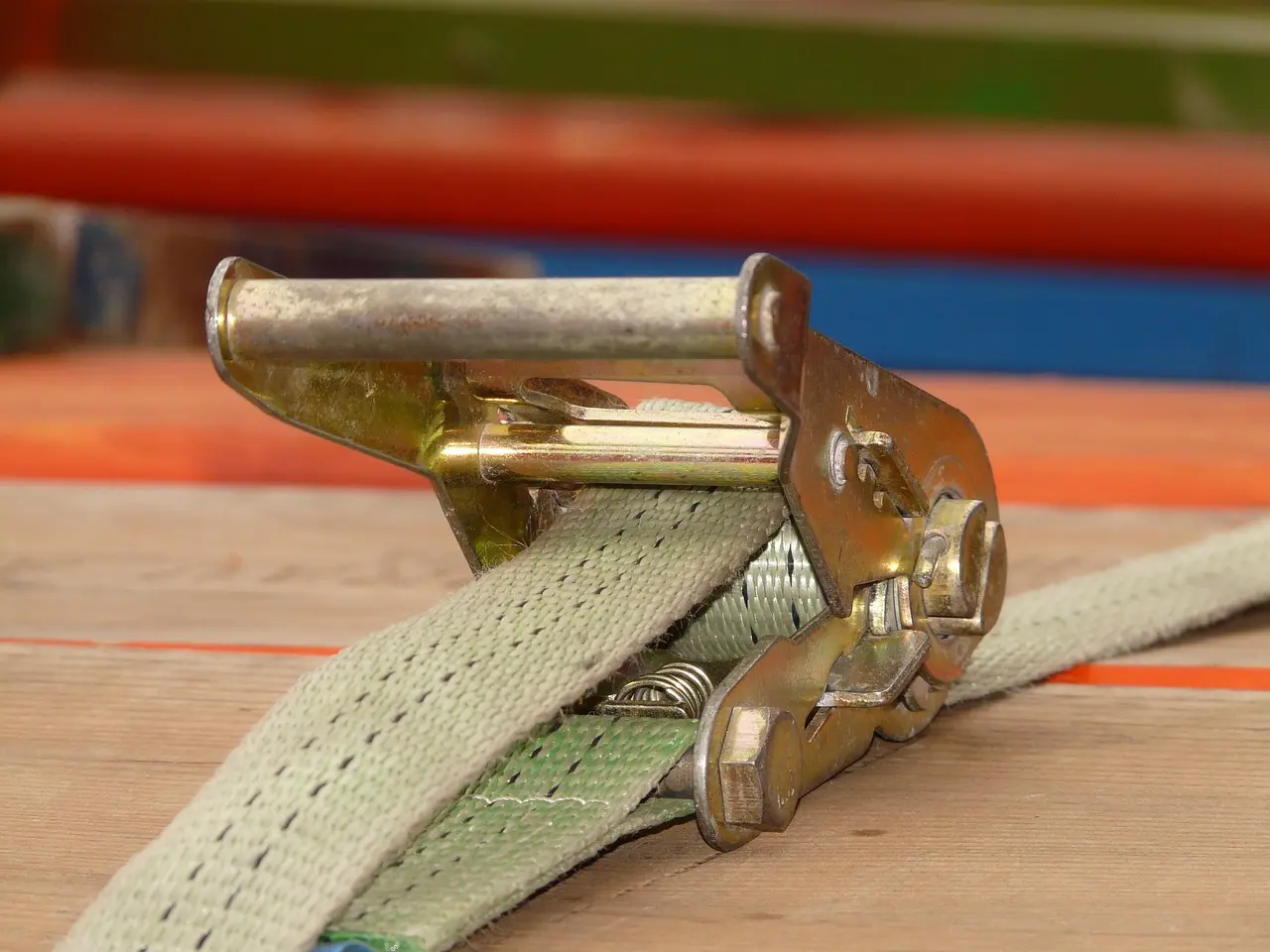
Endless ratchet straps work well when anchor points are limited or when you want the webbing to loop around the furniture itself. Hooked straps, including S-hooks, J-hooks, and double J hooks, fit truck beds, trailers, and rails that already have solid anchor points. Cam buckle straps are a lower-tension alternative for lighter loads where a ratchet would be more force than you need.
Use WLL, not break strength, as the limit
WLL is the number to respect. Break strength is the failure point under ideal conditions, while WLL is the practical safe limit. A strap with a high break strength can still be wrong for furniture if the anchor point, angle, or surface contact is weak. Some common examples on the market include Rhino USA ratchet straps sold as a 4-pack with 1 inch x 15 feet straps and 1,823 lb break strength, PowerTye Industrial Ratchet Tie-Down Kit with 1.5 inch x 8 ft straps and 1,000 W.L.L., Stanley S1007 straps at 1.5 inches x 16 feet with 1,100 lb safe working load, and Hyper Tough 12 ft x 1 in ratchet tie-downs with 500 lbs working load limit.
Pick a length that fits the load and the anchors
Strap length must fit both the furniture and the anchor spacing. Too short, and you cannot route the strap without pulling the furniture off position. Too long, and the loose tail gets in the way and makes tensioning clumsy. For most household furniture, 10 to 15 feet covers many truck-bed and trailer setups, while larger items or wider anchor spacing may call for 16 feet or more.
When the setup is awkward, endless straps help because they do not depend on a hook landing in exactly the right place. Ratchet mechanism quality matters too. A smooth ratchet is easier to tension in small steps, and corrosion resistance matters if the straps will ride in an open trailer or damp cargo area.
How do you strap furniture safely?
Pad every contact point before you tension anything. Route the strap so it holds the piece in place without crushing a weak spot. Tighten only until the furniture stops shifting, then check the load again after the first stop or after a few miles. If the anchor is questionable, do not use it.
- Wrap moving blankets or corner guards around any painted edge, veneer face, or upholstered arm before the strap touches it.
- Place the furniture against a fixed surface so the strap is resisting movement, not trying to suspend the load in midair.
- Choose the strap style that fits the item: endless for limited anchors, hooked for rated rails or tie-down points, cam buckle for lighter restraint.
- Route the webbing flat and keep it off sharp hardware, protruding screws, and drawer pulls.
- Tension the ratchet one or two clicks at a time, then stop and press on the furniture. If it still shifts, add one more small increment and recheck. Do not crank until the frame bows.
- If the load still moves after reasonable tension, add a second strap at a different angle rather than over-tightening the first one.
- After the first few miles, stop and inspect the webbing, anchor points, and padding. Re-tighten only if the load has settled.
Say your dresser is 60 inches wide and the drawers have been removed. One hooked strap across the body may be enough if the anchors are low and solid. If the dresser tilts at the next stop, the fix is usually a second strap or a better strap angle, not more force on the first one.
Follow the vehicle and product manual, never work under a vehicle held only by a jack, never exceed the vehicle’s rated roof, hitch, or tow limit, keep items out of airbag zones and the driver’s view, and check local laws.
Common mistakes
Overtightening soft wood or upholstered pieces: Ratchets can crush a dresser corner, compress a sofa arm, or leave hard lines in fabric. Stop as soon as the item no longer shifts.
Using hooks on weak or unverified anchor points: A hook is only as good as the point it grabs. Interior cargo loops may be intended for light cargo management, not heavy tie-down loads. Use only anchor points that are rated for securement.
Leaving metal hardware on finished surfaces: Bare hooks, buckles, and end fittings can scratch lacquer, veneer, and painted trim. Use padding or soft ties where hardware might touch wood.
Ignoring strap angle and load direction: Two straps do not always share force evenly. A shallow angle can let the furniture creep, while a steep angle can pull the piece upward instead of pinning it down. Use the angle that stops motion without lifting the load.
Choosing break strength instead of WLL: Break strength sounds reassuring, but WLL is the number that should guide the setup. If the strap looks strong but the anchor is weak, the system is still unsafe.
Frequently asked questions
Are ratchet straps safe for moving furniture in a truck or trailer?
Yes, if the truck bed or trailer has rated tie-down points and the furniture is braced so the strap is controlling movement rather than crushing the frame. Check the vehicle manual for approved anchors, and do not use cargo loops unless they are meant for that load.
What kind of ratchet straps should I use for furniture?
Use endless straps when anchor points are limited, hooked straps when you have solid rails or tie-down points, and cam buckle straps for lighter restraint. For finished furniture, choose polyester webbing and use padding or edge protection anywhere the strap can touch wood or fabric.
How tight should ratchet straps be on furniture?
Tight enough that the load does not shift, but not so tight that the frame bends, drawers bind, or upholstery compresses deeply. A good check is whether you can still see the padding keeping the strap off sharp edges. If the piece moves, add tension in small steps and inspect again.
What strap length and width work best for moving furniture?
Length should match both the furniture size and the anchor spacing. For many couches, dressers, and bed frames, about 10 to 15 feet is workable; longer runs may need about 16 feet or more. Width depends on the load and WLL, so check the manufacturer listing instead of guessing from width alone.
What is the difference between ratchet straps and cam buckle straps for furniture?
Ratchet straps let you apply more tension and are better for heavier, rigid pieces that need firmer restraint. Cam buckle straps are simpler and lower tension, which makes them useful for lighter furniture or pieces that only need to be kept from sliding. They are not a substitute for secure anchor points.
Can ratchet straps secure appliances and furniture together?
Yes, but only if the combined stack is stable and the straps do not press on dials, glass, doors, or other fragile parts. Keep the heaviest item low, pad every contact point, and avoid trapping cords or hoses under the webbing. If the stack can shift, separate the loads instead.
Products related to this article
Sponsored / affiliate links. As an Amazon Associate I earn from qualifying purchases. I may earn additional commission from eligible campaigns.