How to Ship Cabinet Doors Without Damage
Ship cabinet doors in a rigid double-wall box or crate, with about 2 to 3 inches of padding on every side and edge protection for glass, veneer, or painted finishes. Poor packing turns a simple shipment into cracked corners, scuffed finishes, and costly claims or replacements. This guide covers packaging choices, carrier selection, labeling, and claim-proof documentation.
How cabinet doors fail in transit
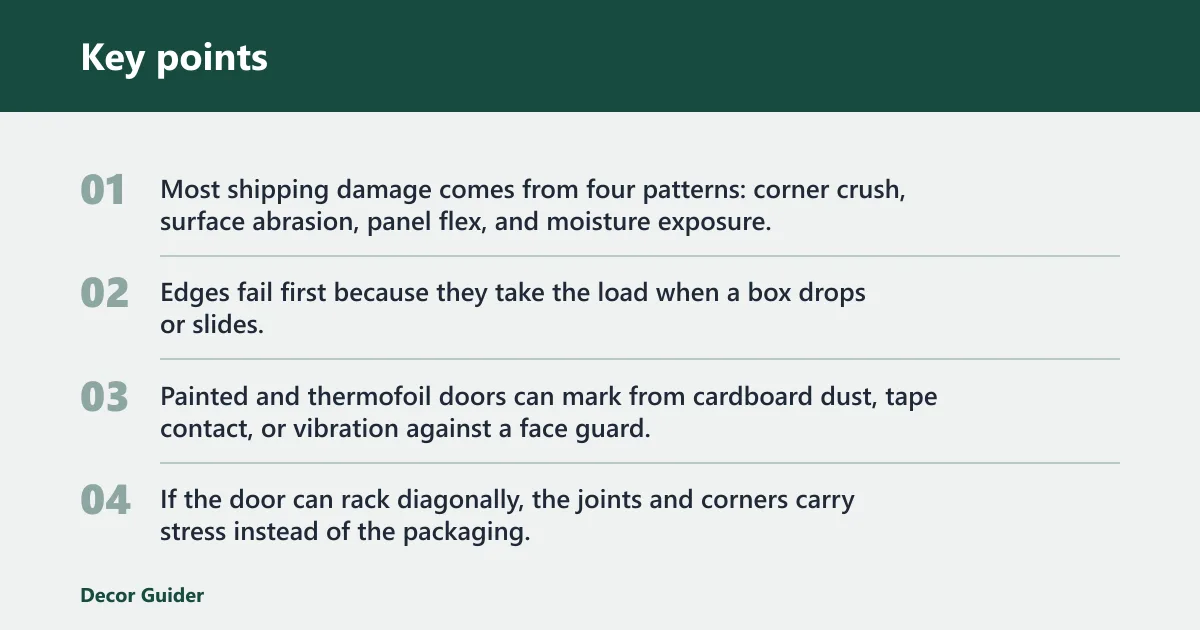


Most shipping damage comes from four patterns: corner crush, surface abrasion, panel flex, and moisture exposure. A door can leave in perfect shape and still arrive with a split rail, a rubbed finish, or a bowed panel if the pack allows movement or the carrier stacks heavy freight on it.
Corner crush and edge chipping
Edges fail first because they take the load when a box drops or slides. Shaker rails, raised-panel profiles, and mitered corners chip easily unless the package has corner blocks or tight edge wrap inside a rigid outer box.
Surface abrasion and finish transfer
Painted and thermofoil doors can mark from cardboard dust, tape contact, or vibration against a face guard. Unfinished wood can still bruise or pick up scuffs, and a fresh finish needs a clean barrier so the wrap does not imprint texture onto the surface.
Panel flex, racking, and warp
Thin doors, large slab panels, and wide MDF doors can flex in a box that is too long, too loose, or stacked flat under weight. If the door can rack diagonally, the joints and corners carry stress instead of the packaging.
Moisture and glass breakage risks
Humidity, wet pallets, and condensation can swell wood-based doors, while glass needs isolation from impact and from other faces. A moisture barrier helps unfinished or primed doors, and glass doors need face-to-face separation so one impact does not spread through the whole stack.
What you need to pack cabinet doors
You need packaging that matches the door’s material, finish stage, and hardware exposure. A small painted shaker door needs less structure than a tall glass cabinet door, but both still need a rigid outer layer, corner protection, and enough internal padding to stop motion.
- Double-wall corrugated box. Use this for parcel shipments and for inner boxes inside a crate.
- Corner protectors. Add these to all four corners, and use larger blocks for raised panels or glass frames.
- Foam sheet or padding. Place foam between the door and the face guard, and between stacked doors.
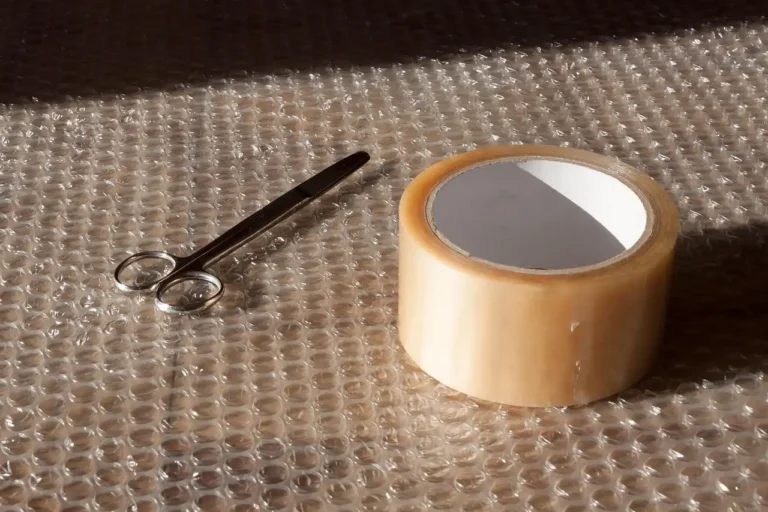
- Stretch wrap. Use it to hold the padding in place, not as the only outer layer.
- Cardboard face guards. Use flat guards on painted, primed, or veneered faces to limit abrasion.
- Fragile labels. Mark the package clearly, but treat the label as a warning, not protection.
- Crating materials. Use plywood or similar rigid build-out for oversized or high-value orders.
Cabinet door shipping table
This table maps the door type, size, and finish to a packing stack, carrier choice, and risk level. Use the box orientation and inspection steps as part of the claim file, not as optional extras.
| Door type and size | Finish stage | Packing stack | Carrier choice | Box orientation | Minimum padding | Damage-risk level | Claim-proof inspection steps |
|---|---|---|---|---|---|---|---|
| Shaker or slab, under 30 in. high and under 18 in. wide | Primed or painted | Face guard, corner protectors, foam sheet, double-wall box | Parcel | Flat in box | 2 in. on all sides | Low to medium | Photograph both faces, all four corners, and the sealed carton; save the label and tracking number. |
| Raised panel, medium size with profile edge | Finished wood | Face guard, foam sheet, corner protectors, double-wall box with tight void fill | Parcel | Flat in box | 2 to 3 in. on all sides | Medium | Record the profile edges, label placement, and door dimensions; check for corner compression before handoff. |
| MDF slab, tall or wide panel | Unfinished or primed | Face guard, moisture barrier, corner protectors, double-wall box or crate | Freight if oversized | Flat, supported end to end | 3 in. on all sides | Medium to high | Photograph the full face and edges, plus the moisture wrap and outer carton before pickup. |
| Thermofoil or painted door with exposed edges | Painted or thermofoil | Soft interleaf, face guard, corner protectors, double-wall box | Parcel for standard size; freight for oversize | Flat, never loose | 3 in. on all sides | High for abrasion | Document finish condition, edge wrap, and any pre-existing rub marks before sealing. |
| Glass cabinet door, framed or mullioned | Finished frame with glass installed | Face guard, glass isolation pads, corner blocks, double-wall box, then crate if large | Freight for large or multiple doors | Flat with edge isolation | 3 in. on all sides plus glass separation | High | Photograph the glass, frame, spacer material, and crate exterior; note any chip or scratch before shipping. |
| Oversized custom door, long or heavy | Any | Crate, foam, corner blocks, face guards, moisture protection | Freight | Flat, braced | 3 in. or more | High | Keep a measured photo set, packing list, and carrier label copy with the crate. |
Should cabinet doors ship flat or upright?
Most cabinet doors ship flat, supported across the full face, because upright packing increases racking and edge load. The exception is a purpose-built crate with internal bracing that holds the door without side sway. For parcel shipments, flat is usually the safer choice.
Solid wood and MDF doors
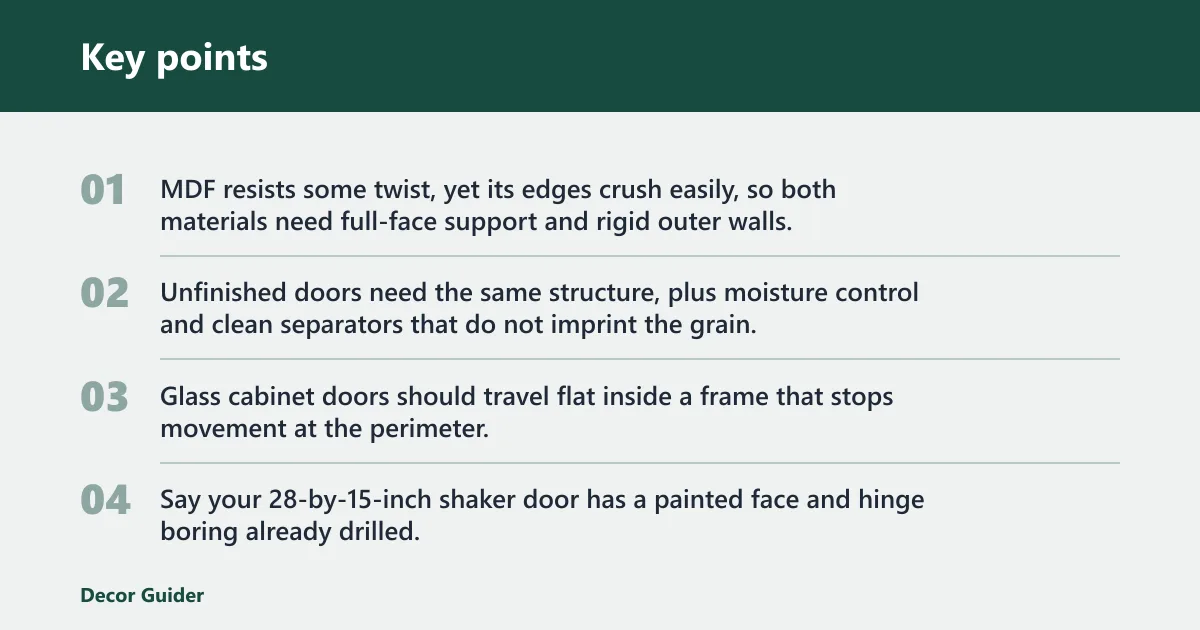
Solid wood doors can handle more edge abuse than MDF, but they are still vulnerable to warp if they are unsupported or exposed to moisture. MDF resists some twist, yet its edges crush easily, so both materials need full-face support and rigid outer walls.
Thermofoil, painted, and unfinished doors
Thermofoil and painted finishes scratch and mar more easily than raw wood, so flat packing with a clean face guard is better than standing the door on edge. Unfinished doors need the same structure, plus moisture control and clean separators that do not imprint the grain.
Glass cabinet doors
Glass cabinet doors should travel flat inside a frame that stops movement at the perimeter. Upright shipping can let the glass panel load against the frame during vibration, which raises breakage risk at the corners and along the edges.
Say your 28-by-15-inch shaker door has a painted face and hinge boring already drilled. A flat parcel box with corner blocks and 2 inches of padding on each side is usually a better fit than a tall carton, because the hinge holes and rail edges stay away from side impact.
How to package cabinet doors for shipment
The safest pack starts with measured documentation, then hardware protection, then a tight box stack that removes movement. Match the packaging to the largest weak point on the door, not just to the outer dimensions.
-
Measure and record everything.
Measure the door to 1/16 inch and note the style, material, finish stage, edge profile, and any hinge boring. Record height, width, thickness, cup diameter, setback, and center locations so the receiver can check the part against the order. -
Cover the face first.
Place a clean cardboard face guard or soft interleaf over the finish, then add foam sheet or padding across the full surface. This keeps tape, dust, and cardboard texture off the finish. -
Protect hardware and boring.
If hinge cups, screws, or protruding hardware remain attached, pad them so they do not press through the box wall. Protrusions should face inward toward the padding, not toward a seam or corner. -
Build the outer box.
Center the wrapped door inside a double-wall corrugated box with 2 to 3 inches of clearance on every side. Fill voids so the door cannot shift, rack, or tap the wall during handling. -
Choose the right service.
Use parcel for standard single-door shipments that fit within carrier size rules, and move to freight when the order is oversized, unusually heavy, or too fragile for conveyor handling. Large custom doors need protective packaging, and many claims depend on the seller’s stated deadline, so confirm that window before ordering.
Cabinet doors are built to exact specifications within 1/16 inch, so the shipper should track the same level of precision on the packing sheet. Some sellers advertise free shipping only above a minimum order value of $1,500, and one custom-door seller says most standard orders ship within 5 business days; that same seller says shipping damage deadlines should be confirmed before ordering.
A common first-timer mistake is packing a 34-inch-tall MDF slab door in a carton that fits the face but leaves the corners loose. The box survives the label scan, yet the top rail arrives crushed because the door shifted inside the package during one hard stop.
How do you ship glass cabinet doors safely?
Glass cabinet doors need frame protection, glass isolation, and edge-to-edge separation so the panel never takes a direct hit. Use a rigid box or crate that prevents point pressure, and do not let glass touch glass, hardware, or hard corner blocks without a spacer.
Frame and mullion protection
Wrap the frame first, then add corner blocks around the outside corners and any exposed mullions. If the frame is painted or stained, use a clean barrier under the wrap so the finish does not pick up marks from abrasion or tape residue.
Glass-to-glass separation
When shipping more than one door, place a cardboard or foam separator between each unit. Every glass face needs its own contact-free zone, with no direct overlap at the edges where chips usually start.
Impact control for oversized panels
Oversized glass doors should move in a crate, not a loose box. Crating adds stiffness, which keeps the panel from flexing under stacking loads and lowers the chance that a corner strike turns into a full fracture.
Frequently asked questions
How do you ship cabinet doors without them arriving damaged?
Ship them in a rigid double-wall box or crate, with 2 to 3 inches of padding on every side and corner protection matched to the material. Measure to 1/16 inch, document the finish and hardware, and choose freight when the door is too large or fragile for standard parcel handling.
What is the best way to protect cabinet doors in transit?
The best protection is a layered pack: face guard, foam or padding, corner blocks, and a rigid outer container that stops movement. For painted, primed, or thermofoil finishes, add a clean interleaf so the surface does not rub against the cardboard or wrap.
Should cabinet doors be wrapped flat or boxed upright for shipping?
Flat packing is usually safer because it spreads load across the full face and limits racking. Upright shipping can work only inside a purpose-built crate with bracing that prevents sway; otherwise, corners, rails, and edges take the impact.
How do you ship unfinished cabinet doors?
Use the same rigid packaging as a finished door, but add moisture protection so the wood does not absorb humidity in transit. Keep the face clean, prevent edge crush, and avoid materials that leave imprint marks on raw surfaces.
What materials do you need to ship cabinet doors safely?
At minimum, use a double-wall corrugated box, corner protectors, foam sheet or padding, stretch wrap, cardboard face guards, and fragile labels. Oversized orders also need crating materials, because a standard carton does not stop flex or stacking damage well enough.
What size box or crate should I use for cabinet doors?
Use a container that leaves 2 to 3 inches of padding on every side after the door is centered inside. For long, heavy, or glass doors, choose a crate large enough to hold the door flat with separators and braces, not a tight carton that forces pressure onto the corners.
Products related to this article
Sponsored / affiliate links. As an Amazon Associate I earn from qualifying purchases. I may earn additional commission from eligible campaigns.