How Many Casserole Dishes Do You Need to Host Thanksgiving?
Plan on about 2 to 4 casserole dishes for a typical Thanksgiving, then add one more for every extra side beyond four or if separate pans are needed for transport. Too few dishes can leave you juggling oven space, delayed sides, and messy reheating. This guide helps you size your dish count by menu, oven capacity, and backup pans.
Planning casserole dishes by guest count and menu


A simple rule is one casserole dish for each hot side you want ready at the same time, plus a spare if one pan needs to travel or hold leftovers. For most hosts, that means 2 dishes for a small menu, 3 to 4 for a standard spread, and 5 or more for a large gathering with multiple baked sides.
How guest count affects dish count
Guest count matters because it usually tracks how many side dishes you need and how large each batch should be. A small group of 4 to 6 can often work with about two pans if the menu is simple. A crowd of 10 to 12 usually needs about three or four pans so hot sides can cook without waiting on each other.
Think of the count in two parts: how many side dishes you want, and how many can fit in the oven at once. If your menu includes stuffing, sweet potatoes, green bean casserole, and macaroni and cheese, that is already four separate baked dishes unless one pan is very large and one side is served in a different vessel.
Thanksgiving casserole dish planning table
| Guest count | Side-dish count | Recommended casserole dish count | Ideal capacity split | When to add a spare |
|---|---|---|---|---|
| 4–6 | 2–3 sides | 2 dishes | One 4-quart pan plus one 2- to 3-quart pan | Add a spare if one side must travel or if leftovers need a separate pan |
| 6–8 | 3–4 sides | 3 dishes | One 4-quart pan and two 2- to 3-quart pans | Add a spare if the oven only fits two pans at once |
| 8–12 | 4–5 sides | 4 dishes | Two 4-quart pans plus two 2- to 3-quart pans | Add a spare if one dish will hold backup portions or a make-ahead side |
| 12–16 | 5–6 sides | 5 dishes | Two 4-quart pans, two 3-quart pans, and one smaller pan | Add a spare if you need one pan for transport, one for leftovers, or both |
This table works best for standard holiday sides. Portions vary by recipe, topping, and dish depth, so treat the capacity split as a planning guide rather than a fixed serving count. A deeper dish can hold more of a dense side, while a shallower pan may brown better and cool faster.
What casserole dish size works best?
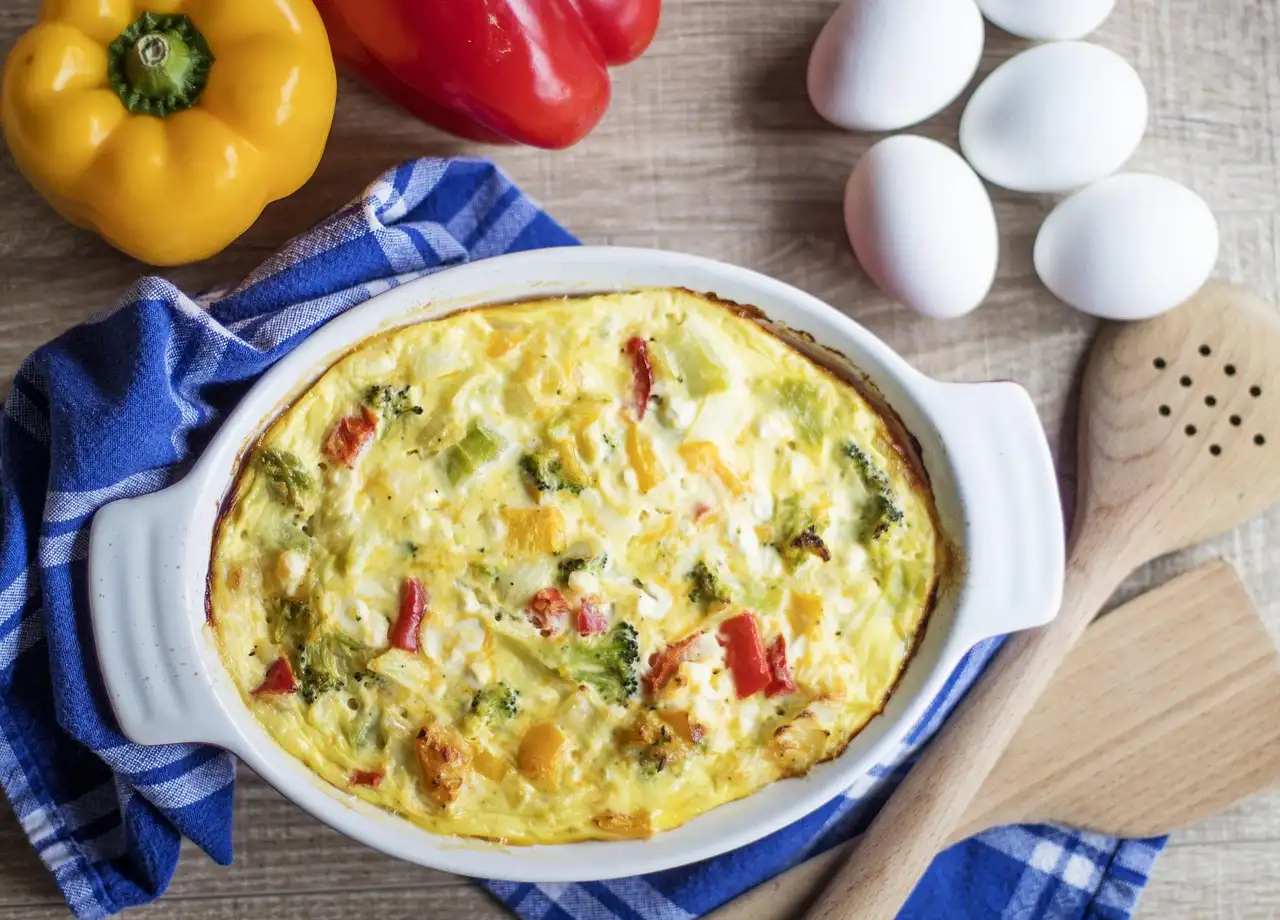
The best size depends on the side you are making and whether you want one pan to feed the table or several pans to control timing. A 2- to 3-quart dish often fits many vegetable sides and smaller batches. A 4-quart dish is a strong choice for stuffing or macaroni and cheese. A deep 5-quart pan helps when you need more volume or a lid for transport.
Common quart ranges for Thanksgiving sides
Stuffing and mac and cheese often do well in a 3- to 4-quart dish, especially when you want enough room for a browned top without spillover. Sweet potatoes and green bean casserole often fit a 2- to 3-quart pan for a normal family-size batch. For larger groups, moving up a size reduces overflow risk and gives the topping room to set.
For common holiday cooking, a rectangular stoneware baking dish is a useful shape because it moves from oven to table cleanly, helps heat distribute more evenly, and often includes handles that make lifting easier. A covered casserole pan is useful when you want to keep food warm before serving. A deep glass baking dish is helpful when you need a lid for transport.
- Match the pan to the side. Use a 4-quart dish for denser sides such as stuffing or mac and cheese, then use 2- to 3-quart pans for vegetables or smaller portions. This keeps the cook time and browning more predictable.
- Check the dish depth. Standard casserole dishes work well for even browning, while deeper dishes are better when you need extra capacity. A deeper pan also helps when a recipe includes a lot of liquid, sauce, or layering.
- Leave room for topping. If a recipe includes crumbs, marshmallows, cheese, or biscuits, do not fill the pan to the rim. Extra headroom reduces spillover and keeps the topping from sliding off the edge.
- Add a second pan when needed. Split a large batch into two smaller dishes if one pan would be too full or if the oven cannot hold the larger dish at the same time as other sides. That gives more control over cooking and serving.
Say your menu includes stuffing, sweet potatoes, and green bean casserole for eight people. Three pans make the schedule easier than one oversized dish, because each side can finish at the right time instead of waiting on a single pan that takes longer to heat through.
Suppose you are making macaroni and cheese for a dozen guests and want leftovers. A 4-quart dish may cover the main serving, but a second smaller dish lets you keep some portions aside or send part of the meal home without packing hot food into the same pan.
When a deep dish beats a standard dish
A deep dish makes sense when the recipe is tall, saucy, or likely to bubble. The Pyrex deep glass baking dish is 3 inches deep and holds about 5 quarts, which gives more vertical space than a standard pan. That extra depth helps with layered casseroles, larger batches, and transport because the lid can stay on more securely.
Standard-depth dishes are better when you want more surface area for browning or faster reheating. That matters for sides where the top is part of the appeal, such as macaroni and cheese or a crisp-topped stuffing. If your recipe often runs over, move to a deeper pan instead of simply filling a standard one higher.
Should you buy one large dish or several smaller ones?
Buy one large dish when you need a single baked side to feed the table and oven space is tight. Buy several smaller dishes when you want better timing, more even heating, or separate pans for different add-ins and leftovers. For Thanksgiving, multiple smaller pans usually give more control than one oversized dish unless the recipe is meant to be baked together.
Best use cases for a single large pan
A single large pan works best for one major side, especially macaroni and cheese, stuffing, or a mixed vegetable bake. It also helps when the recipe needs one final bake and you plan to serve directly from the dish. The Le Creuset covered casserole pan is 4 quarts, oven-safe up to 500 degrees Fahrenheit, and dishwasher-safe, which makes it a practical serving pan when cleanup matters.
Best use cases for two or more smaller pans
Several smaller pans make sense when you have multiple sides competing for oven space or when different dishes need different finishing times. Smaller pans also help if one side is for the main table and another is reserved for later. A 3-quart stoneware pan and a 2-quart glass pan can be easier to rotate than one large, heavy dish.
Use this rule: if one oven can hold only two pans without blocking airflow, do not buy a menu that assumes four large dishes will fit at once. Split the menu into batches or choose smaller pans. That keeps the center of each casserole hot while the edges brown properly.
How oven space changes the answer
Oven space is the hidden limit. A host may need four casserole dishes on paper, but only two may fit comfortably in the oven at once. In that case, either stagger the cooking schedule or choose a mix of one larger pan and two smaller ones. The right choice is the one that matches the oven, not just the recipe list.
- Count your hot sides. List each baked side that needs oven time, including stuffing, macaroni and cheese, sweet potatoes, and green bean casserole. If two dishes will be served cold, do not count them in the casserole tally.
- Check oven slots. Measure how many pans fit with a little airflow around each one. If the oven can hold only two medium dishes, plan the menu around that limit.
- Choose your pan mix. Use one larger dish for the biggest side, then fill the rest of the menu with smaller pans. This is usually the easiest way to balance volume and timing.
Transport-friendly casserole options
If a dish is going to another house, transport matters as much as capacity. Covered pans, storage lids, and extra backup dishes reduce spills and keep food warm longer. For travel, a lid is often worth more than a slightly fancier finish because it keeps the side contained from kitchen to car to serving table.
Covered casserole pans for keeping food warm
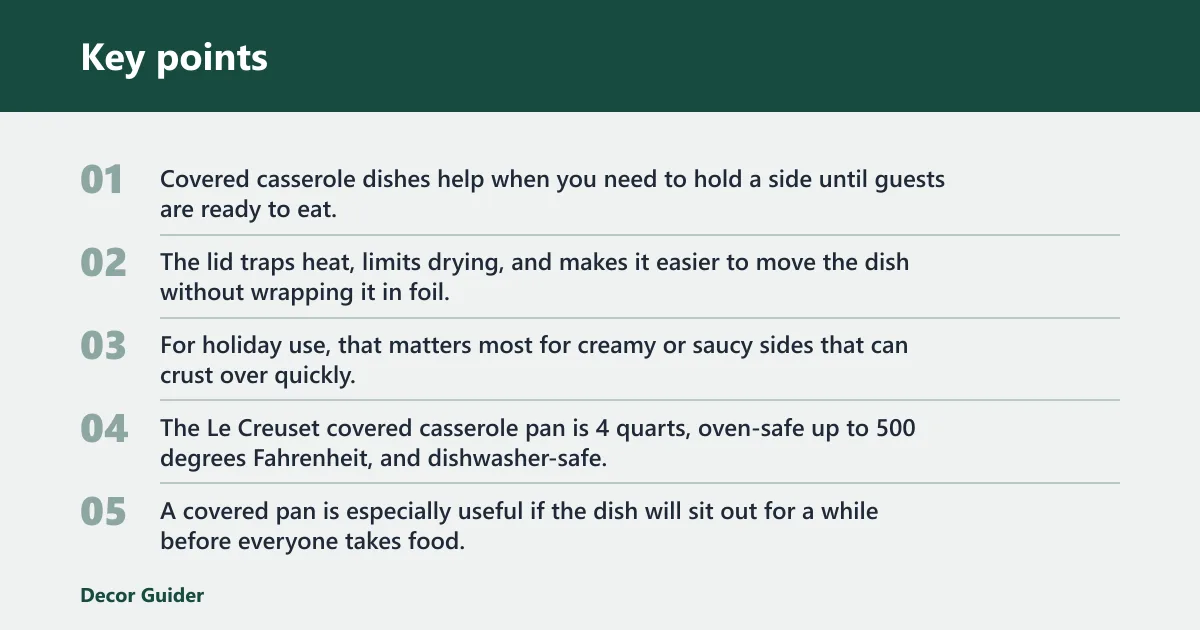
Covered casserole dishes help when you need to hold a side until guests are ready to eat. The lid traps heat, limits drying, and makes it easier to move the dish without wrapping it in foil. For holiday use, that matters most for creamy or saucy sides that can crust over quickly.
The Le Creuset covered casserole pan is 4 quarts, oven-safe up to 500 degrees Fahrenheit, and dishwasher-safe. Those details make it useful for a side that needs both oven heat and a covered hold before serving. A covered pan is especially useful if the dish will sit out for a while before everyone takes food.
Glass lids, storage lids, and carry-in meals
Glass baking dishes are often a good budget-friendly choice, especially when you want freezer and microwave compatibility for prep and leftovers. Standard glass and borosilicate glass are both common, but borosilicate is typically chosen for better thermal shock resistance. If the pan includes a lid, transport gets much easier because the casserole stays contained.
The Pyrex deep glass baking dish includes a lid for transport, and its 3-inch depth and about 5-quart capacity make it useful when a side needs to travel with extra headroom. The OXO Good Grips rectangular stoneware baking dish holds 3 quarts and comes with a lid for storage, which is helpful if you need to refrigerate leftovers in the same pan.
When to add a spare pan
Add a spare pan when the main dish has to travel, when leftovers are likely, or when the recipe may overflow during baking. A spare is also useful if a guest arrives with an extra side and your main pans are already full. It is easier to move a portion into a second dish before baking than to clean spilled filling from the oven later.
A common first-timer mistake is filling every pan to the top and then discovering there is no room for the crumble, sauce, or bubbling edge. Leave a buffer. The extra space protects the topping and gives you a safe place to spoon off a little overflow if needed.
Stoneware and glass casserole dish basics
Stoneware and glass are the main material choices for Thanksgiving casseroles, and each has a different strength. Stoneware gives even heating, heat retention, and an oven-to-table look that many hosts prefer. Glass is often easier on the budget, works well for freezing and microwaving, and makes it easier to see whether the bottom is browned.
Stoneware for oven-to-table serving
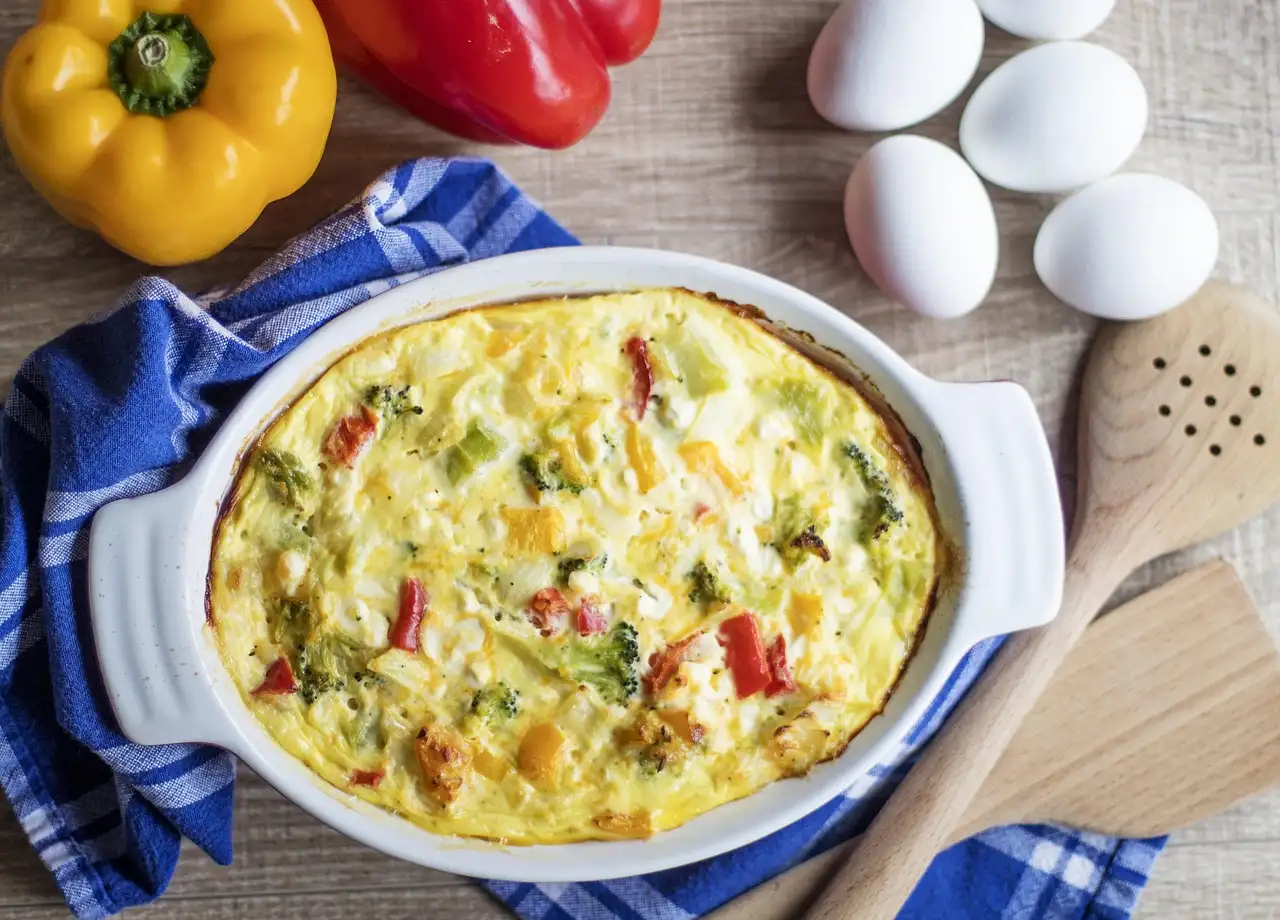
Stoneware is a good match for hosts who want one pan to go from oven to table. Its glazed finish is easy to wipe down, and it holds heat well during serving. A rectangular stoneware baking dish is especially useful for stuffing or macaroni and cheese because the shape spreads the food evenly and usually includes handles for easier lifting.
The OXO Good Grips rectangular stoneware baking dish holds 3 quarts and includes a lid for storage. That size works well for a medium Thanksgiving side, especially when you want enough room for a baked top without taking over the oven rack.
Glass for budget-friendly prep and transport
Glass baking dishes are often the simpler choice when cost, visibility, and leftovers matter. They are easy to use for prep, and many can move from freezer to oven or microwave, depending on the model and material. A lid makes them much more practical for transport and refrigerator storage after the meal.
The Mcirco set includes eight pieces and is made of borosilicate glass. A set like that is useful when you want several sizes on hand for different Thanksgiving sides, or when you need a mix of serving and storage pans instead of only one large vessel.
Rectangular and deep-dish shapes
Rectangular dishes are useful because they stack more efficiently in the oven and on the table. Deep rectangular pans help with layered casseroles and dishes that rise while baking. Shallow rectangles are better when the surface topping matters more than the total volume. Either shape can work; the right one depends on how much food you need to hold and how much browning you want.
Frequently asked questions
How many casserole dishes do I need for Thanksgiving sides?
Most Thanksgiving hosts need 2 to 4 casserole dishes for sides, then one more if a dish will travel or if you want leftovers in a separate pan. The exact count depends on how many baked sides are on the menu and how many will need oven time at once.
What size casserole dish is best for Thanksgiving?
For most holiday sides, a 2- to 3-quart dish works for vegetables and smaller batches, while a 4-quart dish is a stronger choice for stuffing or macaroni and cheese. A deeper 5-quart dish is useful when you need extra room, especially for a layered or saucy casserole.
Should I buy one large casserole dish or several smaller ones?
Several smaller dishes usually make Thanksgiving easier because they let you control timing and fit more flexibly in the oven. One large dish is better when a single side needs to feed everyone and the oven has room. If the menu is large, a mix of both is often the best answer.
How many side dishes do people usually serve at Thanksgiving?
A Thanksgiving meal often includes three to six side dishes, depending on the size of the group and how much cooking the host wants to manage. Smaller gatherings may only need two or three sides, while larger dinners often call for four or more baked dishes.
What casserole dish size works for stuffing or mac and cheese?
Stuffing and mac and cheese usually work well in a 3- to 4-quart dish, with 4 quarts being the safer pick for a crowd. If the recipe includes a thick topping or a lot of sauce, a deeper pan can help keep the bake contained and improve the final texture.
Are covered casserole dishes better for Thanksgiving?
Covered casserole dishes are better when you need to keep food warm, move it without spilling, or store leftovers in the same pan. They are less important if the recipe needs a crisp top and will be served right away. For transport and holding, a lid is a clear advantage.
Products related to this article
Sponsored / affiliate links. As an Amazon Associate I earn from qualifying purchases. I may earn additional commission from eligible campaigns.