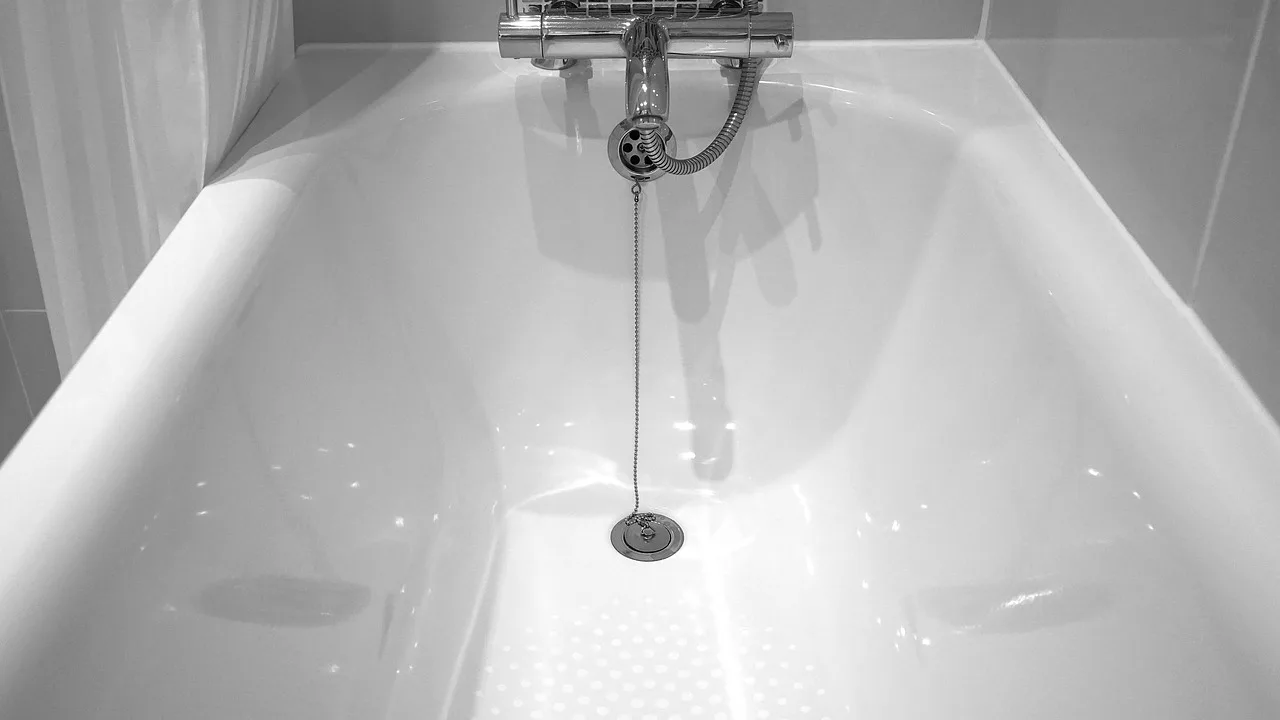
Bathtub Drain Size Chart
Most bathtub drains are commonly reported to use a 1 1/2-inch drain opening, but the connected waste pipe is often 1 1/2 inches or 2 inches, so match both measurements before buying parts. Get the size wrong and you can end up with leaks, a drain that will not fit, or a replacement kit that cannot be installed. This guide gives you a bathtub drain size chart, shows how pipe diameter differs from flange size, and explains when a standard or deep soaking setup fits.
Bathtub drain size chart
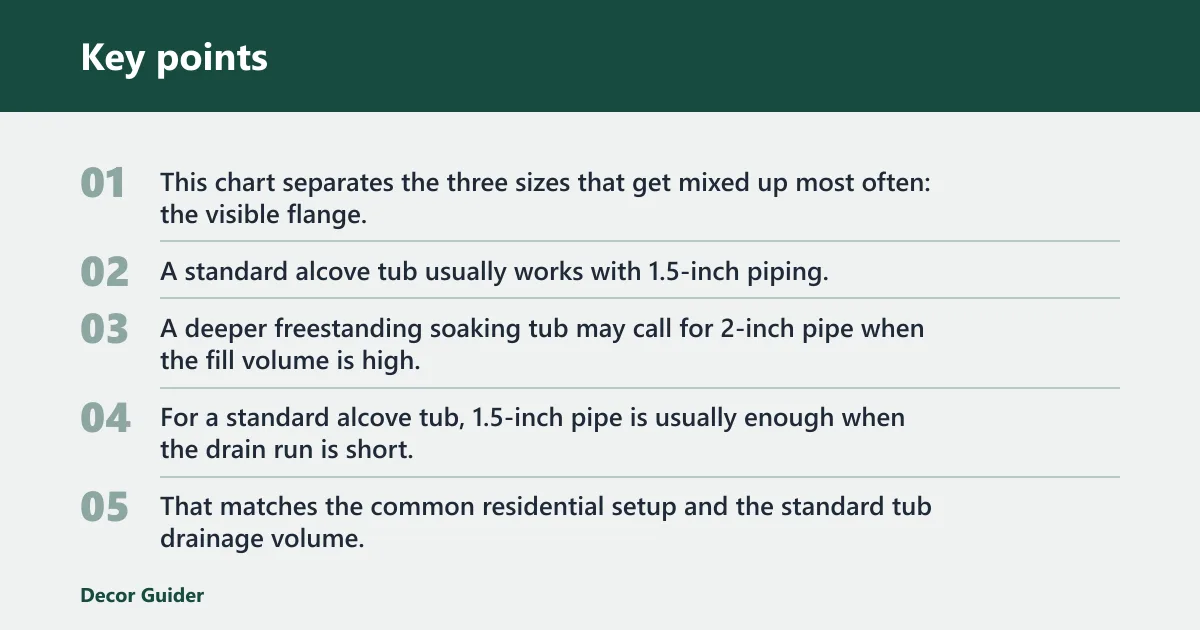


This chart separates the three sizes that get mixed up most often: the visible flange, the pipe under the tub, and the tub type that drives the decision. A standard alcove tub usually works with 1.5-inch piping. A deeper freestanding soaking tub may call for 2-inch pipe when the fill volume is high.
| Bathtub type | Typical water volume | Standard pipe size | When 2-inch pipe is recommended | Flange-size note | What to verify before purchase |
|---|---|---|---|---|---|
| Standard alcove tub | 40 to 60 gallons | 1.5 inches | Usually not needed if the existing rough-in is 1.5 inches and drainage is normal | Visible flange is larger than the pipe and typically about 1.75 to 1.875 inches outside diameter | Confirm the drain shoe thread, stopper type, and overflow connection |
| Deep soaking tub | Higher than a standard alcove tub | Often 1.5 inches, depending on the drain kit and local code | Consider it when the tub holds more water and the manufacturer calls for larger drainage | Flange size still may look similar from above, so do not size by appearance alone | Check the full drain assembly size, overflow style, and available floor space under the tub |
| Large freestanding soaking tub | 65 to 90 gallons | 1.5 inches on many tubs, though some specify 2 inches | Commonly recommended for larger freestanding tubs with higher fill volume | Flange can look similar to a standard tub even when the branch piping below differs | Match the rough-in drawing, outlet size, and code limit before ordering parts |
When 1.5-inch pipe is enough
For a standard alcove tub, 1.5-inch pipe is usually enough when the drain run is short, the trap arm has proper fall, and the tub is not unusually deep. That matches the common residential setup and the standard tub drainage volume. Slow draining in that situation is often a clog issue, not a pipe-size issue.
When 2-inch pipe is worth planning
Plan for 2-inch pipe when the tub is deeper, holds more water, or the maker calls for a larger drain on the rough-in sheet. That is common with large freestanding soaking tubs. A 2-inch branch also gives more room in code-based sizing decisions, which matters when the drain run is longer or the layout is less forgiving.
What to verify before you buy
Check the tub’s rough-in drawing, the drain shoe thread, the overflow style, and the stopper linkage before ordering a kit. Also confirm whether your existing plumbing below the floor is already 1.5 inches or sized for 2 inches. The wrong kit can fit the opening above the floor and still fail at the shoe or trap.
What size are bathtub drains?
The standard U.S. bathtub drain pipe diameter is 1.5 inches. That figure refers to the plumbing below the tub, not the visible opening at the tub floor. The flange you see from above is larger, and the drain shoe under the tub is the part that connects the flange to the trap.
Why flange size is different
The flange is the visible ring at the tub floor. Standard tub drain flanges typically have an outside diameter of 1.75 to 1.875 inches, which is larger than the 1.5-inch pipe below it. That difference matters because the flange size does not tell you the waste pipe size.
Where the drain shoe fits
The drain shoe sits under the tub and connects the flange to the trap. On standard tubs it is usually 1.5 inches. If you confuse the shoe with the flange, you can buy the wrong replacement assembly and end up with threads that do not match.
Are all tub drains the same size?
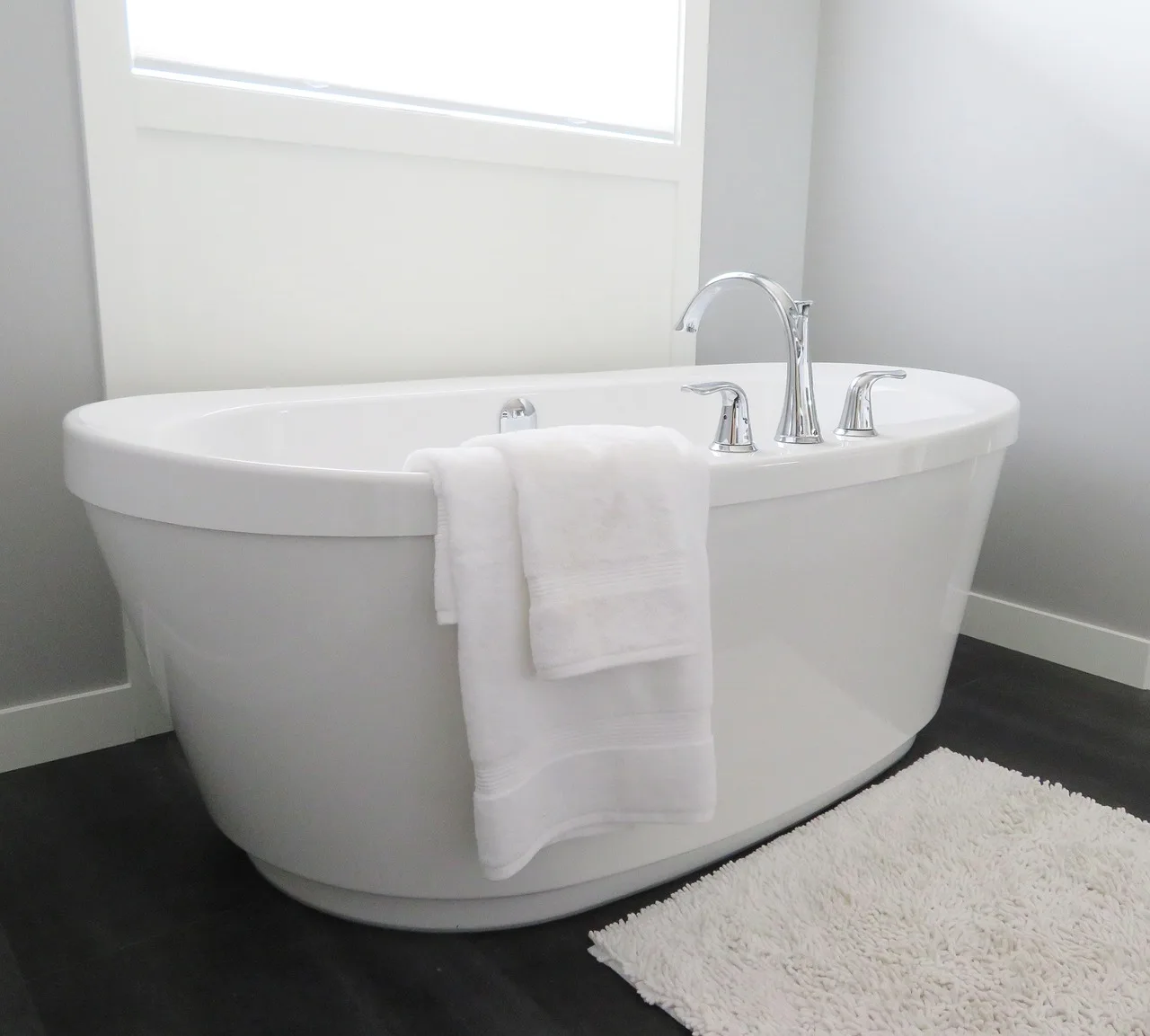
No. Many tubs use the same basic 1.5-inch drain setup, but not all tubs do. Deep soaking tubs and larger freestanding tubs can need different drain sizing, and older homes can have rough-in limits that restrict what can be installed without opening the floor or changing branch piping.
Alcove tubs versus freestanding tubs
A standard alcove tub usually falls into the 40 to 60 gallon range. A large freestanding soaking tub can hold 65 to 90 gallons. That added volume can change the drain choice because the system has to empty a larger amount of water in the same time window.
Say your alcove tub drains slowly after a bath, but the trap and waste line are already 1.5 inches. Start by checking for blockage at the stopper, shoe, or trap, not by assuming you need a bigger pipe. A clog can act like an undersized line.
Older homes and retrofit limits
Older homes may already have a fixed 1.5-inch rough-in, limited access below the floor, or a trap arm that cannot be moved without major work. In that situation, the pipe size you can install may be limited by the existing framing and local code. A larger drain only helps if the rest of the assembly can match it.
Why volume changes the answer
Drain sizing is tied to water volume and fixture loading, not to the tub shape alone. A deep tub that fills higher can stress a small drain more than a shallow tub, especially if the trap arm is long or the slope is poor. That is why the same-looking drain opening may not mean the same plumbing below it.
How do you measure a bathtub drain?
Measure the flange, the shoe, the trap, and the overflow, not just the decorative stopper cap. The cap tells you almost nothing about the pipe below. For replacement parts, the important measurements are the threaded connections, the outside diameter of the flange area, and the overflow linkage style.
Measure this, not
- Measure the flange at the visible drain opening on the tub floor.
- Measure the shoe under the tub where the flange threads in.
- Check the trap to confirm whether the waste line is 1.5 inches or 2 inches.
- Identify the overflow style and stopper linkage before ordering a kit.
- Compare the rough-in with the replacement assembly drawing.
Confirm the overflow type
The overflow assembly is the safety bypass, not a second drain. It includes the overflow plate and tube, and it may use a trip-lever or another stopper linkage. A replacement kit has to match that type, or the tub may drain poorly or fail to seal.
Common first-timer mistake
A common first-timer mistake is measuring only the pop-up cap and assuming the whole drain assembly matches. The cap can be changed without changing the pipe size below it. Always work backward from the tub opening to the shoe and then to the trap.
Drain parts you need to match
A bathtub drain assembly has several parts that do different jobs. Matching the wrong one leads to leaks, cross-threading, or a stopper that will not operate correctly. The visible parts matter, but the plumbing below the tub matters just as much.
Flange
The flange is the visible drain piece at the tub floor. It gives the drain its finished opening and threads into the shoe below. Its outside diameter is larger than the pipe diameter, so do not use it alone to size the drain line.
Drain shoe
The drain shoe is the fitting under the tub that connects the flange to the trap. On standard tubs, it is usually 1.5 inches. If the shoe thread or body size does not match, the flange may install but the connection can still leak.
P-trap
The P-trap is the U-shaped bend that holds water and blocks sewer gas. Bathtub drains use a P-trap as part of the waste assembly. If the trap is the wrong size or installed poorly, you may get odor problems, slow drainage, or both.
Overflow assembly
The overflow assembly is the safety bypass for overfill protection. It includes the overflow plate and the tube that carries excess water away from the tub. It is also where many stopper linkages attach, so the overflow style has to match the replacement parts.
How code sizing affects the drain
Code sizing uses drainage fixture units, or DFU, to help size branch piping. Tallyard lists bathtub fixtures at 2 DFU, says a 1.5-inch horizontal branch handles 3 DFU, and says a 2-inch horizontal branch handles 6 DFU. That is why a larger branch can make sense for a bigger tub or a longer run.
IPC 2021 table sizing
IPC 2021 table sizing is used as a practical reference for fixture loading and branch sizing decisions. You do not need to memorize the table to choose a replacement drain, but you do need to know that code sets limits based on total load, not just the tub opening.
Trap arm slope and drainage
The trap arm needs a slight fall of about a quarter inch per foot. That slope helps water move away without creating siphon risk or pooling in the line. If the slope is too flat, the drain can drain slowly even with the right pipe size.
Badeloft says many larger freestanding tubs specify a 2-inch drain pipe, and that fits the code logic above. A bigger branch is not magic. It simply gives more capacity for a higher-volume fixture and leaves more margin when the layout is less ideal.
What to verify before ordering replacement parts
Before you order, confirm the stopper type, thread style, and rough-in limits. Then check whether the problem is a failed part or a clogged line. A mismatched kit can look right in the box and still fail at the flange, shoe, or overflow once you start the install.
Stopper type
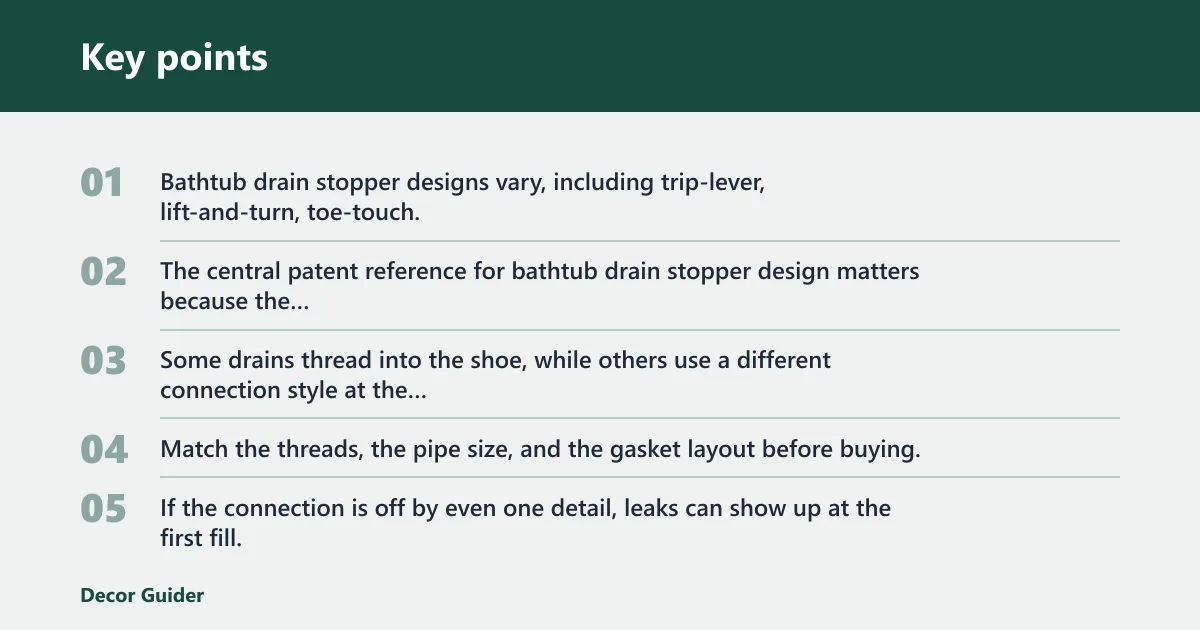
Bathtub drain stopper designs vary, including trip-lever, lift-and-turn, toe-touch, and other linkage styles. The central patent reference for bathtub drain stopper design matters because the linkage has to match the overflow and actuator. Do not order by cap shape alone.
Thread and connection style
Some drains thread into the shoe, while others use a different connection style at the waste and overflow kit. Match the threads, the pipe size, and the gasket layout before buying. If the connection is off by even one detail, leaks can show up at the first fill.
Signs of clogging versus size mismatch
Slow drainage can come from hair, soap buildup, or debris in the stopper or trap. Size mismatch is more likely when a large tub empties too slowly from the start, the rough-in is undersized, or the installed assembly does not match the tub’s required drain size. Clean before you replace.
Short practical rule
If you have a standard alcove tub and a short, code-compliant run, 1.5-inch pipe is usually enough. If you have a deeper freestanding soaking tub or a manufacturer that calls for larger drainage, start with a 2-inch plan and verify the rough-in before you buy. Local plumbing code still has the final say.
Frequently asked questions
Are there different size tub drains?
Yes. Many standard tubs use 1.5-inch plumbing, but deeper soaking tubs and some freestanding tubs can call for 2-inch pipe. The right size depends on tub volume, the rough-in, and local plumbing rules, so do not assume every tub uses the same assembly.
Are bathtub drains standard size?
Bathtub drains are standard in the sense that many residential tubs use a 1.5-inch pipe. They are not standard in every detail, though. Flange size, stopper type, overflow design, and the pipe below the floor can all vary, especially in larger tubs.
What is the standard bathtub drain pipe diameter?
The standard bathtub drain pipe diameter in the United States is 1.5 inches. That size is common for standard alcove tubs and is usually enough for a typical tub drainage volume. A larger tub may call for 2-inch pipe if the manufacturer or code sizing points that way.
Do freestanding tubs need a 2-inch drain?
Not always, but many larger freestanding tubs specify a 2-inch drain pipe. That is common for tubs holding 65 to 90 gallons. Check the tub’s rough-in sheet, because the answer depends on the tub’s volume, the drainage layout, and the local code used for the branch sizing.
What size trap and pipe should a bathtub drain use?
A standard bathtub drain assembly is usually 1 1/2-inch pipe with a P-trap of the same nominal size. The trap holds water to block sewer gas, and the trap arm needs about a quarter inch per foot of fall. Match the trap size to the rest of the branch, not to the stopper cap.
Products related to this article
Sponsored / affiliate links. As an Amazon Associate I earn from qualifying purchases. I may earn additional commission from eligible campaigns.