7 Types of Pressure Cookers: You Should Know
Figuring out pressure cookers can feel like a lot when you’re just starting out. There are so many styles and features, it’s easy to get confused. Many people wonder which one is the best for their needs.

Generic
Small Pressure Cooker, Mini Aluminum Alloy Pressure…
- 【Compact and Space-Saving】Ideal for cozy kitchens or limited counter spaces, this small pressure cooker delivers full functionalit…
- 【Induction & Gas Stove Compatible】Featuring a magnetic base, this versatile mini pressure cooker works seamlessly on induction coo…
- 【Quick and Energy-Efficient Cooking】Engineered with advanced pressure technology, this small pressure cooker significantly reduces…
As an Amazon Associate I earn from qualifying purchases.
We’re here to make it simple. This guide will walk you through the 7 Types of Pressure Cookers You Should Know step by step. You’ll learn what makes each one special and how to choose the perfect one for your kitchen.
Understanding Pressure Cooker Types
Pressure cookers are amazing tools that cook food super fast by trapping steam. This steam builds up pressure, which makes food cook more quickly than usual. This saves you time and energy in the kitchen.
Knowing the different types available helps you pick the one that fits your cooking style and needs best. We will explore the main categories and what makes each unique.
Stovetop Pressure Cookers
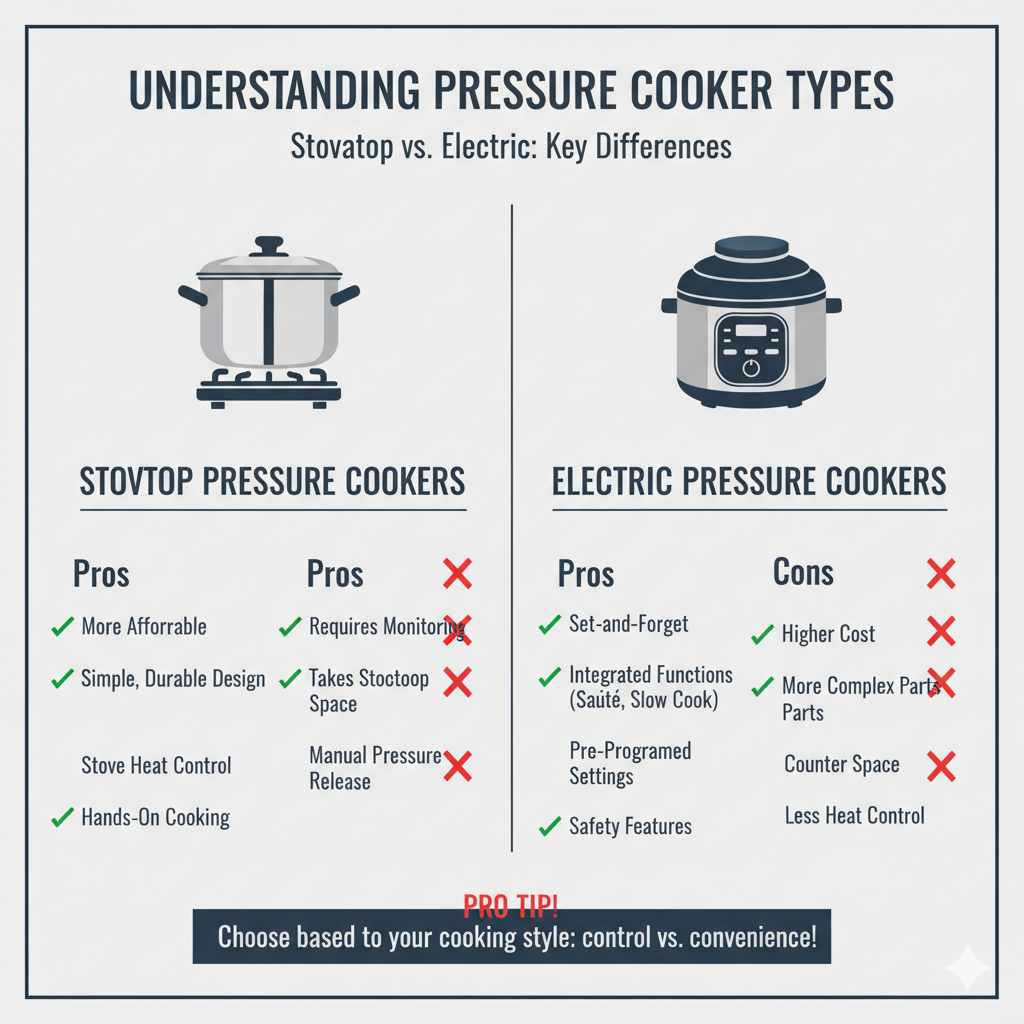
Stovetop pressure cookers are the classic type. They sit right on your stove burner and use the heat from the stove to build pressure. They are usually made of stainless steel or aluminum.
These cookers have a lid that locks tightly with a sealing ring. A weighted or spring-loaded valve on top controls the pressure release. They are known for being durable and offering good control over cooking time because you can adjust the stove heat.
When you use a stovetop pressure cooker, you need to pay attention to the heat. Too much heat and the pressure can build up too fast. Too little heat and it might not reach the proper pressure.
This is why they offer a hands-on cooking experience. Many home cooks still love them because they feel connected to the cooking process.
- Pros
Stovetop pressure cookers are generally more affordable than electric models. They are also quite simple in design, meaning there are fewer electronic parts to break. Their straightforward operation makes them easy to clean and maintain.They can also be used on various types of stovetops, including gas, electric, and induction, though it’s always good to check your specific model’s compatibility.
- Cons
They require constant monitoring. You need to watch the heat level to maintain the correct pressure. This means you can’t just “set it and forget it” like you can with an electric cooker.They also take up space on your stovetop, which can be an issue if you’re cooking other things at the same time. Safety is also a concern if not used properly, as excess pressure can be dangerous.
Electric Pressure Cookers
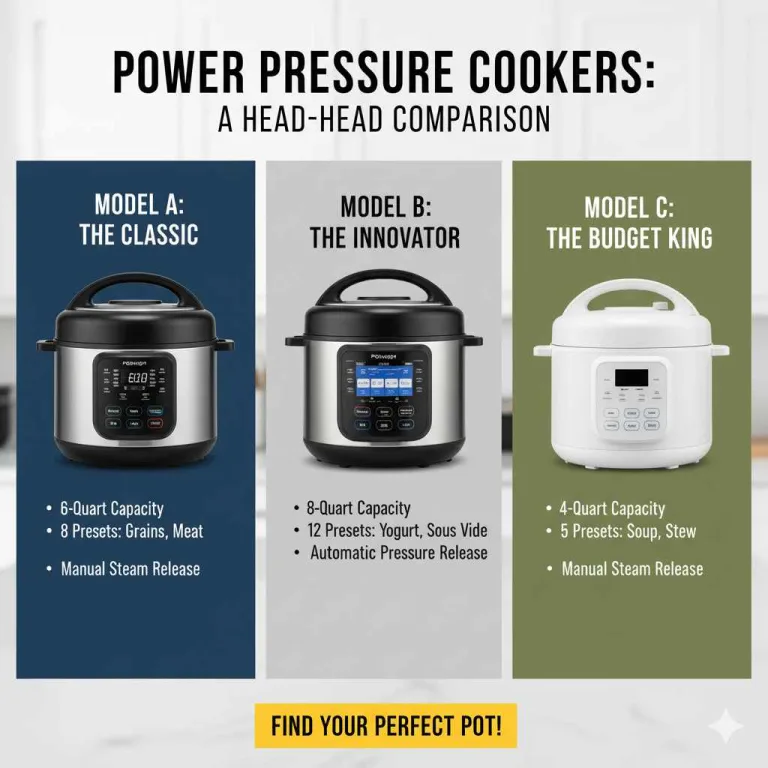
Electric pressure cookers are modern marvels. They have their own heating element and do not need a stovetop. You just plug them in, add your ingredients, set the cooking program, and they do the rest.
Many electric models come with pre-set cooking functions for things like rice, beans, soup, or even yogurt. They are very user-friendly.
The main advantage is convenience. Once you set the timer, you can walk away and do other things. They are safer too, with built-in safety features that prevent over-pressurization.
Cleaning is also usually straightforward as the inner pot is often non-stick and dishwasher safe. This type of cooker has become very popular for busy households.
Multi-Cookers
Many electric pressure cookers are actually multi-cookers. This means they can do more than just pressure cook. They often have settings for slow cooking, sautéing, steaming, making rice, and even air frying in some advanced models.
This makes them very versatile kitchen appliances. A single appliance can replace several others, saving counter space and money.
For example, you could sauté onions and garlic in the same pot before adding other ingredients and pressure cooking your stew. This one-pot cooking capability is a huge benefit for busy cooks. It means fewer dishes to wash after a meal.
The ability to perform multiple functions in one device makes multi-cookers a favorite for many people looking for efficiency.
- Pros
Extremely convenient, with “set it and forget it” functionality. They offer a wide range of cooking presets, making it easy to cook various dishes. Safety features are usually more advanced than stovetop models.They are also energy-efficient as they maintain consistent temperatures. Multi-cooker versions offer even more versatility.
- Cons
Electric pressure cookers can be more expensive than stovetop models. They also require electricity to operate, so you can’t use them during a power outage. Some models can be quite large and take up significant counter or storage space.The programming and settings can sometimes be a bit overwhelming for brand-new users.
Automatic Pressure Cookers
Automatic pressure cookers are essentially a type of electric pressure cooker that leans heavily on its programmed settings. The “automatic” part refers to how precisely they manage the cooking process. They monitor temperature and pressure internally, adjusting as needed to ensure your food cooks perfectly without your constant intervention.
You select the food type and desired doneness, and the cooker handles the rest.
These models are designed for maximum ease of use. They are ideal for people who want perfect results every time without needing to be a culinary expert. The internal sensors and microprocessors work together to deliver consistent outcomes.
This takes the guesswork out of cooking, making complex meals seem simple.
Built-in Safety Features
Automatic pressure cookers are praised for their safety features. They typically have multiple safety mechanisms. These can include lid-locking systems that prevent opening under pressure, pressure release valves that vent excess steam, and overheat protection.
Some even have sensors that stop the cooking process if the pot is empty or if the lid isn’t sealed correctly.
These safety measures provide peace of mind. They significantly reduce the risk of accidents often associated with older pressure cooker models. This makes them a great choice for families or anyone who wants to cook with confidence.
The technology ensures that the cooking environment is always controlled and safe.
Range Top Pressure Cookers
Range top pressure cookers are another term that often refers to stovetop pressure cookers. The distinction is minimal, emphasizing that they are designed to be used on the stovetop range in your kitchen. They are made from durable materials like stainless steel or aluminum.
Their operation relies on the heat source of your stove to generate steam and build pressure inside the pot.
These cookers are appreciated for their ability to handle high heat, which can be useful for quick searing or browning before pressure cooking. They offer a direct connection between the heat source and the cooking vessel, giving the cook immediate feedback and control. This makes them a preferred choice for those who enjoy a more traditional and hands-on cooking approach.
Pressure Regulators
Range top pressure cookers typically feature a pressure regulator. This is a crucial component that controls the amount of steam released and, therefore, the cooking pressure. There are two main types: weighted or spring-loaded.
A weighted regulator uses a small weight that jiggles or rocks at a specific pressure level, venting steam. A spring-loaded regulator uses a spring mechanism that lifts to release steam when pressure is reached.
The regulator ensures that the pressure inside the pot stays within safe and effective limits for cooking. This prevents over-pressurization and maintains a consistent cooking temperature. Understanding how your specific regulator works is key to successfully using your range top pressure cooker.
It’s an important part of the cooking process.
- Pros
Generally more affordable. Simple to operate and clean. Durable construction.Offer precise control over cooking time and pressure by adjusting stove heat. Can handle high heat for searing and browning.
- Cons
Requires constant supervision and adjustment of heat. Less convenient than electric models. Potential safety concerns if not used correctly.Occupies stovetop space.
Induction Pressure Cookers
Induction pressure cookers are designed specifically to work with induction stovetops. Induction cooking uses magnetic fields to heat cookware directly. These pressure cookers have bases made of ferromagnetic materials, allowing them to be heated by an induction cooktop.
They function similarly to other stovetop pressure cookers, building pressure through steam.
If you have an induction cooktop, you need to ensure your pressure cooker is induction-compatible. Not all stovetop pressure cookers will work on induction surfaces. The advantage of using an induction pressure cooker is the efficiency and responsiveness of induction cooking itself.
Heat transfer is very fast and precise.
Induction Cooktop Compatibility
The key feature of an induction pressure cooker is its magnetic base. This allows it to interact with the electromagnetic field generated by an induction cooktop. Without this compatibility, the cooker will not heat up.
Most manufacturers will clearly label their cookware and pressure cookers as induction-compatible.
When purchasing, always check for symbols or text indicating “induction compatible” or “for induction.” This ensures your investment will work effectively on your chosen cooktop. The precise temperature control of induction cooktops can enhance the pressure cooking experience, making it even more efficient and predictable.
Multi-Functional Pressure Cookers
Multi-functional pressure cookers are a modern evolution of the electric pressure cooker. They are designed to perform a wide array of cooking tasks beyond just pressure cooking. Think of them as an all-in-one kitchen appliance.
They can typically slow cook, steam, sauté, make yogurt, cook rice, and even, in some advanced models, air fry or bake.
The appeal here is significant space-saving and convenience. Instead of having separate appliances for slow cooking, steaming, and pressure cooking, you have one device that does it all. This simplifies meal preparation and reduces clutter in the kitchen.
They are programmed with various settings for each function, making them versatile for many different recipes.
Versatile Cooking Modes
These cookers boast numerous cooking modes. You might find settings for baking, boiling, steaming, slow cooking, rice cooking, and, of course, pressure cooking. Some high-end models even include sous vide, air frying, or dehydrating functions.
This versatility means you can prepare almost any meal from start to finish using a single appliance.
For example, you could sauté vegetables, pressure cook a whole chicken, and then steam some broccoli, all within the same multi-functional pressure cooker. This makes meal prep incredibly efficient and reduces the number of dishes you need to wash. The programming is designed to guide you through each cooking mode easily.
Dual Pressure Cookers
Dual pressure cookers, also known as two-pressure or dual-pressure electric models, offer more control over cooking. They allow you to select between a high-pressure setting and a low-pressure setting. This feature is particularly useful because different foods benefit from different pressure levels and cooking times.
For instance, delicate foods like fish or vegetables might cook perfectly on a lower pressure setting, preventing them from becoming mushy. Tougher meats or dried beans might require the higher pressure to cook quickly and thoroughly. Having these two options gives you greater flexibility and precision in your cooking.
High and Low Pressure Settings
The high-pressure setting is ideal for rapidly cooking dense foods like meats, beans, and grains. It reaches a higher internal temperature, speeding up cooking considerably. The low-pressure setting is gentler.
It’s suitable for cooking more delicate items, like fish, eggs, or vegetables, or for simmering foods at a more controlled pace.
Many recipes will specify whether to use high or low pressure. Knowing how to choose the right setting can make a big difference in the final texture and quality of your dish. It allows for more nuanced cooking, moving beyond a one-size-fits-all approach.
This is a key feature for serious home cooks.
A practical example would be cooking dried lentils. Using a high-pressure setting might take 10-15 minutes, while using a low-pressure setting could take 20-30 minutes. Both will result in cooked lentils, but the texture might vary slightly.
For a soup where you want them to hold their shape, low pressure might be better. For a purée, high pressure is fine.
Modern Electric Pressure Cookers (All-in-One)
These are the most common and popular type of pressure cooker today. They combine advanced technology with user-friendly features. Modern electric pressure cookers are often “smart” appliances, meaning they have digital displays and a wide array of pre-programmed settings.
They offer unparalleled convenience and safety.
They are incredibly versatile and can often perform multiple cooking functions. This makes them ideal for busy households, small kitchens, or anyone who wants to simplify their cooking process. Their safety features are top-notch, providing peace of mind during operation.
The ability to cook a wide range of dishes with minimal effort is their biggest draw.
Digital Displays and Controls
These cookers feature clear digital displays that show cooking time, pressure levels, and selected functions. The controls are usually intuitive, often involving buttons or touch panels. This makes it easy to select the right program for your meal.
You can typically set a delay start time, allowing your meal to be ready when you are.
The digital interface removes the guesswork associated with traditional stovetop models. You select your food, choose a cooking time and pressure level (if applicable), and the cooker takes over. Many models also have a “keep warm” function that automatically activates after cooking is complete.
Pre-Set Cooking Programs
A hallmark of modern electric pressure cookers is their extensive library of pre-set cooking programs. These are designed for common dishes like rice, beans, poultry, stew, soup, and even desserts. You simply select the program that matches your food, and the cooker automatically sets the optimal pressure and cooking time.
This feature is a lifesaver for beginners. It removes the need to consult complex charts or guess cooking times. For example, the “Bean” setting is calibrated to ensure dried beans cook through completely and evenly.
This consistency across various dishes makes meal preparation more predictable and enjoyable.
Pressure Cooker Types Summary Table
| Type | Power Source | Key Feature | Best For |
|---|---|---|---|
| Stovetop | Stove Heat | Direct heat control | Hands-on cooks, budget-conscious |
| Electric | Electricity | “Set it and forget it” convenience | Busy individuals, families |
| Multi-Functional | Electricity | Multiple cooking modes (slow cook, sauté, etc.) | Space-saving, versatile cooking |
| Automatic | Electricity | Precise programmed cooking | Beginners, those seeking perfection |
| Range Top | Stove Heat | Durable, traditional operation | Experienced cooks, stovetop users |
| Induction | Induction Stovetop | Magnetic base for induction cooktops | Induction cooktop owners |
| Dual Pressure | Electricity | High and low pressure settings | Cooks wanting more control |
As you can see, each type of pressure cooker offers unique advantages. Your choice depends on your cooking habits, kitchen setup, and desired level of convenience.
Choosing the Right Pressure Cooker
Selecting the best pressure cooker for your needs involves thinking about a few key things. Your cooking style, the space you have available, and your budget all play a big role. Understanding the different types we’ve discussed is the first step.
Now, let’s look at how to make that final decision.
Consider Your Cooking Habits
Are you someone who loves to experiment and be hands-on with your cooking? A stovetop pressure cooker might be ideal. You get direct control over the heat and pressure.
If you’re always busy and prefer to set your meal and walk away, an electric or automatic pressure cooker is a better fit. Their programmed settings and timers do the work for you.
If you cook a variety of dishes and want one appliance to do it all, a multi-functional electric pressure cooker is the way to go. Think about the types of meals you make most often. Do you cook a lot of beans and grains?
Or maybe you prefer quick weeknight stews? Your common recipes will help guide your choice of features.
Kitchen Space and Storage
Pressure cookers vary in size. Stovetop models are generally smaller and can be stored in a cupboard or drawer. Electric pressure cookers, especially multi-cookers, can be quite bulky.
They might take up significant counter space or require dedicated storage. If you have a small kitchen, an induction pressure cooker that works with your existing cooktop might be a space-saving solution.
Measure the space where you plan to keep your pressure cooker, both on the counter and in storage. Also, consider how much counter space you need while cooking. A stovetop model uses your stovetop, while an electric one needs an outlet and space around it.
Think about your kitchen’s layout and how a new appliance will fit in.
Budget Considerations
The price of pressure cookers can range quite a bit. Stovetop models are typically the most budget-friendly option, often costing between $30 and $100. Electric pressure cookers start around $60 and can go up to $200 or more, especially for advanced multi-functional models.
Dual-pressure electric models and high-end automatic cookers are usually at the higher end of the price spectrum.
When setting your budget, consider not just the initial cost but also the long-term value. A more expensive multi-cooker might save you money in the long run by replacing other appliances. Think about how often you’ll use it and the convenience it offers.
Investing in a quality pressure cooker that meets your needs can be a worthwhile decision for your kitchen.
Safety Features
Safety is paramount with any pressure cooker. Electric models generally have more advanced safety features built in. These include locking lids, pressure release valves, and over-temperature protection.
Stovetop models rely more on user vigilance and their pressure regulation systems. Always check for certifications from safety organizations if available.
Modern electric pressure cookers are designed with multiple safeguards to prevent accidents. These features make them very safe for home use. Even with stovetop models, understanding how to use them correctly, maintaining the sealing ring, and never forcing a lid open are crucial safety practices.
Reading the manual is always a good idea.
Tips for Using Your Pressure Cooker
Once you have your new pressure cooker, learning how to use it effectively will make cooking a joy. There are a few simple tips that can help you get the best results and ensure safe operation. These practices apply to most types of pressure cookers and will help you become more confident in the kitchen.
Proper Sealing and Venting
Ensure the sealing ring is properly placed in the lid of your pressure cooker. A good seal is essential for building pressure. After cooking, always use the correct method to release the pressure.
Natural release involves letting the pressure drop on its own. Quick release involves manually opening the steam valve. Always follow the manufacturer’s instructions for your specific model.
Never try to force open a pressure cooker that is still pressurized. Wait until the pressure indicator drops or the steam has fully released. This is a critical safety step.
Improper venting can lead to burns from escaping steam. Using the correct release method ensures your food cooks evenly and safely.
Deglazing and Browning
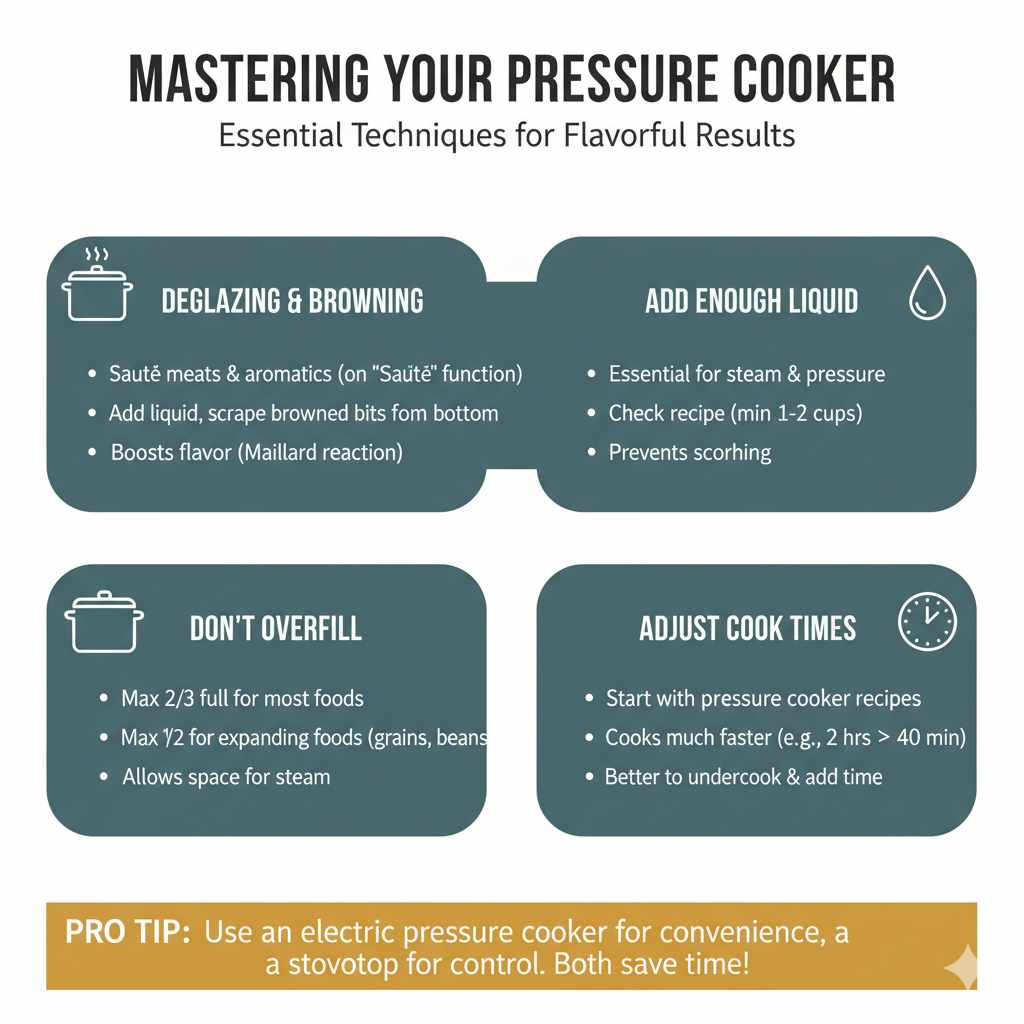
Many electric pressure cookers have a “Sauté” or “Browning” function. This is perfect for searing meats or softening aromatics like onions and garlic before pressure cooking. Browning adds a wonderful depth of flavor to dishes.
After browning, you can deglaze the pot by adding a liquid and scraping up any browned bits stuck to the bottom.
This process, known as the Maillard reaction, creates complex flavors that will infuse your entire dish. It’s a simple step that significantly enhances the taste of stews, chilis, and braised meats. Don’t skip this step if your cooker has this capability; it makes a big difference.
- Add Enough Liquid
Pressure cookers need a certain amount of liquid to generate steam. Always check your recipe for the minimum liquid requirement. Typically, this is at least 1 to 2 cups, depending on the cooker size and recipe.Not enough liquid can prevent the cooker from coming up to pressure, or worse, scorch your food.
- Don’t Overfill
There are usually “fill lines” inside the inner pot of electric pressure cookers. For pressure cooking, never fill the pot beyond the two-thirds full mark. This is to allow space for steam to build without overflowing.For foods that expand, like grains or beans, you might need to fill it even less, perhaps to the half-full mark.
- Adjust Cooking Times
Pressure cooking significantly reduces cooking times. For example, a stew that might take 2 hours in a conventional oven could cook in 30-40 minutes under pressure. Always start with recipe recommendations for pressure cooking times and adjust in future uses based on your results.It’s better to undercook slightly and add more time than to overcook.
Frequently Asked Questions
Question: What is the main difference between stovetop and electric pressure cookers?
Answer: Stovetop pressure cookers use heat from your stove, requiring you to monitor and adjust the heat. Electric pressure cookers have their own heating element and operate independently with pre-programmed settings, offering more convenience and “set it and forget it” functionality.
Question: Can I use any pot on an induction cooktop?
Answer: No, you can only use cookware made of ferromagnetic materials, like cast iron or certain types of stainless steel, on an induction cooktop. Your pressure cooker must be specifically labeled as “induction compatible.”
Question: Are pressure cookers safe to use?
Answer: Yes, modern pressure cookers, especially electric models, are very safe thanks to multiple built-in safety features like locking lids and pressure release valves. Always follow the manufacturer’s instructions for safe operation.
Question: How much liquid do I need for pressure cooking?
Answer: Most pressure cooker recipes require at least 1 to 2 cups of liquid to build steam. Always check your recipe and the cooker’s manual, as not enough liquid can prevent pressure buildup or cause scorching.
Question: Can I open the pressure cooker if it’s not done cooking?
Answer: Never force open a pressure cooker that is still pressurized. You must wait for the pressure to release completely, either naturally or through a quick release, according to the cooker’s instructions. Attempting to open it under pressure can cause serious injury from escaping steam.
Wrap Up
We’ve explored the 7 Types of Pressure Cookers You Should Know, from classic stovetop models to feature-rich electric and multi-functional options. Understanding these types helps you pick the perfect cooker for your kitchen. Consider your cooking style, space, and budget to make the best choice.
Enjoy faster, more flavorful meals.
Related pick: Check today's price on Amazon
Products related to this article
Sponsored / affiliate links. As an Amazon Associate I earn from qualifying purchases. I may earn additional commission from eligible campaigns.