What to Put in a Dresser vs Closet: The Fabric Rule That Ends the Debate
You’ve stood there with a clean hoodie in your hand, staring at an open drawer and a row of hangers, completely stuck. It’s a small decision, but it happens every laundry day. And when you guess wrong, you end up with stretched-out sweaters, wrinkled button-downs, or a drawer so jammed you can’t close it without using your hip.
Most storage advice tells you to sort by category — shirts here, pants there. That’s fine, but it misses the real question. The real question is about physics and fabric. Some materials need to hang to keep their shape. Others will permanently stretch out if you hang them. This article gives you a decision rule based on fabric integrity and visual calm, so you can sort any item in about five seconds without overthinking it.
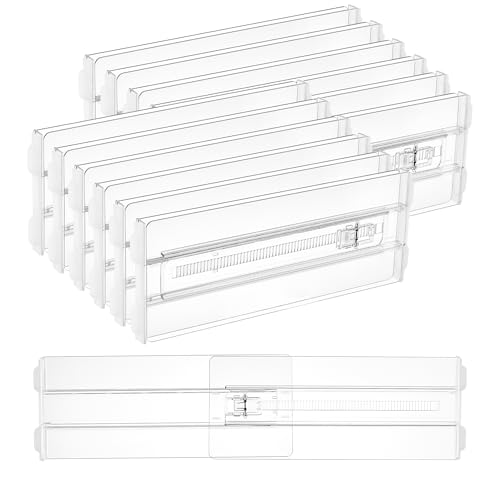
Vtopmart
Vtopmart 12 Pack Drawer Dividers for Clothes,…
- 【Transparent & Sturdy Material】Made of durable shatter-resistant plastic; Moreover, the silicone strips on both sides as a buffer…
- 【Expandable & Adjustable】 For optimal fit, the interior height of the drawer should be greater than 4" (10.16cm), and the length o…
- 【Easy Installation & Removal】Adjust the divider to a suitable length before install, through strong spring tension and silicone fr…
As an Amazon Associate I earn from qualifying purchases.
You’ll also learn how to handle hybrid pieces like cardigans, why hanging bulky sweaters makes your bedroom feel smaller, and a simple 50/50 capsule split if you have equal dresser and closet space. To keep drawers functional once you’ve decided what goes in them, a set of Vtopmart adjustable drawer dividers helps stop stacks from collapsing into one messy pile — worth a look if your folded clothes tend to migrate.
The Core Rule: Fold What You See, Hang What You Wear
Here’s the rule that settles most arguments: Hang structured items and delicate fabrics that wrinkle or lose shape on a hanger. Fold heavy knits, stretchy materials, and anything you wear close to the body.
That sounds simple, but let’s break down why it works. Hanging is great for garments that have a defined structure — a blazer has shoulder pads, a dress shirt has a collar, trousers have a crease. Gravity pulls those items down, which actually helps them keep their shape. Folding is better for items where gravity is the enemy. A heavy wool sweater hung on a hanger will develop bumps at the shoulders and stretch out along the bottom hem over time.
There’s a second part to this rule that most people ignore: visual weight. A closet rod crammed with bulky sweaters takes up a lot of visual space. Every time you walk into the room, your eye registers that mass of fabric. Fold those same sweaters flat in a dresser, and the room instantly feels calmer and more open. The closet looks less crowded, and you’re not fighting a wall of wool every morning.
So the first filter is physical: will hanging damage it? The second filter is visual: does hanging it make the room feel smaller? If either answer is yes, it folds.
What Must Hang in the Closet (And Why)
Delicate Fabrics and Structured Garments
Some fabrics wrinkle so badly that folding is basically self-sabotage. Silk, linen, and rayon fall into this group. A silk blouse folded in a drawer for a week will come out looking like crumpled tissue paper. You’ll have to iron it anyway, so you might as well hang it and skip the extra step.
Structured garments need to hang for a different reason. Blazers, suit jackets, and tailored coats rely on their internal construction — the canvas, the padding, the interfacing — to hold their shape. Folding a blazer breaks the lapel crease and flattens the shoulder padding. After a few folds, it starts looking like a costume rather than a tailored piece. The same goes for dress shirts. The collar and cuffs need to stay crisp, and hanging them on a proper wide hanger keeps the shoulders from puckering.
Trousers and dress pants should hang too, but fold them over the hanger bar rather than clipping them. Clips leave permanent pinch marks on the fabric that are nearly impossible to press out. Fold them lengthwise over the horizontal bar of a pants hanger, and they’ll keep their crease without damage.
The ‘Visual Noise’ Problem with Hanging Casual Wear
Here’s where most people go wrong. They hang t-shirts, hoodies, and casual button-downs because it feels organized. But hanging casual wear creates visual noise. A row of twenty t-shirts on hangers looks busy and cluttered, even if they’re perfectly spaced. The same twenty t-shirts folded in a drawer take up less visual space and look far cleaner.
There’s also a practical issue. Casual t-shirts and polos stretch at the neckline when hung. The weight of the shirt pulls down on the collar, and over time, that stretching becomes permanent. You’ll notice it after a few months — the neckline starts to sag and ripple. That’s the fabric giving up because gravity won the fight.
Hang the items that need structure and wrinkle protection. Keep the casual stuff folded. Your closet will look less chaotic, and your t-shirts will last longer.
What Must Fold in the Dresser (And Why)
Heavy Knits and Denim (The Stretch Factor)
Denim is the clearest case. A pair of jeans hanging by the waistband will stretch out the waist and create ugly bumps on the hips where the hanger presses. Fold jeans in half and stack them in a drawer — they’ll hold their shape and take up less space. The same logic applies to heavy knits like sweaters, cardigans, and chunky turtlenecks. Knit fabric is essentially a series of loops. When you hang it, those loops stretch under their own weight. The shoulders develop bumps, the hem gets wavy, and the whole garment starts to look misshapen.
Fold heavy knits flat. If you’re worried about wrinkles, roll them instead of folding — rolling produces fewer crease lines and lets you see each sweater at a glance when you open the drawer. You can also use drawer dividers to keep stacks upright, which is the best method for visibility and space efficiency.
Intimates, Socks, and Small Accessories
This one is obvious but worth stating: underwear, socks, bras, and ties have no business on hangers. They’ll fall off, get tangled, or just look ridiculous. These small items need compartments, not rods. Use drawer dividers to create separate cells for socks, underwear, and accessories. This is the single best drawer organization upgrade you can make — it costs a few dollars and turns a chaotic drawer into a system where everything has a home.
A quick note on drawer dividers: the Vtopmart 12-pack adjustable dividers are a solid choice because they expand to fit different drawer widths and use spring tension to stay put. They’re not perfect — you need to measure your drawer’s interior height first, and they work best in drawers at least 4 inches deep. But for socks, underwear, and folded tees, they make a real difference in how much you can see at a glance.
The Hybrid Zone: Items That Work in Both Spaces
Some clothes genuinely work in either location. Hoodies, cardigans, casual button-downs, and athletic wear are the main examples. For these, the deciding factor is frequency of use and available space, not fabric care.
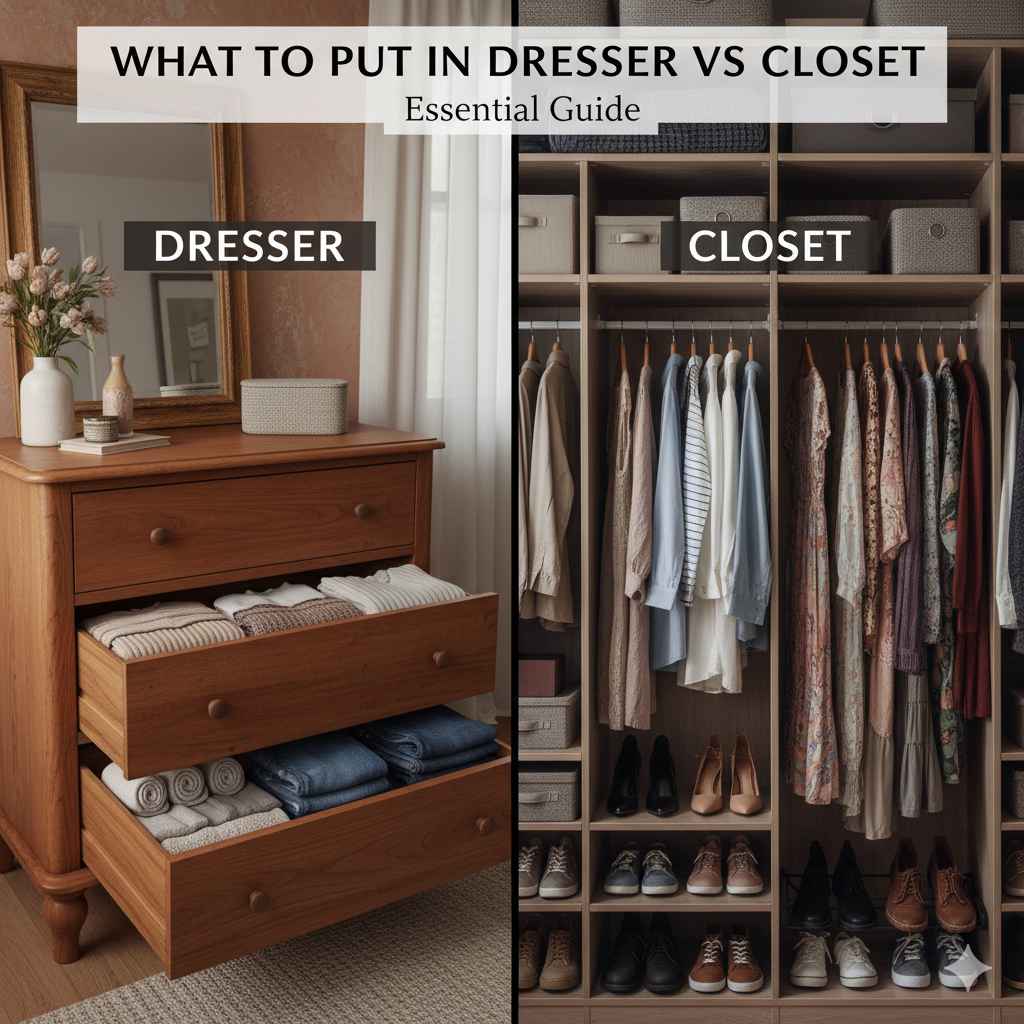
Here’s the accessibility metric that settles it: store items by how often you reach for them, not just by category. If you wear a particular hoodie three times a week, it belongs in the dresser — the top drawer, specifically — so you can grab it without opening the closet. If you wear it once a month, hang it in the closet where it’s out of the way.
Cardigans are a special case. A lightweight cardigan can hang without damage, but a chunky knit cardigan needs to fold. If you have both, split them accordingly. The same goes for button-down shirts. Casual flannel shirts can hang or fold — they’re sturdy enough for either. Dress shirts, as mentioned, should hang.
One more hybrid consideration: seasonal clothing. Off-season clothes should be stored wherever you have the most space, regardless of the fold-versus-hang rule. In the summer, winter sweaters can go in a high closet shelf or under-bed storage. In the winter, shorts and tank tops can be folded into a drawer or a storage bin. The rule applies to what you’re actively wearing, not your entire wardrobe.
The 5-Minute Decision Flowchart
If you’re still unsure about a specific item, run it through this quick if-then logic. You’ll have an answer in under ten seconds.
| If the item is… | Then… | Because… |
|---|---|---|
| Silk, linen, rayon, or a delicate blouse | Hang it | These fabrics wrinkle badly when folded; gravity keeps them smooth. |
| A blazer, suit jacket, or tailored coat | Hang it | Folding breaks the lapel crease and flattens shoulder padding. |
| Dress shirt or trousers | Hang it | Keeps collars crisp and trouser creases sharp. |
| Heavy knit sweater, cardigan, or hoodie | Fold it | Hanging stretches the shoulders and hem under the fabric’s own weight. |
| Denim of any kind | Fold it | Hanging stretches the waistband and creates hip bumps. |
| T-shirt, polo, or casual top | Fold it | Hanging stretches the neckline; folding keeps the collar intact. |
| Underwear, socks, bras, ties | Fold or compartmentalize | They don’t hang well and need small dividers for visibility. |
| You wear it more than twice a week | Dresser (top drawer) | Accessibility matters more than category for everyday items. |
| It’s off-season or worn once a month | Closet shelf or storage bin | Out of sight, out of the way, and not cluttering daily-use space. |
This table covers about 95% of the clothes in a typical wardrobe. The remaining 5% — unusual items like sequined dresses or leather jackets — follow the same logic. If it’s delicate and structured, hang it. If it’s heavy and stretchy, fold it.
Downsizing and the One-In, One-Out Rule
Once you’ve sorted everything into its proper home, you might notice you have more clothes than storage. That’s the real problem. No amount of clever folding fixes an overstuffed wardrobe.
Apply the one-in, one-out rule: every time you buy a new piece of clothing, remove one old piece. This keeps your wardrobe volume stable and prevents the slow creep of accumulation that fills every drawer and rod. It sounds strict, but it’s the only way to maintain the system you just built.
If you’re downsizing from a larger closet to a smaller one, prioritize by frequency. Keep your daily-wear items in the dresser and hang only the pieces that need it. A capsule wardrobe split of roughly 50/50 works well for most people: half your items fold, half hang. This gives you a balanced use of space and ensures you’re not overloading either zone.
If you’re working with a dresser that’s missing a drawer, or you’re dealing with awkward furniture proportions, check out this guide on fixing a missing drawer before you give up on the piece entirely. And if you’re comparing storage furniture options, this breakdown of dresser vs wardrobe vs closet might change how you think about your layout.
Frequently Asked Questions (Wrinkles, Space, and Seasonal Swaps)
Will hanging clothes really prevent wrinkles better than folding?
For structured and delicate fabrics, yes. Gravity pulls the fabric taut, which prevents creases from forming. For casual items like t-shirts and hoodies, folding doesn’t cause wrinkles if you fold them neatly. The wrinkles come from cramming items into an overstuffed drawer, not from the act of folding itself.
How do I stop my folded sweaters from stretching out?
Fold them flat and don’t stack more than three or four high. The weight of the stack on top can compress the bottom sweater and stretch the fibers over time. Rolling sweaters instead of folding them also reduces the pressure on any single point.
What’s the best way to store off-season clothes when I have no extra closet space?
Use under-bed storage bins or vacuum-sealed bags. Store items that wrinkle easily in the closet, and put heavy knits and denim in the bins. Vacuum bags work well for bulky sweaters and comforters, but don’t use them for silk or delicate fabrics — the compression can damage the fibers.
Is it okay to hang jeans if I’m short on drawer space?
You can, but clip them at the waistband rather than hanging them by the belt loops. Hanging jeans by the waistband stretches the waist out over time. Clipping them preserves the waist shape, though you’ll still get slight stretch at the clip points. Folding is better, but clipping is an acceptable compromise.
How do I handle a shared closet where my partner and I have different storage habits?
Divide the closet by vertical zones. Assign one side of the rod to hanging items and the other side to your partner’s hanging items. Use separate dresser drawers for each person’s folded clothes. The key is agreeing on the fold-versus-hang rule together, so you’re not constantly re-sorting each other’s clothes.
What Actually Works When You Apply This
- Hang silk, linen, blazers, dress shirts, and trousers. They need gravity to stay smooth.
- Fold heavy knits, denim, t-shirts, and hoodies. Hanging stretches them out permanently.
- Use drawer dividers for socks, underwear, and accessories — compartmentalizing beats stacking every time.
- Store by frequency of use, not just category. Daily-wear items go in the top drawer, not the back of the closet.
- Treat hybrid items like cardigans and flannel shirts as case-by-case decisions based on weight and fabric.
- Apply the one-in, one-out rule to keep your wardrobe volume from creeping back up.
- Remember the visual weight rule: folding bulky items makes your bedroom feel bigger and calmer.
Products related to this article
Sponsored / affiliate links. As an Amazon Associate I earn from qualifying purchases. I may earn additional commission from eligible campaigns.