Can You Use Indoor Furniture on a Balcony?
It can be used on a covered balcony with low wind, no direct rain, and enough load capacity. Otherwise, choose outdoor-rated furniture. Wet cushions, swollen wood, rust, and tipping hazards can turn a cheap setup into damaged or unsafe furniture. This guide explains how to decide whether an indoor piece can work on a balcony, and when it should stay inside.
Can you use indoor furniture on a balcony?
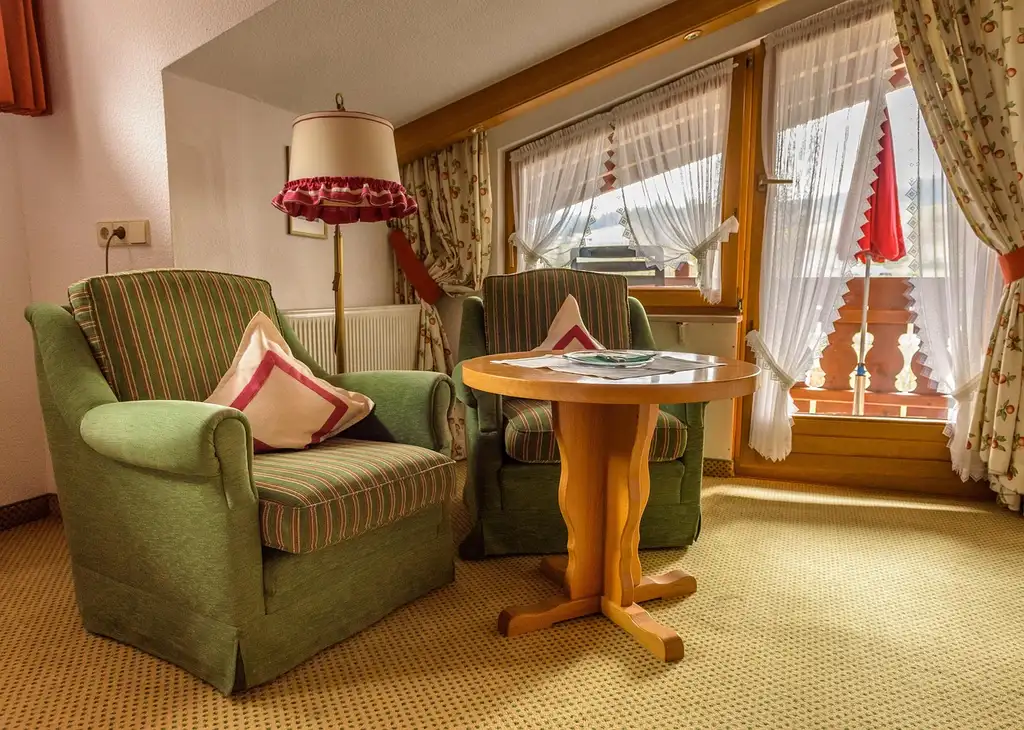
Technically, yes. In practice, only a few indoor pieces belong outside for short periods, and only on a sheltered balcony with low exposure. Many indoor furniture pieces are built for dry, climate-controlled rooms rather than UV, moisture, wind, or the fastener movement that can happen outdoors.
A covered balcony changes the risk, but it does not remove it. If rain can blow in, humidity stays high, or the balcony gets hot afternoon sun, indoor furniture can fail faster than expected. The question is less “does it fit?” and more “can it survive the exposure level here?”
When the answer is no, outdoor-rated furniture with weather- and rust-resistant materials and hardware is the safest choice. That matters even more on upper floors, where wind can lift light pieces and make a small balcony feel unstable.
Technically possible versus practically safe
Some indoor pieces can work for brief, low-risk use if they are dry, sturdy, and easy to bring back inside. That usually means a covered loggia or a balcony with deep overhang, little wind, and no direct splash from rain. Short-term use is not the same as leaving a piece out all season.
Practical safety depends on exposure, drain paths, material choice, and how the item is joined together. Particleboard, MDF, upholstered frames, and untreated wood may look fine at first, then swell, sag, or loosen when moisture reaches seams and edges.
When a covered balcony changes the answer
A covered balcony can reduce direct rain and sun damage, so the risk drops for some indoor pieces. That said, “covered” does not mean “outdoor safe.” Humidity can still soak cushions, metal fittings can corrode, and dust plus moisture can stain fabrics and wood finishes.
If the balcony stays dry, is protected from gusts, and the furniture can be moved inside quickly, a temporary test may be reasonable. For anything meant to stay out full-time, outdoor-rated construction is still the better choice.
When indoor furniture should stay indoors
Do not place indoor furniture outside if the balcony is exposed to rain, frequent wind, or strong sun; if the piece is made from MDF, particleboard, or soft upholstered materials; or if the frame has light-duty joints and fasteners. Those are the cases where failure tends to happen first.
A common first-timer mistake is putting a small upholstered accent chair on an open balcony because it seems light enough. A few damp evenings later, the seat feels musty, the fabric shows fading, and the legs no longer sit square because moisture has reached the joints.
Check your balcony before you buy anything
Measure the usable floor area first, then check load capacity and door clearance. Most balconies are compact, often 4’x6′ to 8’x10′, so the full slab size is not the usable area once you account for the railing, door swing, and a walking path.
Balcony furniture choices should account for doors, railings, and everyday movement. That means the layout comes before the furniture, not after.
Measure usable floor area, not the full slab
Start with the space you can actually stand in and move through. Leave the railing edge clear enough that chairs do not block access, and keep a path open from the door to the seating area. On a small balcony, the usable zone is usually smaller than the slab because corners and the door landing are not fully available.
Plan around one main chair pull-out zone. A dining-style chair needs extra room behind it; a lounge chair needs a different footprint than a stool or bench. If the back of a chair hits the railing or the door, the piece is too deep for the space.
Check balcony load limit and use the 75% rule
Some balconies have weight limits of 50–100 lbs per sq ft. Confirm the rated limit for your building, then keep the combined load of furniture, people, and planters to about 75% or less of that rating. That buffer helps account for uneven placement and concentrated loads near one spot.
Spread weight rather than stacking it in one area. A heavy planter, a solid bench, and two adults all in the same corner can stress a small balcony more than the same items distributed across the floor.
- Find the posted rating. Check building documents, management notices, or the original construction paperwork for the balcony’s rated load. If you cannot verify it, do not guess.
- Estimate total load. Add the furniture weight, the number of people likely on the balcony at one time, and the weight of planters, water, and stored items. Keep that total under 75% of the rated limit.
- Distribute the load. Place heavier items near structural support areas when possible and avoid clustering all weight at the door threshold or one outside corner.
Confirm door swing and chair pull-out clearance
A small balcony should keep 24 inches of open space in front of the door. That gives you room to step through, move a chair, and avoid pinching the swing path. A balcony usually has a railing and a door that opens inward or outward, so both the swing and the landing space matter.
If the door opens outward, furniture must stay far enough back that the panel can open fully without hitting a table or chair. If it opens inward, you still need space for the door to clear, plus room to move around the furniture once the door is open.
Which indoor pieces can work temporarily?
Light, simple pieces are the best candidates for short-term use on a covered balcony. Think small stools, compact side tables, and certain folding pieces that can be brought back inside quickly. Even then, the piece should be dry, stable, and easy to inspect after every exposure.
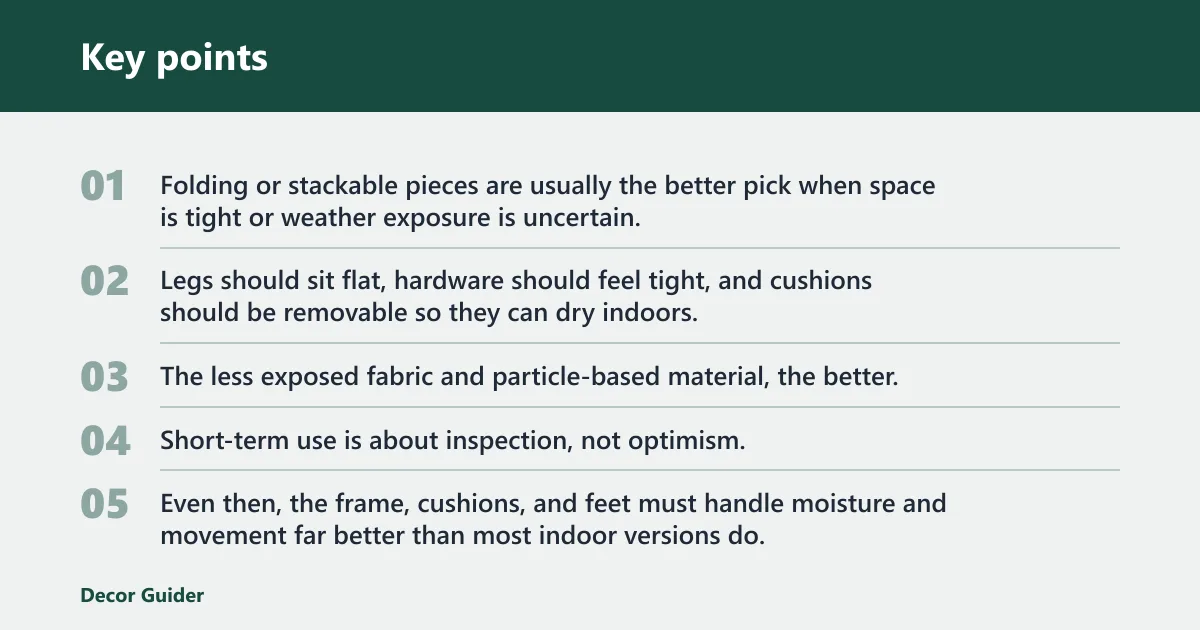
Sofas and loveseats are usually a poor fit because they combine weight, bulk, upholstered surfaces, and larger failure points. Folding or stackable pieces are usually the better pick when space is tight or weather exposure is uncertain.
What makes a piece safer to test outside briefly
Safer pieces usually have solid hardwood or metal parts, simple joints, and finishes that can tolerate brief moisture exposure. Legs should sit flat, hardware should feel tight, and cushions should be removable so they can dry indoors. The less exposed fabric and particle-based material, the better.
Short-term use is about inspection, not optimism. If you see swollen edges, wobble, loose screws, or soft spots in the seat base, the piece is no longer a good balcony candidate.
Why sofas and loveseats are usually a poor fit
A sofa or loveseat on a balcony can work only on a large, sheltered, well-rated space with strong protection from rain and wind. Even then, the frame, cushions, and feet must handle moisture and movement far better than most indoor versions do.
Most apartment balconies are too narrow for a sofa without blocking the walking path or the door. Large upholstered pieces also trap moisture and mildew more easily, and their size makes them harder to move if a storm or wind warning comes through.
When foldable or stackable pieces are the better pick
Foldable chairs, folding table tops, and wall-mounted drop-down tables are useful when the balcony must stay flexible. They can be stored vertically when not in use, which keeps the floor clear for cleaning, drying, or moving around.
Stackable chairs and nesting tables work well on compact balconies because they save floor space without adding permanent bulk. Convenience should not come at the expense of stability, though; a very light chair that skitters in wind is not a good trade.
What materials hold up outdoors?
Outdoor-safe materials are the clearest dividing line between furniture that can handle exposure and furniture that should stay inside. Teak, powder-coated metal, all-weather wicker, aluminium, and synthetic rattan are common balcony materials because they generally handle moisture and sun better than typical indoor finishes.
Indoor materials can fail in familiar ways outdoors, including swelling, warping, or breaking down when moisture reaches exposed edges. MDF and particleboard swell when moisture reaches their edges; untreated wood can warp; steel fittings can rust; and many cushions fade, mildew, or soften when they stay damp.
Outdoor-safe materials to look
Teak is a common outdoor wood choice because it tolerates weather better than many softwoods. Powder-coated metal frames are sturdy, and the coating helps limit rust when the finish stays intact. Aluminium is light and resistant to rust, which makes it useful where weight matters.
All-weather wicker and synthetic rattan are often used for balcony seating because they hold up better than natural woven fibers. Synthetic rattan is simple to wipe clean, which helps when dust, pollen, or splash marks build up on a small outdoor space.
Indoor materials that fail fast outdoors
MDF and particleboard are high-risk choices outside because they absorb moisture at cut edges and screw points. Once swollen, they rarely return to their original shape, and hardware can loosen as the board softens.
Upholstered indoor pieces also fail quickly when cushions stay damp. Mildew can develop inside the fill, and UV fading can show up on the fabric before the frame itself is visibly damaged.
Joinery, cushions, and hardware to inspect
Look for tight joinery, corrosion-resistant fasteners, and seams that do not trap water. Slotted joints, exposed staples, and untreated screw holes are warning signs on any piece meant for a balcony, even a covered one.
Remove a cushion cover if possible and check the backing, zipper, and stitching. If the fabric feels thin, the fill is exposed, or the cover cannot dry quickly, the piece is a weak candidate for outdoor use.
Balcony furniture safety checklist
This checklist helps you sort a piece into one of three practical buckets before you move it outside. Use it with a tape measure, a visual inspection, and the balcony load rating.
| Safe to test outdoors briefly | Use only on covered balconies | Do not use outdoors |
|---|---|---|
| Solid wood, metal, or aluminium frame with tight joints | Mixed-material piece with fabric or wood finish that must stay dry | MDF or particleboard core, especially at edges or screw holes |
| Simple joinery, no wobble, corrosion-resistant screws | Sturdy frame but exposed seams, glue lines, or light upholstery | Loose joints, rusting fasteners, split legs, or soft seat base |
| Removable cushion that can dry indoors right away | Cushion or fabric that resists splashes but should not stay wet | Non-removable cushion, mildew smell, or fabric that traps moisture |
| Light enough to move, but stable on flat feet | Stable only when fully sheltered from wind and rain | Tips easily, skids on tile, or blows across the balcony |
| Fits with 24 inches open in front of the door | Fits only if the door swing is carefully controlled | Blocks the door, railing access, or chair pull-out space |
| Combined load keeps below 75% of the rated limit | Load is close to the limit but still within a safe buffer | Exceeds the balcony rating or crowds one corner with weight |
What works best on small balconies?
Small balconies usually do best with pieces that fold, stack, or nest, plus storage that keeps accessories out of the way. The goal is to preserve walking room, door clearance, and wind stability while still giving you a place to sit.
For many apartment balconies, the better answer is not a larger piece. It is a smarter one.
Foldable chairs, wall-mounted tables, and other space savers
Folding chairs and folding table tops are useful when the balcony needs to serve more than one purpose. Wall-mounted drop-down tables are especially helpful because they free floor space when the table is folded away.
Foldable pieces also make cleaning easier. If the floor needs to dry after rain or washing, you can move the furniture quickly instead of working around fixed legs.
IKEA lists a foldable outdoor chair at 12.990 KD, a foldable outdoor table at 9.950 KD, a table and two folding chairs set at 37.930 KD, and a foldable stool sized 37×45 cm. Those examples show the sort of compact footprint that often works better than full-size indoor seating on a small balcony.
Stackable and nesting pieces
Stackable chairs and nesting tables are strong options for apartments because they save space without needing permanent storage inside the room. They are useful when you want occasional seating but do not want the balcony crowded every day.
Still, weight and wind matter. A stackable chair that is too light can slide, while a nesting table that is too bulky can block the door or the railing path. Choose compact pieces with enough mass or design stability to stay put.
Storage ottomans, benches, and boxes
Storage ottomans, outdoor storage boxes, and storage benches help keep cushions and accessories dry and contained. They are practical when the balcony is partly exposed and you need a fast place to put seat pads, throws, or small tools before a storm moves in.
Cushion storage matters as much as chair choice. A dry seat is more likely to stay usable, smell clean, and avoid mildew after humid weather.
Frequently asked questions
What furniture are suitable for a balcony?
Balcony-friendly pieces are usually compact, weather-resistant, and easy to move. Teak, powder-coated metal, aluminium, all-weather wicker, and synthetic rattan are common choices. Folding chairs, nesting tables, and wall-mounted tables work especially well when the space is narrow.
Is balcony seating better than floor?
Usually yes, if the balcony can handle the load and the seat does not block the door or railing. Seating gives better posture and keeps fabric and cushions off the floor, where water, dirt, and dust collect. Floor seating can work only when the setup stays dry and low.
What happens if indoor furniture gets wet outside?
Moisture can swell MDF or particleboard, stain fabric, loosen joints, and corrode fasteners. Cushions may hold mildew, and wood can warp or split after repeated wet-dry cycles. If an indoor piece gets wet, dry it quickly and inspect every seam, foot, and screw point.
How do I know if my balcony can hold furniture weight?
Check the building’s rated load, then keep the combined load of furniture, people, and planters under 75% of that rating. Some balconies have limits of 50–100 lbs per sq ft. Spread the weight out, and do not crowd all the mass into one corner.
How much clearance do I need for a balcony door?
A small balcony should keep 24 inches of open space in front of the door. Also account for inward or outward swing and for the space needed to pull a chair back. If the door brushes furniture or the path feels tight, the layout needs to change.
Products related to this article
Sponsored / affiliate links. As an Amazon Associate I earn from qualifying purchases. I may earn additional commission from eligible campaigns.