Wood Balcony Furniture vs Metal Balcony Furniture Guide
Choose metal for exposed, windy, or damp balconies, and wood for covered, sheltered spaces if you want warmer seating and can handle regular care. Pick the wrong material and you can end up with rust, swelling, warping, or furniture that is too heavy for a small balcony. This guide compares Wood Balcony Furniture vs Metal Balcony Furniture by comfort, maintenance, weight, lifespan, and the balcony conditions that favor each material.
| Decision factor | Wood Balcony Furniture | Metal Balcony Furniture | Winner |
|---|---|---|---|
| Weight and moving it on a balcony | Often heavier, especially teak | Aluminum is usually lighter; wrought iron is heavy | Metal |
| Heat in direct sun | Tends to feel cooler to the touch | Can absorb heat and become hot | Wood |
| Maintenance | Needs regular sealing or staining | Needs coating checks and rust prevention, but aluminum is lower-maintenance | Metal |
| Weather resistance on exposed balconies | Can rot, swell, or warp if moisture lingers | Better durability in harsh weather, though untreated iron can rust | Metal |
| Comfort for long sitting sessions | Usually more comfortable without cushions | Can be less comfortable and often needs cushions | Wood |
Wood balcony furniture vs metal balcony furniture: the real trade-off


Wood usually feels warmer and quieter, while metal is often lighter, tougher, and easier to maintain. On a balcony, that trade-off matters more than style, because wind, sun, moisture, and weight limits decide whether a set stays useful or turns into a upkeep problem.
How balcony exposure changes the choice
An uncovered balcony gets direct sun, rain, and faster wear. A covered balcony cuts moisture stress, so wood has a better chance if you are willing to seal or stain it regularly. In windy or coastal settings, metal usually holds up better, but only if its coating stays intact.
Why weight, comfort, and upkeep matter more than style
Wood furniture can feel solid and comfortable, but that same mass is awkward on narrow balconies and apartment slabs with posted weight limits. Metal furniture can be easier to move and rearrange, especially aluminum, yet it may need cushions and rust checks. A balcony set should fit the space and the climate before it fits the décor.
Which material fits your balcony setup?
For a small balcony, the better choice is usually the lighter material that you can move safely and store easily. Aluminum is a common patio furniture material because it is generally rust-resistant and easy to clean, which can make it practical for renters and tight layouts. Wrought iron is durable, but its weight can be a poor match for narrow stairs, small landings, and furniture that needs to be shifted often.
Small balconies and apartment weight limits
If your balcony is narrow, choose pieces with slim frames, folding parts, or stackable chairs before choosing a heavy look. Teak can be a high-quality outdoor wood, but it usually costs more than many metal alternatives and adds more mass. Wrought iron can feel permanent in the wrong way on a tiny balcony.
Windy balconies and furniture movement
Wind changes the calculation fast. A lighter chair may slide, tip, or shift during storms, but a very heavy set can be hard to reposition and may stress a small space. Aluminum with a stable frame often works well; wrought iron stays put, though it can be impractical if you need to move it inside before bad weather.
Covered, shaded, and damp balconies
Covered or shaded balconies reduce direct sun damage, which helps both materials. Damp corners and poor ventilation are harder on wood, because rot becomes a bigger risk when moisture lingers. On those balconies, metal with intact coating usually has fewer failure points than untreated wood.
Wood vs metal at a glance
The comparison is simplest when you split metal into aluminum and wrought iron, and wood into teak and cedar. Aluminum is the lower-maintenance metal option, while wrought iron is the heavier traditional option that can rust if not properly treated. Teak and cedar both work outdoors, but they do not ask for the same level of care.
| Material | Best use | Main strength | Main failure point | Care level |
|---|---|---|---|---|
| Teak | Covered or semi-exposed balconies | Weather handling when maintained | Finish wear, surface aging | Medium to high |
| Cedar | Sheltered outdoor spaces | Outdoor use with a lighter wood feel | Rot, mold, finish breakdown | High |
| Aluminum | Small, exposed, or renter-friendly balconies | Rust resistance and low upkeep | Coating scratches, loose joints | Low |
| Wrought iron | Stable, traditional-looking setups | Durability and weight | Rust if coatings fail | Medium |
Which is more comfortable in sun and heat?
Wood is usually more comfortable in hot weather because it does not absorb heat as much as metal. Metal can become hot in direct sunlight, so bare-skin contact on chairs, arms, and tabletops can be unpleasant on exposed balconies. If you sit outside for long stretches, that difference becomes very clear.
Heat retention on exposed balconies
On a south-facing or sun-baked balcony, metal often needs cushions, seat pads, or a shaded layout to stay usable. Wood tends to feel gentler on bare skin, which matters when you do not want to keep adjusting cushions every time the sun shifts. That does not make wood immune to weather; it just makes it easier to sit on.
When cushions become necessary
Metal furniture often needs cushions for comfort, especially for dining chairs and benches. Those cushions can trap moisture and develop mildew if the balcony is damp or if they stay out during rain. Wood can reduce that cushion need, but it still benefits from well-made pads in very hot or very hard-use settings.
How much maintenance does each material need?
Wood balcony furniture usually needs more maintenance than metal. Regular sealing or staining is important for weather resistance, and untreated wood is more exposed to rot, mold, and insect damage. Metal usually needs coating checks and rust prevention, with aluminum being the easier option because it is rust-resistant and easy to clean.
Wood: sealing, staining, and rot prevention
Teak handles outdoor use better than many softwoods, but it still benefits from care if you want to slow finish wear and surface aging. Cedar is also a good outdoor wood, yet it can require regular protection to stay weather-resistant. In damp or poorly ventilated balconies, wood failure often starts with rot or swelling at joints and edges.
Metal: coating care, rust checks, and touch-ups
Metal furniture lasts well when its protective finish stays intact. Rust is the main failure mode for untreated iron-based furniture and for coated pieces with chips or scratches. Wrought iron can be durable, but once coatings fail, rust bleed and peeling paint can spread from small spots to larger sections.
What usually fails first over 1 to 5 years
On a covered balcony, wood often fails first at the finish level: fading, peeling, or small cracks where moisture enters. On an uncovered balcony, wood can show warping, swelling, or rot faster, while metal can show chipped coating, rust at welds, or loose fasteners. The first problem usually appears at joints, edges, and contact points, not in the middle of a flat panel.
Balcony decision table and upkeep checklist
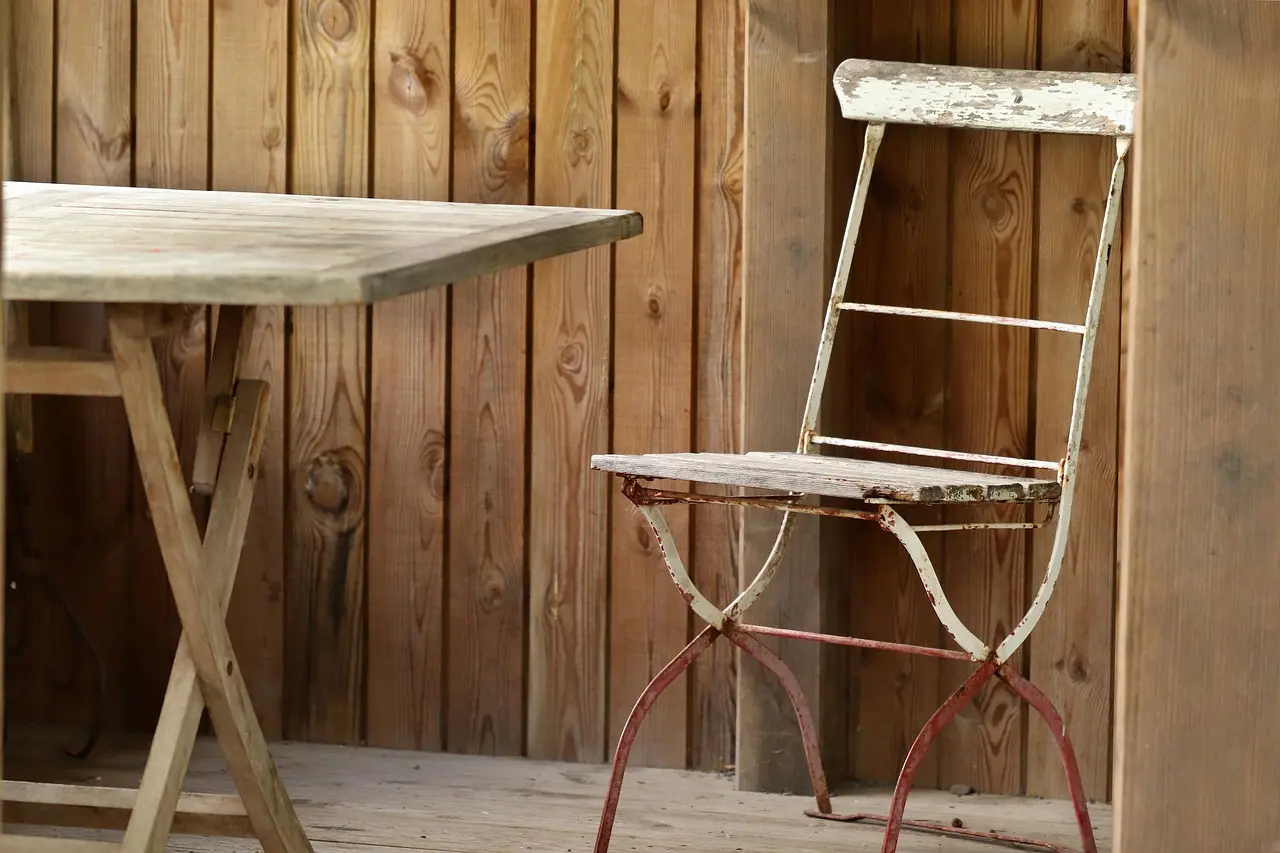
Use this as a balcony-specific buying map. It weighs exposure, weight, and care rather than treating all outdoor furniture the same. The point is not which material is “better” in the abstract, but which one fits your setup without creating a new problem.
| Scenario | Wood choice | Metal choice | What to buy | What fails first | What to avoid | Winner |
|---|---|---|---|---|---|---|
| Uncovered balcony | Teak with regular sealing | Aluminum with a durable finish | Foldable or stackable pieces with drain-friendly slats | Wood: finish wear, then swelling or rot; metal: coating chips | Softwood without protection; bare iron | Metal |
| Covered balcony | Cedar or teak | Aluminum or powder-coated steel | Light chairs, a small table, and easy-clean surfaces | Wood: finish dulling; metal: scratches and loose joints | Heavy sets that block movement | Wood |
| Windy balcony | Heavier teak pieces with secure placement | Wrought iron or weighted aluminum | Stable bases, low profiles, and furniture you can anchor | Wood: tipping or shifting; metal: finish wear at feet | Light bistro chairs that move too easily | Metal |
| Coastal or damp balcony | Teak with disciplined upkeep | Aluminum; coated metal only if cared for | Rust-resistant frames and cushions you can store inside | Wood: rot and mildew; metal: rust at joints and fasteners | Wrought iron with worn coating; untreated wood | Metal |
- Check balcony exposure first: sun, rain, wind, salt air, or shade.
- Confirm how much weight and how much movement the space can handle.
- Pick the frame material: aluminum for low upkeep, teak for warmer seating, wrought iron only if weight is not a problem.
- Plan maintenance before buying: sealing or staining for wood, coating checks for metal.
- Buy cushions only if you can bring them inside or dry them quickly after moisture.
Choose wood if… / Choose metal if…
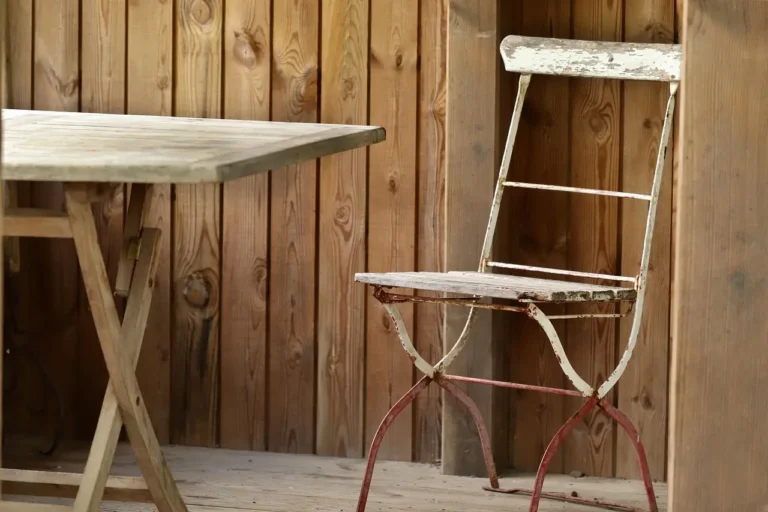
Choose wood if your balcony is covered or sheltered, you want warmer seating, and you are willing to seal or stain it on a schedule. Teak is the strongest outdoor wood choice here, while cedar suits many balconies that are not constantly wet. Wood is the better comfort pick for long sitting sessions in heat.
Choose metal if your balcony is exposed, windy, coastal, or damp, or if you want lower upkeep and easier cleaning. Aluminum is the safest all-around metal choice for many apartments because it is rust-resistant and easy to manage. Wrought iron fits only when weight and rust care are acceptable trade-offs.
Suppose your balcony is a narrow, second-floor landing with strong afternoon sun. Aluminum chairs and a small table are easier to move and less likely to overheat than a heavy wood set, but cushions should be stored indoors to avoid mildew. A common first-time mistake is buying a look-first set that cannot survive the actual exposure.
Frequently asked questions
Is wood balcony furniture better than metal for a small balcony?
Not automatically. For a small balcony, the better choice is usually the lighter and easier-to-move option, which is often aluminum. Wood can work if the space is covered and you want a warmer feel, but heavy teak or bulky frames can crowd a narrow layout fast.
Does metal balcony furniture rust outside?
Yes, it can. Untreated iron and poorly coated metal are the main concerns, especially on damp or coastal balconies. Aluminum is the safer metal choice because it is rust-resistant, while wrought iron needs intact coating and prompt touch-ups when chips appear.
What type of wood is best for balcony furniture?
Teak is usually the strongest outdoor pick, especially where weather exposure is a concern and you can accept a higher price. Cedar is also a good outdoor wood, but it needs regular protection. Both perform better when the balcony is covered or when you can keep up with sealing or staining.
Which is more comfortable in hot weather, wood or metal balcony furniture?
Wood is generally more comfortable in hot weather because it does not absorb heat as much as metal. Metal can become hot in direct sunlight, which makes seats, arms, and tabletops less pleasant on exposed balconies. For long sitting sessions, wood often feels better without extra cushions.
How much maintenance does wood balcony furniture need?
More than metal in most cases. Expect regular sealing or staining if you want weather resistance, plus routine checks for rot, mold, cracked finish, and loose joints. If the balcony is damp or poorly ventilated, that care becomes more important, not less.
What should I choose for a windy balcony, wood or metal furniture?
Metal usually fits windy balconies better, especially when you choose a stable frame and the right weight for the space. Aluminum works well if you need lower maintenance, while wrought iron helps with stability but can be hard to move. Very light furniture can tip or shift too easily in gusts.
Products related to this article
Sponsored / affiliate links. As an Amazon Associate I earn from qualifying purchases. I may earn additional commission from eligible campaigns.