Balcony vs Porch: How to Tell Them Apart in Listings
Use a 3-step rule: check the access point, the support structure, and the roofline. Mislabeling a balcony as a porch can lead to wrong maintenance, bad listing descriptions, and avoidable buyer or renter confusion. I use those three checks first when I read plans or walk a property. This guide shows how to tell them apart in houses, apartments, and real estate listings.
Balcony vs porch: the core difference in one sentence
A balcony is an outdoor platform raised above ground and reached through an upper-level door, while a porch is a covered shelter attached near a house or building entrance, usually at ground level or slightly raised. The difference is structural first, visual second.
| Decision factor | Balcony | Porch | Winner |
|---|---|---|---|
| Access point | Reached through an upper-level door | Reached from a front or back entry at the house | Balcony for upper-floor access; porch for entry-level access |
| Support structure | Projects from the wall and is above ground | Attached to the house and often supported by posts or columns | Tie |
| Roofline | Often open to the sky, though some are covered | Usually roofed or covered | Porch |
| Common setting | Apartment, condo, upper story | House front or back entry | Balcony in apartments; porch in houses |
| Typical safety cue | Railing or small wall is expected | May have railings, especially on raised porches | Balcony |
Access point
If the space is reached through an upper door, it is often a balcony. If it opens from the main entry path or a back door and acts like part of the arrival zone, it is often a porch. That one check cuts through a lot of listing noise.
Support structure
A balcony hangs off or projects from the building envelope and stays above ground. A porch sits with the house, often on posts, footings, or a slab, so it reads as part of the entrance structure rather than an attached ledge.
Roofline
Porches are commonly covered, and describes a porch as a covered shelter that projects from the front entrance. Balconies may be open or covered, but the roofline usually does not define them the way it does for a porch.
How to tell them apart by access, support, and roofline
Use the three checks together, not one at a time. A ground-level covered landing can look porch-like, while a second-story covered platform can be called a porch in a listing even when it behaves more like a balcony. The structure and entry path decide the label better than the marketing copy does.
Access point: door location and how you step onto the space
Start with the door. If you step out from an upper floor, fits the definition of a balcony as an elevated space with access through an upper-level door. If the space sits at the front entrance of the home, and point to porch.
Support structure: whether it hangs off the building, sits on posts, or rests on grade
Balconies are attached above ground and read as projecting platforms; EVODEK states balconies are always attached and above ground floor. Porches usually meet the ground-level circulation of the house, while decks may be attached or freestanding and often stand as separate platforms.
Roofline: covered, uncovered, or partly covered
A covered roofline usually pushes the answer toward porch, veranda, or screened porch. An open platform with railing points toward balcony, deck, or terrace depending on height and location. When the roofline is mixed, the access and support details matter more.
Is a balcony always upstairs?
Yes, in ordinary real estate and building use, a balcony is above ground and reached from an upper-level door. A ground-level covered landing is usually more like a porch or entry stoop than a balcony, even if the space is small and has a rail around it.
Why a balcony must be above ground
Core definitions put the balcony above the main grade of the site. Ecoxplank describes a balcony as a small outdoor platform on higher floors, and EVODEK says balconies are always attached and above ground floor. That combination makes height the first filter.
Why a ground-level entry with a roof is usually a porch, not a balcony
A ground-level covered space near the front door fits the porch pattern. and place porches at the front entrance of homes, so if the platform is part of the arrival path, it is not acting like an upper-level projecting platform.
When a raised landing still does not count as a balcony
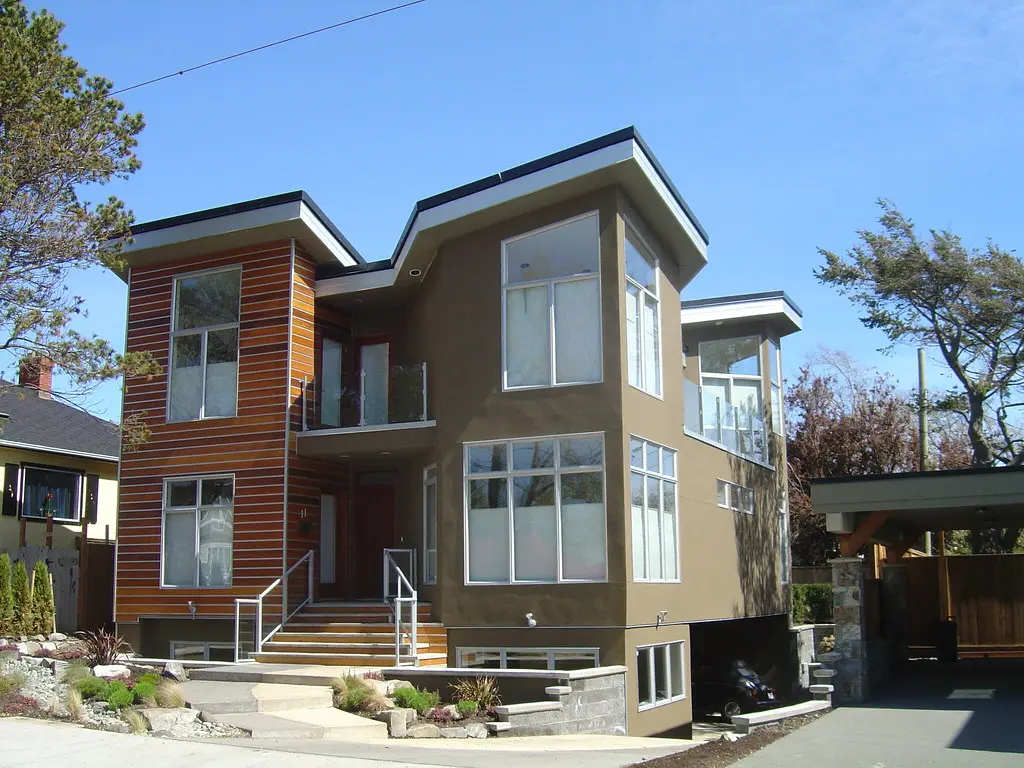
A short set of steps to a covered entry landing can create a raised porch, especially when it is attached to the main entrance and supported from below. The key question is not whether the floor is off the ground a little, but whether the space functions as an upper-level exterior room.
How balcony, porch, deck, patio, veranda, and terrace differ in practice
The names overlap in listings, but the surfaces and structure give each one away. Balcony is elevated and door-fed; porch is attached to the entrance; deck is a roofless platform; patio sits at grade; veranda wraps the building; terrace is a raised flat outdoor area, often on a roof or beside a building.
Balcony vs deck
A balcony is a building-attached platform at an upper level, while says decks are flat, roofless platforms made out of wood, composite materials, cedar, or vinyl. Raised decks may need railings, but they are usually read as floor systems rather than projecting ledges.
Porch vs patio
A porch is attached near the entrance and commonly covered, while places a patio at ground level next to a building. Patios are usually concrete, brick, pavers, or stone, and they often feel more like an outdoor floor than an entry structure.
Veranda vs terrace
says a veranda wraps the front and/or sides of the building, which makes it more corridor-like than a balcony. places terraces most commonly on rooftops, and they are often larger social spaces that may be uncovered.
Where apartment listings tend to blur the labels
Apartment listings often call a small upper landing a porch when it is really a balcony, or they may use terrace for any raised outdoor area. For renters, the safest read is structural: upper door plus railing usually means balcony, while an entry-adjacent covered space usually means porch.
What is the difference between a balcony and a porch?

The difference is that a balcony is an elevated platform with upper-level access, while a porch is a covered space attached near an entrance. In real homes, the balcony is part of the upper story; the porch is part of the arrival sequence at the front or back door.
Quick reading for listings and photos
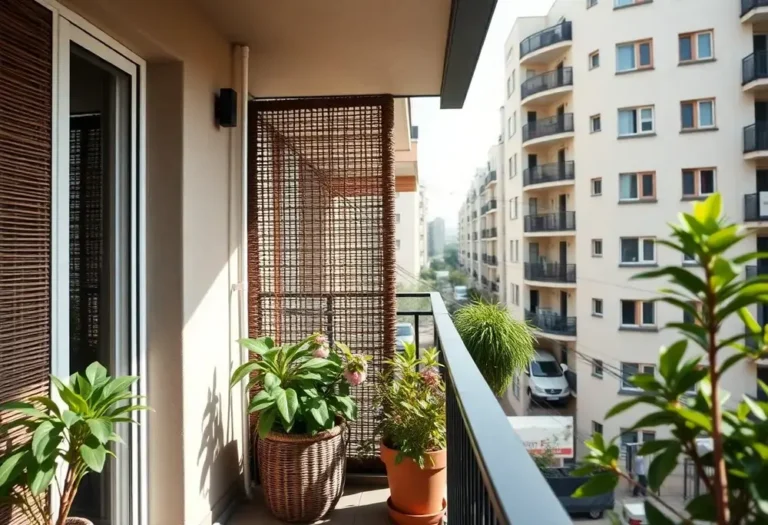
If the photo shows a door opening onto a small raised platform with a rail and open air below, think balcony. If it shows a roof over the space, house siding behind it, and a walk-up to the front door, think porch.
Which is bigger, a balcony or a porch?
Neither one is always bigger. A porch can be much larger than a balcony, especially on older houses or wraparound entries, and some balconies are small enough for one chair. Size alone does not define the type; access and support do.
What size usually suggests in practice
Balconies are often compact because they project from an upper story and need proper support. Porches can range from narrow entry shelters to deep sitting spaces, so a large footprint does not rule out a porch.
Can a balcony be considered a porch?
Sometimes people call a balcony a porch in casual speech, but structurally they are different. A balcony can be porch-like in use if it is covered and furnished for sitting, yet it remains a balcony when it is elevated and accessed from an upper door.
When the label in a listing should be treated as uncertain
If the space is a covered second-story landing, a wraparound entry on an upper level, or a screened outdoor platform attached to an apartment, the listing word alone is not enough. Check the support, the roofline, and where you step out before accepting the label.
Which outdoor space is best for an apartment?
A balcony is usually the most likely fit for an apartment because ties balconies to upper-level doors and places them on higher floors. If the listing says terrace, porch, or patio, confirm whether the space is shared, rooftop, ground-level, or attached to the unit before planning furniture.
How to read terrace, porch, and patio in apartment listings
Terrace usually signals a larger flat outdoor area and may be rooftop or adjacent to the building. Porch in an apartment listing can be loose language for a small covered landing, while patio points to ground level and often to a unit with direct access to the yard or courtyard.
What renters should confirm before placing furniture
Check whether the floor can handle heavy planters, whether railings are present, and whether the space is private or shared. That matters for weight, weather exposure, and whether a chair or table set will actually fit without blocking access.
Use this photo checklist to classify the space

Run through the photo one check at a time. A clear yes to the balcony checks points upward and outward; a clear yes to porch checks points toward the entry; and the patio, deck, veranda, and terrace checks separate the rest. When answers split, treat the label as ambiguous until the site is verified.
- Is the space reached through an upper-level door?
- Does the floor project from the building rather than sit on grade?
- Is there a railing or small wall at the edge?
- Is the area small and clearly exterior to the room behind it?
- Is the space at or near the front or back entry?
- Is there a roof or covered ceiling above it?
- Does the structure look attached to the house with posts, columns, or a slab?
- Is the surface wood, composite, cedar, or vinyl, with open sky above it?
- Is the surface concrete, brick, pavers, or stone at ground level?
- Does the space wrap the front and/or sides of the building?
- Is it a raised flat area, often on a roof or beside a building, with a larger social feel?
- Is the listing language conflicting with the photo, such as “porch” on an upper-floor space or “terrace” on a tiny landing?
How to classify the space from the checklist
If checks 1 through 4 are mostly yes, classify it as a balcony. If checks 5 through 7 are mostly yes, classify it as a porch. If checks 8 through 9 are yes, think deck or patio; if checks 10 through 11 are yes, think veranda or terrace. If check 12 is yes, treat the listing as uncertain and verify on site.
Ambiguous cases to flag
Screened porches are still porches when they sit at an entry and are covered. Wraparound entries are often verandas when they run along the front or sides, and a covered second-story landing may still be a balcony if it opens from an upper-level door and projects above grade.
Choose Balcony if… / Choose Porch if…
Choose a balcony when the space is above ground, reached from an upper door, and edged with a railing or small wall. Choose a porch when the space is attached to the entrance, usually covered, and works as part of the house’s front or back circulation. If the listing is vague, use the photo checklist before buying or decorating.
Choose balcony if…
Choose balcony if the unit is on an upper floor. Choose balcony if the door opens directly to a small elevated platform. Choose balcony if the edge condition requires a railing and the space is clearly outside the building wall line.
Choose porch if…
Choose porch if the outdoor space sits at the front or back entry. Choose porch if a roof covers it and the structure reads as part of the house. Choose porch if the floor is at grade or only slightly raised and the area behaves like an arrival zone.
Frequently asked questions
Is a porch the same as a balcony?
No. A porch is tied to the front or back entry and is usually covered, while a balcony is above ground and projects from an upper floor. A listing may use the terms loosely, but the structure behind the photo usually settles the question.
How do you tell balcony vs porch vs deck?
Use three checks: where you enter, how the space is supported, and whether it has a roof. Balcony means upper-floor access and elevation; porch means entry-adjacent and usually covered; deck means a roofless platform, often wood or composite, attached to the house or standing alone.
What makes a porch different from a patio?
A porch is attached to the house and usually covered, often at the front entrance. A patio is ground-level and paved, commonly made of concrete, brick, pavers, or stone. One belongs to the entry architecture; the other is an outdoor surface beside the building.
What is the difference between balcony, veranda, and terrace?
A balcony is a small elevated platform on an upper floor. A veranda is a roofed outdoor corridor that can wrap the front or sides of a building, while a terrace is a raised flat outdoor area, often rooftop or attached to the building and often larger than a balcony.
Products related to this article
Sponsored / affiliate links. As an Amazon Associate I earn from qualifying purchases. I may earn additional commission from eligible campaigns.