What Decor Works Best for a Small Balcony?
For a small balcony, a common rule of thumb is to choose about 2 to 3 low-profile pieces, favor foldable or wall-mounted items, and keep about 24 to 36 inches of clear walking space. Poor choices make the balcony feel tight, harder to clean, and more likely to fail in wind or break lease rules. This guide breaks down balcony decor by footprint, function, renter risk, sun, and wind so you can pick pieces that fit.
Small balcony decor decision matrix


The best setup starts with four filters: size band, main use, sun and wind exposure, and renter status. A balcony under about 40 square feet often benefits from stricter editing than a slightly larger one, because every item can affect movement, drainage, and sightlines. Use this matrix before you shop.
| Balcony setup | Best seating | Best storage | Best lighting | Best plant strategy | Avoid |
|---|---|---|---|---|---|
| Under 40 square feet, low wind, renter | Foldable chair or tiny bistro set | Small storage bench or stackable bin | Solar string lights on railing | Railing planters with trailers | Deep lounge chairs, heavy pots, fixed mounting |
| Under 40 square feet, strong sun, owner | Foldable metal set with weather-resistant finish | Bench with hinged lid | Plug-in warm-white string lights | Wall planters with drought-tolerant plants | Untreated wood, dark rugs that fade fast |
| Slightly larger, low wind, renter | 24-inch round table with two folding chairs | Storage bench plus slim shelf | Warm-white lights overhead or on railing | Plant stand with mixed heights | Oversized sectional pieces, bulky armchairs |
| Slightly larger, breezy, renter | Lightweight folding seating | Weather-resistant bench with secure lid | Low-sag lighting clipped to fixed points | Low-profile planters and wind-tough plants | Tall freestanding screens, hanging chair without rated stand |
| Dining for two, medium shade, owner | Bistro set | Bench or shelf under table zone | Warm-white overhead string lights | Vertical planters near the edge | Large dining table, wide seats that block circulation |
Use the table as a filter, then trim again by use case. A coffee spot wants a tiny table and one or two seats. A reading nook needs a supportive chair and a side surface. Plant display setups can give up more floor space, while evening lounging needs safer lighting and softer surfaces.
Say your balcony is 32 square feet, gets afternoon sun, and must stay renter-safe. A folding chair, a narrow plant stand, and a flat-weave rug usually fit better than a fixed loveseat. Change one thing at a time, or the balcony loses both walking room and visual calm.
What decor works best for a small balcony?
For the smallest balconies, pick pieces that do one job well. Foldable furniture, a tiny bistro table, vertical planters, and a weather-safe rug usually work better than several decorative extras. If the balcony is slightly larger, you can add a storage bench or a second focal point without crowding the center line.
Best picks for tiny footprints
When floor space is under 40 square feet, choose foldable balcony furniture first because it clears the balcony when not in use. A tiny bistro table and chairs can create a coffee spot without taking over the whole floor. A 24-inch round table is a practical size for two, and some compact sets use folding chairs to save clearance.
Lightweight materials matter here. Powder-coated metal and resin usually handle weather better than untreated wood, while teak can age well if you are ready for maintenance. Untreated wood can swell, fade, or stain faster in exposed conditions. If the balcony is windy, lighter pieces still need enough stability to stay put.
Best picks for slightly larger balconies
A slightly larger balcony can support a clearer layout: one seating area, one plant zone, and one storage piece. A storage bench works well because it gives you seating and under-seat storage in one footprint. A plant stand can hold several pots without spreading them across the floor.
If you want a lounge feel, keep the seat depth modest. One benchmark for narrow seating is no deeper than 14 inches. That limit helps preserve passage space while still giving you a place to sit. A lounge-leaning setup can also use a seat height under two feet, which keeps the profile lower and less bulky.
When to choose one focal piece instead of several small items
Choose one focal piece when the balcony is narrow, the view is limited, or the layout has an awkward door swing. A hanging chair on a secure stand can become that focal point if the floor plan allows it. On many rental balconies, though, a compact bistro set or a storage bench is safer and easier to remove.
A common first-timer mistake is buying three small decor items instead of one functional piece. Three items still consume floor space, but they do less work. One good table or bench usually reads cleaner than a scatter of stools, lanterns, and side tables.
Which furniture fits a small balcony?
Furniture should match the balcony’s main use before it matches a style. For a coffee spot, a bistro set is hard to beat. For reading, a narrow chair and a small side surface may be better. For storage needs, a bench can do double duty without adding another object.
Foldable balcony furniture vs fixed pieces
Foldable furniture works best when you need the floor back at the end of the day. It helps clear the balcony when not in use, and it can be easier to carry through tight doorways or stairwells. Fixed pieces make sense only when the balcony is large enough to absorb their footprint year-round.
Look for folding mechanisms that lock cleanly and materials that resist moisture. Metal frames with weather-resistant coatings are often better than untreated wood on exposed balconies. If you expect strong sun or frequent rain, verify that the hardware is made for outdoor use, not just outdoor-looking decor.
Bistro sets for two
A bistro set is the simplest compact dining option because it keeps the layout tight: two seats, a small round table, and a café-style arrangement. A small balcony table and two folding chairs are often described as a simple setup, and that basic format can help limit visual clutter.
For a balcony that doubles as a morning coffee spot, this is often the most efficient choice. A 24-inch round table for two, which leaves more movement room than a larger square top. The FEJAN outdoor table is sized 50×44 cm, which shows how compact these sets can be.
Storage benches and compact seating alternatives
Storage benches work best when you need seating and a place to hide small items such as cushions, plant tools, or a folded blanket. A hinged lid makes access easier, and weather-resistant material matters if the bench stays outside. Under-seat storage is useful only if the lid opens fully without hitting railings or walls.
If you do not need a bench, a pair of narrow folding chairs can be easier to move and dry. The FEJAN outdoor folding chair is priced at ₩ 15,000, which shows the kind of low-cost, light-duty option many small balconies can use when the goal is flexibility rather than a fixed lounge look.
When a hanging chair makes sense
A hanging chair makes sense only when the balcony can support the footprint of the stand or a secure mounting point. Weight-limit safety matters here, and renter-friendly alternatives are often freestanding rather than attached to the structure. If you cannot confirm the load rating, skip it.
Use a hanging chair as a focal point, not a default choice. It can eat more usable floor space than expected, especially on narrow balconies. A compact lounge chair or a folded storage bench usually fits a rental setup with less risk and less install work.
How do you decorate a small balcony without making it feel cramped?
Keep the center line open, reduce the number of object types, and move storage or greenery upward when possible. The balcony feels larger when the floor stays readable and one side can carry most of the visual weight. A flat-weave rug and one focal piece often do more than several small decorations.
Use vertical planters and plant stands instead of floor-heavy pieces
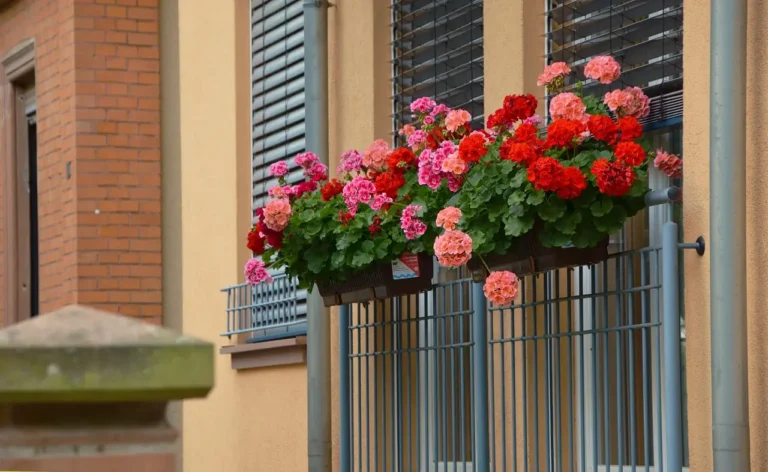
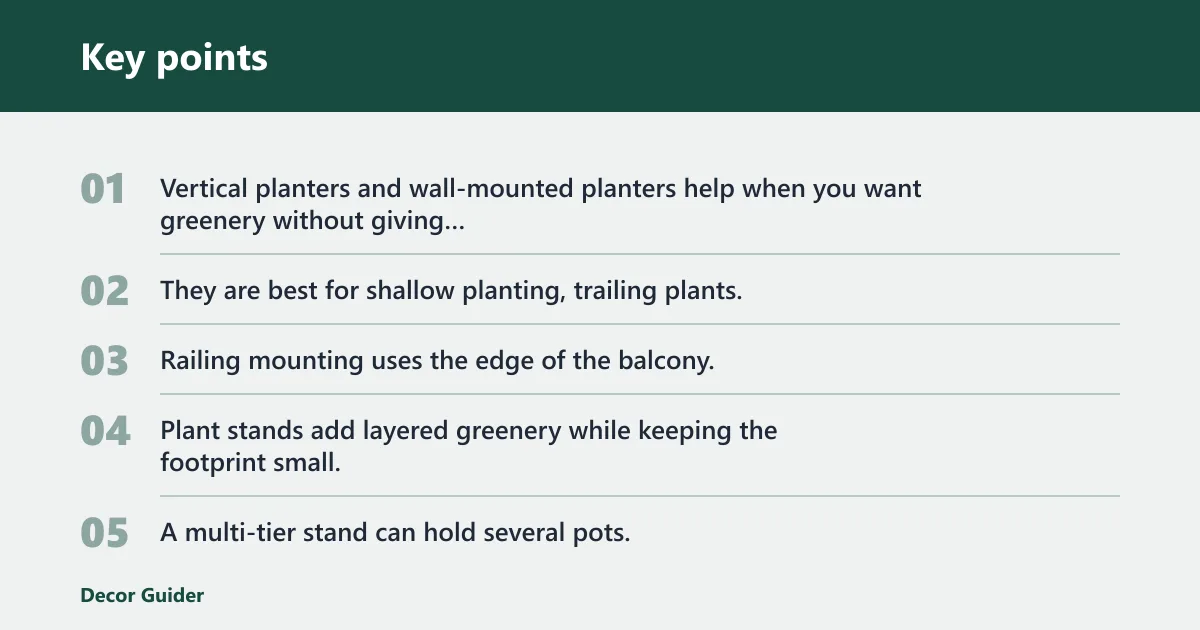
Vertical planters and wall-mounted planters help when you want greenery without giving up floor space. They are best for shallow planting, trailing plants, or upright plants that do not need deep containers. Railing mounting uses the edge of the balcony; wall mounting gives a cleaner line but may be limited by lease rules.
Plant stands add layered greenery while keeping the footprint small. A multi-tier stand can hold several pots, and indoor-outdoor designs let you move pieces as weather changes. If the balcony is windy, keep taller plants lower or closer to a protected wall so they do not tip as easily.
Choose an outdoor rug to define one zone
An outdoor rug helps a tiny balcony feel organized because it marks a single activity zone. A flat-weave polypropylene rug is recommended for easy cleaning, and washable materials are a good fit where dirt and rain are common. The rug should frame the furniture, not press against every edge.
For a narrow balcony, a rug can make the seating area feel intentional instead of scattered. IKEA’s LYDERSHOLM rug measures 80×150 cm, which is a useful reference for a small footprint. Avoid thick pile rugs outdoors; they trap moisture and can make a tight balcony harder to dry and clean.
Keep the center line open for movement
Leave a clear route from the door to the far side of the balcony. That open strip matters more than having a full set of decor items. If you need to pass around furniture to reach a plant or chair, the layout is already too dense.
Use low, narrow pieces along the perimeter and keep tall items near corners. This is where foldable furniture wins over fixed pieces. It is also where a storage bench or plant stand can replace separate tables, stools, and bins.
Pick one strong focal point
One focal point is enough on most small balconies. That could be a bistro set, a hanging chair, a textured rug, or a tall plant stand. The eye needs somewhere to land, but too many focal points make the balcony feel smaller.
Picture a 38-square-foot balcony with a folding chair on one side, a plant stand on the other, and a string of lights overhead. Add a second chair only if the walking space still stays clear. The balance matters more than the count of objects.
Lighting and privacy for small balconies
Lighting and privacy should both work with the balcony’s edge, not against it. Warm-white light feels softer than cooler tones, and privacy tools should filter sightlines without blocking too much daylight. On a tight balcony, placement and attachment method matter as much as the product itself.
String lights for warm evening light
String lights are a simple way to make a small balcony useful at night. Warm-white lighting is preferred over cooler tones because it reads calmer and less harsh in a small space. Solar options reduce cord clutter, while plug-in versions are steadier if outlets are available.
Place lights along the railing or overhead, but avoid dangling loops where people can catch sleeves or bump into bulbs. Keep cords away from door thresholds and water paths. Sagging lines look messy fast on small balconies, and they can make cleaning or moving chairs awkward.
Privacy screens that filter sightlines without blocking too much light
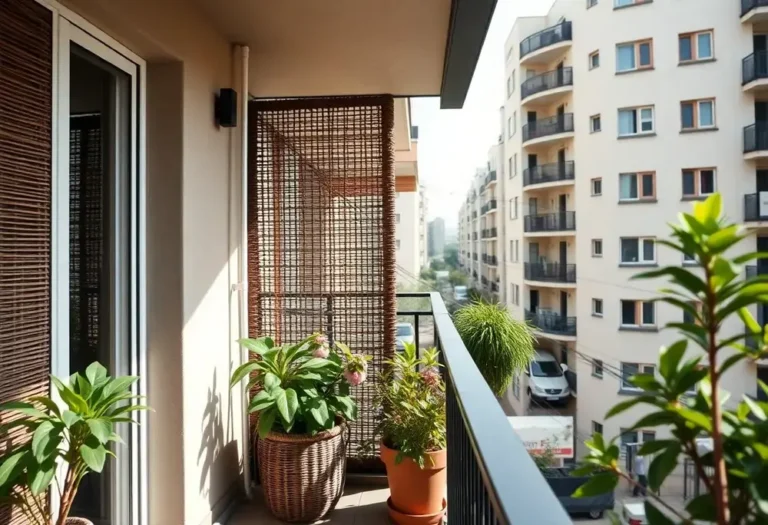
Privacy screens work best when they block direct views but still let light pass through. Freestanding screens are easier for renters because they do not require drilling, while fixed screens can look cleaner if the building allows them. Light-filtering materials are usually better than heavy opaque panels on a small balcony.
Choose partial sightline blocking if you still want breeze and daylight. Full-height opaque barriers can make the balcony feel boxed in. If you need more privacy, combine a screen with a plant stand or railing planters rather than using a solid wall of material.
Renter-friendly placement options
Renter-friendly setup usually means no permanent attachment, no drilling, and no stress on the structure. That does not mean every removable option is safe. A freestanding screen still needs a stable base, and a string-light setup still needs secure support points that do not interfere with drainage or emergency access.
For lease-safe planning, check what can hang from the railing, what can rest on the floor, and what needs a stand. Temporary hooks, clips, and tension-based setups are often easier to remove than glued or screwed pieces. Keep every item easy to take down without damage.
Balcony flooring and weather-safe materials
Flooring changes should improve comfort without creating a permanent installation problem. Temporary decking tiles and easy-clean rugs can change the feel of concrete fast, but they need to handle sun, water, and removal. Material choice matters more here than style.
Decking tiles for temporary rental-friendly updates
Balcony flooring or decking tiles are useful when you want a warmer surface without committing to permanent work. Look for a temporary, rental-friendly install that can be cut to fit, along with UV resistance and easy removal. That combination matters on balconies with odd edges, drains, or door thresholds.
Tiles should sit flat and allow water to drain underneath or around them. If they trap water, they can cause slip issues or leave stains beneath. For small balconies, partial coverage can be enough to soften the floor while keeping maintenance simple.
Flat-weave rugs and easy-clean materials
For rugs, flat-weave construction is the safer choice because it dries faster and holds less debris than thicker pile. Polypropylene and washable materials are practical because they handle weather better and clean more easily. That makes them a better fit for exposed balconies than indoor-style textiles.
Use rugs to define zones rather than cover every inch of floor. A rug that is too large can catch water or make the balcony feel cramped at the edges. If wind is an issue, choose a weight and texture that stays flatter and does not curl.
Material choices that handle sun, water, and rust risk
Powder-coated metal usually holds up better than untreated metal, especially where moisture and sun both hit the balcony. Teak can work well if you want a wood look and can accept maintenance. Resin is lightweight and often weather-tolerant, which helps on renter balconies with less structural margin.
Avoid untreated wood in highly exposed spots unless you are prepared for upkeep. Rust risk rises fast near railings, joints, and hardware. Drainage matters too; if water pools under furniture feet or planters, the finish will fail sooner.
What not to buy for exposed balconies
Do not buy bulky seating, tall freestanding screens, or heavy planters for a windy balcony unless the layout and structure clearly support them. Also avoid anything that blocks the exit path, blocks drainage, or depends on a weak mount. A small balcony needs pieces that can stay stable in bad weather.
Suppose a balcony gets strong afternoon wind and the tenant wants a hanging chair, a thick rug, and three large planters. That combination looks pleasant on paper, but it adds movement risk, cleaning trouble, and weight. A better plan is one folding chair, one plant stand, and a light privacy screen.
Best small balcony decor by setup
Match the decor to the job. A coffee spot needs a table and one or two chairs. A reading nook needs a seat and soft light. A plant display can use vertical storage. Evening lounging needs lighting, a soft floor surface, and one anchor piece.
Coffee spot
Use a tiny bistro set or a 24-inch round table with folding chairs. Add a flat-weave rug to define the zone and a small plant for softness. Keep storage minimal so the seating area feels open enough for a mug, a book, and easy movement.
Reading nook
Choose one chair with a comfortable seat height and a small side surface. A plant stand works better than scattered pots because it keeps the floor open. Warm-white string lights or a small lantern can make late reading easier without harsh glare.
Dining for two
A bistro set is the most practical choice here because it keeps the table small and the chairs easy to move. If the balcony is slightly larger, a storage bench can sit against one wall and hold cushions or serving pieces. Keep the layout tight and simple.
Plant display
Use wall-mounted planters, railing planters, or a multi-tier plant stand instead of floor pots. Trailing plants work well near edges, while upright plants suit stands and shelves. This setup is best when the balcony is more about greenery than sitting.
Evening lounging
Focus on warm-white lighting, a comfortable seat, and a weather-safe rug. A hanging chair can work as the focal point if the support is secure and the weight limit is clear. If that is not possible, a storage bench with cushions is the safer alternative.
Frequently asked questions
What furniture are suitable for a balcony?
Foldable chairs, a compact bistro set, a storage bench, and a narrow plant stand are the safest starting points for most small balconies. Choose weather-resistant materials and verify that each piece fits the available floor space with room to move. Fixed furniture works only when the balcony is large enough.
How can I make a small balcony feel cozy at night?
Use warm-white string lights, a soft outdoor rug, and one comfortable seat or bench. Railing or overhead lighting gives the best evening effect without taking up the floor. Avoid harsh cooler lights, which can make a tiny balcony feel more exposed and less restful.
What balcony decor works best for renters?
Renter-friendly balcony decor is easy to remove, needs no drilling, and does not depend on a permanent mount. Foldable furniture, freestanding privacy screens, removable decking tiles, and railing planters are common choices. Check weight, wind exposure, and building rules before adding anything that clamps or hangs.
Should I choose foldable furniture or a fixed set for a small balcony?
Choose foldable furniture if the balcony must stay flexible, especially under 40 square feet. It clears space when not in use and is easier to remove for cleaning or lease changes. Fixed pieces only make sense when the layout is wide enough to hold them without blocking movement.
How do I add privacy to a small balcony without blocking light?
Use light-filtering privacy screens, partial rail panels, or tall plants placed at the edge of the balcony. Freestanding screens are often easier for renters, while plants soften sightlines without turning the space dark. Avoid solid barriers that block too much daylight or make the balcony feel closed in.
Products related to this article
Sponsored / affiliate links. As an Amazon Associate I earn from qualifying purchases. I may earn additional commission from eligible campaigns.