Balcony Furniture Not Fitting: Problems and Solutions
If balcony furniture does not fit, fix the narrowest failure point first: measure width, depth, seat height, and door clearance, then choose pieces at least 2 to 4 inches smaller than the tightest dimension. Bad fits waste floor space, block access, feel awkward to use, and can become unsafe in wind. This guide helps you diagnose whether the problem is dimensions, clearance, ergonomics, or stability, then pick the smallest effective fix.
Why does my balcony furniture not fit?
Most fit failures come from four causes: the piece is too large for usable floor space, it blocks a door swing or walkway, the seat height does not match the table or your body, or the layout is too exposed for wind. Treat those as separate problems. The right fix depends on which one shows up first.
Size mismatch
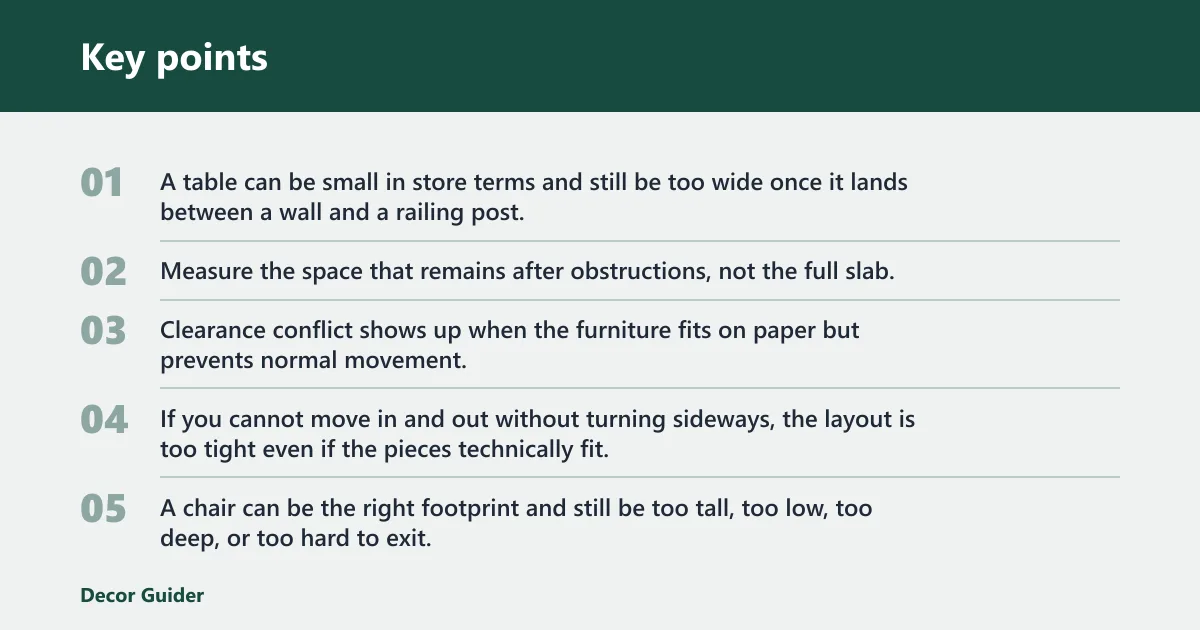
Size mismatch means the furniture occupies more usable width or depth than the balcony can spare after you account for railings, posts, and access paths. A table can be small in store terms and still be too wide once it lands between a wall and a railing post. Measure the space that remains after obstructions, not the full slab.
Clearance conflict
Clearance conflict shows up when the furniture fits on paper but prevents normal movement. A chair may block the patio door from opening fully, or the table may leave too little room to walk past the seated area. If you cannot move in and out without turning sideways, the layout is too tight even if the pieces technically fit.
Comfort and ergonomics
Comfort mismatch is different from size. A chair can be the right footprint and still be too tall, too low, too deep, or too hard to exit. Seat depth, armrest height, and back angle matter because they affect how easily you sit down and stand up. A comfy seat that traps you is still a bad fit.
Wind and stability
Wind changes the decision. On exposed balconies, lighter furniture can slide, tip, or shift every time the door opens. Heavy construction, grippy feet, and a shape that presents less surface area to gusts can matter as much as the dimensions. The right answer may be a heavier chair, a folding piece stored after use, or a layout with fewer loose items.
How do I measure a balcony before buying furniture?
Measure the usable floor, not just the overall slab. Record the clear width, clear depth, door swing, and every obstruction that steals space. Then compare those numbers with the furniture footprint and allow enough room for sitting, standing, and walking past the setup without turning it into a squeeze.
-
Measure the clear floor first. Record the usable width and depth between the walls, railing, and any fixed features. Subtract space lost to posts, HVAC units, planters, or downpipes before you size anything else.
-
Map the door swing. Open the balcony door fully and measure the arc it needs. Leave that zone free, because a table corner or chair arm that lands in the swing path turns a usable balcony into a traffic jam.
-
Reserve walking room. Allow enough circulation space around the setup for you to pass without twisting. A common minimum is about 24 inches for a one-person walkway, and more if you need to carry items through the door.
-
Measure the seating zone. Check the space needed when a chair is pulled out. The occupied depth is not just the chair footprint; it includes the space in front of the seat so knees and feet can move freely.
- Check the chair width when open.
- Check the table edge to chair back gap.
- Check the path behind the chair when occupied.
-
Compare against the tightest limit. If the narrowest point is 30 inches, do not buy a piece that is 30 inches wide. Leave about 2 to 4 inches of buffer so furniture is easier to position and less likely to scrape walls or railings.
Balcony furniture fit diagnosis table
Use this table to identify the failure point before you replace anything. Start with the symptom you notice first, then choose the smallest fix that solves that exact problem.
| Problem | Likely cause | Quick fix | Best replacement type |
|---|---|---|---|
| Chair blocks the door swing | Furniture footprint overlaps the door arc | Shift the chair out of the swing path or swap sides | Folding chair or slimmer upright chair |
| Walkway feels pinched | Insufficient circulation space around chairs and table | Remove one chair or reduce table size | Two-seat bistro set or nesting pieces |
| Seat feels too high | Seat height sits high relative to leg length or table height | Add a lower seat pad only if it does not worsen stability | Lower-profile chair with matched table height |
| Seat feels too low | Hip angle is too closed and standing up takes effort | Try firmer cushioning or a higher seat if the frame allows it | Upright chair with easier stand-up height |
| Table feels bulky | Top is wider than the usable center space | Switch to a smaller round top or fold-down option | Small round bistro table or wall-mounted drop-leaf |
| Chair back hits railing or canopy line | Back height exceeds the vertical clearance under cover | Use a lower back or a design that tucks fully under the line | Low-back folding chair or compact upright chair |
| Furniture moves in wind | Lightweight frame, slick feet, open layout, or exposed position | Store items after use, add grippy feet, or move pieces inward | Heavier weather-stable chair or table with broad base |
| Seat is comfortable but hard to exit | Seat is too deep, too low, or too reclined | Reduce cushion depth or change the layout to allow leverage points | More upright chair with a shallower seat |
What if the chair is too tall or too low?
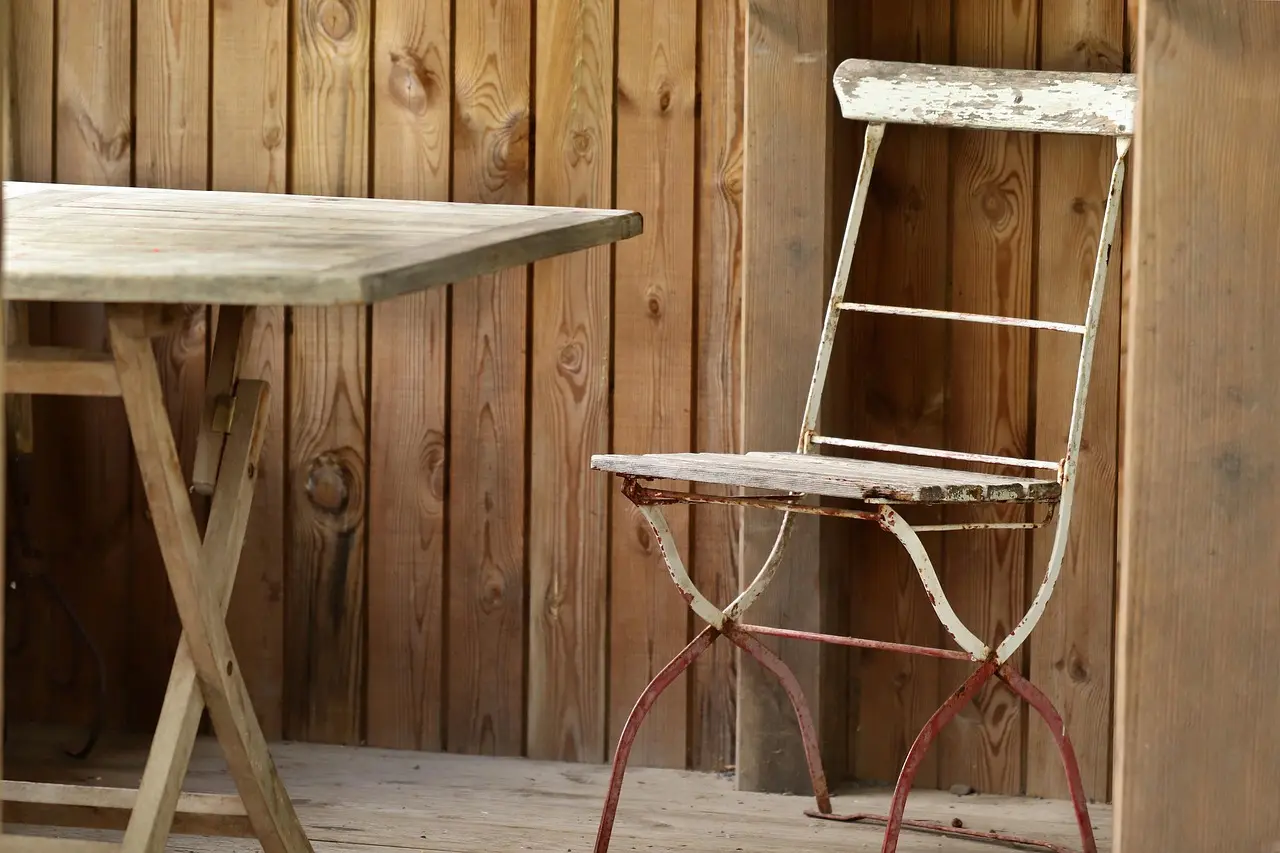
Seat height problems are common because a chair can feel comfortable for a few minutes and still be wrong for daily use. Match seat height to the table and to how easily you can sit down and stand up. A good chair clears the railing line, works with the table edge, and does not trap your knees.
Seat height versus table height
As a general fit check, many dining setups work best when there are about 10 to 12 inches between the seat and the underside of the table. Less than that makes leg movement tight. More than that can leave the chair feeling low relative to the table and may strain shoulders and wrists during use.
If the chair is too tall, elbows ride too high and knees may not slide under the tabletop cleanly. If it is too low, you may have a pleasant sit but a poor stand-up motion. A chair that was comfortable in one layout can become awkward once the table height changes.
Back height under railing or cover lines
Back height matters on balconies with a low railing, overhang, or tarpaulin line. A tall back may fit the floor plan but still interfere visually and physically with the overhead limit. A lower back can solve that problem without changing the rest of the layout.
That is also why wind and cover height should be checked together. A chair selected partly to keep the head below a tarpaulin line may still need to be heavy enough for strong wind conditions. The best choice often solves both problems at once.
Upright and low-slung profiles
Upright chairs usually take less depth and are easier to get out of. Low-slung chairs often feel relaxed, but they can create a surprise fit problem because the seat sits very low once assembled. If standing up takes several minutes or needs extra force, the chair is too low for the space or the user.
Suppose a 17-inch seat feels pleasant for lounging, but getting out of it is awkward because the knees rise sharply and the feet sit too far back. In that case, the issue is not cushion comfort. The better fix is a more upright frame with a higher seat and firmer support.
When comfort is good but standing up is hard
If a chair is comfy but hard to exit, treat that as a design mismatch rather than a comfort win. Too much seat depth, a soft cushion, or a reclined back can make the chair feel lower than it is. A firmer cushion or a shallower seat can help, but a different frame is often the cleaner fix.
What works best on a very small balcony?
For a very small balcony, the best choice is usually the format with the fewest permanent inches on the floor. Bistro sets, folding furniture, stackable pieces, and fold-down tables all work well when the key constraint is usable floor space. Pick the format that removes the most clutter when not in use.
Bistro sets
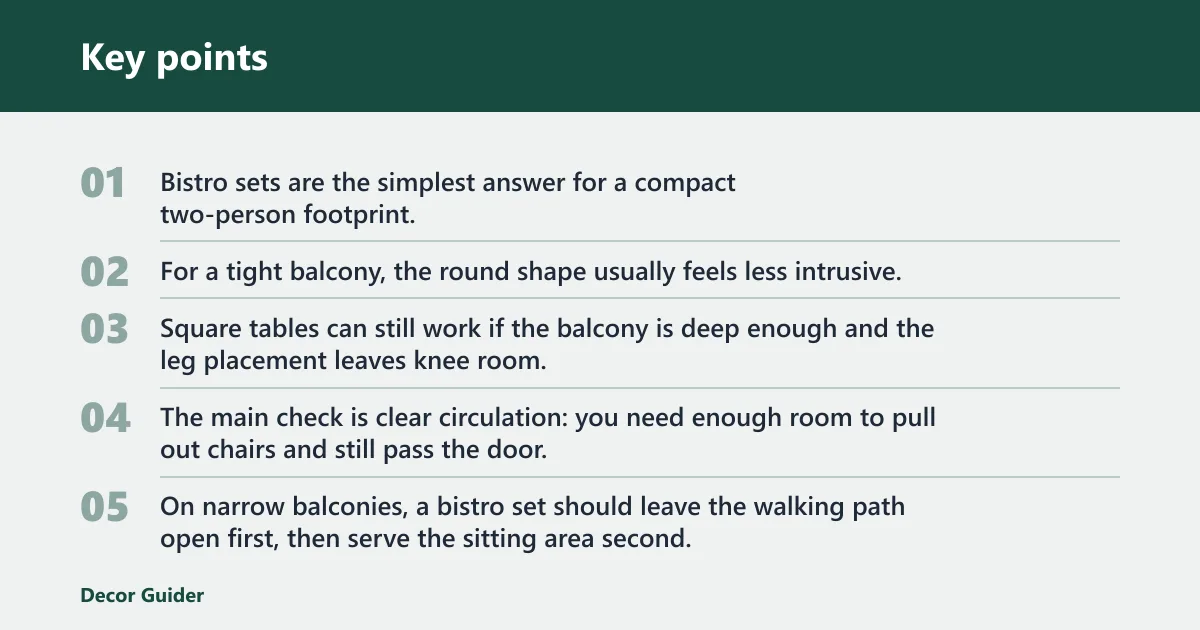
Bistro sets are the simplest answer for a compact two-person footprint. A small round table often fits narrow balconies better than a square table because it avoids sharp corners and lets chairs slide in more easily. For a tight balcony, the round shape usually feels less intrusive.
Square tables can still work if the balcony is deep enough and the leg placement leaves knee room. The main check is clear circulation: you need enough room to pull out chairs and still pass the door. On narrow balconies, a bistro set should leave the walking path open first, then serve the sitting area second.
Folding balcony furniture
Folding balcony furniture is the best fit for renters and tiny balconies when storage matters as much as floor space. The value is not only the open size; it is the width when stored and how fast the piece can be removed. Fold-flat storage gives you a cleaner floor once the furniture is put away.
This format is useful when the balcony needs to change roles during the day. A chair that folds flat and a table that drops down or nests out of the way can turn a cramped layout into a clear one in seconds. Check both the open width and the stored width before buying.
Stackable pieces
Stackable chairs work best when the balcony needs occasional seating, not a fixed dining setup. They are useful if you want a spare chair without dedicating floor space to it all the time. The catch is that the stack still needs a storage spot, so measure that area too.
They are less helpful if every inch of storage is already spoken for. In that case, folding pieces usually solve the problem more cleanly because they disappear into a thinner profile.
Fold-down or nesting tables
Fold-down and nesting tables are strong choices when the tabletop needs to serve laptop, drink, or dining use without dominating the balcony. A wall-mounted drop-leaf can free up floor space when closed. Nesting tables can give you a small side surface without committing to one large table all day.
Choose the smallest table that still works for the real use. If you only need a drink and a laptop, a broad dining top can create unnecessary bulk. If meals are the goal, the tabletop width must still allow plates without crowding the edges.
How can I make bulky balcony furniture feel less cramped?
Bulky furniture feels cramped when the table shape, chair spacing, and movement path all compete for the same inches. You can often improve the layout without replacing everything. Reduce visual bulk first, then remove physical conflicts. The goal is a usable path, not an empty-looking balcony.
Table shape and leg placement
Round tables usually feel lighter in a tight space because they eliminate corners and make circulation easier. Square tables can work, but the legs matter. If the legs sit too far out, they can block knees and make the piece feel larger than the top itself.
When choosing between a round and square table, check where the legs land relative to the chairs. A table with center support or tucked-in legs often feels less crowded than one with wide corner legs, even if the top size is similar.
Chair spacing and circulation room
Leave enough room for chairs to slide out and for a person to pass behind them. If chairs need to remain in their pulled-out position to be usable, the layout is already too tight. A balcony should still allow movement after seating is in place.
One practical rule is to protect the path first, then fit the table into what remains. If the walkway is narrow, reduce chair count or switch to a two-seat arrangement. One good chair beats three chairs that trap the door.
Multi-use layouts
Multi-use layouts reduce clutter by asking one piece to do more than one job. A fold-down table can be dining space by day and wall space by night. A storage bench can hold cushions and serve as occasional seating if its height and depth are comfortable.
Do not multiply functions if it damages access. A piece that stores items but blocks the walkway still fails the fit test. Multi-use works only when the floor remains easy to cross.
How do I stop balcony furniture from blowing around in wind?
Wind control starts with weight, footing, and storage habits. On exposed balconies, a piece that looks fine indoors can shift, tip, or slide outside. Heavier furniture, slip-resistant feet, and fewer loose items usually solve more than decorative anchors do. If wind is a major factor, that should guide the purchase from the start.
Rust-resistant and UV-resistant materials
Outdoor furniture materials should stand up to moisture and sun without constant care. Rust-resistant metal, UV-resistant plastics, and weather-stable finishes reduce maintenance needs. If the balcony gets harsh sun or frequent rain exposure, the surface choice matters as much as the frame shape.
Lightweight construction can be useful, but it is a tradeoff. A lighter chair is easier to move, yet a heavier chair is often more secure outdoors. For a windy balcony, the practical advantage of a heavy chair may outweigh the easier handling of a lighter one.
Slip resistance and foot design
Feet that grip the floor help keep a piece from creeping in gusts or on smooth balcony surfaces. Rounded legs or slick caps can slide more easily than broad feet with traction. If the furniture tends to shift, add grip where the legs meet the floor before adding more weight elsewhere.
Storage or tethering after use
If the balcony is frequently windy, the safest habit may be to store folding pieces after use. That reduces the chance of a chair becoming a moving object in a gust. Tethering can help in some cases, but storage is usually simpler and less visible.
A common first-timer mistake is choosing a light chair for comfort, then discovering that the chair also drifts across the floor after the first strong gust. A heavier replacement with a lower profile and grippier feet is often a better long-term fix than adding small patches of weight.
Balcony furniture not fitting checklist
Use this checklist before you buy anything. It keeps the decision tied to measurements, not guesses.
-
Measure usable width and depth. Record the clear floor after subtracting railing posts, HVAC units, and downpipes. Keep the final furniture footprint at least 2 to 4 inches smaller than the tightest dimension.
-
Measure the door swing. Open the door fully and mark the arc. Do not place a chair back, table corner, or planter in that path.
-
Measure circulation space. Leave enough room to walk behind chairs and between pieces. If the balcony needs side-by-side movement, widen the buffer before adding more furniture.
-
Check seat height. Compare the seat to the table and to the ease of standing up. If the seat is very low, make sure exiting the chair is still simple.
-
Check back height. Measure from the floor to any railing, canopy, or tarpaulin line that the chair back must clear. A taller back can fail even when the seat fits.
-
Review the table shape. Decide whether a round, square, fold-down, or nesting table best fits the layout and the job. Narrow balconies usually benefit from smaller tops and fewer corners.
-
Check storage width. If the piece folds or stacks, measure how wide it is when stored. This matters for renters and tiny balconies as much as the open footprint.
-
Check wind stability. Look for weight, grippy feet, and weather-stable materials. If the balcony is exposed, plan to store or secure lightweight pieces after use.
Frequently asked questions
What furniture works best for a very small balcony?
Bistro sets, folding chairs, and fold-down or nesting tables are usually the strongest options. Choose a round table if corners would block movement, and prefer pieces that store flat when not in use. That keeps the floor usable when seating is not needed.
What if my balcony chair is too tall or too low?
If the chair is too tall, it may crowd the table and make leg clearance awkward. If it is too low, standing up can become difficult even when the seat feels comfortable. Match the seat height to the table and to the ease of sitting and rising.
Products related to this article
Sponsored / affiliate links. As an Amazon Associate I earn from qualifying purchases. I may earn additional commission from eligible campaigns.