How Do You Make a Small Balcony Look Bigger?
Make a small balcony look bigger by keeping one clear walking path, using a low-contrast floor that runs wall to wall, and limiting decor to one vertical focal zone. If you crowd the floor or break up sightlines, the space feels tighter and harder to use. This guide covers layout rules, renter-safe changes, furniture scale, and decor choices that create more visual room without adding clutter.
What makes a balcony look bigger?


A balcony reads larger when your eye can move from the door to the railing without hitting obstacles, abrupt color changes, or stacked decor. The best setup keeps the floor visually continuous, places the main feature on one wall or one corner, and leaves a clear path wide enough to walk through without turning sideways.
Sightlines from the door to the railing
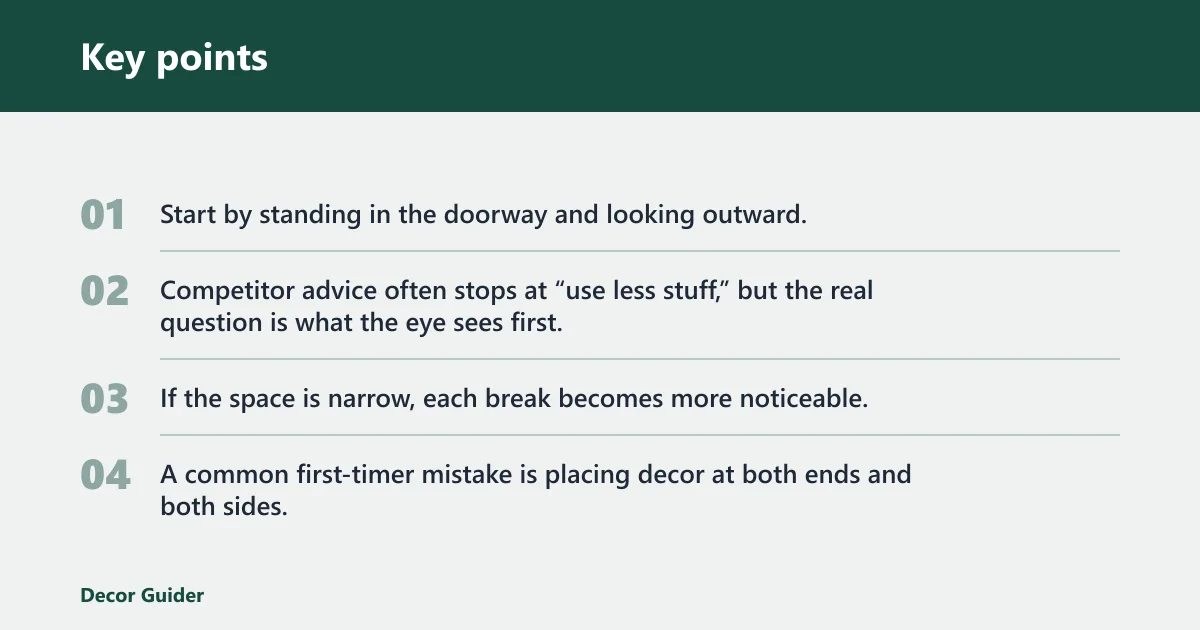
Start by standing in the doorway and looking outward. If you can see a mostly open strip of floor, the balcony will feel more generous from inside the home as well as from the outdoor side. That long view matters more than packing in extra decor.
Competitor advice often stops at “use less stuff,” but the real question is what the eye sees first. A railing blocked by a chair arm, a planter cluster, and a side table creates three interruptions in a very short distance.
Why floor continuity matters
Floor continuity makes a small balcony feel longer because the surface reads as one plane rather than several small zones. Light-colored flooring works best when it is large-format or otherwise visually continuous, and when the plank or tile direction runs along the balcony’s long axis.
Busy patterns cut the floor into pieces. That can work in a larger outdoor room, but on a tiny balcony it usually shortens the view and makes the floor look crowded before the furniture even appears.
Where visual breaks usually happen
The most common breaks are heavy furniture legs, dark rugs that stop short of the edges, several small planters spread across the floor, and mixed finishes that fight each other. If the space is narrow, each break becomes more noticeable.
A common first-timer mistake is placing decor at both ends and both sides. That leaves no visual pause, so the balcony feels busy even when the actual item count is low.
Small balcony visual-opening checklist
Use this quick scorecard before you buy anything. Give each item 0, 1, or 2 points, then total the score and match it to the layout type below.
| Decision | 0 points | 1 point | 2 points |
|---|---|---|---|
| Flooring | Dark, busy, or patchy surface | Some continuity, but visible breaks remain | Light, low-contrast, and visually continuous |
| Furniture scale | Oversized or bulky pieces | Mixed scale, one item feels too large | Compact bistro set or foldable pieces only |
| Vertical storage | Floor storage or stacked bins | One vertical piece, but path is tight | Wall, railing, or corner storage with clear path |
| Color contrast | High-contrast finishes across floor, wall, and decor | Two strong colors with some balance | Restrained palette with low visual jump |
| Path clearance | Path blocked or under 24 inches wide | Usable path, but furniture crowds it | Clear route from door to railing with breathing room |
Score 8-10: Use a lounge layout with one focal wall, one seating group, and minimal extras.
Score 5-7: Use a compact dining or coffee setup with foldable pieces and vertical storage only.
Score 0-4: Strip the balcony back to the path, flooring, and one slim vertical feature before adding decor.
Which flooring makes a small balcony feel larger?
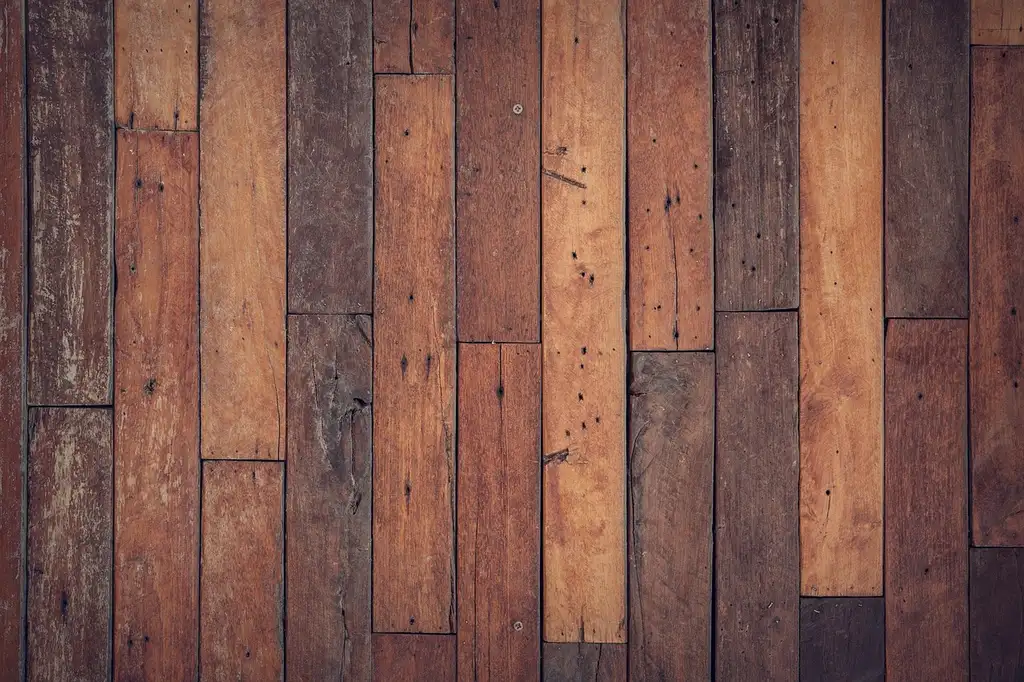
Light-colored flooring usually makes a small balcony feel more open, especially if the surface reads as one continuous field. Large-format decking tiles or other visually continuous materials help more than busy patterns because they reduce the number of lines the eye has to process.
Light-colored flooring and long-axis layout
When the floor is aligned with the balcony’s long axis, the space tends to read as longer. That is especially useful on narrow balconies, where the main challenge is often depth rather than width. Balcony floorboards, decking tiles, or planks should run with the long direction whenever possible.
Real Homes frames this topic around the tiniest outdoor spaces and recommends rental-friendly decking tiles because they are easy to install and remove. That matters for apartments, where the floor choice may need to change with the lease.
Temporary decking for renters
Renter-friendly decking tiles are useful when you need a cleaner look without permanent changes. Choose a finish that blends with the wall and railing rather than introducing a new strong color on the floor.
Keep the pattern calm. High-contrast checkerboards, narrow stripes, or a mix of several tile tones can make the floor look chopped up, which works against the goal of visual length.
What to avoid in narrow layouts
Avoid small, busy tile patterns and abrupt borders that stop before the railing or door. Those edges make a small balcony feel even shorter. If the balcony is very narrow, the safest choice is usually the simplest one.
Suppose a 4-foot-wide balcony has dark patterned tiles and a small rug centered in the middle. Even with only two chairs, the floor reads as broken into pieces. Switching to a light, continuous surface and moving the decor to one wall changes the space more than adding another accessory would.
What furniture makes a tiny balcony feel bigger?
A compact bistro set is the strongest default choice for tight balcony spaces because it gives you a place to sit without filling the floor with bulk. A common setup is 2 seats and a small round table, which is usually easier to move around than a deep sofa or oversized lounge chair.
Compact bistro sets
Real Homes highlights a compact bistro set for tight balcony spaces, and that advice fits most apartment balconies where circulation is limited. A round table usually takes up less visual space than a square one because it has no corners to catch the eye or the body.
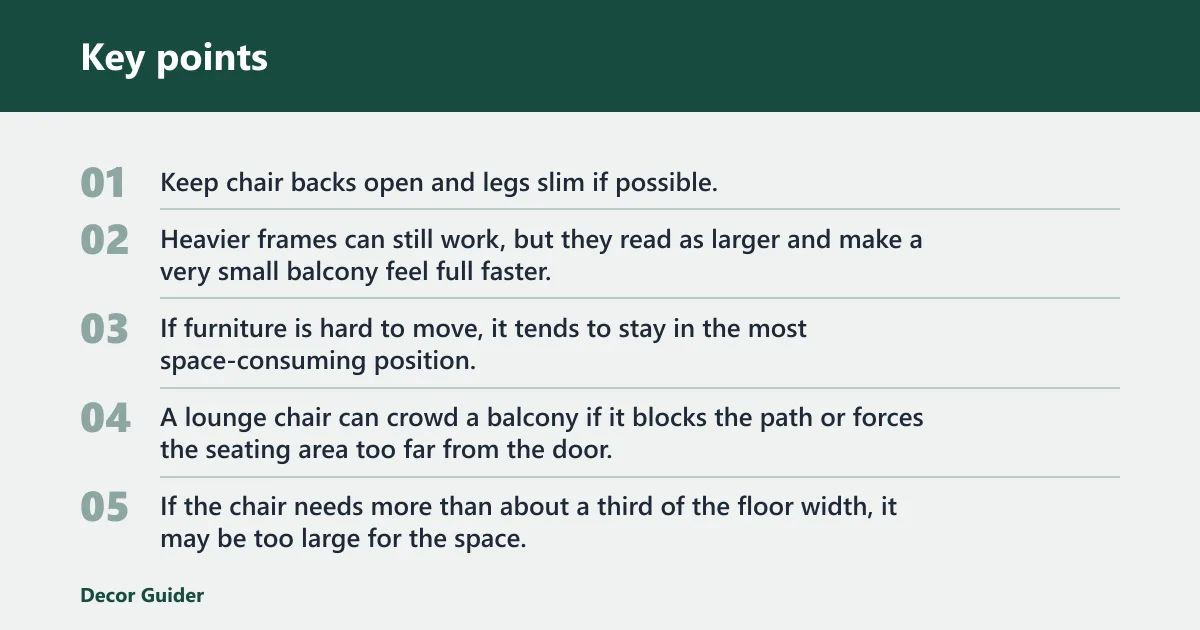
Keep chair backs open and legs slim if possible. Heavier frames can still work, but they read as larger and make a very small balcony feel full faster.
Foldable or lightweight pieces
Foldable or lightweight furniture works best when the balcony doubles as a drying area, plant area, or occasional standing space. Design Home Design recommends a floating table that folds away, and that approach is useful when you need the floor open at different times of day.
Choose pieces you can shift without effort. If furniture is hard to move, it tends to stay in the most space-consuming position.
When a lounge chair takes too much room
A lounge chair can crowd a balcony if it blocks the path or forces the seating area too far from the door. If the chair needs more than about a third of the floor width, it may be too large for the space.
For very small balconies, a chair with a slim frame and no wide ottoman is safer than a deep recliner. The goal is usable openness, not a full indoor-style lounge setup.
How do you decorate a narrow balcony without clutter?
Decorate a narrow balcony by using one wall, one corner, or one railing zone for the main visual feature, then leaving the rest of the floor open. Wall-mounted storage, ladder shelves, rail planters, and vertical plants add interest without taking the walking path away from you.
Wall-mounted and vertical storage
Wall-mounted storage works best when it preserves a clear walking path. Shelves, ladder shelves, and vertical planter frames let you use wall or corner space instead of floor space, which matters most on narrow balconies.
The same source says to take advantage of wall space, and that is the right instinct here. One tall piece usually looks cleaner than several small items spread across the balcony.
Rail planters and vertical plants
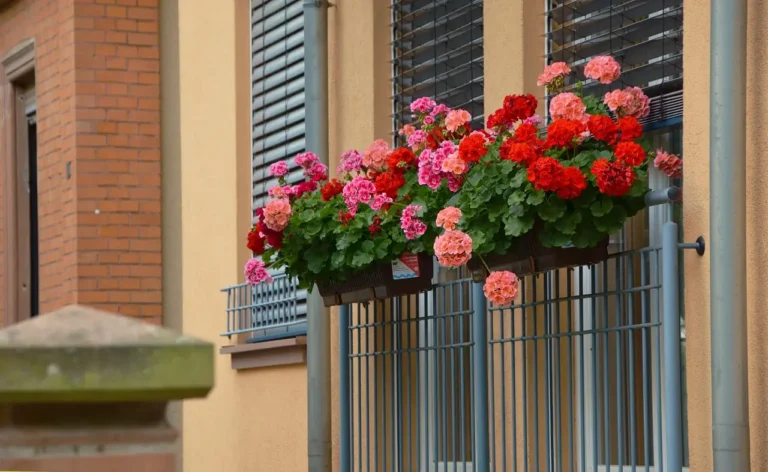
Homes & Gardens suggests balcony rail planters that hook over railings. That frees floor area and keeps planting in a zone that already exists. Rail planters should match the railing load and building rules before you buy them.
Vertical plants help because they add height without widening the footprint. Use climbers, trellis plants, or trailing varieties, but match them to wind and sun exposure. On a windy balcony, a dense plant wall can catch more force than a single slim planter.
One focal zone instead of many accents
Pick one area to do the visual work. That might be a plant frame on one side wall, a vertical row of rail planters, or a single shelf group above the seating zone.
Do not spread small decor across every surface. The eye reads that as clutter, even if each piece is attractive on its own.
Do mirrors work on a small balcony?
Mirrors or other reflective surfaces can create depth on a small balcony when they are placed safely and used sparingly. They work best on a side wall, where they can widen the view without blocking the door-to-railing sightline. They are not a universal fix.
Safe placement on side walls
Balcony Garden Web recommends a large mirror on the back wall, but that placement is not always the safest or most useful choice. A side wall often gives the depth effect with less risk of turning the whole view into a single bright reflection.
Choose a secure mount and keep the mirror out of the main traffic line. If the balcony gets strong sun, angle matters as much as size.
Glare and bird-strike risks
Glare is the main problem with reflective surfaces. Strong sun can bounce into the seating area or back toward windows, and that can make the balcony less comfortable rather than more open. On higher floors or near trees, reflective surfaces can also raise bird-strike risk.
If the mirror would reflect open sky, nearby trees, or moving birds, skip it. A reflective panel should support the view, not create a hazard.
When to skip reflective surfaces
Skip mirrors if the balcony is already bright, if your lease limits wall attachments, or if the only safe location would block the path. A narrow balcony with strong glare and no shade usually gains more from a calm floor and simpler furniture than from reflection.
A mirror is a detail, not the foundation of the layout.
How to use color, rugs, and plants
Color, rugs, and plants can make a small balcony look nice, but they work best when they support the layout instead of competing with it. Use a restrained palette, a rug sized to leave visible edges, and vertical planting that adds height rather than bulk.
Outdoor rugs that define without crowding
Real Homes recommends an outdoor rug and cushions for color, and a rug can help define the seating zone without making the balcony feel crowded. Choose a rug that leaves edges visible all around so the floor still reads as open.
Homes & Gardens says layering textures helps cement the balcony-as-room idea. That works best when the rug is simple and the rest of the textures stay limited to one or two surfaces.
Restrained color palettes
What colors make a small balcony look bigger? Light neutrals, soft grays, pale wood tones, and a limited number of matching accent colors usually feel the most open. The fewer strong contrasts you introduce, the less the space gets chopped into visual sections.
Use cushions or a small planter in a single accent color if you want warmth. Keep the main surfaces calm so the balcony still reads as one space.
Vertical planting for height
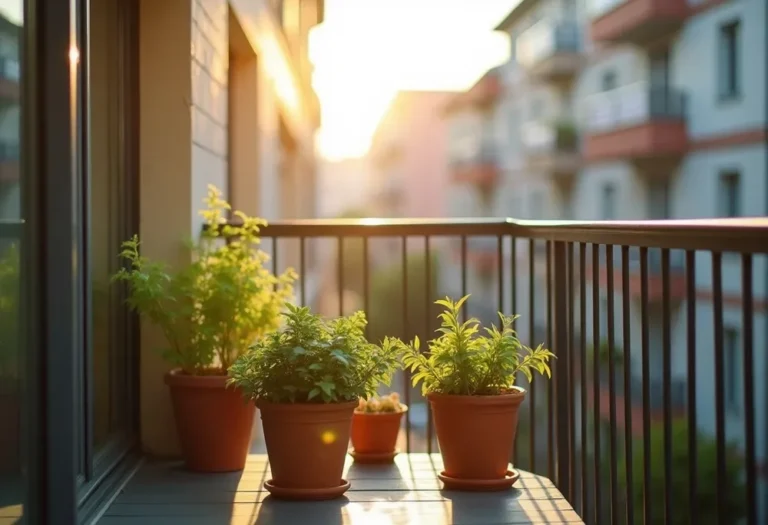
Plants help soften hard edges and add depth when they climb upward or trail from a single elevated point. Vertical planting is more effective than placing many small pots on the floor because it keeps the ground plane clear.
If the balcony is shaded, choose plants that tolerate lower light rather than forcing a sun-loving mix into a dim corner. If it is windy, use smaller containers and secure attachments so the display does not become top-heavy.
How do you keep a small balcony open but cozy?
Keep the balcony open by protecting the floor path and limiting the number of object types, then make it cozy with one rug, a few cushions, and one vertical planting zone. That gives you softness without covering every surface. The space should feel inviting from inside the apartment and usable once you step out.
-
Map the walking path. Measure the clear route from the door to the railing and keep that strip free of furniture, planters, and storage. A path that is easy to walk through will make the balcony feel more open than a crowded layout with prettier items.
-
Choose one seating type. Pick either a compact bistro set or a single lightweight chair with a small table, not both unless the balcony is unusually wide. About two to three pieces are usually enough for a very small balcony.
-
Assign one vertical zone. Use a wall shelf, a ladder shelf, or rail planters in one area only. This keeps the visual mass stacked up instead of spread out across the floor.
-
Keep the palette restrained. Limit the main finishes to one floor tone, one furniture tone, and one accent color. Too many colors make the balcony look busier and smaller than it is.
-
Add softness sparingly. Use an outdoor rug, one or two cushions, and a small number of plants. That gives comfort without filling every edge.
Say the balcony is about 5 feet by 7 feet, with a door that opens toward the long side. A foldable table, two slim chairs, and a side-wall planter frame will usually feel lighter than a sofa, a large rug, and three separate pots on the floor.
What should you avoid on a tiny balcony?
Avoid oversized furniture, several small decor clusters, dark or broken-up flooring, and anything that blocks the main path. Also avoid reflective surfaces that create glare, rail planters that exceed building rules, and floor pieces that make the balcony feel packed from the doorway.
On the smallest balconies, one large visual break can be worse than several small ones. A single heavy chair, a wide storage box, or a thick decorative screen can shrink the apparent size more than the item count suggests.
Frequently asked questions
What colors make a small balcony look bigger?
Light neutrals, soft gray, pale wood tones, and low-contrast combinations usually make a small balcony look bigger. Strong contrast on the floor, walls, and furniture breaks the space into smaller pieces, which works against the goal of openness.
Should I use a mirror on a small balcony?
Use a mirror only if you can place it safely on a side wall, avoid glare, and prevent bird-strike risk. If the reflective surface would catch harsh sun, block the view, or conflict with lease rules, a calmer floor and simpler furniture are better choices.
What balcony furniture makes a tiny balcony feel bigger?
A compact bistro set usually works best because it gives you 2 seats and a small round table without heavy visual bulk. Foldable or lightweight pieces are also useful when you need the floor to stay open for movement, plant care, or drying space.
Can vertical planters make a balcony look larger?
Yes, if they add height without widening the footprint. Climbing plants, trellis plants, and trailing varieties can draw the eye upward while keeping the floor open. Choose plants that suit the balcony’s wind, sun, and maintenance conditions so the display stays tidy.
Products related to this article
Sponsored / affiliate links. As an Amazon Associate I earn from qualifying purchases. I may earn additional commission from eligible campaigns.