Balcony Floor Problems / Not Working / Troubleshooting
Sort balcony floor problems into three buckets: cosmetic wear, moisture damage, or structural risk. If you see soft spots, active leaks, or sagging, stop using the balcony and call a pro. Ignoring it can turn a fixable surface issue into rot, mold, and higher repair costs. This guide shows how to read the signs and choose the right next step.
What a balcony floor problem is telling you
The floor is often the first place a balcony shows stress, but the surface does not tell the whole story. A crack can be a finish issue, a water entry point, or a sign that the deck is moving. The next step depends on what the floor is made of and what else is changing around it.
Concrete, wood, tile, and coated surfaces fail in different ways. Concrete may crack, tile may lift, wood may swell or soften, and coatings can split before the material beneath is visibly damaged. Look at how the floor moves, where moisture collects, and whether the surface feels steady underfoot.
Cosmetic wear versus failure warning signs
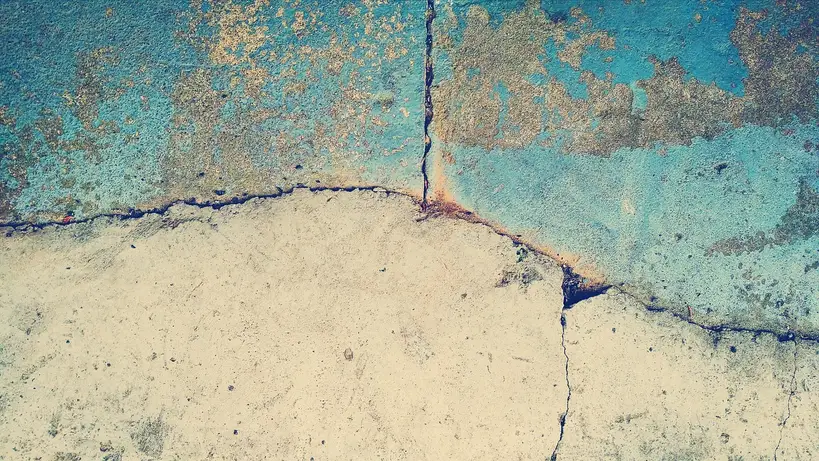
Cracks are not only cosmetic. Hairline cracks can begin as tiny finish splits and may spread when the slab flexes or water enters the opening. A crack that stays the same size and stays dry is a different problem from one that widens, leaks, or comes with movement.
Check for three warning signs together: moisture, softness, and motion. Water stains are an early indicator of moisture infiltration, sagging or uneven floors can indicate weakened support beams, and loose railings are a significant safety hazard on higher balconies. When those signs appear together, the problem is no longer a simple surface repair.
Material matters: concrete, wood, tile, and coatings
Concrete usually needs crack evaluation and sealing after the source of movement is understood. Wood needs moisture and rot checks first, because wooden balconies can warp or swell from moisture exposure. Tile often fails at grout lines, edges, or substrate movement, while coated floors can split at seams and transition points.
Do not use the same repair approach for every surface. A patch that holds on a coated slab may fail fast on tile if the tile has already lifted, and a wood deck that feels soft needs more than filler. Repair limits depend on the material beneath the visible surface.
Why is my balcony floor cracking?

Balcony floors crack because the surface is aging, the structure is moving, or water is working into the floor assembly. Some cracks are only in the top layer, while others point to deeper movement or moisture entry. Width, growth, and location matter more than the crack’s appearance alone.
Surface cracks and coating splits
Small cracks in a coating or finish may start at joints, edges, or spots that see the most movement. These are often the first visible sign that the surface is drying out, shrinking, or flexing. They still deserve attention, because surface splits can open a path for water.
A common first-timer mistake is to seal a crack before checking whether it is only in the finish. If the crack crosses multiple materials, follows a beam line, or appears at a drain edge, treat it as more than a cosmetic flaw until proven otherwise.
Cracks that may point to movement or water entry
Cracks that keep extending, open and close with temperature changes, or appear next to rail posts, drain points, or wall transitions are more concerning. These locations often see stress from movement or failed waterproofing. Water intrusion can then reach wood components, metal reinforcement, or the underside of the balcony.
Do not assume a surface crack is minor just because it is not wide. Hairline cracks can start small and grow as the balcony flexes and moisture enters the opening. If a crack shows discoloration, rust staining, or a damp edge, it is already part of a moisture problem.
Width, growth, and when a crack stops being minor
Use change as your guide. A crack that appears stable, stays dry, and is limited to a top coating is usually less urgent than one that widens or sheds material. If the crack is wider than a quarter-inch, the repair guide says to call a pro.
If you cannot tell whether the crack is only at the surface, document it and stop. Take a clear photo, note the length, and check again after rain or after a temperature swing. Growth over time is often the clearest sign that the problem is active.
Balcony floor troubleshooting matrix
This matrix helps sort common symptoms by likely cause, severity, and next action. Use it as a triage tool, not a final diagnosis. If more than one symptom appears together, follow the more serious row.
| Symptom | Likely cause | Severity | Next action | DIY vs call a pro |
|---|---|---|---|---|
| Cracks | Surface shrinkage, movement, or water entry | Low if thin and stable; high if wider than a quarter-inch or growing | Measure the width, photograph the crack, and check for damp edges or staining | DIY only for stable surface cracks; call a pro for any crack wider than a quarter-inch, active, or paired with movement |
| Soft spots | Rot, subfloor damage, or hidden structural weakness | High | Stop using the balcony and arrange an inspection | Call a pro |
| Pooling water | Poor slope, blocked drainage, or failed waterproofing | Medium to high | Check slope, drain paths, and whether water returns after drying | DIY only if debris blocks drainage; call a pro if water keeps pooling after clearing the drain |
| Tile lift | Bond failure, substrate movement, or moisture under the tile | High | Do not reglue over lifted tile until the substrate is checked | Call a pro |
| Wood swell | Moisture exposure and swelling | Medium to high | Check for soft areas, gaps, and finish breakdown | DIY only if the issue is limited to a surface finish; call a pro if boards are soft, warped, or separating |
| Rust stains | Corroding metal components or reinforcement | High | Inspect nearby fasteners, rail attachments, and underside metal parts | Call a pro if stains are spreading or near structural connections |
| Slope or dip | Settling, support beam failure, rot, or overload | High | Stop loading the balcony heavily and arrange a level-checking inspection | Call a pro |
| Underside staining | Water intrusion, failed flashing, or leaking joints | High | Inspect the underside, wall intersections, and drainage points | Call a pro if staining is active, extensive, or near structural members |
| Noisy floor movement | Loose fasteners, flexing members, or hidden damage | Medium to high | Note where the noise occurs and whether the floor also feels spongy or uneven | DIY only if a loose surface board is clearly the source; call a pro if the noise comes with motion or softness |
| Loose edge seams | Sealant failure, movement at transitions, or water entry | Medium | Check the seam, adjacent flashing, and signs of recurring wetness | DIY only if the seam is a minor finish issue; call a pro if the seam opens again after repair or sits above occupied space |
What signs of water damage should you look for on a balcony floor?
Look for stains, discoloration, mildew, peeling finish, and any area that stays damp after rain. Water stains are an early indicator of moisture infiltration, and they often appear before the floor feels soft or looks warped. Underside staining matters too, because the visible top surface can look better than the structure beneath it.
Stains, mildew, mold, and peeling finish
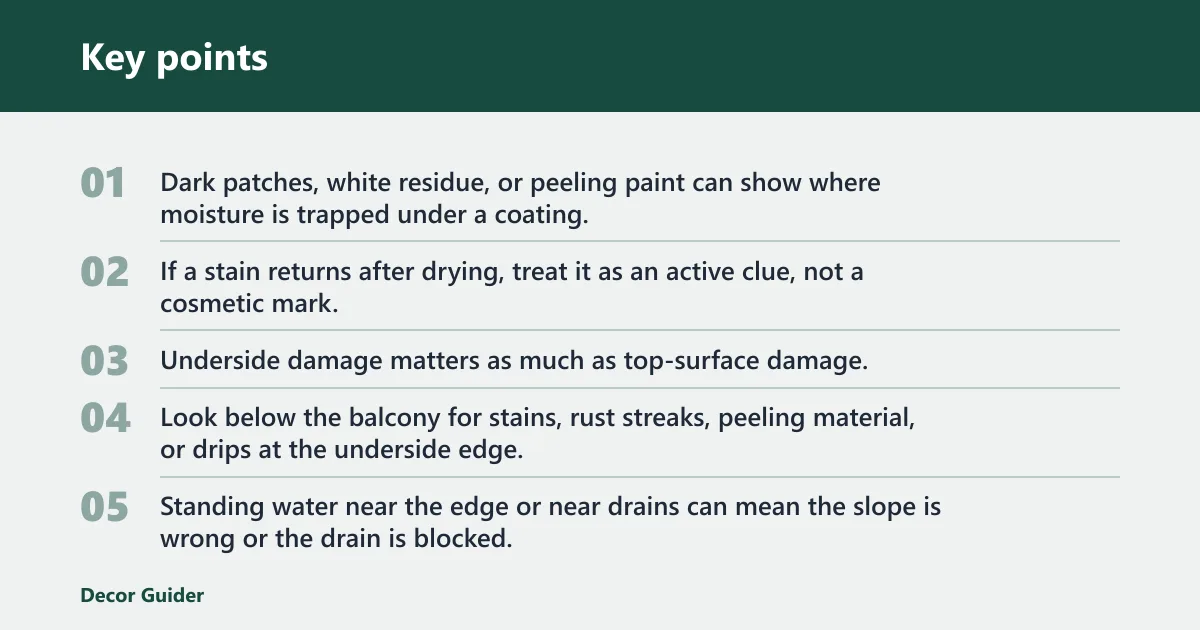
Water damage often starts as a color change. Dark patches, white residue, or peeling paint can show where moisture is trapped under a coating. Mildew or mold near seams, corners, or along the wall line suggests that water is staying in the assembly long enough to support growth.
If a stain returns after drying, treat it as an active clue, not a cosmetic mark. Repeated staining usually means the moisture source is still present, which can weaken wood, break down coatings, and damage hidden fasteners.
Underside staining, rust marks, and failed drainage
Underside damage matters as much as top-surface damage. Look below the balcony for stains, rust streaks, peeling material, or drips at the underside edge. Rust can affect metal components, especially in coastal or humid areas, and it often appears where water has been reaching fasteners or reinforcement.
Check drainage paths at the same time. Standing water near the edge or near drains can mean the slope is wrong or the drain is blocked. Flashing and caulking failures can let water penetrate balcony structure, so inspect these joints rather than just resealing what you can see.
Flashing and caulk joints that need inspection
Focus on places where materials meet: floor-to-wall joints, rail post penetrations, drain edges, and threshold transitions. These are common failure points because movement and water both concentrate there. A surface bead of caulk can hide a deeper gap, so inspect the joint line carefully.
Sealant belongs after a confirmed surface repair, not as a cover for failed flashing, rot, or corrosion. A good sealant can extend life by 5-10 years when the base repair is sound, but it cannot fix a leaking assembly by itself. If the sealant is doing the work of flashing, the repair is not complete.
Why does a balcony floor feel soft or uneven?
A balcony floor that dips, slopes oddly, or feels springy may be losing support. Sagging or uneven floors can indicate weakened support beams, rot, termite damage, or overload. A level check matters here, because even small changes in slope can point to bigger structural problems.
Sagging, dips, and slope changes
Look for pooling water that appears in the same low spot, furniture that no longer sits flat, or a floor edge that seems lower than before. A dip can develop slowly, so compare one side of the balcony with the other and note whether the floor has changed since the last check.
On a balcony about 6 feet across, water collecting near the door after every rain can indicate a new dip. If the dip is new, the problem is not just drainage; the floor may have shifted enough to change the slope. That needs a structural review, not a surface patch.
Rot, corrosion, or support-member problems
Moisture can weaken wood members, and corrosion can weaken metal support parts. If the floor feels soft near one edge, under a rail post, or beside a wall, the issue may involve the support member rather than the deck board or tile alone. That is why underside inspection matters.
Do not load the balcony with heavy items while the cause is unknown. Overloading can worsen an already weak support system, especially when the floor has started to sag or move.
When uneven flooring points to an urgent inspection
Call for an inspection quickly if the floor changes level, makes new noises, or feels spongy in more than one area. Uneven flooring plus water staining or loose rails is a strong warning combination. The problem may be hidden in framing, attachment points, or the waterproof layer below the finish.
What railing and edge problems need attention too?
Floor damage often shows up alongside problems at the edges. Loose fasteners, corroded hardware, and open seams can allow movement and water intrusion at the same time. A balcony floor issue is easier to misread if you ignore the rail and perimeter details.
Loose fasteners and corroded hardware
Loose railings are a significant safety hazard on higher balconies. Do not push or force-test a railing that already looks loose, especially if the balcony is elevated. Instead, note whether bolts, screws, or brackets show rust, movement, or missing material.
Corroded hardware can let the railing shift and can also signal moisture near the attachment point. If the floor around a post is stained, soft, or cracked, the problem may be centered at the connection, not just at the visible surface.
Rot at attachment points
Rail posts and edge framing often reveal hidden damage first. Rot at attachment points can weaken both the railing and the deck edge, which makes the floor problem more serious. If the edge feels loose or the post base is stained, treat it as an inspection trigger.
Loose edge seams and floor-to-railing transitions
Edge seams and transitions are common water entry points. If the sealant is split, missing, or opening again after a repair, moisture may be moving into the deck assembly. That can lead to floor movement, wood damage, or corrosion near the perimeter.
A coated balcony with a seam at the rail line that keeps opening after rain may need attention. Recoating the visible strip may hide the symptom for a short time, but it will not fix failed waterproofing at the transition. The seam and the structure under it both need attention.
How do I tell whether cracking is a surface issue or a deeper problem?
Cracks usually come from surface aging, movement in the structure, or water intrusion. Some start as coating splits. Others reflect deeper stress in concrete, wood, tile, or the underlying support system. The key is whether the crack stays stable or keeps changing.
What to check before you patch
- Clean the surface. Remove dirt, loose finish, and debris so you can see the crack edges clearly. A clean view helps you judge whether the defect is only in the surface or extends into the material below.
- Measure and mark it. Note the crack length and width, then photograph it with a fixed reference nearby. If the crack is wider than a quarter-inch, stop the DIY plan and call a pro.
- Check for moisture clues. Look for damp edges, stains, mildew, or rust nearby. A dry crack and a wet crack do not get the same response.
- Decide on repair limits. Surface-only damage may accept filler, sanding, and sealant after cure, usually 4-6 hours for the filler step mentioned in the repair guide. If the crack is active, growing, or tied to movement, do not seal over it as a final fix.
For renters, the safest path is often documentation and reporting. You can usually clean loose debris, document the defect, and avoid permanent modification, but structural repairs and waterproofing fixes belong with the owner or manager.
How do I know if a balcony floor problem is serious?
A balcony problem is serious when it affects movement, support, or water control. Soft spots, active leaks, sagging, loose railings, and recurring pooling water are all stronger warnings than a simple surface blemish. If more than one sign appears together, assume the issue is more than cosmetic.
Check the floor, underside, flashing, drainage, and rail attachments before deciding it is minor. If the problem is widening, noisy, or wet, or if the balcony feels uneven, the safe choice is to stop regular use until it is evaluated.
How often should a balcony be inspected for damage?
Inspect balconies on a regular schedule and after heavy rain, freeze-thaw swings, or any visible change. A basic visual check should include the floor, underside, flashing, drainage, rail attachments, and any area that shows staining or movement. Photo documentation makes it easier to spot growth over time.
For California multifamily buildings, the article context references SB326 and SB721 balcony inspections for condos every 9 years and apartments every 6 years. Those structured inspections do not replace routine owner or manager checks; they sit on top of them.
Can you repair a balcony floor yourself?
You can usually handle only the most limited surface issues yourself, and only after you confirm that the problem is not structural. If the crack is wider than a quarter-inch, the floor feels soft, water keeps returning, or the railing is loose, stop and call a pro. Sealant is a follow-up step after a verified surface repair, not a cure for deeper failure.
What renters can usually document or report
Renters can take photos, note when stains or movement appear, and report pooling water, loose seams, or rust near the rail. That documentation helps the owner or manager decide whether the issue is surface-only or part of a bigger repair. Avoid drilling, resealing, or making permanent changes without permission.
What a surface-only repair can and cannot solve
A surface-only repair may include cleaning, filling a stable crack, sanding, and then sealing the full floor surface after the filler cures. That sequence can help keep water out when the damage is limited and the substrate is sound. It cannot fix failed drainage, flashing failure, rot, corrosion, or a floor that moves.
Do not treat sealant as the main repair if the balcony is already showing water stains below, tile lift, or a soft spot. In those cases, the visible defect is often only the symptom.
Frequently asked questions
Why is my balcony floor cracking again?
Balcony floors crack because the surface is aging, the balcony is moving, or water is entering the assembly. Hairline cracks may seem harmless but can grow over time. If the crack widens, leaks, or appears with staining, treat it as more than a cosmetic problem.
How do I know if a balcony floor problem is serious enough to stop using it?
It is serious when the floor feels soft, slopes oddly, makes new noises, or shows active water damage. Loose railings are also a major warning sign on higher balconies. When those signs appear together, stop using the balcony and arrange an inspection.
What causes a balcony floor to sag or feel uneven?
Sagging or uneven floors can indicate weakened support beams, rot, corrosion, termite damage, or overloading. A dip or slope change often shows up as pooling water in one spot. If the floor feels soft or the level seems different than before, get a structural review.
When should I call a balcony repair professional?
Call a pro if a crack is wider than a quarter-inch, the floor feels spongy, water keeps returning, the railing is loose, or the balcony slopes in a new way. Those signs point beyond routine surface maintenance. A professional can inspect the structure, waterproofing, and attachment points together.
Which balcony materials fail differently?
Concrete often shows cracks that may reflect movement or water entry, wood can swell or soften when moisture gets in, tile can lift or hollow when the substrate moves, and coated decks can split at seams or transition points. That is why you should not seal over the same symptom the same way on every surface. Concrete, wood, tile, and coated decks each have different repair limits and different warning signs.
What should not be sealed over?
Do not seal over soft wood, lifted tile, active staining, rust near attachments, failed flashing, or a crack that keeps changing. Sealant can help with a sound surface repair, but it should not hide rot, movement, or a drainage problem. If the balcony still leaks or moves after the visible crack is filled, the repair is incomplete.
Products related to this article
Sponsored / affiliate links. As an Amazon Associate I earn from qualifying purchases. I may earn additional commission from eligible campaigns.