Balcony Water Drainage Problems / Not Working / Troubleshooting
If a balcony drain is slow, backing up, or leaking, first check for debris, a blocked outlet, poor slope, or failed waterproofing; if water stays in place for more than 24 hours after rain, treat it as a drainage fault, not a simple clog. Ignoring it can drive water into the slab, walls, or lower units and turn a small fix into structural damage or a landlord dispute. This guide shows how to diagnose the cause, clear safe blockages, and tell when the drain itself is working but the balcony system is failing.
What you’ll need


- Gloves, flashlight, and a bucket
- Small brush, screwdriver, or grate key if the cover uses one
- Wet-dry vacuum, plunger, or drain snake
- Level or simple water-test supplies, such as a cup or bottle
Why is my balcony drain not working?
Many balcony drain failures come from a few common places: debris at the grate, a blocked downpipe or stormwater line, poor balcony slope, or waterproofing and threshold failure. The first two usually affect the drain opening itself. The last two mean water is reaching the wrong place even if the drain is partly open.
Start at the grate
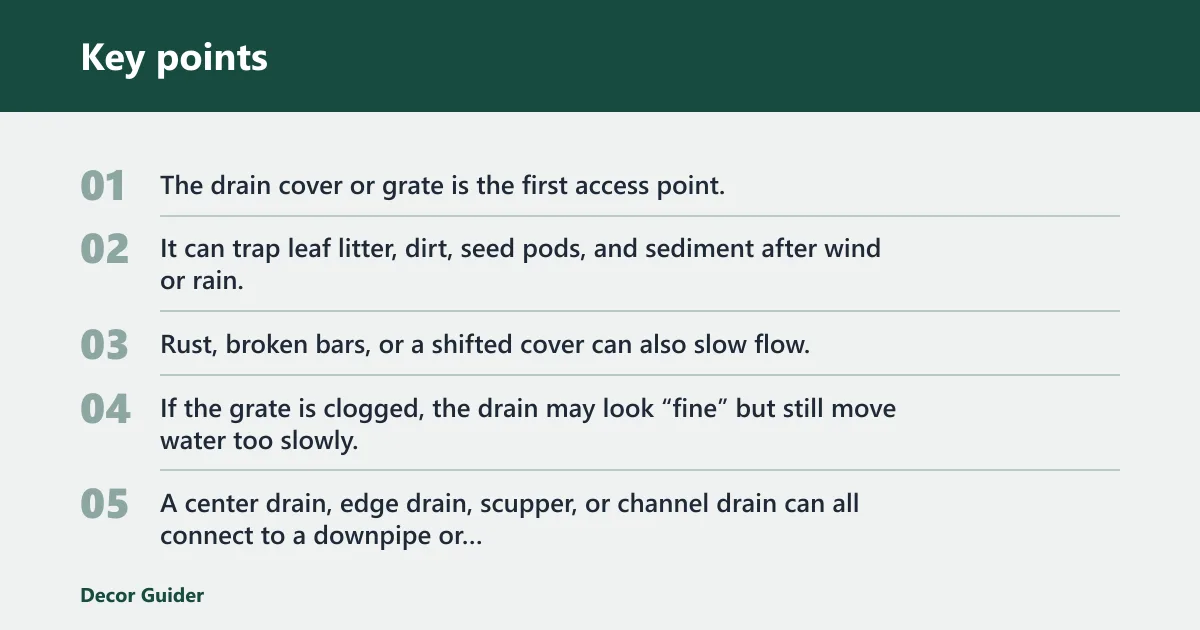
The drain cover or grate is the first access point. It can trap leaf litter, dirt, seed pods, and sediment after wind or rain. Rust, broken bars, or a shifted cover can also slow flow. If the grate is clogged, the drain may look “fine” but still move water too slowly.
Then suspect the line below
A center drain, edge drain, scupper, or channel drain can all connect to a downpipe or stormwater line. If water disappears slowly after you clear visible debris, the blockage may be farther downstream. In apartments, that part often belongs to building maintenance, not the tenant.
Check the slab, not only the drain
Balcony slope, also called fall, should move water toward the drain or scupper. If the slab is uneven, settled, or built with poor fall, water can pool even with a clear opening. That is a building-envelope issue, not a simple cleaning job.
Look for waterproofing failure
If water stains appear below the balcony, at the doorway, or on an interior ceiling, the waterproofing membrane may be damaged or the threshold detail may be failing. Aggressive cleaning, drilling, or repeated standing water can expose that problem. The drain may be working while the assembly around it is not.
Balcony drainage troubleshooting matrix
| Symptom | Likely cause | Quick test | DIY-safe action | Who to call |
|---|---|---|---|---|
| Standing water after rain | Blocked grate, poor slope, or downstream blockage | Pour 1 bucket of water near the drain and watch whether it moves within 1 to 2 minutes | Clear visible debris and remove the grate if it lifts without force | Tenant first, then landlord if water remains after cleaning |
| Slow draining | Leaf litter, sediment, or a partial blockage in the line | Check whether water swirls and then stalls at the opening | Brush out the opening and use a wet-dry vacuum at the grate | Tenant for surface debris; plumber if the line stays slow |
| Gurgling or odor | Trapped air from a partial blockage or stagnant water in the line | Listen after a rinse; smell usually rises when the line is holding water | Clean the grate and run a short water flush, then stop if the sound remains | Landlord or plumber |
| Backflow at the doorway | Overflow path blocked, drain line blocked, or slope toward the threshold | Check whether water reaches the door before reaching the drain | Move mats, planters, and furniture away from the threshold immediately | Landlord, plumber, or waterproofing contractor if the threshold leaks |
| Water staining below the balcony | Membrane failure, cracked detail, or failed edge condition | Look for staining below after rain even if the surface looks clear | Stop drilling, scraping, or using harsh cleaners near the area | Waterproofing contractor and landlord or building manager |
How do you unclog a balcony drain safely?
Clear the grate first, then test for a soft blockage near the opening. Use only gentle methods at the surface unless you know the drain path is rigid and accessible. If water still backs up after a careful clean, the issue is likely farther down the line or tied to slope or waterproofing.
- Lift the grate or cover only if it is designed to be removable.
- Remove leaves, dirt, and sediment by hand, brush, or vacuum.
- Rinse with a bucket of water and watch the flow for 1 to 2 minutes.
- Use a plunger over the opening only if the grate is off and the seal is soft enough to work.
- Feed a drain snake gently into the opening for a soft blockage, then stop at resistance.
- If the drain still backs up, pause and escalate; do not force tools past a membrane or a damaged grate.
Picture a 900 mm-wide balcony with a center drain beside the door. If 10 to 15 liters of rinse water still sits on the slab after the grate is cleared, the problem is usually beyond surface debris. That is the point to stop guessing and inspect slope or downstream blockage.
If that didn’t work, try this next
Move from the drain opening to the line and the slab. First, confirm whether the balcony floor actually falls toward the drain. Then ask whether the downpipe or stormwater line is shared or building-owned. If water still moves the wrong way, the fix is no longer a simple cleanup.
- Place a level on the slab and check whether water would naturally move toward the drain.
- Repeat the water test at two spots: near the drain and near the threshold.
- Document where the water stops or reverses, then report it to the landlord or building manager.
- Request plumber service for a suspected downstream blockage, or a waterproofing contractor if staining or leakage is visible.
When is a balcony drainage problem an emergency?
Treat it as an emergency when water reaches the interior, crosses the threshold, or appears below the balcony in another unit or on a lower ceiling. Those signs mean the problem is no longer limited to surface drainage. Repeated ponding after light rain is also urgent because it can load the slab and push water into weak points.
Act right away
- Move furniture, mats, and planters away from the door and drain path.
- Open the overflow path if the design has one and it is safe to access.
- Stop adding water to the area.
- Contact building maintenance, the landlord, or emergency building services if water is entering inside.
For example, if a top-floor apartment gets a brief storm and water begins to lap at the doorway within about five minutes, treat that as urgent and report it immediately. Even if the drain is partly open, that threshold risk means the problem needs immediate reporting, not another cleaning pass.
Who is responsible for fixing it?
Responsibility usually depends on where the fault sits. A tenant can remove visible debris and report what happens. A landlord or building manager handles shared downpipes, stormwater lines, and structural drainage issues in many properties. A plumber handles line blockages. A waterproofing contractor handles membrane or threshold defects.
Tenant-safe checks
You can inspect the grate, clear leaf litter and sediment, and run a water test. You can also keep the overflow path clear. Do not drill into the slab, pry at sealed edges, or remove fixed waterproofing details. Those actions can turn a drainage issue into a leak.
When the landlord should take over
Call the landlord or building manager if the drain stays slow after clearing debris, if the downpipe seems blocked, or if water staining appears below the balcony. In apartments, the stormwater line is often part of the building system, so a tenant cannot fix the cause alone.
When to call a specialist
Use a plumber for a blockage in the line. Use a waterproofing contractor when the balcony shows staining, threshold seepage, failed sealing, or repeated ponding with no visible clog. Those symptoms point to the assembly, not the grate.
Common mistakes
Many balcony drainage problems get worse because the first response targets the wrong layer. Clean the opening, yes, but do not stop there if water still sits or reappears.
- Blocking the overflow path: Do not place planters, mats, or furniture where backup water is meant to escape.
- Using harsh chemicals: Avoid drain cleaners unless a plumber specifically approves them for that drain and membrane.
- Forcing tools: A hard shove can damage the grate, liner, or waterproofing edge.
- Ignoring slope: If water moves away from the drain, cleaning alone will not fix it.
- Missing threshold signs: Water at the door or below the balcony means the problem has moved beyond the surface.
Common first-timer mistake: a 600 mm square balcony has a clear grate, so the drain is assumed to be fine. Then the same puddle returns after every rain. That pattern usually points to slope or a blocked line, not just leaves in the opening.
Preventive maintenance tips
Keep the grate clear before storm season and after wind-blown debris builds up. Check that the overflow path stays open. If your balcony has a channel drain or edge drain, clean the full length, not just the visible center section. A quick rinse after heavy leaf fall helps reveal slow drainage before it becomes standing water.
Frequently asked questions
What causes water to pool on a balcony after rain?
Pooling after rain often means the slab does not fall enough toward the drain, or the drain path is partly blocked. A quick check is to pour a bucket of water near the high side and watch whether it reaches the drain in 1 to 2 minutes. If it does not, slope or blockage is likely.
Can I pour chemicals down a balcony drain?
That is usually a bad first move. Chemical cleaners can damage membranes, seals, or nearby finishes, and they do nothing for poor slope or a blocked stormwater line. Use mechanical cleaning first, then call a plumber if the blockage remains.
Who is responsible for fixing a balcony drain in an apartment?
A tenant can clear visible debris and report the problem. A landlord or building manager usually handles shared drainage, structural slope issues, and waterproofing faults. A plumber deals with blockages in the line, while a waterproofing contractor handles leaks, stains, and failed membrane details.
Products related to this article
Sponsored / affiliate links. As an Amazon Associate I earn from qualifying purchases. I may earn additional commission from eligible campaigns.