Balcony Plant Troubleshooting: Why Plants Fail
Start with exposure, then container drainage, then plant type. If a balcony plant declines, fix the first mismatch you find before adding fertilizer or water. Skipping that order often leads to root rot, scorched leaves, or repeated plant loss. This guide shows how to diagnose balcony plant failures by sun, wind, pot setup, and species, then choose the most likely fix.
Why balcony plants fail


What you’ll need
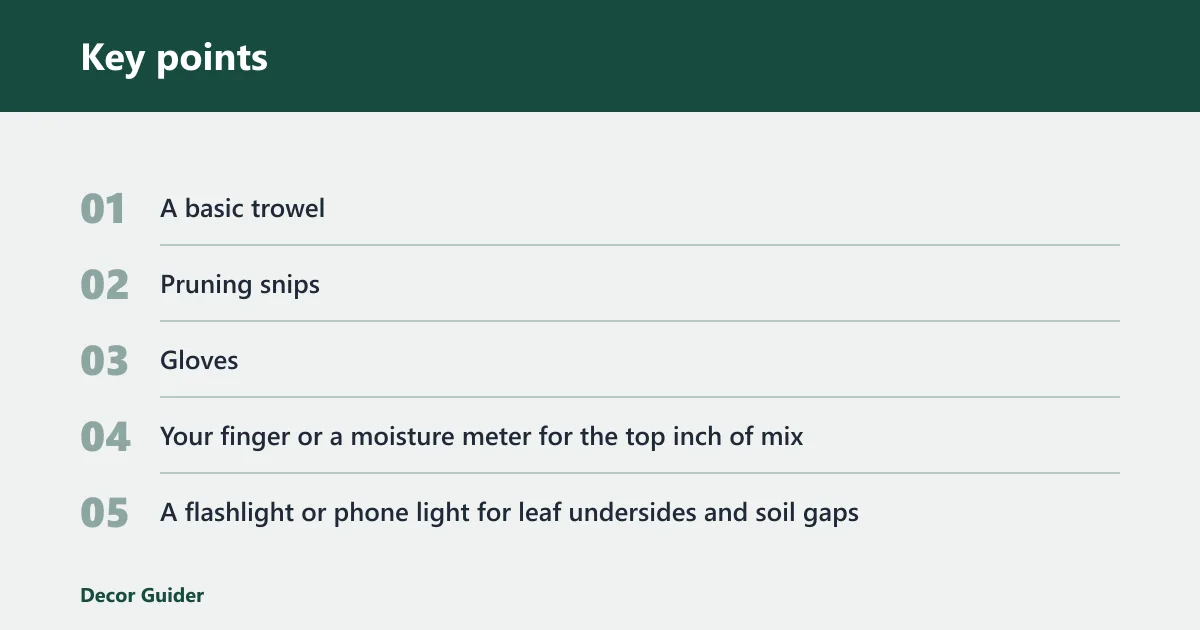
- A basic trowel
- Pruning snips
- Gloves
- Your finger or a moisture meter for the top inch of mix
- A flashlight or phone light for leaf undersides and soil gaps
- A saucer, pot riser, or feet for drainage checks
Balcony plant troubleshooting matrix
| Symptom | Likely cause | Fast test | Fix | Plant types affected | Rescue or replace | Recovery time in days |
|---|---|---|---|---|---|---|
| Leaf scorch, bleached patches | Too much direct sun, reflected heat from walls or railings | Check if the plant gets 6+ hours of direct sun or afternoon blast on a south/west balcony | Move to east or partial shade, add a sheer screen, group pots away from hot surfaces | Leafy greens, ferns, shade annuals | Rescue if stems stay green | 7-21 |
| Wilting despite damp soil | Poor drainage, root rot risk, or overheated roots | Lift the pot; if water pools in a saucer or the mix stays wet for about 2 days or more, drainage may be failing | Empty saucers, raise pots on feet, repot into free-draining mix | Herbs, flowering annuals, succulents | Rescue early; replace if roots are brown and mushy | 10-28 |
| Slow growth, small leaves | Pot too small or exhausted mix | Roots circle the pot or dry out within 24 hours | Move up one pot size and refresh mix | Vegetables, perennials, fast-growing annuals | Rescue | 14-30 |
| Yellow lower leaves | Overwatering, low light, or nitrogen shortage | Compare light hours and check whether the top inch is wet for more than a day | Reduce watering, increase light, then feed lightly | Most balcony plants | Rescue | 7-21 |
| Fine stippling, webbing, pale specks | Spider mites, often worse in hot, dry, windy spots | Shake a leaf over white paper and inspect undersides with a flashlight | Rinse foliage, isolate the plant, treat repeatedly | Herbs, ornamentals, tomatoes | Rescue if caught early | 7-14 |
| Soft stem collapse, black roots | Advanced root rot or cold injury | Unpot and check for brown, mushy roots or frost damage after a cold night | Cut losses, save healthy cuttings if possible | Annuals, tender herbs | Often replace | 0-7 |
Diagnose the problem in this order
- Check sun exposure first: count direct sun hours, note whether the balcony faces south, west, east, or north, and compare that with the plant’s label. Full sun is commonly about 6 or more direct hours; partial shade is about 3 to 6; shade is under 3. Seasonal light shifts matter, because winter sun is lower and summer afternoon sun is harsher.
- Check water next: press the top inch of mix. If it is dry, water; if it is wet and the saucer holds water, stop watering and fix drainage first.
- Check root space and mix: small pots dry fast and crowd roots, medium pots suit many herbs and annuals, and large pots hold more moisture for bigger plants. If the mix is compacted, roots cannot breathe.
- Check wind, heat, cold, fertilizer, and pests last. Balcony gusts, reflected heat, overnight temperature swings, and hidden insects can each push a borderline plant over the edge.
Say your basil sits on a west-facing railing, gets 7 hours of afternoon sun, and droops at 4 p.m. even though the soil feels damp. That points to heat and root stress more than thirst, so the quickest fix is to move it out of reflected heat and into a larger pot with drainage holes.
Why are your balcony plants not growing?
Slow growth usually means the plant is limited by root space, light, or a mix that has run out of air and nutrients. On balconies, shallow planters, hot railings, and uneven light are common reasons a plant stays alive but stalls. Match the plant to the exposure first, then check roots and feed only after that.
When the pot is too small for the plant
- Slide the root ball from the pot and inspect the edges for circling roots or a hard, root-bound shell.
- Move up one pot size, not three.
- Use fresh mix with peat or coir, perlite, and bark for air space and drainage.
- Water until it drains, then recheck in 2 to 3 days.
When the light level does not match the plant type
Sun-tolerant plants, such as many tomatoes, peppers, and flowering annuals, need more direct light than shade-tolerant plants such as ferns, impatiens, and some leafy greens. East-facing balconies give gentle morning sun; west-facing balconies get hotter afternoon light; north-facing balconies often need shade lovers or reflected light from nearby walls.
When feeding is off or the mix is exhausted
Use fertilizer as a support, not a cure. A balanced feed with N-P-K near 10-10-10 or 5-10-5 can help, but if the pot is crowded or the mix has compacted, nutrients will not fix the slowdown. Slow-release pellets suit steady feeding; liquid feed works for a quick correction at half strength.
How do you fix water and drainage problems?
Most balcony watering failures come from treating every pot the same. A small pot may dry out daily in wind and heat, while a large pot with poor drainage can stay wet long enough to rot roots. The right fix depends on whether the mix is actually dry, wet, or trapped in a pot that cannot drain.
Use the top-inch dryness test before watering
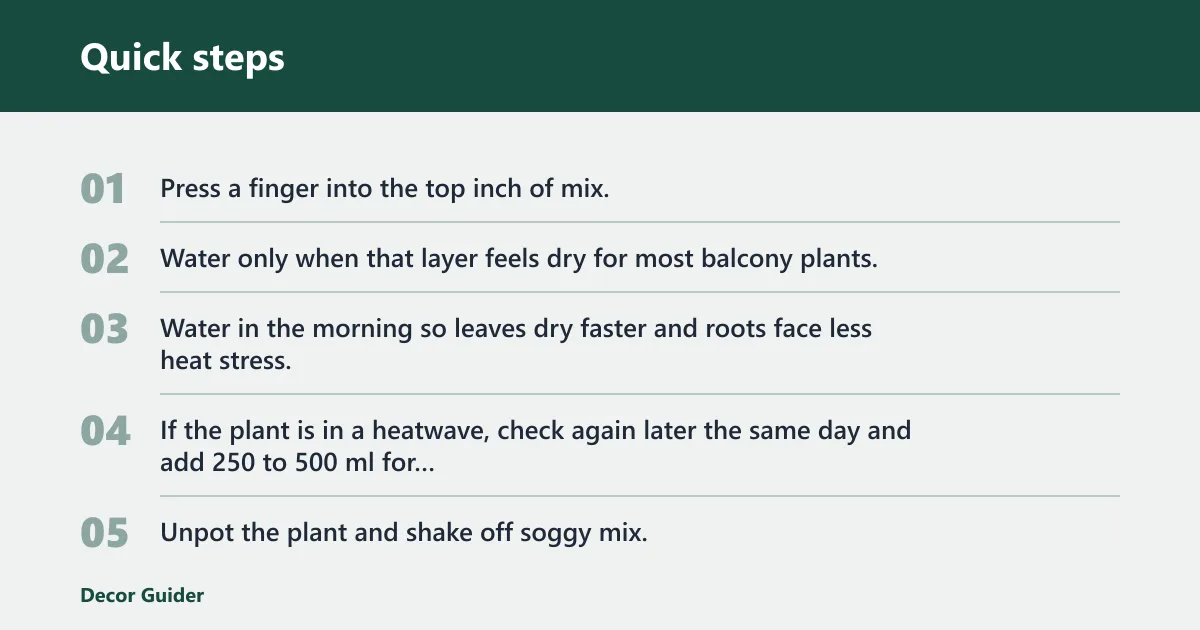
- Press a finger into the top inch of mix.
- Water only when that layer feels dry for most balcony plants.
- Water in the morning so leaves dry faster and roots face less heat stress.
- If the plant is in a heatwave, check again later the same day and add 250 to 500 ml for a medium pot if the mix dried out fast.
Add drainage holes, raise pots, or empty pooling saucers
Containers need drainage holes, and the saucer should not hold standing water. Raised feet or pot risers keep the base out of puddles and reduce root rot risk. If a renter cannot drill holes, the cheapest fix is often a different container rather than repeated rescue watering.
Reset waterlogged mix if roots are declining
- Unpot the plant and shake off soggy mix.
- Trim black, mushy roots.
- Repot into a well-draining blend of peat or coir, perlite, and bark.
- Use a pot only one size larger than the root ball.
Suppose a 10-inch tomato planter on a south balcony stays wet for three days after watering. That is a drainage and pot-size problem first, not a fertilizer problem. Empty the saucer, raise the pot, and repot before feeding.
Common mistakes
- Watering on a fixed schedule instead of checking the mix
- Using garden soil in containers, which compacts and holds too much water
- Leaving saucers full after rain or watering
- Upsizing to a pot that is far too large, which keeps roots wet too long
- Adding fertilizer to a stressed, waterlogged plant
When should you rescue or replace?
Rescue makes sense when stems are firm, roots are mostly white or tan, and the plant still has enough healthy growth to rebound. Replace when the crown is collapsing, roots are mostly brown and mushy, or a tender annual is too far gone for the season. The cost decision matters, too: soil refresh, a new pot, and a light fertilizer reset are cheaper than replacing a large perennial or edible crop.
Use recovery time, root condition, and stem health to decide
Herbs and annual flowers can often recover in about 7 to 21 days if the issue is light, water, or mild nutrient stress. Perennials and woody plants may need 2 to 6 weeks. If the stem base is soft, the plant is not worth a long rescue.
Compare rescue costs with replacement
- Soil refresh: cheapest when only the top layers are tired
- Fertilizer reset: useful when growth is pale but roots are sound
- Pot upgrade: worth it when roots fill the container or water races through too fast
Treat plant types differently
Leafy vegetables usually fail fast in heat and low water. Herbs may recover after pruning and a pot change. Succulents often need less frequent watering and a grittier mix. Flowering annuals are often cheaper to replace once bloom production stops, while perennials deserve a rescue attempt if the root system is still healthy.
How do I protect balcony plants from wind and heat?
Use shelter, spacing, and the right plant for the site. Wind strips moisture from leaves, dries pots faster, and can scorch tender growth. Heat is worse on west and south balconies, especially where walls, glass, and railings reflect sun back onto the pot. Choose tough plants for exposed spots and move tender ones inward.
Place barriers and move pots off hot surfaces
- Shift pots away from metal railings and sun-baked walls.
- Use taller plants, lattice, or a breathable screen to break gusts.
- Group pots so they shade each other without crowding leaves.
- In heatwaves, water early and check again in the evening only if the top inch is dry.
Match plant type to exposure
Sun-tolerant plants suit south and west balconies better than shade lovers. Shade-tolerant species fit north or east exposure, especially in apartments with nearby buildings. Annuals tend to be less forgiving than perennials once stressed, and many edible plants need more light than ornamental foliage plants.
Check for pests and disease
Inspect leaf undersides weekly for aphids, spider mites, and whiteflies. Crowded balconies trap humidity and reduce airflow, which can invite fungal issues. If pests keep returning, move the plant, rinse it, and use repeated treatments rather than adding more fertilizer.
Frequently asked questions
Why are my balcony plants dying?
Dead or declining balcony plants usually fail because the site, pot, and plant type do not match. Check direct sun hours, drainage holes, and root space first. If stems are mushy or roots are brown and slimy, it is usually faster to replace the plant than keep watering it.
Why are my balcony plants not growing?
Stalled growth often comes from a pot that is too small, light that is too weak, or soil that has compacted. Move the plant to the light level it needs, refresh the mix, and size up one container only. Feeding helps only after those limits are fixed.
Why are balcony leaves turning yellow?
Yellow leaves often point to overwatering, low light, or low nitrogen. If the top inch stays wet for more than a day, cut back watering and improve drainage. If the plant is in shade and growth is pale, move it to brighter light before adding fertilizer.
How much sun do balcony plants need?
Many sun plants need about 6 or more hours of direct light, partial shade plants need about 3 to 6 hours, and shade plants do better under 3 hours. South and west balconies are usually brightest; east balconies get gentler morning sun; north balconies suit shade lovers.
Why are balcony plants wilting in pots?
Wilting can mean the mix is dry, the roots are rotting, or the pot is overheating. Check the top inch first. If the soil is wet and the plant still droops, drainage is the likely issue. If the pot dries out within a day, move to a larger container.
How do I stop balcony planters from drying out?
Use a larger pot, a moisture-retentive but well-draining mix, and morning watering. Move planters out of direct wind tunnels and off hot railings. In heat, containers may need a second check later the same day. Raised pots still need drainage holes; they just dry more evenly.
Products related to this article
Sponsored / affiliate links. As an Amazon Associate I earn from qualifying purchases. I may earn additional commission from eligible campaigns.