Balcony Vertical Garden: Is It Worth It for You?
A balcony vertical garden is worth it only if you can water it in about 5 minutes, secure it against wind, and keep total setup under about $150 to $300; otherwise, floor pots are the better buy. Done badly, it can leak, fail in wind, or demand more upkeep than your schedule allows. This guide weighs cost, installation, watering load, renter rules, and which balcony types make vertical planting a smart tradeoff.
Verdict: is it worth it?
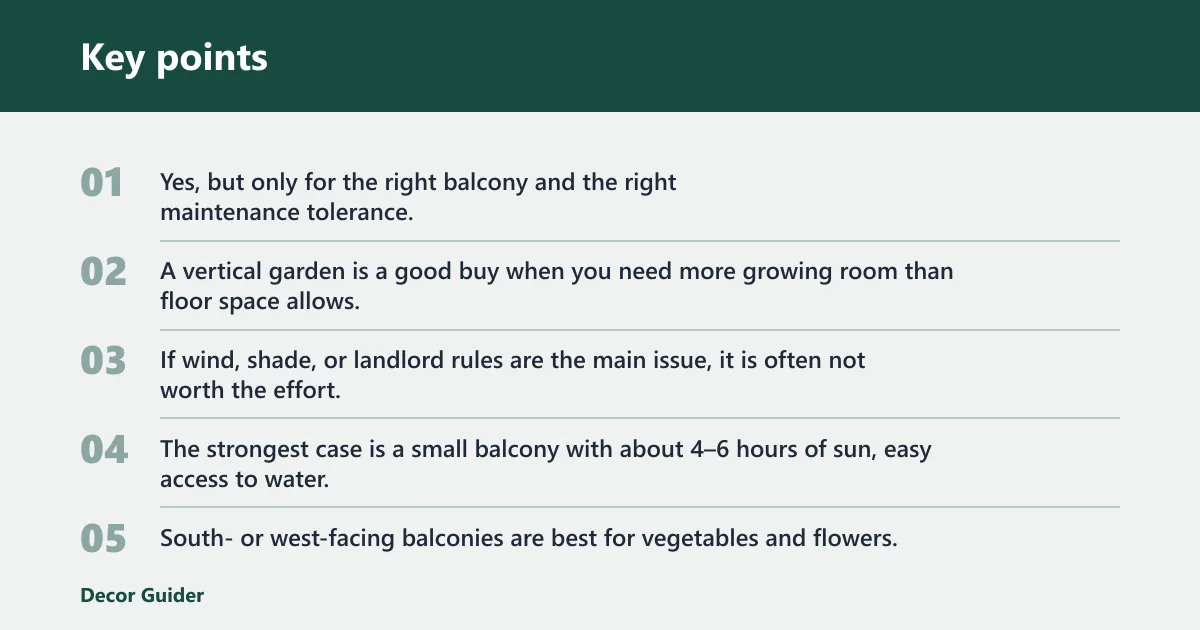


Yes, but only for the right balcony and the right maintenance tolerance. A vertical garden is a good buy when you need more growing room than floor space allows, your balcony gets usable sun, and you can manage watering and drainage without runoff problems. If wind, shade, or landlord rules are the main issue, it is often not worth the effort.
Best case for a small sunny balcony
The strongest case is a small balcony with about 4–6 hours of sun, easy access to water, and a railing or wall that can support a light system. South- or west-facing balconies are best for vegetables and flowers. East-facing balconies work better for herbs and partial-shade plants.
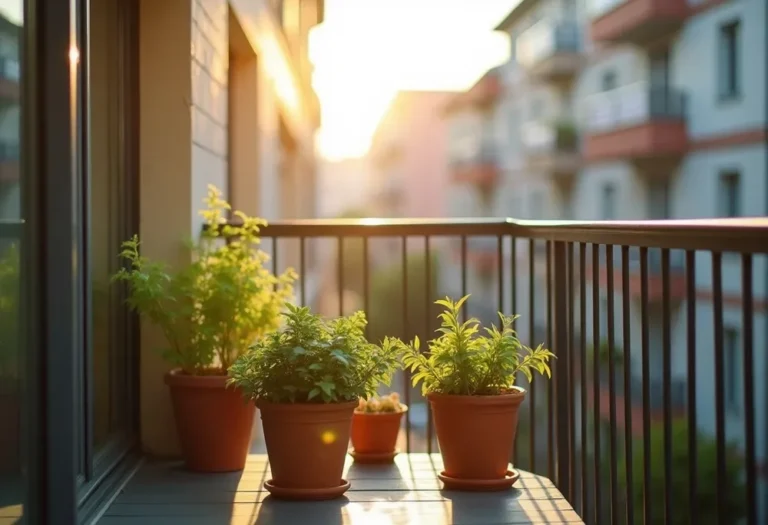
Picture a 5-foot-wide balcony with two railing planters and a narrow wall rack. That setup can add plant capacity without blocking walking space, and it stays practical if you can reach every container without moving furniture.
When the setup is not worth the effort
It is usually a poor fit for deep shade, strong wind, or renters who cannot protect walls and railings from moisture. Heavy systems also become a bad trade if your balcony has uncertain load limits or if every refill requires carrying water through the apartment.
A common first-timer mistake is choosing a tall pocket planter for a windy upper-floor balcony, then watching the fabric dry out unevenly while the top pockets blow around and the lower pockets drip onto the floor below.
Quick verdict by budget and maintenance tolerance
If you want the lowest effort, choose railing planters or a simple shelf rack. If you want the lowest upfront price, a DIY recycled build can work, but only if you count brackets, anchors, pots, and replacement plants. If you want the least mess, hydroponic systems are cleaner but cost more and need more care in another way: pumps, reservoir checks, and electricity.
Pros and cons
Vertical systems solve a real space problem, but they do not reduce plant care. The tradeoff is space efficiency versus more attention to watering, weight, runoff, and mounting quality.
Pros
- Saves floor space on a small balcony.
- Increases plant capacity without widening the footprint.
- Can add screening for railings and partial privacy.
- Works in several formats, from cheap DIY builds to premium modular panels.
Cons
- Needs more careful watering and drainage than loose pots.
- Can drip, stain, or damage balcony surfaces if waterproofing is poor.
- Wind can tip, tear, or dry out exposed plants.
- Some systems become heavy once wet soil, pots, and water are added.
When the cons outweigh the benefits
If you dislike checking moisture, refilling reservoirs, or cleaning runoff, a vertical garden is likely the wrong format. It also loses its appeal when the balcony is so shaded that plants stretch, fail, or need replacement often. In that case, a few floor pots perform better with less complication.
Who it’s for
This suits small balcony owners who want more planting area without giving up walking room, especially on sunny exposures. It also suits renters who can use railing clamps, freestanding frames, or removable hooks instead of drilling. It is a weaker match for low-light balconies, high-wind balconies, and anyone who wants a set-and-forget plant system.
Small sunny balcony owners
If your balcony gets enough direct light and you want herbs, compact flowers, or light trailing plants, a vertical garden can be worth buying or building. A small balcony may use hanging pockets or railing planters. A medium balcony may use wall shelves or a pallet garden. A large balcony may combine vertical systems.
Low-light or shaded balcony owners
Shaded balconies need a narrower plant list and usually less payoff from tall systems. North-facing balconies are suitable for shade-loving indoor plants, but deep shade still limits growth. If your light is weak for most of the day, a few movable pots usually beat a vertical wall of struggling plants.
Renters who cannot drill
Renters should favor railing planters, clamp-on frames, or freestanding units. Drilling into a rental wall is not the default choice, because it can leave damage and may violate the lease. Waterproofing matters too: runoff can stain walls, floors, and the balcony below.
Balcony garden decision table
Use this table to judge total effort, not just appearance. A lower score here means less work and less risk. For the final recommendation, treat the fit as stronger when the balcony matches the system’s light, wind, and mounting needs.
| System | Upfront cost | Installation difficulty | Daily maintenance | Watering frequency | Renter-friendliness | Wind stability | Plant capacity | Mess risk |
|---|---|---|---|---|---|---|---|---|
| Hanging pocket planters | Low | Low to medium | Medium | High | High if removable | Medium | Medium | Medium to high |
| Wall-mounted shelves or racks | Low to medium | Medium | Medium | Medium | Low to medium | Medium | Medium | Medium |
| Trellis or wire grid system | Low | Medium | Low to medium | Medium | Medium | High for climbers if anchored well | Medium | Low |
| Recycled DIY vertical garden | Very low to low | Medium to high | Medium | Medium to high | Medium | Variable | Low to medium | Medium to high |
| Living wall panels | High | High | Medium | Medium | Low | High if installed correctly | High | Low |
| Hydroponic vertical system | High | High | Medium | Medium to low | Low to medium | Medium to high | High | Low |
| Railing planters | Low | Low | Low to medium | Medium | High | Medium | Low to medium | Medium |
How much does a DIY vertical garden on a balcony cost?
A DIY balcony vertical garden can cost about $45–$165 total. That range depends on whether you use bought brackets and pots or recycled materials, and whether you need extra mounting hardware, drip trays, irrigation parts, or replacement plants. The build is cheap only when you keep the system simple.
DIY cost range by material
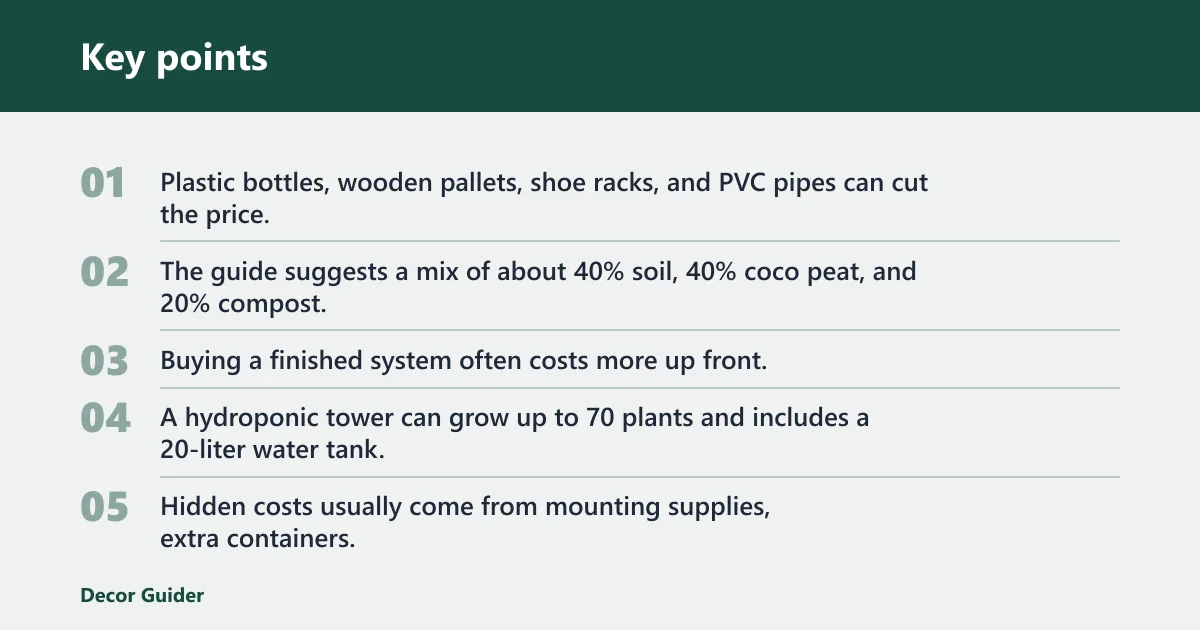
Plastic bottles, wooden pallets, shoe racks, and PVC pipes can cut the price, but “free” materials rarely stay free after you add screws, hooks, zip ties, sealant, and pots. The guide suggests a mix of about 40% soil, 40% coco peat, and 20% compost, which can also affect refill costs over time.
Buy versus build over one year
Buying a finished system often costs more up front, but it can save time on assembly and reduce mistakes that lead to replacement plants. A hydroponic tower can grow up to 70 plants and includes a 20-liter water tank, but it is a much bigger investment than railing planters or a pallet rack.
Where hidden costs show up
Hidden costs usually come from mounting supplies, extra containers, a watering can or hose attachment, plant loss after a hot spell, and replacement brackets or liners. If you are buying a tall frame or wall system, check whether the package includes anchors, drainage trays, and waterproof backing. Many do not.
What types work best?
Different systems solve different problems. The best option depends on whether you want the lowest cost, the lowest mess, or the highest plant count. Soil-based, self-watering, and hydroponic setups are not interchangeable.
Hanging pocket planters
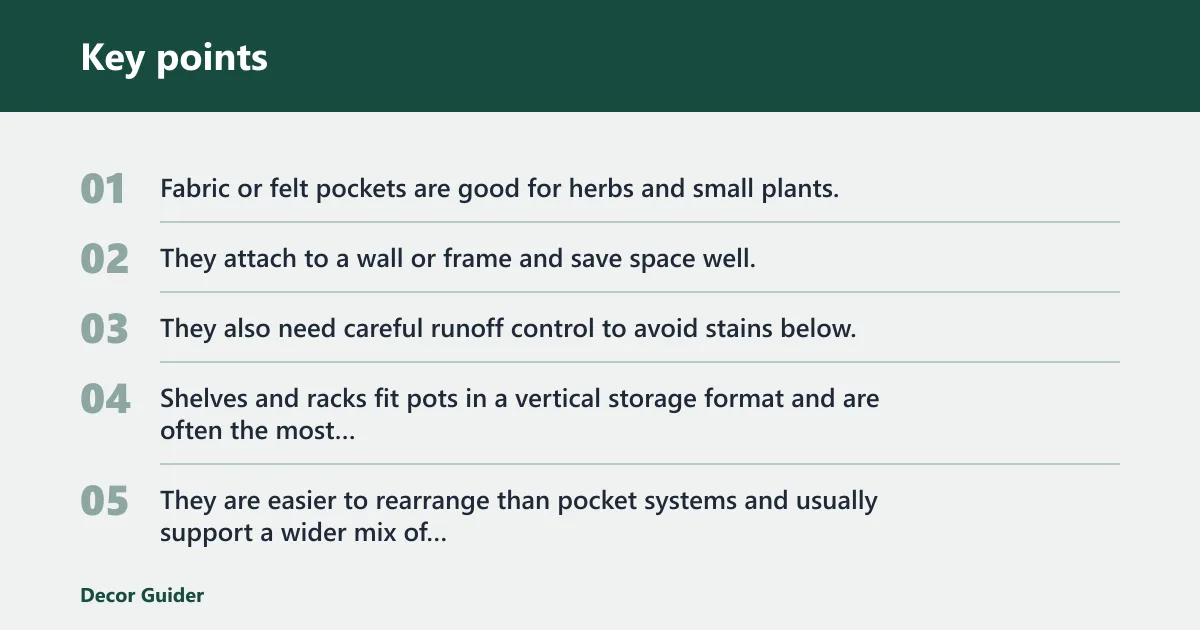
Fabric or felt pockets are good for herbs and small plants. They attach to a wall or frame and save space well, but they usually need frequent watering because pockets dry fast and soil volume is limited. They also need careful runoff control to avoid stains below.
Wall-mounted shelves or racks
Shelves and racks fit pots in a vertical storage format and are often the most budget-friendly DIY path. They are easier to rearrange than pocket systems and usually support a wider mix of plants, but they depend on good wall fixation and can become awkward if the balcony is narrow.
Trellis or wire grid systems
A trellis or wire grid supports climbing plants and keeps leaves lifted for better light and airflow. It is often the least messy option because the planting stays in pots at floor level while the vines climb upward. Use this when you want peas, beans, or other climbers rather than many small plants.
Living wall and hydroponic options
Living wall panels are the premium modular choice. They often include built-in irrigation and can hold many plants in a compact area, but they are expensive and less renter-friendly. Hydroponic vertical systems avoid soil, use a nutrient water reservoir, and tend to run cleaner than soil planters, though they need pump care and more setup skill.
Can renters install one without drilling?
Renters can use railing planters, clamp-on frames, removable hooks, or freestanding units without drilling into the wall. The key is to respect weight limits, keep water off the facade and floor, and avoid any system that swings, slips, or blocks drainage.
Railing planters and clamp-on options
Railing planters are often the simplest renter-safe choice because they use balcony railings and make good use of sunlight exposure. Choose models with drainage control so runoff does not fall onto neighbors or stain the balcony surface. Clamp-on systems are helpful, but they still need a stable railing and a clear weight limit.
Freestanding frames and removable hooks
Freestanding frames avoid wall damage and are easier to move when cleaning or moving out. Removable hooks can work for light planters, but they are not a cure-all. If the load is too high or the balcony is windy, the hardware can fail, pull loose, or scrape paint.
Weight limits, runoff, and wall protection
Wet soil is heavier than dry soil, so large planters can quickly add up. Check balcony load limits before choosing dense containers or large reservoirs. Waterproof backing, drip trays, and careful placement matter because moisture can damage walls and floors even when the structure itself holds.
What plants work best?
Choose plants that match your light, wind, and watering tolerance. Herbs and small edible plants are the safest starting point. Climbers work well on trellises. Compact ornamentals can fill pockets or shelves, but only if they suit the balcony’s exposure.
Herbs and small edible plants
Basil, parsley, chives, thyme, and mint often fit pocket planters, railing planters, or shelf systems. Herbs are usually the easiest match for east-facing balconies and other spots with partial sun. Keep mint contained, because it spreads fast and can crowd out slower plants.
Climbers, trailing plants, and compact ornamentals
Climbing beans, peas, and some vining flowers suit trellis systems. Trailing plants can soften the look of shelves and rails, but they need consistent watering. Compact ornamentals work in mixed vertical systems when they do not outgrow the container space or shade out their neighbors.
Plants to avoid in wind, heat, or shade
Avoid large, top-heavy plants in windy balconies, because they can topple or dry out too fast. Skip heat-sensitive choices on exposed west-facing spaces unless you can water often. In deep shade, avoid plants that need strong direct sun; they will stretch, weaken, and disappoint.
How much sunlight does a balcony vertical garden need?
Most plants need 4–6 hours of sunlight daily. South- or west-facing balconies are best for vegetables and flowers. East-facing balconies suit herbs and partial-shade plants. North-facing balconies are suitable for shade-loving indoor plants, but they are usually the least flexible for productive vertical gardening.
Light by balcony direction
Match the system to the exposure. Sunny balconies can handle more pots and a wider plant list. Shaded balconies need fewer expectations and more selective planting. If the balcony gets uneven sun across the day, place the sun-hungry plants higher or farther out and keep the shade-tolerant ones lower.
How to decide if your balcony is bright enough
Look at the space during the middle of the day, not just at sunrise or sunset. If direct light reaches the balcony only briefly, prioritize foliage and shade-tolerant herbs rather than fruiting crops. A vertical setup that looks full but starves for light is a waste of water and effort.
What are the biggest mistakes with balcony vertical gardens?
The biggest mistakes are choosing the wrong exposure, ignoring wind, overloading the balcony, and underestimating watering time. Many failures come from buying a system that looks efficient on paper but needs more daily attention, stronger mounting, or better drainage than the owner planned for.
- Ignoring sunlight and picking plants that need more light than the balcony gets.
- Skipping drainage holes or drip control, which leads to runoff and stains.
- Mounting a heavy system without checking wall, railing, or balcony load limits.
- Using a tall, top-heavy setup in a windy location.
- Choosing a system that takes longer to water than your schedule allows.
Suppose you buy a wall rack for six 8-inch pots on a west-facing balcony, but the wall is exposed to wind and the bottom tray has no drainage. The plants may survive, yet the maintenance becomes constant: refills, drips, and cleanup after every watering.
Frequently asked questions
Is a balcony vertical garden worth it for a small apartment?
It is worth it when floor space is tight, the balcony gets enough sun, and you are willing to water and inspect the setup regularly. It is less worth it when the balcony is shaded, windy, or too small to access the containers comfortably. The fit depends on upkeep, not just size.
What plants grow best in a balcony vertical garden?
Herbs, trailing plants, climbing plants, and compact ornamentals are the safest choices. Basil, thyme, parsley, mint, peas, and small flowers often fit the format well. Match the plant to the sun level first; a strong vertical system cannot make up for poor light.
Do vertical garden systems need daily watering?
Some do, especially pocket planters and other small soil systems that dry quickly. Larger planters, self-watering containers, and hydroponic systems can reduce how often you need to top up, but they still need regular checks. Heat, wind, and container size change the watering schedule fast.
Can renters install a balcony vertical garden without drilling?
Yes. Use railing planters, clamp-on frames, freestanding racks, or removable hooks rated for the load. Do not assume any hook is enough for a wet, planted container. You also need drainage control and wall protection, because rental damage is not only about holes in the wall.
Is a hydroponic vertical garden better than soil planters?
It can be, if you want cleaner operation, less soil mess, and a higher plant count in a compact system. It is not better for everyone, because the pump, reservoir, and setup cost add complexity. Soil planters are simpler and often better for low-tech balcony owners.
Products related to this article
Sponsored / affiliate links. As an Amazon Associate I earn from qualifying purchases. I may earn additional commission from eligible campaigns.