How to Turn a Balcony Into a Relaxing Outdoor Space
Turn a balcony into a calm outdoor space by putting privacy first, adding a seat next, then finishing with warm light and a few weather-tough plants chosen for your sun, wind, and rain exposure. Skip that order and the space stays exposed, cramped, and awkward to use, while renter-friendly fixes can fail or damage the lease. This guide covers shade, screens, furniture, storage, lighting, plant choices, and simple checks that keep the setup calm and easy to remove.
Before you start


Start by deciding what the balcony must do: lounging, reading, morning coffee, or light dining. That choice sets the size of every other item, because a narrow ledge-style balcony needs different furniture and clearance than a deeper terrace.
Measure the space and exposure
Measure door swing, usable depth, and railing height before you buy anything. Then note sun, wind, and rain exposure at the hours you plan to use it most, because a windy corner needs more anchoring and a sun-baked wall needs more shade. For hanging or clamped items, follow the building’s rules and stay within the load limits stated by the hardware maker and local guidance for balcony attachments.
Picture a balcony that is about 4 feet deep with a door that swings outward. A fixed lounge chair can block access fast. A foldable chair and a wall-mounted drop-leaf table keep the path open and still leave room for a drink or book.
Use the balcony in the right order
- Set privacy first so the space feels usable.
- Add seating and a surface next.
- Protect against weather after the layout is clear.
- Finish with lighting, plants, rugs, and storage.
What you’ll need
- Balcony privacy screen in wood, metal, wicker, or plastic
- Folding chair or bistro-style folding table and chairs
- Wall-mounted drop-leaf table, if drilling is allowed
- Outdoor rug made from weather-resistant material
- Rail planters or pots sized to the railing and floor area
- String lights, LED strip lights, or a battery lamp
- Retractable awning, sun sail, umbrella, or windbreak
- Storage bench or other dual-use seating
- Mirror with weather-safe mounting hardware
- Measuring tape, level, zip ties, mounting clips, and rust-resistant hardware
Renter-safe choices and budget bands
| Balcony problem | Best fix | Tools needed | No-drill option | Estimated budget band | Example dimensions or clearances | Best material or format for exposure | Common mistake to avoid |
|---|---|---|---|---|---|---|---|
| Direct sightlines from neighbors | Privacy screen that filters views and airflow | Measuring tape, clips, zip ties | Freestanding screen or railing-mounted panel | Low to mid | Top edge above seated eye level; leave 6-12 inches from drain points | Slatted wood, woven wicker, or perforated metal for breezy exposure | Blocking all light and making the balcony feel closed in |
| No room for fixed furniture | Folding chair and bistro-style table | None beyond setup tools | Yes, fully removable | Low to mid | Keep at least 24-30 inches for the door swing and 18-24 inches for a seat pull-out path | Powder-coated metal, treated wood, or resin that can move indoors quickly | Choosing bulky pieces that block the door swing |
| Hot, exposed seating area | Retractable awning, sun sail, or umbrella | Mounting kit, weighted base | Umbrella with weighted base | Mid | Allow overhead clearance; keep the canopy edge clear of railings and lights | UV-rated fabric with corrosion-resistant poles or fittings | Ignoring wind load and runoff |
| Dark, flat-looking balcony at night | Layered warm lighting | Hooks, clips, extension cord rated for outdoor use | Battery or solar lights | Low to mid | Use 2700-3000K bulbs and place at two heights, not just overhead | Outdoor-rated LED string lights or battery lamps with sealed housings | Using harsh white light or one single overhead source |
| Hard floor and visual clutter | Outdoor rug plus storage bench | Vacuum, broom, level | Yes, both can be freestanding | Low to mid | Leave drainage paths open and keep rug edges flat | Quick-dry polypropylene or similar weather-resistant materials | Covering damp surfaces without checking drainage first |
How private should it be?
Make privacy partial, not absolute, unless the balcony faces a very exposed angle. A screen that filters views and cuts wind usually feels better than one that blocks both light and airflow. The best height reaches above seated eye level while leaving the upper opening lighter.
Choose a screen that fits the railing
Balcony privacy screens can be made from wood, metal, wicker, or plastic. Use a material that matches the railing shape and fastening method, and place it where it blocks the most direct sightline without crowding the floor. Partial light filtering matters more than full enclosure on most small balconies.
For a railing that flexes in wind, lighter panels can move too much. For a very sunny balcony, a denser weave or slatted panel cuts glare while still letting air pass. Keep the screen clear of drainage points and door hardware.
Match height to seating level
Set the privacy barrier so it covers the seated view first. A screen that stops at the wrong height can hide the wrong sightlines and still leave you exposed when you sit down. If neighbors look down from above, combine railing privacy with taller planters or a higher panel only where allowed.
What furniture fits a small balcony?
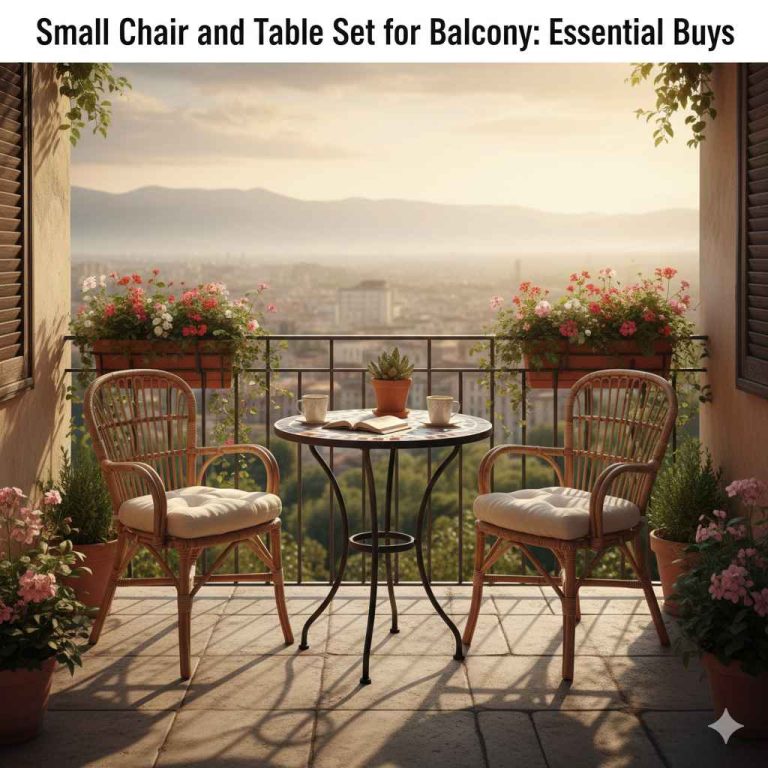
Small balconies work best with folding or lightweight pieces that you can move in seconds. Bistro-style folding tables and chairs fit many small footprints, and wall-mounted drop-leaf tables save space when not in use. Keep each piece proportional to the usable floor area, not the total balcony outline.
Keep the layout open
Leave a clear path from the door to the railing. A common rule of thumb is to keep enough space to sit down and stand up without scraping the railing, the screen, or planters; in tight spaces, that usually means one seat plus one narrow surface, not a full dining set.
Use easy-stowaway furniture if the balcony must still serve as storage access. Lightweight construction matters because heavy pieces are harder to move before a storm and more annoying to clean around.
Build a simple zone plan
- Place the seat where the view is best.
- Put the table within arm’s reach.
- Keep the storage piece against the least-used wall.
- Leave the door swing and one walking lane clear.
How do you handle wind and rain?
Use weather protection after you know where people will sit. Retractable awnings, sun sails, umbrellas, and windbreaks can all help, but each one changes airflow and runoff differently. A windy balcony needs a setup that sheds gusts instead of catching them like a sail, and loose items should be chosen with exposed-balcony wind load in mind, especially for umbrellas and sails.
Check drainage before rugs and planters
Look for blocked drains, pooled water, or low spots before adding an outdoor rug or heavy planter. Standing water shortens the life of flooring, supports mildew, and makes a relaxing setup feel damp. Keep rug edges and planter feet off known drainage paths, and prefer quick-dry materials in humid or rain-prone climates.
Choose items that dry fast and move easily. A light umbrella or a removable windbreak is usually safer for renter-friendly setups than a fixed barrier that traps moisture or strains a railing in strong gusts. Outdoor electrical items should be rated for exterior use and plugged into protected outlets or weather-safe power solutions, per standard outdoor electrical safety guidance.
Adjust for balcony type
A narrow ledge-style balcony benefits from compact wind protection that still allows circulation. A deeper terrace can handle layered protection, such as a sun sail above and a partial screen at the railing. Do not place tall pieces where they can funnel wind into a stronger tunnel effect.
What lighting makes it cozy at night?
Warm lighting in the 2700-3000K range creates an inviting mood without feeling stark, which is why it works well for seating zones and low-glare balcony corners. Layer lighting at more than one height: a low source near the floor, a midlevel source near seating, and an overhead or rail-level accent. That mix reads calmer than one bright fixture alone.
Use string lights, strips, and small lamps
String lights add a soft outline overhead, while LED strip lights can be placed under balcony rails or along edges. A hanging pendant light can become a focal point over outdoor furniture if the ceiling or overhead support allows it. Solar or battery power works well where outlets are limited, and outdoor-rated cords or fixtures help reduce shock risk in damp conditions.
Too much light flattens the space, and too little makes it feel unused after dark.
Place lights at different heights
Run one line about above eye level, then add a lower glow near the seat or table. If the balcony is small, keep the bulb count modest and avoid glare on glass doors. The goal is depth, not brightness.
Suppose a 6-foot-wide balcony feels flat at night. Add one string line along the upper edge and a battery lamp near the chair. That usually gives more depth than adding a second overhead strand.
How do you avoid making a small balcony feel cluttered?
Use fewer pieces, but make each one do more. Clutter usually comes from extra items that do not help privacy, comfort, or storage. Keep the floor visible where possible, and treat every object as either seating, cover, light, or storage.
Use storage and dual-purpose pieces
A storage bench can provide extra seating and keep the space tidy. Hidden compartments work well for cushion storage, small tools, and cleaning supplies. Balcony storage is best when it also removes visual noise, not when it adds another bulky object to work around.
Use cushions sparingly and store them after use if the balcony stays damp or windy. A few weather-safe pieces look calmer than a pile of soft accents that collect moisture and dust.
Add plants with a job
Plants work best when they also define structure. Rail planters, pots, and vertical growers can soften edges without taking up much floor area. Herbs and evergreen structure plants keep the balcony useful across seasons, and vining plants like jasmine, clematis, or passion flowers can create living walls when supported correctly.
Match each plant to the balcony’s sun or shade pattern. A plant that likes full sun will decline fast in shade, and a shade plant can scorch on an exposed ledge. Seasonal swaps keep the display healthy without crowding the space year-round.
Use mirrors with caution
A balcony mirror can create a vertical space illusion and make the width feel larger if it reflects sky or greenery, not direct sun. Mount it with weather-safe hardware and place it where it cannot glare into the seating area or heat up a neighboring wall.
Do not use a mirror as a default fix for a tiny balcony. Bad placement creates glare, and oversized reflective surfaces can make the space feel busier instead of calmer.
Balcony setup checklist
Use this checklist in order. It keeps the balcony functional before it gets decorative.
| Step | Balcony problem | Best fix | No-drill option | Estimated budget band | Example dimensions or clearances | Best material or format for exposure | Common mistake to avoid |
|---|---|---|---|---|---|---|---|
| 1 | Exposure to neighbors | Privacy screen that filters views and airflow | Freestanding or railing-clipped screen | Low to mid | Top edge above seated eye level; leave 6-12 inches from drain points | Slatted wood, woven wicker, or perforated metal for breezy exposure | Mounting too low to block seated sightlines |
| 2 | Tight footprint | Folding chair and bistro-style folding table | Yes | Low to mid | Keep at least 24-30 inches for the door swing and 18-24 inches for a seat pull-out path | Powder-coated metal, treated wood, or resin that can move indoors quickly | Buying fixed furniture that blocks the door swing |
| 3 | Wind or hot sun | Umbrella, sail, or retractable awning | Weighted umbrella base | Mid | Allow overhead clearance; keep the canopy edge clear of railings and lights | UV-rated fabric with corrosion-resistant poles or fittings | Ignoring wind load and runoff |
| 4 | Flat look at night | Warm layered lighting at 2700-3000K | Battery or solar lights | Low to mid | Use 2700-3000K bulbs and place at two heights, not just overhead | Outdoor-rated LED string lights or battery lamps with sealed housings | Using one bright source only |
| 5 | Hard floor and clutter | Outdoor rug and storage bench | Yes | Low to mid | Leave drainage paths open and keep rug edges flat | Quick-dry polypropylene or similar weather-resistant materials | Covering damp drainage paths |
| 6 | Blank walls and dead corners | Plants, mirror, or rail planters | Yes, if mounted safely | Low to mid | Use one vertical feature first, then reassess remaining clearance | Compact pots, rail planters, and weather-safe mirror hardware | Overcrowding every surface at once |
Top-up check: add one new piece at a time, then recheck door swing, drainage, and seating clearance. A practical increment is about one object per pass, rather than a full rearrangement, so you can catch problems before the balcony becomes crowded or hard to clean.
Common mistakes
The most common failure is blocking the door swing. If a chair, bench, or planter touches that arc, the space stops feeling relaxing immediately. Keep the swing clear before adding anything decorative.
Another common mistake is ignoring wind, drainage, or mirror glare. A balcony that funnels gusts, traps standing water, or throws bright reflection into the seating zone will feel uncomfortable even if it looks finished.
A final mistake is adding too many pieces at once. Start with privacy, seat, and light. Then add plants, rug, storage, and a mirror only if each item solves a specific problem.
Frequently asked questions
What is the best layout for a relaxing balcony?
The best layout puts the seat where the view is best, then places the table within reach and the storage against the least-used wall. Privacy should protect the sitting zone first. If the balcony is deep, separate lounging from storage; if it is narrow, keep one slim lane open.
How do I make a balcony feel private without blocking light?
Use a screen that filters views rather than a full barrier. Wood, metal, wicker, or plastic panels can reduce sightlines and wind while still letting some daylight pass through. Place the screen at seated eye level, and choose a style that matches the railing so it does not look patched on.
Which furniture works best on a tiny balcony?
Bistro-style folding tables and chairs are the safest default for tiny balconies. A wall-mounted drop-leaf table saves space when not in use, and lightweight construction makes it easier to move items for cleaning or weather. Avoid bulky lounge sets unless the balcony has deep clearance.
How do I make a balcony cozy at night?
Use warm bulbs in the 2700-3000K range, then layer light at two or three heights instead of relying on one bright source. Add a low lamp, a rail or string light, and one small accent near the seat. Warm, indirect light makes the balcony feel softer and more inviting.
How do I make a balcony usable in wind or rain?
Choose removable, quick-dry items and keep drainage open. A weighted umbrella base, partial windscreen, or retractable awning can help, but umbrellas and sails need extra caution in gusty conditions because they catch wind. Avoid rugs over wet spots, and use outdoor-rated electrical items only.
What are the best plants for a balcony retreat?
Pick plants that match the balcony’s sun, shade, and wind exposure. Herbs, compact evergreen structure plants, and vining climbers work well when space is limited, while rail planters save floor area. The best balcony plants are the ones that can stay healthy in the exact conditions your railing gets.
How do I keep a small balcony from looking cluttered?
Limit the plan to one piece for privacy, one seat, one table, one light layer, and one storage solution. Use vertical planting or a mirror only if they solve a real problem. If an item does not improve comfort, shade, privacy, or storage, leave it out.
Products related to this article
Sponsored / affiliate links. As an Amazon Associate I earn from qualifying purchases. I may earn additional commission from eligible campaigns.