Balcony Privacy Problems / Not Working / Troubleshooting
Start with the symptom: gap, sway, sag, or see-through. Then fix fit first and attachment second; if a screen moves in light wind or leaves a hand-width gap, it is failing. Ignored privacy gaps usually mean more visibility, more noise, and a setup that tears, sags, or gets removed. This guide helps you diagnose balcony privacy screen, curtain, and panel failures by symptom and pick the fastest renter-safe fix.
What you’ll need


For most renter-safe fixes, you need a tape measure, outdoor-rated fasteners, and a replacement that matches both the railing and the exposure. Outdoor fabrics should be labeled for UV resistance, because sunlight degrades many materials over time; metal hardware should be corrosion-resistant in wet or coastal conditions, especially on exposed balconies. For apartment installs, check lease and building rules before you buy anything.
- Tape measure for balcony railing height, rail width, and opening size
- Outdoor-rated railing ties or zip ties with UV-stable outdoor rating
- Balcony privacy screen clips sized for your rail thickness
- Replacement screen, outdoor privacy curtain, or panel material with the right opacity
- Stainless steel fasteners if your setup uses hardware
- Optional drill and anchors for a permanent install where rules allow it
- Scissors or snips for trimming ties
Start with the symptom you can see. A screen that sags needs a different fix from one that flaps, and a visibility problem from above calls for coverage, not tighter ties. Apartment balconies also face different limits by floor height, wind exposure, and railing design, so diagnosis has to include both fit and the building’s allowed mounting method.
Separate fit, wind, and visibility failures
- Measure the railing height, rail width, and the opening size between posts.
- Check whether the screen covers the full span with no side gap or bottom gap.
- Lift the edge by hand and note whether the issue is loose attachment, wind load, or a thin panel.
- Look from above if possible, because balcony sightlines from an upper floor can pass over the railing even when the front face looks covered.
Say a roughly 1.2-meter-tall screen fits the front rail but leaves about a 20-centimeter opening at the corner. That is a fit problem, not a wind problem, so a wider panel or overlap strip fixes it faster than adding more ties.
Decide whether to repair, remount, or replace
- Repair when the material is sound and only ties, clips, or one edge has failed.
- Remount when the attachment method is wrong for the railing thickness or shape.
- Replace when the screen is too short, too narrow, too transparent, or too solid for the wind exposure.
Why is my balcony privacy screen not staying up?
A screen that will not stay up usually has a fit problem, loose fasteners, or hardware that cannot grip the railing thickness. If the panel shifts after every gust, the attachment method is too weak for the balcony’s wind load. In apartment buildings, the right fix is often a better no-drill mount rather than more force on the same weak attachment point.
Check the fit first
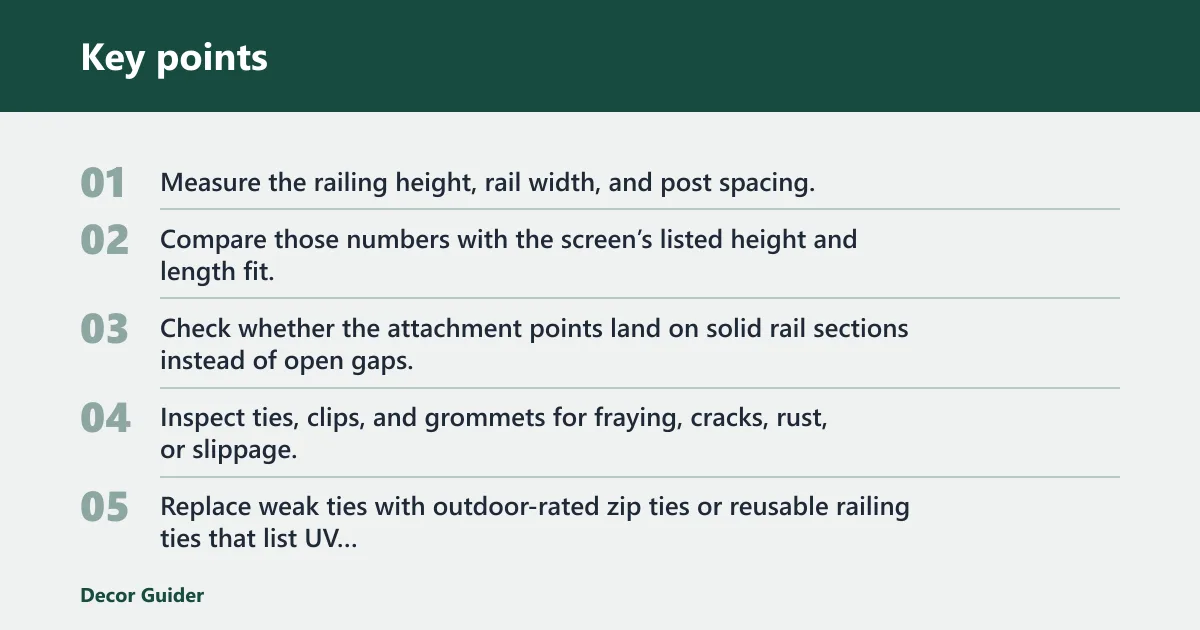
- Measure the railing height, rail width, and post spacing.
- Compare those numbers with the screen’s listed height and length fit.
- Check whether the attachment points land on solid rail sections instead of open gaps.
Check the hardware next
- Inspect ties, clips, and grommets for fraying, cracks, rust, or slippage.
- Replace weak ties with outdoor-rated zip ties or reusable railing ties that list UV stability and load resistance.
- Use balcony privacy screen clips only if they match the railing thickness and have an anti-slip grip.
If that didn’t work, try this next
- Add one tie or clip at each corner before filling the span.
- Move the attachment points closer together, then recheck after a gusty period.
- If the panel still slips, switch to a different attachment method or a narrower screen that fits the opening better.
How do you stop balcony flapping?
Flapping usually means the panel is too solid for the wind load, too loose at the corners, or too far from the rail for stable tension. On exposed apartments, a more permeable screen often works better than a thicker one because it reduces sail effect while still blocking sightlines. Wind exposure, not just size, should drive the replacement choice.
Reduce wind load
- Choose a screen with some wind permeability instead of a solid sheet when the balcony gets frequent gusts.
- Check whether the current panel is acting like a sail against an open corner.
- Add corner reinforcement where the fabric pulls away first.
Tighten the layout
- Shorten the span so the panel is not stretched across a long opening.
- Place ties or clips at regular spacing along the top, middle, and bottom edges.
- Pull the fabric flat, then recheck after one windy day.
If that didn’t work: replace a fully solid panel
- Replace a fully solid panel with a less wind-catching product type.
- Move to a screen with reinforced corners and grommets spaced closer together.
- Use stainless steel hardware or a heavier outdoor privacy curtain if the current material keeps lifting.
Suppose a 3-meter screen on a mid-floor balcony stays neat on calm days but snaps and rattles during afternoon wind. The issue is wind load, so a permeable panel and tighter corner support usually solve more than extra length does. That logic matches outdoor guidance from weather-exposed material standards: reduce sail area first, then strengthen the attachment points.
Privacy gaps matrix
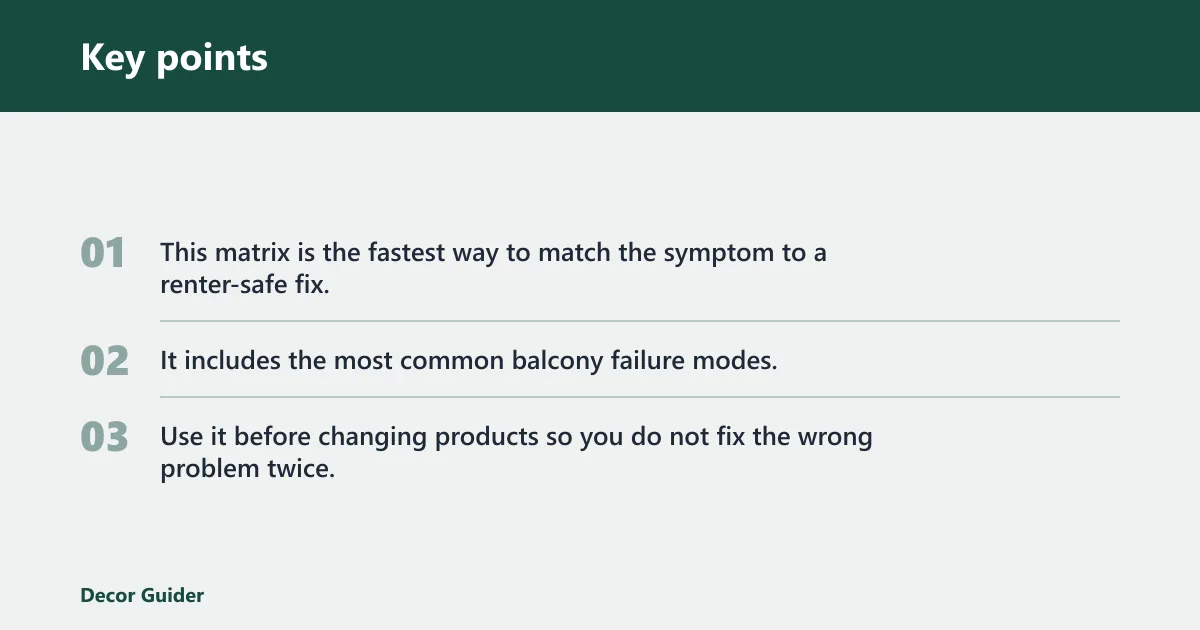
This matrix is the fastest way to match the symptom to a renter-safe fix. It includes the most common balcony failure modes, plus the apartment-specific issues that show up on corner units, higher floors, and shallow balconies. Use it before changing products so you do not fix the wrong problem twice.
| Symptom | Likely cause | Quick fix | Best replacement type | Renter-safety risk |
|---|---|---|---|---|
| Flapping at the top edge | Loose top ties or too much wind load | Add one tie every 20 to 30 cm | More permeable balcony privacy screen | Low if no-drill hardware is used |
| Sagging in the middle | Long span, weak fabric, or poor support | Move ties closer and support the center | Heavier outdoor privacy curtain with tighter grommets | Low to medium |
| See-through front panel | Low opacity | Add an overlap strip or a second layer | Higher-opacity screen or curtain | Low |
| Side gap near a corner | Rail shape or short panel length | Extend coverage around the corner | Longer panel with corner reinforcement | Low |
| Bottom gap under the rail | Screen cut too short | Lower the mount point if allowed | Longer screen or curtain | Low |
| Loose ties slipping | Weak or worn ties, wrong spacing | Replace with UV-stable outdoor-rated ties | Reusable railing ties or clips | Low |
| Clip will not grip | Wrong railing thickness | Match clip size to rail width | Adjustable anti-slip clip | Low |
| Corner still exposed | Overlap between panels is too small | Add more overlap at the corner | Wider panel or corner wrap | Low |
| Privacy from above is poor | Railing covered, but upper sightline remains open | Raise coverage higher or add a top screen | Taller screen or outdoor privacy curtain | Low |
| Hardware rust or corrosion | Non-stainless hardware or wet exposure | Swap to stainless steel fasteners | Rust-resistant hardware with outdoor rating | Medium if hardware fails suddenly |
| Panel twists in gusts | Solid panel with high wind load | Use a more permeable product and add corners | Permeable screen with reinforced edges | Low |
| Curtain blows open | Insufficient lower tie-downs or side restraint | Add side weights or bottom anchors if allowed | Outdoor privacy curtain with heavier hem | Low to medium |
| Wrong fit on a narrow balcony | Panel too wide for the rail layout | Trim coverage only if the product allows it | Smaller modular screen or two-panel setup | Low |
| Low privacy from above | Coverage stops at rail height | Increase top coverage or angle the top edge inward | Taller screen, curtain, or privacy panel | Low |
| Wind gap at a shallow balcony edge | Open side catches gusts and leaks sightlines | Wrap coverage around the exposed edge | Corner-wrapped screen with reinforced edge | Low |
Can you fix balcony privacy without drilling?
Yes, many balcony privacy problems can be addressed with ties, clips, or tension-based mounting when the railing shape and wind load are moderate. No-drill hardware is often enough for renters, but it has limits on heavy panels and exposed corners. If the balcony faces strong wind or has a thin metal rail, no-drill options need stronger reinforcement and better-fit materials.
Use renter-safe mounting first
- Choose UV-stable outdoor ties, reusable railing ties, or balcony privacy screen clips.
- Match clips to the railing thickness and confirm the grip is anti-slip.
- Space ties evenly so the load is spread across the full edge.
Know when drilled hardware is better
- Switch to drilled mounting if the screen keeps slipping after retightening.
- Use stainless steel hardware where corrosion is already visible.
- Confirm building or HOA rules before any permanent install.
How to choose the right replacement
Choose the replacement by symptom, then by size and material. A screen that fits the railing but stays see-through is an opacity problem, while a panel that tears in gusts is a wind load problem. Outdoor material guidance from manufacturers and building standards generally points the same way: UV-stable fabrics for sun, corrosion-resistant hardware for weather, and lighter airflow for exposed balconies.
Match size to the railing
- Measure railing height, rail width, and opening size before buying anything.
- Pick a height that covers the visible line of sight from the floor and, if needed, from above.
- Choose a length that covers the span with enough overlap between panels.
Compare material traits
- Check opacity if privacy is the main issue.
- Check UV resistance if the balcony gets full sun.
- Check wind permeability if the balcony gets strong gusts.
- Check the attachment method last so the hardware matches the railing and the panel.
A common first-timer mistake is buying a wider screen without checking the rail opening size. That can leave the same corner gap, just with more material to flap.
Choose between screen, curtain, and panel
- Use a screen for lighter coverage and easier no-drill mounting.
- Use an outdoor privacy curtain when you need more drape and better side coverage.
- Use a panel when you need a fixed shape and stronger edge control.
Best fix by apartment type
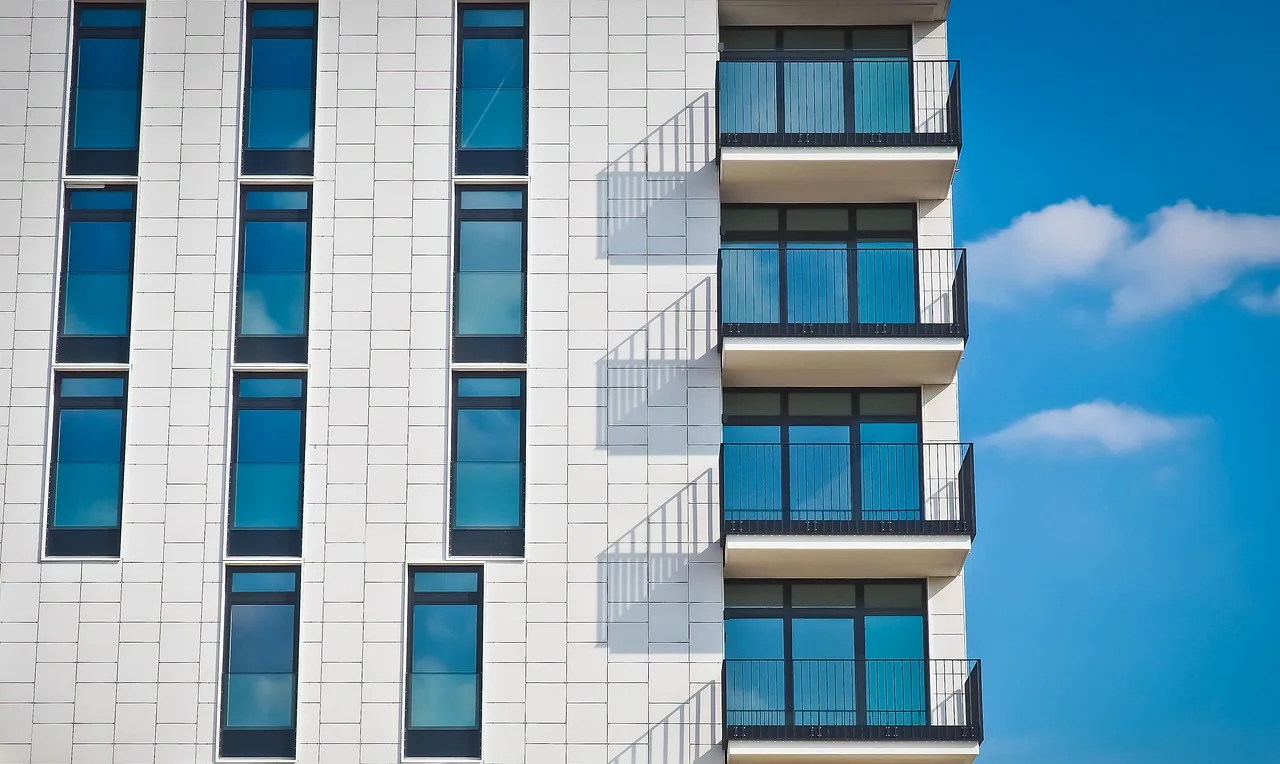
The best fix depends on balcony shape, floor height, and what your lease allows. A windy high-rise usually needs a more permeable screen with stronger corners; a shallow balcony often needs a shorter span and more overlap; metal rails without drilling call for clips or ties; corner units and above-sightline problems need taller or wrapped coverage.
Windy high-rise
Choose a more permeable screen or a lighter outdoor privacy curtain with reinforced corners. High floors create stronger gusts, so a solid panel often acts like a sail. Use corrosion-resistant hardware and keep the attachment points tight to the rail rather than letting the fabric hang away from it.
Shallow balcony
Use a compact panel or curtain that does not overshoot the space and catch extra wind. Shallow balconies can feel private from the front but still expose you from the side, so overlap and corner coverage matter more than total width. A smaller, better-fitted product often works better than a bigger one.
Metal rail with no drilling allowed
Use railing-specific clips, UV-stable ties, or a tension-based system designed for thin metal rails. The main risk is slippage, so the fit has to match the rail thickness closely. If the rail is slick or narrow, anti-slip clips and stainless fasteners used with approved hardware are the safer route.
Corner unit
Prioritize corner wraps, overlap strips, or a wider panel with reinforced edges. Corner units are exposed from two directions, so a single flat face rarely solves the whole problem. Treat corner exposure as a coverage issue first and a wind issue second.
Above-sightline privacy problems
Use a taller screen, a higher mounted curtain, or a top extension that blocks views from upper floors. Front coverage alone is not enough when neighbors can look down into the balcony. Privacy from above usually needs height, not just opacity.
Common mistakes
- Measuring only the front rail and ignoring corner exposure.
- Using indoor ties or clips that are not UV-stable outdoors.
- Choosing a solid panel for a windy balcony and then treating flapping as an attachment issue.
- Ignoring privacy gaps from above after the front face looks covered.
- Using clips that do not match the railing thickness.
- Leaving rusted fasteners in place because the panel still “mostly” holds.
Prevention
Check building or HOA rules before installing anything, then recheck the ties, clips, and corners after the first windy day. Replace worn fasteners before the screen starts moving, because small looseness turns into sagging and tear points fast. In apartments, the longest-lasting setups are the ones that match both the climate and the lease limits from the start.
Frequently asked questions
Why does my balcony privacy screen keep flapping in the wind?
Flapping points to a panel that catches too much wind or has loose edges. A more permeable screen often settles better than a solid one, especially on exposed corners. Add closer tie spacing and corner reinforcement, then recheck after a breezy afternoon.
Why can people still see through my balcony privacy screen?
Visibility usually comes from low opacity, side gaps, or sightlines from above. A front cover can still leave the top open to neighbors on higher floors. Add overlap at the edges, raise the coverage, or switch to a denser screen or outdoor privacy curtain.
How do I stop a balcony privacy screen from sagging?
Support the middle span and tighten the mounting points. Sagging often comes from a long opening, weak fabric, or ties spaced too far apart. Move the fasteners closer together, then choose a heavier material or one with closer grommet spacing if the problem returns.
What size privacy screen fits my balcony railing?
Measure rail height, rail width, and opening size before buying. The right screen covers the visible area with enough overlap at the corners and no bottom gap. If the railing is irregular, use the largest continuous section as the sizing guide, not the whole balcony face.
Can I attach a balcony privacy screen without drilling?
Yes, if the railing shape and wind exposure are manageable. Use outdoor-rated ties, reusable railing ties, or clips sized to the rail thickness. If the screen keeps slipping, or if corrosion and wind load keep returning, drilled stainless hardware may be the better long-term choice.
Products related to this article
Sponsored / affiliate links. As an Amazon Associate I earn from qualifying purchases. I may earn additional commission from eligible campaigns.