How to Deter Squirrels From Balcony: A Complete Squirrel-Proofing Audit
You step outside with your morning coffee, and the cushion on your favorite chair is shredded. Tufts of foam padding drift across the deck. A planter has been dug up, roots exposed, and you spot the culprit perched on the railing, staring at you like you’re the intruder. Squirrels are clever, persistent, and surprisingly destructive when they decide your balcony is part of their territory.
This guide walks you through a complete squirrel-proofing audit. You’ll learn how to find their entry points, remove what’s attracting them, and build barriers that actually hold up. We’ll cover furniture protection, legal considerations for traps and ultrasonic devices, and a troubleshooting section for when the little acrobats keep coming back. By the end, you’ll have a practical plan, not just a list of random tips.

IMUSTGARDEN
I Must Garden Squirrel Repellent: Stops Chewing…
- STOPS DAMAGE FAST – Contains powerful ingredients that prevent squirrels from chewing & gnawing on wires, plants, outdoor furnitur…
- NATURAL INGREDIENTS & PET SAFE – Safe for people, pets, and the environment. Contains NO harmful chemicals or poisons, and has NO…
- PREVENTS CAR & TRUCK DAMAGE – Stops squirrels from chewing on wires and nesting under the hood of your vehicle
As an Amazon Associate I earn from qualifying purchases.
One product that fits neatly into this strategy is the IMUSTGARDEN squirrel repellent. It’s a natural spray that targets chewing behavior on plants, furniture, and even car wiring. It works well as part of a broader barrier approach, especially for surfaces you can’t easily cover with mesh.
Why Squirrels Love Your Balcony (And Why They Keep Coming Back)
Squirrels aren’t random. They operate on a simple logic: food, water, and shelter. Your balcony offers one or more of these, often without you realizing it.
Bird feeders are the obvious draw. A single feeder can feed a family of squirrels for weeks. But other attractants are less obvious. Pet food left out overnight, fruit trees or nut trees near the railing, and even a small tray of water for birds can turn your balcony into a rest stop.
Shelter matters just as much. A balcony with stacked planters, a storage bench, or an overgrown corner provides a safe nesting spot. Squirrels will chew through soft materials like foam cushions to build nests. They’ll also gnaw on wood railings to sharpen their teeth, which grow continuously.
Once a squirrel establishes a route to your balcony, it becomes a habit. They remember food sources for years. That’s why simply scaring one away rarely works. You have to change the environment itself.
Step 1: Remove All Food and Water Attractants
Start with the easiest fixes. Walk around your balcony and look for anything edible or drinkable.
- Bird feeders: Bring them in for two weeks to break the habit, or move them at least 10 feet away from the railing and any jumpable surface.
- Pet food: Never leave bowls outside. Feed pets indoors or pick up bowls immediately after they finish.
- Trash cans: Use cans with tight-fitting lids. Rinse them weekly to remove food odors.
- Fruit and nuts: Pick up fallen fruit from nearby trees daily. If you have nut trees, consider netting the branches.
- Water sources: Empty plant saucers, bird baths, and any standing water. Squirrels need water daily, so removing it makes your balcony less appealing.
This step alone solves about half of the squirrel problems I see. But it’s not enough if you have a feeder you want to keep.
The Bird Feeder Dilemma: How to Make It Truly Squirrel-Proof
You can keep birds without feeding squirrels. The trick is making the feeder physically inaccessible.
Mount the feeder on a pole at least 6 feet tall and 10 feet away from any structure, including your balcony railing. Add a baffle—a dome or cone-shaped guard—below the feeder. Squirrels can jump horizontally about 10 feet and vertically about 5 feet from a standing start. That means the pole needs to be in open space, not near a wall or tree.
For hanging feeders, use a wire or cable with a baffle above the feeder. Squirrels will try to hang upside down to reach it. A smooth, slippery pole or a greased section can stop them. Just check the grease regularly, as it can attract dust and dirt.
If you’re not willing to relocate the feeder, take it down for two weeks. The birds will find other food sources. The squirrels will move on too. Then reintroduce the feeder with the baffle and pole setup.
Step 2: Seal Entry Points and Create Physical Barriers
Removing food helps, but squirrels are persistent. They’ll still explore your balcony for shelter. You need to block their access.
Start by identifying entry points. Look for these specific areas:
- Railing gaps: Spaces between railing posts or under the handrail. Squirrels can squeeze through gaps as small as 1.5 inches.
- Eaves and rooflines: Gaps where the roof meets the wall, especially near corners.
- Pipe junctions: Where utility pipes or cables enter the building. Squirrels use these as highways.
- Under the door: Gaps at the bottom of your balcony door. Weatherstripping can close a gap up to 1 inch.
Seal these with DIY materials. Hardware cloth (wire mesh with 1/4-inch or 1/2-inch openings) is your best friend. Cut it to size and attach it with heavy-duty staples or screws. For gaps around pipes, use expanding foam sealant, then cover it with mesh for extra protection.
DIY Wire Mesh and Railing Guards That Actually Work
Chicken wire works, but it’s flimsy. Squirrels can chew through it if they’re determined. Use hardware cloth instead. It’s sturdier and the small openings prevent them from getting a grip.
For railings, attach the mesh to the inside of the railing, not the outside. This keeps it out of sight and makes it harder for squirrels to climb over. Use zip ties or small screws every 6 inches to secure it.
Consider a motion-activated sprinkler as a non-physical barrier. These devices detect movement and spray a sudden burst of water. They’re effective because they startle the squirrel without harming it. Place it near the entry point or the area they frequent most. The downside is the water can wet your balcony furniture, so position it carefully.
For a more permanent solution, a balcony enclosure or screen room is the gold standard. It completely blocks access. Check your lease or building rules before installing one, as some apartments restrict structural changes.
Step 3: Use Scent and Sound Deterrents That Last
Physical barriers are the most reliable, but scent and sound deterrents add another layer. They’re useful for protecting specific areas, like a planter or a single chair.
Natural Repellents vs. Ultrasonic Devices: What the Science Says
Natural repellents work on the squirrel’s sense of smell. Cayenne pepper and peppermint oil are the two most common active ingredients. The capsaicin in cayenne irritates the squirrel’s mouth and nose, creating a negative association with the area. Peppermint oil has a strong scent that many rodents find overwhelming.
The key is reapplication. Rain, sun, and time break down the active ingredients. Plan to reapply a spray repellent every 3 to 5 days, and after any rain. A product like the IMUSTGARDEN spray is convenient because you can apply it directly to plants and furniture. It’s safe for pets and doesn’t have a strong odor, which matters if you spend time on your balcony.
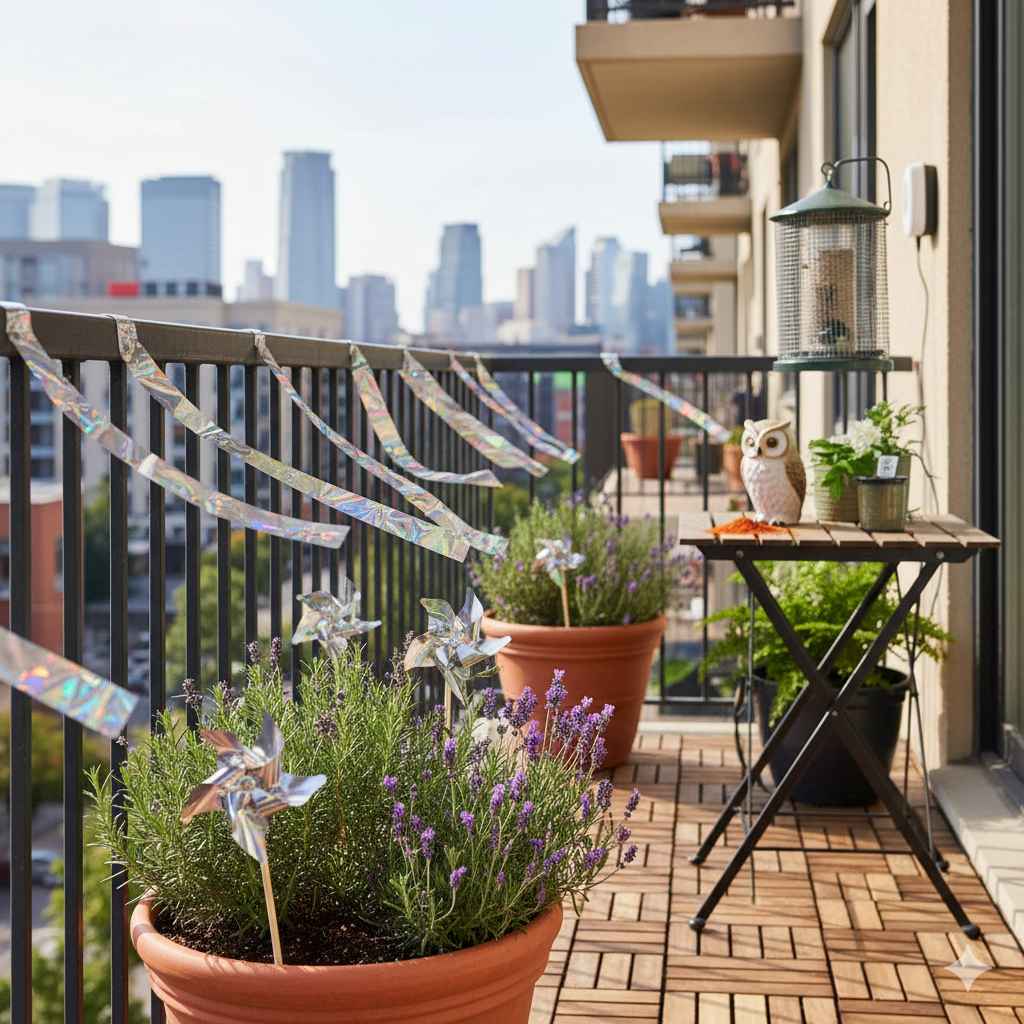
Ultrasonic devices emit high-frequency sounds that humans can’t hear. The theory is that they annoy squirrels and drive them away. The evidence is mixed. Some studies show rodents habituate to the sound quickly, meaning it stops working after a few weeks. Others show it works temporarily, especially for new visitors. The bigger issue is that the sound doesn’t travel through walls or solid objects, so its range is limited.
My advice: skip the ultrasonic devices. They’re expensive and unreliable. Spend that money on better mesh and a good repellent spray.
Step 4: Protect Your Furniture and Planters from Damage
Squirrels chew on furniture for two reasons: to sharpen their teeth and to gather nesting material. Foam cushions are a prime target. They’re soft, easy to tear, and make excellent bedding.
Protect cushions with a tight-fitting, waterproof cover. Look for covers made of heavy-duty polyester or canvas. Squirrels can still chew through these, but they’re much harder to penetrate than the foam underneath. When the balcony isn’t in use, store cushions indoors or in a sealed storage bench.
For planters, the problem is usually digging. Squirrels dig up bulbs and seeds to eat them. Cover the soil with a layer of chicken wire or hardware cloth. Cut a small hole for the plant stem, and secure the mesh over the pot. You can also use a layer of small pebbles or gravel on top of the soil. It makes digging difficult without harming the plant.
If you have wooden furniture, check for chew marks regularly. Squirrels will gnaw on railings and table legs. A repellent spray applied to the legs can discourage this. The IMUSTGARDEN formula is safe for wood and won’t stain it, which is a real plus if you care about how your balcony looks.
The Weekly 10-Minute Squirrel-Proofing Checklist
Consistency beats intensity. Spend 10 minutes each week on this routine, and you’ll stay ahead of the problem.
- Inspect entry points: Walk the perimeter of your balcony. Check for new gaps, loose mesh, or signs of chewing on the railing.
- Remove food sources: Pick up fallen fruit, empty plant saucers, and check for any pet food left out.
- Reapply repellent: If you use a spray, reapply it to planters, furniture legs, and railings. Do this after any rain.
- Check for droppings: Squirrel droppings are small, dark, and cylindrical. Finding them tells you where they’re spending time. Clean the area and apply a fresh layer of repellent.
- Look for new nesting material: Shredded leaves, grass, or bits of foam near a corner or under a bench is a red flag. Remove it immediately.
- Test your sprinkler: If you use a motion-activated sprinkler, make sure it’s still charged and the sensor is clean.
Troubleshooting: Why Your Balcony Is Still a Squirrel Magnet
You’ve done everything, and a squirrel still shows up. Here’s what to check.
Did you miss a food source? Check for fallen birdseed from a neighbor’s feeder above you. Check for acorns from an overhanging oak branch. Check your neighbor’s balcony—if they have a feeder, the squirrels will use your balcony as a staging area.
Is the squirrel habituated? Squirrels learn. If they’ve been getting food from your balcony for months, a single week of repellent won’t break the habit. You need to be consistent for at least two to three weeks. This is why the weekly checklist matters.
Is your repellent fresh? Most natural sprays degrade quickly. If you applied it a week ago and it rained, it’s gone. Reapply and test again.
Did you block every entry point? Squirrels are incredible jumpers. They can leap 10 feet horizontally from a tree branch to your railing. Check for any overhanging branches and trim them back. A gap of even 1.5 inches is enough for a juvenile squirrel to squeeze through.
Are you dealing with a nest? If a squirrel has built a nest inside a storage box or under a deck, it won’t leave easily. You’ll need to remove the nest and seal the area completely. Wear gloves and wash the area with a disinfectant afterward.
Frequently Asked Questions (FAQs)
Will cayenne pepper harm squirrels?
Cayenne pepper irritates their mouth and nose but doesn’t cause lasting harm. The capsaicin creates a burning sensation that teaches them to avoid the area. It’s a safe deterrent, but it washes away in the rain, so you’ll need to reapply it frequently.
Is it legal to trap and relocate squirrels?
In most states, it’s illegal to trap and relocate wildlife without a permit. Relocating a squirrel often results in its death because it doesn’t know where to find food or shelter in a new territory. Check your local wildlife laws before attempting any trapping. In many residential buildings, traps are also prohibited by lease agreements.
Do ultrasonic squirrel repellents work?
They work temporarily, at best. The high-frequency sound can startle squirrels initially, but they adapt to it quickly, often within a few weeks. The sound also doesn’t penetrate walls or furniture, so it only covers a small area. Physical barriers and scent repellents are more reliable.
What smell do squirrels hate the most?
Cayenne pepper and peppermint oil are the two most effective scents. Squirrels also dislike the smell of garlic and apple cider vinegar. You can make a DIY spray by mixing one part vinegar with two parts water, but the smell fades fast outdoors. Commercial repellents often combine these scents for longer-lasting effects.
Can squirrels chew through wire mesh?
They can chew through thin chicken wire. Use hardware cloth with 1/4-inch or 1/2-inch openings instead. The thicker steel wire is too tough for their teeth. If you’re unsure, test a small piece with a pair of pliers—if you can’t easily bend it, the squirrel can’t chew it either.
Final Verdict: The Most Effective Combination Strategy
No single method works forever. Squirrels are adaptable. The winning strategy is a layered defense that combines removal of attractants, physical barriers, and scent repellents.
- Remove all food and water sources first. This is the foundation.
- Seal every entry point with hardware cloth. Check it weekly.
- Apply a natural repellent spray to plants and furniture. Reapply after rain.
- Protect cushions and planters with covers and mesh.
- Skip ultrasonic devices. Spend the money on better mesh.
- Trim overhanging branches to limit jump access.
- Do the 10-minute weekly checklist. Consistency beats intensity.
It takes about two to three weeks to break a squirrel’s habit. Stick with the plan, and your balcony will become just another piece of the landscape—not a buffet or a hotel. For more tips on keeping your outdoor space clean and critter-free, check out this guide on repelling pigeons too.
Products related to this article
Sponsored / affiliate links. As an Amazon Associate I earn from qualifying purchases. I may earn additional commission from eligible campaigns.