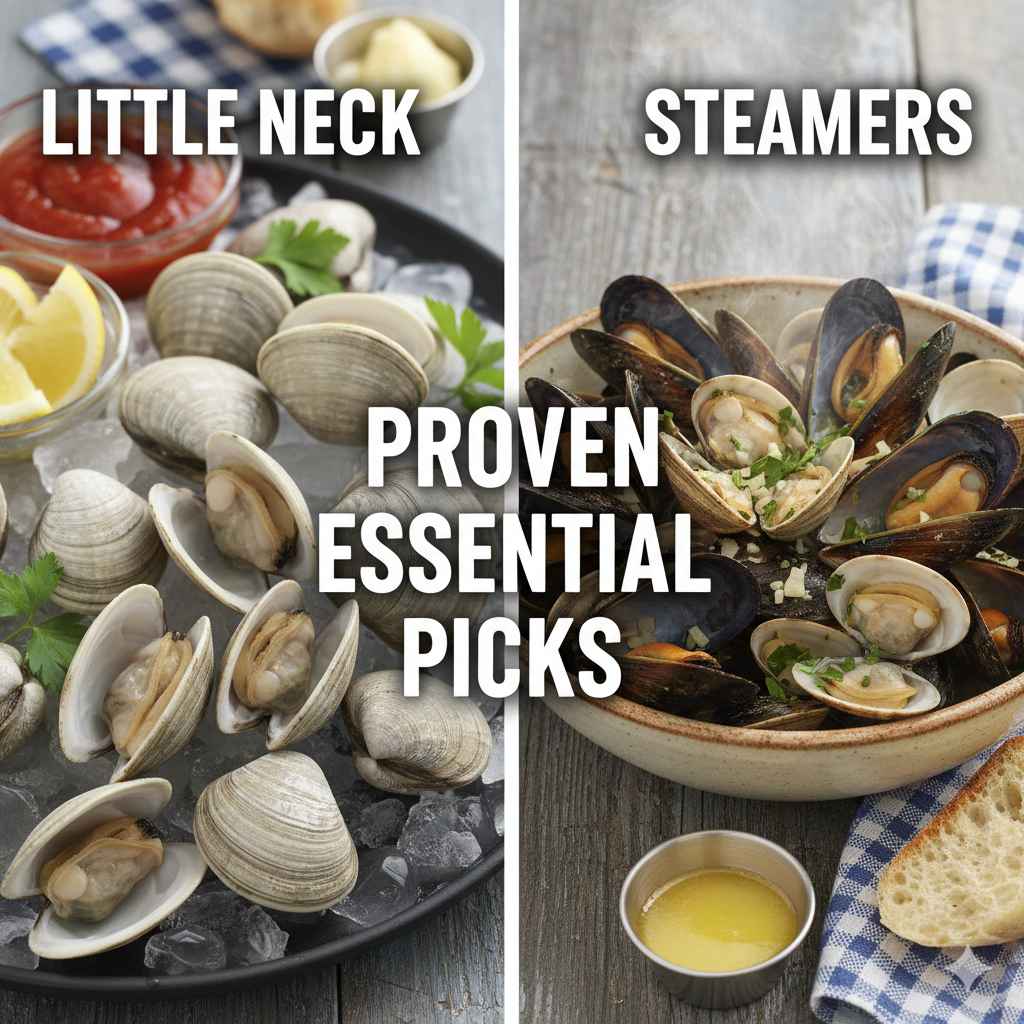
Little Neck Vs Steamers: Proven Essential Picks
Little Neck vs Steamers: Both are fantastic clams, but Little Necks are generally smaller, sweeter, and ideal for raw eating (like cocktails or light steaming), while Steamers (often referred to as Cherrystones or Quahogs) are larger, meatier, and shine when cooked low and slow, like in New England clam bakes. Your best pick depends entirely on how you plan to cook them.
For a closely related home or decor topic, Where To Put Shower Steamers: Placement gives readers a useful next step.
Choosing the right clam for your seafood meal can feel tricky. Two popular choices often come up: Little Necks and Steamers. Are they the same thing? Which one tastes better? If you’ve stood at the seafood counter feeling confused, you are not alone! Don’t worry. Buying clams is simple once you know the difference. We will break down exactly what separates these two tasty bivalves. You will learn which clam works best for raw appetizers and which one is the superstar for a big pot of steamed seafood. Get ready to shop confidently and cook some delicious clams!
Understanding Clam Families: Why Size Matters
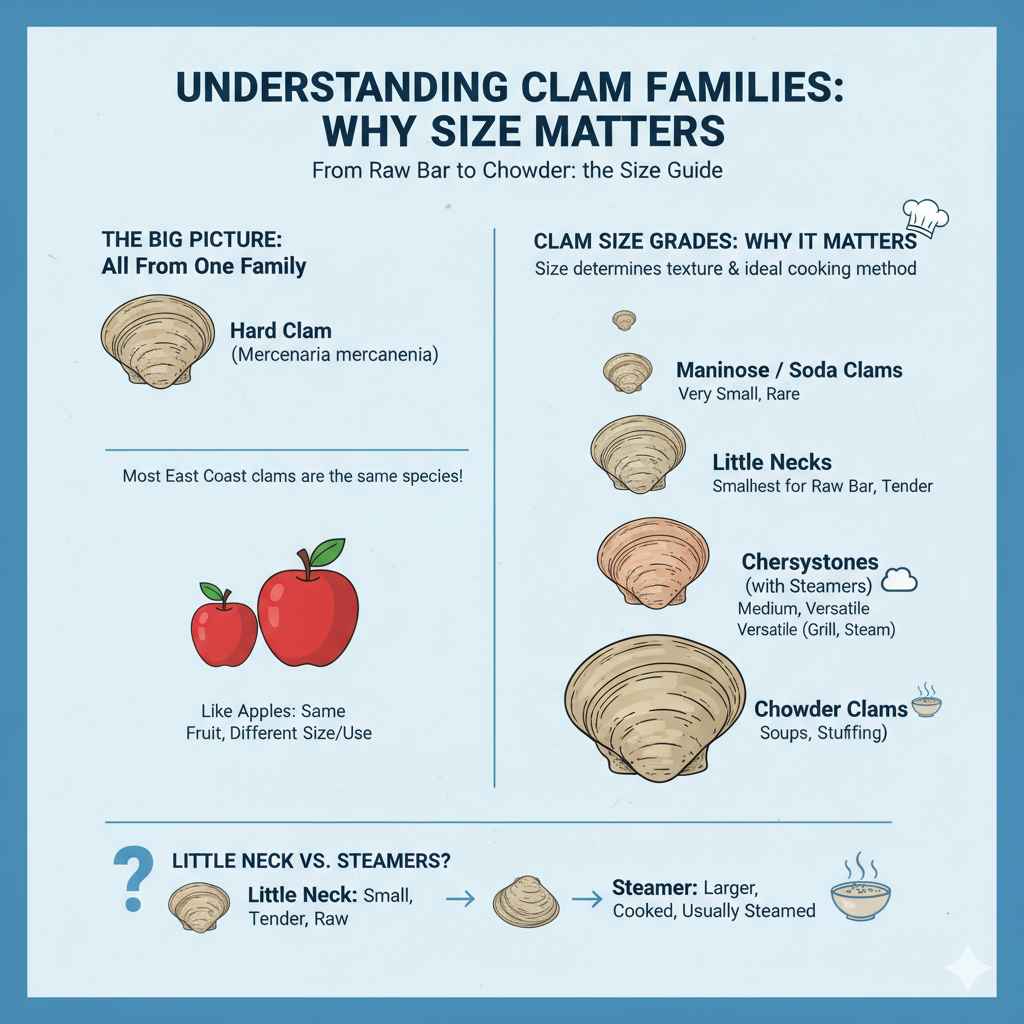
Before we dive into the specific names, let’s talk about the big picture. Most clams sold commercially, especially on the East Coast, come from the same species: the Hard Clam, scientifically known as Mercenaria mercenaria. Think of it like apples—you have small Gala apples and giant Honeycrisp apples; they’re both apples, but their size changes how you use them.
In the clam world, the names like Little Neck, Cherrystone, and Chowder refer to the size grades of this single species. The size determines the best cooking method.
Why Size Grading Exists
Seafood sellers grade clams by size so chefs and home cooks know what they are buying. A tiny clam might be too delicate for boiling but perfect for eating raw. A giant clam would be rubbery if eaten raw but great when chopped up for chowder.
Here is the general size progression from smallest to largest:
- Maninose/Soda Clams: Very small, rarely seen commercially.
- Little Necks: Smallest size generally used for raw service.
- Topneck: Slightly bigger than Little Necks.
- Cherrystones (often grouped with Steamers): Medium size, versatile.
- Chowder Clams (Quahogs): The largest, best for soups and stuffing.
When people ask about “Little Neck vs Steamers,” they are usually comparing a small, tender clam (Little Neck) with a larger, older clam that is meant for heating (Steamer).
Little Neck Clams: The Raw Bar Favorite
Little Necks are the elite choice when you want that fresh, briny snap of a clam eaten cold. They are young, small, and tender.
Characteristics of Little Necks
Little Necks are young clams, usually measuring about one to 1.5 inches across. Because they are small, their muscle structure is still soft, making them pleasant to eat without heavy cooking.
- Taste: Very sweet, clean, and milky.
- Texture: Tender and soft.
- Best For: Anything raw or very lightly cooked.
- Count: You typically get between 10 to 12 for every pound.
Top Uses for Little Necks
If your goal is to serve clams on the half shell, Little Necks are your absolute must-have. They are perfectly sized for popping open and serving over ice.
Here are the best ways to use them:
- Clams on the Half Shell: Simply shuck them (open them) and serve with lemon wedges, cocktail sauce, or a mignonette.
- Clam Cocktails: Poaching them very briefly (just a minute) or serving them totally raw in a glass of tomato juice.
- Light Steaming: Steaming them for a very short time (3–5 minutes) in white wine or beer, leaving them plump and tender.
Safety Note: Whenever consuming raw shellfish, ensure you purchase them from a reputable fishmonger who can confirm they were harvested from clean, regulated waters. The U.S. Food and Drug Administration (FDA) offers essential guidance on handling all seafood safely.
Steamer Clams: The Cooking Powerhouse
The term “Steamer” usually refers to the larger grades of Hard Clams (like Cherrystones or bigger) or, traditionally, the soft-shell clam species (Mya arenaria), often called the Ipswich clam. For simplicity in the grocery store, when you see a bag labeled “Steamers,” they are usually the larger Hard Clams that are too tough for raw eating but perfect for drawing out deep flavor when cooked.
Characteristics of Steamers
Steamers are mature clams. They have tougher interiors because they have lived longer and their muscles have worked harder. This tougher texture means they need time and moisture to become tender.
- Taste: Deeply savory, earthy, and intensely clam-flavored.
- Texture: Chewier and firmer than Little Necks unless cooked thoroughly.
- Best For: Long cooking methods like steaming, baking, or boiling.
- Size: Generally larger than 1.5 inches.
Top Uses for Steamers
Steamers are built for flavor infusion. When you steam them, the broth that comes out is packed with rich clam essence—perfect for dipping bread!
The classic uses include:
- New England Clambakes: They are the backbone of traditional seafood boils, layered with corn, potatoes, and sausage.
- Classic Steamed Presentation: Steamed in a large pot with beer, butter, garlic, and herbs until the shells pop open (usually 8–12 minutes, depending on size).
- Chowders and Soups: While smaller clams can be used, these larger ones offer more meat to chop up for chowder fillings.
If you are making a traditional New England boil, you want these larger, harder types of clams to stand up to the heat and time required.
Little Neck Vs Steamers: Side-by-Side Comparison
To make your choice crystal clear, let’s put them head-to-head based on what matters most: texture, size, and use case.
| Feature | Little Neck Clams | Steamer Clams (Larger Hard Clams) |
|---|---|---|
| Typical Size | Small (1″ – 1.5″) | Medium to Large (1.5″ +) |
| Texture When Cooked Lightly | Tender, almost melt-in-your-mouth | Chewy, potentially rubbery |
| Primary Use | Raw consumption, light steaming, cocktails | Heavy steaming, baking, chowders |
| Flavor Profile | Sweet, mild, slightly milky | Deep, rich, earthy clam flavor |
| Cost (Per Dozen) | Higher (due to immediate harvest/demand) | Lower (as they are older/larger grade) |
Shopping Smart: How to Select Fresh Clams
No matter which size you choose—Little Neck or Steamer—freshness is non-negotiable. Buying bad clams is the fastest way to ruin a meal and potentially make yourself sick. Here are Dustin’s easy tips for picking the best catch at the market.
Rule 1: Choose Clams That Are Closed or Closing
Live clams should have tightly closed shells. If you tap a closed clam gently, and it snaps shut, it’s alive and healthy. This is the most important test.
Rule 2: Discard Any Open Clams
If the shell is wide open (a gaping mouth), give it a light tap. If it does not close within a few seconds, the clam is dead. Dead clams spoil quickly and should never be purchased or eaten.
Rule 3: Keep Them Whole and Intact
Check the container or bag for any broken or chipped shells. A cracked shell means the clam is exposed to air or bacteria and should be left behind. You need every shell to be perfect to hold in the juices safely.
Rule 4: Smell Test
Fresh clams should smell like the clean ocean—briny, fresh, and slightly mineral. If they smell strongly of fish, ammonia, or rotten eggs, pass them by.
The Critical Step: Purging and Cleaning Clams (Even If They Look Clean)
Even the best-looking clams might have sand or grit trapped inside. This might be muddy sand, which ruins the texture of your dish. We need to purge them—which is a fancy way of saying we make them spit out their grit!
Whether you bought Little Necks for raw service or Steamers for a low-and-slow bake, this cleaning process is mandatory. This process works because clams naturally filter water; when placed in saltwater, they filter that clean water and often expel any internal sand.
Tools and Ingredients You’ll Need:
- Large bowl or clean cooler
- Strainer or colander
- Non-iodized salt (like sea salt or kosher salt—iodine can be harmful to shellfish)
- Ice (optional, to keep them cold)
Step-by-Step Purging Process
- Inspect and Discard: Go through your clams one last time. Discard any that are broken or remain wide open after tapping.
- Make the Brine: Fill your large bowl with about 4 quarts of cold water. Dissolve about 1/2 cup of non-iodized salt into the water until it dissolves completely. This simulates the ocean environment.
- Submerge the Clams: Place the clams (shells down) into the salty water. Ensure they are just submerged. If you are doing this in large batches, you may need multiple bowls.
- Keep it Cold: Place the bowl in the refrigerator (or use ice packs around the bowl) for a minimum of one hour, but no more than three hours. They need to stay cold to be happy, but too long in the bowl and they might suffocate.
- Rinse Thoroughly: After purging, remove the clams and discard the dirty, salty water. Rinse the clams under cold running water in a colander, scrubbing the outside of the shells gently with a brush or your hands to remove any clinging mud or grit.
Pro Tip: If you watch closely after an hour, you might see sand accumulating at the bottom of the bowl. If you see a lot, you can carefully lift the clams out (don’t stir up the sand!) and give them a quick soak in one more fresh batch of saltwater for 30 minutes.
How to Cook Little Necks vs Steamers: Matching the Method to the Clam
This is where your choice truly pays off. Cooking a Little Neck like a Steamer might make it tough, and cooking a Steamer too fast like a Little Neck might leave it gritty or undercooked.
Cooking Little Necks: Keeping it Quick and Light
Because Little Necks are small and tender, the goal is to heat them just enough for the shells to open, preserving their natural sweetness.
Perfect Little Neck Preparation: Clams Casino Style
This preparation highlights their raw potential with just a tiny bit of heat.
- Prep: Shuck the clams, keeping the meat attached to the bottom shell. Remove the top shell.
- Topping: Spread each clam with a small amount of butter mixed with finely minced garlic, finely chopped fresh parsley, and a sprinkle of breadcrumbs (optional).
- Bake: Place on a baking sheet. Broil (high heat) for only 3–5 minutes, watching constantly! They are done when the edges of the clam start to curl slightly and the butter is sizzling.
The total cooking time is minimal. This quick blast of heat is perfect for the tender Little Neck meat.
Cooking Steamers: Embracing the Steam Bath
Steamers require a moist, warm environment to gently cook the meat through while allowing the shells to open fully. This method captures all the delicious internal juices.
Essential Steaming Method (The Classic Pot)
This recipe is fantastic because the cooking liquid becomes an instant dipping sauce, especially if you use beer or white wine.
- The Pot Base: In a large pot, add about 1 to 2 inches of liquid (seawater, beer, dry white wine, or beef broth work well).
- Aromatics: Add flavorings: 4 cloves of crushed garlic, a tablespoon of Old Bay seasoning, and a sliced onion. Bring the liquid to a rolling boil over high heat.
- Load the Clams: Add your cleaned Steamer clams to the pot. Do not overcrowd; add them in batches if necessary.
- Cover and Wait: Immediately cover the pot tightly. Reduce the heat slightly to maintain a steady, rapid boil.
- Check for Doneness: Steam for 8 to 12 minutes. The clams are ready when almost all the shells have opened.
- Discard: Any clam that does not open after 12 minutes must be discarded immediately.
Serve immediately with small bowls of melted butter seasoned with lemon juice. The longer cook time softens the firmer meat of the Steamer, making it perfectly edible and delicious.
Choosing the Right Clam Size for Other Dishes
It’s helpful to know where the sizes in between Little Necks and Steamers fit in. Sometimes, you might see a bag simply labeled “Topnecks” or “Cherrystones.” Here is a quick guide on adjusting your cooking based on the size you find available.
| Clam Size Name | Approximate Diameter | Recommended Use |
|---|---|---|
| Little Neck | Under 1.5 inches | Raw on the half shell, Quick Steamed |
| Topneck | 1.5 to 2 inches | Excellent for stuffing (Clams Casino), Light steaming |
| Cherrystone | 2 to 2.5 inches | Great for stuffing, chopping for appetizers, quick poaching |
| Chowder (Quahog) | Over 2.5 inches | Manhattan or New England Chowder, baked stuffed clams (needs long cooking) |
Confidence Building: Troubleshooting Common Clam Issues
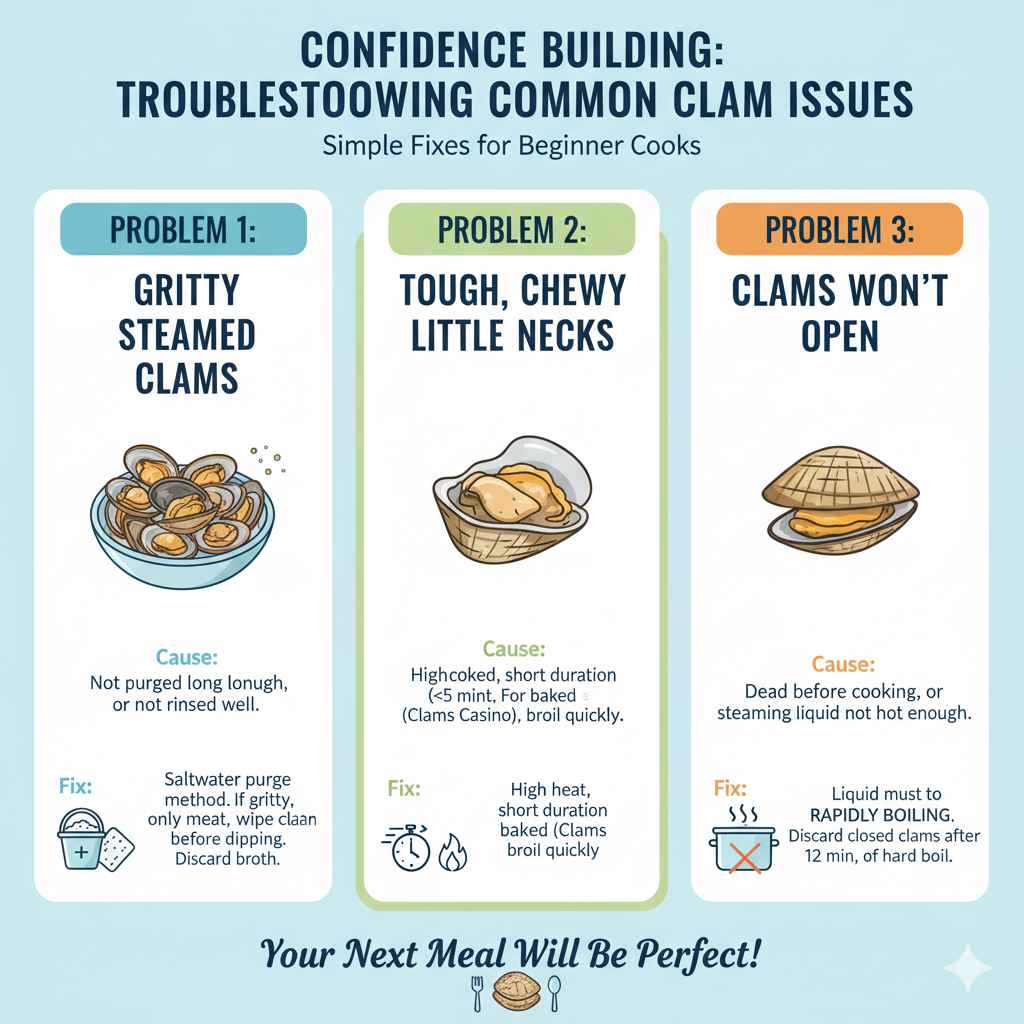
As a beginner cook, things can sometimes go wrong. Here are simple fixes for common clam cooking problems, ensuring your next meal is perfect.
Problem 1: My Steamed Clams are Still Gritty
Cause: You likely didn’t purge them long enough, or you didn’t rinse them well after soaking. The sand was still clinging to the outside or inside.
Fix: Always use the saltwater purge method (as detailed above). If you suspect grit after cooking, do not eat the broth; only eat the clam meat, and make sure you wipe the meat clean before dipping it into the broth.
Problem 2: My Little Necks Are Tough and Chewy
Cause: You cooked them too long, treating them like a bigger Steamer clam.
Fix: For raw-grade clams (Little Necks), use high heat for a very short duration (under 5 minutes). If you are baking them (like Clams Casino), finish them under the broiler so they cook quickly.
Problem 3: My Clams Won’t Open When Steaming
Cause: This is usually because the clam was dead before cooking, or your steaming liquid wasn’t hot enough to create enough pressure quickly.
Fix: Ensure your liquid is boiling rapidly before you put the lid on. If, after 12 minutes of a hard boil, a clam remains stubbornly closed, discard it. Live clams should open when cooked properly.
Frequently Asked Questions (FAQ)
Q1: Are Little Neck clams and Steamers the same species?
Not always. Most “Little Necks” come from the hard clam species Mercenaria mercenaria, while “Steamers” can refer either to larger hard clams (like cherrystones) or to soft-shell clams such as Mya arenaria. That’s why the term “steamer” can be confusing—it sometimes describes size, and other times a different species altogether.
Q2: Which clam is better for beginners to cook?
If you’re new to cooking clams, Steamers (larger clams) are more forgiving. They hold up better to longer cooking times and are less likely to turn rubbery if slightly overcooked. Little Necks require more precision since they can toughen quickly with too much heat.
Q3: Can I substitute Little Necks for Steamers in recipes?
Yes, but with adjustments:
- If replacing Steamers with Little Necks → reduce cooking time significantly
- If replacing Little Necks with Steamers → cook longer and consider chopping the meat
The flavor will still be great, but texture and timing need tweaking to match the clam size.
Q4: How many clams should I plan per person?
A good rule of thumb:
- Little Necks (appetizer/raw): 6–12 per person
- Steamers (main dish): 1 to 1.5 pounds per person
This ensures everyone gets a satisfying portion, especially when Steamers are the centerpiece of a meal like a seafood boil.
Q5: What is the healthiest way to cook clams?
Steaming is the healthiest method. It:
- Preserves natural nutrients
- Requires little to no added fat
- Enhances the clam’s natural briny flavor
Avoid heavy frying or overuse of butter if you’re aiming for a lighter, healthier dish.
Conclusion: Pick the Right Clam, Cook with Confidence
When it comes to Little Neck vs Steamers, there’s no single “winner”—only the right choice for your recipe.
- Choose Little Necks for fresh, delicate dishes like raw platters or quick steaming
- Go with Steamers when you want bold flavor, hearty texture, and longer cooking methods
The real secret is simple: match the clam to the cooking style. Once you understand size, texture, and timing, you’ll never feel confused at the seafood counter again.
Armed with this knowledge, you can confidently select, prepare, and enjoy clams like a pro—whether you’re serving a chilled seafood appetizer or a steaming pot of coastal comfort food.
Products related to this article
Sponsored / affiliate links. As an Amazon Associate I earn from qualifying purchases. I may earn additional commission from eligible campaigns.