How To Repel Pigeons From Balcony: Proven Solutions
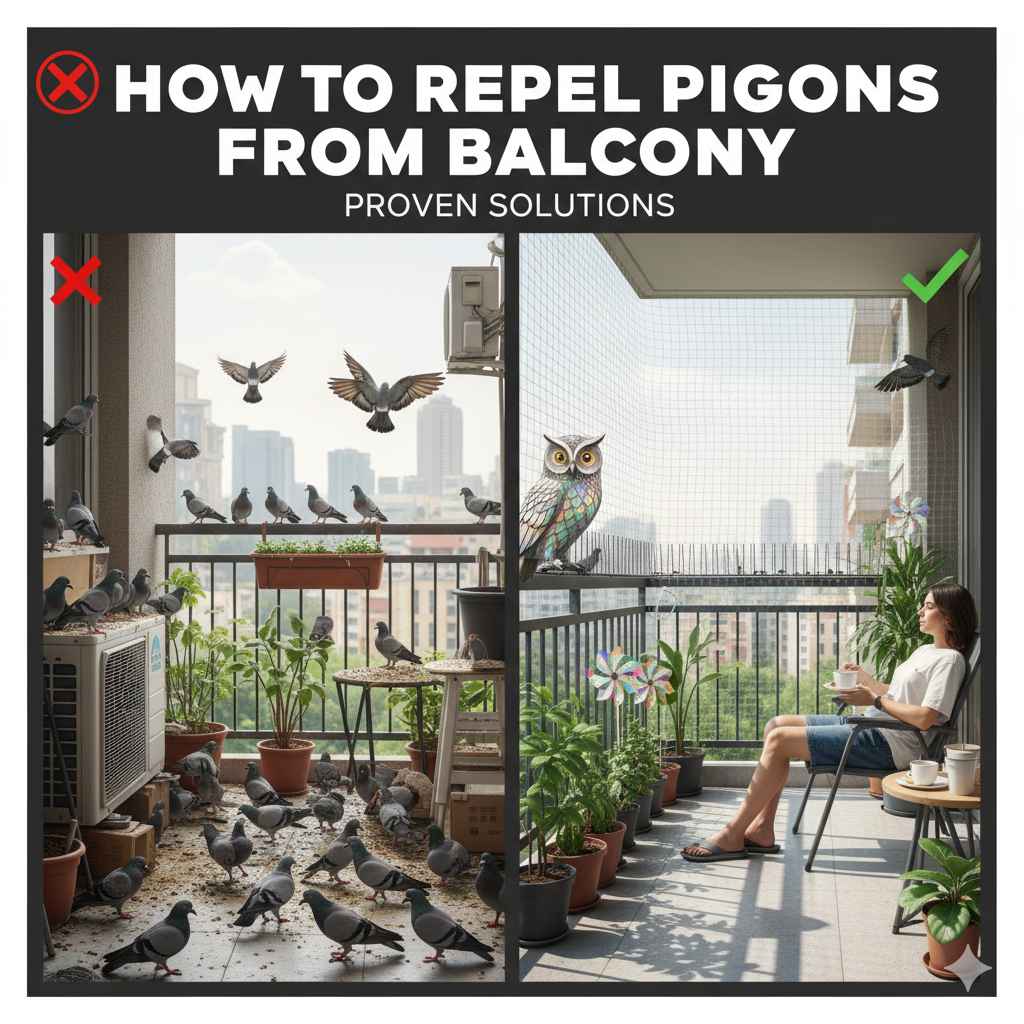
Quick Summary: To effectively repel pigeons from your balcony, combine physical barriers like netting, spike strips, and slope boards with visual deterrents such as flashing tape or decoy owls. Consistency in cleaning droppings is also essential for long-term success in keeping these birds away safely and humanely.
For another table or room-layout decision, Small Chair and Table Set for Balcony: Buys gives readers a useful follow-up.
For a related lighting or fan project, How To Put Christmas Lights On Balcony gives readers another setup detail to compare.
Pigeons are an unwelcome sight on many balconies. They leave messy droppings, create noise, and can spread germs. If you are tired of cleaning up after these feathered visitors, you are not alone. Dealing with pigeons doesn’t require harsh chemicals or complicated solutions. We will walk through simple, safe, and proven steps to make your outdoor space unattractive to them. You can reclaim your balcony space quickly! Let’s look at the best ways to get those pigeons to find a new hangout spot.
Understanding Why Pigeons Love Your Balcony
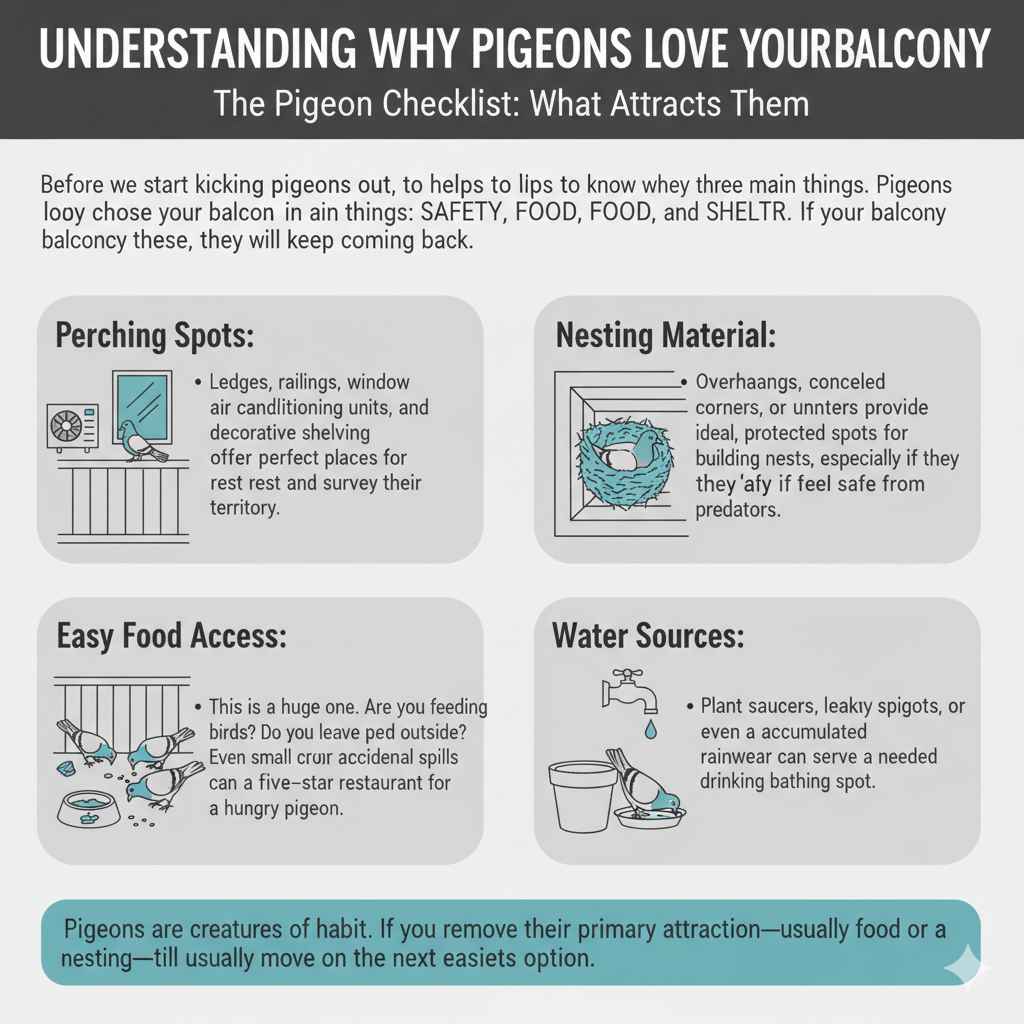
Before we start kicking pigeons out, it helps to know why they chose your balcony in the first place. Pigeons look for three main things: safety, food, and shelter. If your balcony offers these, they will keep coming back.
The Pigeon Checklist: What Attracts Them
- Perching Spots: Ledges, railings, window air conditioning units, and decorative shelving offer perfect places for pigeons to rest and survey their territory.
- Nesting Material: Overhangs, concealed corners, or unused planters provide ideal, protected spots for building nests, especially if they feel safe from predators.
- Easy Food Access: This is a huge one. Are you feeding birds? Do you leave pet food outside? Even small crumbs or accidental spills can become a five-star restaurant for a hungry pigeon.
- Water Sources: Plant saucers, leaky spigots, or even accumulated rainwater can serve as a needed drinking and bathing spot.
Pigeons are creatures of habit. If you remove their primary attraction—usually food or easy nesting—they will usually move on to the next easiest option.
Phase 1: Immediate Action – Cleaning and Sanitation
The single most important first step in how to repel pigeons from balcony areas is thorough cleaning. Pigeons return where they have successfully nested or fed before. Old droppings attract new pigeons because the scent signals a safe area has been established.
Safety First: Cleaning Pigeon Droppings
Pigeon droppings (guano) can carry diseases like histoplasmosis. Always protect yourself before cleaning. This isn’t like sweeping leaves; we need to treat it carefully.
- Gear Up: Put on heavy-duty rubber gloves, safety glasses, and an N95 respirator mask. This protects your skin and lungs from dust and bacteria.
- Soften the Guano: Do not scrape dry droppings, as this releases harmful spores into the air. Mist the droppings thoroughly with a solution of water mixed with a little white vinegar or a mild bleach solution (about 1 part bleach to 10 parts water). Let it soak for 10 to 15 minutes until the droppings are soft.
- Scrape and Collect: Use a plastic scraper or a putty knife to gently lift the softened material off hard surfaces. Place all debris into a sturdy plastic garbage bag.
- Disinfect the Area: After physical removal, scrub the entire area (floors, ledges, railings) with a strong disinfectant solution. A mix of one-part bleach to nine parts water works well for killing bacteria and removing lingering scents.
For more detailed safety information on cleaning biohazards, check out resources from public health agencies like those provided by the Centers for Disease Control and Prevention (CDC) regarding bird-related droppings.
Phase 2: Making Perching Impossible – Physical Deterrents
Once the area is clean, the next goal is to deny pigeons the places they rest and land. If they cannot land comfortably, they won’t use your balcony as a resting spot. These physical solutions are often the most effective long-term methods.
1. Bird Spikes: A Humane Barrier
Bird spikes aren’t sharp like needles; they are blunt plastic or stainless steel strips designed to prevent birds from landing on narrow surfaces like railings or ledge edges. They create an uneven, uncomfortable surface.
Pros and Cons of Spikes:
| Pros (What’s Great About Them) | Cons (Things to Watch Out For) |
|---|---|
| Highly effective on flat ledges and railings. | Can look unsightly if not installed discreetly. |
| Durable and long-lasting once installed correctly. | Installation requires drilling or strong adhesive application. |
| Humane, as they only prevent landing, not harm. | Not suitable for wide ledges where pigeons might nest behind them. |
2. Bird Netting: The Complete Exclusion Method
For large areas, balconies with deep overhangs, or where you have had persistent nesting issues, netting is the gold standard. Netting blocks total access to the entire balcony space.
When installing netting, you must be meticulous. A gap of even a few inches can allow a pigeon to squeeze through and then become trapped, which is bad for the bird and messy for you. Professional installation often yields the best results, but DIY kits are available for smaller areas. The netting should be taut and completely cover the open area.
3. Slope Boards and Shock Tracks (For Experts)
If you have wide ledges, you can install slope boards—pieces of angled plastic or metal—that create a steep incline (at least a 45-degree angle). Pigeons cannot get a grip on a steep slope. Alternatively, electric shock tracks deliver a mild, harmless static pulse when a bird lands, which immediately teaches them to avoid that spot. These are excellent but usually require more specialized installation.
Phase 3: Visual and Sensory Deterrents
These solutions use a pigeon’s natural aversion to shiny, moving, or unexpected objects. While generally less permanent than physical barriers, they work wonderfully as a first line of defense or as supplemental deterrents alongside cleaning.
1. Reflective Tape and Spinners
Pigeons are strongly bothered by sudden flashes of light and erratic movement.
- Flash Tape (Holographic Tape): This heavy-duty, reflective tape should be cut into strips about two feet long. Tie or tape these strips to railings, overhangs, and clotheslines so they flutter and catch the sun randomly. The shifting reflection mimics predators or sudden threats.
- Spinning Devices: Wind-powered spinners or Mylar balloons (often shaped like owls or predatory birds) create unpredictable movement that keeps pigeons uneasy.
Pro Tip on Movement: If you are using any visual deterrent, you must move it or change its location every few days. Pigeons are smart; if a shiny object stays in one spot constantly, they will realize it poses no threat and ignore it.
2. Decoy Predators
The classic tactic is using a decoy owl or hawk. For this to work, you must deploy it correctly.
- Place the decoy where it is highly visible.
- Crucially, you must move the decoy’s head or physical location at least once a week. A stationary owl is just a plastic decoration to a curious pigeon.
- Consider pairing the decoy with a realistic sound effect if possible, though movement is more critical.
3. Using Scents and Taste Aversion
Pigeons rely heavily on smell and texture, though they are generally hardier than smaller songbirds. While overwhelming odors are often ineffective or unpleasant for humans, certain harmless repellents can work.
Gel repellents or sticky pastes can be applied sparingly to ledges where birds land. These substances make the surface unpleasant to stand on without causing harm. Reapplication is often needed after heavy rain.
Phase 4: Habitat Modification – Removing the Invitation
This phase addresses the root cause: why birds feel welcome on your balcony. This is the most crucial step for long-term maintenance.
Eliminate All Food Sources
This is non-negotiable if you want continuous success against pigeons.
- Stop Feeding: Never intentionally feed pigeons or other wild birds on your balcony.
- Secure Trash: Ensure all garbage bins are tightly sealed. Check that lids remain closed.
- Clean Pet Food: If you feed pets outside, bring their bowls in immediately after they finish eating. Pigeons will happily finish any leftovers.
- Check for Spills: Regularly sweep and hose down the area to remove dropped seeds, crumbs, or food particles from outdoor dining.
Block Access to Water
Make sure there are no standing puddles or open containers. Thoroughly drain empty saucers under potted plants or check for small leaks in external water pipes that create damp areas.
Remove Nesting Opportunities
Pigeons prefer sheltered, flat areas. Check underneath railings, behind exterior AC units, or in hidden corners.
- If you find a nest, remove it only after confirming it is vacant (especially outside of nesting season, typically mid-spring to summer). Check local wildlife laws regarding active nests.
- Once cleared, immediately cover that area with netting or install angled sloping boards mentioned earlier to prevent reconstruction.
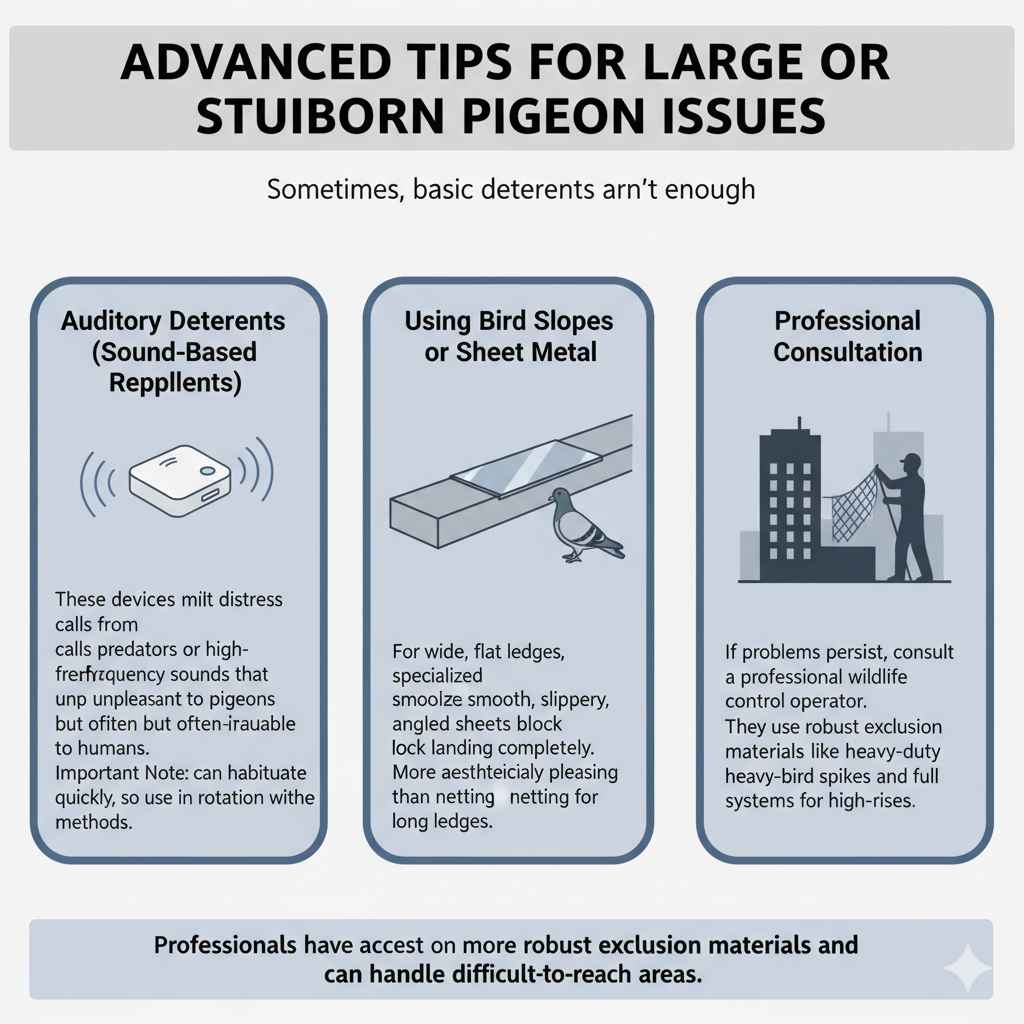
Advanced Tips for Large or Stubborn Pigeon Issues
Sometimes, basic deterrents aren’t enough, especially in urban areas where pigeon populations are high. Here are a few more advanced, yet still safe, steps.
Auditory Deterrents (Sound-Based Repellents)
These devices emit distress calls from predators or high-frequency sounds that are unpleasant to pigeons but often inaudible or barely noticeable to humans.
Important Note on Sound: While electronic sonic devices can be effective initially, pigeons often habituate (get used) to them quickly. They are best used in rotation with visual or physical methods.
Using Bird Slopes or Sheet Metal
For very wide, flat railings or parapet walls, specialized sheets of metal or plastic can be purchased. These are usually smooth, slippery, and angled upward to block landing completely. These are often more aesthetically pleasing than netting when correctly installed on long, prominent ledges.
Professional Consultation
If you have tried everything and the problem persists, it might be time to consult a professional wildlife control operator, especially if the pigeons are nesting on a roof ledge or in difficult-to-reach areas of the building structure. They have access to more robust exclusion materials like heavy-duty bird spikes and full netting systems designed for high-rises.
Beginner’s Troubleshooting Guide: What If They Still Come Back?
It’s frustrating when a solution doesn’t work immediately. Here is a quick list to help you fine-tune your strategy.
| Problem Observed | Likely Cause | Quick Fix Action |
|---|---|---|
| Pigeons stand on ledges despite spikes. | Spikes are too far apart, or birds are nesting behind the spikes. | Install a second row of spikes closer to the edge, or use full netting. |
| Decoy owl is ignored. | The owl hasn’t moved, or the birds have recognized it as fake. | Move the owl daily, or swap it out for a different predator decoy. |
| Droppings are still present after cleaning. | Residual scent is attracting them back, or a food source remains. | Re-disinfect the area immediately and aggressively hunt for hidden food. |
| Netting seems to scare them, but they return later. | There is a small, unnoticed hole in the netting installation. | Inspect the entire perimeter of the net for gaps; seal any openings. |
Frequently Asked Questions (FAQ) About Pigeon Repellents
Q1: Are sticky repellents safe for pigeons?
A: Yes, most commercially available gel or paste repellents are considered taste and texture deterrents. They make the surface uncomfortable to stand on but do not trap or injure the bird.
Q2: How long does it take for deterrents to work?
A: For visual deterrents like tape, you might see results in a few days as the birds test the space. Physical barriers like spikes and netting provide immediate blockage, but it may take several weeks for birds to fully abandon the area as a habitual spot.
Q3: Is it legal to harm pigeons?
A: In many areas, pigeons (Rock Doves) are considered common birds and may not be protected by the same strict laws as native species like doves or pigeons in some regions. However, intentionally harming them can still violate local ordinances. It is always safest and most effective to use humane exclusion and repulsive methods.
Q4: Will mothballs actually keep pigeons away?
A: Mothballs (naphthalene) are sometimes suggested, but they are generally ineffective against pigeons, who tolerate the smell well. Furthermore, they pose a health risk to pets and small children when left loose outside, so we strongly advise against using them near your balcony living space.
Q5: What is the best low-cost, beginner solution?
A: The absolute best low-cost solution is rigorous, daily cleaning of droppings followed by the installation of reflective holographic tape placed strategically to flutter in the wind.
Q6: Can I use netting myself?
A: Yes, for typical residential balconies, you can buy DIY netting kits. Measure your space accurately and ensure you have strong anchor points around the perimeter. Remember, the netting must be pulled taut and sealed completely to the structure.
Conclusion: Reclaiming Your Peaceful Balcony Space
Mastering how to repel pigeons from your balcony involves a simple, three-pronged approach: clean thoroughly, block access physically, and remove the temptation (food/water). It requires patience because pigeons are persistent learners, but by staying consistent with these proven methods, you will teach them that your balcony is no longer a desirable landing zone.
Start with a deep, safe clean-up of all existing mess. Follow that immediately by installing simple visual deterrents like flashing tape. Then, assess whether you need a long-term solution like bird spikes on your railings or full netting for the overhead space. By taking these confident, practical steps, you can soon enjoy your outdoor space again—clean, quiet, and completely pigeon-free. Remember, you have the power to make your space your own again!
Products related to this article
Sponsored / affiliate links. As an Amazon Associate I earn from qualifying purchases. I may earn additional commission from eligible campaigns.