Balcony Traffic Noise Reduction: What Actually Works (and What’s a Waste of Money)
You step outside to enjoy your morning coffee, and the rumble of a delivery truck drowns out everything. Or you try to read on a Sunday afternoon, but every passing car pulls your attention back to the street. Traffic noise on a balcony is one of those problems that seems like it should have a simple fix, but most people end up frustrated after buying the wrong products.
This guide walks through balcony traffic noise reduction from a practical angle. You’ll learn why your balcony amplifies sound, which barriers actually block or absorb it, and how to measure your results so you aren’t guessing. The focus is on real-world effectiveness, not marketing claims. You’ll also get a clear breakdown of what works for rentals, what works for homeowners, and how much you should expect to spend.
YeakThed
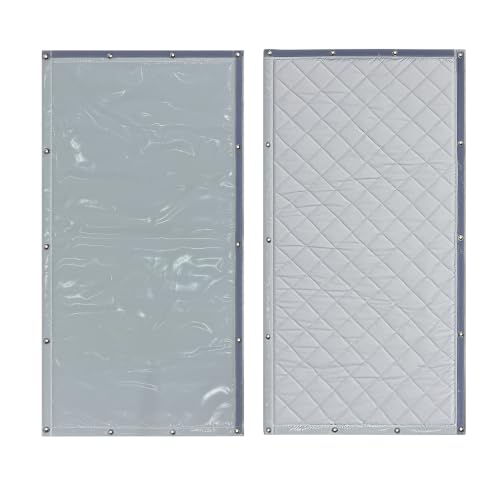
YeakThed Outdoor Sound Barrier Fence 40" X…
- 4-Layer Ultra-Thick Sound Insulation: Upgraded thick composite structure with 0.45mm PVC surface, oxford cloth backing, 1.2mm soun…
- Outdoor Heavy-Duty Durability: Waterproof, weather-resistant and scratch-resistant dual-sided gray design with reinforced tight st…
- Magic Tape Splicing & Customizable: Side magic tape supports quick splicing to form large-area outdoor sound barrier. Standard 1×2…
As an Amazon Associate I earn from qualifying purchases.
One product that solves a big chunk of this problem is the YeakThed Outdoor Sound Barrier Fence. It’s a 40 by 78 inch sound blanket with a four-layer build that handles both sound blocking and absorption. The magic tape on the sides lets you join multiple panels together, so you can cover a large railing area without custom fabrication. It’s a solid starting point for anyone who wants a serious physical barrier without drilling holes.
Why Your Balcony Amplifies Traffic Noise
Most balconies are hard, flat, and open. Concrete floors, metal railings, and glass or stucco walls reflect sound waves rather than absorbing them. When a car passes, the noise hits these surfaces and bounces around. The result is a louder, harsher experience than standing on grass at the same distance from the road.
The shape of the balcony matters too. A covered balcony creates a box-like space that traps low-frequency noise from engines and exhaust. Open balconies let sound escape but also let it come in from every direction. The height of your balcony affects what you hear as well. Second-floor balconies often catch more noise than ground-level patios because there’s less ground absorption and more direct line-of-sight to traffic.
Here’s the key point: you’re not trying to soundproof the entire outdoors. You’re trying to create a localized zone where sound energy is either blocked, absorbed, or masked. That’s a much more achievable goal, and it changes how you approach the problem.
Before You Start: Assess Your Balcony Type and Noise Source
Take ten minutes to figure out what you’re actually dealing with. Different balcony types respond to different solutions, and the noise source matters just as much.
Balcony Type
- Concrete balcony: Heavy and dense, but reflects sound. You’ll need absorption materials (curtains, panels, plants) more than barriers.
- Wood deck balcony: Often has gaps between boards and a hollow feel. Sound passes through more easily. You may need to seal gaps and add mass.
- Rooftop terrace: Usually open to wind and noise from all sides. Requires taller barriers and heavier anchoring.
- Covered vs. open-air: Covered balconies trap sound, so absorption becomes critical. Open balconies benefit from barriers that block line-of-sight to the road.
Noise Source
Identify whether the noise is high-frequency (tires on pavement, brakes) or low-frequency (diesel engines, bass from car stereos). Low-frequency noise is harder to block because it travels through solid materials. High-frequency noise is easier to absorb with soft materials like acoustic foam or heavy curtains.
Stand on your balcony for five minutes at the noisiest time of day. Note where the sound is coming from and whether it’s constant or intermittent. This simple assessment will save you money because you won’t buy a solution designed for the wrong problem.
The 3 Best Physical Barriers (And How to Choose)
Physical barriers are the first line of defense. They work by either reflecting sound back toward the source or absorbing it before it reaches your ears. Here are the three most effective options.
Solid Privacy Screens vs. Soundproof Fences
A solid privacy screen made of wood, composite, or metal blocks visual sightlines and can reduce noise by 5 to 10 decibels if it’s tall enough and has no gaps. The catch is that it must be dense and continuous. A screen with slats or gaps lets sound pass through almost as if it weren’t there.
A soundproof fence goes further by adding mass and absorption. The YeakThed Outdoor Sound Barrier Fence is a practical example. Its four-layer construction includes a PVC surface, oxford cloth backing, sound-deadening felt, and high-density cotton. That combination blocks sound while also absorbing some of the energy, which is better than a solid reflective surface alone.
For best results, install the barrier as close to the noise source as possible, not right next to your seating area. Every foot of distance between the barrier and you adds a little more attenuation. Also, make sure the barrier extends from the floor to at least head height when you’re seated. A barrier that only covers the lower half of the railing won’t do much for you.
Acoustic Curtains and Outdoor Blinds
Heavy-duty acoustic curtains designed for outdoor use are a popular choice because they’re easy to install and remove. They work best when they hang in folds, because the folds create air pockets that absorb sound. A flat, stretched curtain is far less effective.
Outdoor blinds, particularly those made of PVC or heavy canvas, add a layer of mass and break up wind currents that carry sound. They’re not as effective as a dedicated sound barrier, but they offer dual benefits of privacy and light control. If you’re on a tight budget, a double layer of outdoor curtains with a small air gap between them performs noticeably better than a single layer.
One mistake people make is choosing thin, lightweight curtains that billow in the wind. You need weight and density. Look for materials that feel heavy and have multiple layers. The YeakThed barrier, for instance, is designed to stay put and resist wind damage thanks to its reinforced stitching and tensile strength.
Smart Surface Upgrades: Floors, Walls, and Ceilings
Your balcony is a sound reflector. Changing the surfaces changes how sound behaves in the space.
Rug and Underlayment Hacks
An outdoor rug with a thick rubber underlayment is one of the cheapest ways to reduce reflected noise. It won’t block sound from the street, but it will stop the concrete floor from bouncing noise back up at you. The effect is most noticeable on the mid and high frequencies, which are the ones that make traffic noise feel sharp and annoying.
Look for rugs made of polypropylene or other weather-resistant materials. Add a separate rubber or felt underlayment pad underneath for extra absorption. A 6×9 foot rug with a pad can reduce the perceived noise level in a small balcony space by a noticeable margin, though the actual dB reduction at the ear is modest—around 2 to 4 decibels. That’s enough to make conversation easier.
Acoustic Panels and Mass Loaded Vinyl
Acoustic panels designed for outdoor use can be mounted on walls or the ceiling. They absorb sound energy rather than reflecting it. They’re particularly useful on covered balconies where the ceiling bounces noise down. A few 2×2 foot panels on the ceiling above your seating area can cut down on that echo effect.
Mass loaded vinyl (MLV) is a heavy, flexible sheet material that adds mass to existing surfaces. You can attach it to the inside of a railing or behind a privacy screen to improve sound blocking. It’s not pretty, so most people cover it with fabric or use it as part of a multi-layer setup. MLV is effective for low-frequency noise, which most other materials struggle with.
One thing to note: neither acoustic panels nor MLV will completely eliminate traffic noise. They reduce it. A realistic expectation is a 5 to 10 dB reduction with a well-executed combination of barriers and absorption. That’s the difference between ‘annoying’ and ‘noticeable but tolerable.’
The Power of Greenery and Water Features
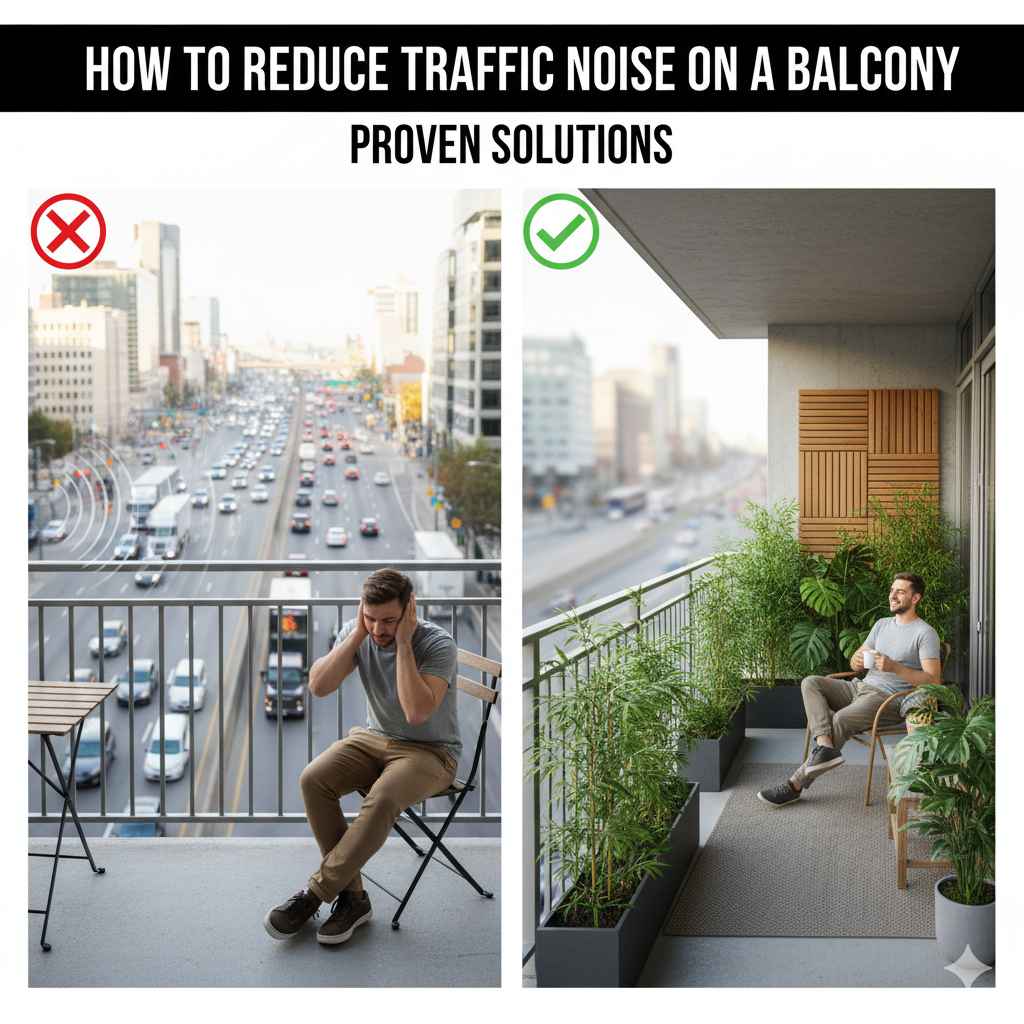
Plants do more than look nice. A dense plant wall or a row of tall potted plants acts as a natural sound absorber, especially for high-frequency noise like tire hiss. The leaves and branches break up sound waves and scatter them. It’s not a miracle cure, but a well-planted balcony can reduce noise by 3 to 5 decibels.
For best results, use plants with thick, broad leaves and dense growth. Bamboo in containers, boxwood shrubs, or a vertical green wall with many layers of foliage work well. The key is density. A single fern in a corner won’t do anything. You need a continuous layer of vegetation between you and the noise source.
Water features work differently. They don’t block noise; they mask it. The sound of flowing water is a form of white noise that makes traffic rumble less noticeable. A small tabletop fountain or a larger floor fountain creates a pleasant ambient sound that competes with the street noise. The effect is psychological but real. People consistently report that a water feature makes a noisy balcony feel quieter, even though the actual dB level of the traffic hasn’t changed.
Combine greenery and a water feature for the best results. The plants absorb some sound, and the water masks the rest. This combo is also the most rental-friendly option since it requires no permanent changes.
Masking Noise with White Noise and Ambient Sound
Sound masking is a legitimate technique. It works by adding a constant, even sound that makes intermittent noises (like a passing car) less noticeable. Your brain focuses on the steady sound rather than the jarring peaks of traffic.
A white noise machine with a speaker that faces outward can cover a small balcony area. The same goes for a Bluetooth speaker playing brown noise or pink noise, which are deeper and less harsh than white noise. The goal isn’t to drown out traffic completely—that would require dangerous volume levels—but to raise the ambient background level so that traffic noise blends in.
You can also use music or podcasts at a moderate volume. The trick is to aim the sound toward your seating area, not toward the street. You’re creating a bubble of sound around yourself.
This approach works best when combined with physical barriers. Masking alone won’t satisfy you if the noise is truly loud. But after you’ve added a sound barrier and some absorption, a small speaker playing ambient sound can be the final layer that makes the balcony feel peaceful.
Rental-Friendly and Low-Cost Fixes (Under $50)
Renters often think they have no options because they can’t drill into walls or install permanent structures. That’s not true. Here are several fixes that leave no trace when you move out.
- Tension rods: Install a heavy-duty tension rod between two walls or between a wall and the railing. Hang outdoor curtains from it. No drilling required.
- Removable adhesive hooks: Use heavy-duty adhesive hooks rated for outdoor use to hang acoustic panels or blankets. Remove them with a heat gun or rubbing alcohol when you leave.
- Freestanding privacy screens: Buy a folding screen made of wood or fabric. Place it between you and the traffic. It’s movable and requires no installation.
- Dense outdoor rug: As mentioned, a rug with a pad reduces reflected noise. It’s a simple purchase that works immediately.
- Indoor/outdoor acoustic blankets: These are the most effective low-cost option. The YeakThed barrier falls into this category. You can hang it from a tension rod, drape it over the railing, or attach it with zip ties to a freestanding frame. The magic tape splicing means you can cover a larger area without buying a custom piece.
You can also build a temporary frame using PVC pipes and pipe fittings. Create a rectangular frame that fits your railing, then attach the acoustic blanket with zip ties or bungee cords. The whole thing costs less than $50 in materials and takes about an hour to assemble. When you move, take it apart and recycle the PVC.
One caveat: adhesive hooks may leave a residue on some surfaces, especially in hot climates where the adhesive softens. Test a small area first. And always check your lease for any rules about balcony modifications, even temporary ones.
How to Measure Your Results (And What dB Reduction to Expect)
Guessing whether your efforts worked is a recipe for disappointment. Measuring gives you concrete data and helps you adjust.
How to Measure
You don’t need expensive equipment. A smartphone app like Decibel X or Sound Meter (available for iOS and Android) is accurate enough for this purpose. The built-in microphone on most phones is surprisingly decent for relative measurements.
- Pick a consistent spot on your balcony where you usually sit.
- Measure the noise level at the same time of day, for the same duration (e.g., 5 minutes), and record the average dB reading.
- Install your chosen solution.
- Wait a few days for everything to settle (plants need to be placed, curtains need to stop being stiff).
- Measure again at the same time and spot.
- Subtract the second reading from the first to get your actual reduction.
Realistic Expectations
Here’s what you can realistically expect from different approaches:
| Solution | Typical dB Reduction | Best For | Relative Cost |
|---|---|---|---|
| Outdoor rug + underlayment | 2–4 dB | Reflected noise, small balconies | Low |
| Acoustic curtains (single layer) | 3–6 dB | Covered balconies, renters | Low–Medium |
| Sound barrier fence/blanket | 5–10 dB | Open railings, high traffic | Medium |
| Mass loaded vinyl + barrier combo | 8–12 dB | Low-frequency noise, homeowners | High |
| Plant wall (dense, wide) | 3–5 dB | Aesthetics + noise reduction | Medium |
| White noise masking | Perceptual only | Any situation, final layer | Low |
A 10 dB reduction sounds like half as loud to the human ear. That’s a significant improvement. A 3 dB reduction is just noticeable. So if you’re starting from 70 dB and you get down to 62 dB, you’ll feel a real difference. If you only get to 67 dB, you might not feel it’s worth the effort.
Remember that these numbers are averages. Your specific situation depends on distance to the road, traffic volume, and balcony height. The measurement process is the only way to know for sure.
FAQ: HOA Rules, Maintenance, and Long-Term Durability
Can my HOA prohibit a sound barrier on my balcony?
Yes, they can. Many HOAs have rules about what can be attached to railings or visible from the street. Some prohibit any changes to the exterior appearance. Before you buy a large barrier, check your HOA covenants or ask the board. You may need to submit a request for approval. If they reject your request, look for freestanding options that aren’t attached to the building, like a folding screen placed inside the railing line.
Will a sound barrier block my view?
Most do, to some extent. A solid barrier is opaque. If you have a great view, that’s a real trade-off. You can mitigate this by installing the barrier only on the lower half of the railing, or by using a semi-transparent option like a dense plant wall. But remember, the taller and more solid the barrier, the better it works for noise reduction.
How do I clean and maintain outdoor acoustic materials?
Outdoor fabrics collect dust, pollen, and pollution. Most acoustic curtains and barriers can be wiped down with a damp cloth and mild soap. Check the care label. Some fabrics can be hosed off, but you should avoid using a pressure washer, which can damage the stitching. For the YeakThed barrier, the PVC surface is weather-resistant, so a simple wipe-down every few weeks keeps it looking good. In winter, if you live in a snowy area, consider taking the barrier down and storing it indoors to extend its life.
Will a sound barrier survive high winds?
It depends on how it’s mounted. A barrier that flaps in the wind will make noise itself and can tear. The YeakThed barrier is designed with reinforced stitching and strong tensile strength to handle wind, but you still need to secure it properly. Use zip ties, bungee cords, or heavy-duty clips at multiple points. Avoid leaving a large barrier up during a severe storm. If you can take it down in minutes, do so.
Do sound barriers work for low-frequency noise like truck engines?
Partially. Low-frequency noise is difficult to block because it has long wavelengths that pass through most materials. A thick, heavy barrier with mass (like mass loaded vinyl or a multi-layer sound blanket) will reduce it, but not as dramatically as it reduces mid-frequency noise. You might need to combine the barrier with a white noise machine to mask the remaining low-frequency rumble. This is a case where realistic expectations matter the most.
Your Quiet Balcony Action Plan
You don’t need to do everything at once. Start with the steps that give you the most noticeable improvement for the least effort.
- Measure your current noise level with a phone app. This gives you a baseline to compare against.
- Add a dense outdoor rug with a rubber underlayment. It’s cheap, instant, and reduces reflected noise.
- Install a physical barrier like the YeakThed Outdoor Sound Barrier Fence on the railing facing the traffic. Use the magic tape to join multiple panels for full coverage.
- Hang outdoor curtains from a tension rod if you want an extra layer of absorption and privacy.
- Place a few large potted plants between you and the street. Dense foliage helps, even if it’s just a few decibels.
- Set up a small speaker playing brown noise or ambient water sounds. Use it as the final masking layer.
- Re-measure your noise level after a week. If you’re not satisfied, add more absorption (acoustic panels) or more mass (MLV).
The combination of blocking, absorbing, and masking is the most reliable path to a quieter balcony. No single product will fix everything. But with the right setup, you can turn a noisy concrete ledge into a spot where you actually want to sit. For more inspiration on making the most of your outdoor space, check out some small balcony decor ideas or explore balcony privacy solutions that pair well with sound barriers.
Products related to this article
Sponsored / affiliate links. As an Amazon Associate I earn from qualifying purchases. I may earn additional commission from eligible campaigns.