Best Balcony Planters for Small Spaces (2026): We Compared
The best balcony planters for small spaces are rail-mounted or narrow rectangular models that fit your railing, hold 5–15 pounds of wet soil, and match plant growth habits. Choose poorly and you risk tipping, broken railings, root stress, and constant dripping onto neighbors or floors. This guide compares rail-fit sizes, wind resistance, drainage options, and planter types for herbs, flowers, and compact vegetables.
Quick comparison
| Product | Badge | Best for | Price | ||
|---|---|---|---|---|---|
 |
UOUZ 13 Inch 2 Pack Large Self Watering Hanging PlantersUOUZ | Our pick | $21.99
Price as of 23 Oct 2026
|
View | |
 |
LITLANDSTAR 18 Pockets Hanging Grow Bags, 2 Pack HorizontalLITLANDSTAR | Also great | $17.99
Price as of 23 Oct 2026
|
View | |
 |
XHIKOWAT Large Rectangular Metal Planter Boxes with PlasticXHIKOWAT | Also great | $89.99
Price as of 23 Oct 2026
|
View | |
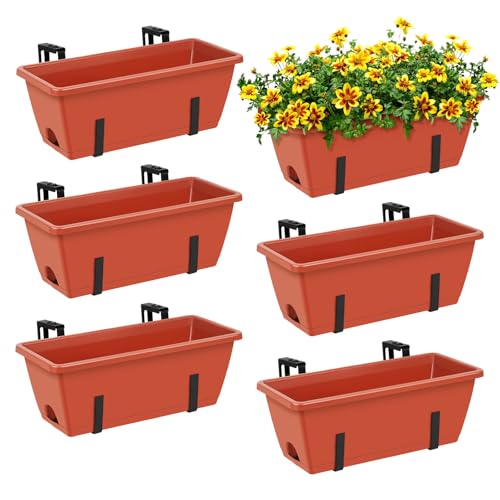 |
ETELI Railing Planter Box 6 Pack Balcony Planters RailingETELI | Also great | $30.99
Price as of 23 Oct 2026
|
View | |
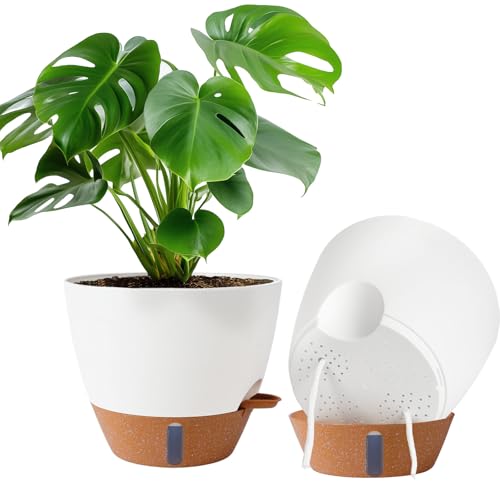 |
Fielda 2 Pack 10 inch Plant Pots, Plastic Self WateringFielda | Also great | $21.59
Price as of 23 Oct 2026
|
View |
Use this table to narrow the field fast. Focus on footprint, wind exposure, and watering needs, because those three points usually decide the right fit.
For balconies with tight access or strong gusts, planter shape can matter more than pot color. A shallow box, a suspended basket, and a tower each fail in different ways.
How we chose
Selection here is based on four checks: rail fit and mounting method, wet-soil weight and wind exposure, drainage and water retention, and whether the format suits renters, herbs, flowers, or trailing plants. Balcony structural limits matter too. Gardening Know How advises checking them before buying.
We also separated planter types by use case instead of treating every balcony the same. A shady, low-wind rental with a strict railing can need a very different setup than a sunny, exposed ledge.
UOUZ self-watering hanging planter: best for low-maintenance trailing plants
This is a strong fit if you want to free floor space and cut down on watering. Based on the product details, it uses a removable 50 oz reservoir, which helps hold moisture longer on windy balconies or during busy stretches.
It suits trailing plants, porch edges, and spots where a light plastic planter is easier to move than metal or terracotta. The tradeoff is exposure: hanging formats can swing in wind, and a basket still needs a secure anchor point or railing setup.
LITLANDSTAR hanging grow bags: best for vertical herb and leafy-green walls
This format works when you want plants off the floor and up a wall or railing. The 18-pocket layout is built for a small footprint, so it suits balconies where wide floor planters would block circulation.
It is a better match for herbs and leafy greens than for heavy, deep-rooted plants. The main drawback is that fabric pockets dry out faster than reservoir-style planters, so it asks for more frequent watering in sun and wind.
XHIKOWAT rectangular metal planter box: best for floor-bound balcony beds
This is the clearest choice when you want a bigger planting zone without spreading into a wide shape. The 33-inch by 12-inch by 14-inch format gives you a long bed for mixed plantings, and the wheeled base helps with repositioning.
It can suit privacy plants or compact vegetables, but it also brings more wet-soil weight than smaller pots. Metal adds weather resistance, yet rust protection still matters outdoors, especially if drainage water sits in the tray or around the base.
ETELI railing planter box set: best for rail-mounted herbs and flowers
This is the strongest rail-first option in the group. The set uses metal brackets and a window-box shape, which is exactly the kind of format that keeps the floor open while putting plants where they get light.
It is a practical pick for herbs and flowers, but it depends on a railing that can accept the bracket design. As with any rail box, fit and balance matter more than appearance. A loose or poorly sized bracket is a real tipping risk.
Fielda self-watering plant pots: best for compact, low-maintenance containers
These suit small balconies that need simple, movable pots rather than mounted gear. The listed features include drainage holes, a deep reservoir, and a water level indicator, which helps reduce the guesswork in dry weather.
The limitation is scale: 10-inch pots are useful for herbs, flowers, or smaller edibles, but they are not a substitute for a long railing box when you want to line a whole edge. They also do less to save space than hanging or rail-mounted styles.
How to choose balcony planters for a small space
Choose by fit first, then by plant habit and maintenance. Measure railing width, confirm how the planter mounts, check where drainage water goes, and estimate the weight after wetting the soil. On small balconies, the right planter is the one that stays stable, fits the edge, and matches the plant’s root depth.
Start with the balcony itself. A narrow ledge often calls for a railing box or window box. A windy, open floor needs a heavier base or a low-profile container that will not tip easily. If watering convenience matters more than maximum planting area, a self-watering reservoir is often the better choice.
- Measure rail thickness or edge depth before shopping.
- Check whether the planter uses hooks, brackets, suspension, or a floor base.
- Estimate wet weight, not dry weight.
- Match depth to the plant root system.
- Confirm drainage holes, plugs, or a reservoir.
- Decide whether you need easy removal for rent rules or winter storage.
Rail fit, wind, and water management
Rail fit is the first constraint because a planter that does not mount correctly is unsafe. Growersreview lists a Dahey railing planter at 15.74 by 6.10 by 5 inches and says its hook fits railings up to 2.7 inches wide. Complete Garden says an Apollo Exports planter fits rails from 1 to 4 inches wide. Those numbers matter more than color or shape.
Wind changes the choice fast. Patch filters outdoor balcony plants by wind tolerance, including “Can handle wind” and “Can’t handle wind.” That is a useful reminder that the planter and the plant both need to match the exposure. A south-facing, gusty balcony needs a more secure mount and a sturdier plant than a sheltered inner courtyard.
Railing planters: best for herbs and flowers
Railing planters are usually the best space-saving option for herbs and flowers because they use dead edge space instead of floor area. They work best when the rail is within the mounting range, the bracket is snug, and the planter includes drainage holes or a plug you can open when rain is heavy.
These boxes are usually rectangular and shallow enough to keep the load closer to the rail. That helps with visibility and access, but it also means root space is limited. Shallow containers dry fast and crowd roots sooner than deeper pots, so they suit compact plantings more than shrubs.
What to check before buying a rail box
- Rail width and bracket compatibility.
- Hook depth and whether it clears the railing cap.
- Drainage holes or removable plugs.
- Material rust risk in rain or spray.
- Whether the planter sits level when full.
Best plant picks for rail boxes
Herbs, annual flowers, and compact leafy greens are the most reliable choices. Complete Garden identifies the Dahey planter as 15.7 inches and railing-friendly, which is the kind of scale that suits a mixed herb strip more than a bulky vegetable crop. Use rail boxes for plants that stay modest in height and do not need deep root runs.
Hanging planters: best for trailing plants
Hanging planters save the most floor space because they move the growing zone overhead or to the railing face. They work especially well for trailing plants, which can spill outward without taking more of the walking area. UOUZ’s hanging planter uses a removable 50 oz reservoir, which also helps on windy balconies.
The catch is exposure. Hanging formats can swing, dry out quickly, and catch more wind than a low rail box. Lightweight materials help with load, but they can also move more in gusts. That makes secure mounting and plant choice more important than in a grounded planter.
Where hanging planters fail
They fail when the anchor point is weak, the plant is too top-heavy, or the basket is filled with a thirsty mix that dries in hours. They also fail when renters cannot use ceiling hooks. In that case, a railing basket or wall-mounted grow bag is often safer and easier to remove.
Vertical planter towers: best for tiny floors
Vertical towers are the best fit when the balcony floor is the main constraint. They stack planting pockets or tiers upward, so the footprint stays small even as plant count rises. Gardening Know How groups balcony containers into six categories, including vertical planters, and also notes that balconies need containers that are easy to water.
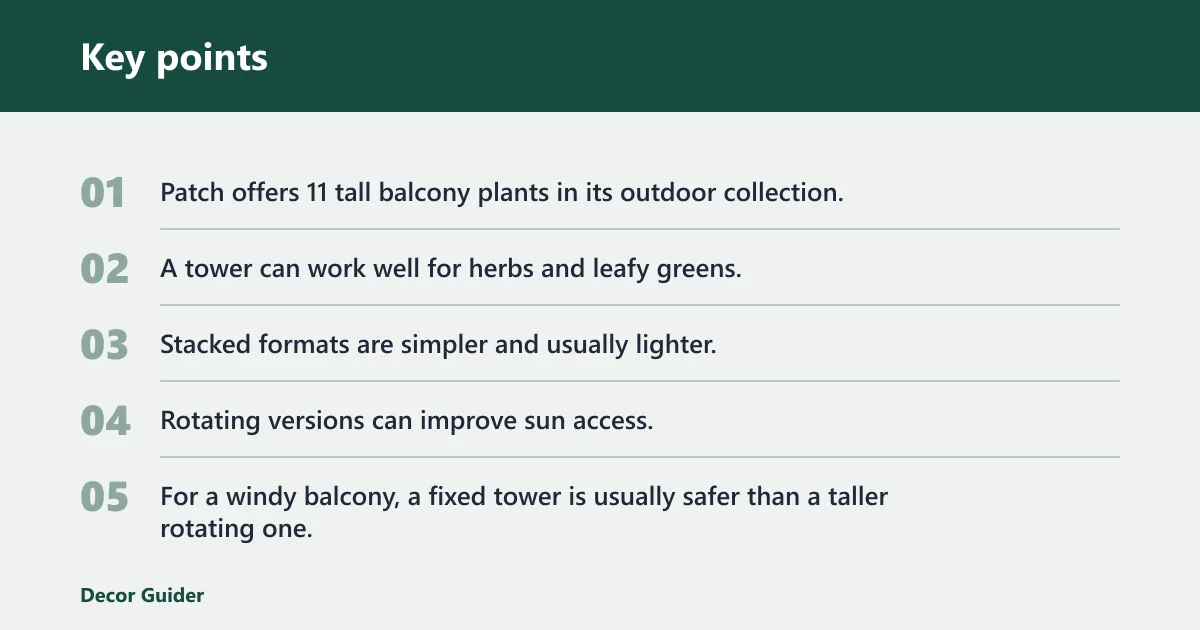
Patch offers 11 tall balcony plants in its outdoor collection, which fits the logic of using height without spreading outward. A tower can work well for herbs and leafy greens, especially when it includes a built-in watering or reservoir option.
Stacked and rotating layouts
Stacked formats are simpler and usually lighter. Rotating versions can improve sun access, but they add moving parts and more opportunity for wobble. For a windy balcony, a fixed tower is usually safer than a taller rotating one, especially if the base is narrow.
Reservoir options for busy schedules
Built-in reservoirs help reduce watering frequency, which is useful on windy balconies and for travel-heavy routines. Self-watering designs with a water level indicator and drainage control are especially helpful because they reduce overwatering risk while still buffering short dry spells.
What to grow in a tower
Leafy greens, herbs, compact flowers, and shallow-rooted edibles are the best fits. Towers are less suited to dwarf citrus or shrub-like plants, which need more root room and a more stable base than most tiered systems provide.
Balcony planter decision matrix
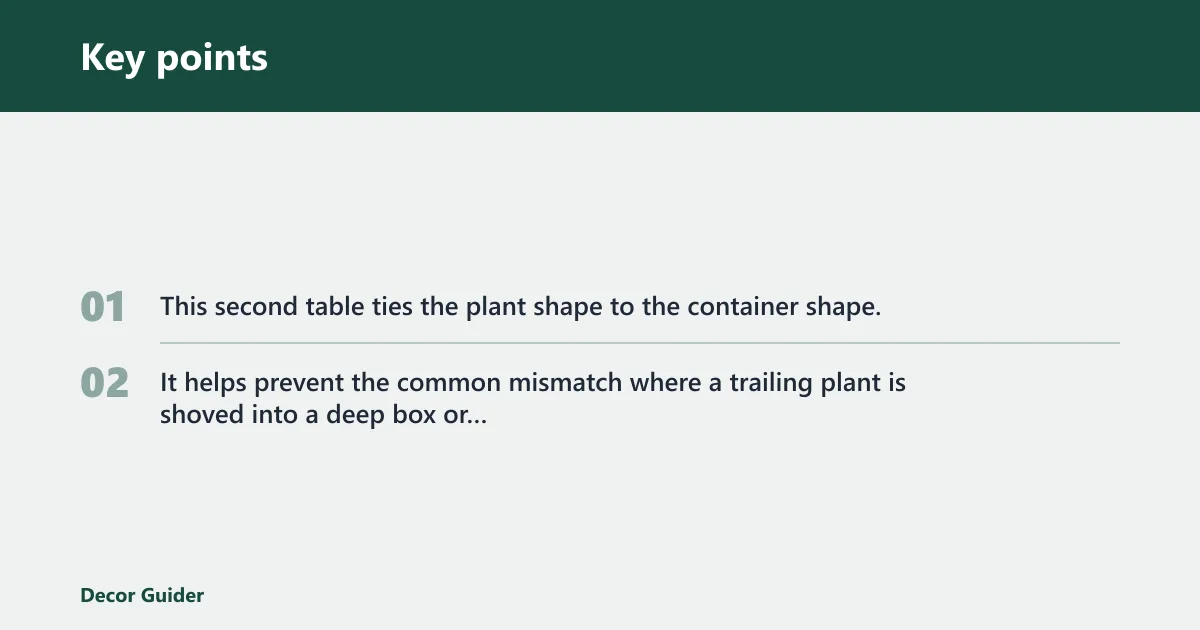
This table gives you a practical way to compare formats before buying. It separates footprint, weight, water demand, and likely failure points so you can match the planter to the balcony instead of buying by appearance alone.
| Planter type | Minimum rail/floor clearance | Typical plant types | Wind risk | Watering frequency | Renter-friendliness | Common failure modes |
|---|---|---|---|---|---|---|
| Railing planter | Rail width must match bracket; usually needs a clear top edge | Herbs, flowers, compact greens | Medium to high if overfilled or loosely mounted | Moderate | High when brackets are allowed | Tipping, slipping brackets, dripping, root crowding |
| Hanging planter | Ceiling or railing suspension point | Trailing flowers, vines, light herbs | High | High unless reservoir-equipped | Medium; depends on building rules | Swinging, fast drying, anchor failure, dripping |
| Window box planter | Narrow ledge or rail edge clearance | Compact herbs, flowers, small vegetables | Medium | Moderate | High if the mount is removable | Overwatering, spillover, sun scorch in shallow soil |
| Vertical planter tower | Small floor footprint; needs vertical headroom | Herbs, leafy greens, small flowers | Medium to high depending on height | Moderate to high | Medium | Top-heavy loads, uneven watering, crowding in pockets |
| Self-watering reservoir pot | Standard floor or shelf space | Herbs, flowers, small vegetables | Low to medium depending on shape | Lower than open pots | High | Clogged plugs, standing water, root rot if misused |
Plant habit to planter format
This second table ties the plant shape to the container shape. It helps prevent the common mismatch where a trailing plant is shoved into a deep box or an upright plant is forced into a shallow basket.
| Plant habit | Best planter format | Why it fits |
|---|---|---|
| Trailing | Hanging planter or railing box | Lets stems spill outward without using floor space |
| Upright | Vertical tower or deeper floor pot | Supports vertical growth and stable rooting |
| Edible | Railing box, self-watering pot, or tower | Works for herbs and compact crops with regular harvests |
| Shrub-like | Deep floor pot or large rectangular planter | Needs more root room and a steadier base |
What planter material lasts longest outdoors on a balcony?
There is no single winner for every balcony, but material choice should start with weather resistance and rust risk. Metal and galvanized steel are sturdier choices for outdoor use, but they need rust protection or corrosion awareness. Plastic is lighter and easier to move. Terracotta is stable and attractive but can crack more easily in cold or if dropped.
Complete Garden identifies KIBAGA planters as a set of 3 made from galvanized steel. That kind of material is useful outdoors, especially where rust resistance matters more than weight savings. For a sheltered balcony, plastic may be the easier option because it is lighter and simpler to reposition.
Do balcony planters need drainage holes?
Yes, unless the planter has a reservoir system that handles excess water another way. Drainage holes help prevent root rot and support moisture control, especially on rainy balconies where water can pool. Some planters include removable plugs so you can choose between drainage and retention depending on weather.
Drainage is not only about wet soil. It also affects staining, tipping, and overflow. A shallow box without an outlet can hold too much water, add weight, and drip onto floors or neighbors. Self-watering models reduce that risk, but only if the overflow path is designed correctly and the plug setting matches the weather.
Failure cases to watch
- Overwatering in shallow containers, which can suffocate roots fast.
- Clogged plugs that trap standing water.
- Staining on concrete, decking, or rail surfaces.
- Tipping when saturated soil shifts to one side.
- Root crowding when the planter is too shallow for the plant.
Which one should you buy?
If you want the cheapest path to a greener balcony, start with a hanging grow bag or a compact plastic pot. If you want the lowest-maintenance option, choose a self-watering planter with a water level indicator. If you have high wind exposure, favor a lower, more stable rail box or a heavier floor planter over a swinging basket.
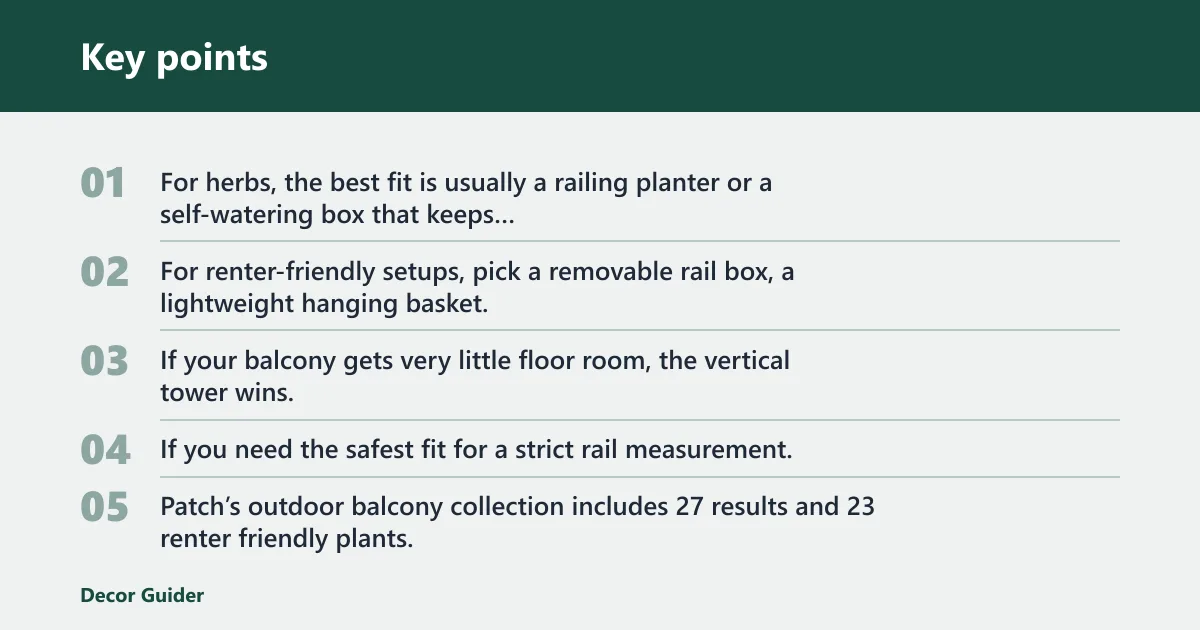
For herbs, the best fit is usually a railing planter or a self-watering box that keeps watering simple. For renter-friendly setups, pick a removable rail box, a lightweight hanging basket, or a tower that sits on the floor without drilling. If your balcony gets very little floor room, the vertical tower wins. If you need the safest fit for a strict rail measurement, use a bracketed railing planter only after checking the rail width against the maker’s specs.
Patch’s outdoor balcony collection includes 27 results and 23 renter friendly plants, with filters for “Can handle wind” and “Can’t handle wind.” That sorting approach is useful here too: treat the planter choice as a filter problem, not a style problem.
Say your balcony rail is 2.5 inches wide, the weather is breezy, and you want basil and small flowers. A railing planter with drainage holes is the better call than a tall tower, because it keeps the plants accessible and limits the floor footprint. Suppose the rail is off limits in a rental and the balcony gets morning sun only. A self-watering floor pot or hanging planter becomes the safer choice, provided the anchor point is allowed.
Frequently asked questions
How do I choose balcony planters for a small space?
Choose by footprint first, then by water control and mounting. Measure the rail or floor area, check how the planter attaches, and estimate the wet weight. For very small balconies, railing planters, hanging baskets, and vertical towers usually beat wide floor pots because they leave more usable walking space.
What size planter fits a balcony railing?
The right size depends on the rail width and the bracket design, not just the planter’s listed length. The same source lists a Dahey railing planter at 15.74 by 6.10 by 5 inches and says its hook fits railings up to 2.7 inches wide. The same source says one Apollo Exports planter fits rails from 1 to 4 inches wide.
Are hanging planters better than railing planters for balconies?
Hanging planters are better when floor space is the main problem and you want trailing plants. Railing planters are usually better when you want easier access, less swing in wind, and more stable watering. On exposed balconies, railing boxes often feel safer because they sit closer to the structure.
How much weight can a balcony planter add?
The exact load depends on planter size and soil saturation, but wet soil is much heavier than dry mix. Gardening Know How warns to check balcony structural weight limits. A practical rule is to treat every full planter as a weight item, not a decor item, especially on railings or lightweight decks.
Products related to this article
Sponsored / affiliate links. As an Amazon Associate I earn from qualifying purchases. I may earn additional commission from eligible campaigns.