How to Get Rid of Silverfish in Dresser Drawers
Remove silverfish from dresser drawers by emptying them, vacuuming cracks, wiping the wood dry, and using sticky traps plus low-humidity control. If the infestation is active, treat the room, not just the drawer. Left alone, they damage paper labels, photo corners, and fabric blends while the moisture that attracts them can spread to other furniture. This guide shows how to clear the drawers, check the dresser itself, and block the gaps and dampness that let them return.
What to remove first from dresser drawers
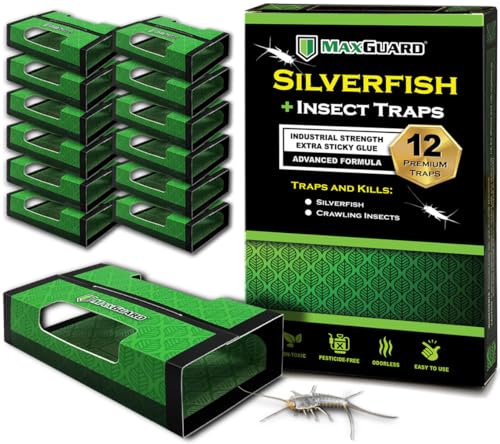
- Kills silverfish and other crawling bugs
- Non-toxic, insecticide-free adhesive trap
- Peel, fold, and place easily
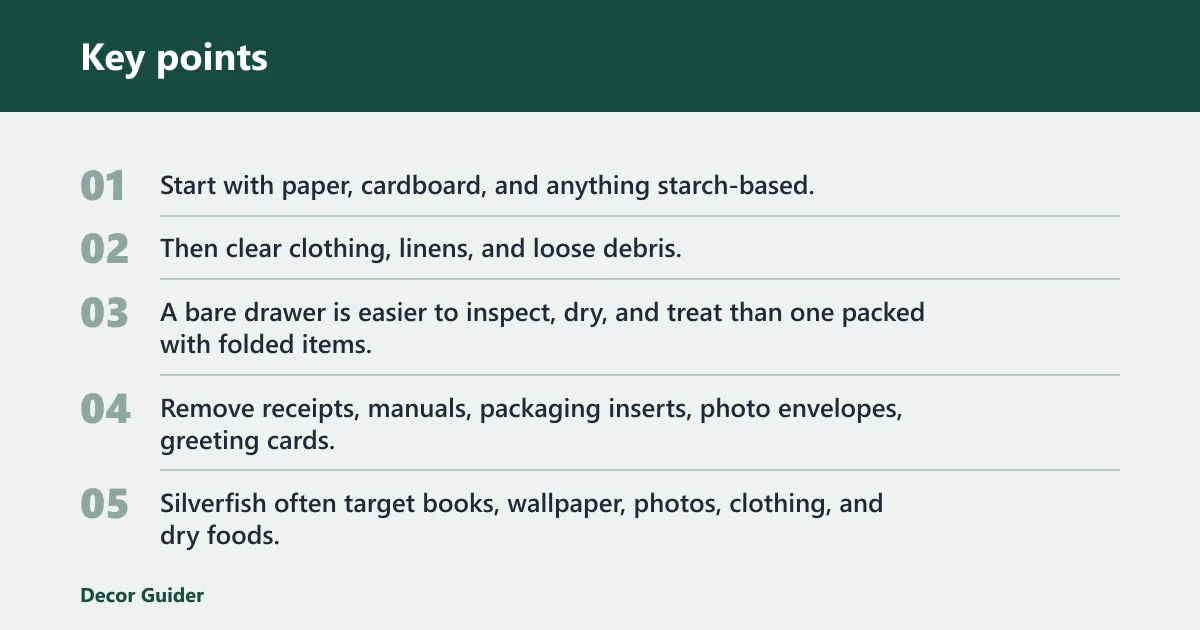
Start with paper, cardboard, and anything starch-based, because silverfish eat cellulose and starches and will hide inside clutter long before you notice damage. Then clear clothing, linens, and loose debris. A bare drawer is easier to inspect, dry, and treat than one packed with folded items.
Paper and cardboard items
Remove receipts, manuals, packaging inserts, photo envelopes, greeting cards, and shoe boxes first. Silverfish often target books, wallpaper, photos, clothing, and dry foods, so anything paper-heavy belongs out of the drawer until the infestation is controlled. Replace cardboard storage with sealed plastic or glass containers.
Clothing, linens, and fabric storage
Take out folded T-shirts, scarves, blankets, and spare bedding. Check seams, hems, and storage folds for shed scales, feeding marks, or live insects. If an item is cleanable and worth keeping, move it to a sealed container after washing or dry cleaning.
Loose lint, crumbs, and packaging
Vacuum lint, dust, hair, paper bits, and crumbs from the bottom corners and slide channels. Silverfish are nocturnal and hide in dark humid areas, so even a little debris can keep the drawer attractive. Do not leave elastic bands, tissue scraps, or torn tags inside.
How to clear and clean each drawer type
Use the cleaning method that matches the drawer material. Solid wood can take a more thorough wipe-down, veneer needs a lighter touch, lined drawers need careful drying, and fabric storage calls for dry cleaning methods first. The goal is to remove food, moisture, and shelter without damaging the surface.
Solid wood drawers
Vacuum the interior with a crevice tool, then wipe with a barely damp cloth and a mild soap solution. Dry all seams immediately with a clean towel. If residue remains in grooves or corner joints, use a cotton swab rather than soaking the wood.
Veneer drawers
Use minimal moisture. Veneer can swell or lift if water sits on the surface, so wipe with a lightly damp cloth and dry right away. Skip abrasive scrubbers and heavy sprays. Focus on drawer corners, runners, and the front lip where debris collects.
Lined drawers and fabric storage
Remove paper or fabric liners if they are worn, musty, or stained, because silverfish can shelter under loose edges. If the liner is salvageable, vacuum both sides and let it dry fully before reinstalling. For fabric storage, use a dry lint roller or vacuum first, then move items to airtight containers.
Dresser drawers silverfish action checklist
Use this checklist to clear the drawer, choose the right treatment, and check nearby gaps that can feed a return. The drawer itself is only part of the problem; wall voids, baseboards, and closet edges often keep the cycle going.
| Drawer contents to remove | Safe cleaning or treatment by material type | Reinfestation checks for nearby wall or baseboard gaps |
|---|---|---|
| Paper, cardboard, manuals, photo sleeves | Solid wood: vacuum and wipe dry; veneer: lightly damp cloth only; lined drawers: remove liner if damaged | Check behind dresser for baseboard cracks and dust trails |
| Clothing, linens, scarves, blankets | Fabric storage: vacuum, wash or dry clean if needed, then seal in airtight containers | Inspect closet corners and the wall behind hanging clothes |
| Loose lint, crumbs, packaging, tags | Solid wood and veneer: vacuum seams and drawer runners; do not leave moisture behind | Look for gaps around pipes, trim, and cabinet openings |
| Stored stationery, envelopes, labels | Place reusable items in sealed plastic or glass containers; discard damaged cardboard | Monitor floor edges and the back of the dresser with traps |
Recheck the drawer after it is fully dry, reset traps, and inspect the wall line behind the dresser. Reinspect nearby drawers and closets as needed, then vacuum any new dust or debris. Keep the storage setup dry, sealed, and clear enough to keep using.
Why are silverfish in your dresser drawers?
Silverfish end up in dresser drawers because the space gives them darkness, shelter, and food in one place. A dresser can hold paper, clothing, lint, and glue-backed labels, while the surrounding room may add humidity from walls, closets, or nearby bathrooms and basements.
Dark harborage inside drawers
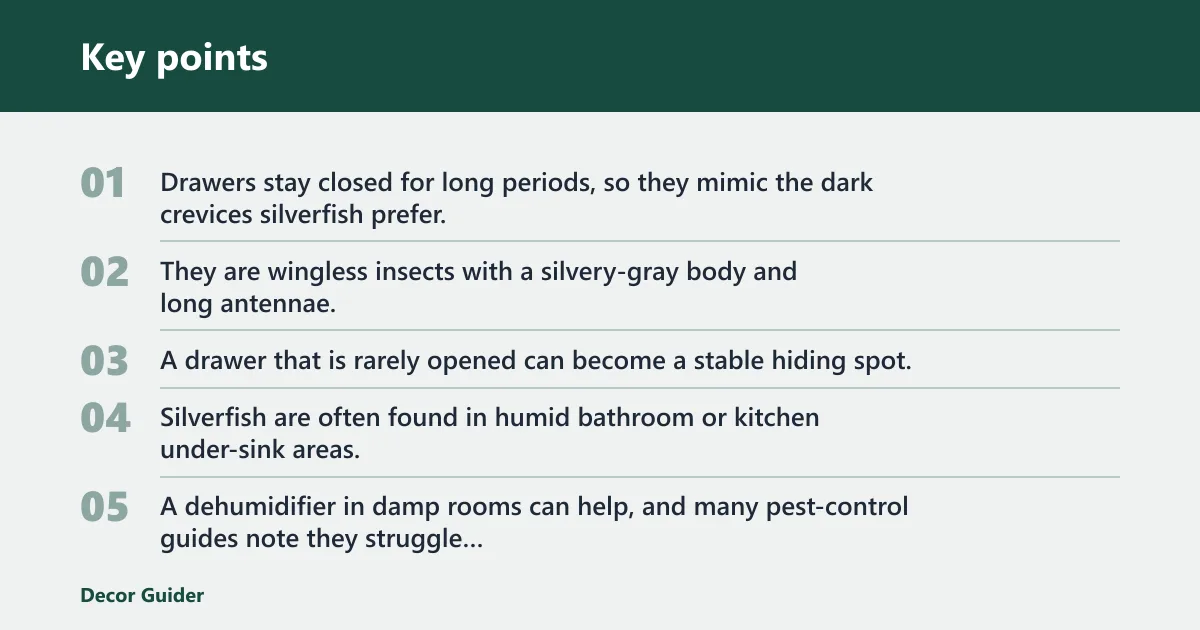
Drawers stay closed for long periods, so they mimic the dark crevices silverfish prefer. They are wingless insects with a silvery-gray body and long antennae, and they move quickly when exposed. A drawer that is rarely opened can become a stable hiding spot.
Humidity near closets and walls
Moisture is a major attraction factor. Silverfish are often found in humid bathroom or kitchen under-sink areas, and they also move into closets, walls, or crawl spaces. A dehumidifier in damp rooms can help, and many pest-control guides note they struggle below about 50% humidity.
Starches, cellulose, and clutter
Paper labels, booklets, cardboard inserts, and some fabric finishes provide the starches and cellulose they feed on. If the drawer is packed with extras, they can feed and hide without leaving much evidence. Clutter also slows drying, which makes the drawer more suitable.
What tools and materials do you need?
Use a short list of tools so you can clean, monitor, and seal without adding residue or moisture. A vacuum, traps, a drying method, and airtight storage are usually more useful than scent products alone. If you add a dust or bait, place it only where the label and material type allow.
Sticky traps and a jar trap
Sticky traps can control small silverfish populations and are useful near activity hotspots, including corners of furniture, closets, and the floor line behind the dresser. A DIY jar trap is a simple homemade option some people use, but it is less dependable than sticky traps: wrap the outside of a jar with tape, place bread inside, and set it where insects can climb in but not out. (Wikihow)
Diatomaceous earth or boric acid
Diatomaceous earth can kill silverfish by dehydrating them, but it must stay dry and should be applied in cracks, not spread where it can coat drawer contents. Avoid breathing the dust or letting it become airborne. Boric acid and borax are different products with different labels and uses; if you use either one, keep it away from kids and pets and follow the product label exactly.
Sealant, vacuum, and airtight storage
Use a crevice tool, a dry microfiber cloth, and a sealant for gaps around trim, pipes, and baseboards. Move paper, clothing, and pantry-style dry goods into sealed storage containers made of plastic or glass. If the room stays humid, add a dehumidifier or fan to reduce moisture near the dresser.
How do you get rid of silverfish in dresser drawers?

Empty the drawers, clean them fully, and then treat the room edges that feed the infestation. A drawer-only fix usually fails because silverfish hide in baseboards, wall gaps, and nearby closets. Treat the furniture zone as one connected area, not one box of wood.
- Empty each drawer and bag the contents by type.
- Vacuum the drawer interior, corners, and runners.
- Wipe the interior dry and let it air out fully.
- Treat cracks, seams, and nearby gaps with the appropriate product.
- Return only sealed or cleaned items to the drawer.
- Set traps and check humidity near the dresser weekly.
Picture a 6-drawer dresser in a bedroom closet with folded pillowcases in one drawer and old stationery in another. If the paper stays, the insects keep food and shelter. If the paper moves to a sealed container and the drawer stays dry, the space becomes far less suitable.
Suppose one drawer has a fabric liner that is loose at the front edge. Remove the liner, vacuum the adhesive residue, and reinstall only if the material is still flat and dry. If the liner stays curled, it gives silverfish another protected edge to hide under.
If that didn’t work, try this next
- Move the dresser about 2 to 3 inches from the wall and inspect the baseboard line.
- Seal visible cracks with a suitable caulk or filler after the area is clean and dry.
- Set sticky traps in drawer corners, behind the dresser, and near closet edges.
- Use diatomaceous earth in wall and trim cracks only, keeping it dry.
- If activity continues, use a labeled crack-and-crevice product with an active ingredient such as a pyrethroid or other label-approved insecticide only in cracks, seams, and voids around trim, baseboards, and the dresser frame, or call a pest professional.
Common mistakes
Silverfish control fails when the drawer is cleaned but the surrounding space stays damp or cluttered. The most common errors are leaving paper inside, using too much dust, and skipping the wall line behind the dresser. Those mistakes let the same insects move back in.
- Leaving cardboard, envelopes, or old labels in the drawer.
- Using cedar, citrus, lavender, or cloves as the only control.
- Putting dust on exposed drawer surfaces instead of cracks.
- Ignoring baseboards, pipe gaps, and closet corners.
- Returning damp items before the drawer is fully dry.
Prevention: Keep clothing and papers in airtight containers when possible, and keep humidity below about 50% in the dresser area if conditions allow. A dry, sealed storage zone gives silverfish fewer places to feed and hide.
Frequently asked questions
How do you get rid of silverfish?
Empty the affected storage, vacuum seams, and dry the area completely. Then place sticky traps near corners and treat cracks around the dresser, baseboards, and closet edges. If moisture stays high, add a dehumidifier and move paper or fabric items into airtight containers.
What do silverfish eat in dresser drawers?
They feed on paper, book bindings, labels, cardboard, and starches on some fabrics. In dresser drawers, the most common targets are stationery, photo envelopes, clothing fibers, and dust mixed with skin flakes or crumbs. Remove those items first.
How long does it take to get rid of silverfish?
Small activity can drop in days with trapping and cleaning, but a full cleanup often takes weeks because hidden insects and eggs can remain in cracks or nearby wall voids. Recheck traps and humidity regularly as you monitor the area.
How do I stop silverfish coming back?
Seal entry gaps, keep the dresser zone dry, and store vulnerable items in airtight containers. Reinspect wall edges, closet corners, and baseboards after cleaning. If traps still catch insects after a month, the source is likely outside the drawers and needs more room-wide treatment.
Products related to this article
Sponsored / affiliate links. As an Amazon Associate I earn from qualifying purchases. I may earn additional commission from eligible campaigns.