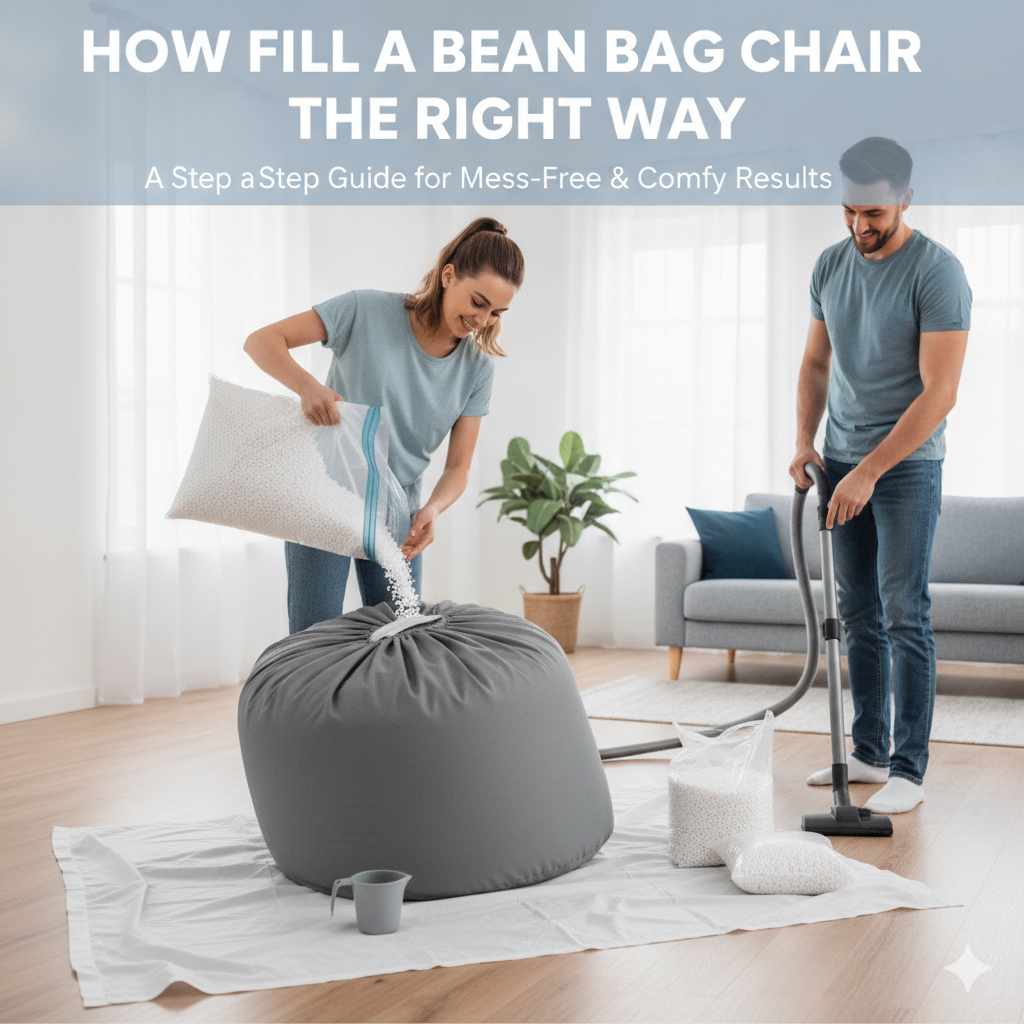
How To Fill A Bean Bag Chair The Right Way
This guide will walk you through filling your bean bag chair. We’ll cover what to use. We’ll show you the best ways to do it.

Big Joe
Big Joe Bean Refill Polystyrene Beans for…
- IT'S THE INSIDE THAT MATTERS: Give your bean chair or pool float some love with Big Joe rejuvenating polystyrene beans; They are l…
- EASY TO REFILL: Cut along the provided dotted line of the refill bag and simply pour
- BRING YOUR BIG JOE BACK TO LIFE: For an approximate amount to refill, a small chair or pool float may need 2-3 bags; While larger…
As an Amazon Associate I earn from qualifying purchases.
For another table or room-layout decision, Small Chair and Table Set for Balcony: Buys gives readers a useful follow-up.
You’ll learn to get that perfect, cozy feel. Soon, your chair will be your favorite spot again.
Getting the right amount and type of filling is key. You want a bean bag chair that feels supportive yet soft. It should mold to your body. Too little filling makes it sag. Too much makes it stiff. This guide shows you how to achieve that perfect balance for ultimate comfort.
Understanding Bean Bag Filling
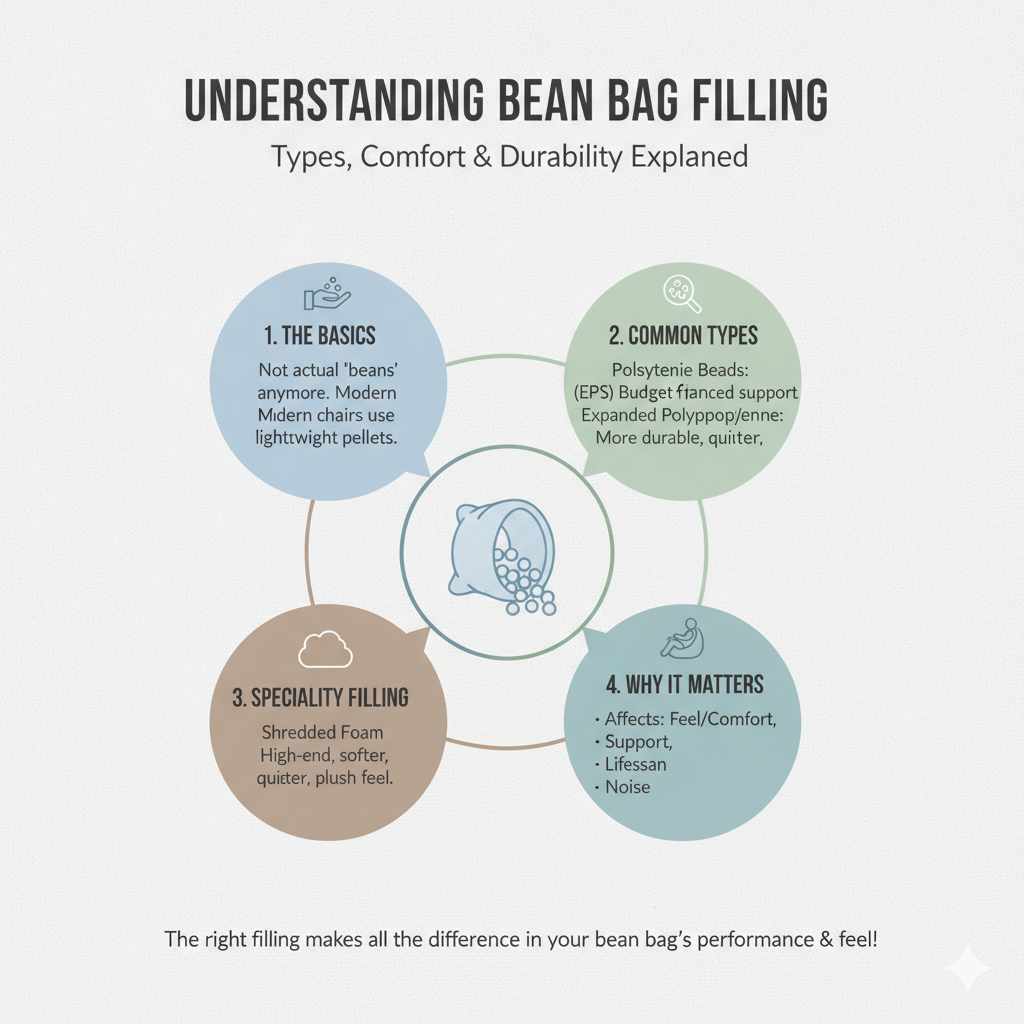
What is actually in a bean bag chair? It’s not really beans anymore, at least not for most modern chairs. The classic “beans” were actual dried beans or peas.
These would get crushed over time. They also weren’t very comfortable. Today, most bean bags use small, lightweight pellets.
These pellets are usually made of polystyrene or expanded polypropylene. They are tiny beads. They flow easily.
This allows them to fill all the nooks and crannies. They also hold their shape well. This keeps your chair from going flat too fast.
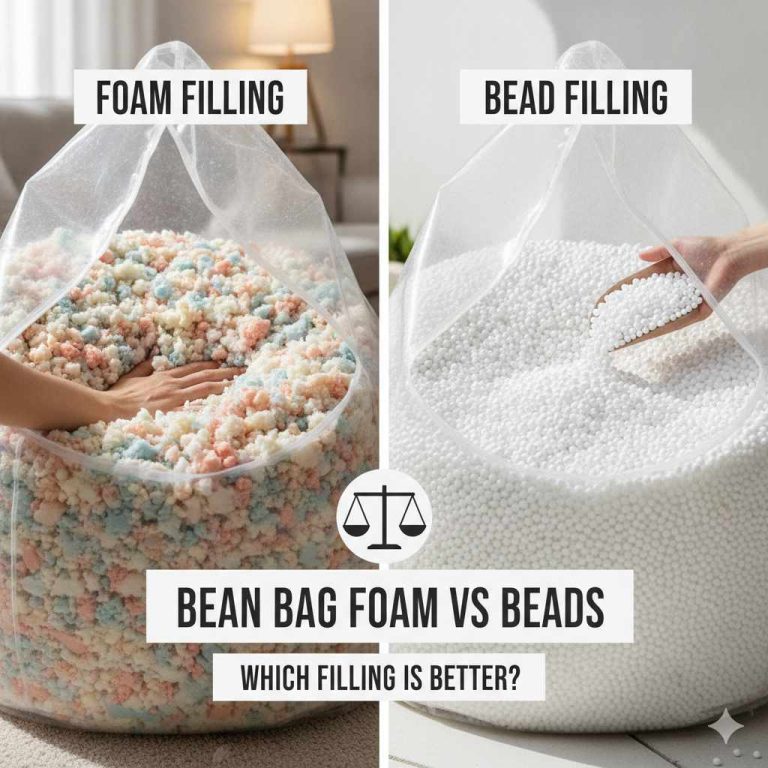
Some high-end or specialty chairs might use shredded foam. This offers a different kind of comfort. It’s often softer and quieter.
The type of filling matters a lot. It affects how the chair feels. It also impacts how long it stays comfortable.
Polystyrene beads are the most common. They are budget-friendly. They offer a good balance of support and give.
Expanded polypropylene beads are a bit more durable. They are also quieter when you move. Shredded foam is like a super-plush pillow.
It’s great for a more luxurious feel.
My First Bean Bag Filling Fiasco
I remember my first time filling a bean bag. I was maybe 10 years old. My parents bought me a huge, bright red one.
It was shaped like a classic dome. It came with a giant bag of white polystyrene beads. I was so excited.
I ripped open the inner liner. Then, I watched in horror as beads escaped everywhere. They flew out like a blizzard.
They went under the couch. They got stuck in my hair. They rolled under the door.
It was a fluffy, white mess. My mom wasn’t too happy. We spent hours picking them up with a vacuum and by hand.
It was not the fun activity I imagined. The chair, once filled, was okay. But the experience was messy.
I learned quickly that you need a plan. And maybe some adult supervision.
Choosing Your Filling Material
Polystyrene Beads: The most popular choice. They are light, moldable, and affordable. Great for everyday use.
Expanded Polypropylene (EPP) Beads: More durable than polystyrene. They are also quieter and hold their shape longer. A good upgrade if you have the budget.
Shredded Foam: Offers a softer, more luxurious feel. It’s like sitting in a giant, comfy pillow. Can be more expensive.
Other Fillings: Some eco-friendly options exist, like recycled materials or natural fibers. Check product descriptions.
Real-World Context: Where and Why Filling Matters
Think about where your bean bag chair will live. Is it in a playroom? A living room?
A dorm room? Each spot has different needs. In a playroom, easy cleaning and durability are important.
Kids will bounce and tumble. The filling needs to withstand this. It also means spills might happen.
So, a filling that doesn’t absorb liquid easily is good.
In a living room, comfort and aesthetics might be higher priorities. You want a chair that looks good and feels amazing to sink into after a long day. If it’s in a dorm, space is often limited.
A bean bag can be a great space saver. But it needs to be firm enough not to take over the whole room when not in use.
The climate can also play a role. In warmer climates, you might prefer a filling that breathes well. This stops you from feeling too hot.
Polystyrene beads can trap heat. Some newer fillings are designed to be more breathable. Or, you might choose a fabric cover that helps with air flow.
Your own habits matter too. Do you like to lounge for hours? Or do you just need a quick place to sit?
If you plan to sit for a long time, you want support. You don’t want to sink so low that you can’t get up. If it’s just for occasional use, a softer fill might be fine.
My Experience with EPP Beads
After my messy start, I decided to upgrade my bean bag filling. I got a new, larger bean bag for my apartment. This time, I researched fillings.
I settled on expanded polypropylene (EPP) beads. The bag looked just as big as the old one. But this time, I was prepared.
I put down old sheets on the floor. I opened the bag slowly. I used a scoop and a funnel.
It was still a bit of a process, but much cleaner. The EPP beads felt different. They were smoother.
When I sat down, the chair felt more stable. It didn’t “poof” as much. It seemed to hold its shape better.
I could lean back without sinking too deeply. I also noticed it was quieter. The old polystyrene beads made a rustling noise.
These were much more subdued. It felt like a grown-up chair now. This experience taught me that better filling can make a big difference.
Quick-Scan Filling Amounts
Small Chair (Kid-sized): 3-4 cubic feet of filling
Medium Chair (Teen/Adult): 4-6 cubic feet of filling
Large Chair (Adult Lounger): 6-8 cubic feet of filling
Extra-Large/Giant: 8+ cubic feet of filling
Note: These are estimates. Always check manufacturer recommendations.
The Step-by-Step Filling Process
Ready to fill your bean bag? Don’t worry, it’s much easier with the right steps. You’ll need a few things first.
Gather your new filling. Get some old towels or sheets. Maybe a small scoop or cup.
A funnel can also be a lifesaver. If your chair has an inner liner, that’s great. If not, you might need to get one.
Some chairs are just fabric shells. Most have an inner bag to hold the filling. This keeps things cleaner.
Check your chair’s design.
First, find a clear space. This is crucial. Lay down your old sheets or towels on the floor.
This catches any escaped beads. It makes cleanup much faster. Think of it as a fluffy containment zone.
Make sure you have enough room to work. You don’t want to be bumping into furniture.
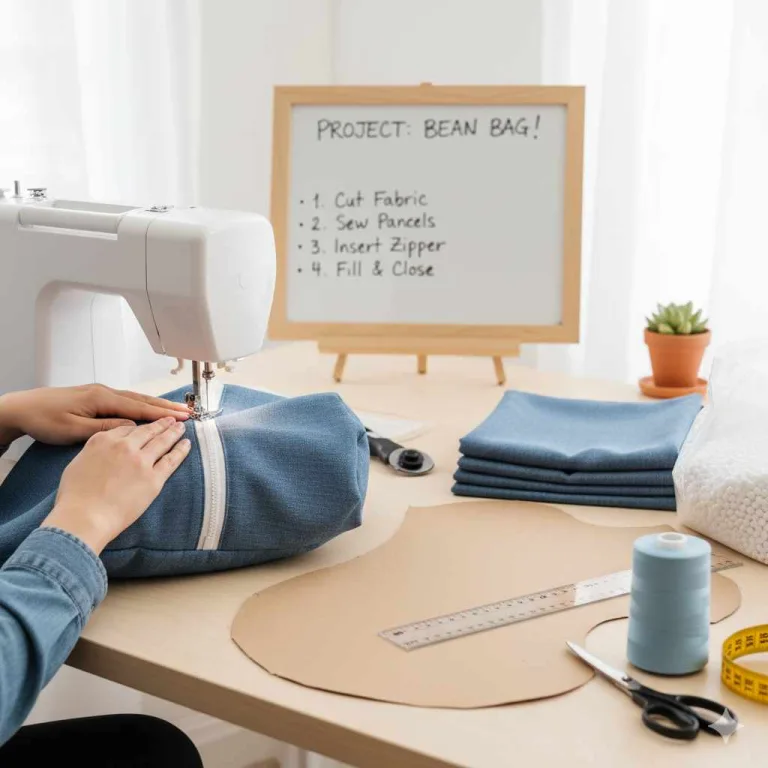
Next, get your bean bag chair ready. If it’s an existing chair that needs refilling, unzip it. Carefully open the main zipper.
Look for the inner liner zipper. If there’s no inner liner, you’ll be filling the outer shell directly. This is the messier option.
Now, for the filling. If you’re using a funnel, put it into the opening of the inner liner. Start slowly pouring or scooping the filling into the funnel.
If you don’t have a funnel, just carefully aim the filling into the opening. It’s best to do this in stages. Fill a little, then check.
You can always add more. It’s hard to take it out if you add too much.
As you fill, gently shake the chair. This helps the beads settle. It also allows the filling to spread evenly.
You want to fill it up, but not too much. You should be able to push into it. It shouldn’t feel like a solid rock.
But it also shouldn’t feel empty and flat.
Once you feel like you have enough, zip up the inner liner. Then, zip up the outer cover. Sit on the chair.
How does it feel? Is it too hard? Too soft?
You can always unzip it and add or remove filling. This might take a few tries to get it perfect. That’s normal.
Be patient with yourself.
What This Means for You
Too Hard: You’ve likely added too much filling. You’ll need to remove some. This is often easier than adding more.
Too Soft/Sagging: You need more filling. Keep adding small amounts until it feels supportive.
Uneven: Shake the chair gently. Push down on different spots to help the filling settle.
Noisy: If you used polystyrene, it might always have some noise. EPP or foam are quieter options.
Refilling vs. First-Time Filling
Is your chair just a bit flat? Or is it completely empty? The process is similar.
If it’s just flat, you might need less new filling. You can often just unzip the chair and add a few scoops. Then zip it back up and test it.
This is a much quicker way to refresh your chair.
If your chair is totally empty, or you’re using a new cover, you’ll be filling it from scratch. This is where having a clear workspace is most important. You’ll be adding a lot more filling.
Take your time. Work in batches. Don’t try to dump the whole bag in at once.
Some people like to fill their chair until it’s very firm. Then they sit on it. The chair will compress slightly.
This can help you judge the final firmness. It’s like breaking in a new pair of shoes. You want them snug, but not painful.
Your bean bag chair should feel snug and supportive.
Tips for a Mess-Free Filling Experience
Let’s talk about preventing that bead explosion I experienced. It’s all about control. First, never rip the filling bag open.
Carefully use scissors to cut a small opening. This gives you more control over the flow.
If your chair has a zipper, make sure it’s fully open. You want the largest opening possible for the filling to enter. For inner liners, the zipper should also be wide open.
Use a scoop. A sturdy plastic scoop works well. Or even a sturdy cup.
Fill the scoop from the bag. Then gently guide the scoop into the chair’s opening. This is much more controlled than pouring directly from a large bag.
Consider a filling station. If you have a large amount of filling, you might even set up a small “station” on the floor. Lay out your sheets.
Put the filling bag there. Have your scoop and funnel ready. You can then transfer filling from the main bag to the scoop or funnel more easily.
If you notice beads escaping, stop immediately. Try to catch them with your hands or the scoop. Don’t let them scatter.
It’s easier to manage a small spill than a big one.
Zip up the chair as you go. If you’re filling it slowly, zip it up partially when you take a break. This contains the filling.
Then unzip it again to continue.
Contrast Matrix: Filling Types
| Feature | Polystyrene Beads | Expanded Polypropylene (EPP) Beads | Shredded Foam |
| Comfort | Good, moldable | Very good, supportive | Excellent, plush |
| Durability | Moderate | High | Varies, can compact |
| Noise | Can be noisy (rustling) | Quiet | Very quiet |
| Cost | Low | Medium | High |
| Weight | Light | Slightly heavier than polystyrene | Heaviest |
What Happens When It’s Just Right
You’ve filled it. You’ve tested it. How do you know it’s perfect?
When your bean bag chair is filled correctly, it feels supportive. You can sink into it. It cradles your body.
It doesn’t feel like you’re falling through it. You can easily shift your weight. Getting up is not a major effort.
The chair should hold its shape when you’re not sitting in it. It shouldn’t look deflated or sad. When you sit down, it should mold to you.
The filling should distribute evenly. The outer fabric should be slightly taught, but not stretched thin.
If it feels like a lumpy mattress, you might need to adjust. Shake it more. Or perhaps you need to remove some filling and add it back in.
It’s a process of fine-tuning. The goal is a chair that is cozy and comfortable for hours.
It should feel like a hug. A supportive hug. Not a crushing one.
And not a flimsy one either. Just right. Like Goldilocks’s porridge, but for seating.
When to Worry About Your Bean Bag
Most of the time, a bean bag chair is pretty low-maintenance. But there are a few things to watch out for. One is a significant loss of filling.
If your chair starts to sag drastically over a short period, the filling might be breaking down. Or there might be a leak.
Check the seams. Feel around the fabric. Are there any small holes or tears?
If you see or feel beads leaking, you’ll need to repair the tear. And you’ll likely need to add more filling. This is where using a good quality filling helps.
Cheaper beads can break down faster. They can become dusty.
Another sign is if the chair becomes very hard and uncomfortable. This could mean you have too much filling. Or the filling has compacted tightly.
Sometimes, you can fix this by removing some filling and fluffing it up. If it’s compacted foam, you might need to break it up.
If you notice a strange odor, that’s also a concern. It could mean the filling has gotten wet and isn’t drying properly. Or it could be the filling itself breaking down.
In this case, it might be time to replace the filling entirely. This is a good reason to use a fabric liner. It protects the filling from spills and moisture.
Always check the manufacturer’s instructions. They often have specific advice for their chairs. Some chairs are designed for specific types of filling.
Using the wrong kind could damage the chair.
Quick Fixes and Tips for Bean Bag Bliss
Here are some easy tips to keep your bean bag chair feeling great:
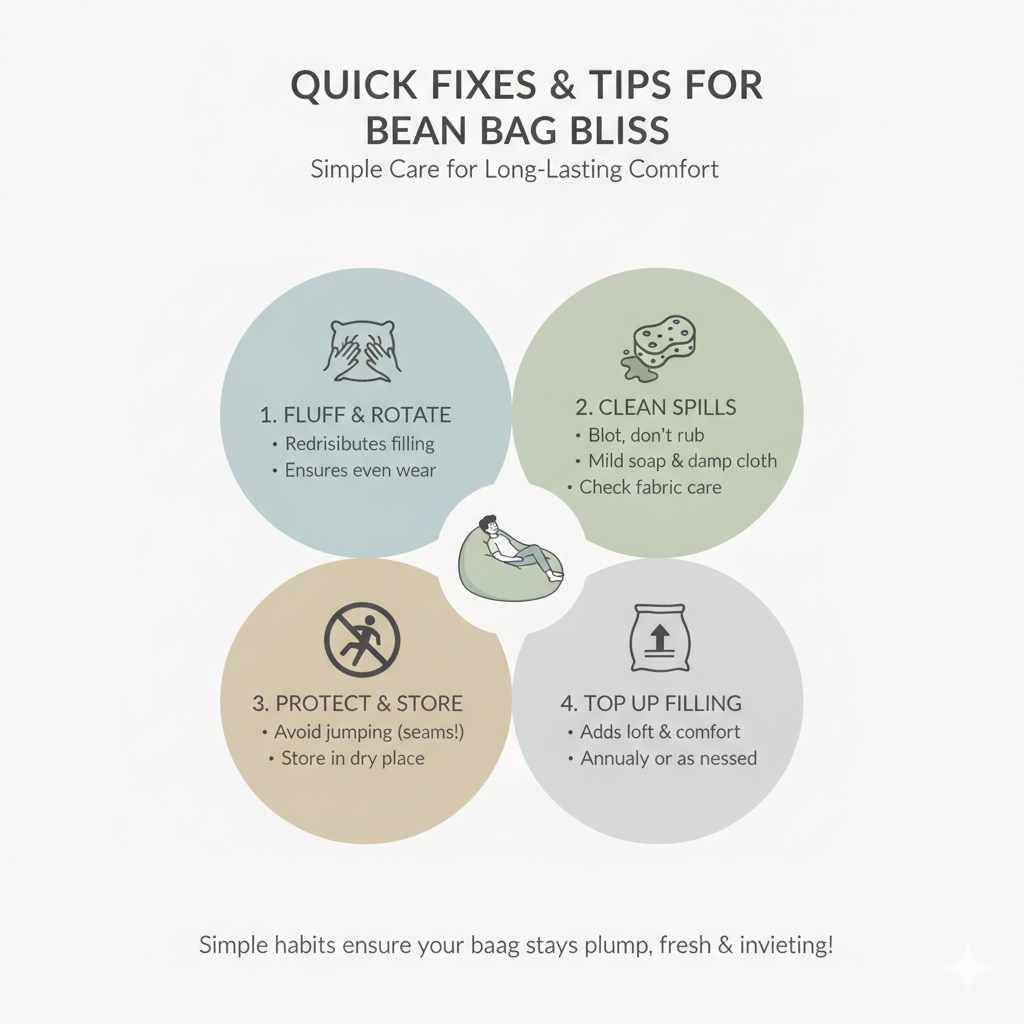
- Fluff it regularly: Just like a pillow, give your bean bag a good fluff every week or so. Push down on it. Shake it gently. This redistributes the filling.
- Rotate it: If you use one side more than the other, flip or rotate the chair. This helps with even wear.
- Clean spills immediately: Blot, don’t rub. Use a damp cloth with mild soap if needed. Check the fabric care instructions.
- Avoid jumping: Treat your bean bag chair with care. Jumping on it can damage the seams and the filling.
- Store it properly: If you’re not using it for a while, store it in a dry place.
- Top up as needed: Over time, filling can compress. Add a small amount of filling every year or two to keep it plump.
Frequently Asked Questions About Bean Bag Filling
How much filling do I need for a standard adult bean bag chair?
For a typical adult-sized bean bag chair, you’ll usually need about 4 to 6 cubic feet of filling. This can vary a lot based on the chair’s shape and how firm you like it. Always check the manufacturer’s recommendations if available.
It’s better to buy a little extra than to run out halfway through.
Can I mix different types of filling in my bean bag?
It’s generally not recommended to mix different types of filling. For example, mixing polystyrene beads with shredded foam can lead to uneven wear. The different materials compress and settle differently.
This can create lumps or an unstable feel. Stick to one type of filling for the best results.
How do I dispose of old bean bag filling?
Disposing of old filling depends on the material. Polystyrene beads are usually recyclable in some areas. Check with your local recycling center.
If it’s mixed with other materials or is no longer clean, it may need to go into the trash. Foam filling might also be recyclable or disposed of as bulky waste. Always check local waste management guidelines.
My bean bag chair makes a lot of noise. How can I fix this?
The rustling noise usually comes from polystyrene beads rubbing against each other. If this bothers you, the best solution is to
Is shredded foam better than beads for a bean bag chair?
Shredded foam offers a different kind of comfort. It’s often described as more like a plush pillow. It’s usually softer and quieter than beads.
However, foam can compact over time and may require fluffing or refreshing more often. Beads, especially EPP, tend to offer more structured support and last longer before needing a top-up.
How do I know if my bean bag chair needs more filling?
Your bean bag chair needs more filling if it feels too flat. When you sit in it, you sink too deeply. It doesn’t provide enough support.
The sides might look deflated. You should be able to push into it, but not feel like you’re falling through it. Adding a little filling at a time is the best way to test.
Conclusion
Filling a bean bag chair doesn’t have to be a daunting task. With the right approach and a little patience, you can achieve that perfect level of cozy comfort. Remember to prepare your space, choose the right filling, and fill it in stages.
Enjoy your newly refreshed and perfectly comfortable bean bag chair!
Related pick: Check today's price on Amazon
Products related to this article
Sponsored / affiliate links. As an Amazon Associate I earn from qualifying purchases. I may earn additional commission from eligible campaigns.