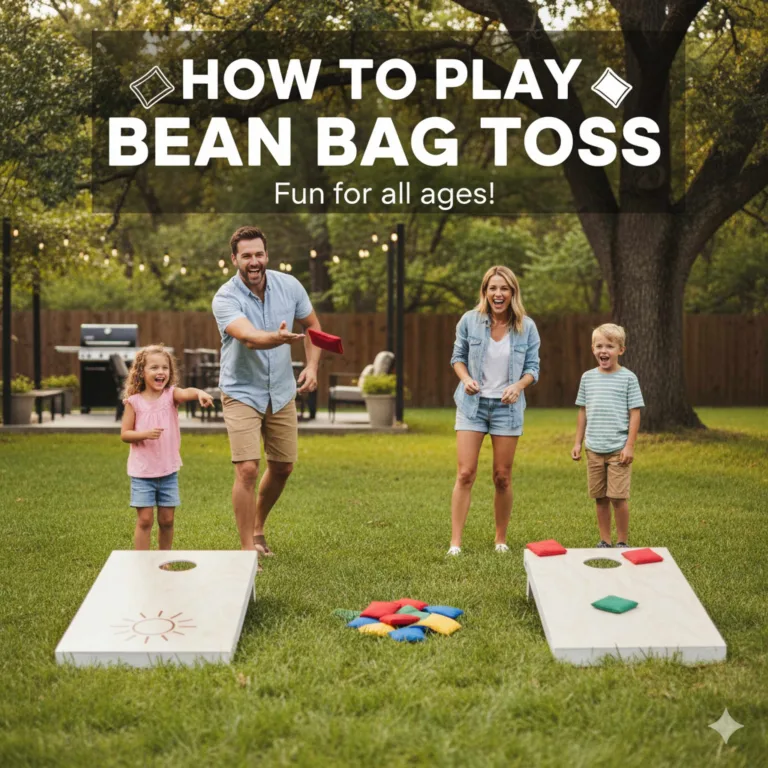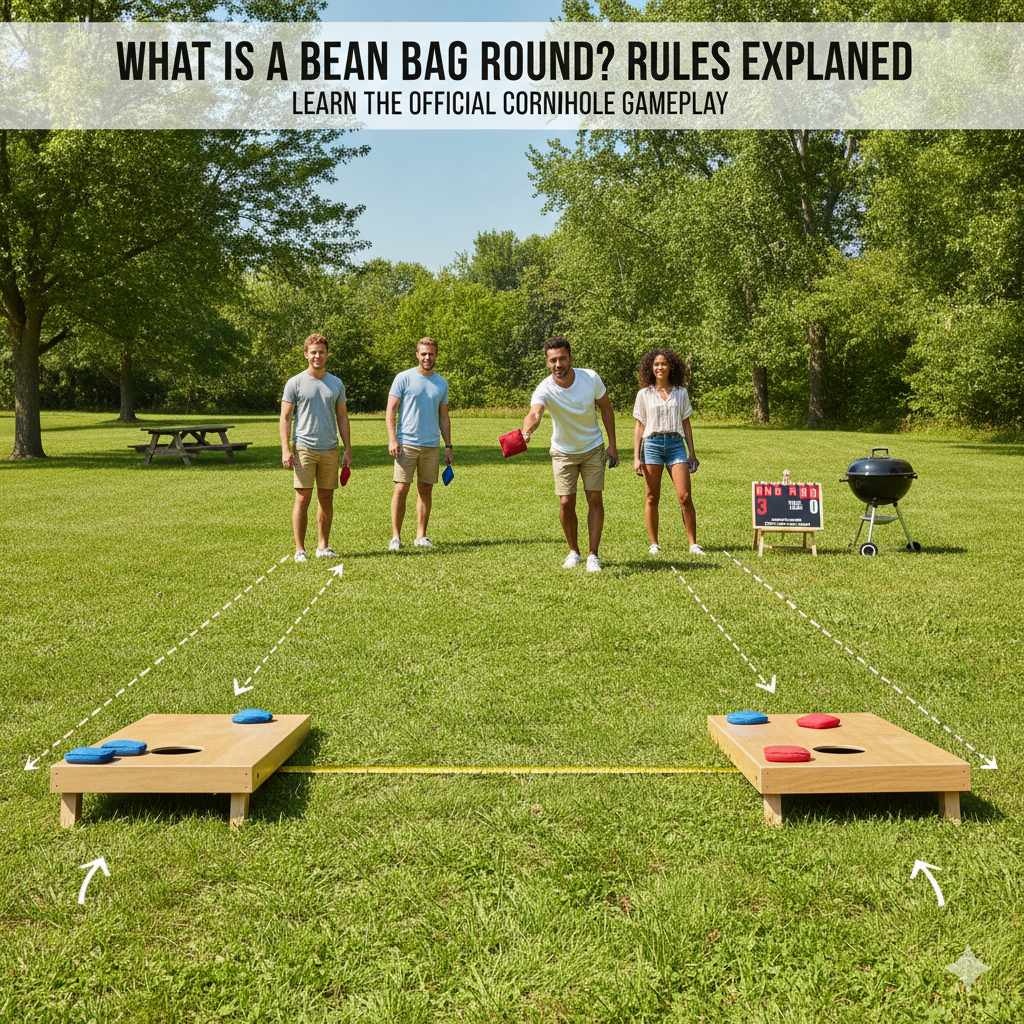
What Is A Bean Bag Round? Rules Explained
A bean bag round is a specific, often informal, game or activity where players throw bean bags towards a target. The main goal is to get the bean bag into or as close to the target as possible. Rules vary greatly depending on the specific game being played, from backyard tosses to competitive leagues.

S&S Worldwide
S&S Worldwide Spectrum Round Beanbags, 4 inch,…
- Easy to wipe down and clean
- Set of 12 in bright Spectrum??colors
- 2 each in red, yellow, blue, green, orange and purple
As an Amazon Associate I earn from qualifying purchases.
For a closely related home or decor topic, How To Decorate Above A Sofa: Stylish Ideas gives readers a useful next step.

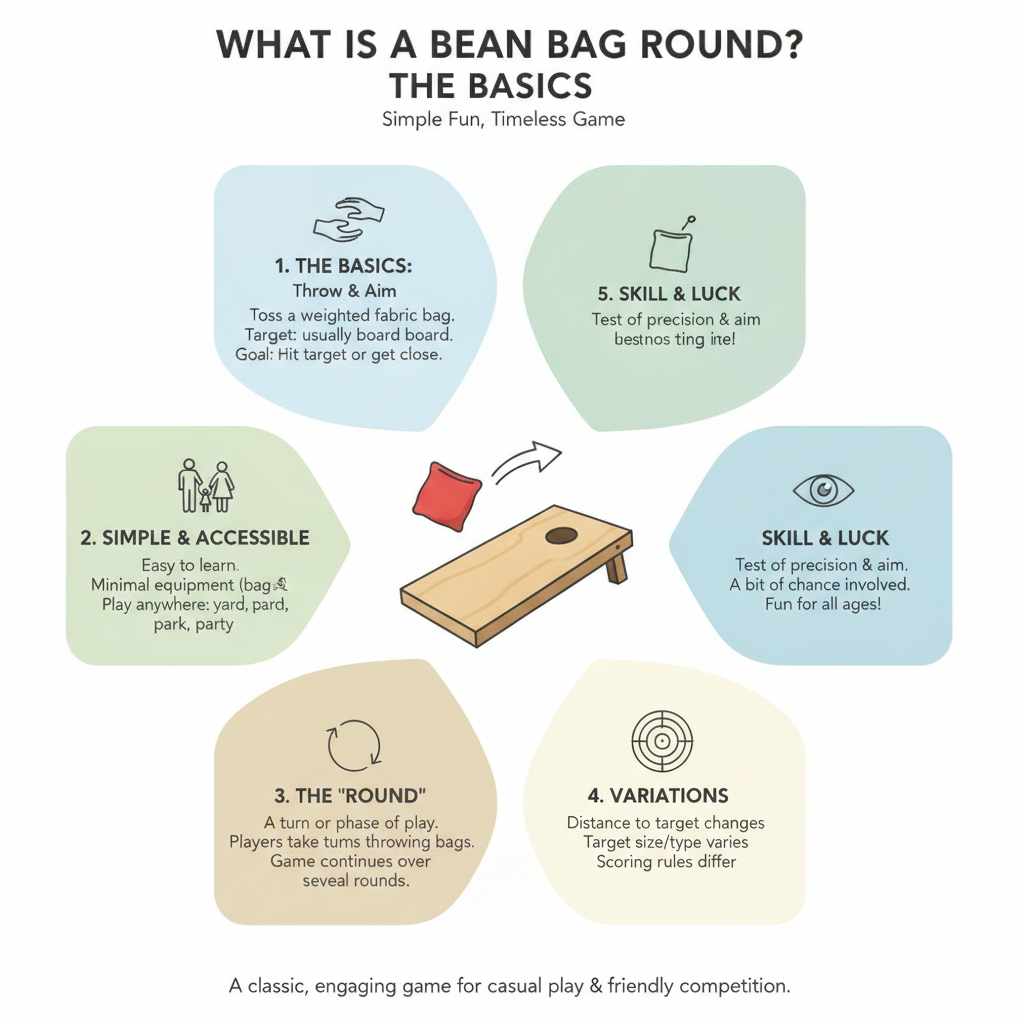
What Is a Bean Bag Round? The Basics
At its heart, a bean bag round is about tossing a soft, weighted bag. Think of it as a little bean-filled sack. The game involves throwing these bags.
Usually, there’s a target involved. The idea is to hit the target, get your bean bag near it, or score points.
The simplicity is part of its charm. You don’t need fancy equipment. Just a few bean bags and a place to play.
This makes it super accessible. It’s a game that’s been around in different forms for a long time. Families play it in yards.
Friends set it up at parties. Sometimes, it’s even part of more organized events.
The term “round” suggests a turn or a phase of the game. In many bean bag games, players take turns throwing. Each turn is like a small round.
You throw your bags, then the other person throws theirs. The game continues over several rounds until someone wins.
The key elements are always the bean bag and the target. The distance to the target and the target’s size can change. So can the scoring.
But the basic action remains the same: throw and aim. It’s a test of skill, precision, and a little bit of luck.
My First Bean Bag Round: A Backyard Fiasco
I remember the first time I really played a “bean bag round” with any seriousness. It was at a family reunion, maybe ten years ago. My uncle, ever the enthusiastic host, had set up this giant wooden board with holes cut into it.
He called it a “cornhole set.” We had these sturdy canvas bags filled with dried corn. I thought, “Easy peasy.”
My first few throws were… terrible. One went way too far, landing in the bushes. Another barely made it to the board.
My cousin, who was only eight, was doing way better. He was tossing them with this perfect arc. I felt a little embarrassed.
My dad chuckled from the sidelines. It was hot, and the sun was beating down. I just wanted to get one decent throw in.
Then, on my last bag of the first round, something clicked. I focused. I mimicked my cousin’s stance.
I tossed it with a gentle flick of the wrist. It sailed through the air, a beautiful, straight line. It landed right in the middle hole.
A “bagger,” my uncle yelled! I felt a surge of pride. It wasn’t professional, but in that moment, it felt like a huge win.
That’s the magic of bean bag games; instant satisfaction.
Bean Bag Round Essentials
The Bean Bag: Typically a square bag made of durable fabric. It’s filled with small pellets like dried corn, beans, or plastic resin. This gives it weight and a consistent shape for throwing.
The Target: This can be anything. Often it’s a raised board with a hole. Sometimes it’s a bucket, a hoop, or even just a marked spot on the ground.
The target defines the game’s objective.
The Playing Area: You need space to throw. This could be a backyard, a park, a beach, or even indoors if the space is large enough. The distance between the thrower and the target is usually set by the game’s rules.
Common Bean Bag Games and Their Rules
While “bean bag round” is a general term, it often refers to specific games. The most popular ones share common ideas but have unique twists. Let’s look at a few.
Cornhole (Bean Bag Toss)
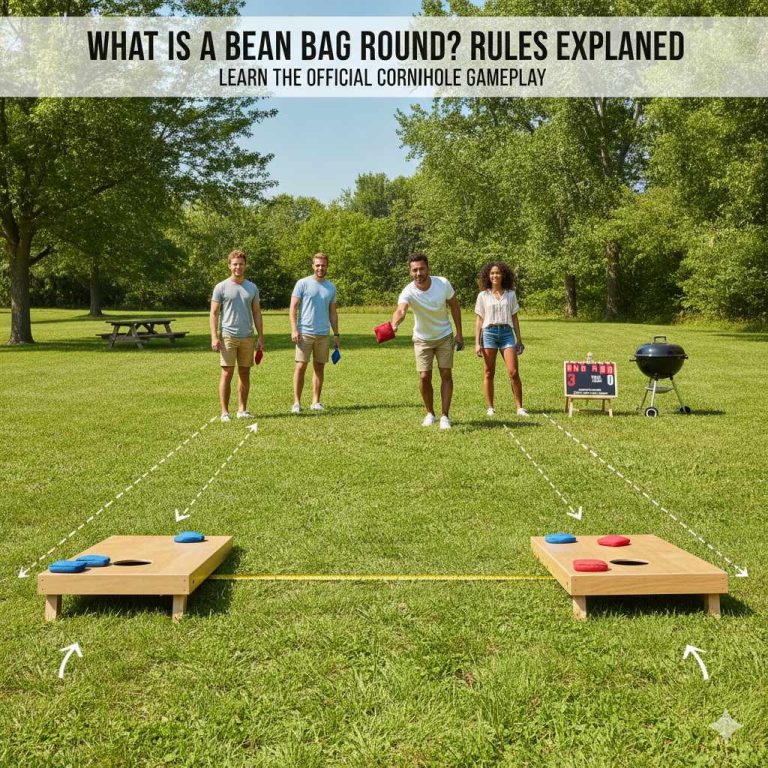
Cornhole is probably the most famous bean bag game. It’s played with two teams, often two people per team. Each team stands at opposite ends of a slanted board.
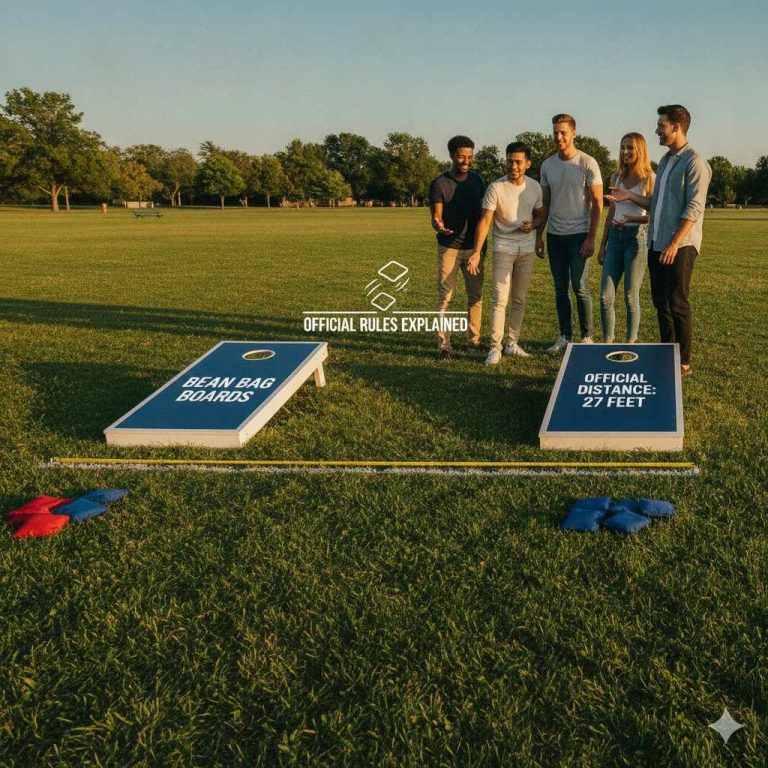
The boards are set a specific distance apart. Usually, this is 27 feet from the front edge of each board.
Each board has a hole about 6 inches in diameter, located near the top. Players toss bean bags, aiming for the hole or the board. The game is played in rounds.
In each round, each player gets four bean bags. The first team to reach 21 points wins.
Scoring is key in cornhole. A bean bag that lands on the board but doesn’t go in the hole scores 1 point. A bean bag that goes through the hole scores 3 points.
If a bag bounces on the ground and then lands on the board, it scores 0 points. Bags that go in the hole but are supported by the board score 3 points.
If one team scores 3 points, and the other scores 1 point, the net score for that round is 2 points (3 minus 1). This is called cancellation scoring. It keeps the scores close.
You must win by at least 2 points. So, if the score is 20-20, you need to get to 22-20.
The game can be played by just throwing bags. Or, teams can strategize. They might try to block their opponent’s shots.
They might try to knock opponent bags off the board. It’s a game of skill and strategy.
Cornhole Variations
There are many ways people play cornhole. Some use different distances for the boards. Some change the size of the hole.
Others use softer bags or different filling. Backyard versions are often more relaxed. Formal tournaments have strict rules.
These rules cover bag weight, size, and board material. They also cover court dimensions and scoring.
Other Bean Bag Games
Beyond cornhole, other games use bean bags. One is called “Washers.” Players toss bean bags at a target stake. Points are awarded based on how close the bean bag is to the stake.
It’s similar to horseshoes but with bean bags.
Another simple game is just tossing bean bags into buckets. You can set up several buckets at different distances. Each bucket is worth a different number of points.
This is great for younger kids. It teaches them aiming and counting.
Sometimes, bean bags are used in relay races. Teams have to carry bean bags in a specific way, like on their heads or backs. Or they might have to toss them into a moving target.
The possibilities are quite large.
Bean Bag Round Styles
Competitive Play: Organized leagues and tournaments with strict rules, official equipment, and defined court sizes. Think professional cornhole players.
Backyard Fun: Casual games played at parties, BBQs, or family gatherings. Rules are often relaxed, and equipment might be homemade.
Educational Games: Bean bags used for children’s games focusing on motor skills, counting, and aiming. Often played with simpler targets.
Therapeutic Use: In some cases, bean bags are used in occupational therapy to help with sensory input or fine motor development.
Why Are Bean Bag Rounds So Popular?
Bean bag games have a broad appeal. They aren’t just for one age group. Kids love them.
Adults enjoy them too. Even grandparents can get in on the action. What makes them so great?
Simplicity: You don’t need to be an athlete. The rules are usually easy to grasp. This means anyone can join in quickly.
There’s no steep learning curve. You can explain the game in minutes.
Portability: Most bean bag sets are easy to carry. You can take them to the park. You can bring them to the beach.
You can set them up at a friend’s house. They don’t take up a lot of space.
Social Interaction: These games are inherently social. They encourage teamwork and friendly competition. You talk to your partner.
You joke with the other team. It builds connections.
Skill Development: While simple, they require skill. Hand-eye coordination is vital. Aiming and judging distance are important.
Players learn to improve their throws over time. This sense of mastery is rewarding.
Affordability: Compared to many other sports or games, bean bag sets are usually quite affordable. You can often buy them online or at sporting goods stores. You can even make your own set for a lower cost.
Stress Relief: There’s something satisfying about a good throw. Releasing a bean bag can be a small stress reliever. Focusing on the game takes your mind off worries.
It’s a fun distraction.
The casual nature of many bean bag games means people can relax. They can laugh at missed shots. They can celebrate good throws.
This creates a positive atmosphere. It’s a game that brings people together easily.
The Experience of Throwing a Bean Bag
There’s a tactile sensation to holding a bean bag. It’s soft but firm. You can feel the weight shift inside.
It conforms to your hand. When you throw it, there’s a specific feel. It’s not like throwing a ball.
It doesn’t spin the same way. It has a more direct, almost gliding trajectory.
The sound it makes when it lands is also distinct. A soft thud on the grass. A distinct plop if it lands in water.
A sharp thwack if it hits a wooden board. Or a satisfying swish if it drops into the hole.
Each throw is a micro-decision. How much power? What angle?
Where is the wind blowing? Even in simple games, these thoughts cross your mind. You adjust your stance.
You try to find your rhythm. It’s a subtle dance between intention and execution.
In my own experience, the best throws feel effortless. It’s like your arm just knows what to do. The bag leaves your hand smoothly.
It travels exactly where you wanted it to go. There’s a moment of pure satisfaction before you even see if it landed well.
And then there are the bad throws. The ones that go wild. The ones that shank off to the side.
These are part of the game too. They make you reassess. They make you focus harder for the next turn.
This cycle of trying, failing, and trying again is what makes games engaging.
Quick-Scan Table: Cornhole Scoring Snapshot
| Outcome | Points Awarded | Notes |
|---|---|---|
| Bag lands on the board | 1 point | Must be fully on the board surface. |
| Bag goes through the hole | 3 points | Also known as a “bagger” or “cornhole.” |
| Bag is on the board but supported by the hole | 3 points | Essentially, it counts as going in. |
| Bag touches the ground before landing on board | 0 points | A ” Foul” or “dead” bag. |
Real-World Context: Where You’ll Find Bean Bag Rounds
Bean bag rounds are versatile. They pop up in many settings across the U.S. Understanding where and why they are played helps appreciate their role.
Backyard Gatherings: This is the most common place. Think summer BBQs, holiday parties, or just a lazy weekend afternoon. They are set up as a fun activity for guests of all ages.
They break the ice and provide a focal point for people to gather.
Parks and Picnics: Families and friends often bring bean bag sets to local parks. It’s a great way to entertain kids while adults relax. They are durable enough to withstand outdoor use.
Tailgating: Before sporting events, tailgating parties are big. Bean bag games like cornhole are a staple. They help build excitement and friendly rivalry among fans.
You’ll see sets set up in parking lots everywhere.
Bars and Breweries: Many establishments with outdoor patios or beer gardens feature bean bag games. They encourage patrons to stay longer and socialize. It adds to the relaxed atmosphere.
Weddings and Events: Increasingly, couples are adding lawn games like cornhole to their wedding receptions. It gives guests something fun to do during cocktail hour or between dances. It adds a playful element to formal occasions.
Summer Camps and Festivals: These events often have a variety of games. Bean bag tosses are a simple, engaging option for campers and festival-goers. They are easy to manage for large groups.
The presence of bean bag games in these varied locations shows their universal appeal. They fit into many social contexts. They are adaptable to different group sizes and energy levels.
It’s a game that truly fits many occasions.
What This Means for You: When to Play and What to Expect
So, you’re curious about bean bag rounds. What should you know? When is a good time to get involved?
It’s Probably Okay: If someone suggests playing a bean bag game, especially a casual one like cornhole, go for it! It’s almost always a low-stakes, fun activity. There’s very little pressure to perform.
When It’s Normal: You’ll see these games at most casual outdoor gatherings. If you’re at a friend’s house with a backyard, and they have a board set up, that’s your cue. It’s an invitation to join the fun.
When to Worry (Just Kidding!): There’s really no “worry” scenario with bean bag games. The biggest concern might be a slightly competitive friend taking it too seriously. But even then, it’s just a game.
The goal is enjoyment.
Simple Checks: Before playing, you might want to check the playing area. Is it clear of obstacles? Is the ground reasonably level?
If playing on a slope, be aware it can affect your throws. Also, check the bean bags themselves. Are they intact?
Are they too worn out?
Score Keeping: If you’re playing a game like cornhole with formal scoring, pay attention. Keep a running tally. It prevents arguments and keeps the game moving.
Sometimes, people use score towers or simple chalkboards.
The main takeaway is that bean bag rounds are designed for fun. They are meant to be inclusive. Don’t overthink it.
Just grab a bag and give it a toss. You might surprise yourself with how much you enjoy it.
Bean Bag Round: Myth vs. Reality
Myth: You need to be really strong to throw a bean bag well.
Reality: Bean bag games rely more on finesse and technique than brute strength. A controlled toss with good form is more effective than a wild heave.
Myth: Bean bag games are only for kids.
Reality: While kids love them, bean bag games like cornhole have a huge adult following. Many leagues and tournaments exist for adults.
Myth: All bean bag games are played the same way.
Reality: There are many variations. Cornhole, bean bag toss, bucket toss, and more.
Each has its own set of rules and objectives.
Quick Tips for Your Next Bean Bag Round
If you’re heading out to play or setting up your own bean bag game, here are a few pointers to make it more enjoyable and successful.
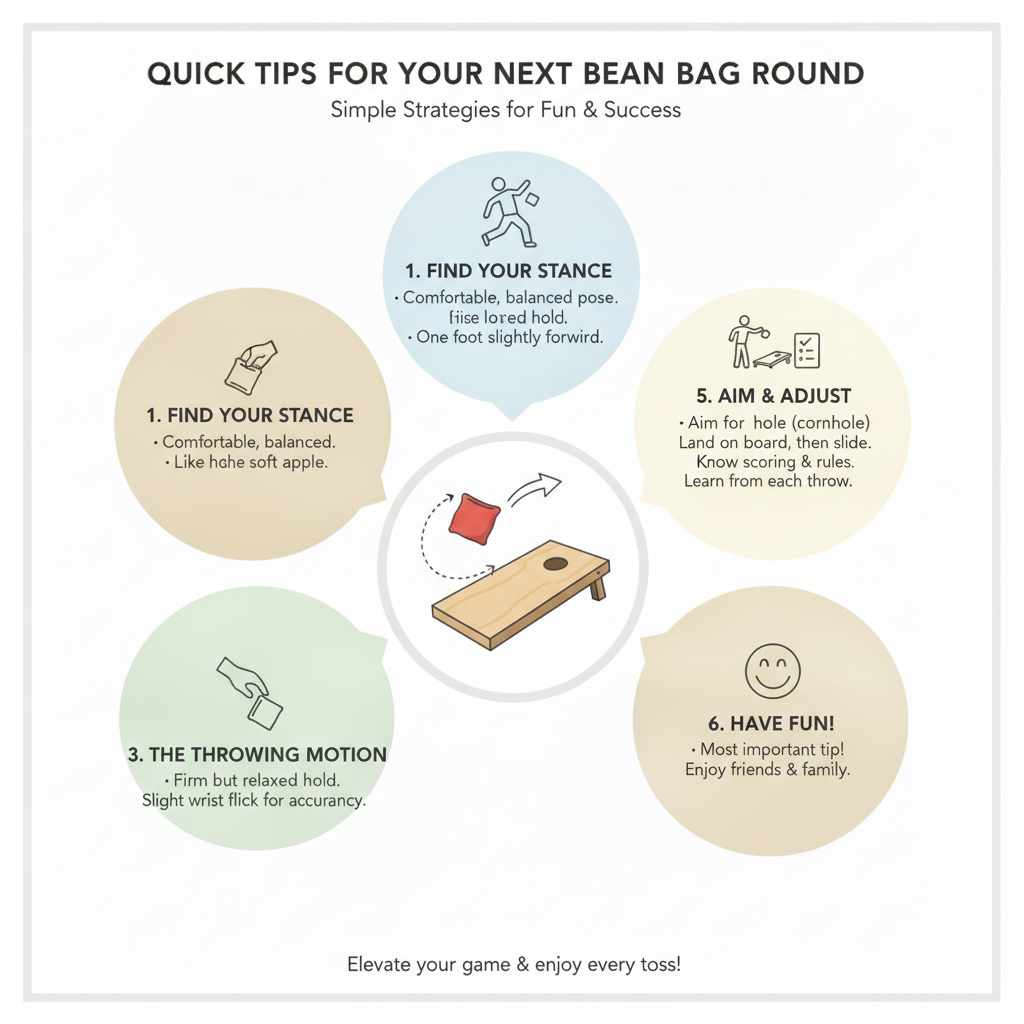
- Find Your Stance: Stand comfortably. Usually, one foot slightly forward is best. Don’t overthink it; find what feels natural.
- Grip the Bag: Hold the bean bag firmly but not too tight. A good grip helps with control. Imagine you’re holding a small, soft apple.
- The Throwing Motion: Use a smooth, underhand motion. A slight flick of the wrist at the end can add accuracy. Focus on a clean release.
- Aim High, Then Adjust: For games like cornhole, aim for the hole but think about your bag landing on the board. You can adjust your aim based on how the bags are landing.
- Practice Makes Perfect: The more you play, the better you’ll get. Don’t get discouraged by missed throws. Learn from them.
- Understand the Rules: Before you start, make sure everyone knows the scoring and any specific game rules. This avoids confusion later on.
- Have Fun! This is the most important tip. Bean bag rounds are about enjoyment and spending time with others.
Frequently Asked Questions About Bean Bag Rounds
What is the main difference between cornhole and other bean bag games?
The main difference is usually the target and the scoring system. Cornhole specifically uses two angled boards with a hole at the top and a unique cancellation scoring system. Other bean bag games might use buckets, stakes, or ground targets, with varying point systems.
Are bean bag rounds safe for young children?
Yes, bean bag rounds are generally very safe for young children. The bean bags are soft and lightweight, posing no significant risk of injury. Games can be adapted with shorter distances and larger targets to make them easier and more enjoyable for kids.
Can you play bean bag games indoors?
You can play bean bag games indoors if you have enough space and use soft bean bags. It’s best to use a target that won’t damage walls or furniture. Smaller, less powerful throws are recommended for indoor play to ensure safety and prevent property damage.
What are bean bags typically filled with?
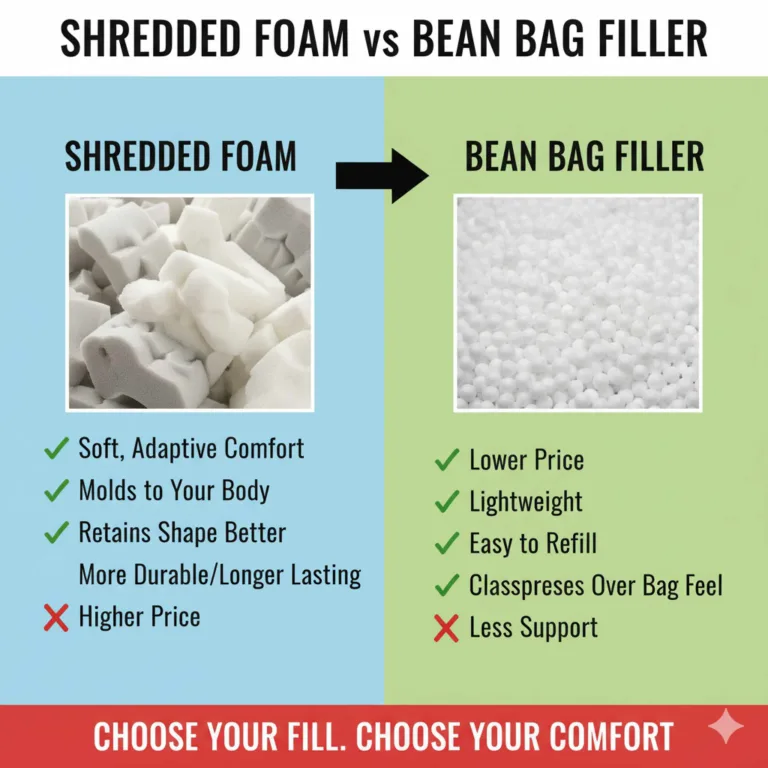
Historically, bean bags were filled with dried beans or corn kernels. Modern bean bags, especially for games like cornhole, are often filled with plastic resin pellets. This filling is more durable, resistant to moisture, and provides a more consistent weight and feel compared to organic materials.
How far apart should cornhole boards be set up?
For standard cornhole, the boards are typically set up so the front edges are 27 feet apart. The throwing boxes behind each board are usually 2 to 4 feet wide. This distance can be adjusted for different skill levels or playing environments.
What is “cancellation scoring” in cornhole?
Cancellation scoring means that points scored in a round by one team are subtracted from the points scored by the other team. For example, if Team A scores 3 points and Team B scores 1 point in a round, Team A gets a net of 2 points for that round (3 – 1 = 2). This method helps keep games competitive and close.
Conclusion: The Simple Joy of a Bean Bag Round
Bean bag rounds, in their many forms, offer a wonderful blend of simplicity and fun. They bring people together, require minimal skill to start, and provide a satisfying challenge as you play more. Whether it’s a casual backyard toss or a competitive cornhole match, the basic act of throwing a bean bag is universally enjoyable.
So next time you see a bean bag game, don’t hesitate to join in. You’ll likely find it’s a highlight of any gathering.
Related pick: Check today's price on Amazon
Products related to this article
Sponsored / affiliate links. As an Amazon Associate I earn from qualifying purchases. I may earn additional commission from eligible campaigns.