How Far Apart Should Bean Bag Toss Boards Be? 27 Feet
Bean bag toss boards sit 27 feet apart, front edge to front edge, for standard and tournament play, with casual games often shortened to about 24 feet. Set the boards at full tournament distance for young kids and nobody lands a single bag, turning a fun backyard game into a frustrating one. This guide covers the official distance, adjustments for kids and small yards, and how to measure it correctly.
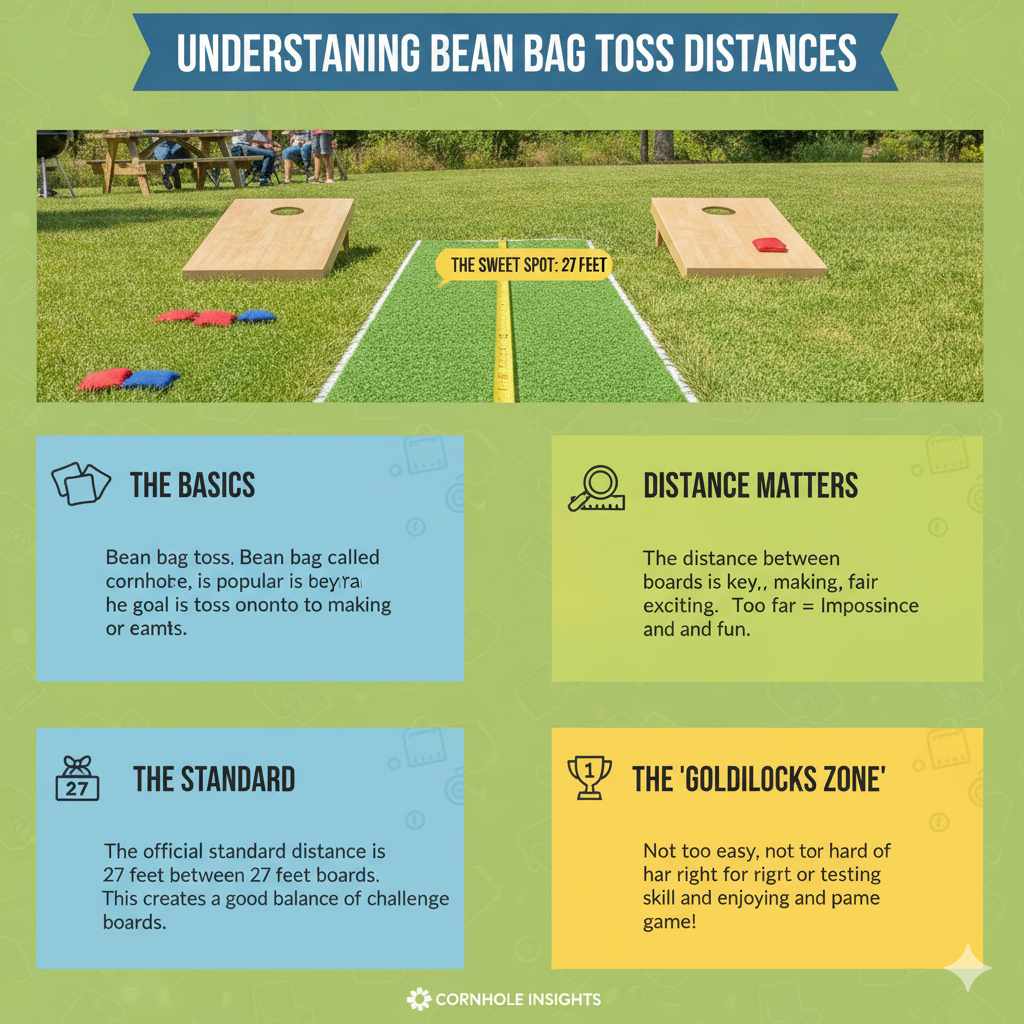
Understanding Bean Bag Toss Distances
Bean bag toss, often called cornhole, is a super popular game. It’s simple to learn and play. But the setup matters a lot.
The main goal is to toss bags onto the board. Or into the hole for more points. The distance between the boards is key to making the game fair and exciting.
Too close, and it’s too easy. Too far, and it becomes impossible. Finding that sweet spot makes the game challenging and enjoyable for everyone.
The standard distance is what most people use. It’s based on years of playing and refining the game. This distance helps create a good balance.
It tests your aim and your throwing power. But it’s not so hard that no one can make a shot. Think of it as the “goldilocks zone” for bean bag toss.
Not too easy, not too hard. Just right for a good game.
The Official and Most Common Distance
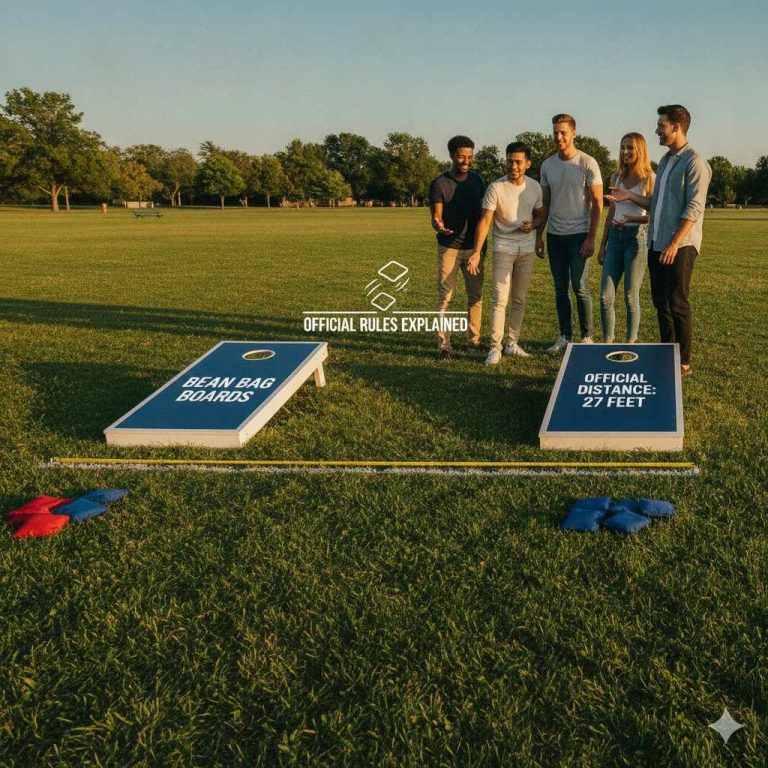
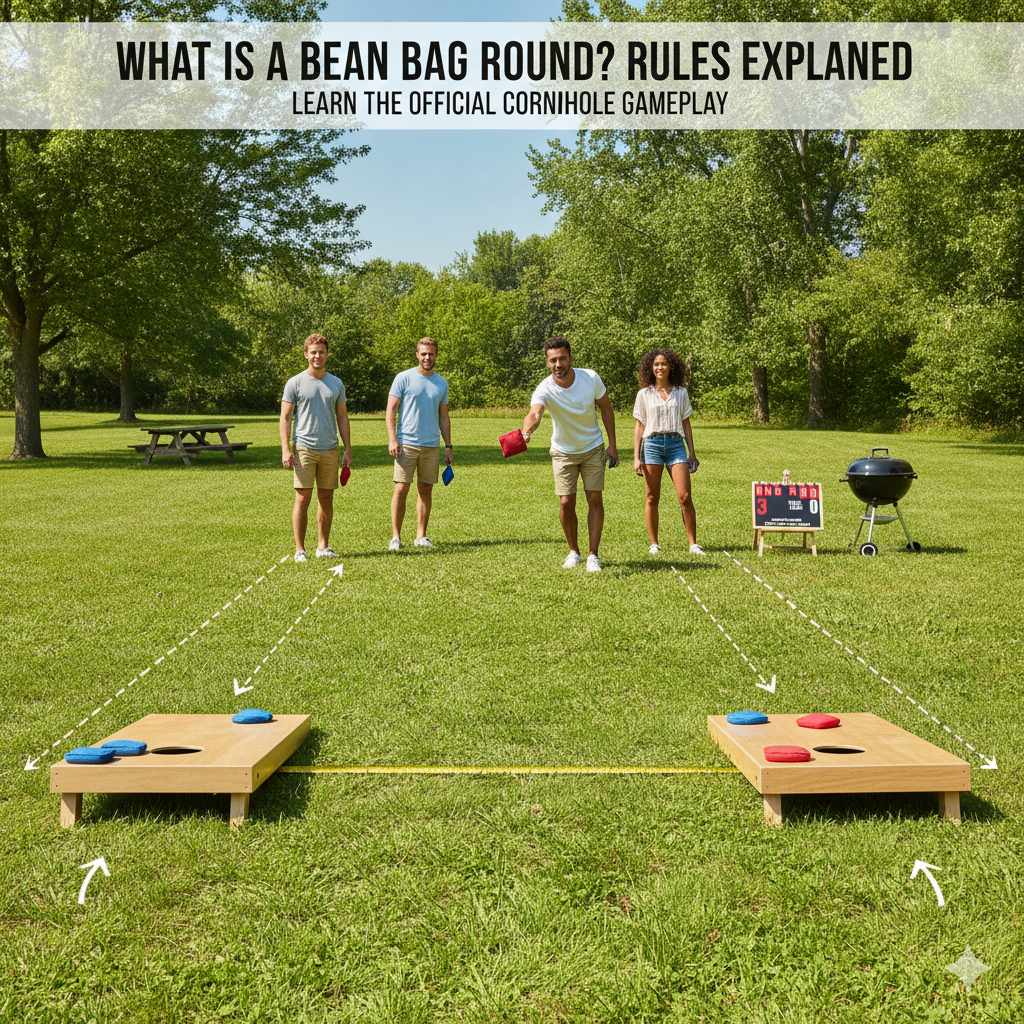
The most common and officially recognized distance for bean bag toss (cornhole) boards is 27 feet from the front edge of one board to the front edge of the other. This is the standard for most tournaments and casual play alike.
This 27-foot rule is the one you’ll hear most often. It’s like the law of the land for cornhole players. Why this specific number?
Well, it’s not pulled from thin air. It’s been tested and proven over time. It creates a nice, challenging throw for most adults.
It requires a bit of skill and a decent arm. But it’s not so far that it feels impossible to hit the board.
When you set up your boards, make sure you measure from the very front edge of one board to the front edge of the other. This is the most accurate way to get the distance right. A tape measure is your best friend here.
Don’t just eyeball it. A few feet can make a big difference in how the game feels. Being precise helps keep things fair for both teams playing.
Why This Distance Works So Well
This standard distance really hits a sweet spot. It’s challenging enough to be interesting. But it’s not so hard that it makes people frustrated.
You need a good toss to get a bag on the board. You need an even better one to get it in the hole. This distance lets players show off their skills.
It rewards accuracy and a good, controlled throw.
It also makes the game dynamic. Players have to adjust their throws. Wind can be a factor.
The angle of the toss matters. Even the type of bag can play a small role. All these small things add up.
They make each toss a mini-challenge. And when you sink a bag, it feels really good. This distance allows for those moments of triumph.
Quick Toss Distance Guide
Standard Distance: 27 feet (front edge to front edge).
Why it’s popular: Good balance of challenge and fun.
Measurement Tip: Use a tape measure for accuracy.
Best Cornhole Board Set Pick
GoSports Classic Cornhole Set with 8 Bean Bags and Travel Case – $79.99
Regulation-size boards that work with the 27-foot official distance this guide covers, with a travel case for moving them to the exact spacing needed.
- Best for: Setting up the official 27-foot tournament distance this guide describes
- Why we picked it: Full-size boards match the regulation dimensions the 27-foot spacing rule assumes
- Main drawback: Full regulation size needs more yard space than a compact set
Compare more cornhole board sets
 Option 1 Himal Outdoors Portable Cornhole Board Set Foldable – $36.99
|
 Option 2 ROPODA Portable Cornhole Board Set 24 x 16 Inch – $49.99
|
 Option 3 GoSports 4×2 ft Rustic Design Cornhole Game Set – $99.99
|
As an Amazon Associate we earn from qualifying purchases.
Adjusting the Distance for Different Groups
Now, the 27-foot rule is great for most adult players. But what if you have kids playing? Or maybe you have a smaller yard?
The good news is that bean bag toss is flexible. You can totally change the distance to fit your needs. It’s all about making sure everyone has fun.
For younger kids, making the boards closer is a smart move. It makes the game more accessible. They can feel successful and enjoy the game more.
You don’t want them to get discouraged because they can’t reach. A shorter distance helps them build confidence and learn the game. They’ll still get the hang of tossing and aiming.
On the flip side, if you have a group of serious players who love a challenge, you might even go a little further. But for most backyard fun, sticking close to the standard or slightly adjusting for kids is the way to go. It’s not about strict rules all the time.
It’s about the spirit of the game and good times.
Bean Bag Toss Distance for Kids
When kids are involved, think about their age and size. For very young children, maybe 10 to 15 feet is plenty. This lets them get the feel of throwing and aiming.
As they get older, say 8 to 12 years old, you can gradually increase it. Maybe 18 to 20 feet would work well. This still keeps it fun without being too hard.
It’s also helpful to explain the game to them. Show them how to hold the bag. Show them how to aim for the board.
Letting them practice a few throws before a real game starts can be super useful. It helps them get comfortable with the action and the distance. They’ll be tossing like pros in no time!
Kid-Friendly Adjustments
- Younger Kids (Under 7): Try 10-15 feet.
- Older Kids (8-12): Aim for 18-20 feet.
- Goal: Make it fun and achievable.
- Practice: Let them try a few tosses first.
Setting Up Boards in a Smaller Yard
Many of us don’t have massive backyards. A smaller space shouldn’t stop you from playing bean bag toss. The key here is smart placement.
Even if you can’t hit the full 27 feet, you can still have a great game. You just need to adapt.
If your yard is, say, 40 feet long, you can probably still get close to the standard distance. Measure out the 27 feet. See how much space you have left.
You might need to place the boards a bit closer to the house or a fence. Just make sure there’s enough room for players to stand and throw safely.
Sometimes, you might have to compromise. Perhaps you can only manage 20 or 22 feet. That’s perfectly fine!
The most important thing is that the game is enjoyable for everyone playing. A slightly shorter distance is much better than not playing at all. You can still have a blast with a modified setup.
Just be aware of the adjusted challenge.
Smaller Yard Setup Tips
Measure your space: See what you can fit.
Compromise: A slightly shorter distance is okay.
Safety first: Ensure room for players.
Adjust scoring: If needed, if the distance is very different.
Bean Bag Toss Distance and Player Skill
As players get better, they might want to increase the challenge. The 27-foot distance is a good baseline. But skilled players might find it too easy over time.
This is where you can get creative. You could try setting the boards a bit further apart.
Moving the boards to 30 feet or even 35 feet can make a big difference. It demands more power and a much more precise throw. This is usually for groups who are very competitive or have played a lot.
It adds a new layer of difficulty. It requires players to really focus on their technique and consistency.
However, remember that not everyone in a group might be at that skill level. It’s a good idea to have options. Maybe you play one round at the standard distance and another at a longer one.
Or you let teams decide what distance they prefer before they start. This keeps it fair and fun for all skill levels present.
What About Different Types of Bean Bag Toss Boards?
You might wonder if the type of boards matters. Most cornhole boards you buy are made to a standard size. This means the playing surface is usually 2 feet by 4 feet.
The height of the board is also pretty standard, typically 12 inches at the front and 8 inches at the back. This consistent design is why the 27-foot distance works so well.
If you’re using DIY boards, just make sure they are roughly the standard size and slope. If your boards are significantly different, you might need to adjust the distance a bit. For example, if your boards are much larger, you might want to increase the distance slightly.
If they are smaller, a slightly shorter distance might be better.
The bags themselves can also influence play. Standard cornhole bags are filled with resin pellets or corn. They have a specific weight and feel.
If you’re using different types of bags, like softer fabric ones or much heavier ones, it might affect how far they travel. This is another reason why the 27-foot rule is the standard. It’s designed for the typical bags and boards.
Board & Bag Considerations
Standard Boards: 2 ft x 4 ft playing surface.
Standard Height: 12 inches (front) to 8 inches (back).
DIY Boards: Try to match standard dimensions.
Bag Fill: Resin or corn are standard for weight.
Real-World Scenarios: Where Do You Play?
The environment where you play bean bag toss can also affect your distance choice. Are you on a perfectly flat, manicured lawn? Or are you on a slight slope?
Is there a lot of wind? These factors can all play a part.
On a very windy day, a longer distance can become extremely difficult. The bags can get pushed off course easily. In such cases, you might want to bring the boards a bit closer together.
This makes it easier to control your throws against the wind. It keeps the game more about skill and less about luck of the wind.
If you’re playing on a slight hill, you might notice that bags tend to slide downhill. This can affect how they land and stay on the board. You might want to experiment with distances to see what feels most balanced for your specific playing area.
Sometimes, just turning the boards around or adjusting player positions can help.
I remember one time we were playing at a park. The ground was a bit uneven, with some dips and bumps. We started at the standard 27 feet.
But the bags were rolling off in strange ways. We ended up moving the boards about 5 feet closer. It made a world of difference.
The bags stayed put better, and we could actually score points. It was a good reminder that the “rules” are just guidelines.
What This Means for Your Game Night
So, what’s the takeaway for your next game night? The standard 27 feet is your go-to number. It’s what most people expect and what’s used in competitive play.
It offers a great balance for most adult players.
But don’t be afraid to tweak it. If you have young kids, bring them closer. If you have a tiny yard, make do with what you have.
If you and your friends are cornhole pros looking for a bigger challenge, push them out a bit further. The goal is to have fun and play a game that feels right for your group.
It’s also a good idea to communicate with your fellow players. Before you start, ask, “What distance feels good for everyone?” A quick chat can prevent misunderstandings and ensure everyone is on the same page. A happy group makes for a better game, no matter the distance.
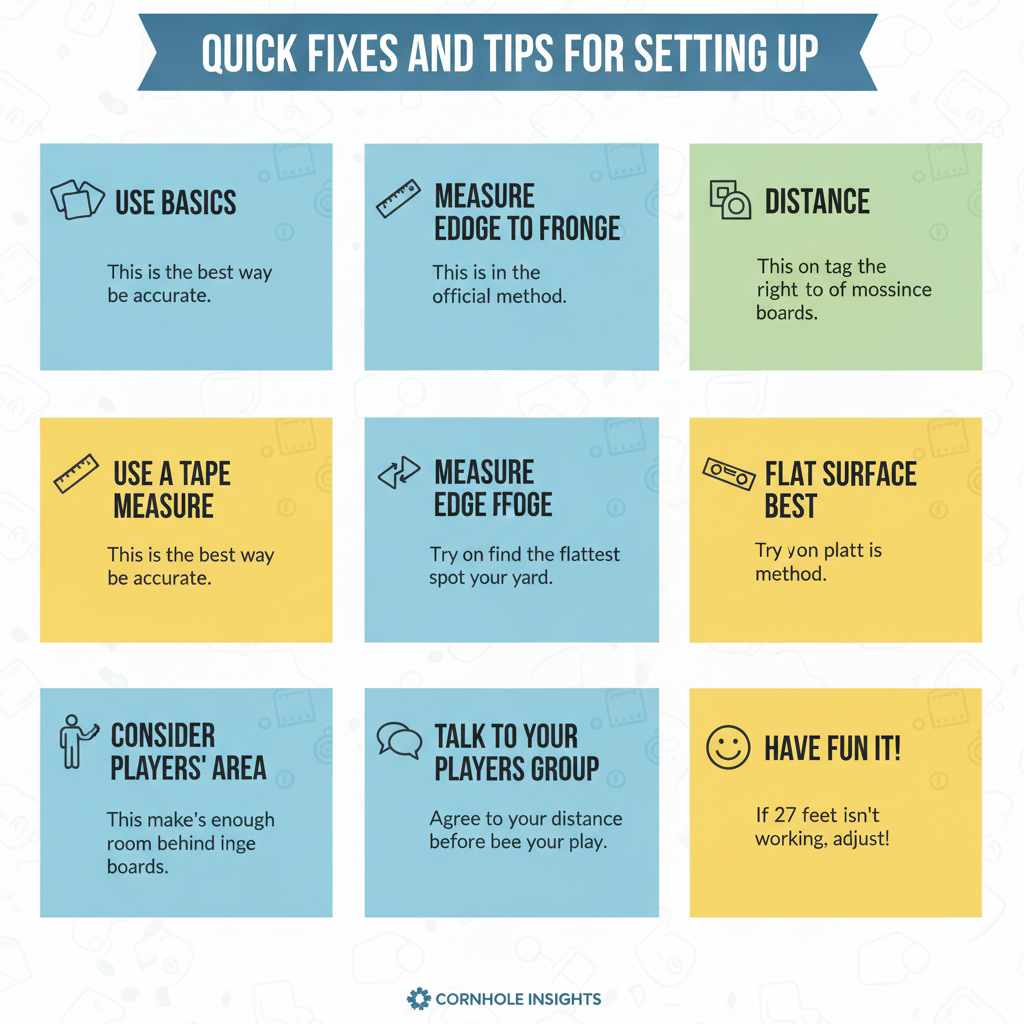
Quick Fixes and Tips for Setting Up
Here are a few tips to make setting up your bean bag toss boards a breeze:
- Use a tape measure: This is the best way to be accurate.
- Measure front edge to front edge: This is the official method.
- Flat surface is best: Try to find the flattest spot in your yard.
- Consider the players’ area: Make sure there’s enough room behind the throwing line.
- Talk to your group: Agree on the distance before you play.
- Have fun with it: If 27 feet isn’t working, adjust!
Setting Up Like a Pro
Measure Twice, Play Once: Accuracy matters.
Line of Sight: Ensure players can see the target board clearly.
Safe Throwing Zone: Keep the area behind the thrower clear.
Comfort is Key: Choose a distance that suits everyone.
Frequently Asked Questions About Bean Bag Toss Distance
What is the standard distance for cornhole boards?
The standard distance for cornhole boards is 27 feet, measured from the front edge of one board to the front edge of the other. This is used in most official tournaments and casual games.
Can I use a different distance if I have kids playing?
Absolutely! For younger children, it’s recommended to shorten the distance to make the game more accessible and fun. Try around 10-15 feet for very young kids, and maybe 18-20 feet for older children.
What if I have a small backyard?
If you have a small yard, you can still play! You may need to compromise on the 27-foot distance. Aim for a shorter, manageable distance, like 20-25 feet, ensuring there’s enough space for players to stand and throw safely.
How do I measure the distance correctly?
The most accurate way is to use a tape measure. You should measure from the very front edge of one cornhole board directly to the front edge of the opposing board. This ensures consistent gameplay.
Should the distance change if I’m playing on a slope?
Playing on a slope can affect how bags land and slide. While the 27-foot standard is still a good starting point, you might find it helpful to slightly adjust the distance or player positions to compensate for the terrain and ensure a fair game.
Are there official rules for bean bag toss distance?
Yes, the official distance for recognized cornhole organizations and tournaments is 27 feet from the front edge of the boards. This is the widely accepted standard for competitive play.
Wrapping Up Our Bean Bag Toss Distance Chat
So there you have it! Figuring out how far apart your bean bag toss boards should be is pretty straightforward. The standard 27 feet is the most common and usually the best bet for a balanced game.
But remember, flexibility is key. Adjust for kids, for your space, or for a fun challenge.
The most important thing is that everyone has a great time playing together. Don’t get too hung up on perfection. A little adjustment goes a long way.
Now go out there, set up your boards, and let the friendly competition begin! Happy tossing!
Products related to this article
Sponsored / affiliate links. As an Amazon Associate I earn from qualifying purchases. I may earn additional commission from eligible campaigns.