How Many Bean Bags Are Used In Bean Bag Toss?
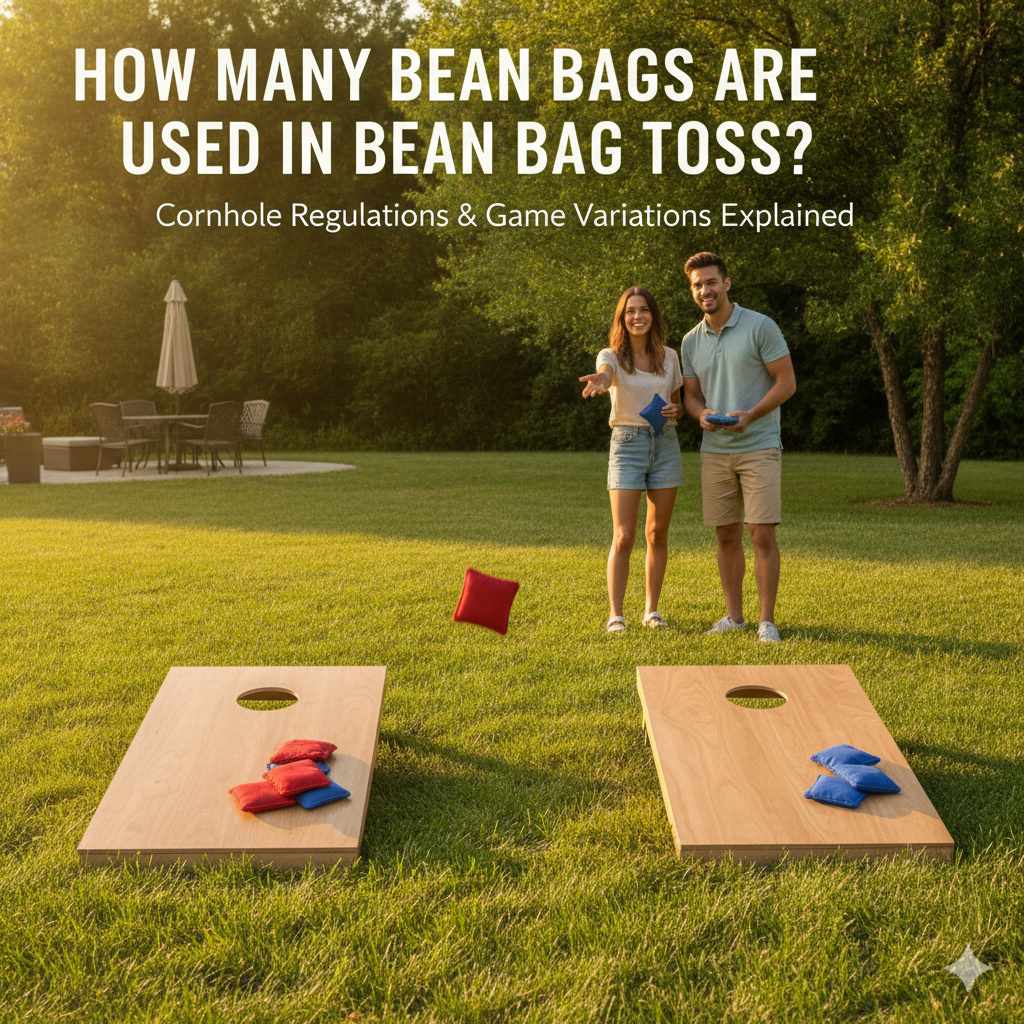
Most standard bean bag toss games, often called cornhole, use 8 bean bags. This usually means 4 bags of one color and 4 bags of a different color. You typically throw them from a set distance at a raised board with a hole in it.

Big Joe
Big Joe Bean Refill Polystyrene Beans for…
- IT'S THE INSIDE THAT MATTERS: Give your bean chair or pool float some love with Big Joe rejuvenating polystyrene beans; They are l…
- EASY TO REFILL: Cut along the provided dotted line of the refill bag and simply pour
- BRING YOUR BIG JOE BACK TO LIFE: For an approximate amount to refill, a small chair or pool float may need 2-3 bags; While larger…
As an Amazon Associate I earn from qualifying purchases.

Understanding the Game and Its Gear
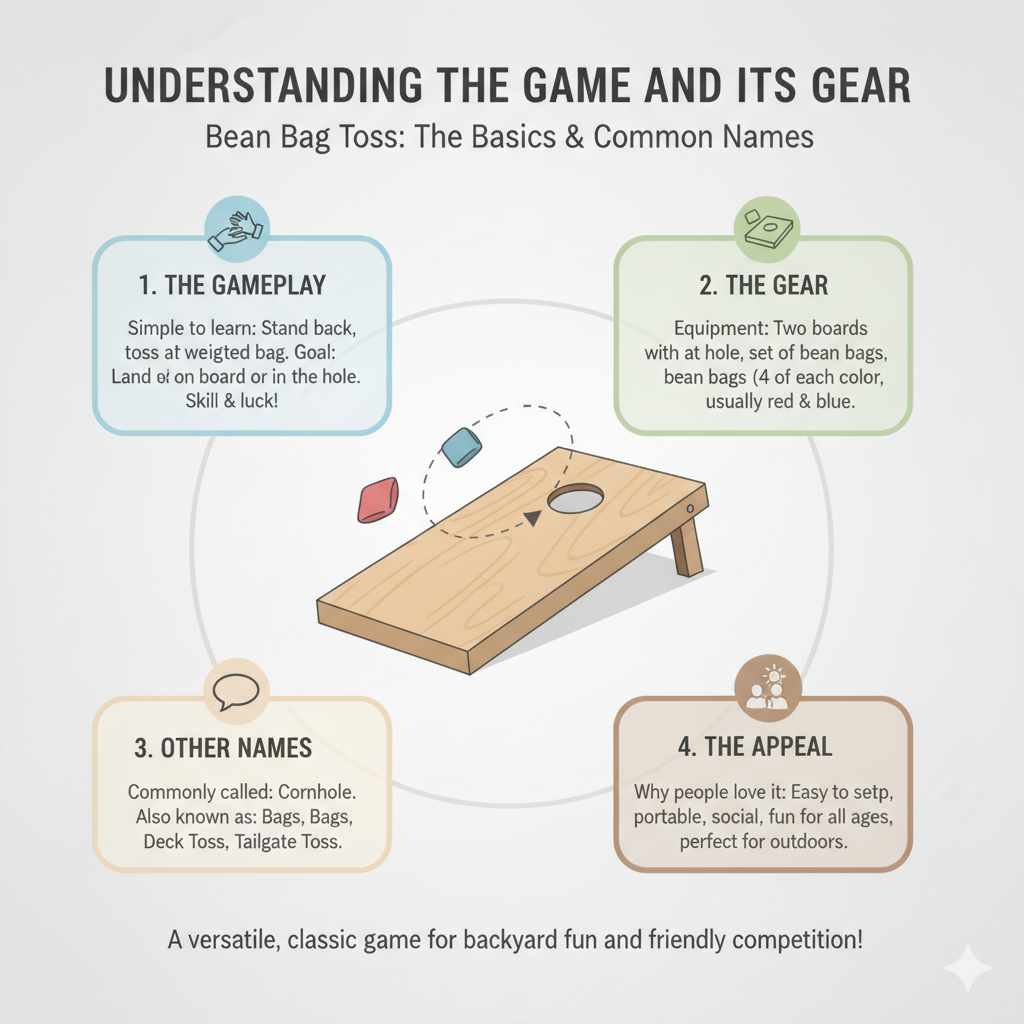
Bean bag toss is a game loved by many. It’s simple to learn. You stand back.
You toss a bag. The goal is to get it on the board or in the hole. It’s a game of skill and a little bit of luck.
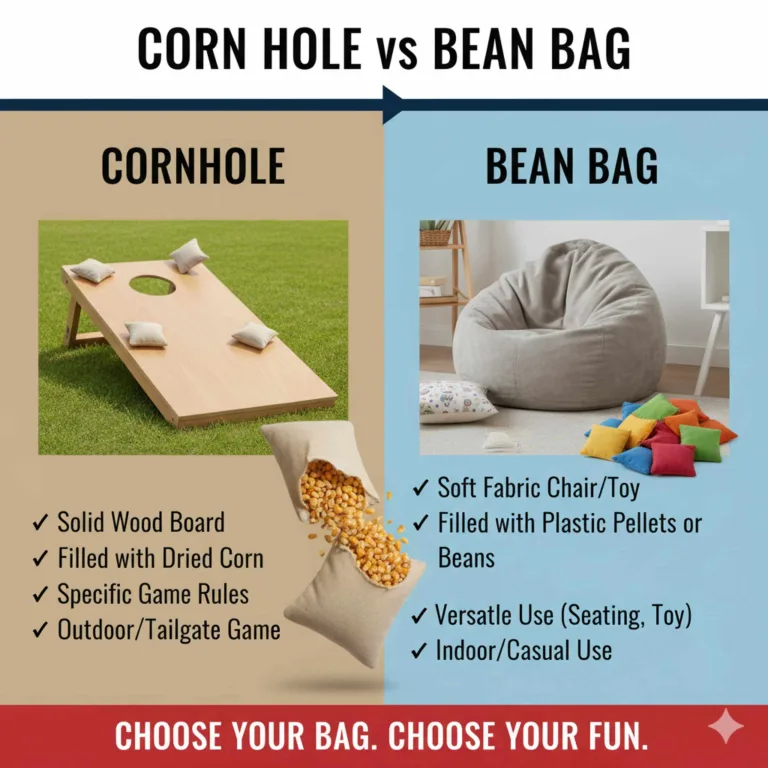
This game is also known by other names.
You might hear it called cornhole. Some people call it bags. Or deck toss.
No matter the name, the basic idea is the same. You toss weighted bags at a target.
My First Bean Bag Toss Game Mishap
I remember the first time I set up a bean bag toss game for a summer barbecue. I was so excited to be the host. I’d borrowed some boards and bags from a friend.
I thought I had it all figured out. The guests started arriving. Kids were running around.
Adults were chatting.
Then, someone asked, “Okay, how many bags do we have here?” I looked. There were bags scattered everywhere. Some were on the grass.
Some were under a chair. I couldn’t even tell if we had the right number. I had to quickly count them.
It was a little embarrassing. I felt like I hadn’t planned well enough. We ended up short a couple of bags.
It made the game a bit clunky. That day, I learned the importance of having all your game pieces ready.
Bean Bag Toss Essentials
What you need:
- Boards: Usually 2, with a hole at the top.
- Bags: The tossing objects.
- Players: Can be 2 or 4.
- Space: Enough room to stand and toss.
How Many Bean Bags Are Typically Used?
For most casual games of bean bag toss, the standard number of bean bags is eight. This number ensures a good flow for a two-player or four-player game. Each player or team gets a set of bags.
Typically, these eight bags come in two different colors. For example, you might have four red bags and four blue bags. This helps players easily identify whose bags are whose on the board.
It’s a simple system that works well for most people.
Team Play Structure
When playing with four people, it’s common to split into two teams of two. Each team stands at opposite ends of the boards. Each team member might alternate throws, or one person on the team throws all their bags, then the other person throws all theirs.
The color coding is very helpful here. Team Red has their four bags. Team Blue has their four bags.
They throw at the same board. This setup keeps the game moving and prevents confusion about who just made a toss.
Typical Game Flow (4 Players)
Player 1 (Team A) tosses 1 bag.
Player 2 (Team B) tosses 1 bag.
Player 3 (Team A) tosses 1 bag.
Player 4 (Team B) tosses 1 bag.
This continues until all 8 bags have been thrown. Then scoring happens.
Variations and What to Expect
While 8 bags are standard, you might see variations. Some people like to add more bags. Others might use fewer.
This often depends on the specific game they are playing or the equipment they have.
For instance, if someone is just practicing their aim, they might only use 1 or 2 bags. They just toss them one after another. Or, if a game is meant to be faster-paced, they might use more bags, perhaps 12 or even 16.
But this is less common.
What If You Don’t Have Exactly 8 Bags?
Don’t worry if you don’t have the perfect set. You can still play. If you only have 6 bags, you can play with 3 bags per team.
The scoring might change a little. The game might end faster. It’s still fun!
The main goal is to enjoy the time outside.
You can also use household items if you’re really in a pinch. Small pillows or rolled-up socks can work for a very casual game. Just make sure they have a little weight to them.
And they should be safe to toss.
Quick Scan: Bean Bag Count
| Standard Game | 8 Bags (4 per color) |
| Common Variations | 6 Bags (3 per color) |
| Practice/Casual | 1-4 Bags |
| Less Common | 10-16+ Bags |
Real-World Scenarios and Bag Counts
Think about different places you might play. Backyard parties are common. You’ll likely find the standard 8 bags.
Tailgating events often have these games too. The 8-bag count is king there.
Summer picnics are another spot. Families bring out their cornhole sets. Again, expect 8 bags.
Sometimes, at larger events or festivals, you might see more elaborate setups. They could have multiple sets of boards. These sets almost always come with the standard 8 bags.
The Role of Bag Material
The bags themselves are usually made of duck cloth or canvas. They are filled with corn kernels or plastic pellets. This filling gives them weight.
The weight is important for how they fly and land. Standard bags weigh about 14-16 ounces. They are usually 6 inches by 6 inches in size.
The material and filling help with grip and feel. This can matter to serious players. For most of us, though, as long as the bags are roughly the same size and weight, the game will be fun.
The count of 8 bags is mostly about keeping the game balanced.
Bag Material Breakdown
Common Filling:
- Corn kernels (traditional)
- Plastic pellets (more weather-resistant)
Common Outer Material:
- Duck cloth
- Canvas
What Does This Mean for Your Game?
Knowing the standard number of bags helps you prepare. If you’re buying a set, you know what to look for. Most retail sets will include 8 bags.
They’ll be split into two colors.
If you’re borrowing a set, count the bags before you start. Make sure you have all 8. If you’re playing at a friend’s house, ask them how many bags come with their game.
This small check can prevent game interruptions.
When to Worry About Bag Count
You usually don’t need to worry about the bag count. It’s a very forgiving game. The only time it might be a problem is if you have a significant difference.
For example, if one team has 3 bags and the other has 5, it’s not fair.
If you have only 2 bags total, the game will be very short. It won’t feel like a full round. But if you have 6 or 7 bags, you can often adapt.
You might just play with fewer bags per person. The key is that both teams should have the same number of bags.
Simple Checks Before You Play
1. Count the bags. Make sure you have 8.
2. Check the colors. You should have 4 of each color.
3. Inspect the boards. Is the hole clear?
4. Assess the space. Is it safe and level?
Quick Tips for Your Bean Bag Toss Fun
Here are a few simple tips to make your bean bag toss game even better:
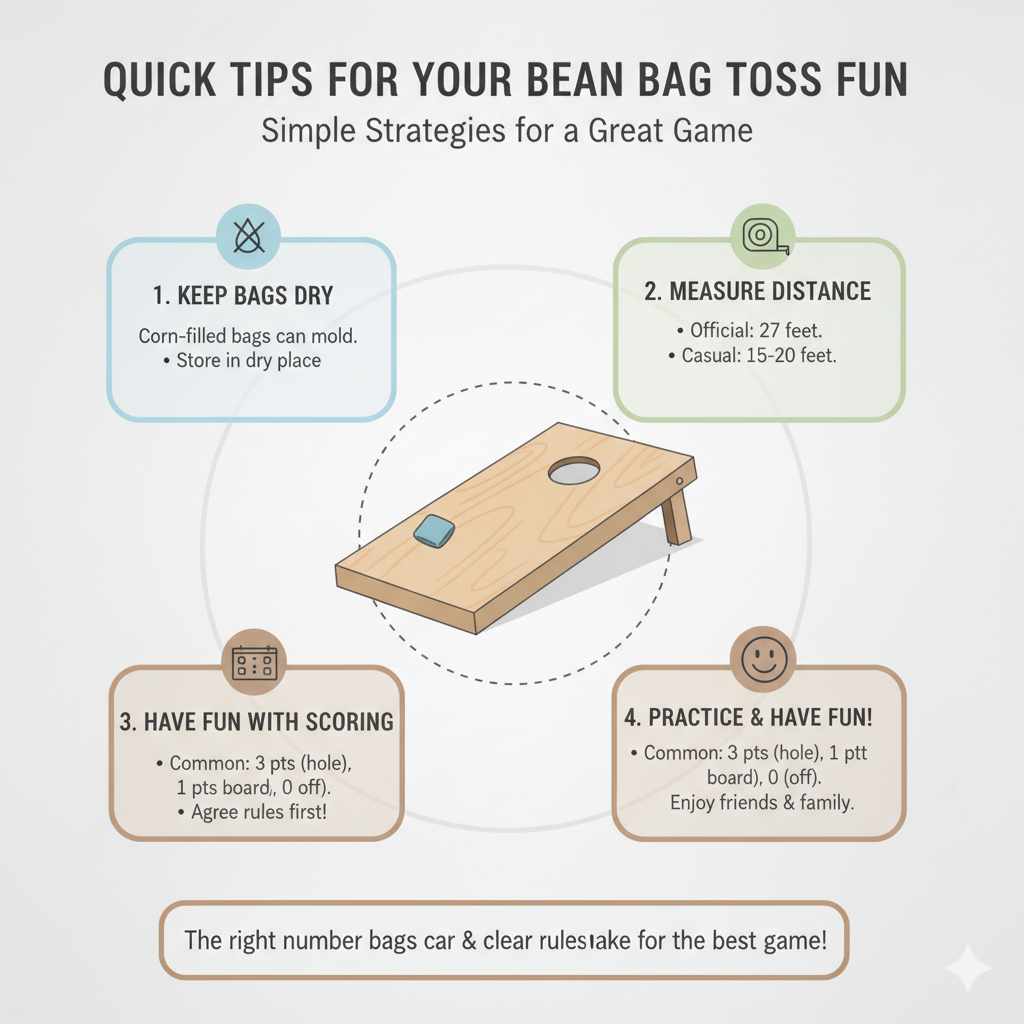
- Keep bags dry. Corn-filled bags can get moldy if left wet.
- Store bags properly. Keep them in a dry place.
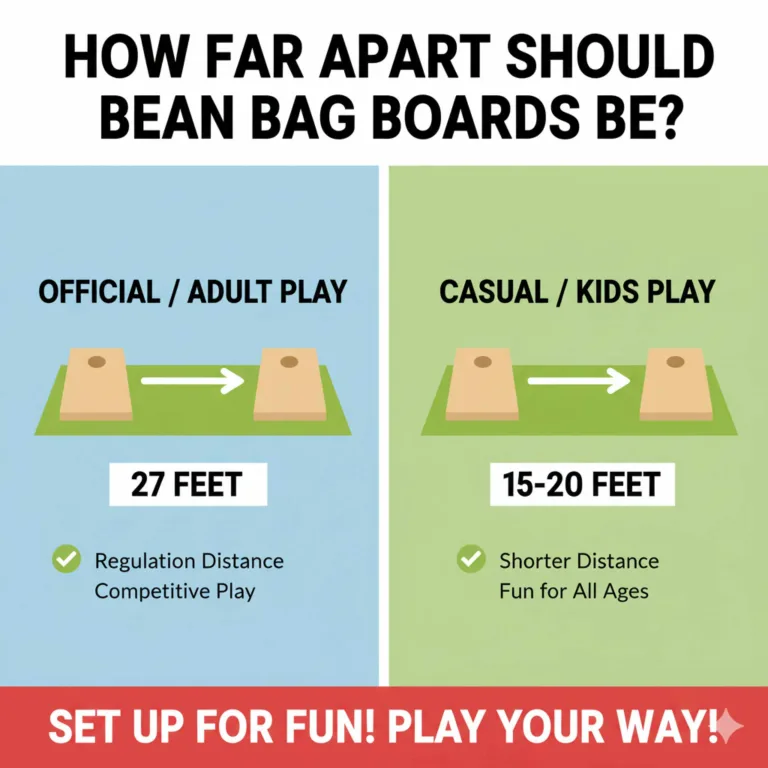
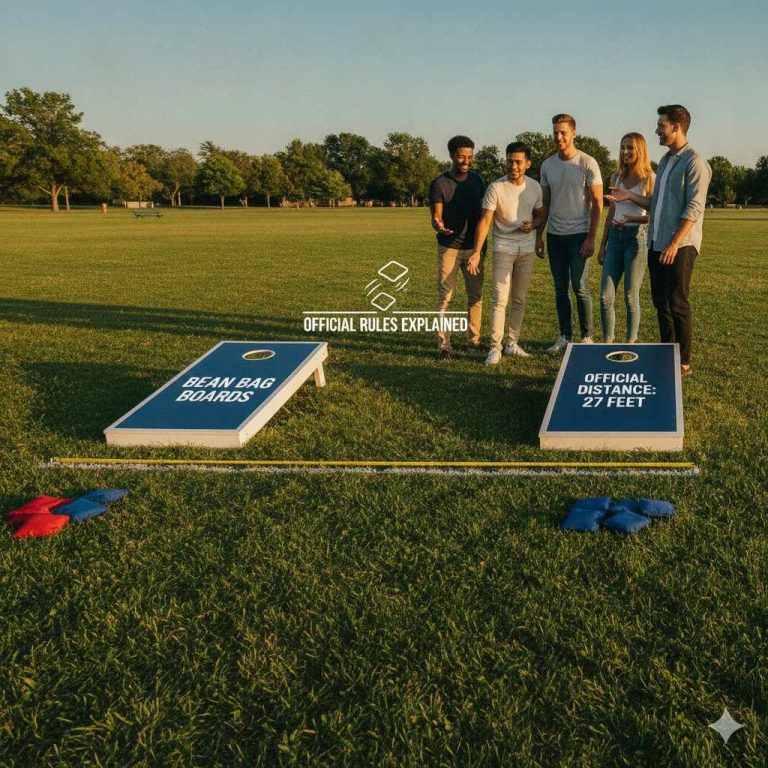
- Use a measuring tape. Official cornhole boards are set up 27 feet apart. For a more casual game, 15-20 feet is fine.
- Have fun with scoring. Some people play where you only get points for bags in the hole. Others give points for bags on the board too. The most common way is 3 points for a bag in the hole and 1 point for a bag on the board. Bags off the board or falling off score zero.
Having the right number of bags is just one part of a good game. Making sure everyone understands the rules and has a good time is the most important thing.
Scorekeeping Basics
Bag in the Hole: 3 points
Bag on the Board: 1 point
Bags knocked off: 0 points
Bags falling off: 0 points
Games are often played to 21 points. You must win by 2 points.
Frequently Asked Questions
How many bean bags do you need for cornhole?
For a standard game of cornhole, you typically need 8 bean bags. This includes 4 bags of one color and 4 bags of another color for two teams.
Can you play bean bag toss with fewer than 8 bags?
Yes, you can play bean bag toss with fewer bags. If you only have 6 bags, you can play with 3 per team. The game will just move a bit faster.
What happens if the number of bags is uneven?
If the number of bags is uneven between teams, it’s not fair. Try to ensure each team has the same number of bags to keep the game balanced.
Are there different sizes of bean bags?
While there are standard sizes, some bags might be slightly larger or smaller. However, for casual play, minor differences usually don’t matter much. Official bags are typically 6×6 inches.
What if my bean bags get wet?
If your bean bags are filled with corn, they should be kept dry. If they get wet, try to dry them out completely to prevent mold. Plastic-filled bags are more weather-resistant.
Where do the different names for bean bag toss come from?
The names vary by region and popularity. “Cornhole” is very common, especially in the Midwest. “Bags” is popular in some areas.
“Bean bag toss” is a more general description that everyone understands.
Final Thoughts on Game Prep
So, the simple answer to how many bean bags are used in bean bag toss is usually eight. Having this standard set makes the game fair and fun for everyone. It’s a small detail that makes a big difference in game flow.
Remember to count your bags and check their condition before the game starts. This little bit of prep work ensures your bean bag toss event runs smoothly, letting you enjoy the good times with friends and family.
Related pick: Check today's price on Amazon
Products related to this article
Sponsored / affiliate links. As an Amazon Associate I earn from qualifying purchases. I may earn additional commission from eligible campaigns.