Bean Bag Toss Vs Cornhole: What’S The Difference?
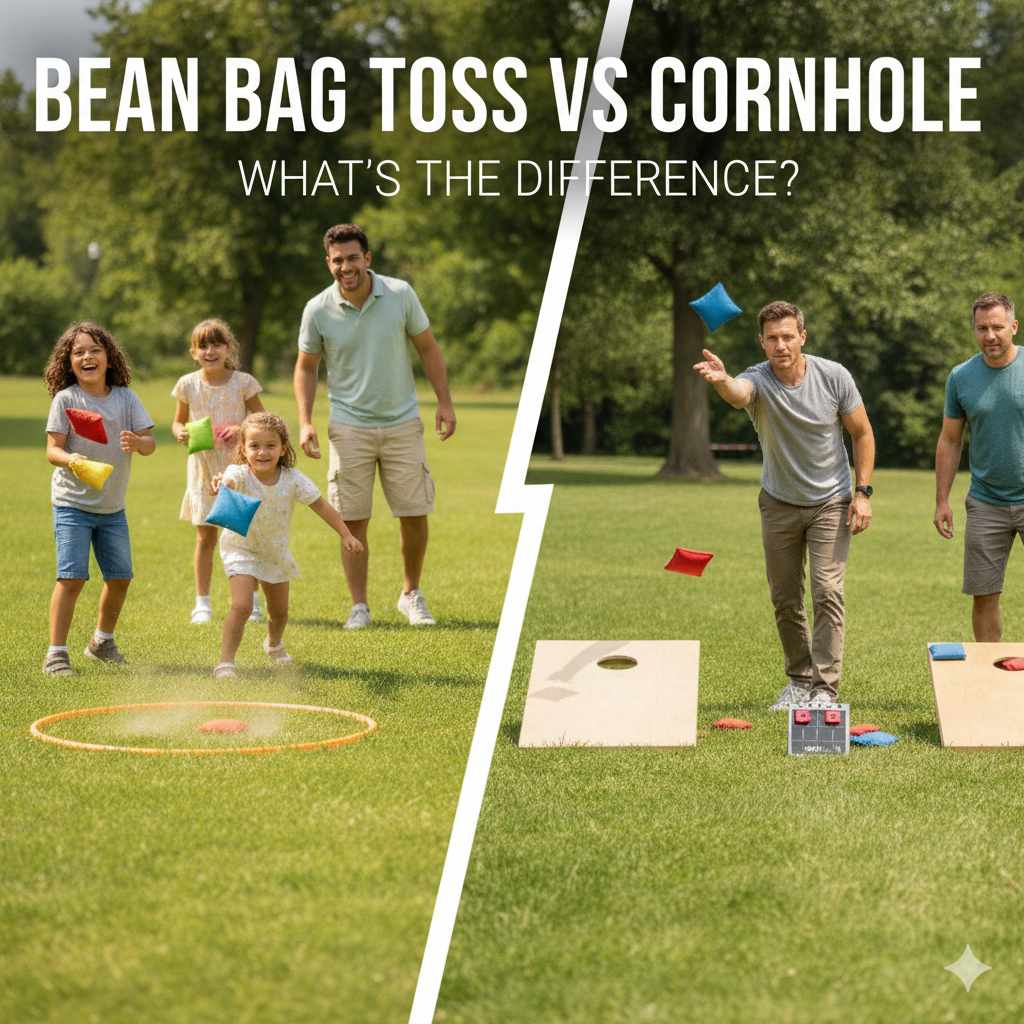
For most people, bean bag toss and Cornhole refer to the same game. However, technically, Cornhole is a specific type of bean bag toss game with regulated rules and equipment. Bean bag toss is the broader term for any game where players throw bags filled with beans (or similar material) at a target.
For a closely related home or decor topic, is carpet or vinyl plank cheaper? Personal Recommendation gives readers a useful next step.
For a closely related home or decor topic, Shredded Foam vs Bean Bag Filler: Choice gives readers a useful next step.
For a closely related home or decor topic, How To Craft A Bookcase Safely gives readers a useful next step.
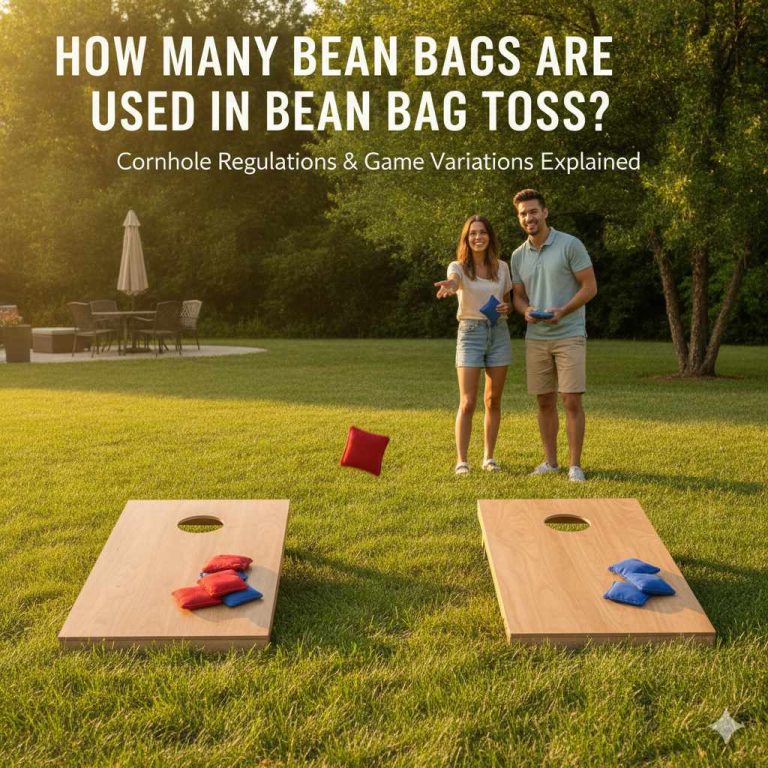
For a closely related home or decor topic, How Many Bean Bags Are Used In Bean Bag Toss? gives readers a useful next step.
For a closely related home or decor topic, Bean Bag Foam Vs Beads: Which Filling Is Better? gives readers a useful next step.
Understanding the Core Game: Bean Bag Toss
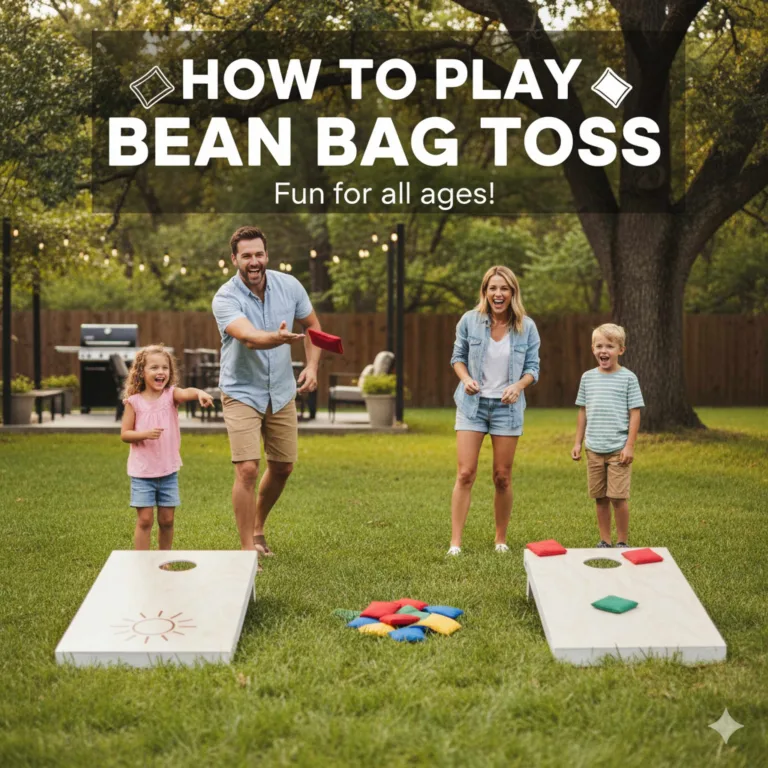
At its heart, bean bag toss is a simple game. It involves tossing bags, often filled with beans or corn kernels, towards a target. This target is usually a raised board with a hole in it. Players score points by landing their bags on the board or getting them through the hole. It’s a game of skill, accuracy, and a little bit of luck. Many variations exist. Think about school field days or casual backyard gatherings. Someone might have just grabbed some scrap wood and painted a circle on it. Then, they filled old socks with rice or dried beans. That’s bean bag toss in its most basic form. It’s accessible and fun for almost anyone, regardless of age.
The appeal of bean bag toss games lies in their low barrier to entry. You don’t need years of practice or expensive gear to get started. It’s a social game, perfect for encouraging interaction and a bit of friendly competition. Kids love it because they can practice their throwing without the pressure of more complex sports. Adults enjoy it because it’s a relaxed way to socialize outdoors. You can chat, laugh, and play all at once. The sound of the bags hitting the boards or the satisfying thud as they drop through the hole is a familiar summer soundtrack for many.
Enter Cornhole: The Regulated Sibling
Cornhole takes the basic idea of bean bag toss and elevates it. It’s more structured. Think of it like the difference between a casual game of catch and a professional baseball game. Cornhole has specific rules, equipment standards, and even official governing bodies. The boards have precise dimensions. The holes are a set size and placed at a specific height. The bags themselves have standards too, in terms of weight and filler material. This structure allows for organized tournaments and a more competitive play environment. When people talk about professional Cornhole leagues or championships, they are referring to this highly standardized version of the game.
The rise of Cornhole as a distinct entity is tied to its growth in popularity. What started as a regional game, especially in the Midwest, has grown into a national phenomenon. This growth demanded standardization. If you want to compete seriously, you need to know the exact specs of the equipment. This ensures fair play. It also makes the game more exciting for spectators. The history of Cornhole is a bit debated, but many stories point to its roots in traditional games played with simple tools. It’s fascinating how a simple pastime evolved into a sport with dedicated fans and athletes.
Key Differences: Boards, Bags, and Beyond
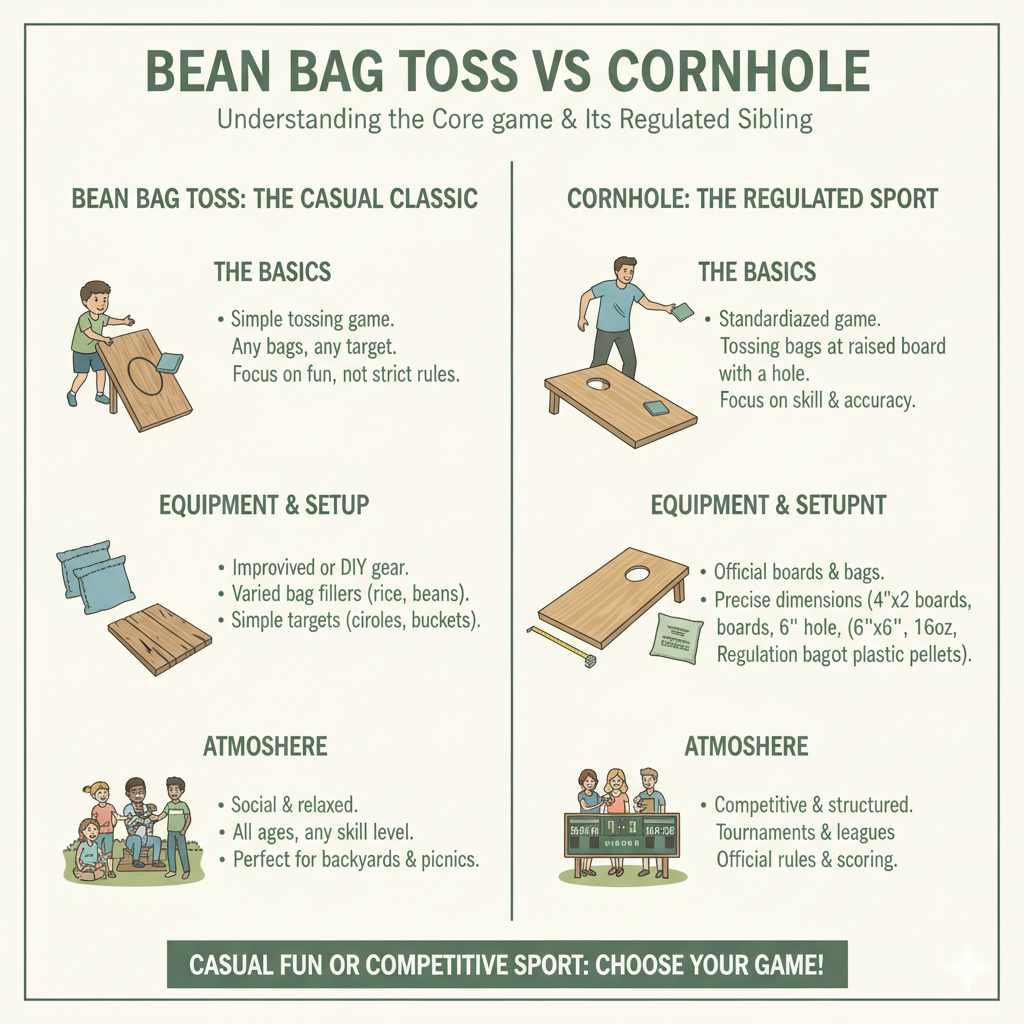
So, where do the differences really show up? The most obvious place is the equipment itself. A “bean bag toss” might use any kind of board and any kind of bag. You could use old milk jugs as targets. You might fill bags with sand or even small pebbles. The board could be any height or angle. It’s all about what you have on hand and what’s fun at the moment. This flexibility is part of the charm of a casual bean bag toss game.
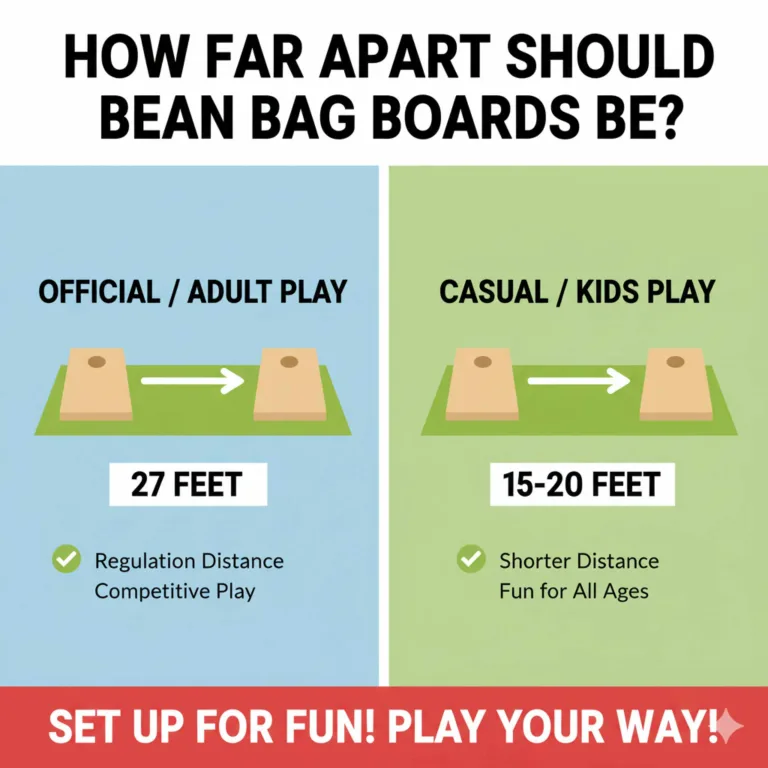
Cornhole, on the other hand, is very specific. The boards are typically made of plywood. They are a standard size, usually 2 feet by 4 feet. The legs are designed to hold the board at a specific angle. The hole is 6 inches in diameter and is placed a set distance from the top of the board. The bags are usually made of duck cloth. They are filled with about a pound of corn kernels or resin pellets. This uniformity is what allows for fair competition at any level. It means when you step up to a Cornhole board, you know exactly what you’re dealing with, no matter where you are.
Board Specifications Compared
Casual Bean Bag Toss:
- Varying sizes and materials
- Any height or angle
- Target could be a hole, a bucket, or just a spot
Official Cornhole:
- 2 feet x 4 feet plywood boards
- Specific angled legs for a 6-degree slope
- 6-inch diameter hole, 9 inches from the top and 12 inches from the sides
The Bags Tell a Story Too
The bags are another major point of distinction. In a general bean bag toss, you might use whatever you can find. Old fabric scraps, old t-shirts, or even sturdy plastic bags could be used. The filler could be anything from dried beans (hence the name!) to rice, sand, or even gravel. This means the weight and feel of the bags can vary wildly. Some might be light and floaty, others heavy and dense. This unpredictability adds an element of chance to casual games.
Cornhole bags have their own set of rules. They are typically made from durable duck cloth. This material holds up well to repeated throws and impacts. The standard weight is around 15 to 16 ounces. The filler is usually corn kernels or resin pellets. This gives the bags a consistent feel and weight. Many Cornhole bags also have a “slide” side and a “stick” side. This allows players to use different techniques. They can slide their bags into scoring positions or make them stop where they land. This level of detail simply isn’t found in most casual bean bag toss setups.
Bag Differences at a Glance
Bean Bag Toss Bags:
- Any size, shape, or material
- Varied filler (beans, sand, rice, etc.)
- Inconsistent weight and feel
Cornhole Bags:
- Standard duck cloth construction
- Filled with corn kernels or resin pellets
- Consistent weight (15-16 oz)
- Often have dual-texture surfaces
The Rules of Engagement
Scoring and gameplay rules also differ. In a casual bean bag toss, people often make up their own rules as they go. Someone might say, “If it’s on the board, you get one point. If it goes in the hole, you get three points.” Or maybe it’s just “first one to get five bags in the hole wins.” There’s no wrong way to play. This relaxed approach is perfect for families and impromptu fun. It allows for flexibility and easy adjustments based on who is playing and how.
Cornhole, conversely, has well-defined scoring. Typically, a bag on the board (called a “ditch”) scores 1 point. A bag that goes through the hole (called a “cornhole” or “bagger”) scores 3 points. If a bag hits the ground and then bounces onto the board, it doesn’t count. If it goes through the hole after bouncing, it also doesn’t count. Points are usually tallied at the end of a round. The most common game is played to 21 points. Teams score points based on the difference between their score and their opponent’s score in each round. This adds a strategic layer to the game. You’re not just aiming to score; you’re trying to outscore your opponent in each round.
Scoring Quick Look
Casual Bean Bag Toss:
- Flexible rules, often made up on the spot
- Points can vary widely per throw
- Winning condition can be anything agreed upon
Official Cornhole:
- Bag on board: 1 point
- Bag through hole: 3 points
- No points for bounced bags
- Game usually played to 21 points
- Scoring is differential per round
My Own “Aha!” Moment
I remember one sweltering July afternoon at my uncle’s place. He’s always been a big fan of outdoor games. We were setting up for his annual family reunion barbecue. He had this impressive set of wooden boards and colorful bags. My younger cousins were super excited, calling it “Cornhole.” My younger self, who had only ever played with a makeshift set in our backyard (think old blankets for bags and painted rocks as targets), was a bit baffled. I asked him, “Isn’t that bean bag toss?” He just chuckled and said, “Well, sort of, but this is the real deal.”
That day, he patiently explained the specific rules of Cornhole. He showed me how the bags had a slick side and a grabby side. He talked about the angle of the boards and how you score. It was like learning a whole new language for a game I thought I knew. The precision in the equipment, the strategy in the throws, and the structured scoring were eye-opening. It wasn’t just tossing bags anymore; it was a game with a deep level of strategy and skill. I felt a little silly for not knowing the difference, but mostly, I was impressed. That experience really cemented for me that while “bean bag toss” is the umbrella term, “Cornhole” represents a specific, developed version of the game.
Historical Roots and Evolution
The history of these games is fascinating. The idea of tossing objects at a target is ancient. Think of people throwing stones or spears. This basic human instinct has likely been around for millennia. More directly, games involving tossing bags of grain or other materials have been played for centuries. Some historians point to ancient games in Greece or Rome. Others link it to medieval games where peasants would toss kernels of corn into pig troughs. These were simple, rural pastimes that used readily available materials.
The modern game of Cornhole, as we know it, seems to have a more recent origin. Many credit it to a man named Heydon Gentry from Kentucky in the 1920s or 1930s. He supposedly adapted a game played by local farmers. This game involved tossing rocks into holes. He
Evolution of the Game
Ancient Origins:
- Tossing objects at targets for skill practice or leisure.
- Early versions likely used natural materials like stones or grain.
Mid-20th Century:
- Development of games using corn-filled bags.
- Regional popularity, especially in the American Midwest.
- Varied equipment and rulesets.
Late 20th/Early 21st Century:
- Standardization of equipment (boards, bags).
- Emergence of organized leagues and tournaments.
- National recognition and professional play.
Why the Confusion?
The primary reason for the confusion is simple: usage. For many years, “bean bag toss” was the descriptive term for any game involving tossing bags. When Cornhole started gaining traction, people often used the older, more familiar phrase to describe it. It’s a natural linguistic shift. Think about how people might refer to any tissue as a “Kleenex” or any cola as a “Coke.” The specific brand or game becomes the general term in everyday conversation. Until Cornhole became so prominent and standardized, there wasn’t a strong need to differentiate.
Another factor is regional dialect. What one area calls “bean bag toss,” another might call “bags,” “baggo,” or simply “Cornhole.” These local names can also contribute to the blurring of lines. The casual nature of many backyard games also plays a role. Most people aren’t worried about official regulations when they’re just having fun at a cookout. They just want to play a game. So, if it involves throwing bags at a board, it’s all “bean bag toss” to them. The distinction becomes more important only when people start looking for organized play or specific equipment.
Reasons for Terminology Mix-up
Generalization:
- “Bean bag toss” is the descriptive, older term.
- Specific games often get referred to by the general term.
Regional Variations:
- Different areas use different names (“Bags,” “Baggo”).
- These local terms can apply to both casual and structured games.
Casual Play:
- Focus is on fun, not official rules.
- Any game with bags and a target can be called “bean bag toss.”
Real-World Scenarios: When to Use Which Term
So, when should you use “bean bag toss” and when is “Cornhole” the better word? It really depends on the context and what you’re describing. If you’re at a friend’s house, and they’ve set up some homemade boards using plywood and old pillowcases filled with rice, calling it “bean bag toss” is perfectly fine. It accurately describes the general activity and the likely DIY nature of the setup. You’re not trying to imply any specific rules or standards are being followed.
However, if you’re talking about a tournament you saw on TV, or if you’re looking to buy equipment for serious play, “Cornhole” is the precise term. If you walk into a sporting goods store and ask for “bean bag toss” equipment, you might get a confused look or be shown very basic sets. If you ask for “Cornhole” gear, you’ll find the standardized boards, bags, and accessories designed for competitive play. Using “Cornhole” signals that you’re aware of the regulated sport and its specific requirements. It shows you understand the nuances of the game.
Usage Guide: Bean Bag Toss vs. Cornhole
Use “Bean Bag Toss” when:
- Describing general games of skill involving throwing bags at targets.
- Referring to homemade or informal setups with varied equipment.
- Talking about games where rules are flexible or made up.
Use “Cornhole” when:
- Referring to the specific, regulated sport with official rules.
- Discussing standardized boards, bags, and tournament play.
- Buying or selling equipment intended for competitive use.
- Talking about organized leagues, professional players, or championships.
What This Means for Your Game Night
Understanding the difference is mostly about communication and setting expectations. If you tell your friends you’re bringing the “bean bag toss” set, they might imagine a relaxed, casual game. If you say you’re bringing your “Cornhole” set, they might expect a more structured experience, especially if they’ve played competitively before. It helps avoid misunderstandings about the rules and the level of play.
For example, if you bring a casual bean bag toss setup to a gathering where people are expecting official Cornhole rules, it could lead to confusion or even mild frustration. Similarly, if you show up to a casual picnic with tournament-grade Cornhole equipment and expect strict adherence to rules, it might feel a bit out of place. Knowing the distinction allows you to tailor the game to the event and the players involved. It ensures everyone is on the same page for maximum fun and minimal confusion.
It’s also useful when purchasing equipment. If you’re just looking for something simple for kids to play with in the yard, a generic “bean bag toss” set might be perfect and more affordable. If you’re aiming for something more durable, competitive, and with official dimensions, you’ll want to look for “Cornhole” branded sets or boards and bags that meet the official specifications. This ensures you get what you’re actually looking for.
Common Concerns and Quick Checks
People often wonder about the quality of homemade sets. Can you really build a good Cornhole board yourself? Absolutely. Many enthusiasts find great satisfaction in building their own boards. The key is to stick to the official dimensions and angles as closely as possible. Online tutorials and plans are readily available. These guides break down the process into simple steps, often requiring basic carpentry skills and tools. It’s a rewarding project that can save money and allow for customization.
Another common question is about bag material and filler. While corn kernels are traditional, resin pellets are becoming more popular. They don’t break down as much over time and are less affected by moisture. Many tournament players prefer them. If you’re playing casually, though, bean-filled bags are perfectly fine. The most important check is that your bags are roughly the same size and weight. Consistency is key for fair play, even in a casual setting. You don’t want one bag to be twice as heavy as another.
Quick Equipment Checks
Boards:
- Dimensions: Are they roughly 2ft x 4ft?
- Hole: Is there a hole about 6 inches across?
- Angle: Does the board slope towards the thrower?
Bags:
- Size/Shape: Are they roughly square, like a small pillow?
- Filler: Can you feel beans, corn, or pellets inside?
- Weight: Do they feel roughly the same when you hold a few?
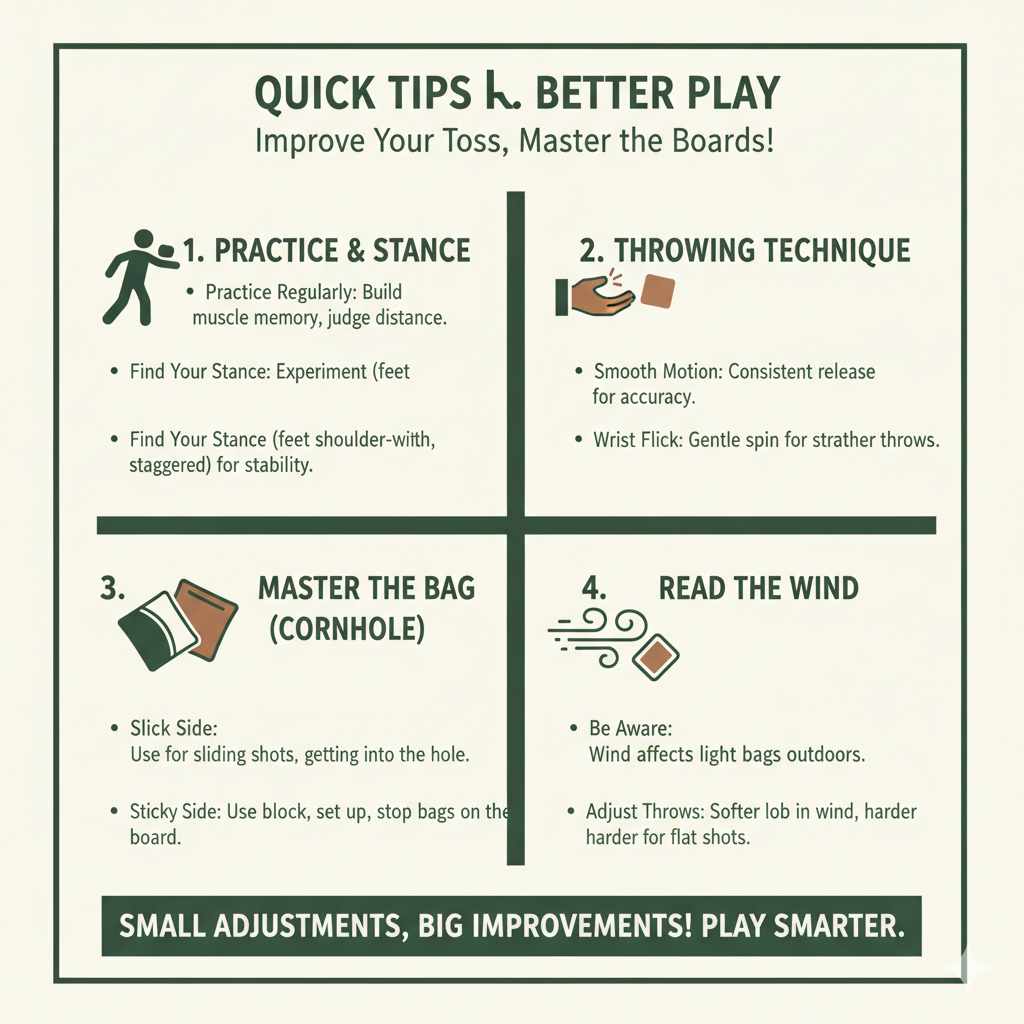
Quick Tips for Better Play
Whether you call it bean bag toss or Cornhole, here are a few tips to help you enjoy the game more and maybe improve your throws. Practice makes perfect. The more you throw, the better you’ll get at judging distance and trajectory. Don’t be afraid to experiment with different stances. Some people like to stand with their feet shoulder-width apart, while others prefer a staggered stance. Find what feels comfortable and stable for you.
Focus on a smooth, consistent throwing motion. Think about flicking your wrist at the end of your throw to give the bag a gentle spin. This can help it travel straighter. Also, learn to use both sides of the bag if you’re playing Cornhole. The slick side can be used for sliding shots, getting your bag up onto the board or even into the hole from a distance. The “sticky” side is great for stopping bags right where you want them, especially for blocking opponents or setting up your next shot.
Finally, pay attention to the wind. It can play a surprisingly big role, especially outdoors. A strong gust can send a light bag flying off course. Adjust your throws accordingly. Sometimes, a softer lob is better in the wind than a hard, flat throw. Remembering these simple tips can elevate your game, regardless of the official name you use.
Frequently Asked Questions
Is Cornhole a type of bean bag toss?
Yes, Cornhole is a specific, regulated version of the general game known as bean bag toss. The term “bean bag toss” is a broader category, while “Cornhole” refers to a standardized game with specific equipment and rules.
Can I use any kind of bag for Cornhole?
For official Cornhole play, you should use bags that meet specific size, weight, and filler requirements. Typically, they are 6×6 inches, weigh 15-16 ounces, and are filled with corn kernels or resin pellets. For casual bean bag toss, any sturdy bag will work.
What is the difference in scoring between bean bag toss and Cornhole?
Cornhole has a defined scoring system: 1 point for a bag on the board, 3 points for a bag through the hole. Casual bean bag toss games often have flexible or made-up scoring rules.
Why is it called “Cornhole” if the bags aren’t always filled with corn?
The name “Cornhole” likely comes from the game’s origins, where corn-filled bags were traditionally used. While resin pellets are now common for competitive play due to their consistency and durability, the name has stuck.
Are there official Cornhole tournaments?
Yes, there are many organized Cornhole tournaments at local, regional, national, and even international levels. These events follow strict rules and use regulation equipment.
If I build my own boards, are they still considered Cornhole boards?
If your homemade boards adhere to the official Cornhole dimensions, hole size, and angle, then yes, they are considered Cornhole boards. Many people build their own for personal use or even for local friendly competitions.
Wrapping It Up
So, there you have it. While many of us use the terms interchangeably, there’s a clear distinction between the general game of bean bag toss and the specific, regulated sport of Cornhole. Understanding these differences helps in setting expectations, buying the right gear, and simply appreciating the evolution of a beloved pastime. Whether you’re tossing homemade bags in your backyard or competing in a national tournament, the joy of the game remains the same. Now you can confidently explain it to anyone who asks.
Products related to this article
Sponsored / affiliate links. As an Amazon Associate I earn from qualifying purchases. I may earn additional commission from eligible campaigns.