Fireplace TV Stand Cost
Fireplace TV stand cost is commonly reported to run from about $150 to $900, with many buyers paying roughly $250 to $500 for a 50–70 inch unit; higher prices are usually tied to sturdier materials, a larger footprint, or stronger heat output. Choose poorly, and you can overpay for weak storage, loud heaters, or a finish that wears out fast. This guide breaks down what drives price, what features are worth paying for, and where value drops off.
What makes a fireplace TV stand expensive
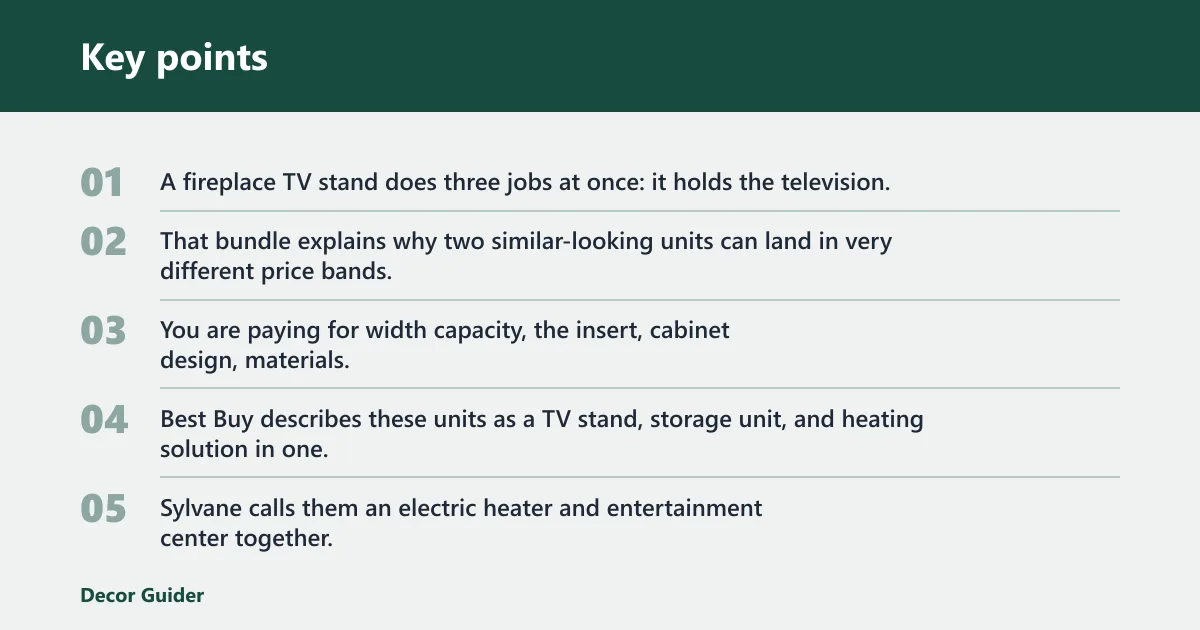


A fireplace TV stand does three jobs at once: it holds the television, houses an electric fireplace insert, and gives you storage. That bundle explains why two similar-looking units can land in very different price bands. You are paying for width capacity, the insert, cabinet design, materials, and how neatly the cord paths are handled.
Best Buy describes these units as a TV stand, storage unit, and heating solution in one. Sylvane calls them an electric heater and entertainment center together. That is useful shorthand, but the cost still depends on how well the stand handles each job.
Console, insert, and storage basics
The console is the furniture shell. The insert is the electric fireplace built into the stand. Storage may mean open shelves, cupboards, enclosed cabinets, or a mix of all four. Cable cutouts matter because they keep streaming boxes, game systems, and power cords from turning the back of the stand into a mess.
Materials usually set the first price jump. MDF with laminate often lands lower than wood-heavy builds, while metal accents and thicker panels can push cost up. The Enstver stand uses laminated MDF and alloy steel, which shows how a single unit can mix value materials with more durable-looking hardware.
Why two similar-looking stands can cost very different amounts
Size, insert quality, and storage design create most of the price spread. A wider console needs more material and more shipping space. A better insert adds flame controls, a thermostat, and safety features. Deeper cabinets or enclosed storage add hinges, shelves, and finished interior panels, all of which raise cost.
Finish also matters. A sleek painted surface, rustic wood look, or traditional paneling can cost more than a plain laminate shell. Style can affect the budget, but it should not outrank fit. A stylish stand that is too narrow for the TV is still the wrong buy.
Fireplace TV stand cost by price band
Entry-level stands usually cover basic storage, simple flame effects, and limited control options. Midrange models tend to add better build quality, more storage flexibility, and a more useful electric insert. Premium units can bring larger width, more refined finishes, and stronger control over the heat and flame settings, but those upgrades are not always worth it for a small room.
Entry-level features and tradeoffs
At the low end, expect simpler materials, fewer cabinet details, and a basic insert with modest control options. These models can still support a flat-screen TV and add light supplemental heat, but they often give up finish depth, storage layout, and long-term durability.
Midrange value features worth paying
Midrange stands often hit the best balance for most shoppers. You are more likely to get better width options, more usable shelf space, enclosed cabinets, and an insert with flame brightness settings, remote control, and a thermostat or temperature setting. Value usually improves fastest here.
Premium upgrades that rarely matter for everyone
Premium pricing makes more sense when you need a larger console, more finished cabinetry, or a style that has to act like furniture in an open living area. If the room is small, the TV is modest, and you only want occasional heat, some premium features will do little for the final result.
How much should you pay for your setup?
Pay for the stand width you actually need, not the biggest model on the page. Most media fireplaces fit 50- to 60-inch flat-panel TVs, and the stand should be wider than the TV. The same source says to start with at least 2 inches on each side for balance. For a 65-inch TV that measures about 57 inches wide, a common stand-width recommendation is roughly 61 to 71 inches.
55-inch class and 50- to 60-inch TVs
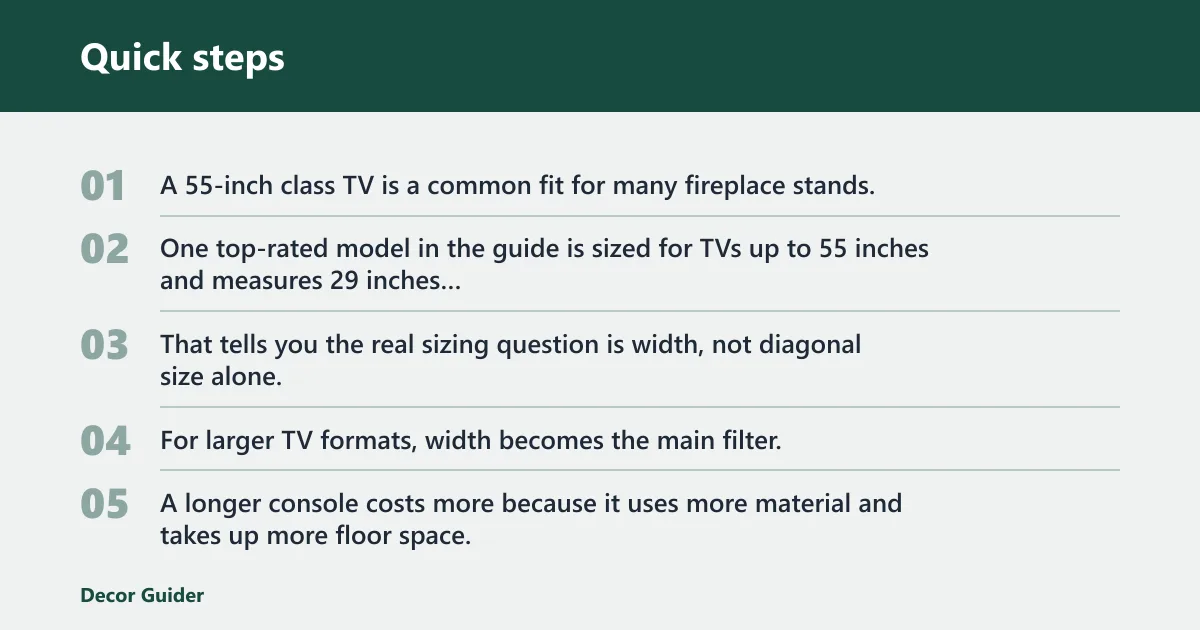
A 55-inch class TV is a common fit for many fireplace stands. One top-rated model in the guide is sized for TVs up to 55 inches and measures 29 inches tall by 48 inches wide by 16 inches deep. That tells you the real sizing question is width, not diagonal size alone.
Larger TVs and wider consoles
For larger TV formats, width becomes the main filter. A longer console costs more because it uses more material and takes up more floor space, but it may be the right move if the TV is wide and the room can handle a larger footprint. A too-small stand looks unstable and can leave poor side clearance.
Small rooms, apartments, and renter-friendly buys
In smaller rooms, the heating side of the purchase often matters less than storage and layout. Many fireplace TV stands provide supplemental warmth up to about 400 square feet, which can be enough for zone heating, but small rooms can overheat fast if you run the insert too high for too long. A compact, renter-friendly unit can make sense if you want one furniture piece instead of separate media storage and a space heater.
Suppose your living room is 180 square feet and the stand’s insert is rated for up to about 400 square feet. The unit may warm the space quickly, but that does not mean the largest heat setting is the best choice. Lower settings often give better comfort and less noise in a small room.
Cost-value matrix
| Buyer scenario | TV size range | Room size | Storage need | Layout type | Feature tier | Worth paying more for | Do not pay extra for | Score |
|---|---|---|---|---|---|---|---|---|
| Budget apartment setup | 50- to 55-inch | Small room | Open shelves only | Standard | Entry | Width fit, cable cutouts, basic remote | High heat output, ornate finish, oversized cabinet depth | 2/5 |
| Main living room | 55-inch class to 60-inch | Medium room | Shelves plus closed storage | Standard | Midrange | Thermostat, flame brightness settings, enclosed cabinets | Extra-wide footprint beyond TV needs | 4/5 |
| Large wall setup | 60-inch and larger | Large room | Full electronics storage | Standard | Premium | Wider console, better finish, stronger control panel | Fancy trim that does not improve storage or heat | 4/5 |
| Corner-space solution | 50- to 55-inch | Small to medium room | Moderate | Corner | Entry to midrange | Space fit, shelf access, easier placement in tight layouts | Paying premium pricing just because it is corner-shaped | 4/5 |
| Style-first buyer | Any compatible size | Any room | Light | Standard or corner | Premium finish | Wood look, rustic/farmhouse or sleek styling, better trim | Large heat claims that you will not use | 3/5 |
What features raise the price?
The biggest price drivers are the fireplace insert, the cabinet build, and how much the stand can hold. After that, layout and finish create the next jump. If you know which of those features you will actually use, you can skip the rest.
Electric fireplace insert quality and controls
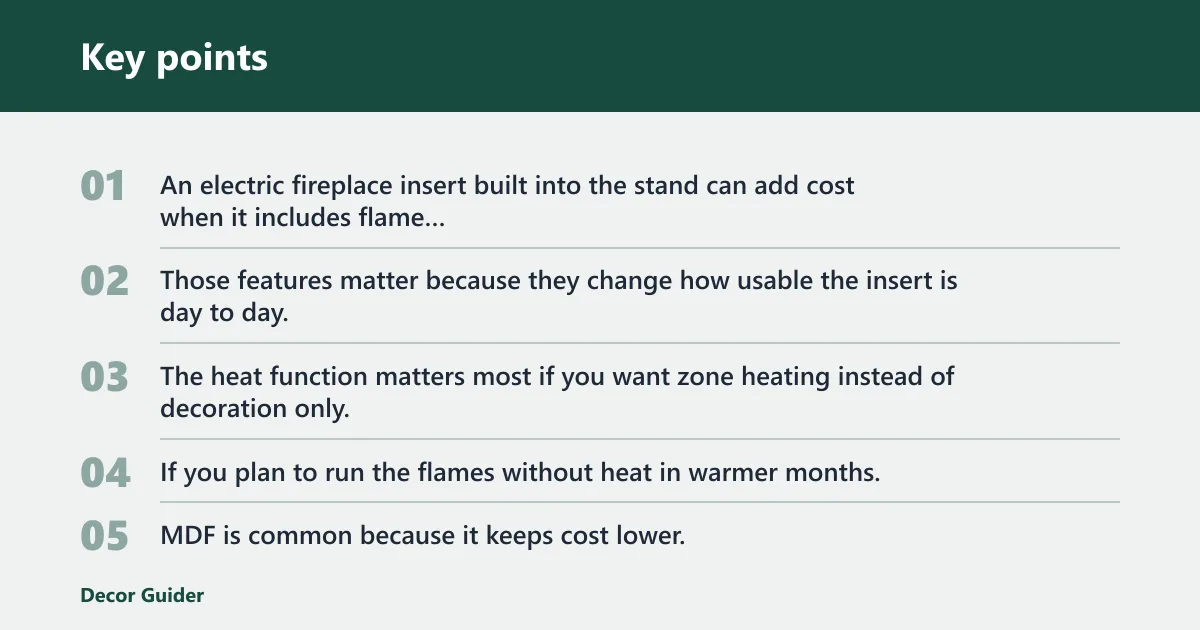
An electric fireplace insert built into the stand can add cost when it includes flame brightness settings, a remote control, thermostat or temperature settings, heat-on/off modes, and safety cutoff. Those features matter because they change how usable the insert is day to day, not because they make the unit look more expensive.
The heat function matters most if you want zone heating instead of decoration only. If you plan to run the flames without heat in warmer months, the flame controls become more useful than the heater itself.
Materials, finish, and build
MDF is common because it keeps cost lower, while wood or wood-heavy builds often cost more. Alloy steel accents can also add to the price if they are used for structure or visible trim. Better finish quality may help the stand hold up to daily use, but decorative detailing alone is not always worth the jump.
Storage layout, cable cutouts, and cabinet design
Open shelves are usually the cheapest storage solution. Cupboards and enclosed cabinets cost more because they need doors, hinges, and more finished surfaces. Cable cutouts also matter because they make the stand easier to live with when you are storing a streaming box, sound bar, or game console.
A common first-timer mistake is buying for flame style first and storage last. Picture a 60-inch stand with a pretty front but no usable cable path at the back. The TV fits, but the cords do not, and the shelf space becomes cluttered fast.
Do fireplace TV stands actually heat a room?
Yes, but only as supplemental warmth. Many fireplace TV stands are rated to warm up to about 400 square feet, which makes them useful for zone heating in a family room, bedroom, or den. They are not a full-home heating solution, and they should not be treated like one.
Supplemental warmth and zone heating
Zone heating can save you from heating the whole house when you only need comfort in one occupied room. That is the main value case for the insert. If the room is already warm, the fireplace function may be more about atmosphere than heat.
Up to about 400 square feet
That 400-square-foot figure is the ceiling many buyers should use as a planning guide, not a promise of perfect comfort. Room insulation, ceiling height, and drafts all change the result. If your room is much smaller, too much heat can become a nuisance instead of a benefit.
When heating adds value and when it does not
Heat adds value when you will use it on chilly evenings and can control it with a thermostat, heat-on/off mode, and safety cutoff. It adds little value when the stand sits in a warm room all year, or when you only want the TV console and storage. In that case, do not overpay for heat features you will rarely switch on.
Are corner fireplace TV stands cheaper?
Sometimes, but not always. Corner fireplace TV stands can cost less than long consoles because they use less material and fit smaller spaces, yet they can also cost more if the design is specialized or the storage is better finished. The cheaper price is a possibility, not a rule.
Corner vs standard layout pricing
Bob Vila highlights a corner option among the best fireplace TV stands, which shows that corner units are a real segment rather than a compromise product. They can be a smart buy when floor space matters more than wall width. Standard consoles usually cost more once they grow wider, especially for larger TVs.
When a corner unit saves space but not money
Corner units save square footage in the room, which Best Buy notes is one reason buyers choose them instead of separate furniture pieces. But a corner shape does not guarantee lower cost. A well-built corner stand with good storage, a strong insert, and a cleaner finish can still cost more than a plain long console.
What should I avoid when buying a fireplace TV stand?
Avoid buying by diagonal TV size alone, because width is what matters. Skip stands that are narrower than your TV, units with weak cable routing, and inserts with controls you will not use. Also avoid paying premium prices for heating power if you only need storage and a clean look.
- Measure the TV width, then pick a stand that is wider.
- Check whether the layout is standard or corner before comparing price.
- Look for shelves, cupboards, or enclosed cabinets that match your storage needs.
- Confirm the insert has the controls you want: flame brightness, remote, thermostat, and heat-on/off mode.
- Check the heating coverage against your room size, especially if the room is small.
Also avoid finishes that look good online but feel thin in person. The cost gap between entry and midrange often comes from materials and cabinet construction, not from the flame effect alone. If the stand will sit in a high-traffic room, durability should outrank decorative extras.
Frequently asked questions
Are fireplace tv stands worth it?
They are worth it when you need a TV console, storage, and occasional supplemental heat in one piece of furniture. They are less worth it if you already have media storage and only want the fireplace look. Value improves when the stand fits your TV width, room size, and storage needs without paying for extras you will not use.
How much electricity does a fireplace tv stand use?
Electric use depends on wattage, heat setting, and how long you run it. A stand that offers heat-on/off modes can use less power when the flames are on without heat. Monthly cost rises with longer run times and higher heat settings, so compare the insert’s wattage and your likely usage before you buy.
How much does a fireplace TV stand cost?
Lower prices usually mean simpler materials and fewer controls. Higher prices usually buy a wider console, better finish, stronger storage, or a more capable electric fireplace insert.
What size fireplace TV stand do I need for my TV?
Pick the stand by TV width, not diagonal size. The same source says the stand should be wider than the TV, with at least 2 inches on each side for balance. Most media fireplaces fit 50- to 60-inch flat-panel TVs, but larger formats need a wider console and a more careful width check.
What features change the price of a fireplace TV stand?
Price rises with a wider cabinet, better materials, more storage, and a stronger insert. Flame brightness settings, a remote control, thermostat or temperature settings, heat-on/off modes, and safety cutoff all add value. Enclosed cabinets, cable cutouts, and nicer finishes also raise cost because they improve day-to-day use.
Are corner fireplace TV stands cheaper than long consoles?
Not always. Corner units can be cheaper because they use less material and fit tight rooms, but some corner designs cost more due to specialized construction or better storage. Long consoles usually cost more as they get wider, especially when they are built for larger TVs and more cabinet space.
Products related to this article
Sponsored / affiliate links. As an Amazon Associate I earn from qualifying purchases. I may earn additional commission from eligible campaigns.