Best Septic Safe Toilet Paper: 5 Top Picks That Won’t Clog Your Tank
Few things ruin a morning faster than a toilet that won’t flush. You plunge, you wait, you wonder if today is the day you’re calling a plumber. For anyone with a septic system, that dread is constant. The wrong toilet paper can turn a minor inconvenience into a costly disaster involving a full tank pump-out or a damaged drain field.
| 1st Pick | 2nd Pick | 3rd Pick | 4th Pick | 5th Pick |

|

|

|

|

|
| Scott Scott Rapid-Dissolving Toilet Paper, 12 Double Rolls,… | Scott Scott ComfortPlus Toilet Paper, 12 Triple Rolls,… | Scott Scott ComfortPlus Toilet Paper, 48 Triple Rolls,… | Amazon Basics Amazon Basics 2-Ply Soft Toilet Paper, 6… | Amazon Basics Amazon Basics 2-Ply Soft Toilet Paper, 30… |
| See on Amazon | See on Amazon | See on Amazon | See on Amazon | See on Amazon |
As an Amazon Associate I earn from qualifying purchases.
But here’s the thing: not all toilet paper is created equal. The best septic safe toilet paper dissolves quickly, breaks down into small particles, and won’t form clogs in your pipes or accumulate in your tank. It’s about choosing paper with short fibers and a design that prioritizes breakdown over plush comfort.
This guide breaks down five top contenders, from Scott’s rapid-dissolving options to Amazon Basics’ budget-friendly bulk packs. We’ll look at real-world performance, cost per sheet, and the honest trade-offs of each. By the end, you’ll know exactly which roll belongs in your bathroom.
Here’s a quick comparison of the key specs to help you narrow it down.
| Features | Scott Rapid-Dissolving | Scott ComfortPlus | Amazon Basics 2-Ply |
|---|---|---|---|
| Ply Count | 1-ply | 1-ply | 2-ply |
| Sheets Per Roll | 231 | 231 | 350 |
| Total Sheets (Per Pack) | 2,772 | 2,772 | 2,100 |
| Key Feature | Dissolves 10x faster | 3x thicker & 4x stronger | FSC-Certified paper |
| Best Use Case | RVs, boats, low-flow toilets | Home septic systems | Budget bulk buying |
Scott Rapid-Dissolving Toilet Paper
Scott
Scott Rapid-Dissolving Toilet Paper, 12 Double Rolls,…
- 12 Double Rolls of Scott Rapid-Dissolving Toilet Paper, 1-ply, 231 sheets per roll; toilet paper that's easy on your wallet, easy…
- Scott Rapid Dissolving toilet tissue is the #1 choice made for RVs and boats
- Clog-Free Technology: Scott 1-ply toilet paper rolls are made with clog-free technology, so it is septic-safe and ideal for low fl…
As an Amazon Associate I earn from qualifying purchases.
This is the paper you want if your plumbing is sensitive or your toilet is weak. Scott designed this 1-ply tissue specifically for RVs and boats, where tank space is limited and clogs are a constant threat. It’s the pick for anyone who wants absolute peace of mind with every flush.
What makes it stand out is its Clog-Free Technology. The paper is engineered to break apart quickly when it hits water. Scott claims it dissolves 10 times faster than the leading 1-ply brand. In practice, this means you can use a generous amount of paper without worrying about it balling up in the pipes. It’s a straightforward solution for a stressful problem.
You will notice a trade-off. This is 1-ply paper, so it’s thin. It’s not the softest or most luxurious option you can buy. If you value plush comfort above all else, you’ll be disappointed. But if you’ve ever had to snake a drain or pump a tank early, you’ll happily trade a little softness for reliability.
- 1-ply, 231 sheets per roll, 12 double rolls per pack
- Clog-Free Technology designed to break down fast
- Specifically marketed for RVs and boats
- Ideal for low-flow toilets and sensitive plumbing
- Dissolves 10x faster than leading 1-ply brands
Best for: RV owners, boaters, and anyone with a weak-flushing toilet who needs maximum clog prevention.
Scott ComfortPlus Toilet Paper
Scott
Scott ComfortPlus Toilet Paper, 12 Triple Rolls,…
- WHAT’S INCLUDED — 12 Triple Rolls of Scott ComfortPlus Toilet Paper, 1-ply, 231 sheets per roll, 291.60 square feet total
- COMFORT’S NOT JUST A NAME — We made Scott ComfortPlus 3x thicker than the leading value brand so you can have extra comfort every…
- SOFTNESS + STRENGTH — Yes, Scott ComfortPlus is soft toilet paper, but we don’t stop there. Our bath tissue is also 4x stronger th…
As an Amazon Associate I earn from qualifying purchases.
Scott ComfortPlus is for the homeowner who wants septic safety without feeling like they’re using sandpaper. It’s a 1-ply paper, but it’s made to be thicker and stronger than standard value brands. Scott says it’s 3x thicker and 4x stronger, which makes it a solid middle ground between basic RV paper and ultra-plush 2-ply options.
The strength here is a big deal. You can use fewer sheets because the paper holds up better during use. That strength doesn’t compromise its septic safety, though. It still uses the same clog-free technology as the Rapid-Dissolving line, breaking down 10x faster than national ultra-soft brands. You get a paper that feels more substantial but still treats your tank right.
Don’t expect a cloud of softness. It’s still 1-ply, so it won’t match the feel of a thick 3-ply quilted tissue. The texture is a bit more utilitarian. But for most people, the balance of strength, cost, and septic safety makes this the best daily driver for a family home.
- 1-ply, 231 sheets per roll, 12 triple rolls per pack
- Made 3x thicker than the leading value brand
- 4x stronger than the leading value brand
- Clog-free technology for septic safety
- Dissolves 10x faster than national ultra-soft brands
Best for: Families looking for a strong, dependable toilet paper that’s safe for home septic systems.
Scott ComfortPlus 48-Roll Pack
Scott
Scott ComfortPlus Toilet Paper, 48 Triple Rolls,…
- WHAT’S INCLUDED — 48 Triple Rolls of Scott ComfortPlus Toilet Paper, 1-ply, 231 sheets per roll, 1,166.40 square feet total
- COMFORT’S NOT JUST A NAME — We made Scott ComfortPlus 3x thicker than the leading value brand so you can have extra comfort every…
- SOFTNESS + STRENGTH — Yes, Scott ComfortPlus is soft toilet paper, but we don’t stop there. Our bath tissue is also 4x stronger th…
As an Amazon Associate I earn from qualifying purchases.
This is the same great ComfortPlus paper, but in a bulk package designed for heavy-use households. If you have a large family or just hate running out of toilet paper, this 48-roll pack is a practical solution. It’s the same 1-ply, septic-safe formula, just in a bigger box.
The main advantage here is convenience and longevity. With over 1,100 square feet of paper, this pack can last a big household for months. It saves you trips to the store and ensures you always have a backup roll. The value is in the volume, not necessarily a lower price per roll, though bulk packs often do save money over time.
Storage is the only real issue. A 48-roll pack is bulky and takes up significant closet or garage space. It’s a commitment. But if you have the room, it’s the most practical way to buy your toilet paper in one go.
- 1-ply, 231 sheets per roll, 48 triple rolls per pack
- Total of 1,166.40 square feet of toilet paper
- Same 3x thicker and 4x stronger design as standard ComfortPlus
- Clog-free technology and septic-safe formula
- Bulk packaging reduces shopping frequency
Best for: Large families or anyone with ample storage who wants to stock up for months.
Amazon Basics 2-Ply Soft Toilet Paper
Amazon Basics
Amazon Basics 2-Ply Soft Toilet Paper, 6…
- SHIPMENT CONTAINS: 6 Rolls with 350 2-ply sheets per roll for a total of 2,100 sheets
- GREAT VALUE: Each roll has 6.3 times more sheets than a regular roll, providing excellent coverage and durability
- SEPTIC SAFE: Toilet paper is suitable for well-maintained sewer and septic systems
As an Amazon Associate I earn from qualifying purchases.
Amazon Basics offers a different approach. This is a 2-ply paper, which immediately makes it softer and more comfortable than the 1-ply options. It’s for the person who wants septic safety but refuses to give up the feel of a thicker, more absorbent sheet.
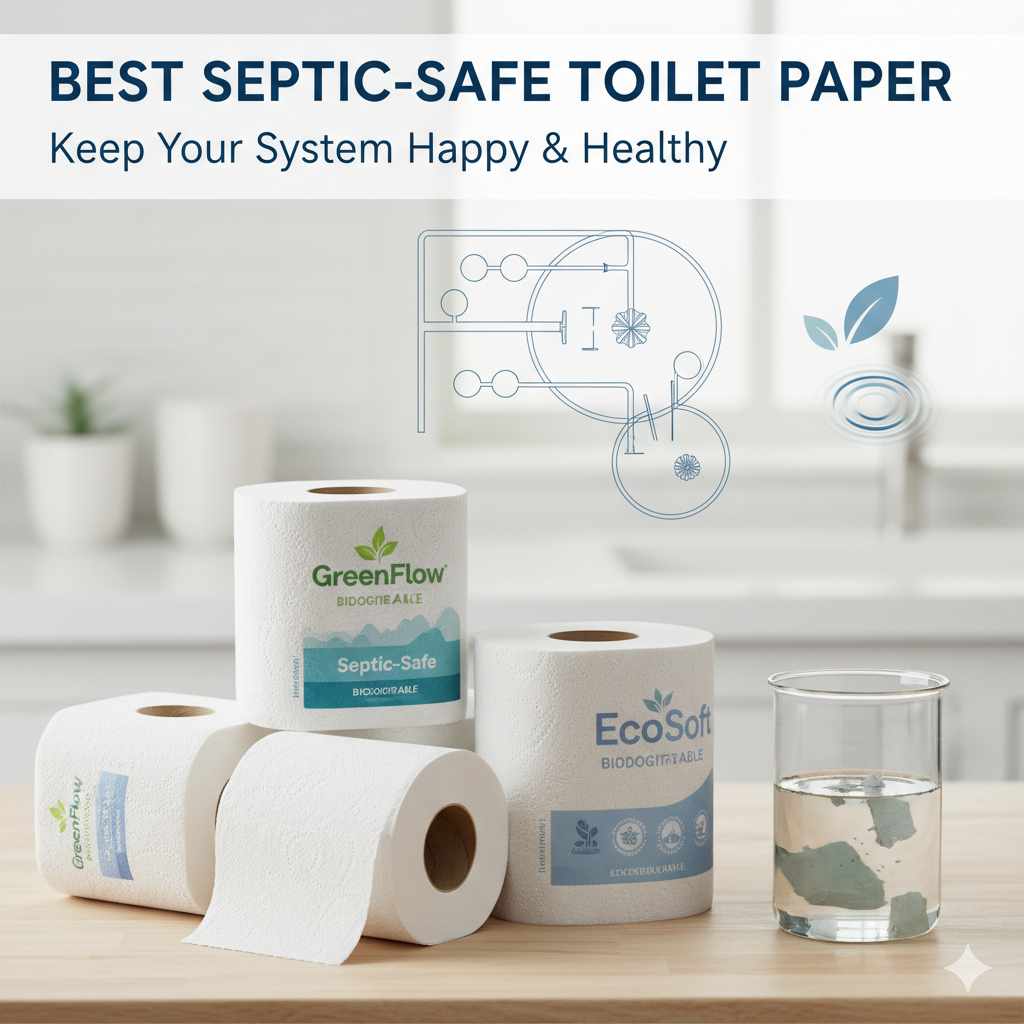
Each roll is a giant, with 350 sheets. That’s a lot of paper per roll, meaning fewer changes and a longer-lasting supply. It’s also FSC-certified, so you know the paper comes from responsibly managed forests. For an eco-conscious buyer, that’s a meaningful checkbox.
The catch is that 2-ply paper, even when labeled septic-safe, is generally slower to dissolve than a dedicated 1-ply septic paper. It’s still safe for a well-maintained system, but you should be more mindful of how much you use at once. This is a comfort-first pick with a nod to safety, not a safety-first pick.
- 2-ply, 350 sheets per roll, 6 rolls per pack
- Each roll equals 6.3 regular rolls
- Suitable for well-maintained sewer and septic systems
- FSC-Certified paper from responsible sources
- Total of 2,100 sheets per package
Best for: Budget-conscious shoppers who want a soft 2-ply feel and don’t mind a slightly slower dissolve time.
Amazon Basics 2-Ply Soft 30-Roll Bundle
Amazon Basics
Amazon Basics 2-Ply Soft Toilet Paper, 30…
- SHIPMENT CONTAINS: 30 Rolls with 350 2-ply sheets per roll for a total of 10,500 sheets
- GREAT VALUE: Each roll has 6.3 times more sheets than a regular roll, providing excellent coverage and durability
- SEPTIC SAFE: Toilet paper is suitable for well-maintained sewer and septic systems
As an Amazon Associate I earn from qualifying purchases.
This is the bulk version of the Amazon Basics 2-Ply paper. It’s the same soft, FSC-certified tissue, just packaged as five separate 6-roll packs. This bundle is perfect for those who have already decided they like the product and want to commit to a larger supply.
With 30 rolls and 10,500 sheets total, this is a serious stockpile. It’s ideal for a busy household or for someone who wants to minimize the chore of buying toilet paper. The individual packs inside make it easy to store and distribute around the house.
Like the smaller pack, this is a 2-ply paper. It’s comfortable and strong, but you should still be cautious about using massive amounts in one flush. The septic-safe label is there, but the fiber breakdown is slower than a 1-ply paper. The value is undeniable, though.
- 2-ply, 350 sheets per roll, 30 rolls total
- Equivalent to 185 regular rolls
- FSC-Certified paper
- Suitable for well-maintained septic systems
- Comes in 5 separate 6-roll packages
Best for: Shoppers who want the softness of 2-ply in a massive bulk order for the best long-term value.
How We Chose These Products
We focused on the science of breakdown, not just marketing labels. The primary factor was how the paper is constructed. 1-ply papers with short fibers, like the Scott options, are the gold standard because they disintegrate rapidly and won’t accumulate in your tank. We also considered the cost per sheet, not just the package price, to identify real value.
We looked for products that were transparent about their septic-safety claims. We prioritized papers with specific technologies or design features aimed at dissolution, rather than just a generic ‘septic-safe’ stamp. The Amazon Basics options were included because they offer a different balance of comfort and safety at a very accessible price point, giving readers a choice based on their priorities.
Buying Guide: What Really Matters
Ignore the ply count hype. A higher ply number doesn’t automatically mean it’s bad for your septic system, but it does mean it takes longer to break down. The real factor is fiber length. Toilet paper made from short, virgin fibers breaks apart faster than paper with long, strong fibers. That’s why 1-ply papers are often the best choice for septic tanks.
Look for the words ‘rapid-dissolving’ or ‘clog-free technology’ on the package. These are indicators that the manufacturer has engineered the paper to break down quickly. Also, consider your water. Hard water, with high mineral content, can slow down the dissolution process. If you have hard water, you might need to lean towards a faster-dissolving 1-ply paper to compensate.
Finally, do a quick self-check on your habits. Do you use a lot of paper at once? Do you have a low-flow toilet? If you answered yes to either, you need a paper that prioritizes breakdown. The most expensive, plush 3-ply paper is a risk, no matter what the label says.
Our Top Recommendation
The overall winner is the Scott ComfortPlus Toilet Paper. It hits the sweet spot between strength, comfort, and septic safety. It’s thicker than basic value brands, so you use less, but its clog-free technology ensures it breaks down quickly in your pipes. It’s the best daily choice for a typical home.
If you have an RV, boat, or a particularly weak toilet, go with the Scott Rapid-Dissolving paper. It’s the ultimate in clog prevention. On the other hand, if you’re on a tight budget and prefer a softer 2-ply feel, the Amazon Basics 2-Ply Soft is a solid, affordable alternative that is still safe for a well-maintained system.
Frequently Asked Questions
What does ‘septic-safe’ really mean on a label?
It means the paper is designed to break down quickly enough to be processed by a septic system. However, it’s not a regulated term. Any paper will eventually break down, but ‘septic-safe’ papers are engineered to do it fast. It’s a promise of speed, not a guarantee of zero risk.
Is 2-ply toilet paper always bad for a septic tank?
No. It’s a trade-off. 2-ply is softer and more absorbent, but it takes longer to dissolve than a 1-ply paper. It’s safe for a healthy, well-maintained system if you’re mindful of your usage. The risk increases if you have a low-flow toilet or use excessive amounts in a single flush.
Are flushable wipes safe for septic systems?
Generally, no. Even if they are labeled ‘flushable,’ most wipes are made with synthetic fibers that do not break down like toilet paper. They can cause serious clogs in your pipes and accumulate in your tank. It’s best to dispose of them in a trash can instead of flushing them.
How can I check if my current toilet paper is causing problems?
Try the mason jar test. Drop a few squares of your toilet paper into a jar of water, shake it gently, and let it sit for a few minutes. If the paper holds its shape and doesn’t start to break apart, it’s likely too strong for your system. If it starts to disintegrate into small pieces, you’re probably fine.
Products related to this article
Sponsored / affiliate links. As an Amazon Associate I earn from qualifying purchases. I may earn additional commission from eligible campaigns.