Water Softener Water Level: The Complete Diagnostic Guide
You peek into the brine tank and see water. Is that normal? Or is something broken? Most homeowners face this confusion. The water level in your water softener is a key health indicator. Get it wrong, and you either waste salt or let hard water damage your pipes.
This guide walks you through a simple check, diagnose, and fix framework. You will learn what the ideal water softener water level looks like, how to test it correctly, and exactly what to do when it is off. No vague advice. Just practical steps you can use today.

Morton
Morton Clean and Protect Water Softener Salt…
- CLEAN AND PROTECT FORMULA: Morton's advanced salt pellets help prevent buildup and maintain your water softener system's efficienc…
- CONVENIENT 2-PACK: Includes two 40 LB bags (80 lbs total) for extended use between refills
- HIGH PURITY: Made with high-quality evaporated salt pellets that dissolve cleanly and reduce mushing and bridging in the brine tan…
As an Amazon Associate I earn from qualifying purchases.
Keeping the brine tank at the right level is easier when you start with quality salt. The Morton Clean and Protect Water Softener Salt Pellets dissolve cleanly, which reduces the mushing and bridging that often cause water level problems. A 40 LB two-pack means fewer refills and less fiddling with the tank.
What Is the Ideal Water Level in a Brine Tank?
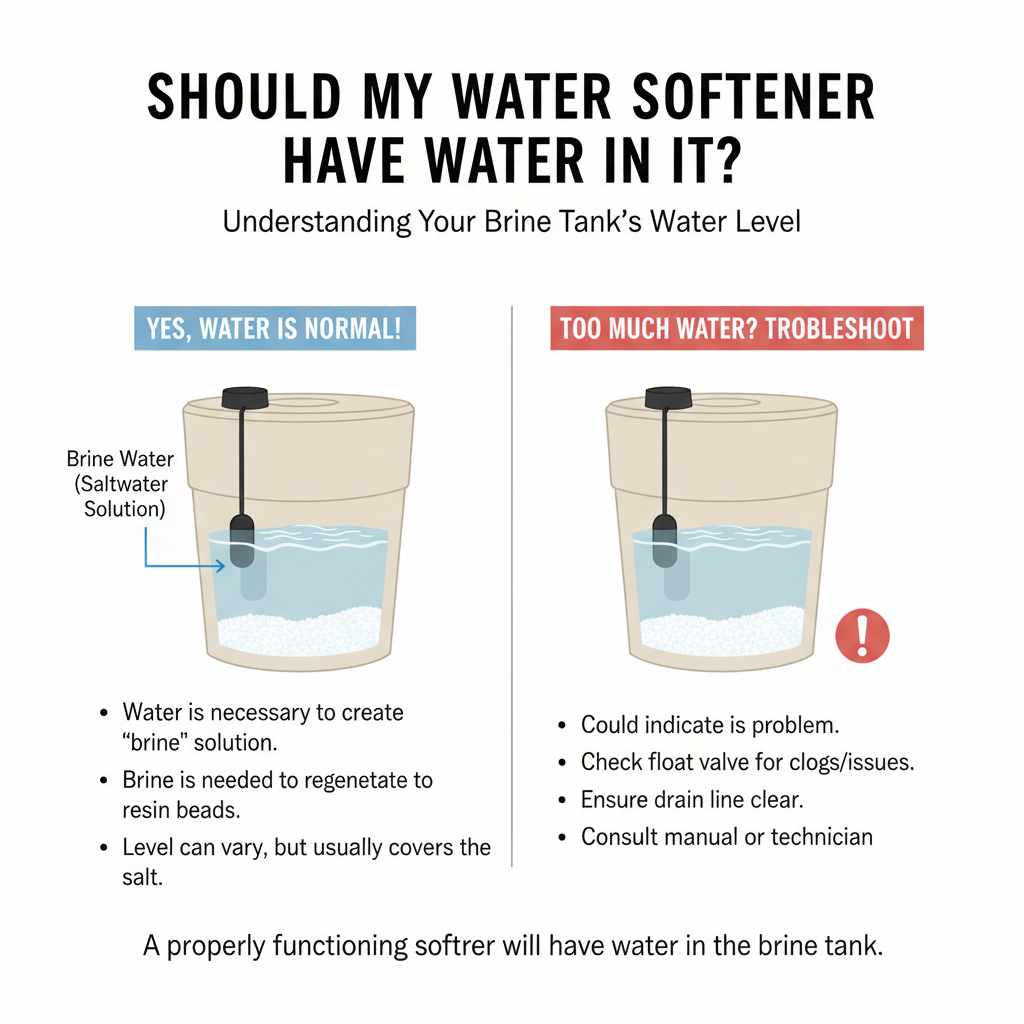
There is no single magic number. The water level depends on your tank type and how long it has been since the last regeneration cycle. For a dry brine tank, you should see almost no standing water between cycles. For a wet brine tank, the water level sits at about half the height of the salt, or roughly 6 to 10 inches from the top.
The critical rule is this: the water should never rise above the salt level. If you see water floating on top of the salt, that is a sign of trouble. The salt should always look dry on top, even in a wet tank.
Water level also shifts with the seasons. In humid summer months, the tank absorbs moisture from the air, raising the water level slightly. In dry winter months, it drops. A fluctuation of an inch or two is normal. A change of six inches is not.
Wet vs. Dry Brine Tanks: Which Do You Have?
Your softener type determines what normal looks like. Older models usually have dry brine tanks. Newer, high-efficiency models often use wet brine tanks. The difference is in how they make the brine solution.
Dry brine tanks hold salt above the water line. Water enters only during the regeneration cycle, dissolves salt, and then drains out. Between cycles, the tank should be mostly empty. If you see standing water in a dry tank, the float valve is likely stuck.
Wet brine tanks keep a reservoir of water in constant contact with the salt. This pre-makes the brine solution so it is ready for the next cycle. These tanks always have standing water. The level should remain steady, not creeping up over time.
Check your owner’s manual to confirm which type you have. If you lost the manual, look at the control head. A timer-based system is likely dry brine. A metered system with a digital display is often wet brine.
How to Check Your Water Level Correctly (Step-by-Step)
Most people check the tank wrong. They open the lid at a random time and get a false reading. Here is the correct method.
The Best Time to Check the Tank
Check the water level about 15 minutes after the regeneration cycle finishes. At this point, the brine draw has completed, and the tank has refilled to its resting state. Checking right after a cycle gives you a false high reading. Checking right before a cycle gives you a false low reading.
Set a reminder on your phone. Wait for the softener to regenerate, then wait 15 minutes, then look. This is the only time you get an accurate picture.
Visual Indicators of a Healthy Level
- Salt is dry on top. If the top layer of salt is wet or submerged, the water is too high.
- Water line is visible. In a wet tank, you should see the water level against the side of the tank, below the salt line.
- No crusty ring. A white mineral ring on the tank wall above the water line indicates the water has been too high.
- Float moves freely. The float valve should not be stuck in the down position.
Pro tip: use a flashlight to look through the translucent tank wall. If your tank is opaque, use a clean stick to measure the depth. Mark the stick at the water line and pull it out.
Troubleshooting: Why Is My Water Level Too High or Too Low?
You have checked the level and it is wrong. Now what? Work through these causes in order. Most fixes are simple.
High Water Level: Causes and Fixes
A high water level usually means the softener is pulling in too much water during the refill phase. The most common culprit is a stuck or broken float valve. The float shuts off the water when the tank reaches the correct level. If it is jammed, water keeps flowing.
Another cause is a clogged injector or venturi. These parts create the suction that draws brine from the tank. If they are dirty, the brine draw is weak, leaving excess water behind. Remove the injector, clean it with a small brush, and reassemble.
Check the drain line too. A kinked or restricted drain line prevents the tank from emptying properly. Straighten the line and look for blockages.
Safety warning: Overfilling is not just a salt problem. Excess water can overflow onto your floor. More seriously, it dilutes the brine solution, which means the resin tank does not get fully regenerated. Hard water then slips through, and scale builds up in your water heater and pipes.
Low Water Level: Causes and Fixes
A low water level means the tank is not refilling enough after regeneration. The first thing to check is the salt level. If the salt is too low or bridged, the water has nothing to dissolve, and the system draws mostly water, leaving the tank empty. Break up any salt bridge with a broom handle.
Next, check the float valve again. This time, it may be stuck in the up position, preventing the refill. Tap it gently to see if it moves.
Low water pressure can also cause this. The refill valve needs a minimum pressure to work. If your home pressure is below 25 psi, the tank will not fill. Test a faucet to gauge the pressure.
Safety warning: Underfilling is just as bad as overfilling. Without enough water, the brine solution is too concentrated. This can cause salt to crystallize inside the resin tank, damaging the resin beads. You also risk air getting into the system, which leads to sputtering faucets and a noisy softener.
When to Call a Professional vs. DIY Fixes
You can handle most water level issues yourself. Cleaning the injector, adjusting the float, and breaking up a salt bridge are all DIY tasks. Watch a video, take your time, and you will save a service call fee.
But some problems need a pro. If you have checked the float, cleaned the injector, and verified the drain line, and the level is still wrong, the control head might be faulty. The control board or the motor that drives the valve can fail. These are not user-serviceable parts.
Also, call a professional if you suspect a leak in the brine line. A cracked line allows water to siphon out continuously, causing constant low levels. This is a hidden problem that requires replacing the tubing.
Preventing Water Level Problems with Routine Maintenance
Most water level problems are preventable. The biggest cause is salt quality. Cheap salt with high impurities creates sludge and mushing at the bottom of the tank. That sludge blocks the float and clogs the injector. Use a high-purity evaporated salt pellet, like the Morton Clean and Protect pellets, to minimize this buildup.
Follow a simple schedule:
- Check the salt level monthly. Keep it at least half full.
- Clean the brine tank thoroughly once a year. Empty it, scrub the walls, and remove all sludge.
- Inspect the float valve every six months for debris.
- Clean the injector screen annually.
- Monitor the water level after each regeneration for the first month after installing a new system. This establishes your baseline.
If you have a smart softener with a digital control head, use its diagnostics. Many models display an error code for brine tank issues. Look up the code in the manual. Codes like "Er" or "brine" often point to a refill or draw problem. The display can also show you the last regeneration time, which helps you confirm the cycle completed.
Frequently Asked Questions About Brine Tank Water Levels
Why is there standing water in my brine tank?
Standing water is normal if you have a wet brine tank. It is only a problem if the water level is rising over time or if the water is above the salt. For dry brine tanks, any standing water between cycles indicates a stuck float valve or a clogged drain line.
How much water should be in the brine tank after regeneration?
It depends on the tank. Wet brine tanks hold 3 to 5 gallons of water. Dry brine tanks should hold almost none. Measure against the salt level. The water should never be higher than the bottom of the salt pile.
Can I add salt when the water level is high?
You can, but it will not fix the problem. High water level means the softener is not functioning correctly. Adding salt to a flooded tank just creates a mess and wastes salt. Fix the water level first, then add salt.
Why is my water softener not using water from the brine tank?
This is a brine draw failure. The injector is likely clogged, or the drain line is restricted. The softener is regenerating, but it is only using incoming water, not pulling the brine from the tank. Clean the injector and check the drain line flow.
Is it bad if the water level drops during the winter?
No. Cold, dry air causes more evaporation from the brine tank. A drop of an inch or two in winter is normal. You will also notice you add salt more often in winter because the system uses more salt to make the same strength brine in cold water.
What to Do Next with Your Water Softener
You now have the tools to diagnose any water softener water level issue. Start with the correct check time: 15 minutes after regeneration. Compare what you see to the baseline for your tank type. Then work through the fixes in order.
- Know your tank type. Dry and wet brine tanks have different normal levels.
- Check the water level only 15 minutes after regeneration, not at random times.
- Keep the salt level above the water line at all times.
- Clean the injector and float valve at least annually to prevent most issues.
- Use high-purity salt pellets to avoid sludge and bridging. The Morton Clean and Protect two-pack is a solid choice for this.
- Do not ignore error codes on a smart softener control head. They point to the exact problem.
- Call a professional only if you have cleaned everything and the level is still wrong. The control head may be faulty.
If you are dealing with other water issues in your home, check out our guide on fixing a water dispenser or learn about drinking water before bed. Both cover common household water concerns.
Products related to this article
Sponsored / affiliate links. As an Amazon Associate I earn from qualifying purchases. I may earn additional commission from eligible campaigns.