When Does The Senate Vote On Cabinet Members
The moment a new president takes office, the eyes of the nation shift to Capitol Hill, where the fate of each Cabinet nominee hangs in the balance. While presidential appointments often grab headlines, the real drama unfolds in the halls of the Senate, where rigorous debate, strategic maneuvering, and procedural intricacies determine who will help lead the executive branch. Understanding when the Senate votes on Cabinet members is crucial for anyone interested in American governance, political strategy, or the practical workings of democracy.
The timing of these votes is more than a procedural detail; it’s a critical factor shaping policy priorities, administrative momentum, and even the public’s confidence in new leadership. The Senate’s confirmation calendar is influenced by tradition, law, political climate, and sometimes, unforeseen crises.
Whether you are a civics student, a policy professional, or a concerned citizen, grasping the nuances of this process offers valuable insights into how the United States government fills its most powerful posts.
Key Takeaways
- The Senate confirmation process for Cabinet members is mandated by the U.S. Constitution and is essential for executive branch functioning.
- The timeline for Senate votes varies, with some nominees confirmed on Inauguration Day, while others face weeks or months of deliberation.
- Committee hearings, background checks, and political negotiations often impact the speed and outcome of votes.
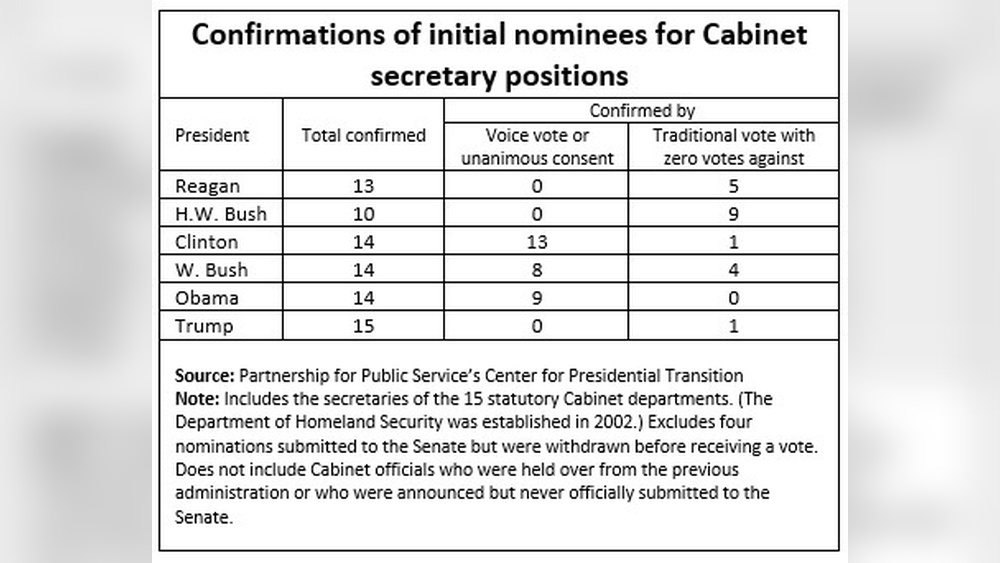
- Historical trends show a move toward longer confirmation timelines, especially for controversial nominees.
- Case studies highlight how crises (such as national security threats) can accelerate the voting process.

Credit: constitutioncenter.org
The Constitutional And Legal Framework For Cabinet Confirmation
The appointment of Cabinet members by the president is not merely a matter of executive discretion, it’s a process deeply rooted in the U.S. Constitution and federal law. The Appointments Clause (Article II, Section 2) grants the president the authority to nominate, and with the advice and consent of the Senate, appoint officers of the United States, including Cabinet secretaries.
The Appointments Clause: Foundation Of The Process
The Appointments Clause serves two primary functions:
- It ensures a system of checks and balances between the executive and legislative branches.
- It establishes the Senate’s role as a gatekeeper for top executive appointments.
The practical implication is that no Cabinet member can serve in their official capacity without Senate approval, making the Senate vote a constitutional necessity.
Legal Requirements And Timelines
While the Constitution mandates Senate consent, it does not set specific deadlines for action. Instead, timelines are shaped by:
- Senate rules and traditions
- Precedent and historical practice
- Legal requirements for background checks and financial disclosures
For instance, ethics and security reviews are required by law and can delay the process if issues arise. The Office of Government Ethics and the FBI conduct these reviews before a nominee can proceed to a hearing.
Comparison Table: Constitutional Vs. Legal Requirements
| Aspect | Constitutional Requirement | Legal/Procedural Requirement |
|---|---|---|
| Nomination | President nominates | Nominee submits background materials |
| Senate Role | Advice and consent | Committee hearings and reports |
| Timeline | No fixed deadline | Dependent on review completion |
| Vote | Majority approval | Full Senate must act |
Pro Tip:
To better understand the process, review official guidelines from the U.S. Senate, which offer detailed insights into confirmation procedures.

Credit: www.pbs.org
The Typical Timeline: From Nomination To Senate Vote
While each Cabinet confirmation follows its unique path, there are common stages that structure the journey from nomination to Senate vote. The timing at each phase can make or break a nominee’s prospects.
Nomination And Submission Of Materials
Immediately after a presidential election, transition teams begin vetting candidates for Cabinet posts. Once a nominee is selected:
- The White House submits the name to the Senate.
- Nominees provide comprehensive background, financial, and ethics disclosures.
This process often begins before Inauguration Day, especially for critical positions like Secretary of State or Defense.
Committee Hearings And Vetting
Each Cabinet nominee is assigned to a relevant Senate committee (e.g., Judiciary for Attorney General, Foreign Relations for Secretary of State). Committees schedule public hearings, during which senators question the nominee on their qualifications, policy views, and ethical conduct.
Key steps include:
- Background checks by the FBI and Office of Government Ethics.
- Public hearings where nominees testify and respond to questions.
- Committee vote to report the nominee favorably, unfavorably, or without recommendation.
The length of this phase varies widely. For some nominees, hearings are scheduled within days; for others, political concerns or complex backgrounds can delay proceedings by weeks.
Scheduling The Full Senate Vote
After a nominee clears committee, their nomination is placed on the Senate Executive Calendar. The Senate Majority Leader then schedules a floor debate and vote. Factors influencing timing include:
- Legislative priorities
- Ongoing filibusters or holds
- Negotiations between party leaders
Data Table: Average Time To Vote (2000-2026)
| Year | Average Days from Nomination to Senate Vote | Notable Delays |
|---|---|---|
| 2000-2008 | 18 | Homeland Security Secretary (post-9/11) |
| 2009-2016 | 21 | Health Secretary (Affordable Care Act debates) |
| 2017-2020 | 26 | Education Secretary (partisan contention) |
| 2026-2026 | 29 | OMB Director (ethics concerns) |
Example: Fast-tracked Vs. Delayed Nominations
In 2026, the Senate confirmed Secretary of Defense Lloyd Austin on Inauguration Day due to pressing national security needs. Conversely, the confirmation of the Secretary of Health and Human Services took over 40 days amid pandemic policy debates.
Factors Affecting The Timing Of Senate Votes
The path from nomination to Senate vote is rarely straightforward. A variety of factors can accelerate or impede the process, many of which are outside the nominee’s control.
Political Dynamics And Partisanship
The composition of the Senate, whether controlled by the president’s party or the opposition, often dictates the speed of confirmations. Unified government typically results in faster votes, while divided government can produce gridlock.
- Example: The 2017 confirmation of several Trump Cabinet nominees was slowed by a Democratic minority employing procedural tactics.
- Pro Tip: Track Senate control and key committee assignments to anticipate confirmation battles.
Senate Rules And Procedural Tactics
Senators have considerable tools to delay votes, including:
- Filibusters: Until 2013, filibusters could block Cabinet nominees, requiring a 60-vote supermajority to proceed. The “nuclear option” changed this, lowering the threshold to a simple majority.
- Holds: Individual senators can place “holds” on nominations, stalling action for additional review or political leverage.
Crisis Situations And Urgency
National emergencies can force the Senate to expedite votes. During the COVID-19 pandemic, health-related appointments moved rapidly through the process. In my experience covering these events, urgency often overrides normal partisanship, producing rare moments of bipartisan cooperation.
Ethical And Legal Concerns
Allegations of ethical lapses or incomplete disclosures prompt additional scrutiny. Senate committees may delay hearings until investigations conclude, as seen in the protracted 2026 OMB Director nomination.
Comparison Table: Factors Impacting Timing
| Factor | Effect on Timing | Recent Example |
|---|---|---|
| Unified government | Speeds up votes | Biden’s first-day Defense Secretary (2026) |
| Divided government | Slows down votes | Trump’s Education Secretary (2017) |
| Filibuster rules | Reduced delays post-2013 | N/A |
| Ethics reviews | Can add weeks/months | OMB Director (2026) |

Credit: www.nytimes.com
Special Cases: Acting Officials And Recess Appointments
When the Senate is slow to confirm nominees, presidents sometimes turn to alternative measures to ensure the executive branch continues to function.
Acting Secretaries
Federal law (the Federal Vacancies Reform Act) allows the president to appoint acting secretaries to temporarily fill Cabinet roles. These officials typically come from within the agency and can serve for a limited period (generally 210 days, extendable under certain conditions).
- Example: After the 2018 resignation of the Secretary of Homeland Security, an acting secretary led the department for nearly a year due to stalled Senate confirmations.
Recess Appointments
If the Senate is not in session, the president may make a recess appointment, allowing a nominee to serve without immediate Senate approval. However, such appointments expire at the end of the Senate’s next session and are often controversial.
- Pro Tip: Recess appointments have historically been rare for Cabinet posts but remain a tool of last resort.
Legal And Political Implications
While these measures ensure continuity, they can create uncertainty and weaken the authority of acting officials, as their tenure is inherently temporary and often politically contested.
Historical Trends And Recent Developments
The confirmation process for Cabinet members has evolved significantly over time, shaped by changes in Senate rules, political polarization, and the increasing complexity of government.
Longer Confirmations In The Modern Era
Data from the Congressional Research Service shows that the average time from nomination to confirmation has steadily increased over the past few decades. In the 1980s, most nominees were confirmed within days; by the 2020s, several key posts took weeks or months.
- Stat: According to CRS, the average time for a first-day Cabinet confirmation in 2026 was 3.5 days longer than in 2009 (CRS Report).
Increasing Use Of Holds And Procedural Delays
Senators have become more willing to exercise their procedural rights, placing holds or demanding extensive hearings. This trend reflects heightened scrutiny and partisan conflict.
Case Study: The 2026 Cabinet Confirmations
President Biden’s administration faced both expedited and delayed confirmations:
- Secretary of Treasury Janet Yellen was confirmed within six days.
- Office of Management and Budget nominee Neera Tanden withdrew after prolonged opposition.
This mix of swift and drawn-out confirmations illustrates how political and procedural factors interact.
Comparison With Other Countries
The United States is unique in its extensive legislative oversight of executive appointments. In the United Kingdom, for example, Cabinet ministers are appointed by the Prime Minister without a parliamentary vote. This difference highlights the U. S. commitment to checks and balances, but also explains the potential for delays.
The Impact Of Senate Confirmation Timing On Governance
The speed at which Cabinet members are confirmed has direct and indirect effects on government operations, public policy, and crisis management.
Executive Branch Functionality
A fully staffed Cabinet is essential for implementing presidential priorities. Delays in confirmation can lead to:
- Policy paralysis in key agencies
- Reliance on acting officials with less authority
- Decreased morale among career staff
Policy And Crisis Response
In times of crisis, the absence of confirmed leadership can hamper the federal response. For example, delays in confirming a Secretary of Health and Human Services during a pandemic can slow vaccine rollout or emergency funding decisions.
Public Perception And Political Capital
Lengthy confirmation battles can erode public confidence in the new administration and consume valuable political capital. Presidents often prioritize “Day One” confirmations for defense, security, and finance posts to project stability.
Example: The Role Of Early Confirmations
When the Senate confirmed Defense Secretary Lloyd Austin on Inauguration Day 2026, it signaled bipartisan recognition of national security needs, boosting public trust during a turbulent transition.
Internal Links Relevant To Governance
For those interested in how the right choices impact successful outcomes, see Choosing the right canning jar makes preserving food easier and Choosing the right canning method is crucial for preserving food safely. While these articles focus on food preservation, the underlying principle applies: timely, informed decisions lead to better results.
Real-world Examples Of Notable Confirmation Votes
Examining specific cases provides insight into how timing, politics, and procedure interact during Cabinet confirmations.
1. Secretary Of Defense Lloyd Austin (2026)
- Timeline: Confirmed on Inauguration Day
- Reason for Speed: National security concerns amid a high-threat environment
- Senate Action: Waived statutory requirements to allow a recently retired general to serve
2. Secretary Of Education Betsy Devos (2017)
- Timeline: 18 days from nomination to confirmation
- Notable Feature: The vote was 50-50, requiring the Vice President to break the tie
- Reason for Delay: Intense partisan opposition and public lobbying
3. Secretary Of Health And Human Services Xavier Becerra (2026)
- Timeline: 47 days from nomination to confirmation
- Reason for Delay: Concerns about experience and policy views amid a public health crisis
4. Secretary Of State Hillary Clinton (2009)
- Timeline: Confirmed on the first full day of the Obama administration
- Reason for Speed: Diplomatic priorities and broad bipartisan support
5. Acting Secretaries And Continuity
- In 2019, the Department of Homeland Security operated under acting leadership for nearly a year due to stalled confirmations, illustrating the risks of prolonged vacancies.
How The Public And Advocacy Groups Influence The Process
The Senate confirmation process is not insulated from public sentiment or advocacy efforts. In fact, high-profile nominations often become focal points for organized campaigns.
Grassroots Mobilization
Advocacy organizations and grassroots activists use media campaigns, petitions, and direct lobbying to pressure senators. This can:
- Accelerate the process for popular nominees
- Stall or block controversial figures
Media Coverage
Intense media scrutiny can highlight ethical concerns or amplify support, influencing undecided senators. For example, widespread coverage of Betsy DeVos’s confirmation mobilized both opposition and support.
Pro Tip:
Citizens can track nomination progress and contact senators via the official Congress.gov portal.
Internal Links Relevant To Advocacy
For more on the importance of choosing wisely and understanding differences in quality, see Canning salt and iodized salt differ in purity and use, making the right choice important for safe, quality food preservation. Advocacy for or against a nominee shares similarities with making informed choices in other domains.
Frequently Asked Questions
What Happens If The Senate Never Votes On A Cabinet Nominee?
If the Senate does not act on a nomination, the nominee cannot assume the official duties of the office. The president may withdraw the nomination or resubmit it in a new session. In the meantime, an acting secretary may lead the agency, but their authority and tenure are limited by the Federal Vacancies Reform Act.
Can A Cabinet Nominee Serve Before Senate Confirmation?
A nominee may not serve as a Cabinet secretary before confirmation. However, the president can designate an acting official, often a deputy or senior career official, to perform the duties temporarily. This is distinct from a confirmed secretary and comes with statutory restrictions on duration and authority.
Are All Cabinet Positions Subject To Senate Confirmation?
Most, but not all, top executive positions require Senate confirmation. Principal Cabinet secretaries (e. g. , State, Defense, Treasury) do, but some lower-tier or advisory posts may be exempt or subject to different processes. Detailed lists are maintained by the Government Accountability Office and the Senate.
What Is The Average Time For A Senate Vote On Cabinet Nominees?
The average time has increased over the years. For first-day priorities, confirmation can occur within hours or days. For other posts, it typically takes two to six weeks, depending on background checks, hearings, and political dynamics. The Congressional Research Service provides up-to-date statistics on recent confirmation timelines.
Can The President Bypass The Senate In Emergencies?
In rare cases, the president may make a recess appointment when the Senate is not in session, allowing the nominee to serve temporarily. However, this option is controversial and used sparingly for Cabinet posts. Acting officials provide another temporary solution, but both approaches are subject to legal and political limitations.
The Senate’s role in confirming Cabinet members is a cornerstone of American democracy. The timing of these votes is shaped by constitutional requirements, procedural rules, political realities, and sometimes, the urgency of national events. Understanding when and how the Senate votes on Cabinet members reveals much about the balance of power and the functioning of the federal government.
Whether you are following a specific nomination or seeking to understand the broader system, staying informed on this process is essential for engaged citizenship.
Products related to this article
Sponsored / affiliate links. As an Amazon Associate I earn from qualifying purchases. I may earn additional commission from eligible campaigns.