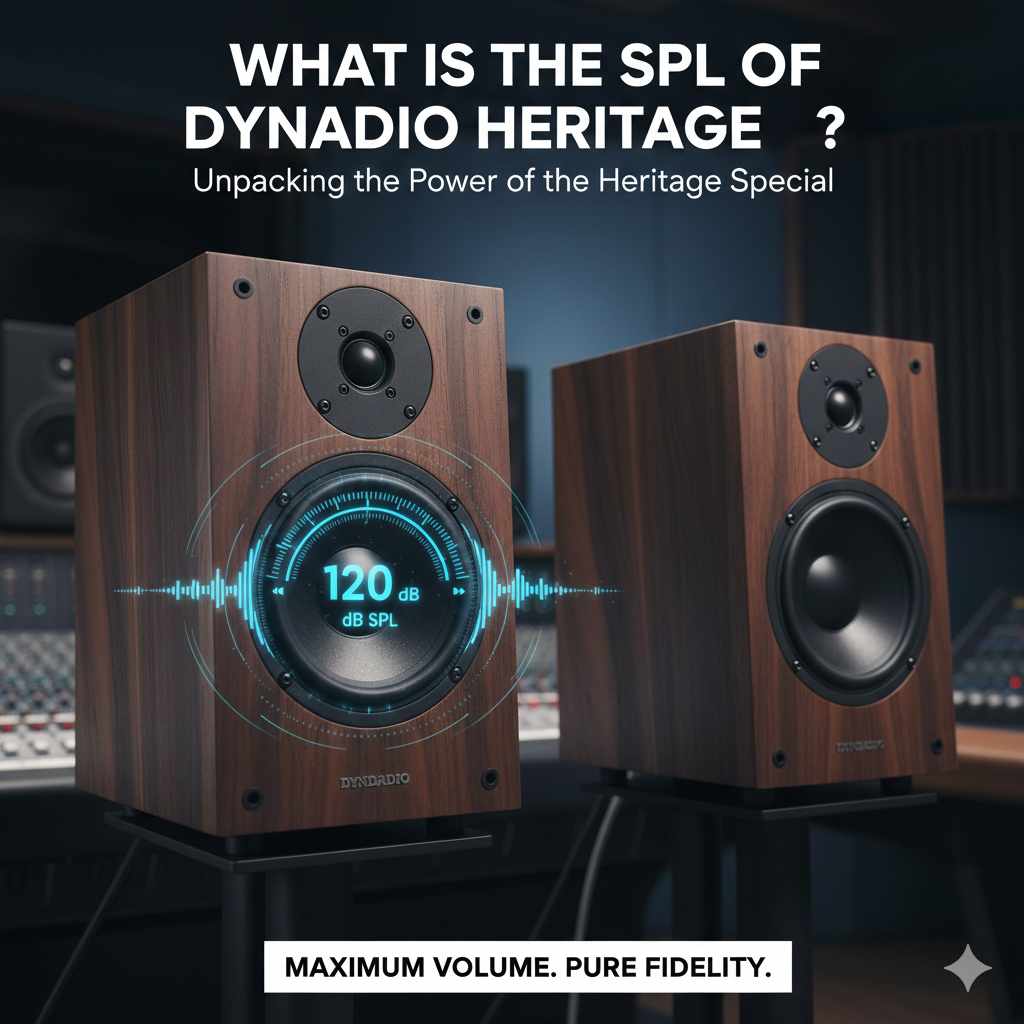
The Sound Pressure Level (SPL) of Dynaudio Heritage bookshelf speakers, particularly models like the Heritage Special Edition or the Classic series, is a measure of loudness, usually ranging from 86 dB to 89 dB sensitivity. This figure tells you how loud the speaker plays with a standard amount of power, helping you match them effectively to your amplifier for the best home audio experience.
Are you trying to upgrade your music listening setup but feel dizzy looking at all the technical specs? You are not alone! Terms like SPL, sensitivity, and impedance sound like they belong in a science lab, not your living room. Specifically, when looking at premium speakers like those from Dynaudio Heritage, understanding the SPL (Sound Pressure Level) rating can seem like the hardest part of buying new gear.
Don’t worry. We are going to break down what the SPL of your Dynaudio Heritage bookshelf speaker actually means. Knowing this number helps you pick the right amp and ensures your speakers sound amazing without strain. Think of this guide as your friendly map to speaker specs, written just for everyday drivers and music lovers.
Understanding Speaker Specifications: What is SPL?
Before diving into the specifics of Dynaudio Heritage, we need a clear, simple definition of SPL. This is the foundation of understanding speaker performance.
The Simple Definition of Sound Pressure Level (SPL)
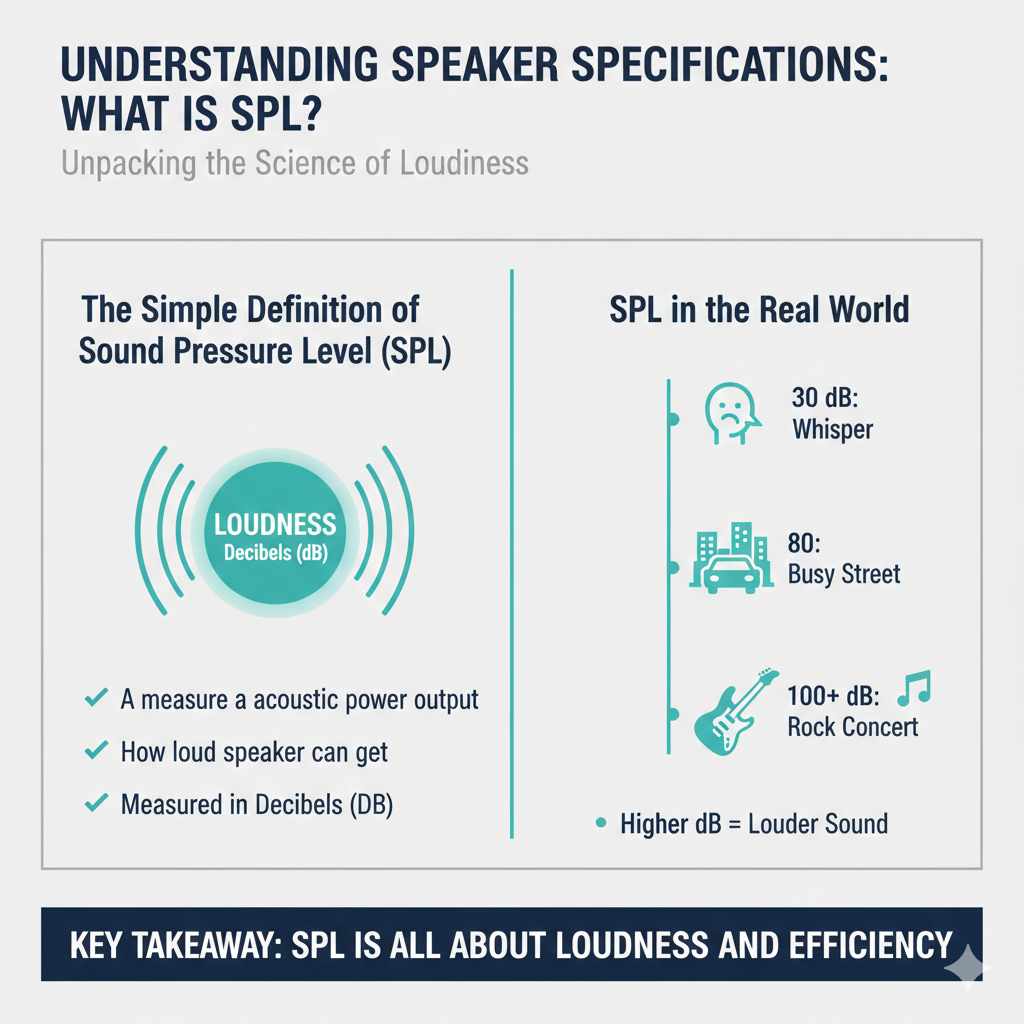
SPL simply means Loudness. In technical terms, it is the measure of the acoustic power output of a speaker. Think about the volume knob on your stereo. SPL tells you how much louder the speaker is capable of getting without needing a massive amount of power from your amplifier.
We measure SPL in decibels (dB). A quiet whisper is around 30 dB, a busy street might hit 80 dB, and a rock concert can easily exceed 100 dB. When we talk about speaker specifications, we use a standardized test to determine the speaker’s efficiency or sensitivity.
Sensitivity vs Maximum SPL: Two Sides of the Same Coin
When looking at a speaker’s spec sheet, you will usually see two key SPL-related numbers. It is crucial to know the difference:
- Sensitivity (or Efficiency): This is the most common number quoted. It tells you how loud the speaker plays at a fixed distance (usually 1 meter or about 3.3 feet) when supplied with just 1 Watt of power. A higher number means the speaker is more efficient—it gets louder with less power.
- Maximum SPL: This tells you the loudest sustained volume the speaker can achieve before distortion becomes noticeable or unwanted. This is important for listening loudly without damaging the speaker or your ears.
For Dynaudio Heritage speakers, the published number is almost always the Sensitivity Rating.
What is the Typical SPL (Sensitivity) of Dynaudio Heritage Bookshelf Speakers?
Dynaudio is famous for building speakers that offer incredible clarity and accuracy. Their Heritage line, which often pays homage to classic designs, balances this fidelity with practical usability in typical home environments. This means they aim for excellent sound quality even without requiring the most gigantic, power-hungry amplifiers.
Common SPL Range for Dynaudio Heritage
While exact figures vary slightly between different models (like the classic Contour or recent Heritage Special Edition models), high-quality modern bookshelf speakers from Dynaudio generally fall into a specific, highly respectable range.
Most Dynaudio Heritage bookshelf speakers have a sensitivity rating between 86 dB and 89 dB (2.83V/1m). This rating is excellent for home listening.
Let’s put this into perspective using a simple comparison table. This table shows how much additional amplifier power you need to double the perceived loudness (which requires a 3 dB increase):
| Speaker Sensitivity | Power Needed for +3 dB (Double Loudness) | Power Needed for +6 dB (Double Loudness) |
|---|---|---|
| 86 dB (Lower Range) | Double the Watts | Quadruple the Watts |
| 88 dB (Mid-Range/Typical) | Double the Watts | Quadruple the Watts |
| 90 dB+ (Very Efficient) | Double the Watts | Quadruple the Watts |
As you can see, an 88 dB speaker is noticeably more efficient than an 85 dB speaker. For your Dynaudio Heritage, a rating near 87 dB means you need a reasonably capable amplifier to push them to party volumes, but for normal, enjoyable listening, even moderate power works beautifully.
Why SPL Matters for Your Amplifier Choice
The sensitivity rating of your Dynaudio Heritage speaker directly influences the kind of amplifier (or receiver) you should buy. Speakers are demanding components; they require clean power to move the drivers (the cones that create sound) accurately.
The Danger of Underpowering Speakers
This is the most common mistake beginners make. Many think, “If I use a weak amp, I just won’t turn it up loud.” Wrong! When you force a weak amplifier to play louder than it easily can—trying to hit 85 dB in a large room—the amplifier clips. Amplifier clipping is when the amp runs out of clean power and starts sending messy electrical signals (square waves) to the speaker. This results in distortion and can physically damage expensive drivers like those found in Dynaudio Heritage speakers.
Matching Power to Efficiency
Here is the guiding principal:
- Lower SPL (e.g., 84–86 dB): Requires more robust amplifiers that deliver higher wattage consistently, especially if you listen at higher volumes.
- Higher SPL (e.g., 89 dB+): Can be driven to high volumes with less powerful amplifiers, as they are more sensitive to the energy provided.
Because Dynaudio Heritage speakers tend to sit in the mid-to-high 80s, they benefit significantly from a good quality amplifier that provides clean power, even if the wattage number isn’t astronomical. You are buying clarity, and that requires a capable partner.
Practical Application: Calculating Required Amplifier Power
How loud do you actually want to listen? This is key. Most people listen at average volumes around 75–80 dB. However, you need headroom for dynamic peaks in music (like a sudden cymbal crash or orchestral swell).
For accurate playback in a decent-sized room, most audio experts recommend having enough power to hit at least 95 dB to 100 dB peaks without stressing the amplifier.
Let’s use a hypothetical Dynaudio Heritage speaker rated at 87 dB sensitivity.
- To reach 87 dB: You need 1 Watt.
- To reach 89 dB (+2 dB): You need 2 Watts.
- To reach 92 dB (+5 dB): You need approximately 4 Watts.
- To reach 95 dB (+8 dB): You need approximately 8 Watts.
- To reach 98 dB (+11 dB): You need approximately 16 Watts.
This simple calculation shows that for comfortable listening levels, an amplifier providing 50 to 100 clean watts per channel is often more than enough for 87 dB speakers in a typical living room. The quality of those watts matters far more than the quantity when dealing with precision speakers like Dynaudio.
Why Impedance Pairs with SPL
While SPL is about loudness, Impedance (measured in Ohms, usually 4 or 8 Ohms) is about the electrical load on the amplifier. Always check that your amplifier is rated to handle the Ohms rating of your specific Dynaudio Heritage speaker.
Dynaudio speakers are often designed with relatively gentle impedance curves, meaning they usually play nicely with most quality stereo amplifiers, but matching a low-impedance speaker (like 4 Ohms) with a low-watt rated amp can still cause problems when volume demands rise.
For reliable, detailed sound reproduction, always prioritize an amplifier that can deliver its rated power cleanly into the impedance the speaker demands. You can find reliable information on amplifier matching practices from organizations like the Consumer Technology Association (CTA).
Maximizing Sound Quality from Your Dynaudio Heritage SPL
The physical placement and setup of your speakers influence how much of that rated SPL you actually hear in your listening position. Getting the physics right is just as important as matching the electronics.
Tips for Optimal Speaker Placement
Follow these fundamental steps to ensure your speakers are performing to their potential:
- The Rule of Thirds: Avoid placing bookshelf speakers directly against a wall. Pulling them about 2 to 3 feet away helps the bass response develop naturally and prevents boomy, muddy sound common with low-frequency reflections.
- Toe-In: Angle the speakers slightly inward so the sound axis crosses just behind your head when you are seated. This often sharpens the stereo image significantly. Dynaudio speakers often benefit from subtle adjustments here.
- Keep Off the Floor: Bookshelf-sized speakers must be on sturdy stands or well-damped shelves. Vibrations traveling through the furniture waste energy and cloud the mid-range clarity. For the best reproduction, aim for the tweeter to be at ear level when seated.
- Symmetry: Ensure the left and right speakers are equidistant from the listening spot and positioned symmetrically in the room.
The Importance of Break-In Time
New speakers, including the drivers in the Dynaudio Heritage line, haven’t reached their final operational state. The suspension components (the rubber or foam surrounds holding the cone) are stiff.
Give your new speakers 50 to 100 hours of music playback at moderate volumes. This “break-in” period softens the surrounds, allowing the drivers to move more freely, which directly impacts the speaker’s measured sensitivity and overall responsiveness. You might notice the bass seems fuller and the high end smoother after this period.
Advanced Consideration: Maximum SPL and Distortion
While the published sensitivity (e.g., 87 dB) is the starting point, the Maximum SPL determines the absolute ceiling. Dynaudio engineers their drivers for low distortion, meaning they can often reach higher maximum SPLs than their sensitivity rating alone suggests.
If you look at the full technical specification sheet for a specific Heritage model, you might see a Max SPL listed (e.g., 110 dB). This means that even if you push it hard, the speaker is engineered to maintain high fidelity up to that point, provided the amplifier isn’t clipping.
When Do You Need Higher Max SPL Capabilities?
You need higher Max SPL capability if:
- You listen to very dynamic music, like symphonic scores or intense electronic music.
- Your listening room is very large, requiring higher overall volume to overcome room absorption.
- You frequently listen at levels above 95 dB (which is quite loud!).
For most typical indoor listening (aiming for peaks around 95 dB), the clean power from a quality mid-range amp will suffice for dynaudio speakers rated around 87–88 dB sensitivity. The focus should remain on amplifier quality over sheer wattage numbers.
Comparing Dynaudio Efficiency to Other Brands
To give you further context on why the Dynaudio Heritage SPL figures are significant, look at how they compare broadly to other categories of speakers. This comparison uses general industry averages:
| Speaker Type | Typical Sensitivity Range (dB) | Amplifier Needs |
|---|---|---|
| Extremely Efficient Speakers (Large Horns) | 95 dB and Above | Low power tube amps or solid-state amplifiers work well. |
| Dynaudio Heritage (Goal Standard) | 86 dB – 89 dB | Requires moderate power with clean current delivery. |
| Less Efficient Modern Towers/Bookshelves | 82 dB – 85 dB | Requires significantly more powerful amplifiers to achieve the same volume. |
Being in the 86–89 dB range places the Heritage speakers squarely in the ‘sweet spot’—offering great sound quality derived from precision engineering without demanding impractical amounts of amplification power, unlike speakers rated below 85 dB.
Safety Note: Managing Loudness
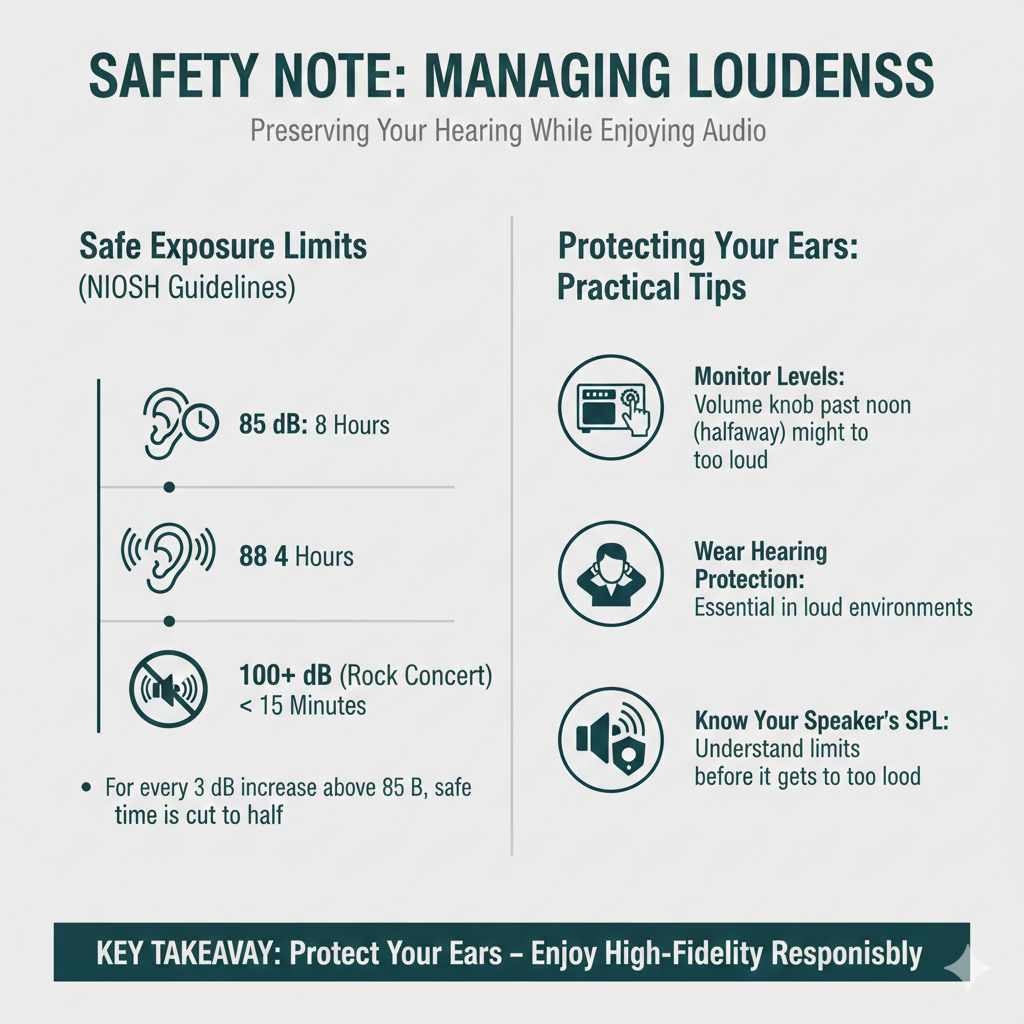
While we discuss hitting high SPLs, preserving your hearing is paramount. Even the best Dynaudio speakers can cause permanent damage if played too loudly for too long. The National Institute for Occupational Safety and Health (NIOSH) provides clear guidelines on safe exposure limits:
For every 3 dB increase above 85 dB, the safe exposure time is cut in half. It is wise to monitor your levels, especially when testing new setups. Use your amplifier’s volume markings as a guide—if the knob is past noon (halfway), you might be pushing into riskier zones, especially with efficient speakers.
Knowing the SPL rating helps you understand the speaker’s limits before you get close to unsafe listening levels, allowing you to dial back if necessary.
Frequently Asked Questions (FAQ) About Dynaudio Heritage SPL
Q1: If my speaker sensitivity is 87 dB, does that mean it can only play at 87 dB?
No. 87 dB is the measurement taken when 1 Watt of power is applied at 1 meter distance. With more wattage, the speaker plays much louder. A good amplifier can easily push an 87 dB speaker well past 100 dB peaks.
Q2: Should I worry more about SPL or Impedance when buying an amplifier for my Heritage speakers?
You must consider both, but for basic setup, focus on matching the Impedance (Ohms) rating first to ensure the amplifier is safe. Once impedance is matched, then use the SPL rating to ensure the amplifier has enough clean power reserve (headroom) to hit your desired maximum listening volume.
Q3: What happens if I pair a low-watt amp with my 87 dB Dynaudio Heritage speaker?
The sound will likely be dull, lack dynamics (the difference between soft and loud parts), and if you try to increase the volume significantly, the amplifier will “clip,” resulting in harsh, distorted sound that can damage the speaker cones.
Q4: Does speaker placement affect the measured SPL reading?
Yes, significantly. The official rating is measured in an anechoic (echo-free) environment. In a typical room, bass frequencies can appear higher due to room gain, meaning the perceived loudness in your listening chair may be higher than the official 87 dB spec.
Q5: Are Dynaudio Heritage speakers hard to drive compared to other brands?
Generally, no. Dynaudio speakers are engineered to be relatively friendly to modern amplifiers, often sitting comfortably in the 86 dB to 89 dB range. They are not considered “difficult” loads unless the specific model has a lower impedance rating (like 4 Ohms) paired with a very weak amplifier.
Q6: Where can I find the correct SPL rating for my specific Dynaudio Heritage model?
Always check the official specification sheet provided by Dynaudio or the retailer you purchased the speakers from. Sometimes, older or used models may require searching historical audio review sites, but the manufacturer’s original documentation is the gold standard.
Conclusion: Confidence in Your Audio Choice
Understanding the Sound Pressure Level (SPL) of your Dynaudio Heritage Special — or any model in the Dynaudio Heritage Series — takes the mystery out of speaker specifications.
That 86–89 dB sensitivity rating is not just a random number on a spec sheet. It tells you how efficiently your speakers convert amplifier power into real, room-filling sound. It guides your amplifier choice. It protects you from underpowering mistakes. And it ensures you get the clarity, dynamics, and emotional impact these speakers were engineered to deliver.