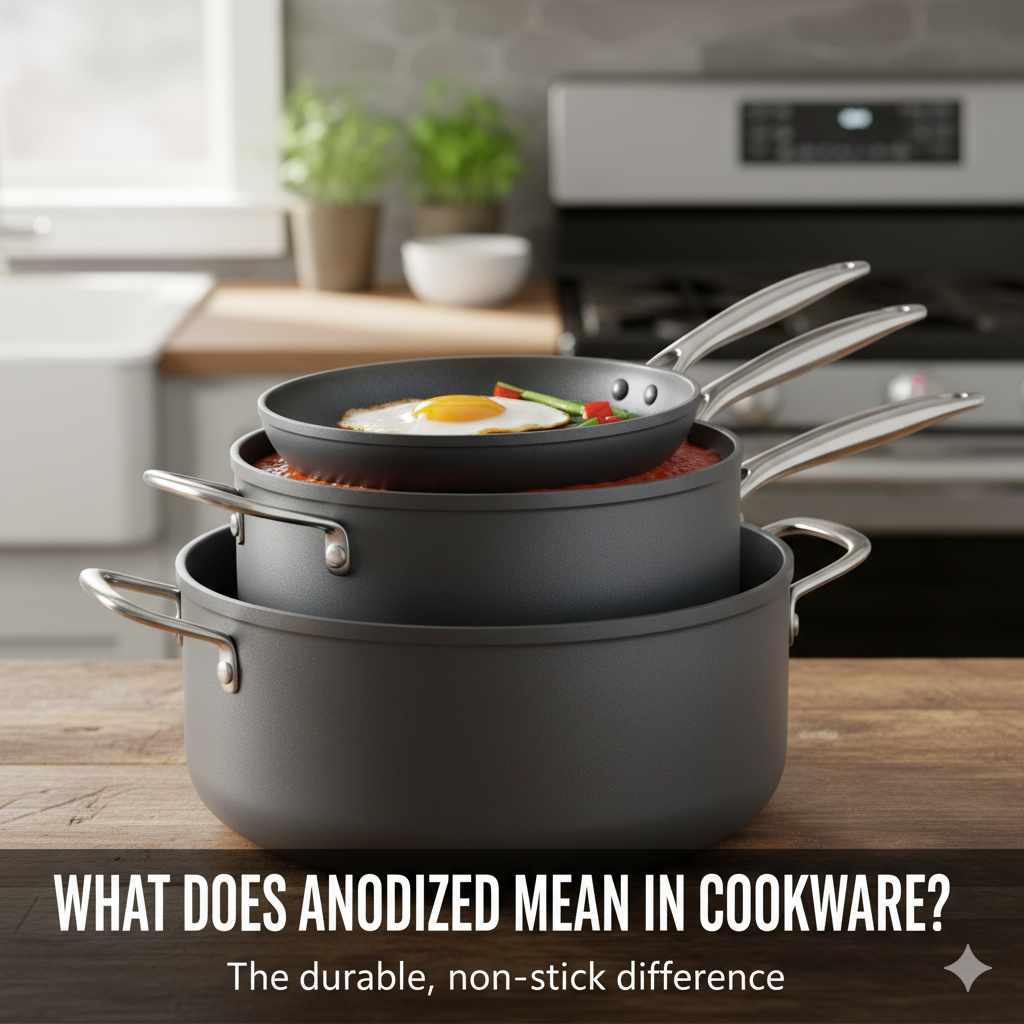
You’ve stared at the cookware aisle, reading boxes that all claim to be the toughest thing since forged steel. One term keeps popping up: hard anodized. It sounds technical, maybe a little intimidating. Most people assume it’s just another nonstick coating name, like Teflon or ceramic. That assumption is wrong, and it’s costing people money on pans that don’t perform.
This guide breaks down what hard anodized cookware actually is, how it’s made, and whether it deserves the premium price tag. You’ll learn the electrochemical process that transforms soft aluminum into a surface harder than steel, how it compares to stainless steel and cast iron for specific tasks, and exactly what to check before buying so you don’t end up with a cheap aluminum pan wearing a fancy label.

T-Fal
T-Fal Ultimate Hard Anodized Nonstick Pots and…
- Durable Construction: The hard anodized exterior and forged design of this hard anodized cookware set is built to stand the test o…
- Our Pots and Pans Set Non Stick Includes: 1 quart 2 quart, and 3 quart covered saucepans, 8 and 10 inch frypan, 11.5 inch covered…
- Thermo-Spot Technology: Our frying pans nonstick set has a unique heat indicator that turns solid red when pans are properly prehe…
As an Amazon Associate I earn from qualifying purchases.
If you’re shopping for a complete set that puts this technology to work, the T-Fal Ultimate Hard Anodized 17-piece set covers most kitchen needs with a titanium nonstick coating and Thermo-Spot heat indicators. It’s a solid example of what mid-priced hard anodized cookware offers, though we’ll get into the details of what makes it good and where it falls short.
What Does “Hard Anodized” Actually Mean?
Hard anodized aluminum is not a coating. It’s a transformation of the aluminum itself. The process changes the metal’s surface at a molecular level, making it dramatically harder and more resistant to corrosion than the raw material.
The Electrochemical Process Explained Simply
Standard aluminum is soft. You can scratch it with a key. That softness makes it a fantastic heat conductor but a poor choice for a pan’s exterior. Hard anodizing fixes this through an electrochemical bath.
The pan is submerged in an acid electrolyte solution, then subjected to an electrical current. This forces oxygen to bond with the aluminum surface, creating a layer of aluminum oxide. This isn’t paint or a plating; it’s the same metal, chemically altered. The oxide layer grows into the aluminum, not just on top of it.
That layer is remarkably tough. Aluminum oxide ranks around 9 on the Mohs hardness scale. For reference, topaz is an 8, and diamond is a 10. It’s harder than most steels. The resulting surface resists scratching, warping, and corrosion far better than plain aluminum.
Here’s the critical distinction: the anodized layer is the pan’s body. The nonstick coating, if there is one, is applied on top of the anodized surface. Many people confuse the two. You can have hard anodized cookware with no nonstick coating at all, though most consumer sets include one.
Hard Anodized vs. Other Cookware Materials
The material comparison matters more than brand names. Each cookware type solves a different problem, and none of them are perfect for everything.
Hard Anodized vs. Stainless Steel
Stainless steel is the workhorse of professional kitchens. It sears beautifully, handles high heat, and goes in the dishwasher without complaint. But it’s a terrible heat conductor on its own, which is why quality stainless pans have an aluminum or copper core sandwiched between layers.
Hard anodized aluminum conducts heat better than that stainless sandwich. It heats faster and more evenly across the surface. The trade-off is durability. Stainless steel is nearly indestructible. You can abuse it with metal spatulas, high heat, and aggressive cleaning. Hard anodized will scratch if you use metal utensils on the nonstick surface, and the anodized exterior can dull over time.
For everyday cooking like eggs, sauces, and vegetables, hard anodized wins. For high-heat searing of steaks or deglazing a pan for pan sauce, stainless steel is the better tool. They complement each other in a well-rounded kitchen.
Hard Anodized vs. Traditional Nonstick
This is where the marketing gets muddy. Traditional nonstick pans are typically thin aluminum with a PTFE (polytetrafluoroethylene) coating sprayed on top. The aluminum base is cheap and prone to warping. The coating scratches easily and degrades at high temperatures.
Hard anodized pans use a thicker, denser aluminum base that resists warping and distributes heat more evenly. The nonstick coating applied to that base lasts longer because the underlying structure is more stable. You’re not just paying for the coating; you’re paying for the superior base metal.
Cheap nonstick pans might last a year with regular use. A decent hard anodized pan should last five years or more if you treat it right. That’s the real value proposition. The coating will eventually wear out, but the pan body itself will still be flat and functional.
The Real Pros and Cons (Beyond the Marketing)
Hard anodized cookware has genuine strengths, but it’s not magic. Here’s the honest breakdown of what you get.
Performance Pros: Heat, Durability, and Safety
Heat conductivity is the biggest reason to choose hard anodized. Aluminum is one of the best conductors of heat available, and the anodizing process doesn’t change that property. Your pan heats quickly and evenly, eliminating hot spots that burn food in one corner while the other stays raw.
The hardened surface is also resistant to pitting and corrosion. Acidic foods like tomatoes or vinegar won’t react with the anodized surface, which is a problem with bare aluminum. That makes it safe for simmering tomato sauce all afternoon.
The anodizing process itself is also a health plus. It seals the aluminum, preventing it from leaching into your food. This is a real concern with uncoated aluminum cookware, especially when cooking acidic dishes. The oxide layer acts as a barrier.
Practical Cons: Weight, Care, and Cost
Hard anodized pans are heavy. The thick aluminum base that gives them their durability also adds pounds. If you have wrist issues, you’ll feel it when lifting a filled dutch oven. The T-Fal set mentioned earlier is manageable, but it’s not light.
You also have to be careful with the nonstick coating. Most hard anodized sets use a PTFE-based coating, which means no metal utensils and no high-heat searing. The coating can release toxic fumes if heated above 500°F, though this is rare in normal cooking. The pan’s body is oven safe to 400°F, but the coating limits what you can do.
Cost is another factor. A quality hard anodized set runs $150 to $400. You can buy a comparable stainless steel set for less, and it will last forever. The hard anodized set will need replacement when the coating wears out.
How to Choose a Quality Hard Anodized Pan
Not all hard anodized cookware is created equal. The term is used loosely, and some budget brands cut corners.
What to Look For in Construction and Thickness
The most important factor is the gauge of the aluminum base. Quality hard anodized pans use a thick base, typically 3 to 4 millimeters at the bottom. Cheaper pans might use 2 millimeters or less. A thinner pan heats unevenly and warps more easily.
Check the weight. A genuinely heavy pan is a good sign. If it feels flimsy, it probably is. Look for a pan that has some heft when you lift it empty.
Also look at the rim. A quality pan will have a rolled or sealed rim where the aluminum is finished. Bare, sharp aluminum edges indicate a cheaper manufacturing process. The rim is often the first place corrosion starts if it’s not properly sealed.
Finally, check the base for induction compatibility. Hard anodized aluminum is not magnetic, so it won’t work on induction cooktops unless the manufacturer adds a stainless steel plate to the bottom. The T-Fal set is explicitly not induction compatible, which is a limitation for some kitchens.
For a deeper comparison of how this material stacks up against stainless steel, this material comparison guide covers the trade-offs in more detail.
Care and Maintenance to Extend Lifespan
Your hard anodized pan will last years if you follow a few basic rules. Ignore them, and you’ll be shopping for a new set in eighteen months.
Cleaning, Utensils, and Induction Compatibility
Hand washing is the single best thing you can do. Most hard anodized sets claim to be dishwasher safe, but the harsh detergents and high heat of a dishwasher will degrade the nonstick coating faster. A quick wash with warm soapy water and a soft sponge takes two minutes. Your pans will thank you.
Use wooden, silicone, or plastic utensils. Metal utensils will scratch the nonstick surface, even on a hard anodized base. The scratches don’t just look bad; they create spots where food sticks and where the coating can peel.
Don’t preheat an empty pan on high heat. The nonstick coating can break down when heated above 500°F, releasing fumes that are toxic to birds and unpleasant for humans. Heat the pan on medium, add oil or butter, then increase the heat if needed.
Seasoning the pan isn’t necessary, but it helps. After cleaning, rub a thin layer of cooking oil over the nonstick surface and wipe it dry. This fills microscopic pores and maintains the slick surface over time. It’s a trick most people don’t know, and it significantly extends the coating’s life.
If you’re weighing this material against ceramic alternatives, this ceramic comparison article explains the key differences in coating durability and heat tolerance.
Frequently Asked Questions
Is hard anodized cookware safe to use?
Yes. The anodizing process seals the aluminum, preventing it from leaching into food. This is actually safer than bare aluminum cookware. The main concern is the nonstick coating, which is typically PTFE-based. It’s safe at normal cooking temperatures below 500°F. Just don’t leave an empty pan on high heat.
Can hard anodized pans go in the oven?
Most can, but the temperature limit varies by brand. The T-Fal set is oven safe to 400°F, and the lids to 350°F. Always check the manufacturer’s specifications. The handles are often the limiting factor, especially if they’re made of silicone or plastic.
Why is my hard anodized pan sticking?
Either the nonstick coating is worn out, or you’re not using enough oil or butter. Even a new pan needs some fat for foods like eggs. If the coating is damaged, you’ll see scratches or flaking. At that point, it’s time to replace the pan. The hard anodized body will last, but the coating won’t.
Does hard anodized cookware work on induction cooktops?
Only if the manufacturer adds a magnetic stainless steel base. Hard anodized aluminum itself is not magnetic. The T-Fal set is not induction compatible. If you have an induction cooktop, look for sets that explicitly state induction compatibility in the specs.
How long does hard anodized cookware last?
With proper hand washing and utensil care, expect five to seven years of regular use. The nonstick coating will wear out before the pan body. Some people get a decade or more by being careful. Compare that to cheap nonstick pans that last a year or two.
Bottom Line: Is It Worth the Investment?
Hard anodized cookware occupies a sweet spot in the market. It’s better than cheap nonstick, easier to maintain than cast iron, and more practical than stainless steel for everyday cooking. It’s not the best at any single task, but it’s very good at most of them.
- Hard anodized is a transformation of aluminum, not a coating. The oxide layer is harder than steel.
- It heats more evenly than stainless steel and won’t warp like thin aluminum pans.
- The nonstick coating is the weak point. It will wear out eventually, so treat it well.
- Hand washing and silicone utensils will double the lifespan of the pan.
- Check the base thickness and weight before buying. Heavy is good.
- If you have an induction cooktop, verify compatibility before purchasing.
- For a complete set that demonstrates the technology, the T-Fal Ultimate set is a reasonable starting point, but check the current price and reviews on Amazon.
Buy the best hard anodized set you can afford, take care of it, and it will serve you well for years. Just don’t fall for the hype that it’s indestructible. It’s a great material, but it has limits.