How to Hang a Canopy Over a Bed Without Drilling
Use a no-drill canopy method that fits your ceiling: adhesive hooks for smooth painted surfaces and light voile, a tension rod if walls sit opposite each other, or a freestanding frame for heavier fabric or strict rentals. The wrong hardware can drop, peel paint, or leave marks that cost your deposit. This guide shows how to choose the safest option by ceiling type, fabric weight, and rental rules, then install it cleanly.
What you’ll need

- Adhesive hooks or Command-style adhesive strips with a printed weight rating
- Tape measure
- Pencil for temporary ceiling marks
- Lightweight curtain fabric, or a canopy panel with a rod tunnel
- Curtain rod or curtain dowel, if the fabric is made for one
- String or twine for a lighter suspension option
- Clean, dry cloth
- Mild cleaner that leaves no residue
Canopy hook matrix
| Ceiling type | Fabric weight | Rental limit | Best no-drill method |
|---|---|---|---|
| Smooth painted ceiling | Lightweight voile or sheer panel | Strict no-damage lease | Adhesive hooks with strips |
| Smooth painted ceiling | Light to medium fabric | Normal rental rules | Adhesive hooks with a short rod or dowel |
| Recently painted ceiling | Any adhesive setup | Lease allows waiting time | Wait for paint cure time before mounting |
| Lightly textured ceiling | Very light fabric only | Temporary install | Test adhesive first; switch plans if bond is weak |
| Popcorn ceiling | Any canopy fabric | Any rental limit | Skip adhesive hooks; use a different layout |
| Walls opposite each other | Fabric with rod tunnel | Temporary or semi-permanent | Tension rod or stick-on rod system |
| Heavy curtain panel | Medium to heavier fabric | More stable install needed | Freestanding frame or non-adhesive support |
How do you choose the right no-drill method?
Start with the ceiling, then match the mount to the fabric weight. Smooth, dry ceilings can handle adhesive hooks or Command-style strips; textured or popcorn ceilings usually cannot. If the fabric weighs more than a light voile panel, it is usually safer to move up to a rod or dowel, or switch to a wall-supported or freestanding setup.
Use lightweight fabric for adhesive setups
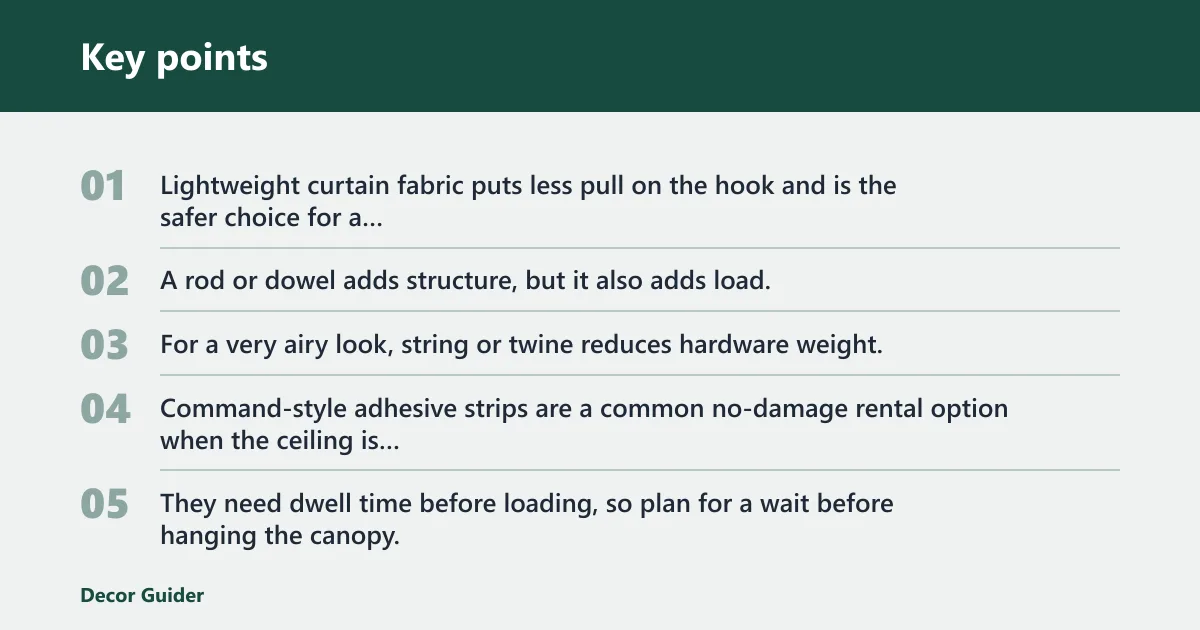
Lightweight curtain fabric puts less pull on the hook and is the safer choice for a canopy that hangs from the ceiling. A rod or dowel adds structure, but it also adds load, so the mount and the fabric need to stay in balance. For a very airy look, string or twine reduces hardware weight, though it gives less support than a rod.
Choose strips for removable rental installs
Command-style adhesive strips are a common no-damage rental option when the ceiling is smooth and the landlord allows temporary hardware. They need dwell time before loading, so plan for a wait before hanging the canopy. They are a poor match for textured or popcorn ceilings, where the adhesive can sit on high points instead of bonding evenly.
Skip adhesive on popcorn ceilings
Popcorn ceilings may not work with adhesive hooks. The texture cuts down on contact area, which raises the chance of peel or slip. If the ceiling is popcorn, use a tension rod between walls, a freestanding frame, or a different canopy layout that does not rely on ceiling adhesive.
Wait after painting before mounting hardware
Recent paint needs extra curing time before adhesive hooks are used. A common rule of thumb is seven days for many paint jobs, but the real wait depends on the paint and the room conditions. If the surface still feels soft, tacky, or smells strong, do not load the hooks yet.
How do you hang the canopy without drilling?
Mark the ceiling above each bed corner, clean the contact points, and mount the hooks with the openings facing away from the bed. Then let the adhesive set before loading it. The cleanest canopy geometry comes from placing the attachment points directly over the mattress corners, not close to the bed frame rails.
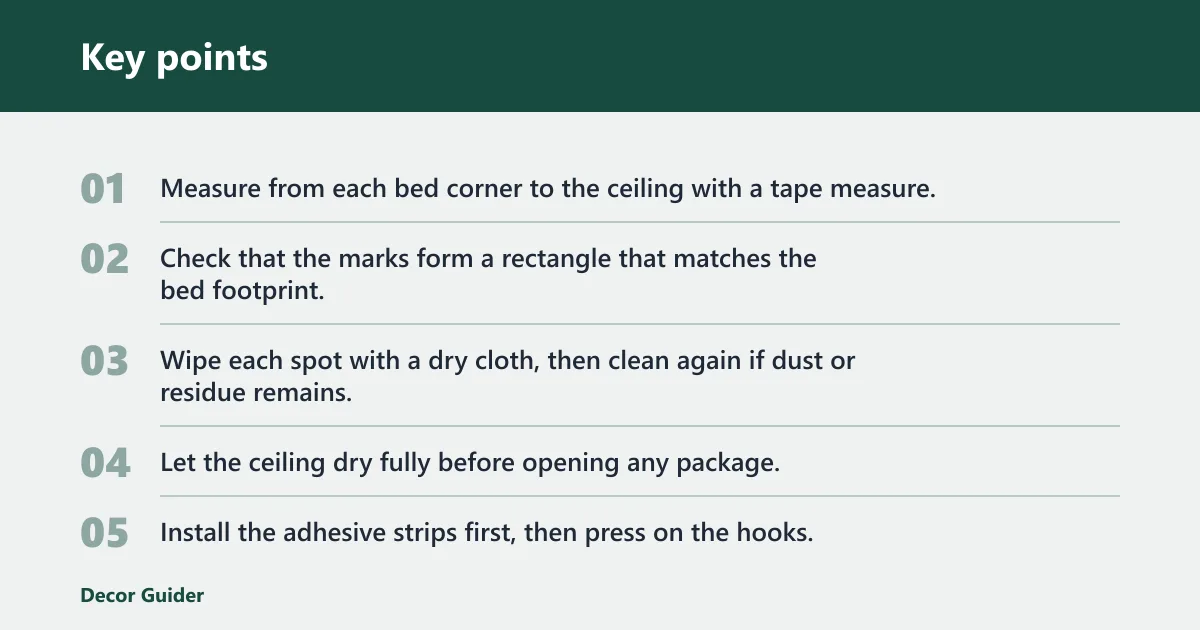
- Measure from each bed corner to the ceiling with a tape measure, then mark the four points with a pencil.
- Check that the marks form a rectangle that matches the bed footprint, not the headboard alone.
- Wipe each spot with a dry cloth, then clean again if dust or residue remains.
- Let the ceiling dry fully before opening any package.
- Install the adhesive strips first, then press on the hooks.
- Turn each hook so the opening faces away from the bed.
- Wait one hour before hanging anything on the hooks. (Wikihow)
- Thread the curtain rod, dowel, string, or twine through the canopy fabric and suspend it from the hooks.
Picture a queen bed in a studio rental with a smooth ceiling and a sheer canopy panel. If the hooks sit about 4 inches off the corner marks, the fabric may pull diagonally and can look uneven. Re-centering the hooks over the marked corners usually fixes the drape before the canopy ever goes up.
How to choose between rod, dowel, string, or twine
A curtain rod or curtain dowel works best when the canopy has a rod tunnel and you want a straighter line across the top. String or twine is lighter and easier to hide, but it supports less structure and can sag more if the fabric is wide. Use the lightest support that still keeps the drape even.
What if your ceiling is popcorn or freshly painted?
Textured ceilings and uncured paint are the two biggest failure points for no-drill canopy hardware. If adhesion is weak, do not keep adding more hooks to the same surface. Move to a different layout before the fabric starts pulling the mount loose or leaves marks on the ceiling.
Check for textured surface failure risk
Run a hand near, not on, the planned mounting area and look for raised texture, flaking paint, or soft spots. If the surface is uneven, adhesive hooks are a poor fit. A tension rod between opposing walls, a stick-on rod system on smoother trim, or a freestanding canopy frame is safer.
Use the paint cure time before hanging
If the ceiling was painted recently, wait until the paint has cured before adding adhesive hardware. A fresh finish can release with the adhesive or deform under load. If the room must be finished sooner, use a non-adhesive option that does not depend on ceiling contact.
If that didn’t work, try this next
Suppose the ceiling is lightly textured and the first strip peels within minutes. Remove it, clean the spot again, and shift to a less exposed area only if the ceiling is still smooth enough for contact. If the surface remains unreliable, stop using adhesive and change the support method rather than doubling the load.
Common mistakes
Most canopy problems come from load, spacing, or surface prep. Fix those first, and the layout usually settles into place.
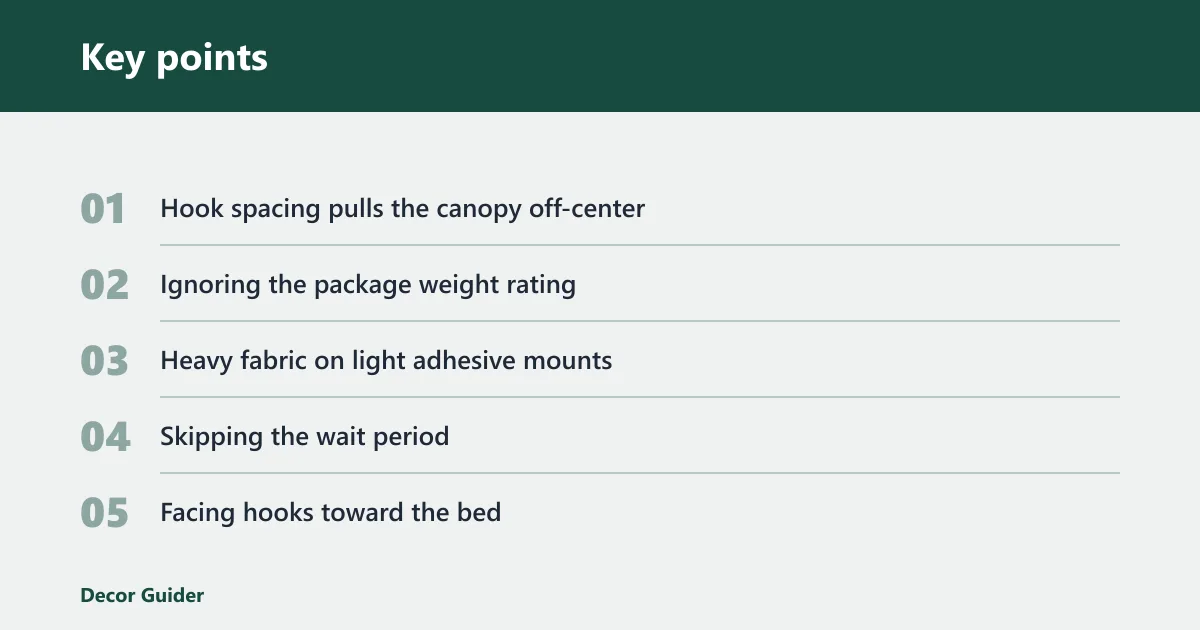
- Hook spacing pulls the canopy off-center: Recheck the tape-measure marks above each corner before sticking anything up.
- Ignoring the package weight rating: Use only hooks whose printed rating fits the fabric, rod, and any added ties.
- Heavy fabric on light adhesive mounts: Move to a lighter panel or a stronger support system if the canopy feels strained.
- Skipping the wait period: Let the adhesive set before loading the hooks, then check for creep after the first hour.
- Facing hooks toward the bed: Turn the opening away from the bed so the fabric does not lift out of the hook.
- Using string where a rod is needed: String and twine suit lighter drape only; use a rod or dowel when the fabric needs a firmer line.
Temporary versus semi-permanent rentals
A temporary setup uses the lightest possible fabric, adhesive hooks, and a layout you can remove without repair work. A semi-permanent setup can use a rod or dowel with higher-rated adhesive hardware, but only on a smooth ceiling that is fully cured and clean. The more structure you add, the more you need a reliable surface.
Say your rental allows removable hardware, but the canopy is a heavier woven panel. The safer move is to shorten the span, switch to a lighter fabric, or choose a support that does not depend on ceiling adhesive. That keeps the drape tidy without asking a small hook to do a big job.
Frequently asked questions
What can I use to hang a canopy over a bed without drilling holes?
Adhesive hooks, Command-style strips, a tension rod, stick-on rods, or a freestanding frame can all work, but only in the right setting. Smooth ceilings suit adhesive options; opposite walls suit tension rods; heavier fabric needs a more stable support than lightweight hook-and-strip setups.
Will adhesive hooks hold a canopy over a bed?
They can, if the ceiling is smooth, dry, and fully cured, and if the fabric is light enough for the hook rating printed on the package. They are a poor choice for popcorn ceilings, heavy panels, or any layout that puts sharp diagonal pull on the mount.
Can you hang canopy curtains from the ceiling without drilling?
Yes, but the surface matters more than the style. Smooth painted ceilings work best with adhesive hooks and lightweight fabric; popcorn ceilings usually do not. For a true ceiling canopy, place the hardware above each bed corner so the drape hangs evenly instead of drifting toward one side.
How do you make a canopy bed look good in a rental?
Choose sheer or lightweight fabric, keep the attachment points square with the bed, and avoid oversized hardware that shows above the canopy line. A clean rectangular layout with even drape looks intentional. If the ceiling cannot support adhesive, a tension rod or freestanding frame will look tidier than a compromised hook setup.
What if my ceiling is popcorn and I can’t use adhesive hooks?
Skip adhesive and switch to a non-ceiling option. A tension rod between walls, a stick-on rod on a smoother surface, or a freestanding frame will be more reliable than trying to make hooks grip texture. If the rental rules are strict, use the lightest structure that still keeps the canopy shape.
How long should I wait before hanging canopy hooks after painting?
Wait until the paint has cured before loading adhesive hardware. A common benchmark is seven days, but newly painted ceilings should only be used once the finish feels hard and no longer tacky. If the paint is still soft, postpone the install or choose a non-adhesive support.
Products related to this article
Sponsored / affiliate links. As an Amazon Associate I earn from qualifying purchases. I may earn additional commission from eligible campaigns.