How To Clean Tea Kettle: Quickly And Easily
Cleaning your tea kettle might seem tricky, especially if you’re new to it. Mineral buildup, often called limescale, can make your kettle look messy and affect how well it works. People often wonder how to get it sparkling clean without a lot of fuss.
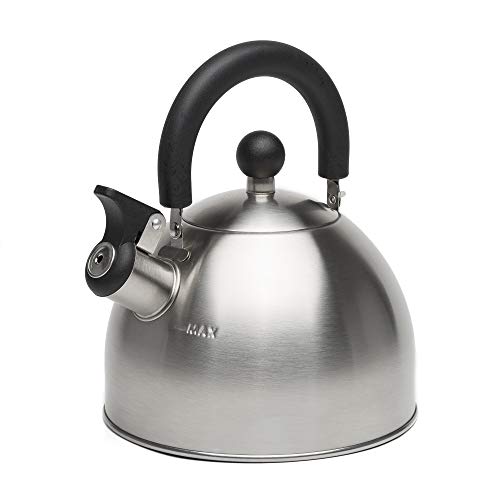
Primula
Primula Stewart Whistling Tea Kettle for Stovetop,…
- PREMIUM STAINLESS STEEL TEA KETTLE: Crafted from durable stainless steel, the Stewart stovetop kettle delivers long-lasting perfor…
- FAST-BOILING PERFORMANCE: Heats water rapidly for tea, coffee, or cocoa. The whistling spout clearly signals when boiling, helping…
- EASY POUR SPOUT: Flip-up whistling spout allows smooth, controlled pouring and effortless one-hand operation. Perfect for everyday…
As an Amazon Associate I earn from qualifying purchases.
You might be surprised how simple it can be to tackle this common kitchen chore. This guide will walk you through easy steps to get your kettle looking like new again, so you can enjoy your hot drinks without any worries. We’ll show you exactly what to do next.
Understanding Tea Kettle Scale Buildup
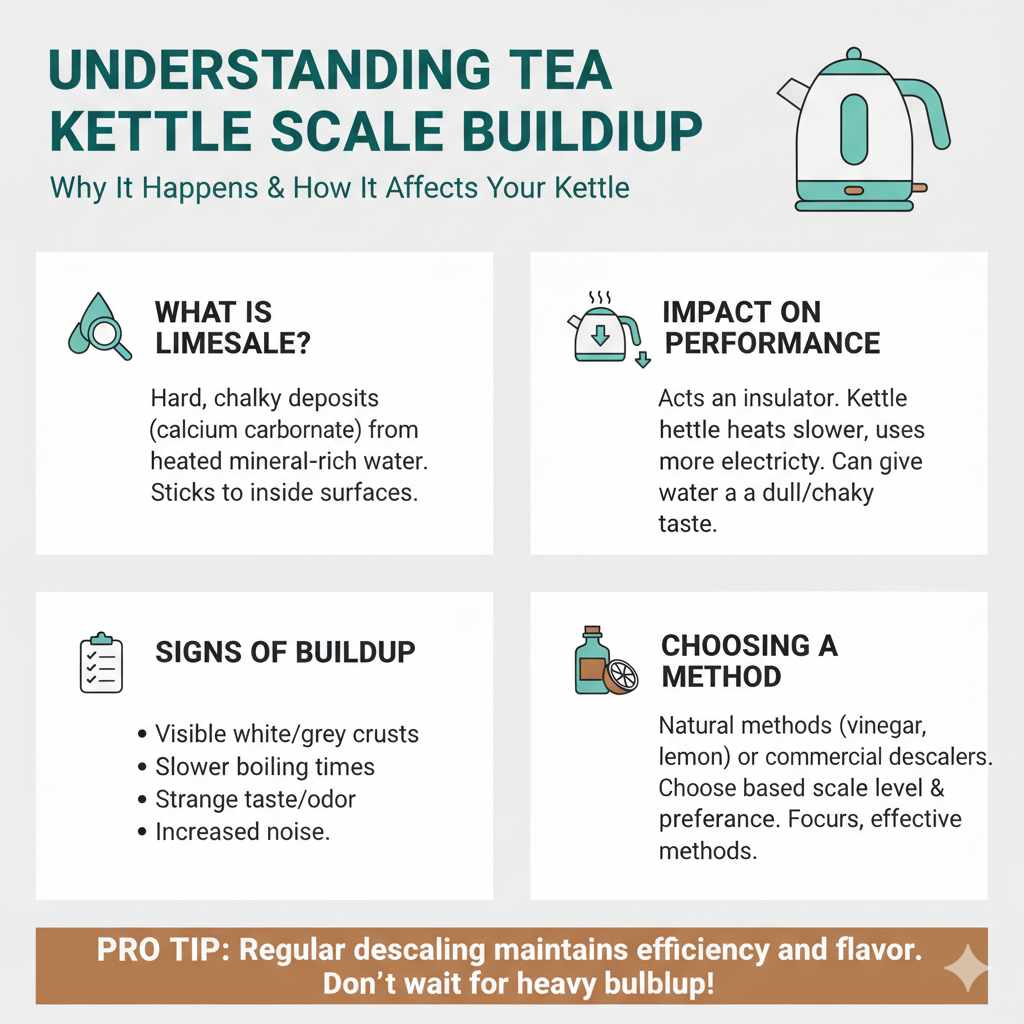
Mineral deposits are a common problem for tea kettles. Water, especially hard water, contains dissolved minerals like calcium and magnesium. When you heat water in your kettle, these minerals are left behind and build up on the inside surfaces.
This buildup, known as scale or limescale, looks like white, chalky crusts. It can make your kettle less efficient by insulating the heating element, meaning it takes longer to boil water. Over time, it can also affect the taste of your tea.
This section explores why this happens and what it means for your kettle.
What is Limescale and Why Does It Form
Limescale is a hard, chalky deposit made up mostly of calcium carbonate. It forms when water with high mineral content is heated. As the water gets hot, the dissolved calcium and magnesium compounds precipitate out of the water and stick to the surfaces inside the kettle.
The hotter the water gets and the longer it sits, the more scale can form. This is why kettles, especially those used daily, are prone to scale buildup. Even if you use filtered water, some minerals will always be present.
Think of it like leaving a trace behind. Every time you boil water, a tiny bit of those minerals stays. Over many boils, these tiny traces add up to a visible layer.
This layer isn’t just ugly; it’s a sign your kettle isn’t working as efficiently as it could be.
Impact of Scale on Kettle Performance
Scale buildup directly affects your kettle’s performance. It acts as an insulator. This means the heating element has to work harder and longer to heat the water.
This uses more electricity and slows down your boiling time. If you’re in a hurry for your morning coffee or evening tea, a scaled kettle is a real nuisance. Imagine trying to heat a pot of water with a blanket wrapped around it – that’s kind of what scale does.
Beyond efficiency, scale can also impact the taste of your beverages. It can give water a dull, metallic, or even chalky flavor. This can ruin the taste of your favorite tea or coffee.
It’s like using a dirty cup for your drink; the cup itself affects the flavor.
Here are some common signs of scale buildup:
- Visible white or grey crusty deposits on the bottom and sides of the kettle.
- Slower boiling times than usual.
- Strange taste or odor in the boiled water.
- The kettle may make more noise when boiling.
Recognizing these signs means it’s time for a good descaling.
Choosing the Right Descaling Method
There are several ways to descale your tea kettle, and the best method often depends on how much scale you have and what you have on hand. Some people prefer natural methods using common household items, while others might opt for commercial descalers. Both can be very effective.
The key is to choose something that will break down the mineral deposits without damaging your kettle.
We’ll focus on simple, effective methods that are safe for most kettles. You don’t need fancy chemicals or special tools. The goal is to make this process easy and quick.
How to Clean Inside a Tea Kettle (Descale Fast) Using Natural Methods
When you need to descale your kettle quickly, natural ingredients are often the best choice. They are safe, readily available, and work surprisingly well on stubborn mineral deposits. These methods rely on the gentle acidity of common foods to break down the scale.
You likely have everything you need in your kitchen right now. This approach is great for regular maintenance and for tackling moderate scale buildup.
Vinegar Method for Descaling
White vinegar is a superstar for cleaning because of its acetic acid content. This acid is excellent at dissolving mineral deposits like limescale. It’s a safe and effective way to get your kettle sparkling again.
Here’s how to use it:
- Mix equal parts white vinegar and water in your kettle. For a standard kettle, this might be about 1 cup of vinegar and 1 cup of water.
- Fill the kettle enough to cover the scaled areas. If the scale is mostly at the bottom, you don’t need to fill it to the top.
- Let the mixture sit in the kettle for at least 30 minutes to an hour. For tougher scale, you can let it sit longer, or even overnight.
- After soaking, pour out the vinegar-water solution. You should see that the scale has softened or started to break away.
- Gently scrub any remaining stubborn spots with a soft brush or sponge. Avoid using abrasive scrubbers that could scratch the kettle’s interior.
- Fill the kettle with fresh water, boil it, and then pour it out. Repeat this fresh water boil-and-discard step 1-2 more times to remove any lingering vinegar smell or taste.
This method is very effective for most types of kettles, including stainless steel and glass. It’s also very budget-friendly.
Vinegar’s Cleaning Power Explained
The acetic acid in white vinegar is the key player here. Acetic acid (CH₃COOH) is a weak organic acid. When it comes into contact with calcium carbonate (CaCO₃), the main component of limescale, a chemical reaction occurs.
This reaction produces calcium acetate (Ca(CH₃COO)₂), water (H₂O), and carbon dioxide gas (CO₂). The calcium acetate is soluble in water, meaning it dissolves. The carbon dioxide gas helps to lift the loosened scale from the kettle’s surface, creating small bubbles.
The overall reaction can be simplified as:
CaCO₃ (s) + 2CH₃COOH (aq) → Ca(CH₃COO)₂ (aq) + H₂O (l) + CO₂ (g)
This chemical process effectively breaks down the hard, chalky scale into substances that can be easily rinsed away. The longer the vinegar solution sits, the more time the acid has to react with and dissolve the calcium carbonate.
Real-Life Example: Sarah’s Kettle Revival
Sarah had a stainless steel kettle that was coated with a thick layer of white scale. She tried scrubbing it, but it didn’t budge. She decided to try the vinegar method.
She mixed 1 cup of white vinegar with 1 cup of water and filled the kettle to cover the scale. She let it sit for two hours. When she poured out the mixture, she was amazed to see chunks of scale floating in it.
She used a soft sponge to wipe away the last bits and then boiled fresh water twice to remove the smell. Her kettle looked brand new again, and her tea tasted so much better.
Lemon Juice Method for a Fresh Scent
Lemon juice offers another natural and effective way to descale your kettle. Like vinegar, it contains citric acid, which is also great at breaking down mineral deposits. Plus, it leaves behind a pleasant, fresh citrus scent.
Here’s how to do it:
- Squeeze the juice of 1-2 fresh lemons into your kettle.
- Add enough water to cover the scaled areas. You can also add the squeezed lemon rinds to the water for extra cleaning power.
- Let the mixture sit for at least 30-60 minutes.
- Pour out the lemon mixture.
- Wipe away any loosened scale with a soft sponge.
- Boil fresh water in the kettle and discard it to rinse out any remaining lemon residue. Repeat if necessary.
This method is a bit gentler than vinegar and is a good option if you find the vinegar smell too strong.
The Chemistry of Citric Acid
Citric acid (C₆H₈O₇) is an organic acid found in citrus fruits. It’s a common food additive and a powerful cleaning agent. In the context of descaling, citric acid reacts with calcium carbonate in a similar way to acetic acid.
The acid breaks down the calcium carbonate, forming calcium citrate, water, and carbon dioxide.
The reaction looks something like this:
2C₆H₈O₇ (aq) + 3CaCO₃ (s) → 2Ca₃(C₆H₅O₇)₂ (aq) + 3H₂O (l) + 3CO₂ (g)
This reaction effectively loosens and dissolves the mineral buildup. The natural fruit acids make it an excellent choice for those who prefer natural cleaning solutions for their kitchen appliances. The scent it leaves is a welcome bonus.
Baking Soda for Gentle Scrubbing
Baking soda (sodium bicarbonate, NaHCO₃) isn’t as acidic as vinegar or lemon juice, but it’s a fantastic mild abrasive. It can help scrub away softened scale and also neutralize odors. It’s best used after an acidic soak or for lighter scale issues.
To use baking soda:
- Make a paste by mixing baking soda with a little water.
- Apply the paste to the scaled areas inside your kettle.
- Let it sit for about 15-30 minutes.
- Gently scrub with a soft sponge or cloth.
- Rinse thoroughly with clean water. You may want to boil and discard a kettle full of fresh water afterwards to ensure all residue is gone.
Baking soda is very safe for all kettle materials and is excellent for a quick refresh.
How to Clean Inside a Tea Kettle (Descale Fast) with Commercial Solutions
For very stubborn scale or when you need the fastest results, commercial descaling solutions can be highly effective. These products are specifically formulated to tackle mineral deposits quickly and efficiently. They often contain stronger acids or chelating agents designed to break down limescale rapidly.
When using these products, it’s crucial to follow the manufacturer’s instructions precisely to ensure safety and effectiveness.
Understanding Commercial Descalers
Commercial descalers are cleaning agents designed to remove mineral scale. They often contain acids like sulfamic acid, phosphoric acid, or citric acid, but in higher concentrations than you’d find in household items. Some may also contain surfactants to help lift away dissolved minerals.
These formulations are powerful and can work much faster than natural methods on heavy buildup.
Always check the label for compatibility with your kettle material. Most are safe for stainless steel, glass, and some plastics. However, it’s wise to test in an inconspicuous area if you’re unsure.
How Commercial Descalers Work
Commercial descalers leverage concentrated chemical reactions. For instance, sulfamic acid (H₃NSO₃) is a common ingredient. It reacts with calcium carbonate (CaCO₃) to form calcium sulfamate (Ca(SO₃NH₂)₂), water, and nitrogen gas.
This reaction is potent and quick.
The general reaction for sulfamic acid is:
2H₃NSO₃ (aq) + 3CaCO₃ (s) → Ca(SO₃NH₂)₂ (aq) + 3H₂O (l) + N₂ (g)
These cleaners are designed to dissolve the bonds that hold the mineral deposits to the kettle’s surface. The speed at which they work makes them ideal for those who need a quick solution to a heavily scaled kettle.
Step-by-Step Guide for Using Commercial Descalers
Always read and follow the specific instructions on the product packaging, as formulations can vary. However, a general guide for most liquid or powder descalers is as follows:
- Ensure your kettle is empty and unplugged.
- Measure the correct amount of descaler according to the product instructions. Typically, you’ll mix a small amount with water.
- Fill the kettle with the descaling solution, making sure it covers all scaled areas.
- Let the solution work for the recommended time, usually 10-30 minutes. Avoid leaving it longer than instructed, as it could potentially damage the kettle.
- Carefully pour out the used descaling solution.
- Rinse the kettle thoroughly with fresh, clean water.
- Boil a full kettle of fresh water and discard it. Repeat this boiling and discarding step 2-3 times to ensure all traces of the descaler are removed. This is vital for safety and to prevent any chemical taste in your beverages.
Never mix different cleaning products, and ensure good ventilation when using commercial descalers.
Sample Scenario: Quick Descale for Busy Mornings
Mark was running late for work and realized his electric kettle was taking ages to boil. He noticed a thick layer of scale at the bottom. He remembered he had a commercial descaler specifically for kettles.
He quickly mixed one packet with water as per the instructions, filled the kettle, and let it sit for 15 minutes while he got ready. He then poured out the solution, rinsed the kettle twice, and did one final boil with fresh water. By the time he was ready for his coffee, his kettle was sparkling clean and boiling water in record time.
Choosing the Right Commercial Product
When selecting a commercial descaler, look for products labeled specifically for kettles or coffee makers. Key considerations include:
- Effectiveness: Some products are designed for heavy-duty descaling, while others are for lighter, regular maintenance.
- Ingredients: Check if the active ingredients are suitable for your kettle material (e.g., citric acid based, or stronger acids).
- Safety Certifications: Look for products that meet safety standards and mention ease of rinsing.
- Brand Reputation: Trusted brands often offer reliable and well-tested products.
Using a product that is specifically designed for kettles ensures it will be effective and safe.
Preventing Future Scale Buildup
Once you’ve got your tea kettle looking shiny and new, you’ll want to keep it that way. Preventing scale buildup is much easier than removing it once it’s thick. Simple habits can make a big difference.
These tips focus on reducing the amount of minerals that end up in your kettle and keeping it clean between deep descales.
Regular Rinsing and Drying
The easiest way to prevent scale is to not let water sit in the kettle for long periods. After each use, empty the kettle completely. Then, give it a quick rinse with fresh water.
Drying the kettle after rinsing also helps. If you leave water to air dry, some mineral deposits can still be left behind. A quick wipe with a clean, dry cloth ensures that any residual moisture, and the minerals within it, are removed.
This simple step stops new scale from forming between uses.
- Empty Immediately: Don’t let boiled water sit in the kettle longer than necessary.
- Quick Rinse: A rinse with fresh water washes away loose mineral traces.
- Dry Thoroughly: Use a soft cloth to dry the interior. This is key to preventing new deposits.
This routine takes only a minute but can significantly reduce the rate of scale accumulation.
Using Filtered Water
If you live in an area with hard water, using filtered water can make a significant difference. Water filters remove many of the dissolved minerals that cause scale.
You can use a pitcher filter, a tap-mounted filter, or even a filter built into your refrigerator. While filtering water adds a small step to your routine, it can greatly extend the time between descaling sessions.
Data suggests that using softened or filtered water can reduce limescale buildup by up to 80%. Many households benefit from this simple change.
| Water Type | Mineral Content | Scale Formation Likelihood |
|---|---|---|
| Hard Tap Water | High | High |
| Filtered Tap Water | Medium to Low | Medium to Low |
| Distilled Water | Very Low | Very Low |
Choosing filtered water is a proactive step towards a cleaner kettle and better-tasting beverages.
Frequency of Descaling
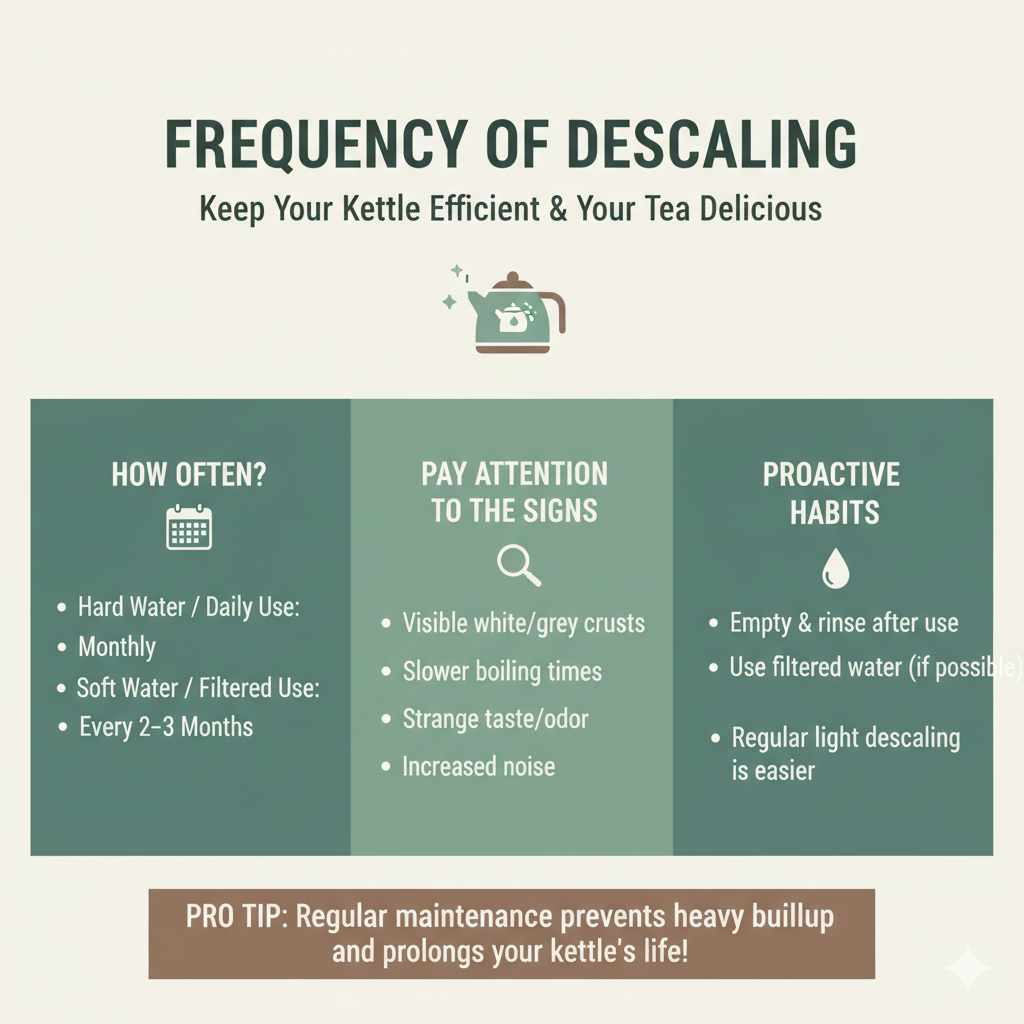
How often you need to descale depends on your water hardness and how often you use your kettle. If you have very hard water, you might need to descale monthly. If you have softer water or use filtered water, every 2-3 months might be sufficient.
Pay attention to the signs: if you notice slower boiling or visible scale, it’s time to descale. Regular light descaling is easier than dealing with a heavily scaled kettle.
Sample Scenario: Proactive Cleaning Habit
Maria lives in an area with notoriously hard water. She used to descale her kettle every few months and found it a chore. She decided to start emptying and rinsing her kettle after every use, and also switched to using filtered water from a pitcher.
Within six months, she noticed her kettle was still looking much cleaner, and the occasional white specks she used to see were gone. She ended up only needing to do a full descaling once a year, instead of every three months. This small change made a big difference in keeping her kettle in top shape.
Frequently Asked Questions
Question: How often should I descale my tea kettle?
Answer: The frequency of descaling depends on your water hardness and how often you use your kettle. If you have hard water, you might need to descale monthly. For softer water or if you use filtered water, every 2-3 months is usually sufficient.
Look for signs like slower boiling or visible scale.
Question: Can I use vinegar in an electric kettle?
Answer: Yes, you can use white vinegar in most electric kettles. Just be sure to follow the rinsing steps carefully afterward to remove any vinegar smell or taste. Always check your kettle’s manual for specific cleaning recommendations.
Question: What if the scale is very hard to remove?
Answer: For very stubborn scale, you might need to repeat the descaling process or use a commercial descaling product. Let the solution soak for a longer period (but follow product instructions) and gently scrub with a non-abrasive sponge.
Question: Is it safe to drink from a kettle that has been descaled?
Answer: Yes, it is safe, provided you rinse the kettle thoroughly afterward. It’s crucial to boil and discard fresh water at least 2-3 times after descaling to remove any residue from the cleaning solution.
Question: Can I use dish soap to clean my tea kettle?
Answer: Dish soap is good for cleaning the exterior of your kettle but is not effective for removing mineral scale from the interior. You need an acidic cleaner like vinegar or citric acid, or a specialized descaler.
Wrap Up
Keeping your tea kettle clean and free from scale is simple with the right approach. You’ve learned easy methods using common household items like vinegar and lemon juice, as well as effective commercial options for tough jobs. Remember to rinse and dry your kettle after each use, and consider using filtered water.
These habits will ensure your kettle works efficiently and your drinks taste their best. You can easily maintain a sparkling kettle.
Related pick: Check today's price on Amazon
Products related to this article
Sponsored / affiliate links. As an Amazon Associate I earn from qualifying purchases. I may earn additional commission from eligible campaigns.