How Much Is a Wooden TV Stand?
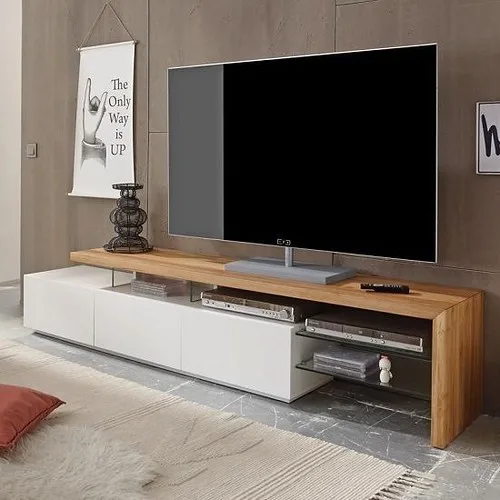
A wooden TV stand is often reported to cost about $120 to $600, with solid wood commonly running about $300 to $1,200+ and engineered wood starting around $80 to $250. Paying too little can mean weak joints, poor finish, and sagging under a large TV. This guide breaks down price by material, size, storage, and build quality so you can judge whether a listing is fairly priced.
What drives wooden TV stand prices?


Price shifts most with board type, width, storage layout, and how the frame is built. A plain engineered-wood console can sit near the low end, while a wide solid-wood unit with drawers, cabinets, and reinforced joinery moves into a much higher range. Brand, region, and delivery also change the final number.
Material type matters first
Solid wood costs more because the material itself is denser and the build often uses heavier joinery. Engineered wood is the lower-cost alternative, and it can be a smart buy if the board thickness and frame are sound. Hybrid wood-metal units sit between the two in both price and weight.
Wood stands are described as strong and long-lasting compared with metal, but that does not mean every wooden stand is automatically better value. Metal stands are generally lighter than wooden stands, so they can be easier to move in small apartments or renter-friendly layouts.
Wood species changes the look and the bill
Oak usually lands in a mid-to-high price band because buyers pay for durability and a familiar grain pattern. Walnut usually costs more, largely because of its deeper color and premium appearance. Sheesham wood often offers a strong value position because it has a distinctive grain and durable feel without always pricing like walnut.
Storage and hardware add cost fast
Open shelving usually costs the least because it uses fewer hinges, runners, and door panels. Drawers and closed cabinets raise the price because they add slides, hinges, doors, and more assembly steps. Cable cutouts, back panels, and device vents also add labor and material cost.
Brand, region, and delivery are not minor details
Local labor rates, transport distance, and warehouse markup can move the price meaningfully from one market to another. A unit listed online may look inexpensive until delivery and assembly are added. In local searches, including Kenya-related queries, the same stand can land in a different bracket depending on city, timber supply, and import exposure.
Wooden TV stand price breakdown
The table below gives practical price bands. It is a buying guide, not a fixed quote, because wood species, finish, hardware, and region can shift the final number. Use it to tell whether a listing is in the expected range or priced too high for its build.
| Category | Budget range | Mid-range | Higher range |
|---|---|---|---|
| Engineered wood | $80 to $250 | $180 to $350 | $300 to $450 |
| Solid wood | $300 to $500 | $450 to $900 | $900 to $1,200+ |
| Hybrid wood-metal | $120 to $300 | $250 to $600 | $500 to $900 |
| Small stand, under 47 inches wide | $80 to $220 | $180 to $350 | $300 to $500 |
| Mid-size stand, about 47 to 70 inches wide | $150 to $350 | $300 to $700 | $650 to $1,000 |
| Large stand, over 70 inches wide | $250 to $500 | $450 to $900 | $850 to $1,200+ |
| Open shelves only | $80 to $220 | $180 to $400 | $350 to $600 |
| Drawers | $150 to $300 | $250 to $600 | $500 to $900 |
| Closed cabinets | $180 to $350 | $300 to $700 | $650 to $1,100+ |
How much is a wooden TV stand by size?
Size affects price because a wider stand uses more material and needs more support. As a rule, the stand should be at least as wide as the TV base, and many buyers prefer a wider unit for better balance and a more finished look. Longer stands also raise flex risk if the frame is weak.
Small stands for compact rooms
Small stands usually cost less because they use less wood and fewer fittings. They suit compact rooms, secondary TVs, and renter-friendly setups where floor space is tight. The tradeoff is less storage and less visual weight under a large screen.
Mid-size stands for most TVs
Mid-size units cover the broadest price band because they fit many common TV sizes and room layouts. They are often the best starting point for buyers who want enough storage without paying for extra width they do not need. For many homes, this is the safest value zone.
Large stands for wider TVs and heavier gear
Large units cost more because they need a longer top, stronger leg placement, and more resistance to sag. They make sense for large living rooms and bigger TVs, especially if you also store game consoles, streaming boxes, and speakers. A weak large stand is a bad bargain.
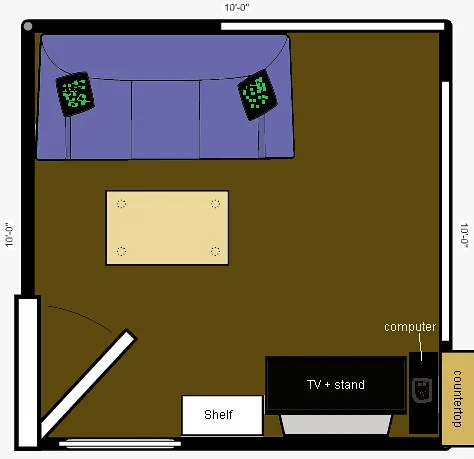
Say your TV is 65 inches wide in a 10-by-12-foot apartment. A console that is too long can crowd the room and feel bulky, while a mid-size stand with good storage may fit better and cost less. Width should solve the room first, not the shopping cart.
Which wood type changes the price most?
Wood species can shift the price almost as much as width. Oak, walnut, and sheesham wood all read differently in the market because buyers pay for appearance, durability, and supply. Solid wood usually costs more than engineered wood, but the final value depends on thickness, joinery, and finish quality.
Oak: durable and common
Oak usually sits in the middle to upper part of the solid-wood range. It is a common choice when buyers want a familiar grain and a sturdy feel without moving into walnut pricing. Expect oak to cost more than many engineered options and more than simple painted MDF-style units.
Walnut: premium look, higher cost
Walnut often commands the highest price among the three because of its color depth and appearance. It is a better fit when the TV stand is part storage piece, part display furniture. The premium is mostly about look and material positioning, not only function.
Sheesham wood: strong value for the look
Sheesham wood is often attractive to buyers who want visible grain and a durable build without jumping to walnut prices. It can sit in a value-friendly position when the joinery and finish are honest. The grain pattern often reads more distinctive than many plain engineered boards.
Solid wood versus engineered wood
Engineered wood is usually the better budget answer when you need a lower starting price. Its strength depends heavily on board thickness and frame support, so a thick top with a weak base can still fail early. If the listing hides those details, treat the price with caution.
Does storage layout change the cost?
Yes. Storage layout is one of the easiest ways to move a stand from budget to mid-range. Open shelves are cheapest, drawers cost more, and closed cabinets usually cost the most because each part adds material, hinges, runners, and assembly time. Cable access matters too.
Open shelves for easy device access
Open shelving keeps prices down and gives quick access to consoles, streamers, and routers. It also helps airflow around warm devices. The downside is visible clutter, so it works best if your gear is tidy and your cables are managed well.
Drawers for hidden storage
Drawers push the price up because they add moving hardware and tighter build tolerances. They are useful if you want remotes, discs, and small accessories out of sight. Weak drawer slides are one of the first failure points in cheaper units.
Closed cabinets for a cleaner look
Closed cabinets usually cost more than open shelves because doors and hinges add material and labor. They can hide media gear well, but they also need enough depth for ventilation and cable routing. Without that, the stand may look neat and still function badly.
A common first-timer mistake is buying a low-cost console with two closed doors and no rear cable cutouts. The result is a cramped cabinet where a router runs hot, wires bend awkwardly, and the buyer ends up drilling holes later.
Is a wooden TV stand worth more than metal?
Often, yes, but not always. Wood usually costs more when you compare similar sizes and storage because it uses more material and often ships heavier. Metal stands are generally lighter, and narrow or floating metal stands are recommended for smaller living rooms. For larger rooms, solid wooden TV stands with ample storage are recommended.
Where wood usually costs more
Wood tends to cost more when the design includes thick panels, visible grain, drawers, and a wide top. That higher price often buys more storage and a warmer look. It can also buy less visual clutter, especially in open-plan spaces.
When metal or hybrid frames make more sense
Metal or hybrid builds can be the better deal if you need light weight, a smaller footprint, or easier moving. Hybrid wood-metal units are useful when you want the look of wood but need a stronger frame under a long top. They are common in budget-conscious larger stands.
Do you need a middle support piece?
A TV stand doesn’t always need a middle wooden piece. The middle support helps prevent sagging and add stability, and that support becomes more important with larger TVs. If the stand is long, heavy, or lightly braced, center support is one of the first things to check.
When center support matters most
Longer stands and wider tops are the biggest candidates for sag. If the center is unsupported, the top can bow over time, especially under a large TV or heavy console stack. That problem is more common in thinner engineered boards and in very long console styles.
When reinforcement changes the need
A center support matters less in reinforced or metal-framed builds. A thicker top, stronger side panels, or a rigid frame can do some of the same work. The key is not the label on the stand, but whether the load path is supported across the full width.
What to check before you buy
- Look for the stated weight capacity, not just the style name.
- Check whether the center panel is decorative or structural.
- Inspect leg spacing and whether the middle has a brace.
- Prefer thicker tops for wider stands and heavier TVs.
- Avoid long units that wobble when pressed at the center.
Room fit and buying choices
Room layout changes the best price range because the right stand for a small apartment is not the same as the right stand for an open-plan living room. In tight spaces, a narrow footprint and lighter visual weight matter. In larger spaces, storage, width, and stability matter more.
Small apartments and renter-friendly setups
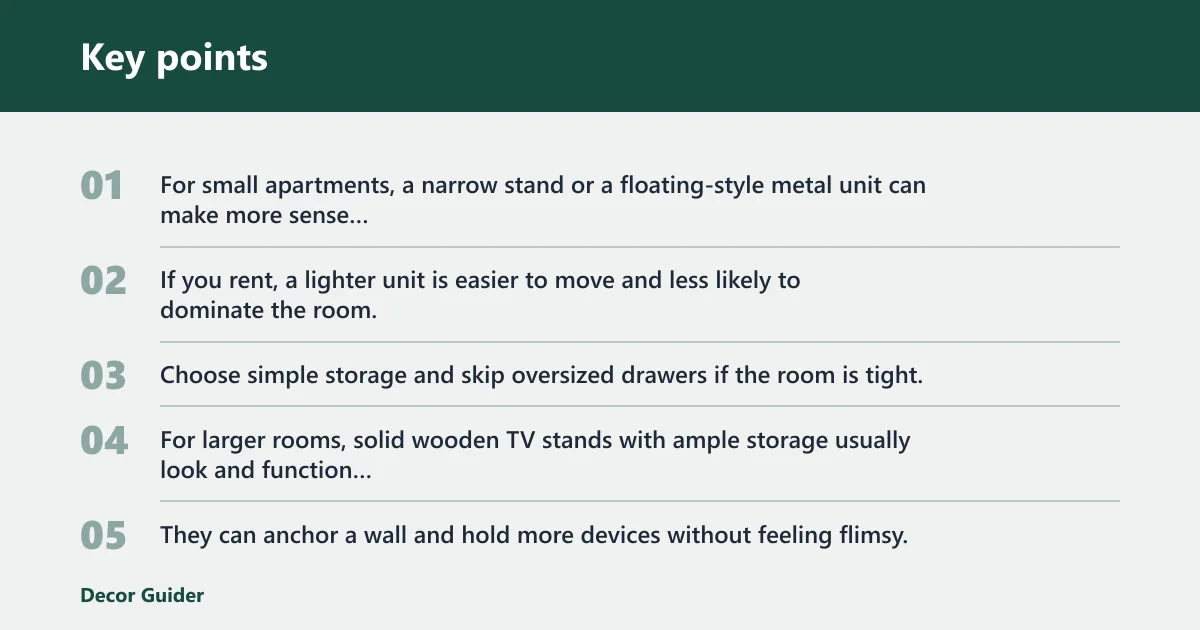
For small apartments, a narrow stand or a floating-style metal unit can make more sense than a heavy solid-wood console. If you rent, a lighter unit is easier to move and less likely to dominate the room. Choose simple storage and skip oversized drawers if the room is tight.
Large living rooms and open-plan spaces
For larger rooms, solid wooden TV stands with ample storage usually look and function better. They can anchor a wall and hold more devices without feeling flimsy. This is where the higher price often makes sense because the stand has to carry more visual and physical load.
Corner placement and wall clearance
Corner placement needs careful measurement because corners reduce usable depth. If the stand sits too close to the wall or blocks baseboards, cable access gets awkward fast. A stand that looks like a bargain online can become expensive if it forces a room layout change.
Finish choice affects cleaning and style
A painted finish can hide grain and create a cleaner, more uniform look. A natural wood finish usually shows grain and can feel warmer in the room. Cleaning is easier when the finish is smooth and well sealed, since dust and smudges wipe off more cleanly.
How much wooden tv checklist
Use this checklist when a listing looks tempting but the price feels uncertain. A fair price should match the material, size, storage, and support structure you are getting. If the stand looks expensive yet lacks those basics, it may be priced for style alone.
| Feature | Fair price signal | Overpriced warning sign |
|---|---|---|
| Engineered wood console | About $80 to $250 for a basic, well-braced unit | Prices near solid wood without thicker panels or better hardware |
| Solid wood build | About $300 to $1,200+ depending on species and size | Premium pricing with thin boards or weak joinery |
| Large wide top | More support, thicker top, or frame reinforcement | Long span with no center support and no brace |
| Drawers or cabinets | Higher price with solid slides, hinges, and aligned doors | Extra cost for flimsy hardware or poor alignment |
| Finish quality | Smooth edges, even coating, clean cutouts | Chipped edges, rough seams, and visible patching |
| Device storage | Ventilation and cable routing built in | No rear access, cluttered wiring, or cramped shelves |
At lower prices, watch for wobble, sagging, chipped edges, and weak hardware. Those are the failures that show up first. If a stand creaks when touched or bows under normal gear, the price is not a bargain.
Frequently asked questions
How much is a wooden TV stand?
A wooden TV stand usually costs $120 to $600, though the range stretches wider for solid wood, premium finishes, and larger sizes. Engineered wood starts lower, while oak, walnut, and sheesham wood move up depending on grain, thickness, and hardware. Delivery and region can also change the final price.
What affects the price of a wooden TV stand?
Material type, wood species, size, storage layout, finish, brand, and region do most of the work. A simple open-shelf unit costs less than a wide cabinet-style console with drawers and better hardware. Longer units also need stronger support, which adds to cost.
What size wooden TV stand do I need for my TV?
Choose a stand that is at least as wide as the TV base, and usually a little wider for balance. Larger TVs need stronger support and more stable framing. In small rooms, a shorter stand may fit better than a very wide one, even if the TV itself is large.
Should I choose a wooden TV stand with drawers or shelves?
Choose shelves if you want lower cost, easy access, and better airflow for devices. Choose drawers if you need to hide remotes, cables, and small items. Cabinets look cleaner but usually cost more and need good ventilation and cable routing.
Do wooden TV stands need a middle support piece?
Not always. The middle support helps prevent sagging and add stability, and it matters more with larger TVs or longer stands. If the unit has a thicker top, reinforced frame, or metal support, the middle piece may be less necessary.
How much is a wooden TV stand in Kenya?
Prices in Kenya vary by city, timber type, workmanship, and whether the stand is locally made or imported. A practical local search should compare similar sizes and finishes rather than one listing alone. Region, delivery, and custom work can shift the price more than many buyers expect.
Products related to this article
Sponsored / affiliate links. As an Amazon Associate I earn from qualifying purchases. I may earn additional commission from eligible campaigns.