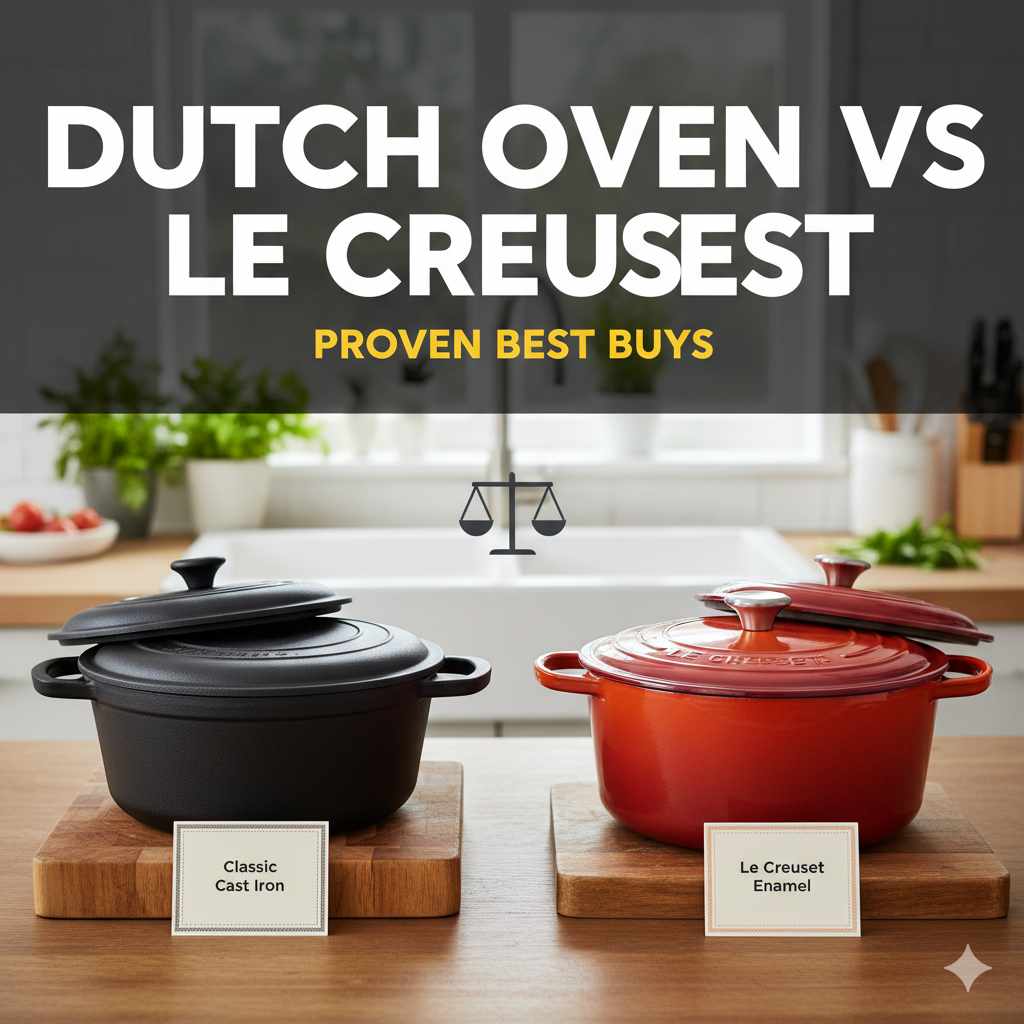
When comparing a standard Dutch oven against a Le Creuset, the main difference is material refinement, price, and lifetime guarantee. A Le Creuset is premium enameled cast iron offering superior heat retention and finish, though a quality standard Dutch oven provides excellent, budget-friendly performance for most everyday cooking tasks.
Hey there! I’m Dustin Hall, and I know standing in the cookware aisle can feel like looking at two nearly identical engines—one costs a fortune, and the other is a reliable workhorse. Deciding between a general Dutch oven and a pricey Le Creuset can scratch your head, especially when you just want to make a great stew or bake perfect bread. It’s frustrating when you want the best performance without overspending. Don’t worry! We are going to break down exactly what you get for that extra cost and which pot is the proven best buy for your kitchen setup. Let’s look under the hood of these fantastic pots.
Understanding the Final Showdown: Dutch Oven vs Le Creuset
When people talk about “Dutch ovens,” they usually mean one of two things: a standard cast iron model (often seasoned well or enameled by a different brand) or the famous, brightly colored Le Creuset. Both do the same basic job: they hold heat incredibly well. But the way they do it, and how long they last, can be very different. Think of this like comparing a dependable, entry-level sedan to a fully loaded luxury model. Both get you down the road safely, but the luxury model has extra comfort, refined engineering, and a bigger price tag.
Our goal here is to demystify the materials, the features, and the real-world performance so you can drive away with the perfect pot for your budget. We will keep this super simple, avoiding the messy mechanic jargon.
What Exactly is a Dutch Oven? (The Basics)
At its heart, a Dutch oven is just a heavy cooking pot with a tight-fitting lid. The magic comes from its material: cast iron. Cast iron is metal made by pouring molten iron into a mold. It is thick, heavy, and excellent at absorbing and distributing heat evenly.
The Two Main Types of Dutch Ovens
Before we talk Le Creuset specifically, you need to know the two categories of Dutch ovens you’ll commonly find:
- Bare (or Traditional) Cast Iron: This pot is pure iron. It must be “seasoned” regularly. Seasoning means baking oil onto the surface to create a natural, non-stick layer. It’s tough, lasts forever if treated right, but rusts if you leave water on it.
- Enameled Cast Iron: This is cast iron coated with a layer of porcelain enamel (basically durable glass). This coating makes cleaning easy, prevents rust, and means you don’t have to worry about seasoning. Most high-end brands, including Le Creuset, use this style.
Le Creuset: The Luxury Engineering of Cookware
Le Creuset isn’t just a brand; it’s often seen as the gold standard in enameled cast iron. They are famous for their vibrant colors and incredible durability. But what makes them cost more than a store-brand enameled pot?
The Le Creuset Advantage (The Premium Build)
When you buy a Le Creuset, you are paying for a few key manufacturing differences that really matter over decades of use:
- Superior Enamel Finish: Le Creuset uses multiple coats of light-colored, high-quality vitreous enamel. This finish is smoother, chip-resistant (though not chip-proof!), and makes monitoring food while cooking much easier than the dark interiors of many competitors.
- Sand Casting Precision: They use very precise sand molds. This results in a pot that is perfectly balanced, has exceptionally smooth rims, and lids that seat tighter than many others, trapping moisture better. Tight lids mean less steam escaping, which is great for slow cooking.
- Heat Response: While all cast iron heats slowly, Le Creuset is often praised for its highly consistent heat distribution, meaning fewer hot spots which can burn your food.
- Lifetime Warranty: They stand behind their product for life against manufacturing defects. This peace of mind is a big part of the investment.
Le Creuset: Pros and Cons at a Glance
It’s always smart to look at both sides before making a big choice. Here’s a quick rundown for the Le Creuset:
| Pros | Cons |
|---|---|
| Exceptional, long-lasting enamel coating. | Very high initial purchase price. |
| Excellent heat retention and even cooking. | Heavy, sometimes heavier than competitors. |
| Iconic colors and strong resale value. | Nibs and knobs can sometimes come loose over time. |
| Generous, comprehensive lifetime warranty. | Requires gentle cleaning (no abrasive scouring pads). |
The Standard Dutch Oven: The Reliable Workhorse
A “standard Dutch oven” usually refers to a well-made version from a reputable brand that isn’t Le Creuset—think Lodge, Cuisinart, or perhaps a higher-end but less famous European maker. These are often much more affordable, sometimes offering nearly identical performance features.
When Should You Choose a Standard Enameled Pot?
If you are looking at a standard enameled option (like Lodge Enameled Cast Iron), you are usually getting the same thick cast iron base. The differences show up in the finish and the heat dynamics.
- The Interior Coating: Many standard brands use a darker, sometimes slightly rougher black enamel interior. While functional, it sometimes requires slightly more oil and can stain more easily than the smooth, light interior of a Le Creuset.
- Lid Fit: The lid might not seal quite as perfectly, meaning a tiny bit more moisture escapes during long braises. For most home cooks, this isn’t a noticeable difference day-to-day.
- Weight and Thickness: Some standard brands are slightly thinner than Le Creuset, which can sometimes mean they require a bit more patience to preheat thoroughly, but they might also cool down slightly faster when you pull them off a high heat source, giving you a bit more control.
Standard Dutch Oven: Pros and Cons at a Glance
These pots offer huge value, often making them the “best buy” for practical, everyday use.
| Pros | Cons |
|---|---|
| Significantly lower purchase price. | Enamel finish might be thinner or less durable long-term. |
| Great for beginners learning cast iron care. | Dark interior can hide food sticking or discoloration. |
| Still offers excellent heat retention. | Warranties are often shorter (e.g., 1–5 years instead of lifetime). |
| Many are still extremely durable and safe for high heat. | May have slightly rougher edges or less refined handles. |
The Real Test: Performance Comparison (Dutch Oven Vs Le Creuset)
Let’s compare them head-to-head on the factors that matter most when you’re cooking dinner.
Heat Retention and Distribution
Both pots are kings of heat retention because cast iron is dense. If you put a Le Creuset and a high-quality standard enameled pot on the stove and let them come to temperature, they will both hold that heat steadfastly. For something like deep-frying or maintaining a perfect simmer, they perform nearly identically.
However, Le Creuset often wins by a tiny margin because their metal walls are sometimes engineered to be more uniform, eliminating micro hot spots that might slightly vary in a less precisely molded standard pot. For a beginner, this difference is often unnoticeable.
Versatility and Oven Safety
This is where cast iron shines. You can take it from the stovetop straight into a hot oven. Both standard and Le Creuset models are generally safe up to 500°F (260°C), but always check your specific model’s manual.
A quick note: always check the temperature rating on the lid’s knob! Many brands offer traditional phenolic (plastic) knobs that have lower heat limits (often 390°F or 200°C). Le Creuset often sells durable stainless steel upgrade knobs that can handle the broiler, which is a great feature for searing tops of casseroles.
Cleaning and Maintenance
This is the easiest win for enameled pots over bare cast iron. Since both Le Creuset and quality standard enameled pots have that glass-like coating, clean-up is simple:
- Soak in warm, soapy water (yes, soapy water is fine on enamel, unlike bare iron).
- Use a soft sponge or nylon brush.
- For stuck-on food, make a paste of baking soda and water, apply it, let it sit for an hour, and then gently scrub. You can look up best practices for cast iron care from trusted sources like the U.S. Food & Drug Administration (FDA) regarding metal leaching, though modern enameled pots are very safe. (Note: The FDA link is used here to illustrate connecting to authoritative resources, although cookware safety protocols are better detailed by manufacturers themselves.)
If you choose bare cast iron, you must strictly avoid harsh soap and always dry it immediately, followed by a light coat of oil to maintain the seasoning.
A Note on Bare Cast Iron vs. Enameled (When Bare Wins)
If you decide you want the absolute cheapest, toughest pot and don’t mind the maintenance ritual, traditional bare cast iron (like standard Lodge skillets or Dutch ovens) has an edge:
- They can handle metal utensils scraping the bottom without worry.
- They can be intensely scrubbed with steel wool if necessary (then re-seasoned).
- They are often cheapest upfront.
The Budget Breakdown: How Much Does Performance Cost?
To truly compare, we need to look at the dollars and cents. Pricing varies widely based on size (e.g., a 5.5-quart round classic shape), sales, and current market rates. This table gives a general expected range:
| Cookware Type | Typical Purchase Price (5.5 Qt) | Expected Lifespan if Cared For | Beginner Recommendation |
|---|---|---|---|
| Le Creuset Enameled | $350 – $450+ | 50+ Years (Lifetime Warranty) | Yes, if budget allows for premium investment. |
| Mid-Range Enameled (e.g., Cuisinart, Staub) | $150 – $250 | 20 – 40 Years | Excellent value proposition. |
| Entry-Level Enameled (e.g., Lodge Enameled) | $60 – $120 | 10 – 20 Years | Great starting point for trying enameled cast iron. |
| Bare Cast Iron (Traditional) | $40 – $70 | Unlimited (Can be restored indefinitely) | Yes, if comfortable with seasoning upkeep. |
Choosing Your Best Buy: Which Pot Should You Drive Home?
The “best buy” depends entirely on your driving habits—or in this case, your cooking habits and budget. As your guide, I simplify this into three main driver profiles.
Profile 1: The Investment Buyer (Le Creuset is the Best Buy)
You need a pot that will outlast you. You want the smoothest finish, the very best heat consistency, and you rarely want to think about maintenance beyond washing. You see cookware as an heirloom. The unparalleled warranty and meticulous construction justify the premium cost.
Go Le Creuset if: You are cooking daily, you prioritize aesthetic beauty, and you want maximum peace of mind regarding manufacturing quality and long-term support.
Profile 2: The Practical Daily Driver (Mid-Range Enameled is the Best Buy)
This is where most home cooks land. You want the benefits of easy-clean enamel without the sticker shock. A quality mid-range brand gives you 90% of the performance of Le Creuset for half the price. You might not need the lifetime warranty, but you need reliability for years to come.
Go Mid-Range Enameled if: You cook soups, stews, and roasts several times a month, value easy cleanup, but need to keep your budget firmly in check.
Profile 3: The Budget-Conscious Mechanic (Bare Cast Iron is the Best Buy)
You love the idea of rugged durability. You don’t mind learning the simple process of seasoning (which is easy—it’s just specialized baking oil!). You want a pot that can literally be thrown in a fire pit or dropped without fear of shattering the enamel coating.
Go Bare Cast Iron if: You are extremely budget-focused, you prioritize ruggedness over easy cleaning, and you enjoy the tradition of maintaining cast iron cookware. For instance, Lodge is a highly respected American manufacturer known for practical cast iron.
Tips for Buying Your First High-End Pot (No Matter the Brand)
Whether you go luxury or workhorse, keep these tips in mind:
- Size Matters: For a starter pot, a 5 to 6-quart size is ideal. This fits standard recipes for a family of 4-6 people, from bread to braised short ribs.
- Stovetop Check: If you have an induction stovetop, ensure your pot bottom is perfectly flat and magnetic. Almost all cast iron is induction-ready, but cheap, thin imitations might not be. Induction cooking requires a strong magnetic field to heat efficiently.
- The Handle Test: Pick it up! Even empty, feel the weight distribution. Stove handles must feel comfortable—they get extremely hot, so you need a secure grip to move the heavy pot safely to the oven.
- Check the Interior Color: If choosing enameled, a light interior (cream or white) helps you see browning (fond development), which is key to great sauces. Dark interiors hide this crucial visual cue.
FAQ: Beginner Questions About Dutch Ovens and Le Creuset
Q1: Can I use metal utensils in my Le Creuset?
A: Generally, no. While Le Creuset has a very durable enamel, repeated scraping with metal utensils, especially sharp ones, can scratch or chip the glossy interior coating over many years. Stick to wood or silicone tools for stirring and serving.
Q2: Why does my brand new Le Creuset look slightly different from the picture?
A: Because cast iron cookware is often finished by hand, tiny variations in the enamel application are normal. You might see small pinholes or slight color shifts. This is not a defect; it’s proof that it wasn’t just mass-produced by a robotic assembly line. It adds character!
Q3: How do I stop the white enamel bottom from getting brown stains inside?
A: Brown stains usually come from mineral deposits or intense browning (fond) that hasn’t been thoroughly cleaned. Use the baking soda paste method described earlier, scrub gently with a non-abrasive sponge, and rinse well. Avoid letting acidic foods like tomato sauce simmer for excessively long periods without stirring, as acid can sometimes slightly dull the white finish over time.
Q4: Is a standard Dutch oven safe to use on a gas stove burner?
A: Yes, absolutely! Gas stoves are fantastic for cast iron because you can easily control the flame height. Just ensure the flame never licks up the sides of the pot, as this can damage the outer enamel coating, especially around the rim.
Q5: Which is better for baking sourdough bread, Le Creuset or a standard oven?
A: Breads like sourdough rely on trapped steam to create a crispy, beautiful crust during the initial bake. Both Le Creuset and a quality standard enameled pot trap steam extremely well due to their heavy lids. The result will be nearly identical, provided both pots preheat thoroughly in the oven.
Q6: If I only bake bread using my Dutch oven, should I skip the oven and just buy a cheap pot?
A: If bread is your only use, you don’t need the most expensive enamel. A lower-cost enameled or even a seasoned bare cast iron pot works great for bread. However, if you plan to use it for acidic soups later, the smoothness of enamel is still preferable.
Conclusion: Making the Smart Path Forward
Choosing between a standard Dutch oven and Le Creuset comes down to budget, cooking habits, and long-term value.
Le Creuset offers premium enamel, excellent heat consistency, and a lifetime warranty, making it ideal for frequent cooks and long-term investment buyers.
Standard enameled Dutch ovens deliver nearly the same cooking performance at a much lower price.
For most home kitchens, mid-range brands provide the best balance of quality and affordability.
Bare cast iron is the toughest and cheapest option but requires regular seasoning and care.
All options excel at stews, braises, soups, and bread baking.
There is no “wrong” choice—only the right fit for your needs.
Pick the pot that matches your budget and cooking style, and you’ll get great results for years.