A conventional oven is bigger and better for large meals, while a toaster oven saves energy, preheats fast, and is perfect for small tasks like toasting or reheating. Choosing between them depends on your cooking volume and kitchen space.
Sometimes, deciding which appliance to use for dinner feels like a tiny, frustrating puzzle. You have two good options sitting on your counter or built into your wall: the big, trusty conventional oven and the smaller, quicker toaster oven. Which one heats up faster? Which one saves you money on electricity? Don’t worry about complicated settings or wasted energy. We are going to break down exactly what each one does best. Think of me, Dustin, as your garage buddy checking the specs on two different engines—we’ll find the perfect tool for your next simple fix, or in this case, your next meal.
Why Size Matters: Understanding Your Kitchen Appliances
When you look at a conventional oven and a toaster oven side-by-side, the difference is obvious, right? One is huge, the other is small. But that size difference isn’t just about looks; it completely changes how they heat up, how much food you can cook, and how much electricity they sip. Understanding this core difference is the first step to making smart cooking choices.
The Conventional Oven: Your Kitchen Workhorse
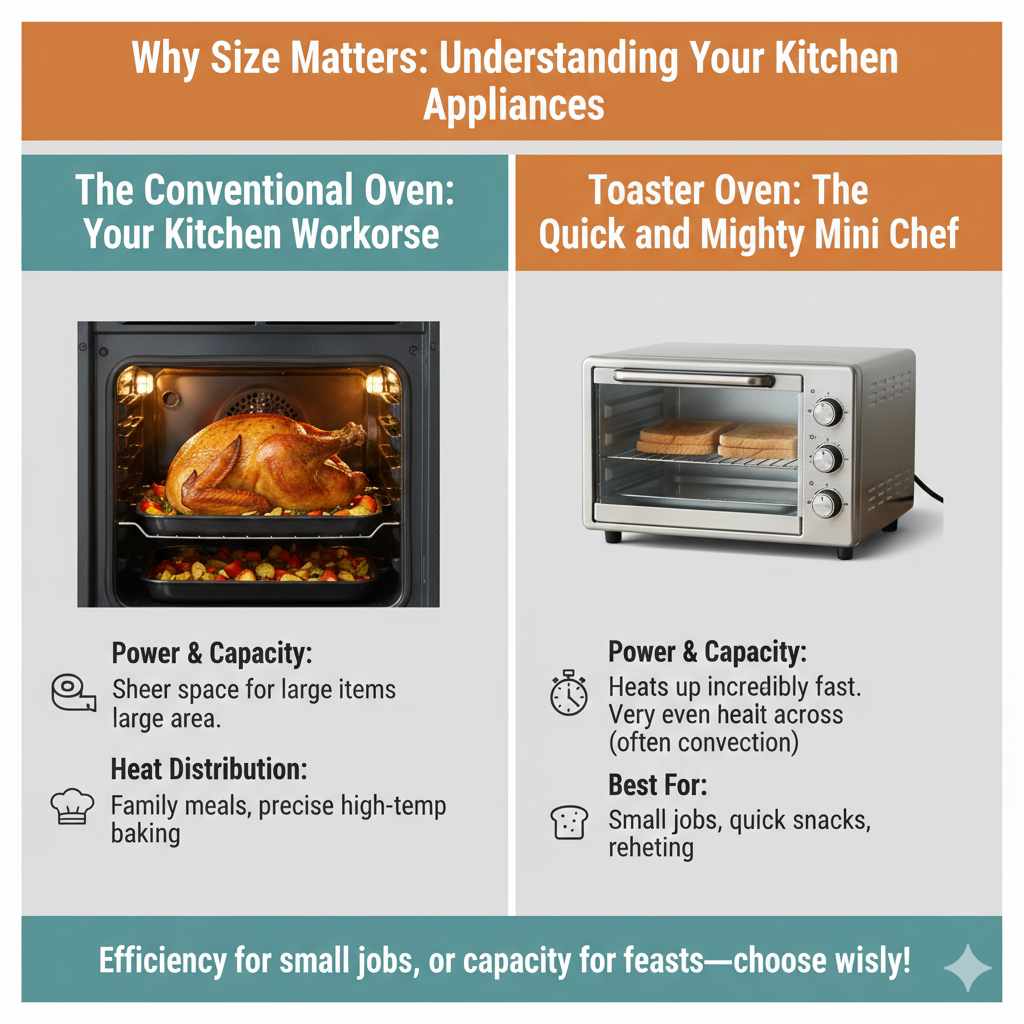
Your conventional oven is the original big appliance in the kitchen. Usually built into your stove, it’s designed for heavy lifting. Think Thanksgiving turkey, baking three trays of cookies at once, or roasting a huge ham. It uses powerful heating elements, often top and bottom, to surround your food with consistent, high heat.
- Power & Capacity: It has the sheer space to handle large items comfortably.
- Heat Distribution: It aims for very even heat across a large area, though sometimes you need to rotate pans.
- Best For: Any meal designed for a family or when you need precise, sustained high-temperature cooking (like sourdough bread).
The Toaster Oven: The Quick and Mighty Mini Chef
The toaster oven looks like a miniature version of the big oven, and in many ways, it is! But because it’s small, it heats up incredibly fast. It usually has heating elements too, often quartz or metal rods, positioned close to the food. This proximity means it can toast bread or bake a small pizza surprisingly quickly.
Many modern toaster ovens are actually “toaster oven/air fryers,” which adds another layer of versatility. However, even the simplest model is a champion of efficiency for small jobs.
Conventional Oven Vs Toaster Oven: The Head-to-Head Comparison
To help you see things clearly, let’s line up these two competitors and see where each one shines. This comparison focuses on the most important things drivers (and home cooks) care about: speed, energy use, and what they can actually handle.
Here is a simple table breaking down the essentials:
| Feature | Conventional Oven | Toaster Oven |
|---|---|---|
| Preheat Time | Long (10–25 minutes) | Short (3–8 minutes) |
| Energy Consumption | High (Uses significant power) | Low (Very energy efficient for small batches) |
| Maximum Capacity | Very High (Turkey, large trays) | Low (Toast, small casseroles, 12-inch pizza) |
| Temperature Range | Very precise, excellent sustained heat | Good, but temperature can fluctuate more |
| Ideal Use | Family dinners, batch baking, roasting | Snacks, reheating leftovers, small meals |
Speed and Preheat Time: The Need for Speed
If you’re rushing home after work and just want to heat up a couple of frozen appetizers, waiting 15 minutes for the big oven to reach 400°F feels agonizing. That’s where the toaster oven earns its stripes.
Because the toaster oven has a much smaller volume of air to heat, it gets up to temperature incredibly fast. For a quick snack, this saves precious time.
- Conventional Oven: Needs time to heat the entire interior cavity.
- Toaster Oven: Heats up quickly due to its compact size, often ready in under five minutes.
Energy Efficiency: Saving Fuel (or Electricity)
Think about this like idling your car versus driving a short errand. Running the huge conventional oven for three cookies is wasteful. It uses a lot more electricity (BTUs) to heat that large space compared to the tiny toaster oven.
For energy savings, the toaster oven is the clear winner every time you are cooking for one or two people. According to some home appliance efficiency guides, using a small countertop appliance for small tasks can significantly reduce household energy load.
Capacity Constraints: What Can You Fit Inside?
This is the conventional oven’s home-field advantage. If you are hosting a holiday gathering, you simply cannot fit a full-sized roasting pan into a standard toaster oven. The conventional oven gives you the space needed for complex layering, large sheet pans, and bulky items.
If your meal involves multiple dishes that need to coordinate cooking times, the large oven allows you to manage that juggling act more easily.
When to Always Choose the Conventional Oven
While the toaster oven is handy, certain cooking jobs require the raw power and size of its big brother. If you skip using the large oven for these tasks, you’ll usually end up with uneven results.
- Baking Yeasted Breads: Breads require consistent, sustained heat and often need steam or high humidity, which the large, enclosed cavity handles better. They also need room to rise without touching the heating elements!
- Large Roasts: Turkey, large briskets, or whole chickens need enough space so that the air can circulate fully around the protein. If the food is too close to the elements, the outside will burn before the inside is safe.
- Multi-Rack Cooking: If you are cooking two full racks of food simultaneously, you need the depth and height only the conventional oven provides.
- Large Batch Cooking: Making dinner for more than four people usually pushes the limits of a typical toaster oven.
When the Toaster Oven Takes the Crown
The toaster oven shines when speed, minimal energy use, and convenience are your top priorities. It’s the perfect kitchen sidekick for the everyday driver who just needs to get the job done efficiently.
Toasting and Broiling Small Items
Let’s get the obvious one out of the way: toasting bread. The toaster oven is purpose-built for this. It toasts more evenly than a pop-up toaster and prevents crumbs from making a mess inside the main oven cavity.
Broiling small items, like garlic bread tops or melting cheese on an open-faced sandwich, is also much simpler and safer in the smaller unit, as the element is closer to the food.
Reheating Leftovers (The Game Changer)
If you’ve ever tried to reheat pizza in a microwave, you know the tragedy that follows—soggy crust and rubbery cheese. The toaster oven brings back crispy perfection.
Use the toaster oven to reheat leftovers because it uses dry, radiant heat. This dries out surface moisture while crisping the outside. This trick revived day-old french fries or pizza better than any other method.
Small Batch Cooking and Baking
Need four muffins? Want to bake a single chicken breast or toast a small dinner roll? The toaster oven saves you the energy cost and the time waiting for the big oven to warm up. It’s great for dorm rooms, small apartments, or just reducing kitchen heat on a hot day.
For even better results, many small countertop units offer air frying capabilities now, which is fantastic for making crispy chicken wings quickly without deep frying them.
Mastering Temperature (A Crucial Maintenance Step)
One area where people often get tripped up relates back to our automotive analogy: checking your gauges. Just because the dial says 350°F in both appliances doesn’t mean they are exactly the same. Temperature consistency is vital for safe and pleasant cooking.
For reliable results, especially when following recipes exactly—like when canning or making sensitive desserts—you should know the actual temperature inside both units. This is similar to checking your tire pressure; it seems minor, but it affects performance.
Safety Tip: If you are new to using a specific toaster oven, it’s always a good idea to verify its temperature accuracy with an inexpensive, oven-safe thermometer placed inside.
For more detailed guides on maintaining consistent heat in large appliances, resources from institutions like the U.S. Department of Energy on appliance energy use can offer broader context on how your kitchen machinery operates efficiently.
The Science of Hot Air Circulation
Conventional ovens rely heavily on convection (if they have a fan) or natural heat rising. The heat tends to move slower and more gently around the food.
Toaster ovens, especially those with air fryer functions, often blast the heat directly onto the food. This intense, high-velocity circulation is great for crisping exteriors fast, but it can easily burn thin items if you aren’t careful.
| Heating Method | Primary Effect | Best Used For |
|---|---|---|
| Conventional Radiant Heat | Slow, even enveloping of large items | Roasts, large cakes, slow cooking |
| Toaster Oven Direct Heat | Fast surface browning, direct contact heating | Toast, small pizzas, melting cheese |
| Convection (in either unit) | Forced air movement for crisping | Even baking of cookies, fast roasting |
Installation and Placement: Keeping Things Safe
Just as you wouldn’t park your car too close to a flammable hazard, placement is crucial for kitchen appliances that generate significant heat.
Conventional Oven Safety
If your conventional oven is part of a range, it’s usually installed properly by professionals. The main concern here is usually clearance from nearby cabinets or flammable materials, especially around the ventilation slots.
Toaster Oven Placement: Watch the Clearance
This is where beginners can sometimes make a safety oversight. Because a toaster oven gets hot on the outside surface and vents hot air, it needs space around it—especially above.
Never place a toaster oven directly under a low cabinet shelf without checking clearance. The hot air escaping the top vent can cause discoloration or, worse, create a fire hazard over time. Always aim for several inches of open space above and to the sides.
Safety regulations regarding appliance spacing exist to prevent overheating. Always consult your user manual, but generally, treat the toaster oven like a small space heater when it comes to nearby items.
The Practical Showdown: Day-to-Day Cooking Scenarios
Let’s see how these two stack up in real-world situations, focusing on minimizing hassle and maximizing flavor.
Scenario 1: Making Lunch for One
You want a grilled cheese sandwich and maybe some warmed soup.
- Winner: Toaster Oven. It will toast the bread, melt the cheese fast, and warm the soup bowl without heating up the whole kitchen. You save energy and time.
Scenario 2: Sunday Night Family Dinner
You are roasting a 4-pound chicken and baking potatoes.
- Winner: Conventional Oven. The chicken needs 90 minutes of space to cook thoroughly and evenly. The toaster oven struggles with that volume and duration.
Scenario 3: Baking Cookies for a School Event
You need 4 dozen cookies, requiring multiple trays.
- Winner: Conventional Oven. You can load two or three sheets at once and rely on the internal circulation to cook them relatively evenly (though rotation is still smart). The toaster oven would require at least four separate, slow batches.
Scenario 4: Reheating Leftover Steak
You want that steak to have a nice crust again, not just warm mush.
- Winner: Toaster Oven. Set it to about 300°F. Place the steak on a small piece of foil. It heats gently and crisps the edges nicely without drying out the center as quickly as the conventional oven might.
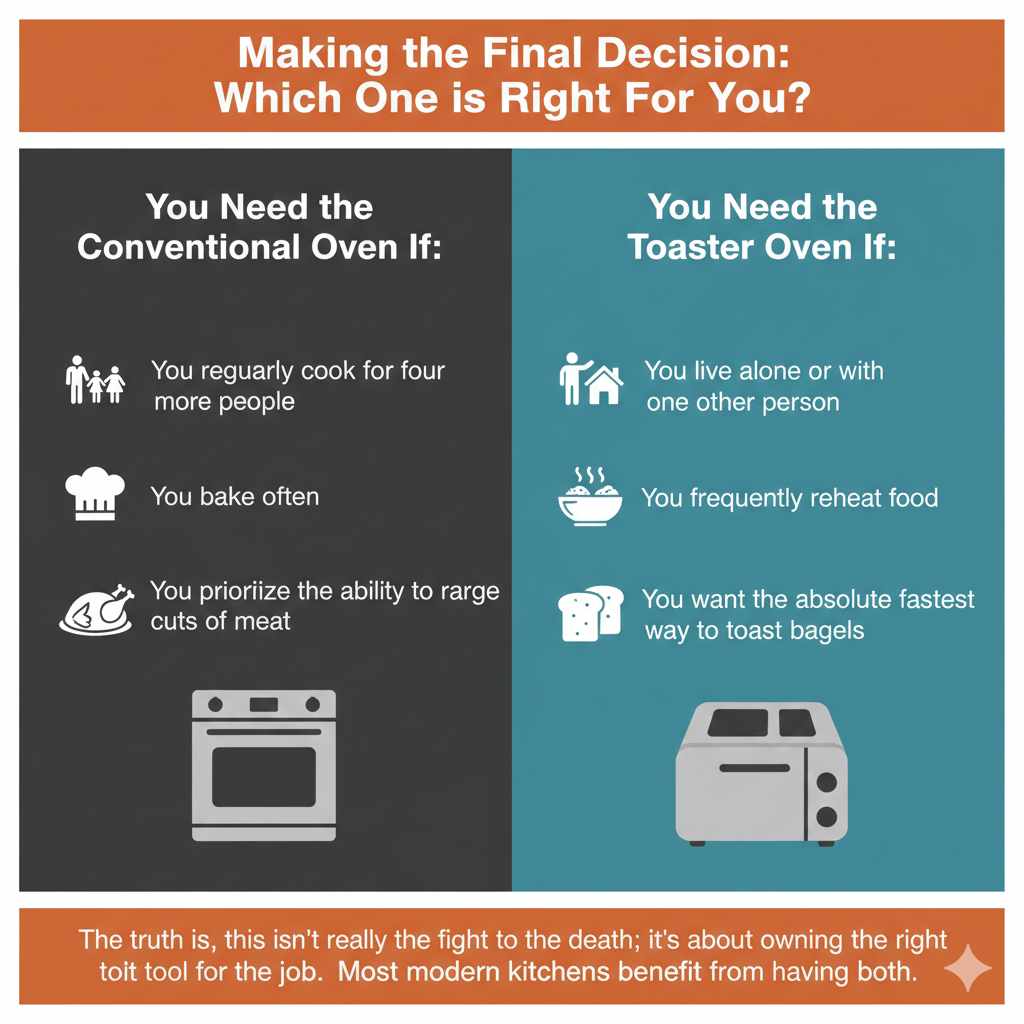
Making the Final Decision: Which One is Right For You?
The truth is, this isn’t really a fight to the death; it’s about owning the right tool for the job. Most modern kitchens benefit from having both.
You Need the Conventional Oven If:
You regularly cook for four or more people, you bake often, or you prioritize the ability to roast large cuts of meat.
You Need the Toaster Oven If:
You live alone or with one other person, you frequently reheat food, you want the absolute fastest way to toast bagels, or you want to save noticeable amounts on your monthly energy bill for small tasks.
Think of it like this: your conventional oven is your big pickup truck—great for moving big loads reliably. Your toaster oven is your small, fuel-efficient sedan—perfect for the daily short commute.
Frequently Asked Questions (FAQ) for Beginners
Q1: Can a toaster oven safely replace my conventional oven completely?
A: Generally, no. For small tasks (toast, reheating, small two-serving meals), yes. For large roasts, large batch baking (like holiday turkeys or multiple racks of cookies), a toaster oven lacks the necessary capacity and sustained, even cooking environment.
Q2: Does a toaster oven use a lot of electricity?
A: Compared to the conventional oven, no. Because they are small and preheat so fast, they use significantly less electricity per cooking cycle, making them very budget-friendly for daily small meals.
Q3: Are toaster oven meals less healthy than conventional oven meals?
A: The cooking method itself isn’t the health factor; it’s what you cook. Both can roast vegetables or bake fish healthily. Some modern toaster ovens also offer air frying, which is a low-oil option for crisping food.
Q4: Why does my food cook faster in the toaster oven?
A: The heating elements (coils) in a toaster oven are much closer to the food you are cooking. This means the heat transfer is more direct and intense, leading to faster cooking times than the large, ambient heat of a conventional oven.
Q5: Should I leave my toaster oven on the counter all the time?
A: Yes, most countertop toaster ovens are designed for permanent placement. However, always ensure you have at least 4–6 inches of clearance above and behind the unit to allow heat to escape safely, as noted in the safety section earlier.
Q6: How do I clean each appliance effectively?
A: For the conventional oven, use self-cleaning features or specialized oven cleaners. For the toaster oven, empty the crumb tray frequently. Wipe down the interior with a damp, soapy cloth after it cools; avoid submerging heating elements in water.
Conclusion: Cooking Confidence in Your Kitchen
Navigating the world of kitchen appliances doesn’t need to feel like deciphering a confusing wiring diagram. Whether you are tackling a massive Sunday roast or just trying to get a perfectly crisp slice of toast, knowing the strengths of your conventional oven versus your toaster oven puts you in control. The conventional oven provides the sheer power and space for the big jobs, ensuring large items cook safely and evenly. The toaster oven offers speed, efficiency, and perfection for those smaller, everyday tasks that don’t require firing up the main unit.
By understanding when to use the big engine and when to rely on the nimble runner, you not only save time and energy but you guarantee better results every time you step up to cook. Keep these simple guidelines in mind, and you’ll walk away confident that you chose the right tool, every single time. Happy cooking!