BLACK+DECKER Toaster Oven vs Regular Oven: 2026 Kitchen Audit
The 60-Second Verdict: Which One Wins?
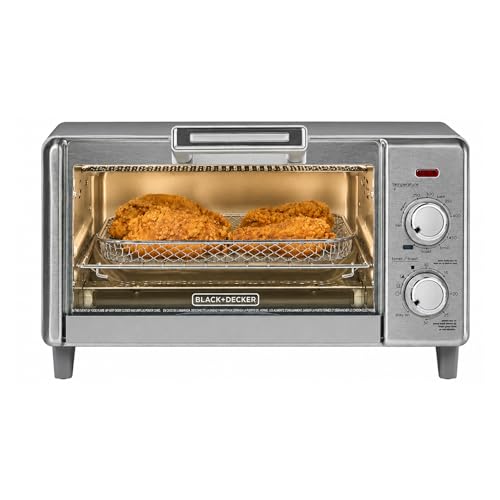
Most households should own both. But if you’re forced to pick one for daily cooking, the BLACK+DECKER 4-Slice Air Fry Toaster Oven (B0CKLXZRMC) comes out ahead for singles, couples, and small families. It does more, cooks faster, and uses less electricity than a full-size oven.
| Our Pick | Runner Up |
|
|
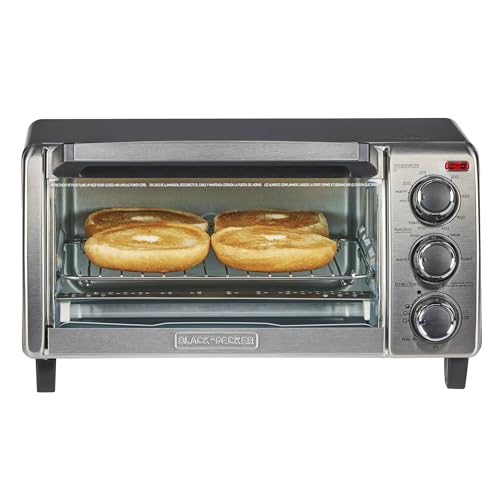
| BLACK+DECKER BLACK+DECKER 4-Slice Air Fry Toaster Oven, 5-in-1… | BLACK+DECKER BLACK+DECKER TO1313SBD Toaster Oven, 15.47 Inch, Silver… |
| See on Amazon | See on Amazon |
As an Amazon Associate I earn from qualifying purchases.
The regular oven still wins for big roasts, multiple trays of cookies, and holiday cooking. That’s not a close call. But for the other 340 days of the year, the air fry toaster oven is the workhorse.
This comparison focuses on two specific BLACK+DECKER models: the newer 5-in-1 air fry unit and the classic TO1313SBD. Both are compact, both fit a 9-inch pizza, and both cost a fraction of what you’d spend on a range. The difference is in how they cook and what they can replace.
How They Actually Cook: Radiant vs. Ambient Heat
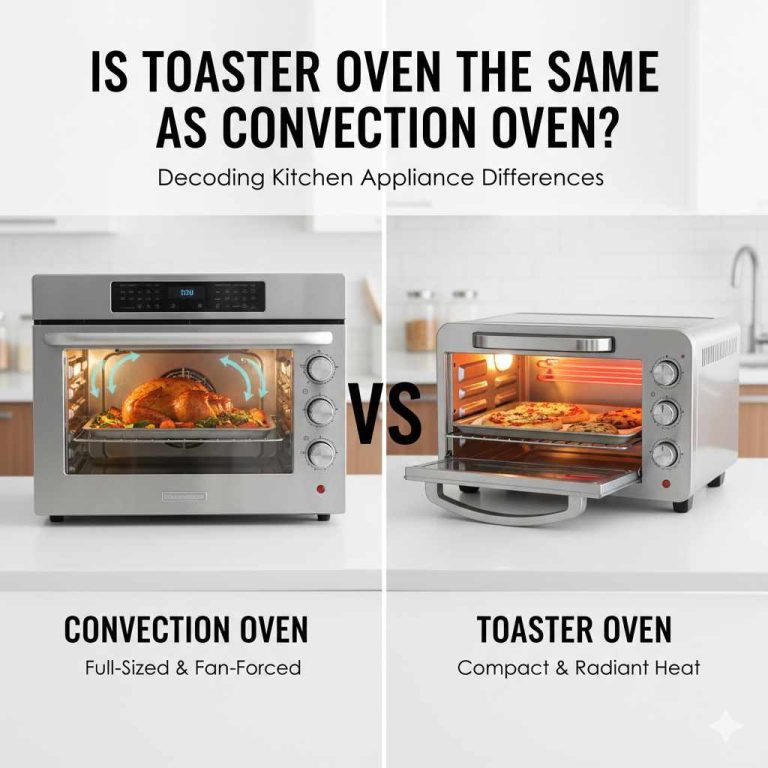
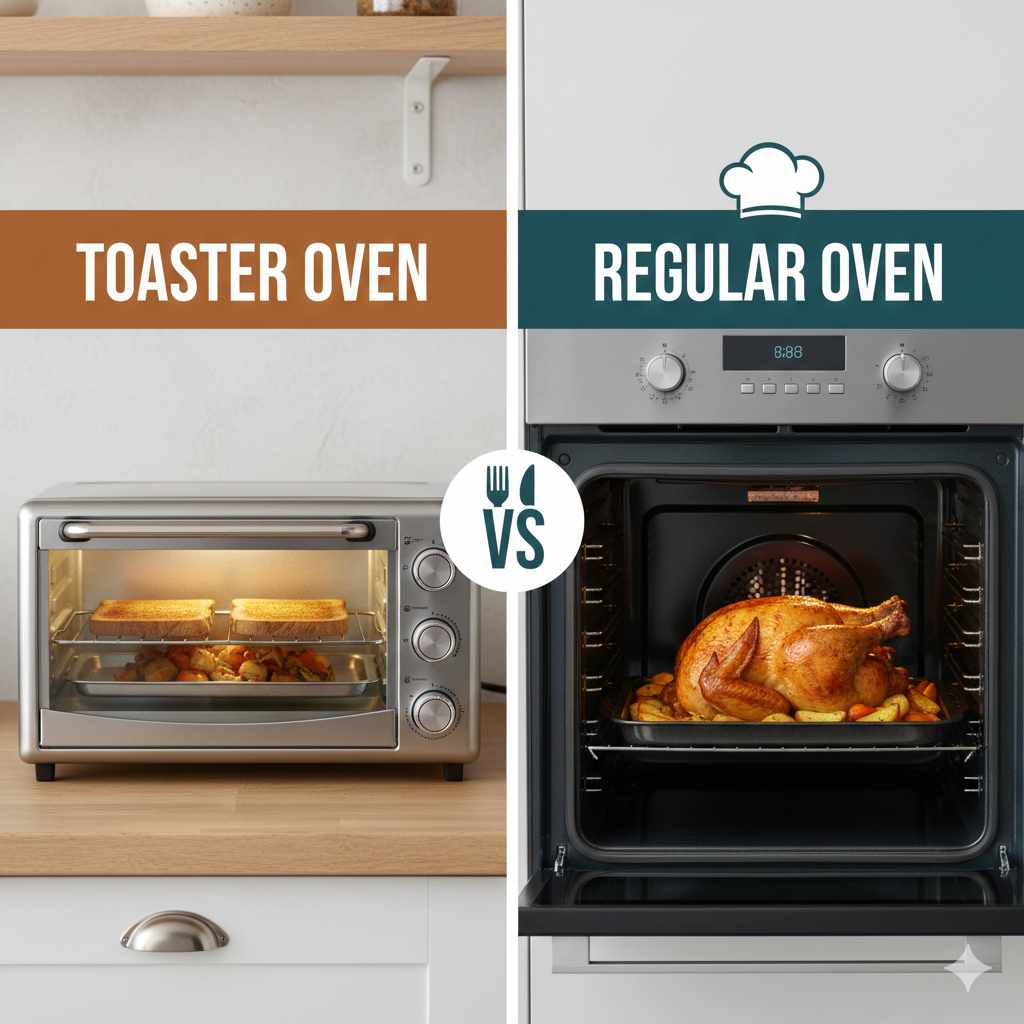
A regular oven heats a large air volume. The heating elements warm the air, and that air circulates slowly around your food. This is ambient heat. It’s gentle, even, and takes time to build up.
A toaster oven uses radiant heat. The heating elements are inches from your food, so the surface gets direct radiation. That’s why toast browns faster and cheese melts more aggressively. The BLACK+DECKER air fry model adds forced convection with its fan, pushing hot air around the food. That combination of radiant heat and moving air is what creates crispy exteriors without drying out the inside.
Here’s the practical difference: a toaster oven browns the surface before the interior finishes cooking. A regular oven cooks more evenly from edge to center. For a baked potato, the regular oven wins. For reheating pizza, the toaster oven is dramatically better — the crust crisps while the cheese bubbles, something a microwave can’t do and a regular oven does poorly.
The TO1313SBD also has natural convection airflow, but it’s not fan-forced. It relies on hot air rising and escaping through vents. That works fine for toast and small bakes, but the air fry model’s fan makes a real difference for frozen foods and anything you want crispy.
The Real Cost Breakdown: Energy, Price, and Replacement
Let’s talk money. A typical regular oven draws about 2,400 watts when heating. A toaster oven draws around 1,500 watts. But the toaster oven heats a space that’s maybe one-tenth the volume. So it reaches temperature in 3-4 minutes instead of 10-15, and it cycles the heating element far less often once it’s there.
Run the math for a year. If you use your oven 4 times a week for 30 minutes each, a regular oven costs roughly $1.20 per use in electricity at average U.S. rates. That’s about $250 a year. The toaster oven costs roughly $0.30 per use — around $60 a year. The air fry model runs slightly higher than the TO1313SBD because the fan adds draw, but it’s still under $80 annually.
Then there’s the appliance cost. The regular oven is already in your kitchen, so it’s a sunk cost. The toaster oven is a new purchase. But check the current price on Amazon for either BLACK+DECKER model — they’re inexpensive enough that the energy savings alone pay for one within a year or two.
Replacement cycles matter too. A quality regular oven lasts 15-20 years. A toaster oven lasts 3-5 years with regular use. So the toaster oven isn’t a long-term investment. It’s a convenience tool with a short lifespan. Factor that into your decision.
Speed and Temperature: The Truth About Preheating and Cooking Time
Preheating is where the toaster oven wins every single time. The TO1313SBD manual says to preheat for 10 minutes for best results. That’s actually conservative — in practice, it hits 350°F in about 4 minutes. The air fry model is faster still, reaching temperature in under 3 minutes because the fan distributes heat immediately.
A regular oven takes 10-15 minutes to preheat to 350°F, and 20 minutes or more for 450°F. That’s not a huge deal if you’re cooking a roast for an hour. But for a 12-minute frozen pizza or 8-minute chicken tenders, the preheat time doubles your total cook time.
Actual cooking times are shorter in a toaster oven too. The radiant heat transfers energy faster. A batch of cookies that takes 12 minutes in a regular oven finishes in 9-10 minutes in the TO1313SBD. Chicken thighs that need 40 minutes in a big oven finish in 30 in the air fry model.
Temperature control is the weak spot. Both toaster ovens use a mechanical thermostat, not digital. The TO1313SBD has a 30-minute timer with a stay-on option. The air fry model also has a 30-minute timer. Neither is precise. If a recipe calls for 375°F, you’ll get somewhere between 350°F and 400°F. That’s fine for most things but not ideal for delicate baking like soufflés or macarons.
What Each Appliance Does Better (And Worse)
Dishes that demand a regular oven
Anything large or moisture-sensitive needs the big oven. A whole turkey, a 5-pound roast, a casserole dish that serves eight — these simply don’t fit in a 4-slice toaster oven. Both BLACK+DECKER models max out at a 9-inch pizza or 4 slices of bread.
Baking also favors the regular oven. The larger thermal mass means fewer temperature swings when you open the door. A toaster oven loses heat quickly when opened, and it takes time to recover. That’s a problem for bread and pastries that need stable temperature.
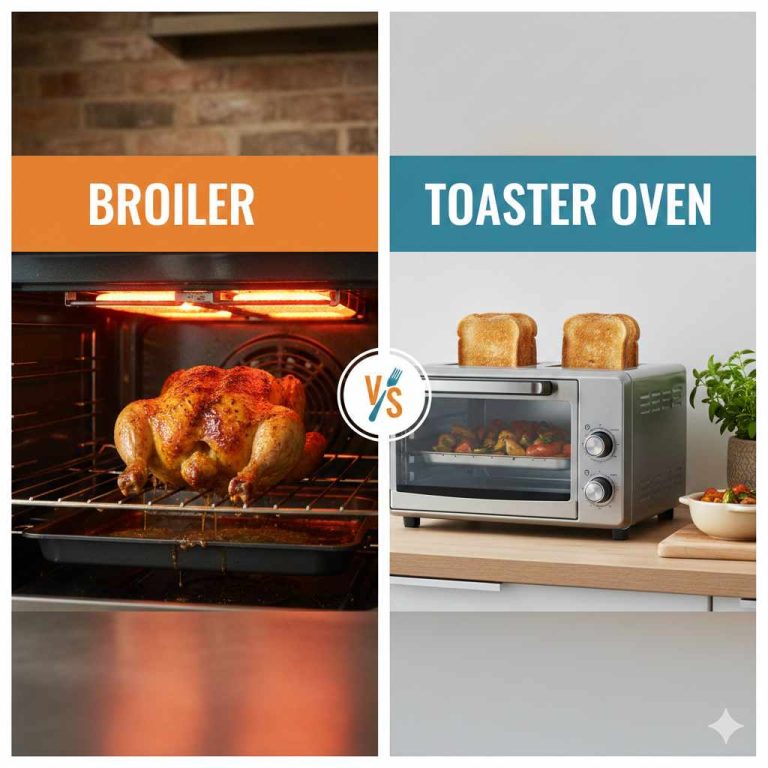
Broiling in a regular oven is genuinely dangerous to the food — it’s so powerful that it burns quickly. The toaster oven’s broil setting is gentler and more controllable.
Dishes that are better in a toaster oven
Reheating leftovers is the toaster oven’s superpower. Pizza comes out with a crispy crust and melted cheese. Fried chicken stays crunchy. The air fry model’s fan makes this even better.
Small batches of anything — 4 slices of toast, 2 baked potatoes, a single chicken breast — are faster and cheaper in a toaster oven. You don’t heat 5 cubic feet of air for one serving.
Frozen foods like french fries, chicken nuggets, and fish sticks cook better in the air fry toaster oven than in a regular oven. The combination of radiant heat and forced airflow creates that fried texture without oil.
The air fry function on the B0CKLXZRMC is legit. It uses a mesh tray that lets air circulate under the food. You get crispy results with a fraction of the oil. It’s not a dedicated air fryer, but for a 9-inch capacity, it’s close enough for most households.
The Conversion Cheat Sheet: Adjusting Any Recipe
Switching a recipe from regular oven to toaster oven is simple. Drop the temperature by 25°F and reduce the time by 20-25%. So a recipe that calls for 400°F for 20 minutes becomes 375°F for 15-16 minutes in a toaster oven.
For the air fry model, drop the temperature by 25°F and reduce time by 30%. The fan accelerates cooking significantly.
Watch your food closely the first time you try a recipe. Check at the shortest suggested time and add minutes as needed. The mechanical timer on both BLACK+DECKER models is accurate enough, but the stay-on function on the TO1313SBD is useful for longer cooks.
One caveat: don’t use glass bakeware in a toaster oven unless it’s rated for it. The radiant heat can cause thermal shock and shatter the glass. Stick with metal pans or the included tray.
Can a Toaster Oven Replace Your Regular Oven? (The Honest Answer)
For a single person or a couple, yes, mostly. You’ll miss the regular oven for holiday meals and big batches. But daily cooking — breakfast toast, lunch reheats, dinner for two — happens faster and cheaper in a toaster oven.
For a family of four or more, no. The 4-slice capacity is a hard limit. You can’t cook a 9×13 casserole or a whole chicken. You’d be running the toaster oven in batches, which defeats the speed advantage.
The air fry model comes closer to replacing a regular oven than the TO1313SBD because the convection fan makes it more versatile. But both share the same size constraint.
If you have the counter space, keep both. Use the regular oven for big cooks and the toaster oven for everything else. The energy savings alone justify the purchase.
Safety, Heat, and Kitchen Comfort
Both toaster ovens get hot on the outside. The TO1313SBD manual explicitly warns that outer surfaces become hot and to use oven mitts. The air fry model runs slightly cooler on the exterior because of the fan, but it’s still not safe to touch.
Placement matters. Keep at least 4 inches of clearance on all sides. Don’t put it under a cabinet that’s low, and never on a plastic surface. The crumb tray catches drips, but grease fires are possible if you broil fatty foods. Keep a fire extinguisher in the kitchen, not just a smoke detector.
Heat output is a real issue in summer. A toaster oven dumps heat into the kitchen just like a regular oven, but it does it in a smaller area and for less time. The air fry model’s fan pushes hot air outward, so it’s slightly worse for kitchen comfort than the TO1313SBD. In a small apartment, this matters.
Noise is a factor too. The air fry model’s fan is audible — a low whir that runs continuously during cooking. The TO1313SBD is silent except for the timer ticking. If you’re sensitive to noise or have an open-plan kitchen, the fan might bother you.
Final Verdict: How to Choose Based on Your Cooking Style
Here’s a simple scoring system. Rate each factor 1-5 for your situation, then add them up.
| Factor | Air Fry Toaster Oven (B0CKLXZRMC) | Classic Toaster Oven (TO1313SBD) | Regular Oven |
|---|---|---|---|
| Speed to preheat | 5 | 4 | 1 |
| Energy efficiency | 5 | 4 | 1 |
| Cooking capacity | 2 | 2 | 5 |
| Crisping ability | 5 | 3 | 3 |
| Baking evenness | 3 | 2 | 5 |
| Counter space needed | 3 | 4 | 0 |
| Versatility | 5 | 3 | 4 |
| Cost per use | 5 | 5 | 2 |
| Noise level | 3 | 5 | 5 |
| Heat output | 3 | 4 | 2 |
If you cook for 1-2 people, the air fry toaster oven scores highest. If you bake bread or host dinners, the regular oven wins. If you want the cheapest way to make toast and reheat leftovers, the TO1313SBD is enough.
My honest recommendation: buy the air fry model if you have $70-100 to spend and counter space to spare. It’s the better all-around tool. Choose the TO1313SBD only if you already own a dedicated air fryer or you never cook frozen food.
Neither toaster oven replaces a regular oven for serious cooking. But for everyday meals, the air fry model is the clear winner. It’s not perfect — the timer is basic and the temperature control is loose — but it delivers the convenience and savings that matter most.
Frequently Asked Questions
Can I bake cookies in a toaster oven?
Yes, but only in small batches. Both BLACK+DECKER models fit a 9-inch pizza or 4 slices of bread, so a standard cookie sheet won’t fit. Use a small baking tray and expect to cook 4-6 cookies at a time. Drop the temperature by 25°F and check at the minimum recommended time.
Is the air fry function worth the extra cost?
If you eat frozen foods, leftovers, or want crispy results without oil, yes. The B0CKLXZRMC’s fan makes a noticeable difference in texture. If you only make toast and small bakes, the TO1313SBD is sufficient and costs less.
How do I clean these toaster ovens?
Both have a removable crumb tray that slides out for easy cleaning. The air fry model includes a drip tray and mesh tray that are dishwasher-safe. Wipe the interior with a damp cloth regularly to prevent grease buildup. Don’t use abrasive cleaners on the heating elements.
Will a toaster oven heat up my kitchen?
Yes, less than a regular oven but still noticeably. The air fry model’s fan pushes hot air outward, so it’s slightly worse in summer. The TO1313SBD is more contained. In a small apartment, consider using it on a balcony or near a window if you’re cooking something long.
For more on how these compare to your main oven, check our cooking time comparison and the full conventional oven guide. If you’re weighing a microwave instead, see our microwave vs toaster oven breakdown.
Products related to this article
Sponsored / affiliate links. As an Amazon Associate I earn from qualifying purchases. I may earn additional commission from eligible campaigns.