Fondue, the ultimate communal food experience, famously brings melted cheese and bread together. But where does this cozy tradition actually come from? The proven essential history points directly to the Swiss Alps, evolving from simple mountain meals to the global sensation we enjoy today. This article traces its humble beginnings and key turning points.
Have you ever wondered about the roots of that warm, bubbly pot of melted goodness? It’s easy to think fondue is just a fun 1970s thing, but its story goes much deeper than that. Many people get confused about its true home, sometimes mixing it up with other melted-cheese dishes.
Don’t worry about digging through dusty history books! We are going to walk through the simple, proven origins of fondue. I’ll break down the historical facts so you can share the story next time you host a fondue night. We’ll uncover how necessity created this delicious tradition and how it spread across continents.
Where Does Fondue Originate? The Swiss Alps Answer
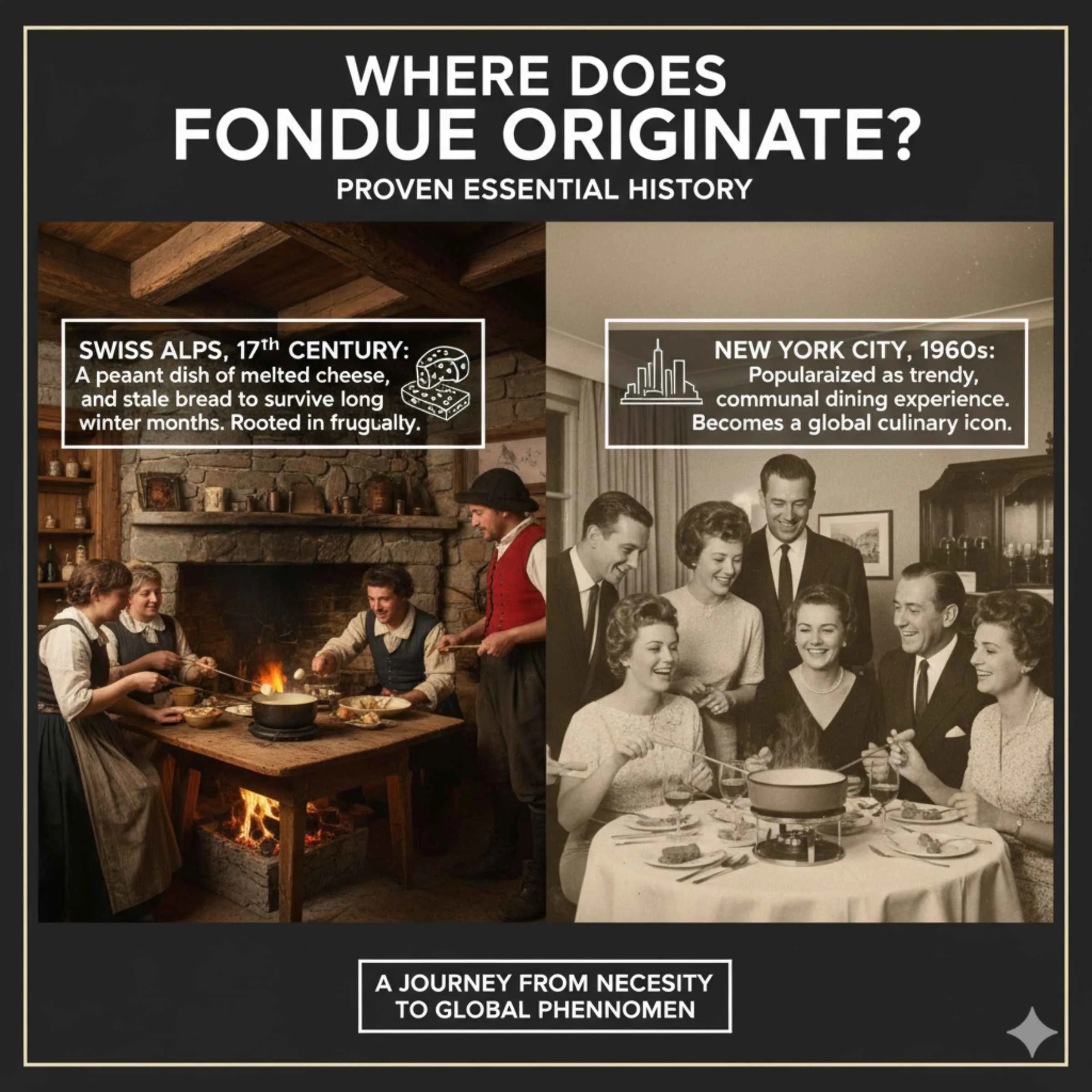
If you’re asking, “Where does fondue originate?” The most direct and historically supported answer is Switzerland. It wasn’t invented in some fancy French kitchen; it was born out of survival and practicality in the cold, rugged environment of the Swiss Alps.
Think about living high up in the mountains during the long winter months, generations ago. Fresh food was scarce. What did the farmers and villagers have in surplus? Cheese and stale bread. Fondue was the brilliant solution to use up what they had.
The Essential Ingredients of Alpine Survival
The original fondue concept wasn’t gourmet; it was resourcefulness. It was about making a hearty, warm meal from ingredients that could last all winter:
- Hard Cheeses: Alpine regions produced robust, aged cheeses that lasted for months.
- Stale Bread: Day-old bread became soft and perfect when dipped into hot liquid.
- Wine: White wine added the necessary acidity to help the cheese melt smoothly without becoming oily.
- Fire: A steady heat source was always available in every home.
This combination wasn’t just tasty; it was energy-dense fuel for hard labor in cold weather. It was community building on a plate—everyone dipping from the same pot.
From Peasant Food to National Dish: Formalizing the Recipe
While people were surely melting cheese over fires for centuries, the concept needed a formal name and a published recipe to become a recognized dish. This tipping point occurred in the early 20th century.
The Turning Point: 1930s and the Cheese Union
Believe it or not, marketing played a huge role in making fondue famous! In the 1930s, Switzerland faced an issue: they produced too much cheese. To boost domestic consumption and help farmers, the Swiss Cheese Union (Schweizerische Käseunion) started promoting fondue as the national dish.
Under this promotion, specific rules for making “true” Swiss cheese fondue were established. They standardized what ingredients were necessary, essentially creating the recognized recipe we know today. This effort was crucial in answering the question, “Where does fondue originate?”—it officially stamped Switzerland onto the dish.
| Era | Significance | Result |
|---|---|---|
| Pre-19th Century | Necessity in Alpine Farming | Informal mountain survival meals. |
| 18th Century | First known written references | Mentioned in Swiss cookbooks, often with egg yolks added. |
| 1930–1934 | Swiss Cheese Union Campaign | Formalized recipe standardization and national promotion. |
| 1964 | New York World’s Fair | Introduction to the international (American) audience. |
The First Written Appearance
While dating the very first dip is impossible, the oldest known written recipe resembling modern fondue dates back to a 1794 cookbook published in Zurich. This recipe included cheese, wine, and eggs. This shows that the basic concept was already well-established culturally by the late 18th century.
This is your first big takeaway, similar to learning about basic car maintenance: the foundation of fondue is resourcefulness, rooted deep in Swiss culinary heritage.
Fondue’s Journey Across Languages: Why the Name?
Understanding the name helps unlock the origin. The word “fondue” comes from the French word fondre, which simply means “to melt.”
Even though French is an official language in Switzerland (especially in the western regions like Geneva), the dish spread across linguistic borders using this simple, descriptive verb. It’s a perfect example of how practical, descriptive names stick around!
What About Other Melted Cheese Dishes?
When people ask where fondue originates, they sometimes confuse it with similar dishes from neighboring countries. It’s important to know the difference. Think of it like confusing a sedan with a coupe—they are both cars, but they have distinct features.
- Raclette (Switzerland/France): This involves scraping melted cheese (often from a wheel) directly onto potatoes. It’s usually served alongside accompaniments, not primarily used for dipping.
- Queso Fundido (Mexico): This is typically a baked appetizer of melted cheese mixed with meats or peppers, served hot, often with tortillas. It doesn’t rely on wine or the communal dipping pot setup.
Fondue, especially cheese fondue, requires the specific starch base (the wine) to keep the cheese emulsion stable for dipping, which is what sets it apart historically.
The Great American Takeover: Fondue in the 1960s and 70s
If you thought fondue was just an old European thing, you’d be missing the biggest explosion in its popularity. For many Americans, “where does fondue originate?” seems like it should be “a groovy 1970s dinner party.”
This massive surge was driven by two main factors:
- Marketing and World Fairs: Swiss food promotion brought fondue to international audiences, including the 1964 New York World’s Fair.
- The Rise of Home Entertaining: The Vietnam era and the focus on staying home led to a cultural embrace of communal, theatrical dining experiences in suburban homes. Fondue pots became must-have wedding gifts.
The Shift to Meat and Chocolate (Moitié-Moitié)
When fondue hit America, it gained flexibility. The Swiss traditionally stuck to cheese, but the foreign market demanded variety. This is where we see the inclusion of other beloved types:
- Fondue Bourguignonne (Meat Fondue): Cooking raw meat pieces in hot oil.
- Chocolate Fondue: Melting chocolate, often with cream or liqueur, for dipping fruit.
- Broth or International Fondue: Cooking thinly sliced meats in hot broth (sometimes called Chinese hot-pot style).
This adaptation process is healthy! Just like upgrading your car battery for better cold starts, adapting fondue made it relevant to new palates.
Essential Equipment: The Birth of the Rechaud
You can’t talk about fondue without talking about the gear. The essential equipment that moved fondue from a campfire to the dining table is the réchaud (a small tabletop heating unit) and the specific long-stemmed forks.
This equipment is key to maintaining the proper temperature, which, much like keeping your engine oil at the right level, is critical for success.
The Anatomy of a Fondue Set
A good, safe fondue experience relies on consistent heat. If the heat is too high, the cheese seizes up and burns. Too low, and you get a congealed blob. The classic set is engineered for this balance.
| Component | Function | Why It Matters |
|---|---|---|
| Caquelon (Pot) | The ceramic or cast iron vessel holding the food. | Ceramic holds heat evenly, preventing scorching. |
| Réchaud (Burner Base) | The stand that holds the pot over the heat source. | Keeps the pot securely positioned above the flame. |
| Burner | Holds denatured alcohol or a small tea light. | Provides gentle, consistent, low heat control. |
| Fondue Forks | Long, insulated forks for dipping. | Prevents burns and minimizes cross-contamination of breadsticks. |
For those interested in the chemistry behind keeping that cheese perfectly smooth—a process called emulsification—experts at universities often cite the importance of acid (wine) stabilizing the fat. You can read more about the science behind stable food emulsions from food science resources, like those sometimes found through university extension programs.
Why Did Fondue Become So Popular Around the World?
The answer to “where does fondue originate” is Switzerland, but its universal appeal comes from its inherent social nature. It’s an interactive way to eat.
The Communal Experience
In the age of fast, individual meals, fondue forces people to slow down. Everyone is gathered around one central pot, sharing an experience. This social aspect—the dipping, the sharing, the gentle jostling for the best piece of bread—is inherently fun.
It’s a great confidence builder for beginner hosts because the preparation is mostly done ahead of time. Once the pot is on the burner, the work is done; it’s all about conversation.
The Versatility Factor
Beyond cheese, the introduction of oil and chocolate variations meant fondue could fit any course: appetizer, main course, or dessert. This flexibility secured its lasting place in international cuisine.
The Proven Timeline of Fondue History
To summarize the journey from necessity to modern classic, here is a simple timeline:
- Medieval Alpine Necessity: Villagers melted old cheese with wine and stale bread to survive harsh winters. This was likely done over open flames without specialized pots.
- 18th Century Codification: Early written records appear, showing recipes using eggs, indicating a slightly more refined approach to the basic concept.
- 1930s National Branding: The Swiss Cheese Union standardized the recipe (cheese, wine, starch) specifically to market Swiss cheese domestically. This solidified its status as the Swiss national dish.
- 1960s Global Launch: Through tourism promotion and World’s Fairs, fondue—particularly the cheese version—enters the international mainstream, especially in North America.
- 1970s Diversification: The introduction of oil (meat) and chocolate fondues broadens the appeal, leading to its peak popularity as a dinner party centerpiece.
Beginner’s Guide to Celebrating Fondue Heritage
Now that you know where fondue originates, you can honor the tradition! Keeping it simple is the best way to start, just like when you tackle your first oil change—start with the manual and build confidence.
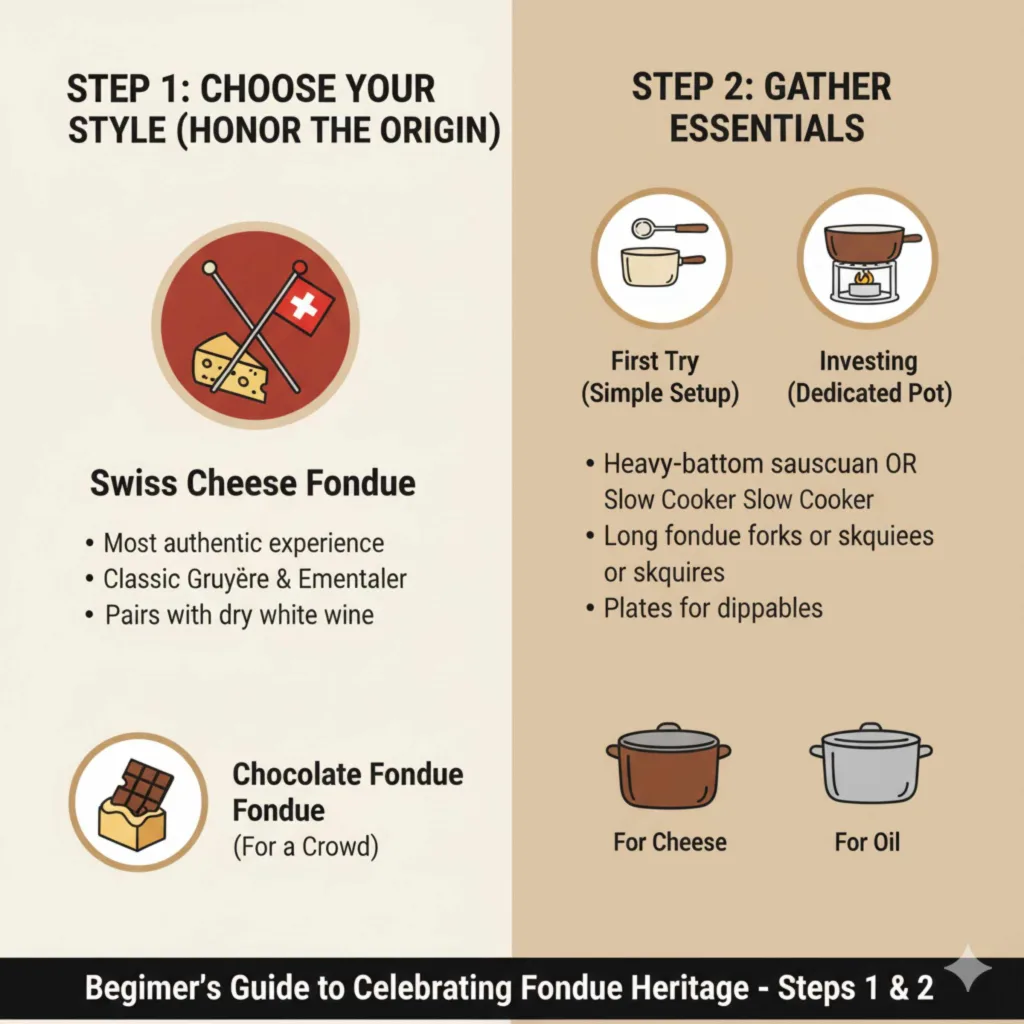
Step 1: Choose Your Style (Honor the Origin)
If you want the most authentic experience, stick to the Swiss cheese method. If you are hosting a crowd of first-timers, chocolate is always a safe bet.
Step 2: Gather Your Essentials
Do you need a fancy pot? Not necessarily for the first try! You can gently heat cheese in a heavy-bottomed saucepan and transfer it to a warmed slow cooker set to “Keep Warm,” or even just use a small pot over a very low flame (if you are very careful).
If you decide to invest, look for sets that use ceramic pots for cheese and heavy stainless steel for oil.
Step 3: Master the Cheese Base (The Key to No Clumps!)
For about 1.5 pounds of cheese (Gruyère and Emmentaler are classic choices), you need about 1 cup of dry white wine and 1 tablespoon of cornstarch (or flour).
Simple Cheese Fondue Prep List:
- Grate cheese finely (this helps it melt evenly).
- Rub the inside of the pot with a cut clove of garlic (optional, but traditional).
- Gently warm the wine until barely simmering—do not boil!
- Add the grated cheese gradually, stirring constantly in a figure-eight pattern.
- Once creamy, stir in the cornstarch mixture (mixed with a teaspoon of wine first) to stabilize the sauce.
Remember this analogy: If you rush the heat or the stirring, the cheese will break, just like rushing mechanical steps can lead to poor alignment. Slow and steady wins!
Frequently Asked Questions (FAQ Corner)
Q1: Is fondue actually French or Swiss?
A: Fondue is definitively Swiss in origin. While it uses the French word “fondre” (to melt), the tradition of melting hard alpine cheeses with wine originated in the Swiss Alps centuries ago to use up winter stores.
Q2: What is the secret ingredient that keeps Swiss cheese fondue from getting stringy?
A: The secret is the acidity of the dry white wine and the stabilizer, usually cornstarch or a type of flour. The acid helps break down the proteins, allowing them to mix smoothly with the fat, keeping the mixture creamy rather than clumpy.
Q3: Can I make fondue without alcohol?
A: Yes, you can substitute the wine with non-alcoholic liquids like vegetable broth or even unsweetened white grape juice, though you might need slightly more cornstarch to achieve the same creamy texture without the wine’s acidic properties.
Q4: Which cheese is the most traditional for fondue?
A: Traditionally, Swiss cheeses are preferred. The classic blend is Gruyère mixed with Emmentaler. Some recipes also encourage Vacherin Fribourgeois for extra creaminess.
Q5: When did fondue become popular in the United States?
A: Fondue surged in popularity in the US during the 1960s and peaked dramatically in the 1970s. It was often featured at dinner parties as a fun, interactive centerpiece.
Q6: What do you dip into savory cheese fondue besides bread?
A: While bread is the classic choice, many modern dippers work well. Try small cubes of boiled potatoes, steamed broccoli florets, small boiled carrots, or blanched apples slices for a sweet crunch.
Conclusion: Honoring the Melting Pot of History
So, you now know the definitive answer: where does fondue originate? It’s Switzerland, born from the practical, hearty needs of mountain life and later elevated through clever marketing into a celebrated national treasure.
It’s more than just melted cheese; it’s a history lesson in resource management and communal dining. Whether you recreate the simple, pure cheese version eaten by Alpine farmers or opt for a modern chocolate dipping platter, you are participating in a rich, delicious tradition.
Just like learning to change your own oil gives you confidence under the hood, understanding the history of fondue adds depth to your next gathering. Relax, keep your heat low, stir regularly, and enjoy sharing that wonderful, comforting, historic pot with friends and family. You’ve got this!