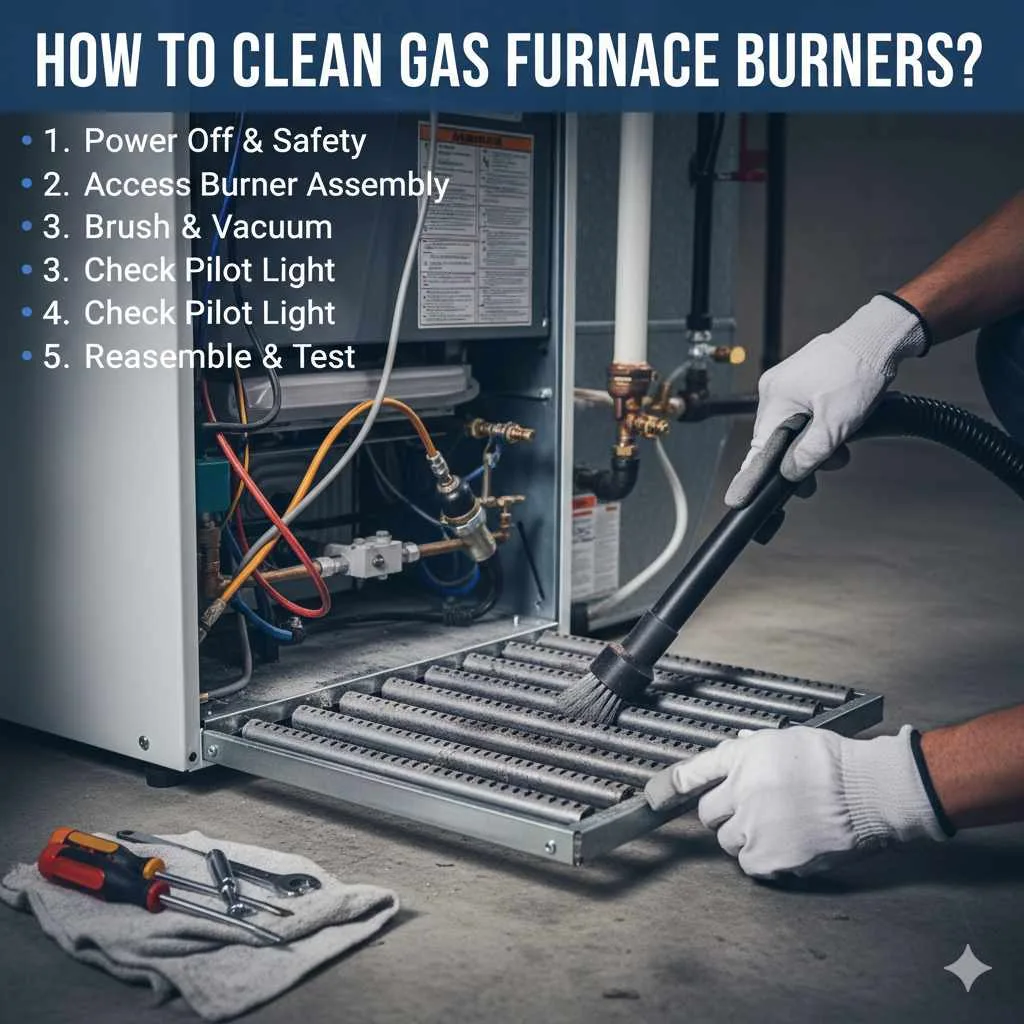
Don’t let dirty gas furnace burners dim your home’s comfort! This guide offers simple, proven steps to clean your gas furnace burners, ensuring efficient heating and peace of mind. Essential maintenance made easy, right here.

Goodman
B4022700 – Goodman OEM Furnace Inshot Burners
- This is a Brand New OEM Furnace Inshot Burners
- Top Quality OEM Replacement Part!
As an Amazon Associate I earn from qualifying purchases.
For a related kitchen decision, How to Clean a Cast Iron Dutch Oven: Effortless Method adds another practical detail to check.
For a related kitchen decision, How to Clean Range Top Burners adds another practical detail to check.
Is your home feeling a little less cozy when the temperatures drop? If your gas furnace is struggling to heat up your space efficiently, it might be time to take a peek at its heart: the burners. Over time, dust, debris, and even rust can gather, causing them to work harder and less effectively, which can lead to uneven heating or even a pilot light issue. It might sound daunting, but with a few simple tools and this easy-to-follow guide, you can get your furnace burners sparkling clean and running like new. We’ll walk you through everything you need to know, step-by-step, so you can feel confident tackling this essential home maintenance task.
Why Cleaning Your Gas Furnace Burners is Essential
Think of your furnace burners like the pilot light on a candle. If the wick is clogged with soot or debris, the flame will be weak, inconsistent, or might even go out. Your gas furnace burners are no different. When they’re clean, they produce a strong, steady blue flame that efficiently heats the air circulated throughout your home. This means your thermostat reads the correct temperature sooner, your furnace runs for shorter cycles, and you enjoy consistent, comfortable warmth. It’s all about optimal performance and energy savings!
Dirty burners can cause a number of frustrating problems:
- Inconsistent Heating: You might notice some rooms are warmer than others.
- Higher Energy Bills: A struggling furnace works harder, using more fuel.
- Pilot Light Issues: The pilot light might flicker, be weak, or not ignite at all.
- Noisy Operation: Uneven flames can sometimes create unusual noises.
- Reduced Lifespan: Over time, constant strain can wear down components.
Regular cleaning is a simple yet powerful way to prevent these issues and ensure your furnace serves you loyally for years to come. It’s a key part of proactive home maintenance that makes a real difference in your comfort and your wallet.

Essential Tools You’ll Need
Before you dive in, let’s gather your supplies. You probably have most of these around your house already! Having everything ready makes the process smooth and efficient.
- Safety First! Your safety is always Arlene’s top priority.
- Screwdriver Set: You’ll need this to remove the furnace access panel. Often a Phillips head or flathead is all you need, but having a small set is handy.
- Work Gloves: To protect your hands from any sharp edges inside the furnace.
- Soft Brush: A natural bristle brush or an old paintbrush works perfectly for gently sweeping away dust and debris. Avoid anything too stiff that could scratch the burners.
- Vacuum Cleaner with Hose Attachment: For removing loosened debris. A crevice tool is great for reaching tight spots.
- Compressed Air (Optional but Recommended): A can of compressed air can blast away stubborn dust.
- Clean, Dry Cloths: For wiping surfaces.
- Owner’s Manual: Always a good idea to have your furnace’s specific manual handy for any model-specific instructions. If you can’t find it, they’re often available online on the manufacturer’s website.
Remember, if you’re ever unsure, it’s always best to consult a professional. But for a simple cleaning, these tools should do the trick!
Step-by-Step Guide: How to Clean Your Gas Furnace Burners
Ready to get your furnace in top shape? Follow these straightforward steps to clean your gas furnace burners. Remember, safety is paramount, so let’s get started.
Step 1: Safety First – Turn Off the Power and Gas
This is the most crucial step! Before you lay a hand on your furnace, you MUST disconnect its power and gas supply. This prevents any accidental startups or gas leaks.
- Turn off the electricity: Locate the power switch for your furnace. It’s usually a toggle switch on the furnace itself or on a nearby wall. Flip it to the “Off” position. If you’re unsure, you can also turn off the breaker that controls your furnace at your home’s main electrical panel.
- Turn off the gas supply: Find the gas shut-off valve. It’s typically located on the gas pipe leading to the furnace. There’s usually a handle on the pipe. Turn the handle so it’s perpendicular (at a 90-degree angle) to the pipe. This indicates the gas is shut off.
Double-check that the power and gas are indeed off. You can try to turn on your furnace’s thermostat to make sure it doesn’t ignite.
Step 2: Access the Burner Compartment
Now, it’s time to open up your furnace. Your gas furnace has an access panel that covers the burner assembly. This panel is usually held in place by screws or clips.
- Using your screwdriver, carefully remove the screws holding the access panel in place.
- Gently pull the panel away from the furnace. Set the panel and screws aside in a safe place where you won’t lose them.
You should now be able to see the burner assembly. It typically consists of several burners lined up, often with a pilot light assembly or an ignitor nearby, depending on your furnace model. Take a moment to look at it – this is where the magic happens!
Step 3: Inspect the Burners
Before you start cleaning, take a good look. Are the burners visibly dusty? Do you see any debris lodged in the ports (the small holes where the flame comes out)? Is there any sign of rust?
A clear visual inspection helps you understand the extent of the cleaning needed. Most of the time, it’s just accumulated dust and light debris that’s easy to manage.
Step 4: Gently Clean the Burners
This is where your soft brush and vacuum come in handy.
- Brush away dust: Using your soft brush or paintbrush, gently sweep away any loose dust and debris from the surface of the burners and the surrounding area. Work carefully to avoid pushing debris further into the burner ports.
- Vacuum debris: Use your vacuum cleaner’s hose attachment to suck up the dust and debris that you’ve brushed loose. Pay attention to any nooks and crannies.
- Use compressed air (optional): If you have a can of compressed air, you can use short bursts to blow out any stubborn dust from the burner ports. Hold the can upright and use short, controlled blasts. Be prepared for dust to fly, so you might want to reposition yourself or use a cloth to shield delicate components nearby if necessary.
- Clean the ignitor/pilot assembly: If your furnace has a pilot light assembly, gently brush it as well. Be extra careful with the ignitor or flame sensor; these are sensitive components. A light dusting is usually all they need.
It’s important to be gentle. You’re not trying to scrub these clean; you’re just removing loose particulate matter that can impede proper flame ignition and combustion. Think of it as dusting, not deep cleaning.
Step 5: Check for Obstructions
While you’re in there, take a moment to ensure the burner ports themselves are clear. If you see any small bits of debris that your brush or air couldn’t dislodge, you can try to carefully pick them out with a small, non-metallic tool (like a toothpick, but be very gentle). The goal is to ensure each port has a clear path for gas to flow.
Once you’re satisfied, give the area one last quick vacuum to ensure no loose dust remains.
Step 6: Reassemble and Restore Power
It’s time to put everything back together and get your furnace ready to work its magic again!
- Replace the access panel: Carefully put the access panel back into its original position. Ensure it’s seated correctly and all edges align.
- Secure the panel: Reinsert and tighten the screws or re-engage the clips that hold the panel in place. Make sure it’s snug, but don’t overtighten.
- Turn the gas back on: Return the gas shut-off valve handle to its original position, parallel to the gas pipe. This allows gas to flow to the furnace again.
- Turn the power back on: Flip the furnace power switch back to the “On” position, or restore power at your electrical panel if you turned off the breaker.
Step 7: Test Your Furnace
Now for the satisfying part – testing your work!
- Set your thermostat: Turn your thermostat up a few degrees above the current room temperature.
- Listen and observe: Within a few minutes, you should hear your furnace kick on. Listen for a clear ignition sound. Look through the small viewing window on the furnace door (if your model has one) to observe the burner flames. They should be a steady, consistent blue. If you see yellow or flickering flames, or if the ignition seems hesitant, it might be a sign of an ongoing issue that warrants professional attention.
If your furnace ignites properly and begins to heat your home, congratulations! You’ve successfully cleaned your gas furnace burners and ensured efficient operation.
When to Call a Professional
While cleaning your gas furnace burners is a well-achievable DIY task for most homeowners, there are times when professional expertise is essential. It’s always better to err on the side of caution when it comes to your home’s heating system.
Here are some situations where you should contact a qualified HVAC technician:
- You’re uncomfortable or unsure at any step: If you feel nervous about any part of the process, a professional can handle it safely and efficiently.
- Persistent problems: If your furnace continues to have issues after cleaning (like yellow flames, strange noises, or failure to ignite), there might be a deeper problem with the gas valve, ignitor, heat exchanger, or other components.
- Signs of damage: If you notice rust on the burners that looks severe, or if any parts appear cracked or broken, call a pro.
- Annual maintenance: Even if you perform basic cleaning yourself, it’s wise to have a professional inspect your furnace annually. They can perform a more thorough tune-up, check for carbon monoxide leaks (a critical safety check), and catch potential problems before they become major issues. You can find resources on furnace maintenance from organizations like Energy.gov, which offers excellent advice on home heating efficiency.
- Gas smell: If you ever smell gas, turn off the gas valve immediately, leave your home, and call your gas company and the fire department from a safe location. Never try to diagnose a gas leak yourself.
A professional tune-up can also ensure your system is operating at peak efficiency, potentially saving you money on energy bills in the long run. Think of it as an investment in your home’s comfort and safety.

Common Furnace Burner Issues and How to Address Them
Understanding common problems can help you identify when your furnace needs attention. Here’s a quick rundown:
| Problem | Possible Cause(s) | Arlene’s Take & Solution |
|---|---|---|
| Weak or Yellow Flame | Dirty burners, low gas pressure, or insufficient air supply. | Try This: First, ensure your burners are clean (you just learned how!). If the flames are still yellow or weak after cleaning, it could indicate a supply issue. Check your air filter—a clogged filter can restrict airflow. If that doesn’t help, it might be time for a professional to check gas pressure or burner calibration. Yellow flames can also be a sign of incomplete combustion, which is a safety concern you should not ignore. |
| Burners Won’t Ignite | Dirty ignitor/pilot assembly, faulty ignitor, or a gas supply problem. | Try This: Gently clean the ignitor or pilot assembly with a soft brush (as shown in our guide!). If your furnace has a pilot light, ensure it’s consistently lit. If you have an electronic ignitor that isn’t sparking, it might need replacement. If gas is flowing but there’s no ignition, a professional is your best bet to inspect the ignitor system or gas valve. |
| Uneven Flame Pattern | Clogged burner ports or misaligned burners. | Try This: The cleaning steps above should address clogged ports. Ensure the burners are properly seated. If they look bent or severely misaligned, don’t try to force them back into place yourself. This is a job for an HVAC technician who can ensure precise alignment for safe and efficient operation. |
| Rattling or Vibrating Noises | Loose parts, debris in the blower housing, or unbalanced flame. | Try This: While cleaning, check for any loose screws or components in the burner area. Sometimes, debris can get into the blower assembly, causing noise. If burner flames are uneven, cleaning might resolve it. However, persistent rattling could indicate a more significant mechanical issue requiring professional diagnosis. |
Remember, consistent troubleshooting starts with basic maintenance! Keeping your burners clean is your first line of defense against many common furnace complaints.
Frequently Asked Questions (FAQ)
Q1: How often should I clean my gas furnace burners?
A: It’s a good idea to clean your gas furnace burners at least once a year, typically before the heating season begins. If you live in a particularly dusty environment or have pets that shed a lot, you might consider doing it more often, perhaps every six months.
Q2: Can I use water to clean the furnace burners?
A: No, you should NEVER use water to clean your gas furnace burners. They are made of metal that can rust, and any moisture left behind can cause further damage or operational issues. Always use dry cleaning methods like brushing and vacuuming.
Q3: What if my furnace has an electronic ignitor instead of a pilot light?
A: The cleaning process is very similar. You’ll still turn off the power and gas, access the burners, and gently brush away dust. Be extra careful around the electronic ignitor (which looks like a small ceramic rod or wire) and the flame sensor. A light dusting is all they need; avoid any harsh scrubbing or spraying.
Q4: My burners look rusty. Is that bad?
A: A small amount of surface rust might not be a major issue if it doesn’t impede function. However, significant rust can weaken the metal or block burner ports. If you notice extensive rust, it’s best to have a professional inspect the burners before they become a problem. They might be able to clean them or recommend replacement.
Q5: How do I know if my furnace is running efficiently after cleaning?
A: After cleaning, observe the flames through the viewing window. They should be strong, steady blue flames. Your furnace should also ignite promptly and heat your home effectively without excessive cycling (turning on and off rapidly). Pay attention to your energy bills; if they start to decrease, that’s a good sign of improved efficiency!
Q6: What is the “flame sensor” and how do I clean it?
A: The flame sensor is a safety device that confirms a flame is present when the burner is supposed to be on. If it doesn’t detect a flame, it signals the furnace to shut off the gas to prevent an unsafe condition. You can usually clean it by gently rubbing it with a clean, dry cloth or a very fine grit sandpaper (like 220-grit). Be extremely gentle, as it’s a delicate component. If you’re unsure, leave this to a professional.
Q7: I smell a faint burning smell after cleaning. Should I be worried?
A: A very faint, brief burning smell might be due to residual dust or manufacturing oils burning off. However, if the smell is strong, persistent, or smells like gas, turn off your furnace immediately and call a qualified HVAC technician. It’s crucial to distinguish between a minor burn-off and a potential safety hazard.
Conclusion
Taking care of your home’s heating system doesn’t have to be complicated, and cleaning your gas furnace burners is a perfect example of a simple DIY task that makes a big difference. By following these steps – prioritizing safety, gathering your tools, and working gently – you can ensure your furnace runs efficiently, keeps your home warm and cozy, and potentially saves you money on energy bills. Remember, a well-maintained furnace is a happy furnace, and a happy furnace means a comfortable home for you and your loved ones. So, give your furnace burners a spa day before the cold weather truly sets in. You’ve got this!
Related pick: Check today's price on Amazon