
Fondue is a delightful, interactive meal where bite-sized pieces of food are dipped into a communal pot of melted cheese, warm chocolate, or hot seasoned oil. Originating in Switzerland, it’s a social, easy-to-master cooking style perfect for beginners looking to host a fun, hands-on dinner without complex stovetop work.
Ever looked at a bubbling pot of creamy cheese or rich chocolate and thought, “That looks amazing, but surely it’s complicated?” We’ve all been there! Many folks think fondue is reserved for fancy restaurants or expert chefs, but I’m here to tell you that knowing what is fondue is the first step to unlocking one of the easiest, most fun ways to eat.
Fondue, at its heart, is simple: heat, dip, enjoy. It’s less about perfect technique and more about creating a warm, shared experience. Forget the fear of complicated cooking; we’re going to break down exactly what fondue is, the different types you can make, and the simple gear you need to get started safely.
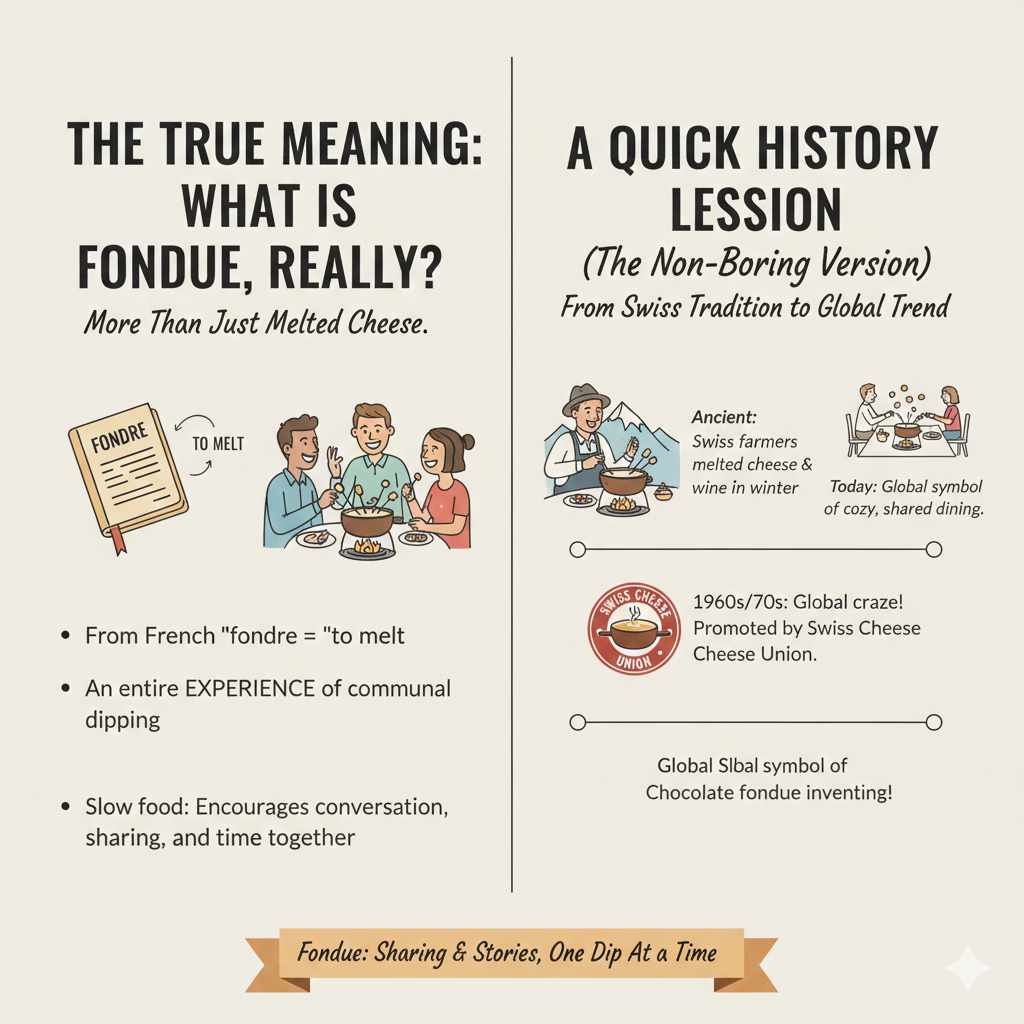
The True Meaning: What Is Fondue, Really?
The word “fondue” comes directly from the French word fondre, which means “to melt.” So, literally, fondue means “melted.” But it describes so much more than just a melted substance. It refers to the entire experience of dipping food into that communal pot.
If you’re used to quick microwave meals, fondue feels different. It’s slow food. It encourages conversation, sharing, and taking your time. It transforms a simple meal into an event.
A Quick History Lesson (The Non-Boring Version)
While it feels like a trendy 1970s fad, fondue is ancient, or at least, happily traditional. It started as a practical way for Swiss and Alpine farmers to use up stale bread and hard cheese during the long winters when fresh supplies were scarce. They melted the cheese with wine to soften it, creating a nutritious, warm meal.
The modern craze really took off in the 1960s and 70s, largely thanks to promotion by the Swiss Cheese Union to boost consumption of Swiss dairy products. They even introduced chocolate fondue as a dessert option! Today, it’s recognized globally as a symbol of cozy, shared dining.
Three Core Types of Fondue: Know Your Pot Contents
When someone asks, “What is fondue?”, they are usually focused on one of three main styles. Each one requires slightly different equipment and ingredients. Understanding these three types is key to choosing your perfect night in.
1. Cheese Fondue (The Classic Melting Pot)
This is the origin point. A rich, savory blend, usually involving Swiss cheeses like Gruyère and Emmentaler, melted with dry white wine and a touch of cornstarch or kirsch (cherry brandy) for stabilization. It is traditionally eaten with cubes of stale bread dipped using long forks.
- Key Ingredient Magic: The wine and cornstarch help keep the cheese smooth and prevent it from separating (called ‘breaking’ or ‘oiling out’).
- Dippers: Crusty bread, boiled small potatoes, blanched vegetables (like broccoli or cauliflower), and sometimes even apples.
2. Oil Fondue (Fondue Bourguignonne)
If cheese fondue is slow and cozy, oil fondue is fast and sizzly! This method involves heating a neutral-flavored, high smoke-point oil (like canola or grapeseed) in the fondue pot to around 350°F (175°C). Guests cook raw, bite-sized pieces of meat right at the table.
- Safety Note: Oil gets very hot. Never use plastic utensils or add watery vegetables directly to the oil, as this can cause dangerous splattering. Keep a fire extinguisher handy, just in case.
- Dippers: Cubes of beef tenderloin, chicken breast, shrimp, and firm vegetables.
For more information on safe cooking temperatures when using hot oil, always consult verified food safety guidelines. For example, the USDA Food Safety and Inspection Service provides excellent resources on cooking meats to safe internal temperatures.
3. Chocolate Fondue (The Sweet Finale)
This is often the easiest and most exciting for beginners. It involves gently melting high-quality chocolate (often mixed with heavy cream, milk, or liqueur) until smooth. No precise temperature stabilization is needed, just gentle, steady heat.
- Dippers: Strawberries, bananas, pretzels, marshmallows, pound cake cubes, dried apricots, and rice krispie treats.
The Gear: Setting Up Your Fondue Station Like a Pro
You don’t need a professional setup to enjoy fondue. The crucial piece of equipment is the fondue pot set. If you’re working with oil or keeping cheese very hot, you need a reliable heat source.
Essential Fondue Equipment
Here are the core components you’ll need:
- The Pot (Caquelon): Traditionally made of heavy ceramic or cast iron for even heat distribution, especially for cheese. For oil fondue, stainless steel is common.
- The Stand: This holds the pot above the heat source.
- The Burner/Rechaud: This is the heat source underneath. It usually uses a small can of sterno (canned gel fuel) or denatured alcohol, especially for cheese and chocolate. Oil fondue often requires a slightly stronger electric base or a dedicated high-heat burner.
- Dipping Forks: Long, thin forks, usually color-coded at the handle so everyone knows which fork is theirs! Never use these forks to stir or handle food near the flame—they should only be for dipping.
If you are making chocolate or cheese fondue, you can often get away with using a sturdy ceramic bowl set over a simmering pot of water (a double boiler setup) if you don’t own a dedicated set. However, for oil fondue, a proper, high-heat-rated pot is non-negotiable for safety.
Table Setup: Making It Easy and Safe
Setting up the table is half the fun. Here is a quick checklist to ensure everything runs smoothly:
| Station Element | Purpose | Beginner Tip |
|---|---|---|
| Heating Source (Pot/Burner) | Keeps the fondue flowing evenly. | Place the burner slightly off-center on the table so people don’t bump it while reaching. |
| The Dippers | Food items ready for dipping. | Cut everything into uniform, manageable, bite-sized pieces (about 1 inch). |
| Plates & Napkins | A place to put cooked food. | Use small individual plates—people often dip multiple times before putting their food down. |
| Sauces/Condiments | For oil-dipped meats. | Set up small bowls of garlic aioli, mustard, or BBQ sauce away from the main pot. |
The Big Secret to Perfect Cheese Fondue: Avoiding the Break
The most common fear when making cheese fondue is that the smooth, creamy sauce will suddenly turn grainy, oily, or separate into an unappetizing clump. This is called “breaking.” It usually happens because of sudden temperature changes or incorrect ingredient ratios.
Here are the secrets to a consistently silky cheese fondue:
Step 1: Choose the Right Cheese Ratio
You need cheeses that melt well and those that provide structure. A classic ratio is roughly 1 pound of cheese mixture for every 1 cup of liquid (wine/kirsch).
- The Melters (About 60%): Gruyère, Emmentaler, Vacherin Fribourgeois. These are nutty and creamy.
- The Stabilizers (About 40%): Fontsina or a mildly sharp Cheddar. These help bind the fats.
Step 2: Prepare the Cheese Correctly
Never melt big blocks of cheese! The outside will burn before the inside melts. Always grate the cheese; this vastly increases the surface area, allowing it to melt evenly.
Step 3: Use the Anti-Clump Coating
This is perhaps the most important tip. Toss your grated cheese lightly with 1 to 2 tablespoons of cornstarch or flour before it even touches the pot. This starch coats the fat molecules and prevents them from separating when heated.
Step 4: Gradual Heat and Wine Addition
The liquid (dry white wine or kirsch) must be warm, not boiling, when added. Do not dump all the cheese in at once. Add the cheese mixture to the warm wine mixture one small handful at a time, stirring constantly in a figure-eight motion until each addition is fully incorporated before adding the next.
Regarding wine, look for a dry, acidic white wine. Acids help break down the cheese proteins, leading to a smoother melt. If you are avoiding alcohol, you can use lemon juice diluted with broth, but the flavor profile will change.
Mastering Chocolate Fondue: Smooth As Silk
Chocolate fondue is forgiving, but if you want results that look professional, you need to understand gentle heating. The main hazard here is burning the chocolate, which makes it seize up and become gritty.
Chocolate Melting Rules
- Use Couverture or High-Quality Chips: Avoid standard grocery store chocolate chips if possible; they often contain stabilizers that prevent them from melting smoothly. Use good quality bars (60% to 70% cacao) or dedicated fondue chocolate melting wafers.
- The Gentle Introduction: Chocolate should almost always be melted using indirect heat. Use your stand’s lowest setting or a double boiler setup. The goal is to heat it slowly.
- Add the Fat Last: Melt the chocolate first until it is mostly smooth. Then, slowly stir in the heavy cream, milk, or liqueur. The added fat helps keep the final product glossy and fluid.
Did you know? Chocolate should never be heated much above 115°F (46°C) if you want to maintain its smooth texture, which is why low, consistent heat is essential for fondue.
Oil Fondue Safety: Cooking Meat at the Table
Cooking raw meat at the dining table feels exciting, but safety must come first. Oil fondue requires high heat, meaning we introduce a real fire risk if not managed correctly.
Mandatory Oil Fondue Pre-Dipping Checks
Before guests even sit down, perform these checks:
- Verify the oil pot is on a stable, level surface away from the edges of the table.
- Ensure the oil you are using has a high smoke point. Good choices include peanut, canola, or grapeseed oil. Olive oil is NOT suitable as it smokes and burns at lower temperatures.
- Do not overfill the pot. Oil should never be more than halfway full to prevent bubbling over when food is added.
The Cooking Process: Never Double Dip the Raw Meat
When dipping meat into hot oil, the goal is to cook it through safely. Since this is communal dining, we must prevent cross-contamination between the raw food and the pot.
- Using your designated color-coded fork, spear a single, raw piece of meat firmly.
- Carefully lower the meat into the hot oil. Hold it steady for a few seconds until it stops sputtering aggressively.
- Cook until the meat reaches a safe internal temperature (160°F for beef, 165°F for poultry).
- Crucial Step: Once the meat is cooked, remove it from the oil and place it immediately onto your individual plate. Never place a cooked piece of meat back into the raw oil pot, and never use your fondue fork to handle any other food items once it has touched the raw meat.
- Dip the cooked meat into the provided dipping sauces.
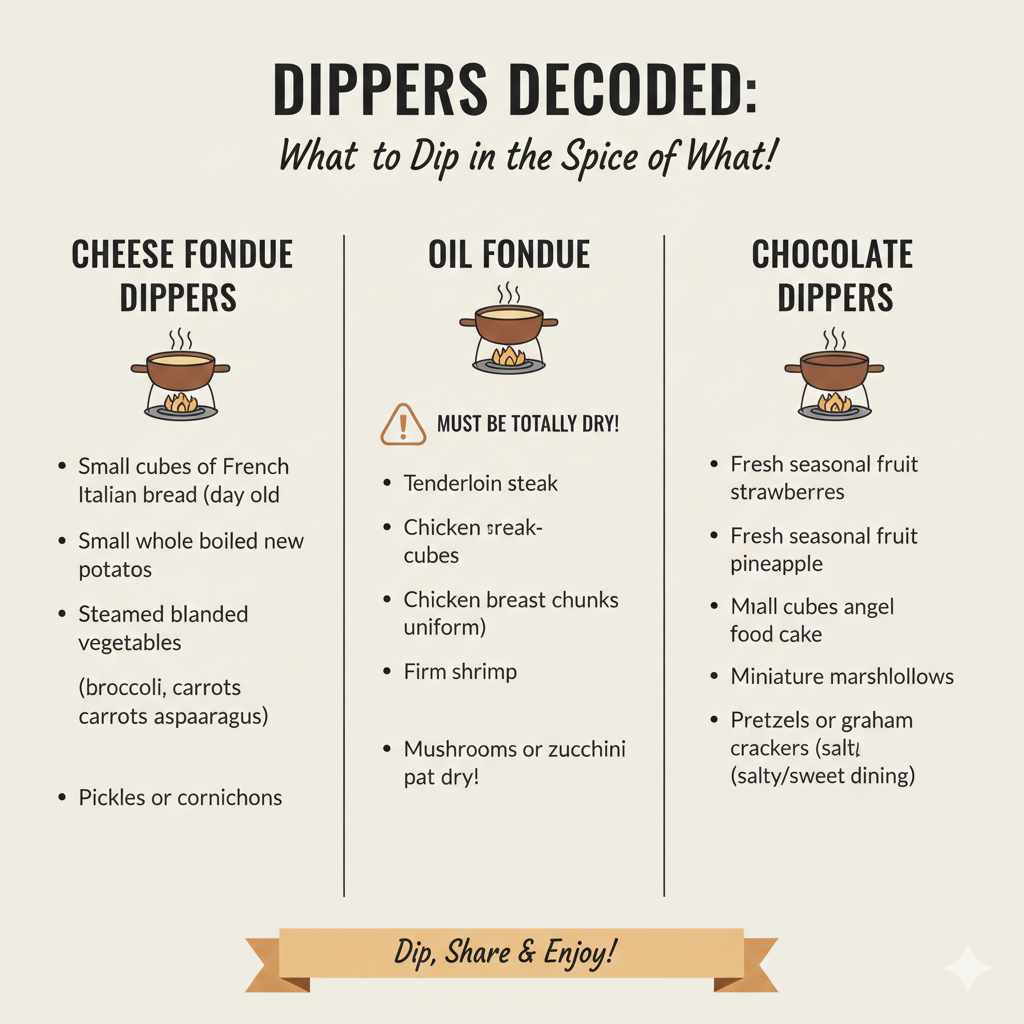
Dippers Decoded: What to Dip in What
The choices for dippers can make or break the fondue experience. Variety is the spice of life, so offer plenty of options!
Cheese Fondue Dippers
These need to be sturdy enough not to break off on the fork and absorbent enough to soak up the cheese.
- Small cubes of French or Italian bread (a day old is best).
- Small, whole boiled new potatoes (skin on is fine).
- Steamed or lightly blanched vegetables (broccoli, carrots, asparagus tips).
- Pickles or cornichons (the acid brightens the heavy cheese).
Oil Fondue Dippers
These must be totally dry, as water causes violent oil splatter.
- Tenderloin steak (cut into 1-inch cubes).
- Chicken breast chunks (ensure they are uniform).
- Firm shrimp.
- Mushrooms or zucchini chunks (pat them very dry before dipping!).
Chocolate Fondue Dippers
Focus on textural contrast: something soft, something crunchy, and something fruity.
- Fresh seasonal fruit (strawberries, pineapple, melon).
- Small cubes of angel food cake or pound cake.
- Miniature marshmallows.
- Pretzels or graham crackers (for salty/sweet contrast).
Troubleshooting Common Fondue Fails
Even with the best intentions, things sometimes go wrong. Don’t panic! As your automotive guide in the kitchen, I can tell you that every mechanical issue has a fix, and so does every kitchen ‘hiccup.’ Here’s how to get back on track.
| The Symptom | Likely Cause | The Quick Fix |
|---|---|---|
| Cheese is grainy/oily. | Heat was too high, or cheese was added too fast. | Remove from direct heat immediately. Stir in 1 teaspoon of good quality kirsch or lemon juice slowly to bring the emulsion back together. |
| Chocolate is seized/hard. | Chocolate got too hot or a tiny drop of water got in. | Remove from heat. Stir in 1–2 tablespoons of hot heavy cream or milk, stirring very gently until it loosens. |
| Oil is smoking heavily. | The temperature is set too high, or the oil is old/degraded. | Turn the heat down immediately. If it continues to smoke heavily, turn off the burner and add a few plain, uncooked potato slices to absorb some of the excess heat slowly. |
| Bread is hard to stab. | The bread is too fresh (too soft) or the pieces are too big. | Use bread that is a day old, or lightly toast/dry the cubes briefly in the oven before serving. |
FAQ: Your Burning Fondue Questions Answered
Q1: Do I need a special pot to make fondue, or can I use a regular saucepan?
For cheese and chocolate fondue, you can start the melting process in a saucepan on the stove. However, you must transfer it to a dedicated fondue pot with a low, steady heat source (like Sterno) to keep it warm and smooth while people eat. For hot oil fondue, a regular thin saucepan is unsafe; use a heavy-bottomed pot designed for high heat.
Q2: Can I make cheese fondue without wine?
Yes, you can! Wine adds necessary acidity to keep the cheese smooth, but if you want to avoid alcohol, substitute the dry white wine with fresh lemon juice diluted with vegetable or chicken broth. Use about two parts broth to one part lemon juice to mimic the acidity.
Q3: What happens if I drop my bread into the cheese pot?
If you drop your bread in and it stays submerged, tradition says you have to pay for the next bottle of wine or kiss the person next to you! Practically speaking, retrieve the soggy bread using one of the long fondue forks (or a slotted spoon if you are less traditional). Do not use your fingers.
Q4: How do I keep chocolate fondue from getting too thick as we eat?
Chocolate fondue naturally thickens as it cools, especially during a long, relaxed dipping session. The fix is simple and stress-free. Keep a small amount of warm heavy cream or milk nearby (not cold). If the chocolate starts to stiffen, stir in one tablespoon at a time until it loosens back to a smooth, pourable consistency.
Final Thoughts: Fondue Isn’t Fancy — It’s Fun
It’s not just melted cheese, hot oil, or warm chocolate. Fondue is shared joy in a pot. It’s conversation over perfection, laughter over rules, and food that slows everyone down in the best possible way.
Once you understand the basics — gentle heat, the right ingredients, and a little patience — fondue becomes one of the easiest and most rewarding meals you can make. Whether you’re dipping crusty bread into bubbling cheese, cooking tender bites of meat at the table, or ending the night with strawberries swirling in warm chocolate, fondue turns eating into an experience.
And that’s the real secret.
You don’t need professional skills, expensive gear, or culinary confidence. You just need a pot, a few good ingredients, and people you enjoy sitting around the table with.
So go ahead — plan that fondue night. Make it casual. Make it cozy. Make it delicious.
Because now that you know what fondue is, there’s nothing stopping you from dipping straight into happiness.