Why ‘Instant’ Isn’t the Goal: The Bed Bug Reality Check
You spot a rust-colored smear on your sheets and your stomach drops. You’ve heard the horror stories, and now you’re staring down the possibility of a bed bug infestation. The first thing you probably type into Google is ‘what kills bed bugs instantly.’ You want a spray, a powder, or a trick that ends this nightmare in a single evening. I get it. The anxiety is real, and the urge to nuke the problem with the strongest chemical you can find is overwhelming.
But here’s the hard truth from someone who has studied these pests: ‘instant’ is a marketing word, not a scientific one. A contact spray might kill a single bug in seconds if it hits it directly. That feels like victory. But a bed bug infestation is a colony, not a single invader. For every bug you see, there could be dozens hiding in seams, cracks, and behind baseboards. An ‘instant’ kill on one bug does nothing to the eggs that are glued to your mattress ticking or the nymphs tucked into a screw hole. True eradication takes time, patience, and a strategy that attacks every life stage, not just the adults you can see.

Ortho
Ortho Home Defense Max Bed Bug, Flea…
- READY-TO-USE APPLICATOR: Apply this bed bug spray for homes using the included Comfort Wand to target tight and hard-to-reach plac…
- BED BUG KILLER: Kill bed bugs, bed bug eggs, fleas and ticks with Ortho Home Defense Max Bed Bug, Flea & Tick Killer
- BED BUG SOLUTION SYSTEM: This indoor bug spray is a Step 2 product in the Ortho Bed Bug Solution System; use with Step 1: Detect a…
As an Amazon Associate I earn from qualifying purchases.
This guide is a myth-busting walkthrough of the fastest, most effective DIY methods. I’ll show you which products genuinely kill on contact, which ones take a day to work, and which ones are a waste of money. You’ll walk away with a realistic plan that prioritizes safety and results over false promises.
For a comprehensive approach, the Ortho Home Defense Max Bed Bug, Flea & Tick Killer is a solid choice. It comes ready to use with a Comfort Wand applicator that reaches tight spaces, and it’s formulated to kill pyrethroid-resistant bed bugs, which is a growing problem in many cities.
The 4 Fastest-Killing Methods (That Actually Work)
Let’s rank the methods by speed. This list separates what truly kills on contact from what kills over a few hours. Each has a place, but you need to know the difference before you start spraying.
Heat: The Only True ‘Instant’ Killer
Heat is the gold standard. A bed bug’s internal proteins denature at around 113°F (45°C). If you expose a bug to temperatures above 120°F (49°C), it dies within minutes. This is why professional exterminators use whole-room heaters that raise the temperature to 135°F for several hours.
For a DIY ‘instant’ fix, a handheld steam cleaner is your best weapon. The steam nozzle outputs vapor at 200°F or hotter. When you pass the nozzle slowly over a bug, it dies on contact. The steam also penetrates fabric and cracks, killing eggs that a spray might miss. The key is to go slow. A quick pass won’t transfer enough heat. You need to move at a pace of about one inch per second over the seams of your mattress, the folds of your sofa, and the edges of your baseboards.
One caveat: steam doesn’t kill what it doesn’t touch. You can’t steam inside a wall void or deep inside a box spring frame. For those spots, you need a different tool.
Diatomaceous Earth (DE): The 24-Hour Killer
Food-grade diatomaceous earth is a fine powder made from fossilized algae. It’s not a poison. It works mechanically. The microscopic sharp edges cut the exoskeleton of a bed bug, causing it to dehydrate and die. It takes a while—usually 24 to 48 hours after contact—but it is relentless.
DE is a residual killer. It stays where you put it for months. This makes it perfect for treating areas you can’t reach with a spray: behind headboards, under baseboards, and inside electrical outlet covers (after turning off the power). The trick is application. You want a thin, almost invisible dusting. If you pile it up, bed bugs will just walk around it. Use a small brush or a powder duster to apply a fine layer.
It’s not instant, but it is a critical part of a long-term plan. It catches the bugs that hatch days after you’ve treated the visible ones.
Rubbing Alcohol: The Contact Killer (With Caveats)
Isopropyl alcohol (70% or higher) kills bed bugs on contact. It dissolves their outer shell and dehydrates them. Spray it directly on a bug and it will die within seconds. That sounds perfect, but the reality is messier.
Alcohol evaporates quickly. It leaves no residual effect, so it won’t kill bugs that crawl through the area an hour later. You have to hit every single bug directly, which is nearly impossible when they’re hidden in a crack. It also doesn’t kill eggs. You’ll be spraying for weeks, chasing new hatchlings.
And there is a serious safety issue. Alcohol is highly flammable. Spraying a mist of it around your bed, near outlets, or close to a pilot light is a fire hazard. I’ve seen people recommend soaking a mattress in alcohol. That is a terrible idea. You’re essentially creating a bomb in your bedroom. Use it sparingly as a spot treatment, not as a primary strategy.
Steam: The Immediate Chemical-Free Solution
We touched on steam above, but it deserves its own space. A quality steam cleaner with a narrow nozzle is the single best tool for instant, chemical-free killing. The heat kills bugs and eggs on contact, and it’s safe for use on mattresses, sofas, and curtains.
The downside is the physical labor. You have to steam every seam, tuft, and fold. It’s slow work. A queen-sized mattress can take an hour to treat properly. But it’s effective, and it leaves no toxic residue behind, which matters if you have kids or pets.
After steaming, dry the area thoroughly. Bed bugs hate dry environments, but the moisture from steam can actually help them thrive if left unchecked. Use a fan or open a window to speed up drying.
The Best DIY Bed Bug Sprays and Powders
If you’re not ready to invest in a steam cleaner, a good spray is your next best bet. Look for products with active ingredients like pyrethrins, pyrethroids, or neonicotinoids. These are the standard chemicals used in most consumer bed bug sprays.
One product worth considering is the Ortho Home Defense Max Bed Bug, Flea & Tick Killer. It’s designed to kill pyrethroid-resistant bed bugs, which is a huge advantage. Many over-the-counter sprays fail because the local bed bug population has developed resistance to the active ingredients. This product specifically addresses that issue. It also comes with a Comfort Wand, which makes it much easier to inject spray into the cracks and crevices where bed bugs hide. You can use it on mattress seams, box springs, and baseboards. It’s not an instant kill, but it works quickly and leaves a residual effect that continues killing for weeks.
For powders, stick with food-grade diatomaceous earth. Avoid the pool-grade stuff, which is treated with chemicals and is dangerous to inhale. You can also find silica gel powders, which work similarly to DE but are often more effective. They absorb the waxy outer layer of the bug’s exoskeleton, causing rapid dehydration. Just like DE, apply them in a thin layer.
There are also aerosol sprays that foam. These are excellent for filling gaps and cracks. The foam expands to coat the inside of the void, which is where nymphs often hide. They’re not great for flat surfaces, but they complement a spray-and-powder routine perfectly.
How to Use These Methods Together: A Step-by-Step Plan
No single method wins this fight. You need a combined arms approach. Here is a sequence that works, based on how exterminators tackle infestations.
- Isolate the bed. Pull the bed away from the wall. Remove all bedding and wash it in hot water (at least 120°F) and dry it on high heat for 45 minutes. This kills all life stages on the fabric.
- Encase the mattress and box spring. Buy high-quality bed bug encasements. These are zippered covers that trap any bugs inside and prevent new ones from getting in. Leave them on for at least a year. Bed bugs can live that long without feeding.
- Vacuum thoroughly. Use a vacuum with a HEPA filter. Go over the mattress seams, the box spring, the bed frame, and the carpet around the bed. Pay attention to the edges of the carpet where it meets the baseboard. Dispose of the vacuum bag in a sealed plastic bag immediately after.
- Steam the furniture. Use your steam cleaner on the mattress, box spring, and bed frame. Go slow and methodical. Focus on tufts, seams, and any dark spots that look like pepper flakes (that’s fecal matter).
- Apply the spray. Use the Ortho spray along the seams of the box spring and the joints of the bed frame. Spray into every crack and crevice you can find. Don’t soak the mattress; a light mist is enough for the surface, but be generous in the crevices.
- Dust with DE. Apply a thin layer of DE around the legs of the bed, under the baseboards, and in any cracks. This creates a barrier that bugs must cross to reach you.
- Install traps. Place bed bug traps under each leg of the bed. These are plastic cups with a slippery interior that traps bugs trying to climb up. This is both a control measure and a monitoring tool.
This entire process takes a full day. It’s exhausting, but it’s the most effective DIY sequence you can run. You’ll need to repeat the vacuuming and steaming steps every few days for two weeks to catch newly hatched bugs.
Critical Safety Warnings: What Not to Do
Many DIY attempts fail because people make the situation worse. Here are the biggest mistakes I see, and why they backfire.
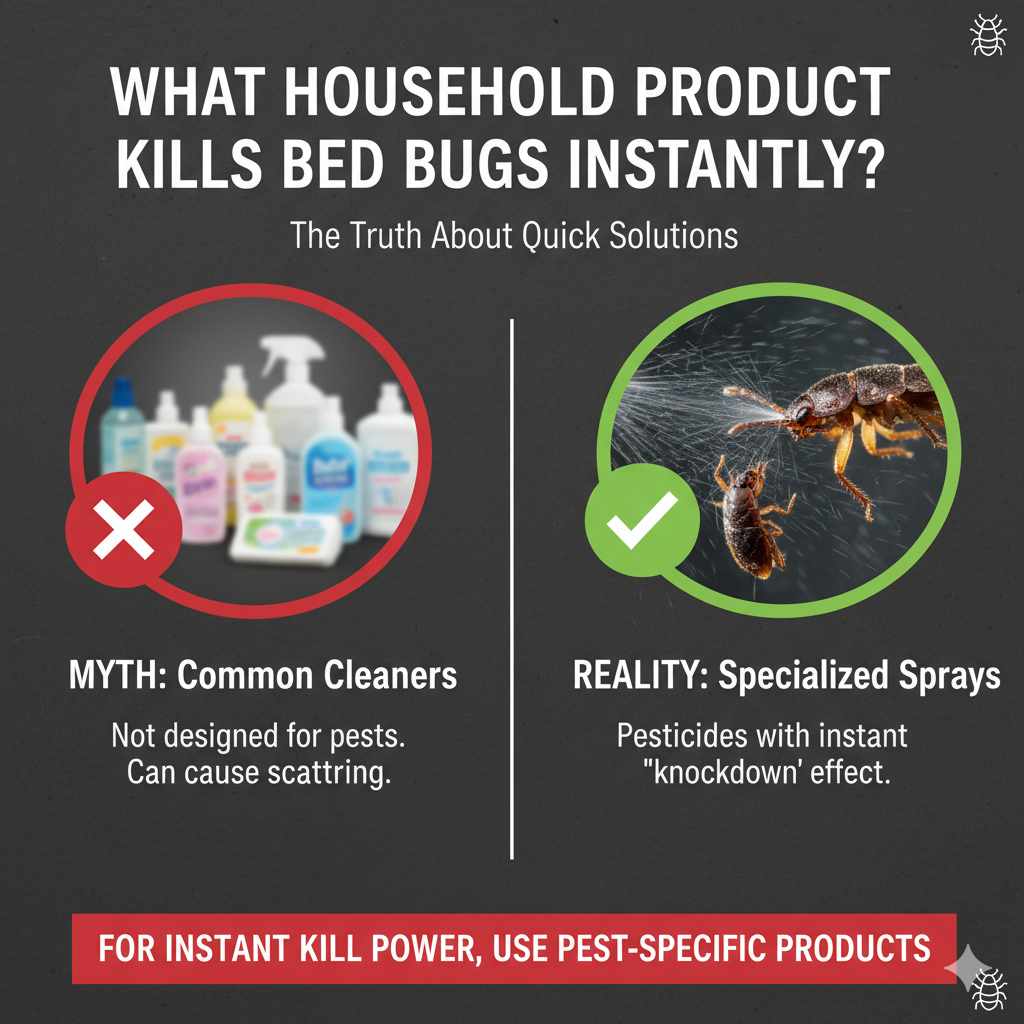
Never use a bug bomb (fogger). This is the most common and most destructive mistake. Bug bombs aerosolize a pesticide that fills the room. The mist doesn’t penetrate the deep cracks where bed bugs hide. It actually scatters the bugs, pushing them deeper into your walls and into adjacent rooms. You’ll end up with a larger infestation that’s harder to treat. Plus, the residue is toxic and requires a thorough cleaning of every surface.
Don’t use rubbing alcohol as a room treatment. As mentioned, it’s a fire hazard. I’ve read news reports of homes catching fire after owners sprayed alcohol near a spark. It’s not worth the risk.
Avoid overusing DE. While DE is safe to eat (food grade), it’s not safe to inhale. The fine dust can irritate your lungs. Wear a dust mask when applying it. And don’t pile it up. A thin layer is more effective and creates less airborne dust.
Don’t throw away your mattress immediately. This is a common panic reaction. A mattress is expensive, and throwing it away doesn’t solve the problem. The bugs will just hide in your bed frame or baseboards. You’ll be out a mattress, and you’ll still have bed bugs. Treat the mattress with encasements and steam. Only dispose of it if it’s heavily soiled or torn, and even then, cut it up or mark it clearly so someone else doesn’t pick it up and spread the infestation.
Don’t ignore the clutter. Bed bugs are expert hiders. If your room is full of clutter, they have thousands of places to hide. You can’t treat every surface. You have to reduce the clutter. Box up items in plastic bins, seal them tightly, and move them out of the room. This gives the bugs fewer places to retreat to and makes your treatment more effective.
How to Know You’ve Won: Verification and Prevention
How do you know the fight is over? You can’t just assume that because you haven’t seen a bug in a week, they’re gone. Bed bugs are masters of hiding. Here’s how to verify success.
First, keep the monitoring traps under your bed legs. Check them every few days. If you see a trapped bug, you’re not done. Continue your treatment. If you go two full weeks without a single bug in the traps, that’s a good sign. But don’t celebrate yet. You need to go a full month without any signs of new activity.
Second, inspect your body and your sheets every morning. Look for new bed bug bites. The bites are typically small, red welts, often in a line or cluster. If you wake up with new bites after two weeks of treatment, you have a surviving population. Go back to the steaming and spraying routine.
Third, look for the physical signs. Check the seams of your mattress and the corners of your furniture for dark fecal spots, shed skins (which look like translucent husks), or the bugs themselves. A flashlight is essential for this. Bed bugs are nocturnal and hide in dark places, so you need to be thorough.
Prevention is a continuous process. Once you’ve cleared the infestation, keep your bed encased. Leave the traps in place. Vacuum the perimeter of your room weekly. And be careful about bringing used furniture home. Inspect it thoroughly before you bring it inside. A quick check can save you months of misery. If you’re traveling, check the hotel mattress and headboard for signs of bed bugs before you unpack. You can learn more about bed bug identification to sharpen your inspection skills.
When to Call a Professional: The Cost-Benefit Analysis
DIY treatment is cheap but costly in time and effort. A professional treatment is expensive but saves you weeks of labor. Here’s a realistic look at the numbers.
A full DIY kit—steam cleaner, encasements, spray, DE, and traps—will run you around $200 to $400 upfront. The steam cleaner is the biggest expense, but you’ll own it for other cleaning tasks. The ongoing cost of spray and DE is maybe $50 per month of treatment.
A professional exterminator typically charges between $300 and $1,500 depending on the size of your home and the severity of the infestation. Heat treatments are the most expensive, often $1,000 or more, but they’re usually a one-and-done solution. Chemical treatments are cheaper but may require multiple visits over several weeks.
So, which should you choose? If your infestation is caught early—you’ve only seen a few bugs, and they’re confined to the bed—DIY is a viable option. You can handle it with the plan above. But if you’ve had the infestation for months, if it’s spread to multiple rooms, or if you’ve tried DIY and failed, call a professional. The cost of repeated failed DIY attempts—in money, time, and lost sleep—quickly exceeds the cost of a professional service.
There’s also a middle path. Some pest control companies offer a ‘DIY plus inspection’ service. They’ll do an initial inspection, provide you with professional-grade products, and then come back to verify the results. This is a good compromise if you want to save money but want the peace of mind of a professional assessment.
Frequently Asked Questions (FAQ)
Does bleach kill bed bugs instantly?
Bleach can kill bed bugs on contact because it’s a strong oxidizing agent that damages their exoskeleton. However, it’s not a practical solution. The fumes are toxic, it can damage your mattress and fabrics, and it doesn’t penetrate cracks. It’s also dangerous to mix with other cleaners. You’re better off with a dedicated bed bug spray or steam.
Can I use a hairdryer to kill bed bugs with heat?
A hairdryer doesn’t get hot enough to kill bed bugs reliably. Most hairdryers top out at around 140°F, but they don’t deliver the sustained heat needed to raise the temperature inside a mattress seam to lethal levels. You’d have to hold it in one spot for several minutes, which is impractical. A steam cleaner is a much better investment.
How long does it take for diatomaceous earth to kill bed bugs?
It takes about 24 to 48 hours for DE to kill a bed bug after it crawls through the powder. The sharp particles cut the exoskeleton, and the bug dies from dehydration. It’s not a quick fix, but it’s a great residual barrier that keeps working for months.
Will vacuuming alone get rid of bed bugs?
No. Vacuuming removes the bugs and eggs you can see, but it can’t get into the deep cracks and crevices. A vacuum is a great first step to reduce the population, but you must follow it up with steam, sprays, and DE to kill the hidden bugs. You’ll also need to vacuum daily for a week or two to catch newly hatched bugs.
Are bed bug bites dangerous?
For most people, bed bug bites are not dangerous. They cause itchy welts that can be annoying, but they don’t transmit diseases. However, some people have severe allergic reactions that require medical attention. The bigger risk is a secondary skin infection from scratching the bites. If you see signs of infection, like redness, swelling, or pus, see a doctor.
What to Do Right Now
You’ve read the details. Here’s the short version you can act on tonight.
- Stop looking for a single ‘instant’ fix. It doesn’t exist. You need a multi-step plan.
- Wash and dry all bedding on high heat immediately. This is your first, easiest win.
- Buy mattress and box spring encasements. They trap bugs and prevent new ones from getting in.
- Get a steam cleaner and treat every seam, tuft, and fold of your bed and sofa. Go slow.
- Use a spray like Ortho Home Defense Max on cracks and crevices to kill resistant bugs and leave a residual barrier.
- Apply a thin dusting of food-grade diatomaceous earth around the bed and baseboards for long-term protection.
- Monitor with traps for a full month after your last sighting. Only then can you be sure you’ve won.
This fight is a marathon, not a sprint. It requires patience and a willingness to repeat the boring steps. But with the right tools and a realistic mindset, you can reclaim your home. You can also check our guide on where bed bugs hide to make sure you’re targeting the right spots.