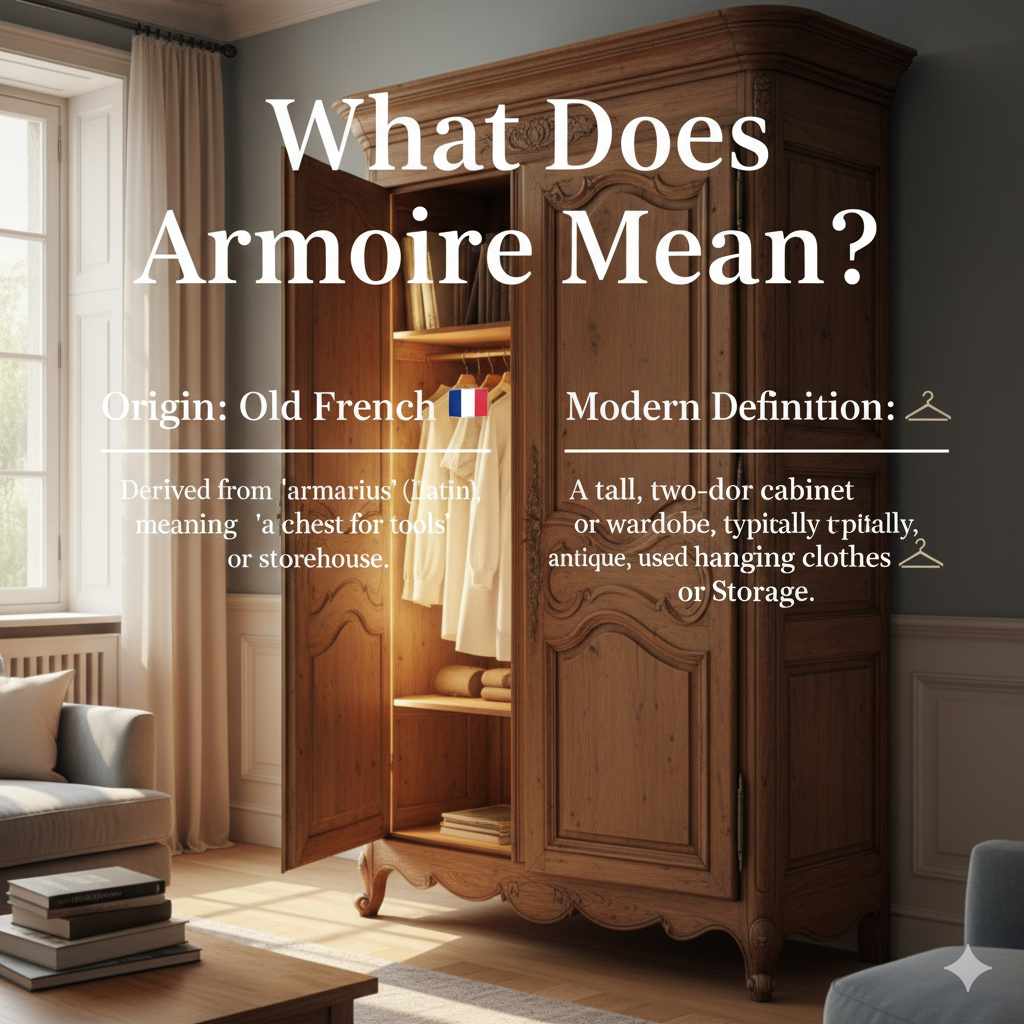
Armoire Definition: Meaning, Size, and Wardrobe Difference
An armoire is a tall, freestanding storage cabinet with doors, shelves, and usually a hanging rail, the movable forerunner of the built-in closet. The distinction matters when you buy: hanging shirts and jackets on standard hangers needs at least 24 inches of interior depth, and many armoires only clear a doorway on their side or with the doors removed. This guide covers the definition, the armoire versus wardrobe difference, key features, modern uses, and how to choose one.
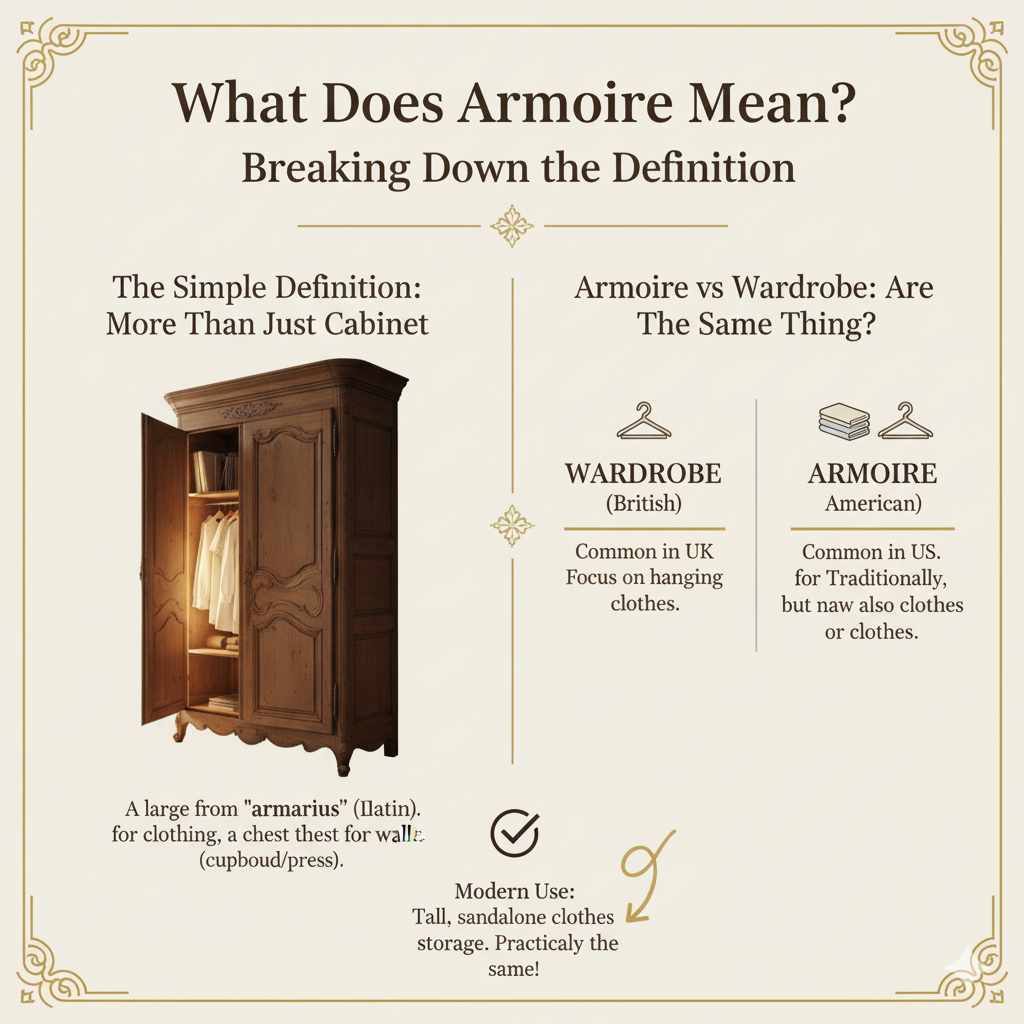
What Does Armoire Mean? Breaking Down the Definition
To truly understand what an armoire is, we need to look at its roots and its function. It’s more than just a big box with doors; it’s a specific type of storage furniture that has evolved over centuries.
The Simple Definition: More Than Just a Cabinet
At its core, an armoire is a large, freestanding cupboard. It is primarily designed for storing clothing, similar to a modern wardrobe or closet. The key differentiator is its standalone nature—it isn’t built into a wall like a traditional closet.
The word itself comes from the French word “armoire,” which broadly translates to “a cupboard or press.” In older European homes, where built-in closets were rare, these pieces were essential for keeping expensive garments safe and organized.
Armoire vs Wardrobe: Are They the Same Thing?
This is perhaps the most common point of confusion. While often used interchangeably in modern retail, there are subtle distinctions, largely based on geographic location and traditional design:
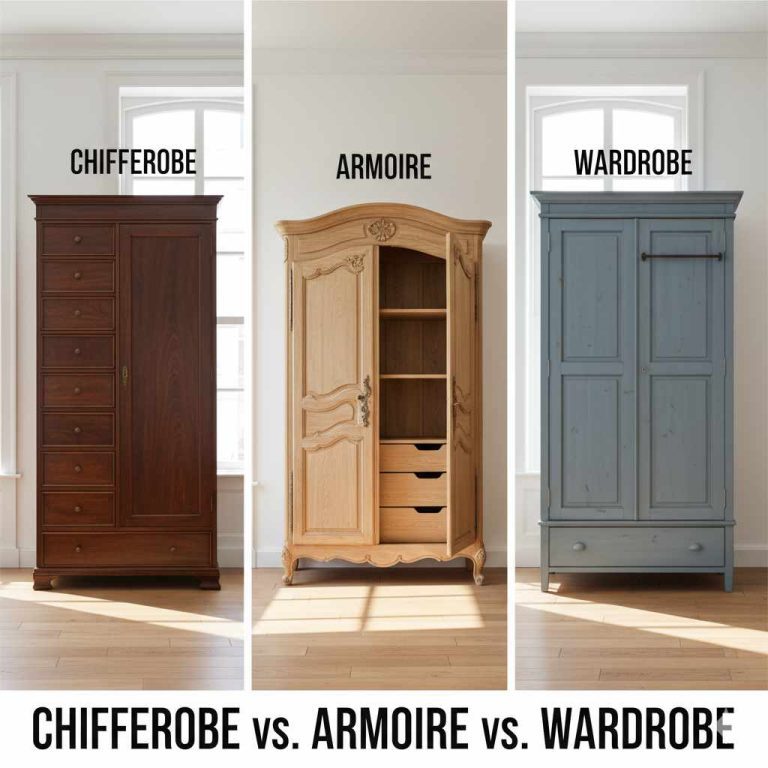
Wardrobe: This term is more common in British English and often implies a piece specifically designed for hanging clothes (a clothes press).
Armoire: This term is more common in American English. Traditionally, an armoire was often used for storing linens, dishes, or even serving as a television cabinet, though clothing storage is its most popular modern use.
For most shoppers today, especially when looking at furniture online, an armoire and a wardrobe serve the same basic function: tall, standalone clothes storage. If you are buying something tall that closes with doors and holds your shirts, it is practically an armoire.
A third term muddies this further in vintage listings, since a chifferobe combines hanging space with a bank of drawers. Our breakdown of chifferobe vs armoire vs wardrobe sorts out which label fits which piece.
The History of the Armoire: Why It Became Necessary
To appreciate this piece of furniture, it helps to know where it came from. The armoire has a rich history tied to security, travel, and changing home architectures.
From Medieval Times to the Renaissance
In the Middle Ages and early Renaissance periods (think 14th through 16th centuries), homes were often drafty and lacked built-in storage solutions like plaster-lined closets. Clothing, tapestries, and valuable linens needed protection from dust, dampness, and sometimes theft.
The armoire served as a portable, highly decorative safe for these items. Because they were heavy and often made of solid, carved wood, they represented a significant investment. They weren’t just functional; they were status symbols showing wealth and taste.
The Influence of Transportation
Crucially, the armoire had to be designed to be transportable. Before modern moving vans, large furniture often needed to withstand being carried across great distances or moved between estates. This necessity influenced their construction, favoring strong, robust frames, sometimes even designed to be partially dismantled.
The Modern Shift and Decline
With the rise of more permanent housing styles, central heating, and improved home construction in the 18th and 19th centuries, built-in closets became standard, especially in North America. This caused the armoire to fall slightly out of primary use for clothing storage.
However, the resurgence of smaller living spaces and the desire for flexible, decorative storage brought the armoire back in the 20th and 21st centuries. Today, it’s celebrated for its aesthetic appeal and flexibility, often being used to house media centers or serve as stylish pantry storage in kitchens.
Best Armoire Pick
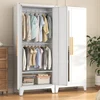
72-Inch Tall Metal Armoire Wardrobe Closet – $139.99
A freestanding, movable clothes cabinet in exactly the sense this guide defines, at a fraction of what a solid-wood armoire costs.
- Best for: Renters who want the standalone, relocatable storage this guide describes without solid-wood weight
- Why we picked it: The 72-inch height leaves room for the full-length hanging this guide says to check before buying
- Main drawback: Metal construction cannot be refinished the way the solid-wood pieces in this guide can
Compare more armoire and armoire-care options
 Option 1 Howard Feed-N-Wax Beeswax Wood Polish – $11.48
|
 Option 2 Homode Cedar Blocks for Clothes Storage – $17.99
|
 Option 3 VOWNER 71-Inch Armoire with 3 Drawers and Mirror – $302.09
|
As an Amazon Associate we earn from qualifying purchases.
Anatomy of an Armoire: Key Features to Look For
When shopping, knowing the parts of an armoire helps you compare features and decide which one suits your needs best. Think of it like checking the important systems on your car before buying—you need to know what’s under the hood of the furniture itself.
Structural Components
Most proper armoires share a few fundamental structural elements:
1. The Body/Carcass: This is the main box structure that holds everything together. It needs to be sturdy.
2. Doors: Usually, armoires have two large doors, though some singular or four-door styles exist. Hinges must be strong to support the weight of the doors over time.
3. Base/Feet: Depending on style, it might sit directly on the floor or be elevated on decorative feet, which affects how easy it is to clean underneath.
4. Hardware: This includes the handles, pulls, and locks (if present). Good quality hardware will feel solid and operate smoothly.
Interior Configurations
The interior layout is critical. Unlike a dedicated dresser with only drawers, an armoire offers versatility. The internal setup usually falls into one of three main categories:
| Configuration Type | Primary Use | Typical Interior Features |
| :— | :— | :— |
| Hanging Armoire | Primary clothes storage (suits, dresses) | Full-length hanging rod |
| Shelved Armoire | Linens, books, folded items | Fixed or adjustable shelves |
| Mixed-Use Armoire | Versatility, media centers | Combination of drawers, shelves, and a rod |
If you plan to hang up longer items, make sure that the armoire you choose offers enough vertical clearance, often around 50 to 60 inches for standard length clothing.
Modern Uses for Your Armoire: Beyond Just Clothes
While its traditional role was storing garments, today’s armoire is a champion of multi-purpose storage. Its enclosed, large volume makes it perfect for hiding clutter or housing specialized equipment.
1. The Entertainment Center Armoire
This was a massive trend in the late 1990s and early 2000s. An entertainment armoire is specifically designed to hide a television.
How it works: The TV sits on a platform or shelf inside the unit. When you want to watch, you open the doors. When you’re done, you close the doors, and the TV disappears, leaving you with a piece of traditional looking furniture.
Modern Note: Since modern flat-screen TVs are much thinner, many new entertainment armoires are shrinking or disappearing altogether in favor of lower media consoles. Still, they are great for hiding game consoles, wires, and gaming equipment when not in use.
2. Office and Craft Storage
For those working from home without a dedicated office, an armoire can be a lifesaver.
It keeps paperwork, craft supplies, or expensive electronics out of sight when the workday ends.
You can outfit the inside with a small desk surface, file holders, and shallow shelves. This creates a portable, easily disguised “cloffice” (closet office).
3. Kitchen or Dining Room Pantry
In older homes or spaces with limited kitchen cabinetry, an armoire serves beautifully as a freestanding hutch or pantry. Look for styles with deep shelves for pantry staples or glass doors to display nice china.
4. Linen and Towel Storage
Bedding and towels take up a surprising amount of space. A deep, shelved armoire is ideal for keeping guest linens organized and dust-free in a hallway or spare room.
Choosing the Right Armoire: A Practical Checklist
Buying furniture is an investment. Before you commit, run through this checklist to ensure the armoire fits your space, your style, and your needs. This is similar to checking the specifications on a new car part to ensure it fits your model!
Step 1: Measure Twice, Buy Once
The biggest mistake people make is buying an armoire that won’t fit through doorways or into the intended space.
Measure the Room: Note the height, width, and depth where the armoire will sit.
Measure the Path: Measure every doorway (including the front door and any hallway clearances) that the piece must pass through. Many large armoires can only fit through if they are laid on their side or if the doors are temporarily removed.
Check Ceiling Height: If you want to hang long items, confirm the interior height allows for this, keeping in mind the thickness of the top panel.
Step 2: Assess Your Storage Needs
What are you primarily storing? This dictates the interior layout you need.
If it’s for suits, you need a hanging rod.
If it’s for books, you need strong, adjustable shelving.
If it’s for folded sweaters, you might prefer deep drawers at the bottom and some hanging space above.
Step 3: Material Matters for Longevity
The material affects durability, weight, and price.
Solid Wood: (Oak, Cherry, Maple) Extremely durable, heavy, and often the most expensive. This offers the best long-term value and can be refinished many times.
Veneered Plywood/MDF: Lighter and often more affordable. Good quality veneers can look fantastic, but deeper scratches expose the material underneath. Check the thickness of the wood used for internal shelving—thin particleboard might sag under the weight of heavy dishes or books. For building standards and material quality, resources like the U.S. Department of Commerce’s resources on wood products can be helpful in understanding terminology.
Step 4: Style and Finish Coordination
The armoire is a statement piece because of its size. You want it to look good!
Traditional: Look for dark woods, carved details, and ornate hardware (brass or oil-rubbed bronze).
Modern/Minimalist: Favor clean lines, lighter woods (like birch or maple), or painted finishes (white, black, or gray). The doors might be flat panels rather than recessed or paneled.
Farmhouse/Rustic: Distressed finishes, metal accents, and slightly chunkier proportions work well here.
Placement Considerations: Where Should the Armoire Go?
Because an armoire is a large, substantial piece of furniture, its placement matters greatly for both function and the flow of the room.
1. As a Room Divider (In Large Spaces): A very tall, heavy armoire can sometimes be used effectively near the center of a very large, open-plan room to softly divide a sleeping area from a sitting area without building a permanent wall. Ensure the back is finished neatly if you plan to use it this way.
2. Against a Solid Wall: This is the safest and most traditional placement. Ensure there is enough room to fully open the doors without hitting other furniture or walls—ideally, allow for the door swing plus a foot or two of maneuvering space.
3. Security and Anchoring: This is crucial, especially if you have children or pets. Tall furniture can tip over if pulled or climbed on. Always anchor your armoire securely to the wall using anti-tip hardware, similar to how you would secure a heavy bookshelf. Safety guidelines from organizations focused on home safety emphasize this practice.
Armoire Maintenance: Keeping Your Investment Looking Great
Treating your armoire right ensures it lasts for generations. Good maintenance keeps the wood healthy and the moving parts operating smoothly.
Caring for Wood Finishes
Dusting and cleaning wood properly prevents dulling and damage.
Routine Dusting: Use a soft, clean microfibre cloth weekly. Wipe gently in the direction of the wood grain.
Cleaning Spills: If something spills (like coffee or water rings), address it immediately. For light surface grime, a slightly damp cloth followed immediately by a dry cloth works well.
Conditioning: Depending on the wood type and finish, you may want to apply a quality paste wax or wood polish every 6 to 12 months. This helps maintain moisture in the wood and protects the finish. Avoid silicone-based sprays, which can build up residue over time.
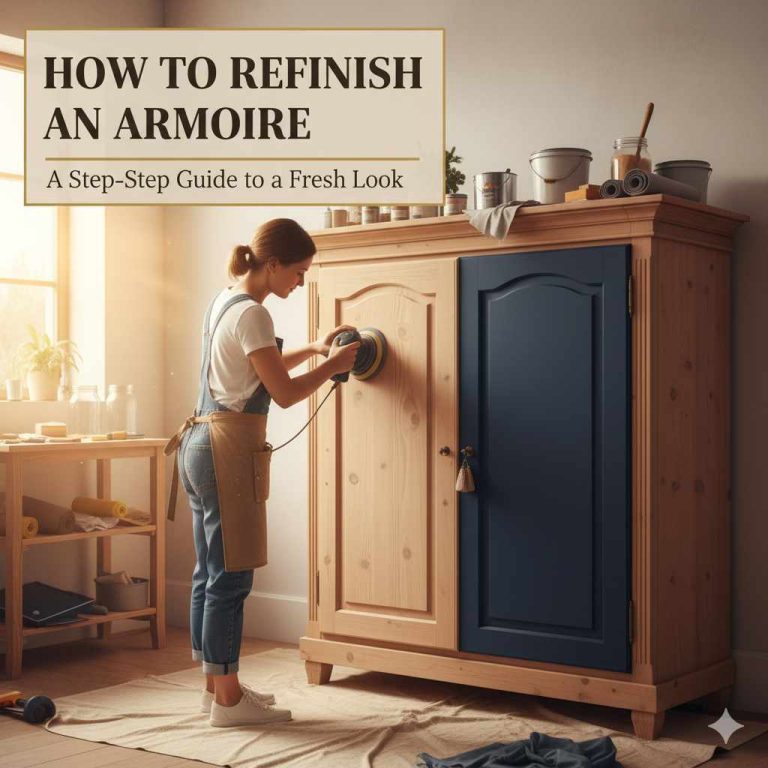
When waxing no longer hides the wear, stripping and recoating is the next step, covered in our guide to refinishing an armoire.
Maintaining Moving Parts (Hinges and Doors)
If the doors start sagging, sticking, or squeaking, it likely needs simple adjustment.
1. Tighten Screws: Check all visible screws on the hinges and door mounts. Often a loose screw is the culprit for a sagging door. Use a screwdriver (not a power drill, unless you are experienced) to tighten gently.
2. Adjust Hinges: Most modern hinges have adjustment screws that allow you to move the door up/down, in/out, or side-to-side until it aligns perfectly. Consult the manufacturer’s manual if available, but usually, turning the screw slightly will correct minor misalignment.
3. Lubrication: If hinges squeak, a tiny drop of non-staining lubricant (like silicone spray applied to a cloth, not directly onto the wood) on the pivot points can stop the noise.
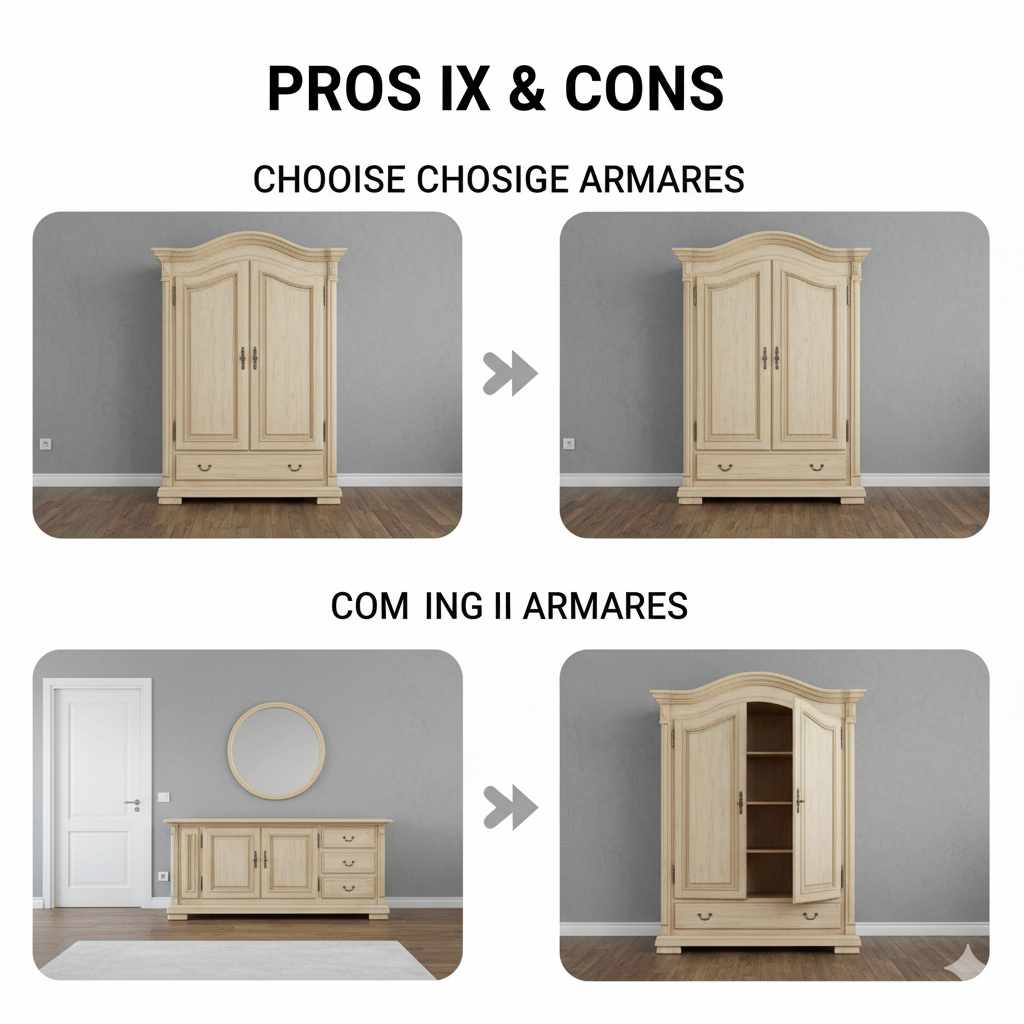
Pros and Cons of Choosing an Armoire
Like any major furniture purchase, an armoire comes with clear advantages and a few things to consider.
Advantages (Pros)
Aesthetic Impact: They add immediate presence and character to a room, often serving as a visual anchor.
Concealed Storage: Doors hide clutter beautifully, making a room look instantly tidier.
Flexibility: They are easily moved if you change your room layout or move homes (unlike built-in closets).
Versatility: Can be adapted for clothing, media, office supplies, or kitchen storage.
Disadvantages (Cons)
Space Hog: They take up a significant floor footprint. They are generally not suitable for very small rooms.
Weight and Moving: They are extremely heavy, making installation and future moves potentially difficult or costly.
Accessibility: You must open doors to access anything inside, unlike open shelving. If storage is accessed frequently (like during a busy morning routine), this can be slightly slower than an open closet.
Frequently Asked Questions about Armoires (FAQ)
Q1: Is an armoire expensive compared to a dresser?
Generally, yes. Because an armoire is larger, taller, and often requires more complex construction (doors, internal hanging mechanisms), it usually costs more than a standard chest of drawers of comparable wood quality.
Q2: Can I use a regular wooden cabinet as an armoire?
You can, provided it is tall enough and sturdy enough. If you intend to hang clothes, you must install a proper hanging rod securely into the side panels. If it doesn’t have doors that close fully, it will function more like an open shelving unit.
Q3: What is the difference between an armoire and a closet system?
An armoire is a single, freestanding piece of furniture with its own structure. A closet system usually involves modular shelving, cabinetry, and rods that are installed directly against the wall space or inside a dedicated alcove, forming an integrated storage area.
Q4: How deep should an armoire be for hanging clothes?
For standard hangers (like those used for shirts and jackets), you typically need an interior depth of at least 24 inches. If you are storing very wide items or wish to use specialized hangers, aim for 26 inches or more.
Q5: Should I buy a new armoire or second-hand?
Buying second-hand, especially older, solid wood pieces, is often a great value. Older armoires were built to last. However, ensure all doors and drawers open smoothly and check for signs of pest damage (small boreholes in the wood) before purchasing used furniture.
Q6: Are armoires still in style today?
Yes, very much so! While dedicated TV armoires have waned, the classic, large wardrobe armoire is popular again for maximizing storage in apartments, adding character to bedrooms, or utilizing the piece for stylish office or kitchen storage.
Conclusion: Your Confident Guide to the Armoire
Now you have a clear picture of what an armoire means. It’s not just a confusing piece of antique terminology; it’s a versatile, strong, and often beautiful storage solution—a freestanding cabinet that protects and organizes everything from fine suits to important office files. We covered its historical roots, the key internal parts you need to check, and how it easily adapts to modern living rooms, bedrooms, or even offices.
Remember, whether you are seeking a tall piece to hide the clutter or a decorative focal point, checking the construction (especially the wood quality and hinge strength) and measuring your space are your two most important steps. You now have the knowledge to confidently search for, purchase, and place the perfect armoire for your home, turning a potential furniture headache into a smart, stylish storage win. Go ahead and look for that perfect piece; you know exactly what you are getting!
Products related to this article
Sponsored / affiliate links. As an Amazon Associate I earn from qualifying purchases. I may earn additional commission from eligible campaigns.