Wampat TV Stand Review: Is It Worth Buying for Your Space?
A Wampat TV stand is worth buying if you need affordable storage and your TV fits the model’s stated size and weight limits. Pick the widest unit that still clears your wall and leaves room for cables. Choose badly and you can block vents, strain the top panel, or run out of storage fast. This guide checks size picks, storage layout, build quality, weight capacity, and fit for living rooms, apartments, and smaller media setups.
This guide is part of our TV stand guide: types, sizes, setup, and style series.
Verdict

For the right buyer, the value is practical, not flashy: a wide console, enclosed storage, and a layout that handles common streaming gear. For the wrong buyer, the limits show up quickly. Deep AV receivers, oversized soundbars, and uneven floors can turn a good-looking console into a cramped setup.
Pros and cons
- Pros: Sliding barn doors hide clutter; adjustable shelves help with component height; the tabletop is rated to 220 pounds; the finish is described as waterproof and scratch-resistant.
- Cons: Manufactured wood is easier to chip at the edges than solid wood; large soundbars and deep receivers can crowd the center bay; assembly quality depends on hardware fit and hole alignment.
Who it’s for: shoppers who want a TV stand with enclosed storage, farmhouse or rustic styling, and enough width for a mid- to large-size screen. It is less suitable if you need deep AV storage, a very heavy component stack, or furniture that can tolerate rough handling and frequent moves.
📊 One Wampat model fits flat curved screen TVs up to 85 inches. Source: WAMPAT Buying Guide & Brand Review (Oct. 2026 Updated).
Specs at a glance
| Spec | Wampat model details | What it means in use |
|---|---|---|
| TV size compatibility | Up to 85 inches on one listed model; other Wampat listings are also sold for up to 65 inches and up to 75 inches | Size compatibility depends on the exact model, not the brand name alone |
| Overall dimensions | 78.6 inches wide, 15.4 inches deep, 23.6 inches high | Wide enough for large screens, but the depth is still modest for bulky gear |
| Top weight capacity | 220 pounds | Enough for most TVs in this class, with room left for a soundbar if the layout allows |
| Adjustable shelf capacity | 30 pounds per shelf | Fine for consoles, streaming boxes, and smaller receivers; not a free pass for heavy AV stacks |
| Storage layout | Two spacious cabinets and three large open storage spaces | Good mix of concealed and open storage |
| Material | Thick manufactured wood | Budget-friendly and easy to wipe down, but more prone to edge wear than solid wood |
| Finish | Waterproof and scratch-resistant finish | Helps with cleaning and day-to-day scuffs |
| Sustainability claim | Cabinet wood is described as FSC-certified | Useful if certified sourcing matters to you |
| Style | Sliding barn doors with farmhouse look | Works best in farmhouse, rustic, and some industrial rooms |
| Listed variant | 79.0 x 15.3 x 23.6 inches, 110.0 pounds | Shows that Wampat sells closely related size variants, not one universal layout |

Who it is for
A Wampat TV stand fits three common buyer types best: a small apartment setup that needs concealed storage without a huge footprint, a family room that needs a wide top and cabinet space, and a media-heavy room where you want more than a plain open shelf. The key is matching the exact model to the gear you own.
Small apartment setup
If your room is tight, the appeal is the mix of width and enclosed storage. A 78.6-inch console can still feel large in a studio or one-bedroom, so this is best when your wall can take the visual weight and you need the cabinets to replace separate storage furniture. If the TV is 65 inches or smaller, the stand may feel generous rather than cramped.
Family room setup
For a family room, the bigger Wampat sizes make more sense. The broad top, cabinet doors, and open centers can hold streaming devices, remotes, and game accessories while keeping the front of the room calm. This is the best use case for households that want one console to do the work of a media cabinet and a storage credenza.
Media-heavy setup

- Lowest price at $66.49 makes it accessible
- 110 lb top capacity handles most 65-inch TVs
- Open shelves provide flexible gear storage
If you own a large receiver, a center-channel speaker, a game console, and a soundbar, this is the most demanding scenario. The stand can work, but only if the shelf openings and depth match your gear. The stated 30-pound shelf rating is only part of the check, physical clearance matters just as much.
Say your TV is 85 inches but your center-channel speaker is deep and tall. The width may work, yet the cabinet openings can still fail you if the speaker blocks the doors or cuts off cable bends at the back.
What the proof asset shows
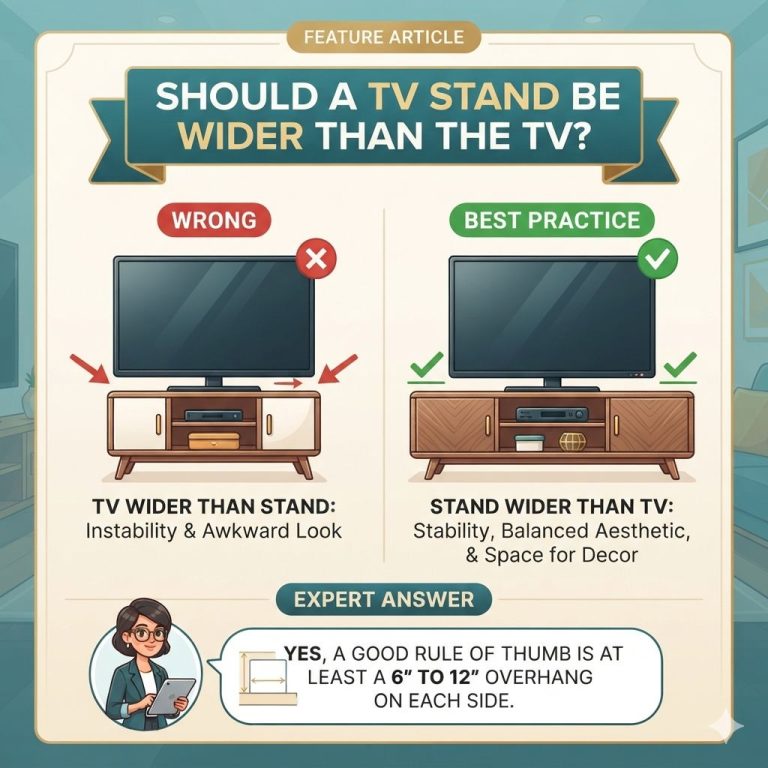
The fit check below translates the published dimensions into actual room use. It is the best way to avoid buying by screen size alone. A stand can support a big TV and still fail if the soundbar hits the door, the receiver cannot breathe, or the cabinet depth is too shallow for the plugs.
| Shopper scenario | Best Wampat fit | Fit check using the published dimensions | Storage use case |
|---|---|---|---|
| Small apartment | 65-inch class or smaller | Use the 78.6-inch width as a ceiling for wall span, not as a target. The 15.4-inch depth suits shallow components better than deep AV gear. | Streaming box, router, a few controllers, and hidden cable slack |
| Family room | 75-inch class | The width gives comfortable side clearance for a large panel. The 220-pound top rating is helpful, but you still need cable room behind the set and airflow around devices. | Console, soundbar, kids’ game storage, and closed-off clutter |
| Media-heavy setup | 85-inch class | The size range can fit, but the stand becomes gear-dependent. Deep receivers, thick power bricks, and oversized soundbars can run out of room before the TV runs out of width. | Disc player, receiver, game systems, and accessory bins if they are not too deep |
What works for 65-inch, 75-inch, and 85-inch TVs
At 65 inches, the stand is usually generous. At 75 inches, it starts to feel properly scaled for a main living room. At 85 inches, the fit becomes more exacting: the TV may fit the published size limit, but the rest of the setup has to be planned around venting, cable routing, and how far the base feet spread.
- Measure the TV’s feet or base, not only the screen size.
- Measure soundbar depth and receiver depth before buying.
- Leave room for cable bends behind the console.
- Check that the stand fits the wall width and nearby outlets.
- Plan storage around the gear you already own, not future upgrades only.
Where the stand runs out of space
The first problem is often a soundbar that is too tall or too deep for the open center. The second is a receiver with rear cables that need more depth than the cabinet offers. A third issue is ventilation: even if a component fits, it can run too warm if you pack the shelf too tightly.
What works well?
The strongest parts of the Wampat design are its storage mix and its size-to-price logic. Sliding barn doors hide clutter, adjustable shelves let you tune the cabinet openings, and the wide top works for medium and large TVs. That combination is useful when you want a media console that also acts like a storage cabinet.
Sliding barn doors for concealed storage
The barn-door look is not only decorative. It gives you a place to hide game controllers, remotes, and extra cables without making the front of the room feel busy. That matters more in family rooms than in showpiece living rooms, where open shelving can look messy fast.
Adjustable shelves for gear and cable planning
Each adjustable shelf is rated at 30 pounds, which is enough for typical streamers, game consoles, and many smaller accessories. Adjustable shelves also help with cable routing because you can leave more vertical room where plugs need to bend. That flexibility matters more than an extra decorative panel.
Manufactured wood and cleanup
The stand is described as thick manufactured wood, and that usually means easy wipe-down care and consistent panel sizing. The tradeoff is durability at the edges. Manufactured wood can chip more easily than solid wood, especially around corners, shelf holes, and door tracks if the unit is moved often.
Style fit for farmhouse and industrial rooms
Sliding barn doors point clearly to farmhouse style, but the same shape can work in industrial rooms too. The line is broad enough that Wampat also sells washed grey, dark walnut brown, mid-century modern, and farmhouse styles. That range helps if you want the same general layout without the same visual finish.
What does not?
The main downside is that a large TV stand made from manufactured wood is still a budget furniture piece, not heavy cabinetry. Edge wear, fastener loosening, and finish damage become more likely if the unit is moved, overloaded, or assembled without careful alignment. The stand can still be a good buy, but only within its limits.
Manufactured wood is the weak point
Manufactured wood is common in budget furniture because it keeps cost down and is easy to clean. It is less forgiving than solid wood, though. Repeated tightening of screws can enlarge holes over time, and corners can wear if you drag the console or bump it during moves.
Uneven flooring can become a safety issue
If the room floor is not level, the cabinet doors and top panel can sit under stress. That can make doors rub, shift weight unevenly, or leave the unit slightly unstable. For a large TV, that is not a small problem. Leveling feet or shims may be needed before setup is complete.
A common buyer mistake is overlooking the stand’s shelf depth and ending up with components that overhang or don’t fit. A 75-inch screen may fit on top, yet a fairly deep receiver or a tall soundbar can still fail the cabinet opening test.
When the Wampat is the wrong choice
Skip it if your setup includes oversized soundbars, very deep receivers, or unusually heavy AV gear that needs stronger shelving and deeper bays. It is also a poor pick if you need a very compact footprint, because the wider models are built to support larger screen widths and more storage volume.
Is a Wampat TV stand safe for a large TV?

- Enclosed storage hides media components cleanly
- Height-adjustable shelves adapt to equipment
- Cable management cutouts reduce visible wires
Yes, within the published limits, but safety is more than the top rating. The tabletop is claimed to hold 220 pounds, which is a strong signal for most large TVs. That said, the TV’s stand feet, the console’s levelness, and anti-tip anchoring matter just as much as the headline number.
How to read the 220-pound top rating
The 220-pound figure should be treated as a capacity ceiling, not a target. A TV that weighs far less than that may still be awkward if its feet sit near the edge or if the base is narrow and the floor is uneven. Weight capacity does not replace proper placement.
Why anti-tip anchoring still matters
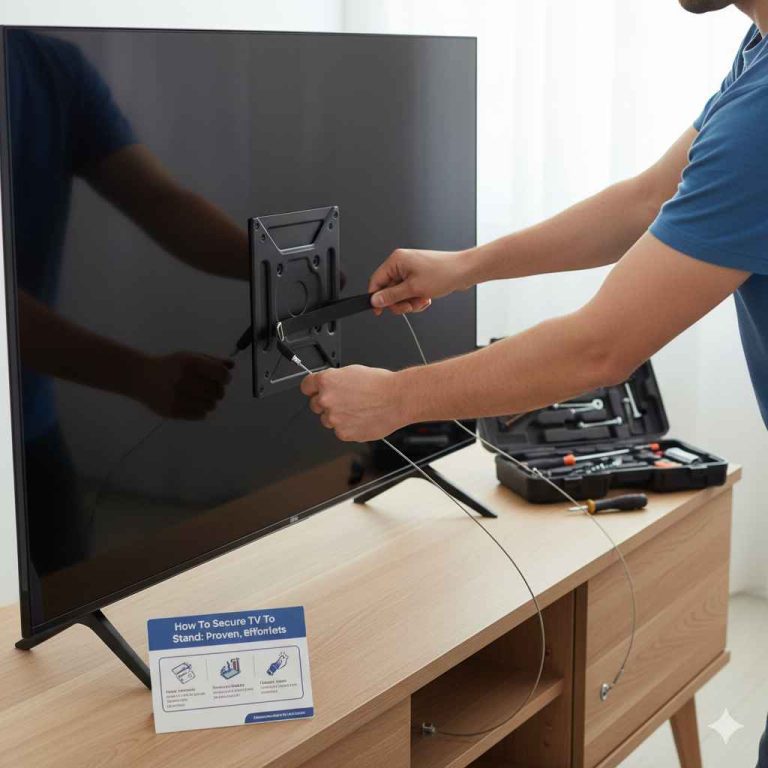
Even with a large, low console, anti-tip hardware is a smart step when children or pets are present. A top-heavy screen can be pulled forward if a drawer or door is used as a climbing point. Wall anchoring is a safety layer, not a cosmetic extra.
Child and pet safety checks
Keep cords out of reach, close cabinet doors fully, and do not leave loose gear on the top surface. If a pet jumps onto the shelf or a child pulls on the door track, the unit can shift. The safest setup is one that assumes the room will be used, not staged.
How does it compare to alternatives?
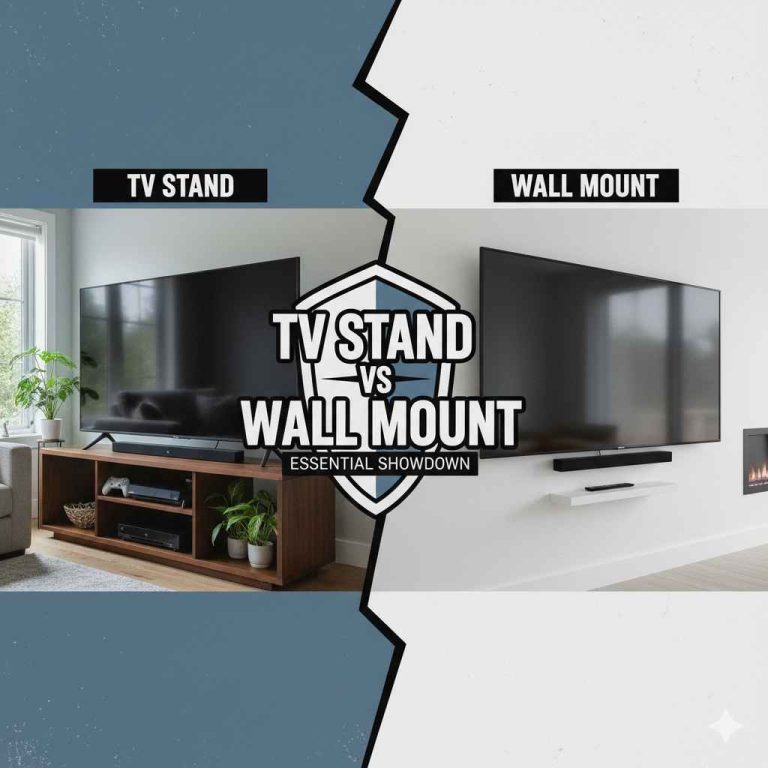
A wall mount is not automatically better. It saves floor space, but it gives you less storage and more visible wall work. A Wampat TV stand makes more sense if you need places to hide devices, remotes, and cables. It is the better furniture choice when storage is part of the purchase.
Storage-per-dollar versus simpler media consoles
Compared with simpler open consoles, Wampat’s value comes from cabinet volume and concealed storage. That is useful if you want fewer visible cables and less clutter. If you only need a flat surface for a TV and one streaming box, a cheaper open stand may deliver better storage-per-dollar.
When a different size is the better buy
If your screen is 65 inches or smaller, a narrower model can be easier to place and may leave more breathing room in an apartment. If your room is wide and your gear stack is deep, a larger unit or a more open layout may be the better match. Size should follow gear, not the other way around.
What is the Wampat TV stand made of?
Wampat describes the cabinet wood as FSC-certified and the stand as made of thick manufactured wood. That combination suggests a budget-friendly build with a sustainability claim attached to the wood sourcing. It is practical for cleaning and daily use, but it is still not the same as solid hardwood cabinetry.
Finish options and model variants
Wampat sells related looks in washed grey, dark walnut brown, mid-century modern, and farmhouse styles. The main differences buyers should watch are width, door type, and the internal layout. A variant can look similar in photos and still behave differently in a living room because the shelf openings are not the same.
Is Wampat easy to assemble?
Assembly is generally straightforward if you follow the included instructions carefully, but “easy” depends on fit and patience. Manufactured wood furniture usually goes together best with two people, especially for aligning the top panel, checking square corners, and keeping doors consistent. One person can do it, but two often makes setup less awkward.
Assembly details that matter
Pay attention to hole alignment, hinge placement, and shelf pin positions. If the holes are slightly off, forcing screws can damage the panel surface. The cabinet doors and shelf hardware should line up cleanly before you tighten everything fully. That step helps prevent a door from rubbing later.
What size Wampat TV stand should I buy for an 85-inch TV?
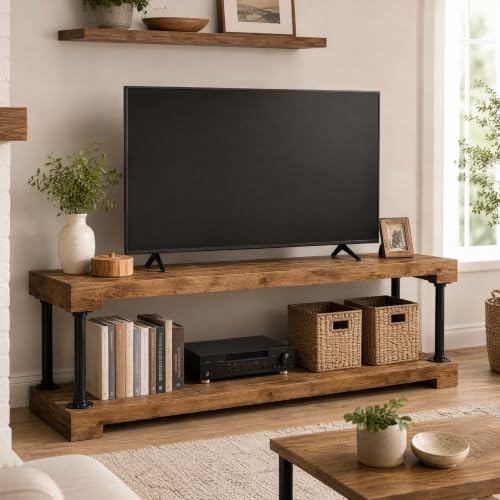
- 100% solid wood tabletop is premium and durable
- Fits TVs up to 75 inches for future upgrades
- Industrial metal-and-wood design adds character
For an 85-inch TV, choose the widest Wampat model that still leaves room for your wall, center channels, and cable bends. The listed model that fits up to 85 inches measures 78.6 inches wide, 15.4 inches deep, and 23.6 inches high. That is a workable starting point, but not a universal answer.
Measure the TV’s feet width and the actual gear depth before you decide. If your soundbar is oversized or your receiver needs extra ventilation, a stand that technically fits an 85-inch screen can still feel too cramped in daily use.
Does a Wampat TV stand have enough storage?
For many living rooms, yes. The design includes two spacious cabinets and three large open storage spaces, which gives it more practical storage than a bare-bones console. The catch is that “enough” depends on device depth and cable routing, not only on how many compartments you can count.
How the storage layout helps
Closed cabinets are useful for hiding game accessories, extra controllers, and less attractive boxes. Open bays are better for gear that needs easy access or regular ventilation. That split is one reason the stand works for mixed-use family rooms better than a purely decorative console.
Are Wampat TV stands safe for a large TV?
They can be, provided the TV fits the top surface and the stand is anchored and leveled properly. The published 220-pound tabletop rating is a strong baseline, but safe use also depends on footprint, center of gravity, and how much room the feet or base have on the top panel.
Before placing a large TV, check the floor level, secure the unit to the wall if the model allows it, and keep heavy gear low in the cabinet. That reduces wobble and keeps the top from carrying more stress than it needs.
Do Wampat TV stands work for farmhouse decor?
Yes. The sliding barn doors are the clearest signal that the design is meant for farmhouse styling, and the same look can also fit rustic or industrial spaces. If your room uses black metal accents, wood tones, and open shelving, the stand usually feels at home.
Should you buy it
Buy it if you need a wide media cabinet with concealed storage, a TV that matches the stated size range, and a layout that can hold common streaming gear without looking cluttered. Skip it if your equipment is deep, your floor is uneven, or you want furniture that will shrug off heavy wear.
Cherry Picks reports 503 Wampat products evaluated and 27,888 items reviewed, with Wampat pricing listed from $49.99 to $1,039.99. That spread suggests the brand covers a lot of ground, so value depends on the exact model. For this stand, the win is storage and room fit, not luxury build.
Frequently asked questions
Is the Wampat TV stand any good?
Yes, if you want a budget-friendly stand with enclosed storage, a wide top, and a farmhouse-leaning look. It is a good fit when your TV and devices match the published size and weight limits. It is less compelling if you need solid-wood construction or deep AV storage.
How much weight can a Wampat TV stand hold?
The tabletop is claimed to hold up to 220 pounds, and each adjustable shelf is claimed to hold up to 30 pounds. Those figures are useful, but they do not replace fit checks for TV feet width, gear depth, and ventilation around components.
Will a Wampat TV stand fit my TV size?
It depends on the exact model. One listed version fits flat curved screen TVs up to 85 inches, while other Wampat options are sold for up to 65 inches and up to 75 inches. Match the screen size to the specific listing, not just the brand.
What is the Wampat TV stand made of?
Wampat describes it as made of thick manufactured wood, and the cabinet wood is said to be FSC-certified. Manufactured wood is common in budget furniture because it is easier to produce and clean, but it can be more vulnerable to edge wear and fastener loosening over time.
Are tv stands safe?
TV stands are safe when the top is wide enough, the unit is level, and heavy screens are anchored if needed. Safety becomes less certain on uneven floors or when large TVs sit on narrow bases. Anti-tip hardware and careful cable management improve safety a lot.
is tv better on stand or wall
That depends on what you need more, storage or open floor space. A wall mount saves surface area, but a stand gives you cabinets, shelves, and easier gear access. If you own several devices, a stand is often the more practical choice.
Products related to this article
Sponsored / affiliate links. As an Amazon Associate I earn from qualifying purchases. I may earn additional commission from eligible campaigns.