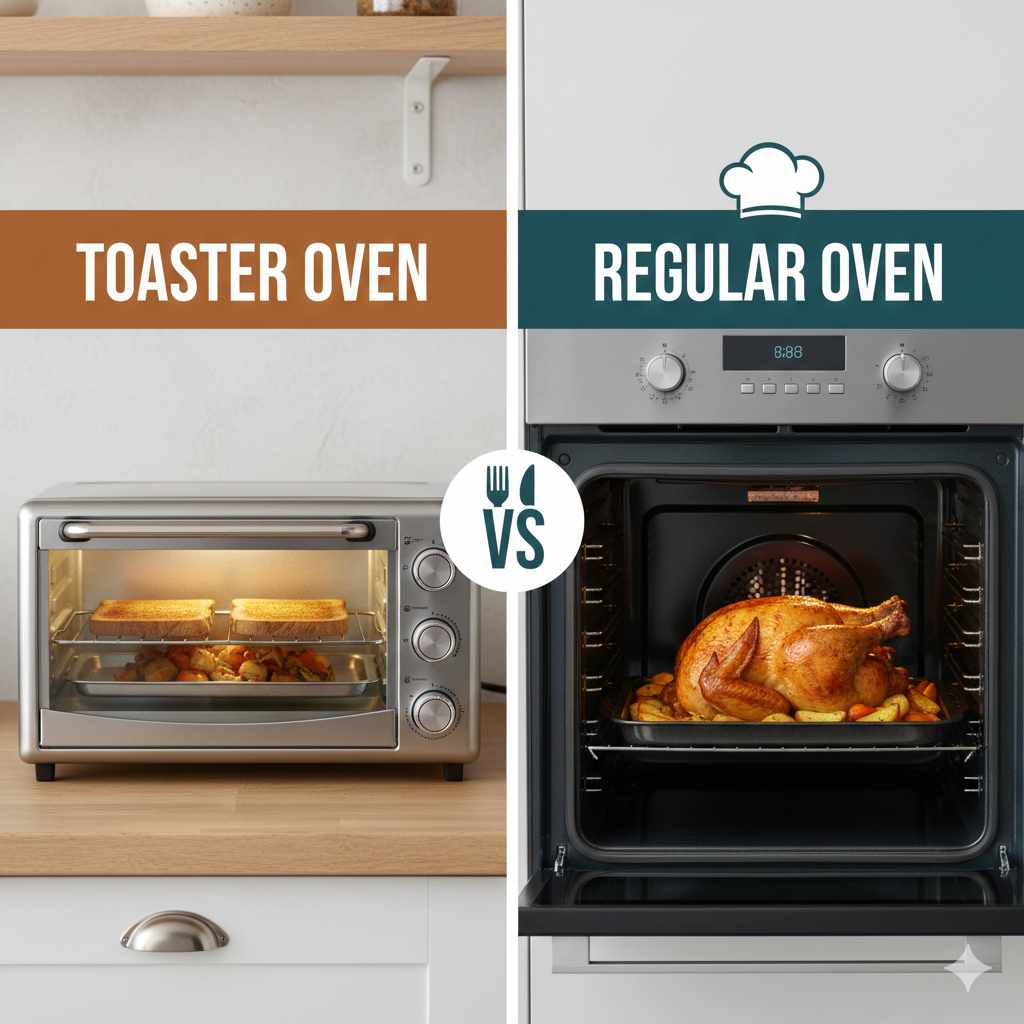
For everyday cooking tasks, the toaster oven generally wins on speed, energy efficiency, and small-batch heating, while the regular oven is superior for large meals, serious baking, and achieving precise, even temperatures. Choosing between them depends entirely on what you plan to cook most often.
Ever stand staring at your kitchen appliances, wondering which one will finish the job faster or use less power? That little toaster oven sits on the counter, looking ready for action, while the big oven seems like overkill just to reheat a slice of pizza. Deciding between a toaster oven vs regular oven can feel confusing, especially when you are trying to save time or keep your kitchen cool on a hot day. Don’t worry about complex settings or wasted energy. We are going to break down exactly what each appliance does best, making it simple to pick the right tool for any cooking job you have. Let’s get your kitchen decisions sorted out, one delicious meal at a time!
Toaster Oven vs Regular Oven: The Quick Facts You Need to Know
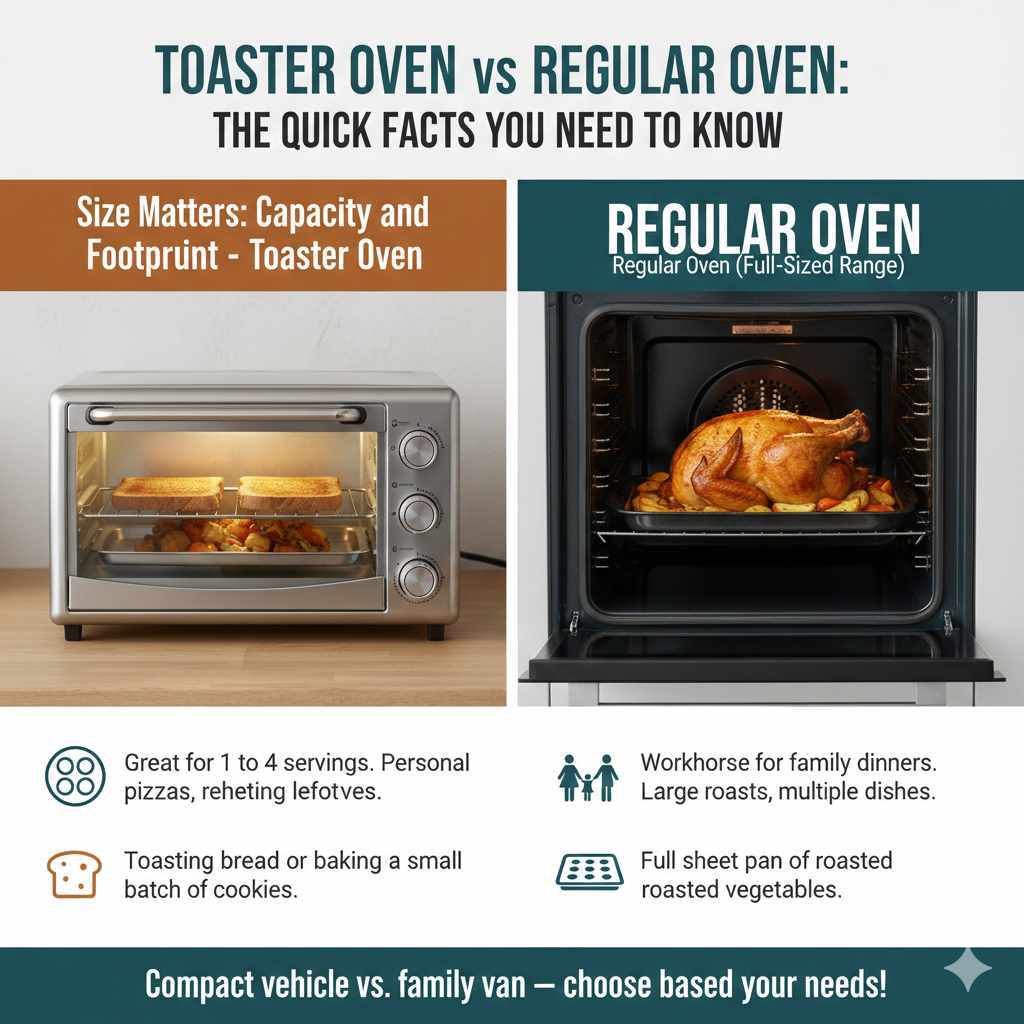
When we look side-by-side at a toaster oven and a regular oven, we are comparing a compact vehicle to a family van. Both get you cooking, but they excel in different situations. Understanding the fundamental differences in size, heating elements, and energy use is the first step in mastering your kitchen appliances.
Size Matters: Capacity and Footprint
The most obvious difference is size. A toaster oven is designed to sit on your countertop. This small space has a huge impact on how you use it.
- Toaster Oven: These are great for 1 to 4 servings. Think personal pizzas, reheating leftovers, toasting bread, or baking a small batch of cookies.
- Regular Oven (Full-Sized Range): This is your workhorse for family dinners. It handles large roasts, multiple casserole dishes, or a full sheet pan of roasted vegetables with ease.
Heating Elements and Temperature Control
Both ovens use electric heating elements (usually one on top and one on the bottom for baking/broiling), but the way they distribute that heat is different.
In a toaster oven, because the heating elements are very close to the food, they often cook faster. This direct heat provides excellent browning and melting power, which is why they are fantastic for toasting!
A regular oven uses larger elements and fans (in convection models) to circulate air around a much larger space. This allows for more even cooking when dealing with large volumes of food, ensuring the middle of a turkey gets cooked at the same slow pace as the edges.
The Energy Showdown: Which One Saves You Money?
This is a huge factor for many home cooks. Running a large appliance when you only need a little bit of heat can definitely hike up your electric bill. Here’s where the toaster oven shines brightest.
Why Toaster Ovens Are Energy Savers
A toaster oven uses significantly less power because it has a much smaller cavity to heat up. Heating 0.5 cubic feet of space takes far less energy than heating 3.5 cubic feet of space.
If you are simply reheating two lasagna slices or baking four muffins, using the full-sized oven is like driving a semi-truck across town just to pick up a gallon of milk—it’s inefficient. For these small jobs, a toaster oven can use 75% less energy.
When the Regular Oven is Still Necessary
While the toaster oven is efficient for small tasks, remember that longer cooking times can sometimes even things out. If you are slow-roasting something for four hours, the total energy used might be similar to a steady-state use of a regular oven, but generally, for anything under an hour, the toaster oven pulls less amperage (current draw).
Appliance Anatomy: What You’ll Find Inside
To really understand the functional differences, let’s look at the features that define each appliance. This helps you decide if the toaster oven has the capabilities you need.
Toaster Oven Features Walkthrough
Modern toaster ovens (often called countertop convection ovens) are packed with features that mimic a full oven.
- Functions: Typically include Toast, Bake, Broil, Warm, and often Convection Bake. Newer, higher-end models might even have Air Fry settings.
- Controls: Can be simple dials or digital touch screens. Digital controls are often better for maintaining consistent temperatures.
- Accessories: Usually comes with a small baking tray/broiling rack and a crumb tray underneath for easy cleaning.
Regular Oven Features Walkthrough
The full oven is built for capacity and heavy-duty performance.
- Standard Functions: Bake, Broil, Roast, and often Self-Clean. Convection is now a standard feature on most new models designed to circulate air efficiently.
- Racks: Multiple heavy-duty racks that slide out, allowing you to cook on different levels simultaneously.
- Preheat Time: Because of the massive space, preheating from cold can take anywhere from 10 to 20 minutes, depending on the temperature setting.
Direct Comparison Table: Toaster Oven vs Regular Oven
Use this quick chart to see the essential specifications side-by-side. This is helpful when deciding which appliance is better for your specific kitchen workflow.
| Feature | Toaster Oven | Full-Size Regular Oven |
|---|---|---|
| Typical Capacity | 0.5 to 1.5 cubic feet | 3.0 to 5.0 cubic feet |
| Energy Use (Small Task) | Very Low | High |
| Preheat Speed | Very Fast (3–5 minutes) | Slow (10–20 minutes) |
| Best For | Reheating, Searing, Small Batch Baking | Large Roasts, Holiday Cooking, Multi-Shelf Baking |
| Counter Space | Required (Countertop) | None (Built-in or Range) |
| Temperature Consistency | Can have hot spots due to proximity of elements | Generally more consistent, especially convection models |
When to Always Choose the Toaster Oven (The Power User’s Guide)
If you are cooking for one or two people, or if you just need to quickly brown the top of something, the toaster oven is your best buddy. It saves time, saves energy, and honestly, it often works better for these specific tasks.
1. Reheating Leftovers Like a Pro
Throwing a slice of pizza or day-old french fries in a standard oven seems inefficient. The toaster oven excels here. It restores crispness without turning the food into a dry hockey puck, which is what an under-used microwave often does.
Simple Reheating Steps:
- Set the toaster oven to 350°F (Bake or Toast setting, depending on the food).
- Place food on the small rack, slightly elevated if possible.
- Heat for 3–5 minutes. Check frequently to prevent burning the edges!
2. Perfect Toasting and Bagels
This might seem obvious, but modern toaster ovens often provide more consistent browning across the entire surface of the bread than pop-up toasters, especially for thicker items like bagels or artisan bread slices.
3. Small-Batch Baking and Roasting
Got a recipe for six cookies or a single chicken breast? Don’t fire up the giant oven. Use the toaster oven for better heat regulation on small portions. If your toaster oven has a convection setting, use it! It will dramatically improve air circulation for tiny roasting jobs.
4. Keeping Food Warm
Hosting a small gathering? Set the toaster oven to the lowest “Warm” setting (usually around 170°F). It’s perfect for keeping dinner rolls, appetizers, or sauces warm without drying them out, without tying up your main oven.
When You Must Use the Regular Oven
There are clear moments when pulling out the big gun is the only safe or sensible option. Overloading a toaster oven is a recipe for uneven cooking or, worse, a fire hazard.
1. Large Roasts and Holiday Meals
Cooking a turkey, a prime rib, or a whole ham requires space. Not only do you need room for the meat itself, but you also need proper air circulation around it. If you cram a 15-pound turkey into a small toaster oven, the internal temperature will take hours longer to reach safety levels, increasing the risk of undercooked spots. For food safety on large items, always use the full oven.
Safety Note: Always ensure poultry reaches an internal temperature of 165°F. You can check out USDA guidelines on safe cooking temperatures for reference.
2. Delicate or Large-Scale Baking
If you are making multiple trays of cookies, an entire layer cake, or bread loaves, you need the stability of a full oven. Layered cakes are particularly sensitive to the intense, close radiant heat of a toaster oven, which can cause tops to dome unevenly or burn before the center sets.
3. Projects Needing Consistent, All-Around Heat
For recipes requiring precise, low, and slow cooking (like drying fruit, making jerky at a low temperature, or highly sensitive pastry work), the larger insulated cavity of a regular oven maintains its temperature far more reliably than a smaller unit.
Mastering Temperature: Accuracy in Small Spaces
One common complaint about toaster ovens is that they often run hotter than the dial suggests. This is usually due to the elements being so close to the food.
How to Check Your Toaster Oven Temperature
To ensure you are not accidentally burning your toast or overcooking your chicken, checking the actual temperature is a smart, DIY step.
- Purchase an inexpensive, standalone oven thermometer (they usually cost less than $10).
- Set your toaster oven to a mid-range temperature, like 350°F.
- Place the oven thermometer inside and close the door.
- Let it preheat completely (about 10 minutes).
- Read the thermometer. If it reads 400°F, you know when your dial says 350°F, you should actually set it to 325°F to compensate.
This small step takes the guesswork out of using your countertop appliance and boosts your cooking confidence immediately. Consistent results come from knowing your tools!
Cleaning and Maintenance: Keeping Them in Top Shape
Both appliances need regular cleaning to work well and stay safe, but the process and required frequency are different.
Toaster Oven Cleaning Tips (Routine Maintenance)
Because of their small size, crumbs and grease build up fast. If you never clean the bottom, that built-up gunk will eventually smoke, leading to bad odors. Many toaster ovens have a slide-out crumb tray—use it!
- Crumb Tray: Empty this after every toasting session. Seriously, just get into that habit!
- Racks and Trays: Remove these and wash them in hot, soapy water. You can often soak them.
- Interior Walls: Wipe down the inside walls occasionally with a cloth dampened with warm water and a mild soap. Avoid harsh scrubbing pads that can damage the interior finish.
Regular Oven Cleaning Tips (Deep Dive)
The regular oven requires less frequent, but much more intensive, cleaning.
- Self-Cleaning Cycle: If your oven has this feature, use it twice a year (or as directed by your manual). It uses extremely high heat to turn spills into ash. Remember to remove all racks and clean up loose debris before starting this cycle.
- Racks: The large racks are often hard to clean when inside the oven. A great trick is soaking them overnight in a bathtub filled with very hot water and a cup or two of dishwasher detergent (if you don’t mind using the tub for cleaning).
- Door Glass: Use a specialized oven cleaner on the glass, or a baking soda paste, to remove baked-on grease.
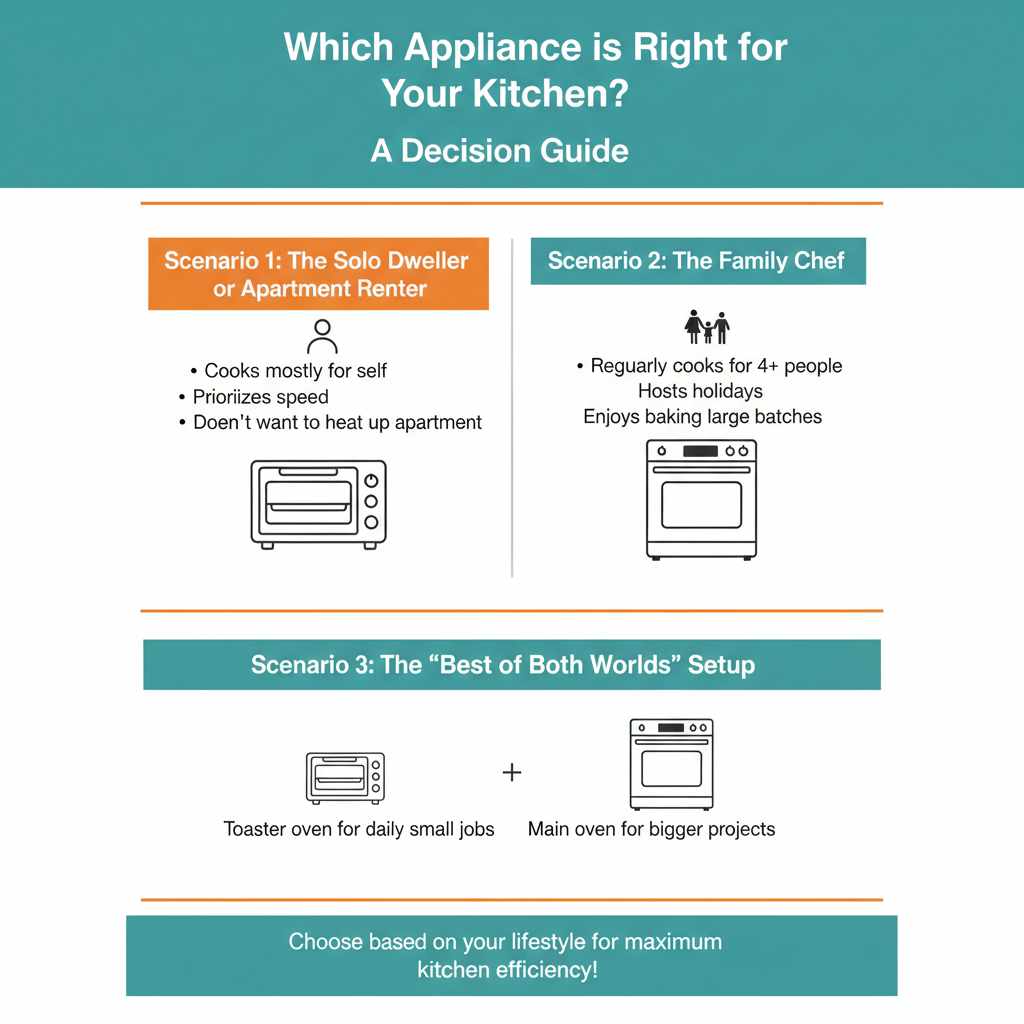
Which Appliance is Right for Your Kitchen? A Decision Guide
If you are setting up a new kitchen, or wondering whether to invest in a high-end toaster oven, ask yourself these key questions.
Scenario 1: The Solo Dweller or Apartment Renter
If you cook mostly for yourself, prioritize speed, and don’t want to heat up your whole apartment in the summer, the toaster oven is your main tool. A small oven that can do the basics well saves space and utility costs.
Scenario 2: The Family Chef
If you regularly cook for four or more people, host holidays, or enjoy baking large batches of bread or pastries, the regular oven is non-negotiable for capacity and consistency.
Scenario 3: The “Best of Both Worlds” Setup
Most experienced cooks keep both! The toaster oven handles the daily small jobs (like warming breakfast or heating a single frozen meal), freeing up the main oven for when you need it for bigger projects.
For an excellent guide on energy efficiency in home appliances, you can always consult resources from organizations focused on consumer energy use, which often compare heat retention and cycle times between different oven types.
Frequently Asked Questions (FAQ) About Oven Use
Q1: Can I bake bread in a toaster oven?
Yes, you can bake small loaves or rolls. However, the heat can be intense, so watch the tops closely. You will likely need to use a smaller pan than traditional recipes call for.
Q2: Is it safe to leave a toaster oven plugged in all the time?
It is generally safe, but for maximum safety and energy saving, unplug it or switch it off at the wall when not in use, especially if it’s an older model without modern safety features.
Q3: Does a toaster oven use more electricity than a microwave?
For short heating tasks (like reheating one item for 60 seconds), the microwave uses less total energy. However, for longer cooking tasks (like baking potatoes or roasting vegetables), the toaster oven will be more energy-efficient than running the standard oven.
Q4: What temperature setting should I use for “Toasting”?
The “Toast” setting on most toaster ovens usually defaults to a high heat setting, similar to the Broil function, controlled by a timer rather than a precise temperature. For actual, timed toasting, use the Toast setting. For melting cheese, use the Broil setting.
Q5: Can I cook on foil in a toaster oven?
Yes, you can use aluminum foil, but be very careful. Since the heating elements are close, ensure the foil lays flat and does not touch the top or bottom elements. Loose foil can easily blow up toward the heating source, which is a fire risk.
Q6: If my regular oven is broken, can I rely solely on my toaster oven?
For essential daily cooking (breakfast, quick dinners), yes. For serious holiday baking or cooking large cuts of meat, no. It’s best viewed as a supplemental appliance, not a full replacement, due to capacity limits.
Q7: Do toaster ovens make the kitchen hotter than a full oven?
Counterintuitively, the toaster oven often makes the room feel hotter because while it uses less total energy, all that heat is concentrated and released right onto your countertop surface, close to where you are standing.
Conclusion: Making the Smart Choice for Every Meal
Deciding between your toaster oven vs regular oven boils down to one simple question: How much food are you cooking?
If you are the everyday cook focusing on efficiency, leftovers, and smaller portions, embrace your toaster oven! It heats up fast, saves you money on power, and does a fantastic job on simple tasks. Think of it as your speedy pit crew for one or two plates.
If you are taking on projects—the big holiday spread, complex baking where even heat matters most, or feeding a crowd—the regular oven remains the unmatched champion. It offers the space and consistent environment necessary for large-scale success.
By understanding their strengths and weaknesses, you stop wasting time waiting for the big oven to preheat for something that takes three minutes, and you start cooking smarter, safer, and with more confidence. Welcome to better kitchen efficiency!