Storage Pouf Cost: What You’ll Actually Pay Each Month
Storage pouf cost usually runs from roughly a few dozen dollars a month for a small 5×5, to a bit more for a 5×10, and higher for larger units, with climate control and drive-up access pushing the price up. Pick the wrong size or miss move-in fees, and your first 90 days can cost far more than the monthly rate you compared. I use this breakdown to compare nearby units with fewer surprises.
How storage pouf cost works
Storage unit pricing changes with size, access type, floor level, and location. The number on the sign is usually the monthly rate, but your first bill can be lower because the first month is prorated to the day you sign up. Add promo pricing, fee structure, and any rate guarantee, and the real cost picture gets clearer.
Monthly rate versus promo rate
The monthly rate is the standard rent for one month. A promo rate is the temporary discount that applies for a set period, often the first two full months. Some units may be sold with 50% off the first 2 full months, and 2nd floor units may offer up to 60% off the first 2 full months.
What proration means on move-in day
Proration means you pay only for the days left in that billing month. If you move in on the 20th, the first bill is smaller than a full month. That matters because the headline price does not always match the cash you hand over at move-in.
Which fees change the real total
Fees can include admin charges, insurance, and a lock if one is not included. Here, a free lock is included with every rental, which trims one common move-in expense. The facility also advertises a 9-month rate guarantee, which helps when you are planning beyond the first bill.
According to southburystorage.com — Southbury Self Storage highlights 64 HD cameras on watch.
What size storage unit do you need?

The right size depends on the items in the load, from a few boxes to a packed apartment or furniture set. Locker units fit a handful of sealed boxes. A 5×5 handles holiday tubs and a small stack of bins. A 5×10 covers apartment overflow. A 10×10 often holds a sofa and boxes. A 10×20 works better for full-room contents or larger moves.
Locker size and a few boxes
Locker units start from $25 per month. They are the cheapest entry point and make sense for papers, small bins, tools, or a handful of sealed boxes. If you are only clearing out a closet shelf, a locker usually keeps you from paying for empty space.
5×5 and seasonal items
A 5×5 unit starts from $50 per month. It is a common choice for holiday bins, small sports gear, off-season clothes, and a few compact furniture pieces. If the load is light and stacked neatly, a 5×5 usually keeps costs down without forcing a jump to a larger unit.
5×10 and apartment overflow
A 5×10 unit starts from $85 per month. That size works for the overflow from a studio or one-bedroom apartment: several boxes, a mattress, small tables, and packed kitchen items. It is often the first size that feels like real room instead of a closet with a door.
10×10 and sofa plus boxes
A 10×10 unit starts from $140 per month. This is the common answer when someone asks what storage unit size fits a sofa and boxes. It is a practical middle ground for a couch, chairs, dresser pieces, and stacked household boxes, especially when the items are protected and packed tightly.
10×20 and room contents
A 10×20 unit starts from $216 per month. It is the better fit for full-room contents, larger apartment moves, or bulky furniture sets. A drive-up 10×20 unit also allows vehicle storage, which matters when the load includes a car or you need direct outside access for heavy items.
How much do common unit sizes cost?
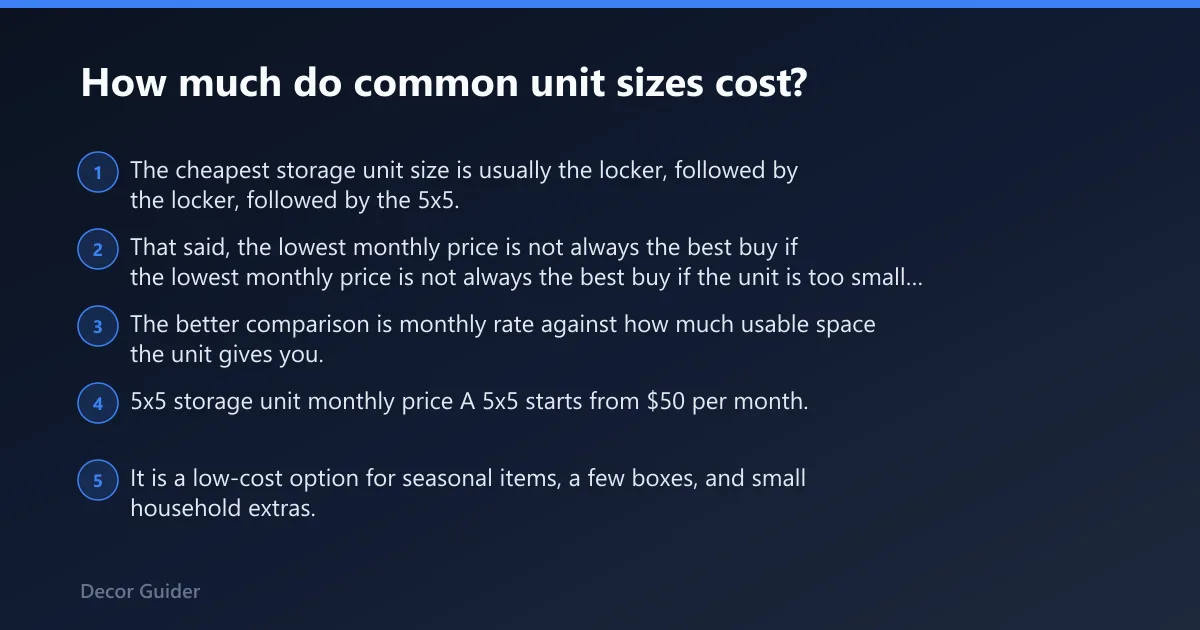
The cheapest storage unit size is usually the locker, followed by the 5×5. That said, the lowest monthly price is not always the best buy if the unit is too small and forces a second rental. The better comparison is monthly rate against how much usable space the unit gives you.
5×5 storage unit monthly price
A 5×5 starts from $50 per month. It is a low-cost option for seasonal items, a few boxes, and small household extras. If the contents can be stacked in a tidy square footprint, this size often gives the cleanest cost-to-space ratio for light storage needs.
5×10 storage unit monthly price
A 5×10 starts from $85 per month. It usually fits more than the basic overflow from a closet or hall cabinet, but less than a full living room set. For many renters, this is the size where the monthly payment still feels manageable while storage capacity starts to matter.
10×10 storage unit monthly price
A 10×10 starts from $140 per month. It suits furniture, medium household overflow, and the contents of a room or two. If the load includes a sofa and multiple boxes, this is the size most people should price before jumping to a larger and costlier option.
10×20 storage unit monthly price
A 10×20 starts from $216 per month. It is the biggest of the listed sizes and usually makes sense when the move involves full rooms, larger furniture, or special access needs. The higher monthly rent can be worth it if it prevents renting two smaller units.
Best value by size and use case
Locker units are best for the smallest loads. A 5×5 is the value pick for boxes and seasonal items. A 5×10 works well for apartment overflow. A 10×10 is the best middle-size value for furniture plus boxes. A 10×20 becomes the better buy when space, access, and loading convenience matter more than the lowest sticker price.
Proof table: first-month, promo, and 9-month cost
The table below uses a simple comparison so you can see the cost pattern fast. It assumes a rough half-month move-in for the prorated first month, then a 50% off promo for the first two full months. Real first-month charges change with your sign-up date, but the math shows how the bill builds.
| Unit size | Start monthly rate | Rough first-month prorated cost | Promo monthly rate | 9-month total cost | Best value note |
|---|---|---|---|---|---|
| Locker | $25 | $12.50 | $12.50 | $187.50 | Best for a few boxes and the lowest entry price. |
| 5×5 | $50 | $25 | $25 | $375 | Best value for seasonal items and light overflow. |
| 5×10 | $85 | $42.50 | $42.50 | $637.50 | Best for apartment overflow without paying for too much space. |
| 10×10 | $140 | $70 | $70 | $1,050 | Best balance for a sofa, boxes, and medium household storage. |
| 10×20 | $216 | $108 | $108 | $1,620 | Best when you need room contents or vehicle storage. |
Are climate-controlled storage units more expensive?
Yes, climate-controlled storage units are usually more expensive than drive-up units. They have inside access and temperature protection, which adds comfort for items that do poorly in heat swings or damp air. If the contents are basic household goods, the added cost may not be worth it.
Inside access and temperature protection
Climate-controlled units are accessed from inside the building. That usually means less exposure while loading and unloading. The controlled temperature helps when storing electronics, documents, wood furniture, fabrics, and items that should not sit in a hot exterior box.
Why climate control usually costs more
The higher price reflects the building systems, inside access, and the extra protection offered by the unit type. If you are comparing two same-size units, climate control often costs more than a drive-up option. The tradeoff is less weather exposure and better storage conditions for sensitive contents.
When the extra cost is worth it
Climate control is worth the premium when the items are sensitive, replacement would be expensive, or the storage term is long. If you are storing sofas, framed art, records, or electronics, the added monthly charge can be cheaper than replacing damaged items later.
Drive-up storage units versus inside units
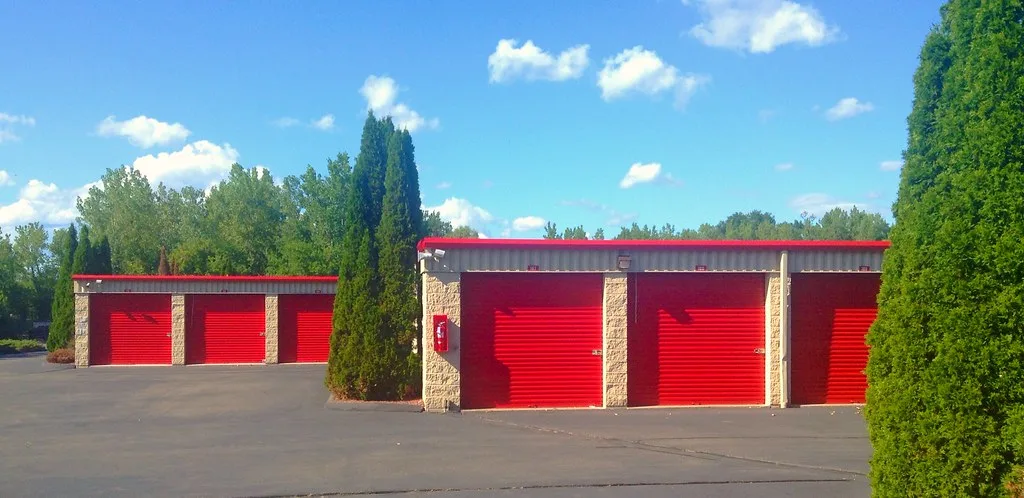
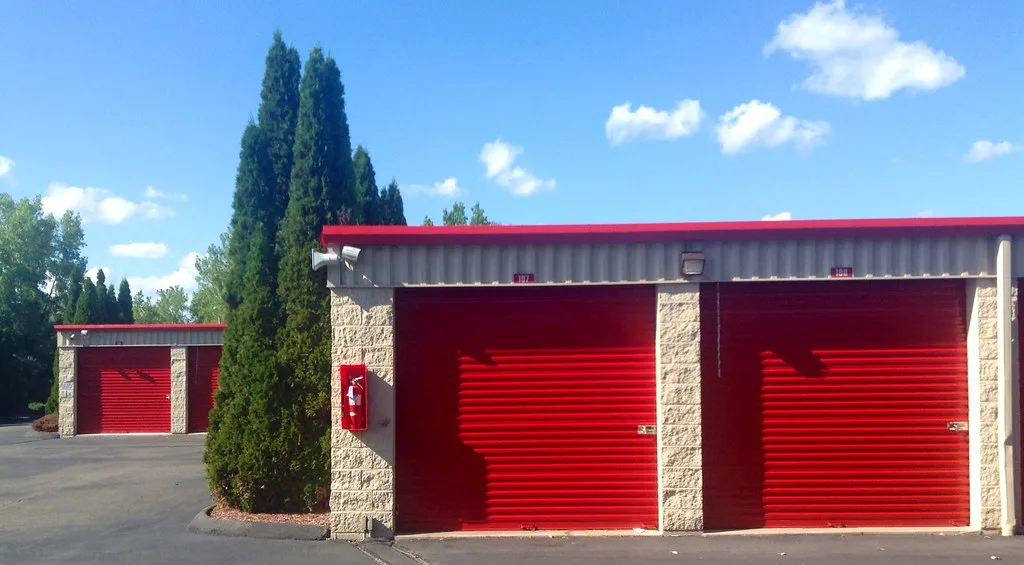
Drive-up units are usually the lower-friction choice for heavy items. They have outside access, so you can load and unload from a vehicle right at the door. A drive-up 10×20 is non-climate controlled with an insulated roof, and the larger door size helps with bulky furniture and vehicle storage.
Outside access and vehicle loading
Drive-up access cuts down on walking through halls and elevators. That matters when the load includes appliances, boxes, or a full truck. If speed and easy loading matter more than indoor protection, the outside-access format is often the better buy.
Insulated roof and door size
An insulated roof helps reduce heat transfer compared with a bare metal box. The door size also matters because large furniture or a vehicle needs a wide opening. A drive-up 10×20 is the clearest option when access convenience is part of the decision, not only square footage.
When drive-up storage is the better buy
Drive-up storage is usually the better value for tools, moving-day loads, garage items, and short-term household overflow. If the contents do not need temperature protection, paying extra for inside access may not return much. The lower-cost unit can make more sense, especially for quick in-and-out use.
What fees and terms come with move-in?
Most rentals are month-to-month, and online rental is available in about 2 minutes. The first month is prorated to the day you sign up, so the move-in amount can be lower than the posted monthly rate. A free lock is included with every rental, which helps keep the first checkout simple.
Month-to-month lease and online rental
A month-to-month lease gives flexibility when the end date is uncertain. Online rental keeps the process fast and avoids an extra trip before move-in. For renters comparing several nearby places, the ability to book online today can be the difference between getting a unit and losing it.
Access hours and daily access window
Access is available 7am–9pm, 365 days a year. That daily window matters if you plan early-morning drop-offs or evening pickup after work. Access hours are part of the real value because a cheap unit that is hard to reach can cost time and gas later.
Free lock included or extra purchase
A free lock is included with every rental, so you do not need to buy one at move-in unless you want a different style. That is a small item, but it changes the first bill. Missing that detail can make a low monthly rate look cheaper than it really is.
Insurance, admin fees, and other add-ons
Insurance and admin fees can still show up, depending on the rental. Those add-ons are common friction costs, and they matter most when you compare two units with similar headline rent. Always check the move-in total, not only the monthly rent.
How security and access affect the price
Security features can move pricing, especially when the facility adds stronger monitoring or controlled entry. Southbury Self Storage highlights 64 HD cameras on watch, and facilities may also use alarm systems, sprinklers, and access control. Those features help explain why some sites charge more than bare-bones storage.
Camera count and alarm systems
More cameras and alarm systems usually mean more oversight points around the property. That does not make a unit invulnerable, but it can support better monitoring and a stronger site layout. When prices differ, security hardware is one of the reasons behind the gap.
Sprinklers and access control
Sprinklers and access control are part of the basic safety picture many renters look for. Access control limits who can enter, while sprinkler coverage adds another layer of building protection. These features are worth asking about if you are comparing facilities with similar rent.
How security features show up in pricing
Higher security usually adds to operating cost, and that can show up in the monthly rate. The trick is to compare the full package: cameras, alarms, sprinklers, access control, access hours, and unit type. A slightly higher rent may be fair if the facility also makes move-in and daily use easier.
Frequently asked questions
how much does the storage cost
Storage prices vary by unit size and access type. Locker units start from $25 per month, a 5×5 starts from $50, a 5×10 starts from $85, a 10×10 starts from $140, and a 10×20 starts from $216. Climate control and drive-up access can change the final price.
what is the cheapest storage unit size
The cheapest storage unit size is usually the locker. It starts from $25 per month and is meant for a few boxes, small bins, or light overflow. If you only need to clear a closet or hold paper files, that size usually makes the most financial sense.
what size storage unit do I need for a few boxes
For a few boxes, a locker is often enough. If the boxes are bulkier or you want room to add more later, a 5×5 is the next step up. The key is to avoid paying for a bigger unit when the load is still compact and easy to stack.
how much is a 5×5 storage unit per month
A 5×5 storage unit starts from $50 per month. It fits seasonal items, small household overflow, and compact boxes. For many renters, it is the best middle ground between the lowest-cost locker and a larger unit that would go partly unused.
how much is a 10×10 storage unit per month
A 10×10 storage unit starts from $140 per month. It is a practical choice for a sofa, boxes, and medium household contents. If you are storing furniture plus several packed cartons, this size often gives the best balance of space and price.
what fees come with renting a storage unit
Fees can include admin charges, insurance, and sometimes a lock. In this case, a free lock is included with every rental, which removes one common extra cost. The main thing to watch is the move-in total, because promo pricing and proration can change what you pay first.
can I rent a storage unit online today
Yes, online rental is available and takes about 2 minutes. That makes it easier to reserve a unit, complete the paperwork, and get moving without a long office visit. If availability is tight, booking online can help secure the size you need before it is gone.
what storage unit size fits a sofa and boxes
A 10×10 is usually the first size to check for a sofa and boxes. It has enough room for a couch, chairs, and stacked cartons if the load is packed well. If the furniture set is larger or you need easier loading, a 10×20 may be the safer pick.
Products related to this article
Sponsored / affiliate links. As an Amazon Associate I earn from qualifying purchases. I may earn additional commission from eligible campaigns.