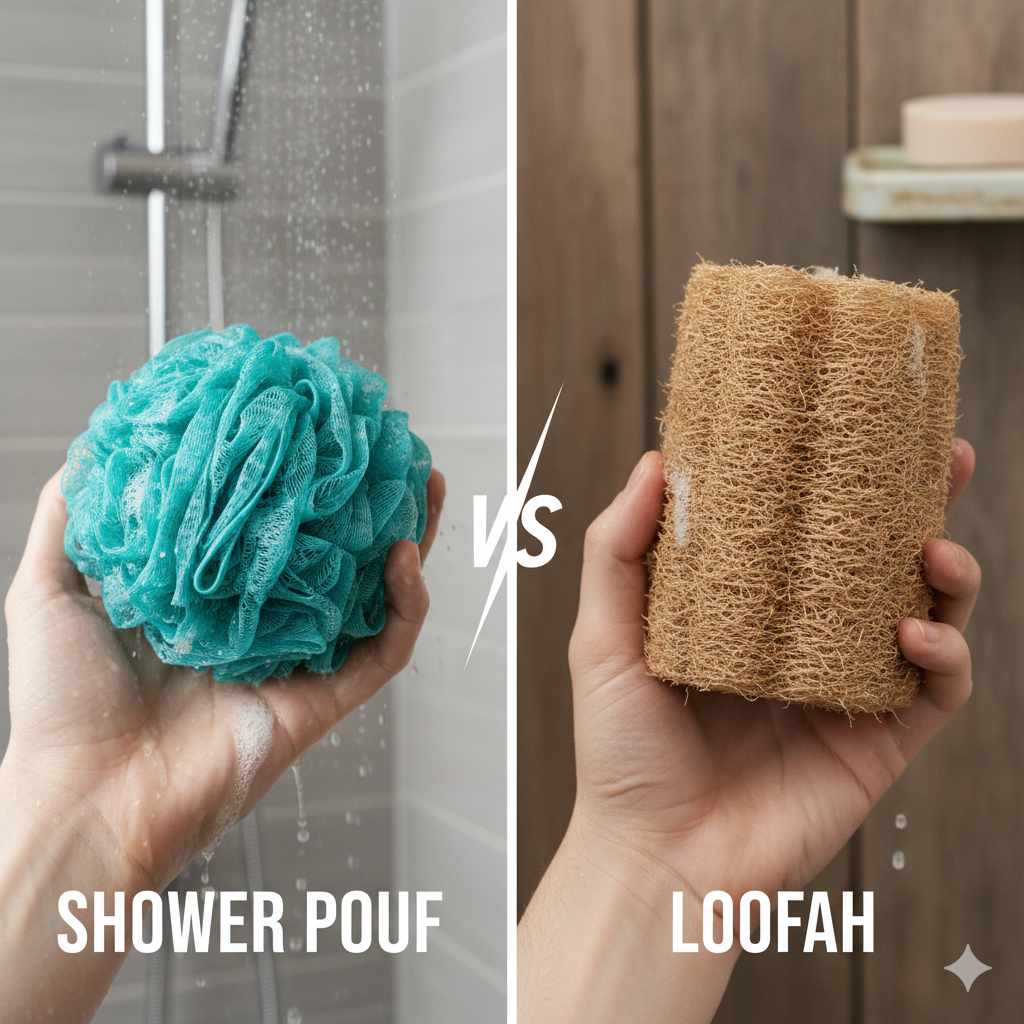
Shower Pouf vs Loofah: Key Differences Explained
Choosing the right shower tool can make your bathing routine feel much better. Many people wonder about the Shower Pouf vs Loofah: Key Differences Explained. It can seem a little confusing at first with so many options available.

RNOAFMU
Rnoafmu Shower Loofah Bath Sponge, 60G Exfoliating…
- Hygienic Loofah Pack: RNOAFMU's bath sponges for shower are vacuum-sealed to ensure optimal hygiene and cleanliness prior to usage…
- Standard Size with Hanging Loop : Approx. 4.5 inches (11.4 cm) in diameter, 60g weight – fits comfortably in most adult hands. Inc…
- Enjoy Shower Time: These lofas for shower balls produce a rich foam and effectively distribute soap or body wash onto the skin, en…
As an Amazon Associate I earn from qualifying purchases.
Don’t worry, we’ll break it down simply. We’ll help you figure out which one is best for your skin and your shower. Let’s get started on finding your perfect lather buddy.
We’ll look at what makes each one unique so you can make a choice that leaves your skin feeling great after every wash.
What is a Shower Pouf
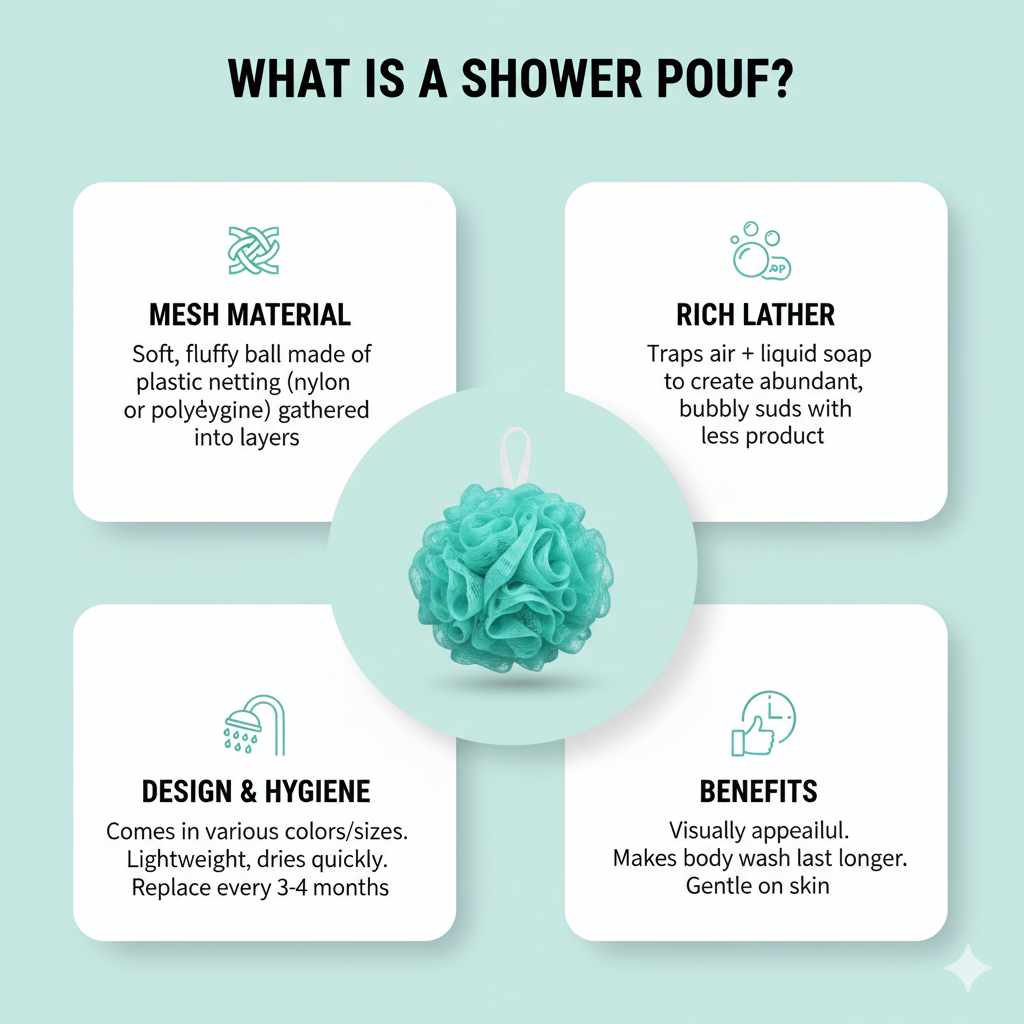
A shower pouf, also known as a bath pouf or shower lily, is a soft, fluffy ball made of mesh material. It’s typically constructed from plastic netting, often nylon or polyethylene. These mesh layers are gathered together at the bottom and attached to a small handle or loop for hanging.
The main purpose of the mesh is to trap air and create a rich, bubbly lather when combined with liquid soap or body wash.
They come in a wide variety of colors and sizes. This makes them a visually appealing choice for many bathrooms. The material is lightweight and dries relatively quickly, which is important for hygiene.
When you use a pouf, you’ll notice it creates a lot of suds with just a small amount of product. This can make your body wash last longer.
How Shower Poufs Are Made
The creation of a shower pouf involves several simple manufacturing steps. Plastic polymers, like polyethylene or nylon, are processed into fine threads. These threads are then woven or knitted into a mesh fabric.
Multiple layers of this mesh are cut into specific shapes.
These layers are then gathered together tightly at one point. A small plastic piece or a string is often used to secure the gathered end, forming the ball shape. A loop or handle is then attached to this secure point.
This allows the pouf to be hung up to dry after use. The final product is a light, airy, and colorful shower accessory.
Types of Shower Poufs
Shower poufs come in several variations, mainly differing in their material and density. Some are made from finer mesh for a more delicate lather, while others use coarser netting for more exfoliation.
- Fine Mesh Poufs These are the most common type. They are made from very thin, soft netting. They produce a dense, creamy lather and are gentle on the skin, making them suitable for daily use and for those with sensitive skin. The fine mesh is excellent at creating a luxurious foam from even a small amount of body wash, extending product use significantly.
- Coarser Mesh Poufs Some poufs are designed with a more open or rugged mesh. This provides a more invigorating scrub and greater exfoliation. They still create good lather but are best for those who prefer a more vigorous cleansing experience. People with normal or less sensitive skin often enjoy the deeper clean these offer.
- Dual-Texture Poufs A few poufs combine different textures. One side might have a softer mesh for general cleansing, while the other has a rougher surface or integrated scrub pad for targeted exfoliation. These offer versatility, allowing users to switch between gentle washing and deeper cleaning as needed during their shower routine.
What is a Loofah
A loofah, sometimes spelled luffa, is a type of fibrous plant sponge. It comes from a gourd in the cucumber family. When the gourd is dried, the fibrous interior is left behind, which becomes the loofah sponge.
They have a natural, slightly rough texture that is excellent for exfoliating the skin.
Loofahs can be found in their natural form or processed into various shapes and sizes. Natural loofahs are usually oval or cylindrical. They are biodegradable and eco-friendly options for your shower.
The texture can vary depending on the specific plant and how it’s prepared.
How Loofahs Are Made
The process of making a loofah starts with growing the loofah gourd plant. The gourds are left on the vine to mature fully. They are then harvested when they are completely dry.
After harvesting, the outer skin of the gourd is peeled away.
The seeds are removed from the inside. What remains is the fibrous network of the gourd. This fibrous material is then cleaned.
Sometimes it’s bleached or treated to remove any remaining pulp. The cleaned and dried fibers form the natural loofah sponge. They are then cut into desired sizes or shapes for sale.
Types of Loofahs
Loofahs can be categorized based on their origin and processing. The most common types are natural loofahs and synthetic loofahs, though the term “loofah” often refers to the natural plant-based product.
- Natural Loofah (Luffa) This is the original loofah. It’s a vegetable sponge derived from the dried fruit of the Luffa aegyptiaca or Luffa acutangula plant. Natural loofahs have a distinct fibrous texture that provides excellent exfoliation. They are biodegradable, making them an environmentally friendly choice. Their texture can range from moderately rough to quite firm depending on the specific gourd.
- Synthetic Loofahs These are made from plastic materials, mimicking the texture of a natural loofah. They are often softer than natural loofahs and do not biodegrade. While they create good lather and offer some scrubbing action, they are essentially a form of plastic waste that contributes to microplastic pollution. Their durability can be a double-edged sword, lasting longer but taking much longer to break down.
- Sea Sponges These are technically not loofahs but are often grouped with natural shower tools. They are harvested from the ocean floor and are the skeletons of marine animals. Sea sponges are very soft and porous, offering gentle exfoliation and a luxurious feel. They are also natural and biodegradable but can be more expensive than loofahs.
Comparing Shower Pouf vs Loofah Key Differences Explained
When you’re deciding between a shower pouf and a loofah, it’s helpful to see their main differences side by side. This comparison focuses on how they clean, their feel on the skin, how long they last, and their impact on the environment. This will help you make an informed choice for your daily washing needs and personal preferences.
Exfoliation Properties
The level of exfoliation each tool provides is a major difference. This is how well they remove dead skin cells. It’s a key factor in how clean and smooth your skin feels after washing.
A natural loofah typically offers more robust exfoliation. Its fibrous texture is naturally abrasive, effectively sloughing off dead skin cells. This can leave skin feeling exceptionally smooth and refreshed.
It’s great for rough patches.
A shower pouf, especially those made from fine mesh, provides much gentler exfoliation. It helps to buff away dead skin cells but in a much milder way. This makes it ideal for daily use or for individuals with sensitive or easily irritated skin.
Some coarser poufs offer more exfoliation, but still generally less than a natural loofah.
Lather Production
How well each tool creates suds from your body wash or soap is another important distinction. A good lather can make your shower experience more enjoyable and can help distribute the soap effectively.
Shower poufs are designed to create a copious amount of lather. The mesh material traps air and body wash, producing rich, foamy bubbles. This is often seen as a sign of thorough cleaning and makes the experience feel more luxurious.
You usually need less body wash with a pouf.
Natural loofahs also create lather, but it might be less voluminous than with a pouf. The lather tends to be airier and less dense. While they still clean effectively, the amount of suds might be less dramatic.
Synthetic loofahs often produce lather similar to poufs.
Durability and Lifespan
How long your shower tool will last is a practical consideration. Replacing your shower tool regularly is important for hygiene.
Shower poufs, being made of plastic netting, can last for several months, often 3 to 6 months, with proper care. They tend to maintain their shape and effectiveness for a good period. However, as they are plastic, they will eventually need to be disposed of, contributing to plastic waste.
Natural loofahs have a shorter lifespan. They typically need to be
Hygiene and Drying
Keeping your shower tool clean and dry is vital to prevent the growth of bacteria and mold.
Both shower poufs and loofahs need to be rinsed thoroughly after each use. They should then be squeezed out to remove excess water. The best way to store them is by hanging them up to dry completely.
Shower poufs, with their airy mesh structure, tend to dry relatively quickly. This helps reduce the chance of bacterial growth. Natural loofahs also dry well, but their more solid structure might take slightly longer.
Regular disinfection, perhaps with a diluted vinegar solution or in the washing machine for poufs, can help maintain hygiene for both.
Environmental Impact
The materials used and how they break down in the environment are important factors for many people.
Shower poufs are typically made from plastic, which is not biodegradable. When they reach the end of their life, they contribute to plastic waste in landfills or oceans. Some companies are starting to offer poufs made from recycled plastics or plant-based materials.
Natural loofahs are a plant-based product and are fully biodegradable. When you’re finished with a natural loofah, you can compost it. This makes them a much more eco-friendly option compared to plastic poufs or synthetic loofahs.
Skin Sensitivity and Type
Your skin type plays a big role in which shower tool will feel best and be most effective for you.
For individuals with sensitive skin, a fine mesh shower pouf is often the preferred choice. Its soft texture offers a gentle cleansing and mild exfoliation. This reduces the risk of irritation or redness.
People with normal to dry or less sensitive skin might enjoy the deeper exfoliation offered by a natural loofah. It can help with smoother skin and may improve circulation. Those with very oily skin might also prefer the more vigorous scrub a loofah provides.
Shower Pouf vs Loofah Choosing the Best For You
Now that we’ve looked at the Shower Pouf vs Loofah Key Differences Explained, you can make a better choice. Your personal preference and skin needs are the most important factors. Think about how you like your shower to feel and what your skin responds to best.
Consider Your Skin Type
If your skin is easily irritated, red, or dry, a gentle approach is best.
- Sensitive Skin For those with sensitive skin, a soft, fine mesh shower pouf is usually the safest bet. It provides a mild scrub that cleans without causing discomfort. You can enjoy a good lather and a gentle polish.
- Normal to Oily Skin If your skin is generally resilient or prone to oiliness, a natural loofah can offer a more thorough exfoliation. It helps to remove excess oil and dead skin cells effectively, leaving your skin feeling very clean.
- Combination Skin For combination skin, you might even use both! Perhaps a pouf for daily washing and a loofah for occasional deeper exfoliation on areas that need it more.
Think About Your Desired Clean
What kind of feeling do you want after your shower?
Do you love that super-sudsy, luxurious foam that feels like it’s washing away everything? A shower pouf excels at this. It makes even a little bit of body wash go a long way to create a mountain of bubbles.
Or do you prefer a brisk, invigorating scrub that leaves your skin feeling polished and smooth? A natural loofah is your champion for this. It feels more like a deep clean and can help get rid of rough spots.
Environmental Preferences
Your choice can also reflect your commitment to the planet.
If being eco-friendly is a top priority, a natural loofah is the clear winner. It’s a compostable product that comes from nature. You can feel good knowing it will break down easily.
If you prefer a shower pouf, look for brands that offer options made from recycled or plant-based materials. This can help reduce the plastic waste associated with these popular items. Some poufs are designed to be more durable, which can also be a factor in reducing waste over time.
Budget and Longevity
Both options can be quite affordable, but their lifespans differ.
Shower poufs often cost a little less initially and can last longer, typically a few months. This can make them a cost-effective choice over time, especially if you replace them as recommended for hygiene.
Natural loofahs are also reasonably priced. However, they need to be replaced more frequently, usually every one to three months. This means you might end up buying them more often throughout the year.
Real-Life Examples and Scenarios
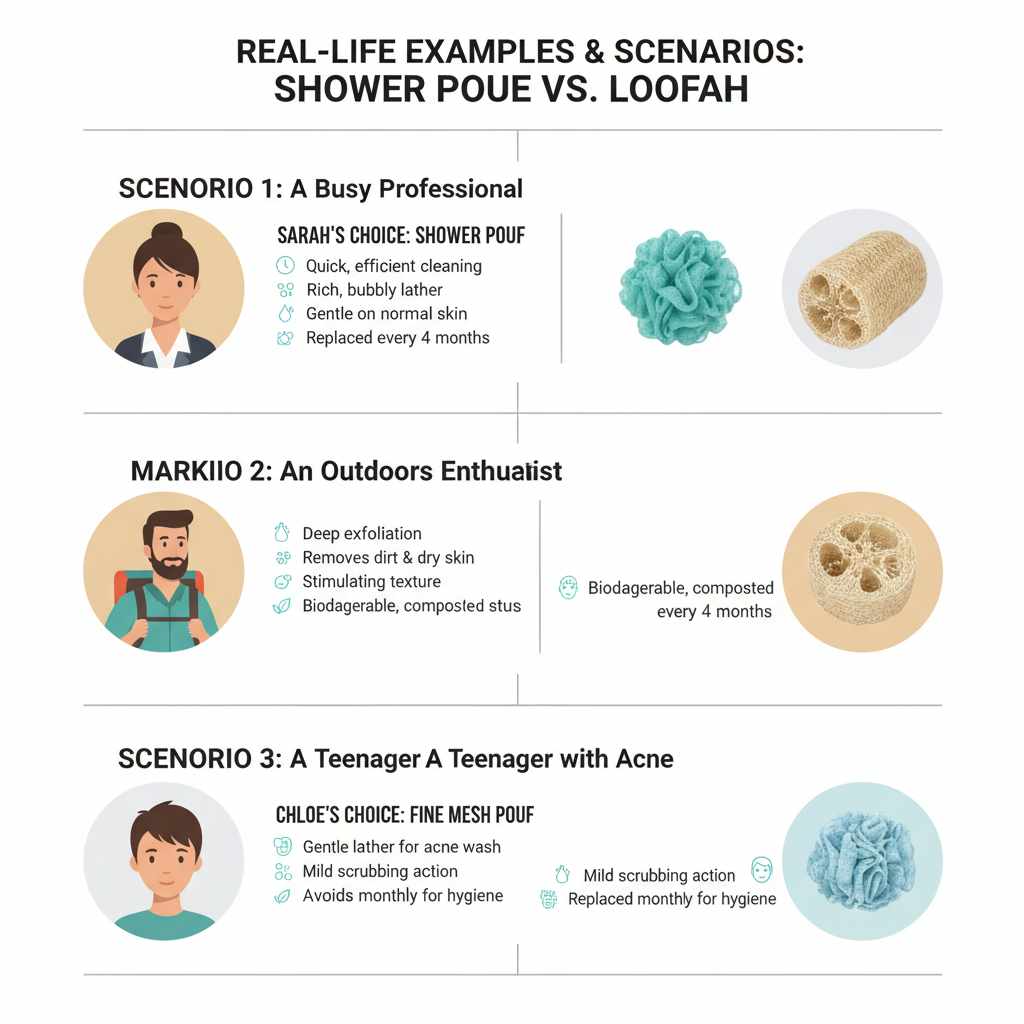
To make these differences even clearer, let’s look at how people use shower poufs and loofahs in everyday life. These examples show why one might be better than the other in specific situations.
Scenario 1 A Busy Professional
Meet Sarah, a busy marketing manager who works long hours. She wants a quick and effective way to clean up after a stressful day. Sarah’s skin is generally normal, not too sensitive.
- Sarah prefers the rich lather a shower pouf provides. It helps her feel completely clean with minimal effort. She uses a small amount of her favorite body wash and gets a lot of suds.
- She finds that the gentle scrubbing from her pouf is enough for her daily needs. It leaves her skin feeling soft without any extra work.
- Sarah hangs her pouf up after every shower. She replaces it every four months as recommended to keep it hygienic. She likes that her pouf lasts a good while.
For Sarah, the shower pouf offers efficiency, good lather, and gentle cleaning that fits her busy lifestyle.
Scenario 2 An Outdoors Enthusiast
Mark is an avid hiker and gardener. His skin often gets dirty and can become a bit rough from outdoor activities. He wants something to really scrub away dirt and dead skin.
- Mark uses a natural loofah because he loves the deep exfoliation it provides. It helps remove mud and dry skin effectively after a day outdoors.
- He finds that the loofah’s texture really gets into his pores and leaves his skin feeling smooth and revitalized. It’s like a mini-spa treatment after a tough day.
- Mark values that his loofah is biodegradable. After about two months, he composts his old loofah and buys a new one. He enjoys making environmentally friendly choices.
For Mark, the natural loofah offers the vigorous cleaning and natural, eco-friendly benefits he seeks.
Scenario 3 A Teenager with Acne
Chloe is a teenager dealing with occasional breakouts on her back and shoulders. She needs something that can clean her skin well without irritating it further.
- Chloe uses a fine mesh shower pouf. She finds that it creates a gentle lather with her acne-clearing body wash.
- The mild scrubbing action helps to lift away dirt and oil without making her sensitive skin red or sore. She avoids harsh scrubbing.
- She carefully rinses and hangs her pouf to dry daily and replaces it monthly to maintain the highest level of hygiene and prevent bacteria buildup.
Chloe’s choice of a fine mesh pouf allows her to manage her skin concerns effectively and gently.
Statistics On Shower Tool Usage
Studies and market trends offer insight into how people choose their shower tools. While exact figures for poufs vs. loofahs can vary by region, general preferences show interesting patterns.
| Shower Tool | Estimated Usage Preference | Primary Appeal |
|---|---|---|
| Shower Pouf | 60-70% | Lather, Variety, Gentleness |
| Natural Loofah | 20-30% | Exfoliation, Natural, Eco-friendly |
| Synthetic Loofah/Other | 10-15% | Durability, Affordability (synthetic) |
The preference for shower poufs is often driven by their ability to create abundant lather and their wide range of colors and styles. For many, the visual appeal and the feeling of a rich, bubbly wash are key factors. Gentleness is also a major draw, especially for those with sensitive skin or for daily use.
Natural loofahs appeal strongly to consumers who prioritize natural products and sustainability. The desire for effective exfoliation and the biodegradability of these items make them a conscious choice for many. As awareness of environmental issues grows, the popularity of natural, compostable options like loofahs is expected to increase.
Frequently Asked Questions
Question: What is the main difference between a shower pouf and a loofah
Answer: The main difference is their material and texture. Shower poufs are usually made of plastic mesh and are fluffy, creating a lot of lather. Natural loofahs are made from plant fibers and have a rougher texture, offering better exfoliation.
Question: Which is better for sensitive skin a pouf or a loofah
Answer: A fine mesh shower pouf is generally better for sensitive skin because it is softer and provides a gentler scrub. A natural loofah can sometimes be too abrasive for easily irritated skin.
Question: How often should I replace my shower pouf or loofah
Answer: For hygiene, it’s recommended to replace a shower pouf every 3 to 6 months and a natural loofah every 1 to 3 months. Both should be rinsed and dried thoroughly after each use.
Question: Are natural loofahs better for the environment than plastic poufs
Answer: Yes, natural loofahs are biodegradable and compostable, making them much more environmentally friendly than plastic shower poufs, which contribute to plastic waste.
Question: Can I use body wash with a natural loofah
Answer: Yes, you can use body wash with a natural loofah. It will create lather, though typically less foamy than what a plastic pouf produces. The loofah will still help distribute the soap and clean your skin.
Summary
Choosing between a shower pouf and a natural loofah comes down to your personal needs. Poufs offer great lather and gentleness, perfect for daily use. Natural loofahs provide deeper exfoliation and are eco-friendly.
Consider your skin type and what kind of clean you prefer to find your best shower companion.
Related pick: Check today's price on Amazon
Products related to this article
Sponsored / affiliate links. As an Amazon Associate I earn from qualifying purchases. I may earn additional commission from eligible campaigns.